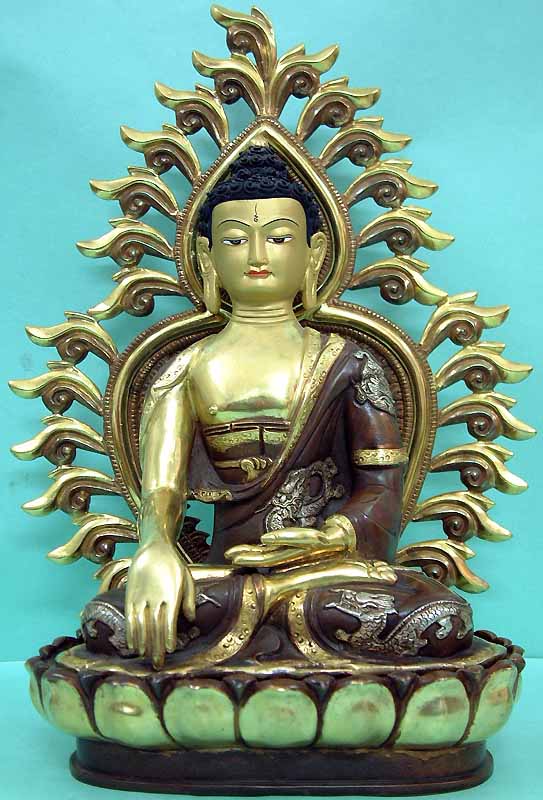
The
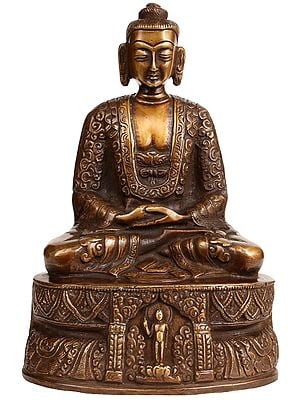
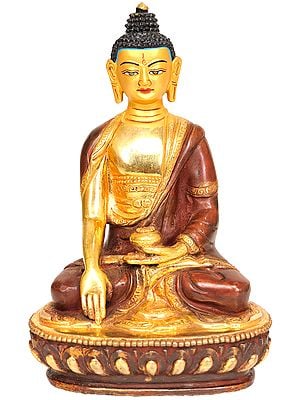
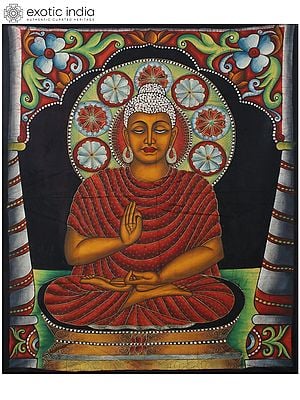
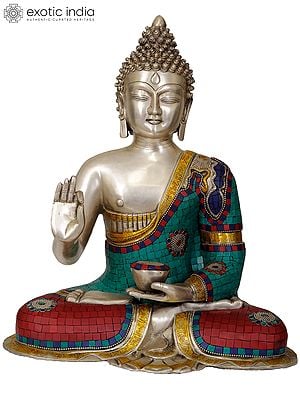
Buddha Shakyamuni, at the moment of enlightenment, invoked the earth as
witness, as indicated by the fingers of his right hand, which spread
downward in the bhumisparsha
mudra, the "gesture of touching the earth." As
the
Buddhist Sutras relate, the sun and moon stood still, and all the
creatures of the world came to offer obeisance to the Supreme One who had
broken through the boundaries of egocentric existence. All
Buddhist art
celebrates this supreme moment and leads the viewer toward the Buddha's
experience of selfless and unsurpassed enlightenment. The earliest forms of
Buddhist art were semiabstract: bodhi-trees, wheels, stupas, and even the
Buddha's stylized footprints served as supports for contemplating what was
ultimately beyond words or forms. As the Buddha himself continually taught,
it was not he who was continually revered but the possibility he presented.
"Don't look to me," he said, "but to the enlightened state."
The first anthropomorphic representations of the Buddha are said to have
been drawn on canvas from rays of golden light emanating from his body.
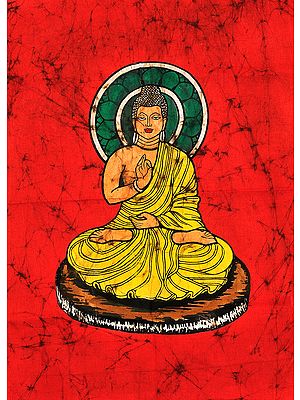
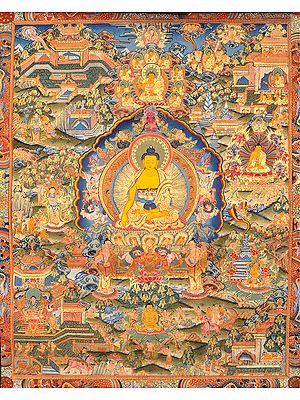
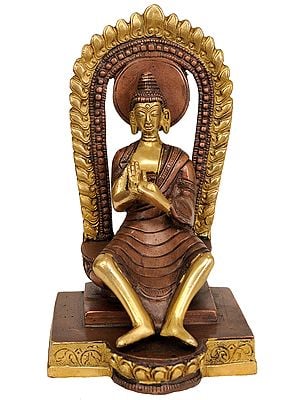
Later Buddhist art pictured the Buddha in numerous manifestations, but
always as an archetype of human potential, never as a historically
identifiable person. All forms of the Buddha, however, are commonly shown
seated on a lotus throne, a symbol of the mind's transcendent nature. As a
lotus rises from the mud to bloom unsullied in open space, so does the mind
rise through the discord of its own experience to blossom in the
boundlessness of unconditional awareness.
Buddhism is not a static doctrine, but a creative expression of the
interdependent nature of all things. It is a means by which we can discover
in the heart of experience, not ourselves, but a luminous and unfolding
mystery. Buddhism envisions the
universe as a net of jewels, each facet of reality reflecting every other
facet. Our calling is not to escape this web of interdependent origination,
but to awaken to our indwelling Buddha nature, to see the world for what it
is, and to become Buddhas in our own right - beings of infinite awareness
and compassion.
"Be a light unto yourself," Buddha Shakyamuni declared at the end of his
life. Become a Buddha, an awakened being, he urged, but never a blind
follower of tradition. Indeed the image of the Buddha, transcending time and
place, centers us in our innermost being.
Shrestha, Romio. Celestial Gallery: New York, 2000.
How are Nepalese copper statues made?
Nepalese statues and sculptures are best known for their unique
small religious figures and ritual paraphernalia for over two
thousand years. These are mainly cast in copper alloy. Nepal draws
influences from the artistic styles of Buddhism and Hinduism, and
therefore the sculptors of the country specialize in making the
icons of both these religions. Over the years, Nepalese sculptures
evolved into their own distinctive iconography. Some
characteristic features of these sculptures that differ from other
pieces are exaggerated physical postures, youthful and sensual
features, languid eyes, wider faces having serene expressions, and
ornate flourishes. The Buddhist deity icons of Nepal have
tremendous demand in countries such as China and Tibet for ritual
purposes in their temples and monasteries.
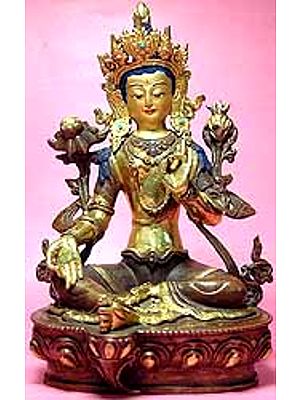
Nepalese statues and sculptures have a high copper content and
therefore develop a slightly reddish patina on the surface as they
age. However, the most unique feature of Nepalese copper statues
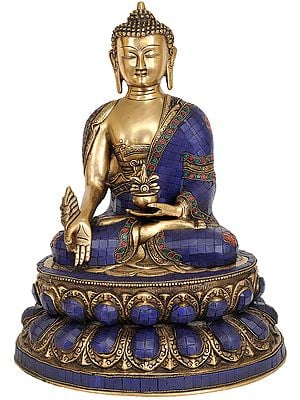
is their decorative detailing. The pieces are heavily gilded and
sometimes inlaid with semi-precious stones. This embellishment
protects them from getting tarnished. The traditional lost-wax
method for casting Nepalese copper statues remains the most
practiced technique in Nepal for many centuries. This process
involves many steps and requires skilled artists.
The first step in lost-wax sculpting is to make a wax replica of
the desired Buddhist deity to be cast in copper. This replica is
created by hand and therefore needs excellent artistic skills
otherwise fine features will be lacking.
Once the wax replica is made, it is then coated with a special
mixture of clay with a brush. This layer of clay is hardened when
left to dry. A small hole is made on the base of the wax mould so
that the wax flows away when it is heated.
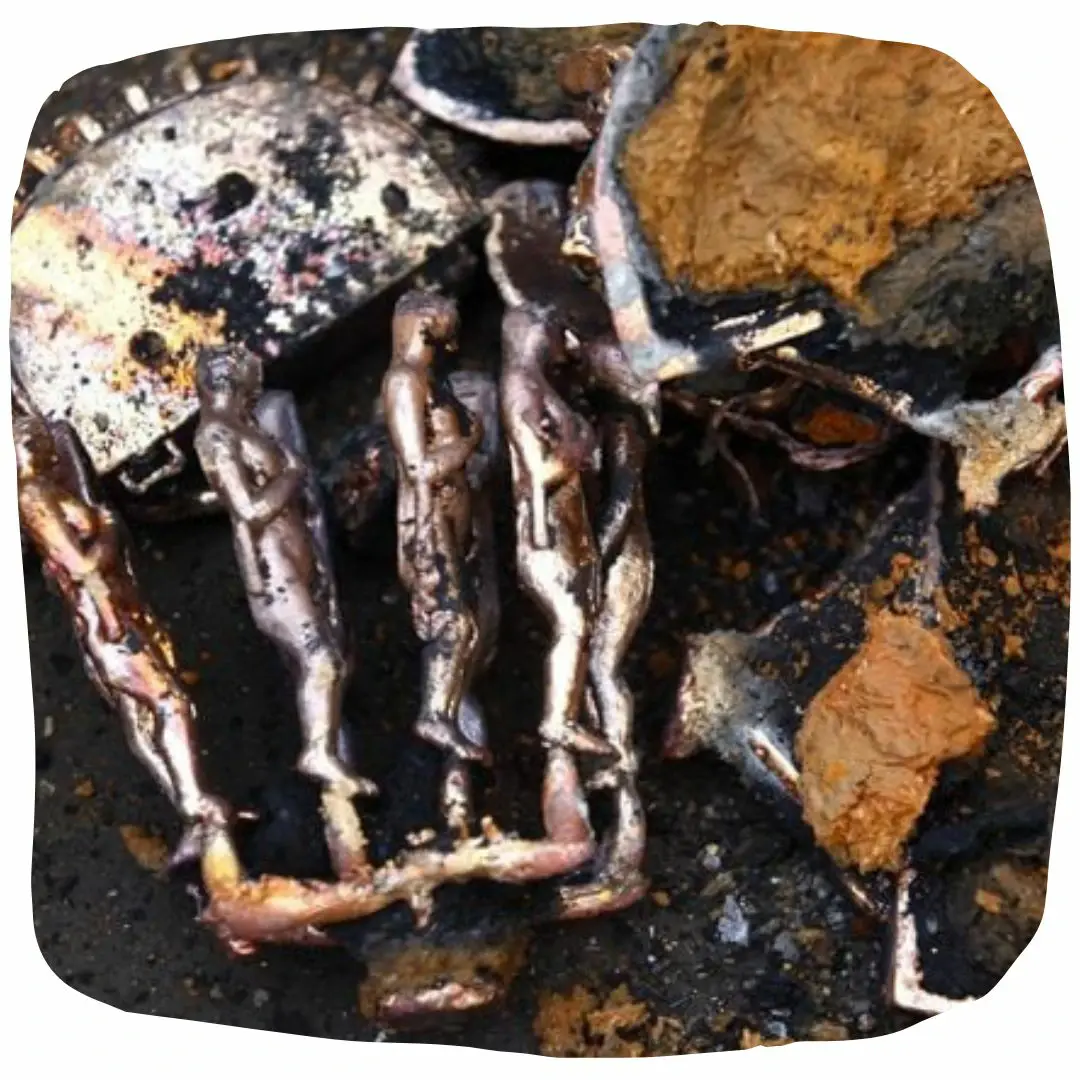
At this stage, a hollow mould in the shape of the deity is
obtained.
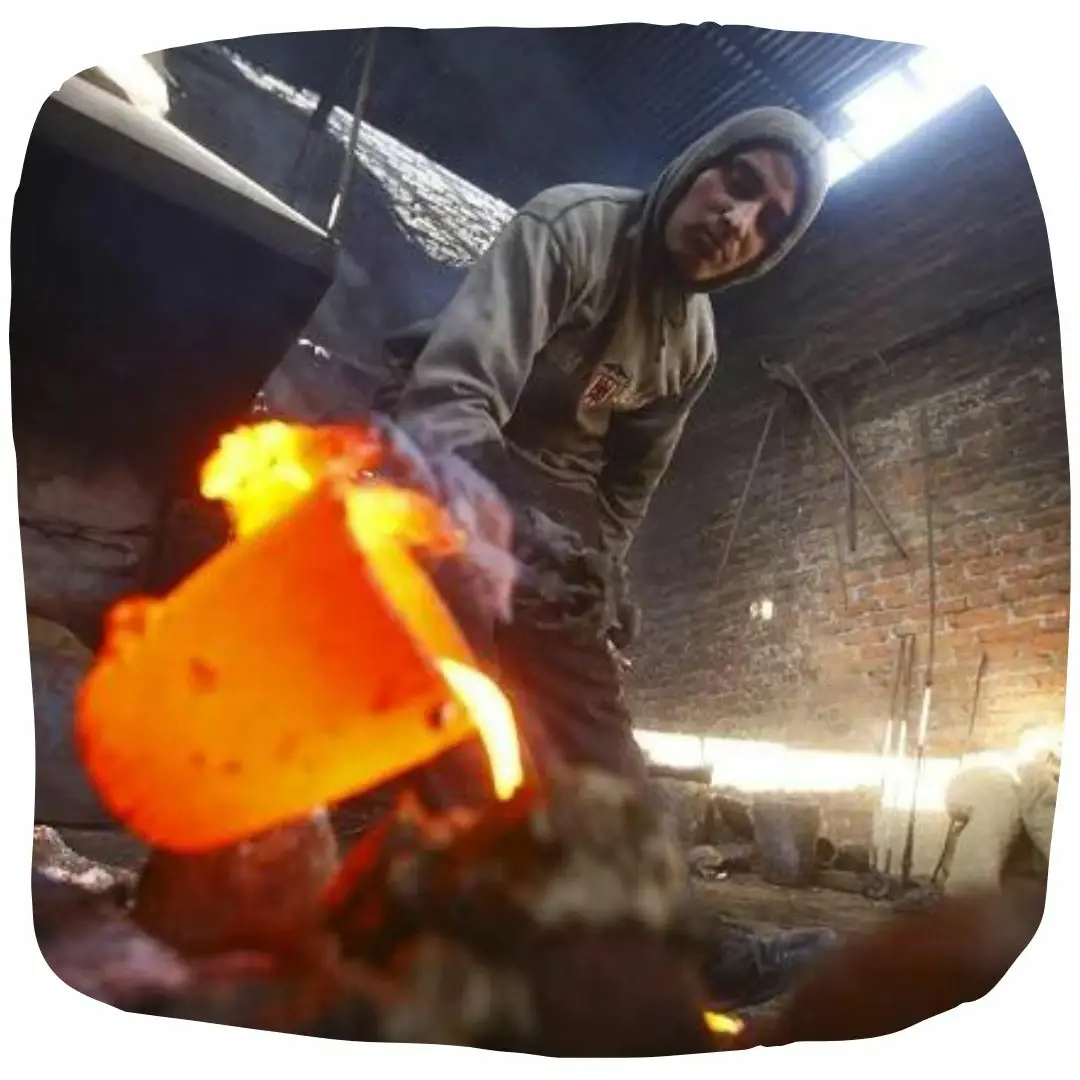
This is the time to pour liquid copper into the hollow mould which
is then allowed to cool and harden inside a container of cold
water. When the liquid metal has hardened, the mould is removed
and the statue within is revealed.
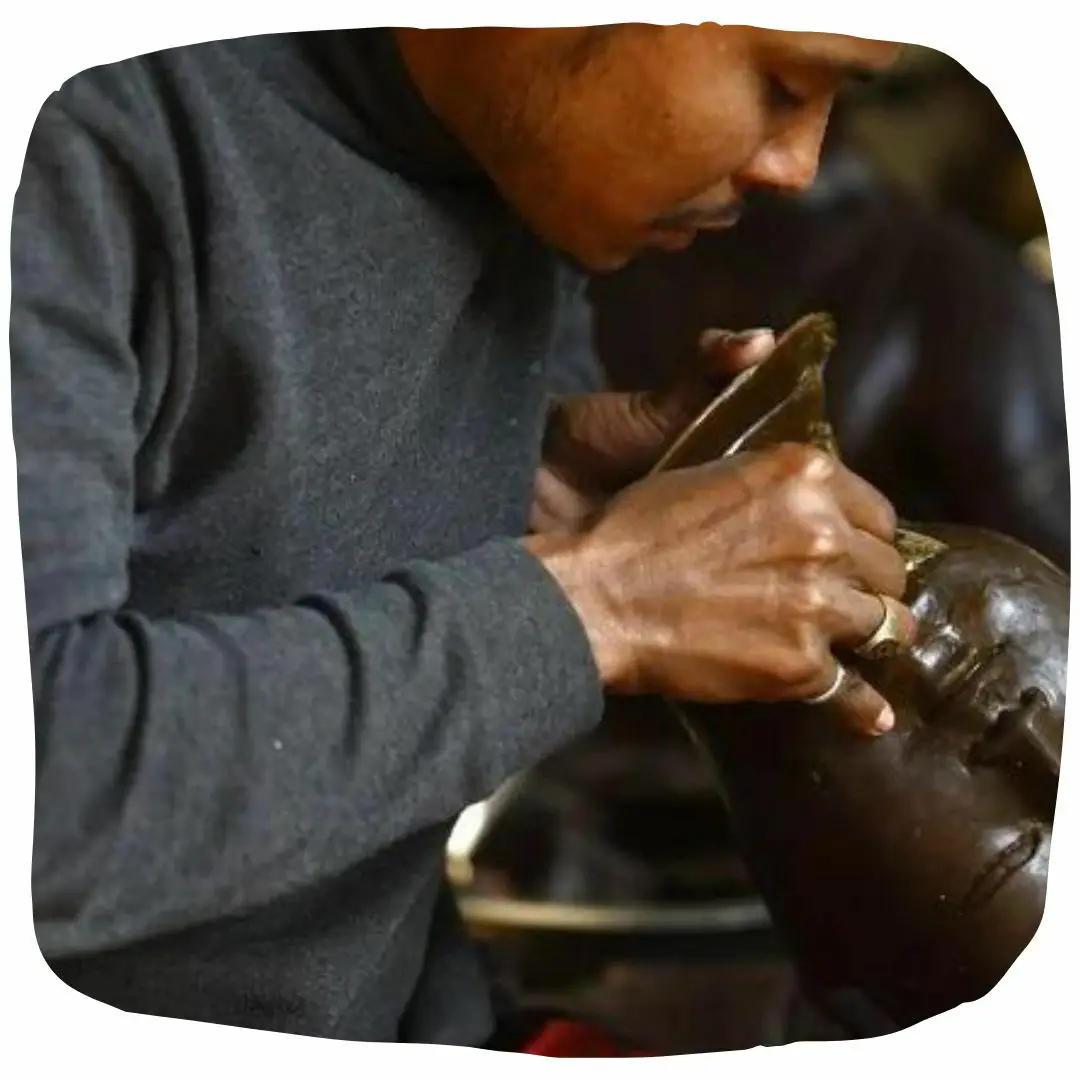
The artist works on the details of the statue using various tools.
It is then polished to get a shiny and lustrous surface.
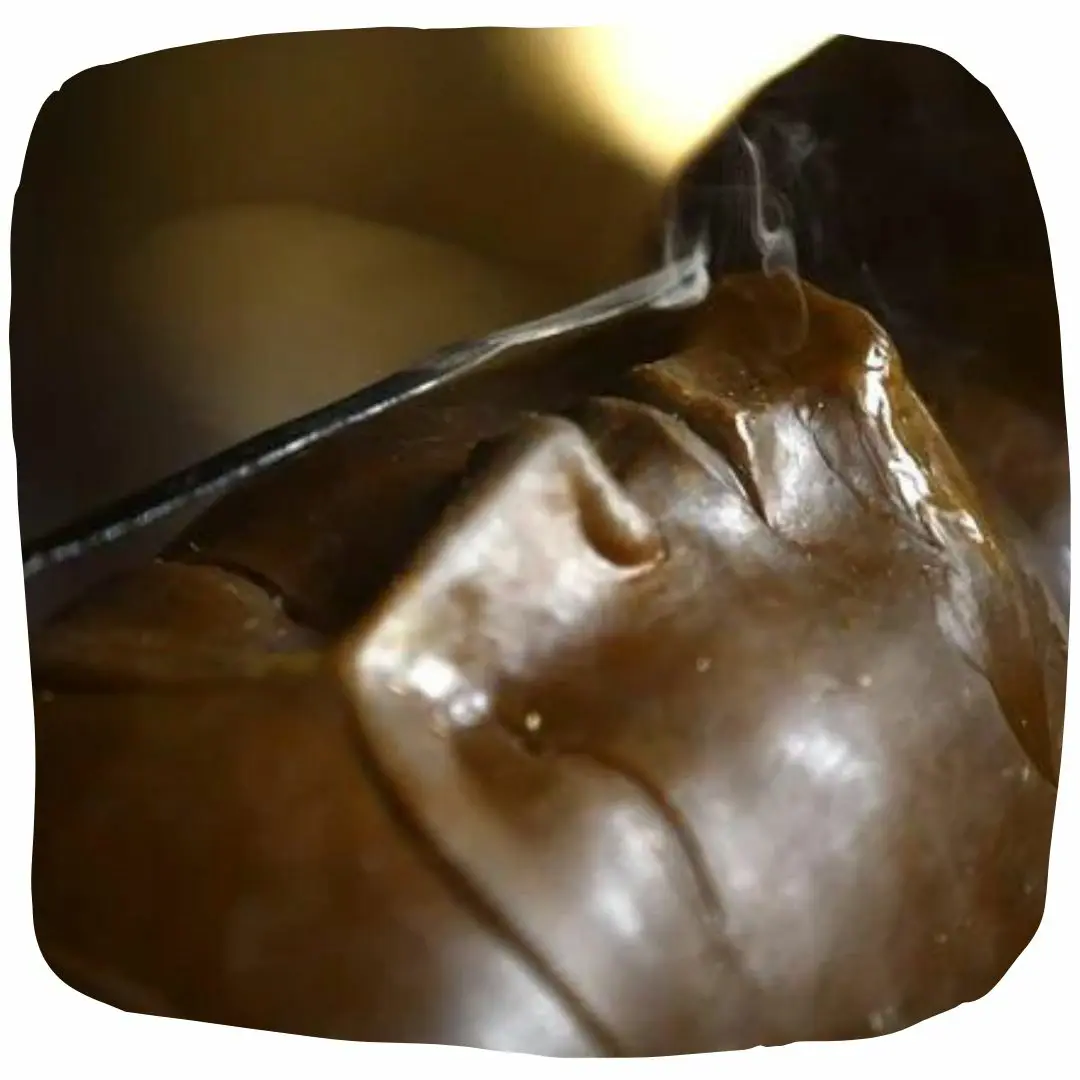
Now comes the most important part of Nepalese art which is gold
gilding. This is done by the traditional fire gilding method. A
mixture of mercury and 18K gold is applied on the surface of the
statue and heat is applied using a flame torch. The result is that
mercury evaporates along with impurities, leaving a pure 24K gold
finish.
The lost-wax method of sculpting is the most preferred technique
for artists to cast a metallic statue having intricate details.
Since Nepalese copper sculptures require extraneous effort for
giving a majestic look by adding special embellishments, it takes
several weeks to complete one masterpiece. A 24K gold gilded
copper sculpture retains its brilliant luster for many years and
appears as like before. Nepalese sculptures continue to remain one of the finest specimens of the art of the East that have a strong
aesthetic appeal that other sculptures cannot match.

















 Upload an Image
