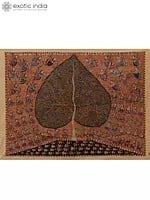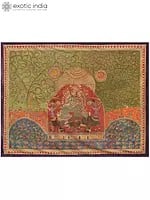
A traditional art form originated from the land of Gujrat, Mata ni pachedi is the pride of the nomadic Vaghari community. Mata ni pachedi translates to “ behind the mother goddess” a kind of regional cloth painting made for the worship of Matas. Living along the banks of the Sabarmati river in Gujrat, the inferior caste of the village was not allowed to visit the temples.
Hence, they began creating the paintings about 3000 years ago. The Mata ni pachedi paintings were generally used as a backdrop or canopies in their temporary wooden temple as a symbol of devotion. These paintings narrate a series of events from mythological texts similar to the cultural art forms of Rajasthan and South India.
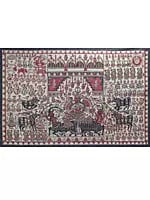
The regional Gujarati themes of the mata ni pachedi make it so special and unique. They are usually made on a rectangular canvas which is further divided into nine separate columns to create a sort of framework for the narration. In Mata ni Pachedi goddesses have a powerful presence including various deities like Amba and Durga along with other regional devis.
Now popularly known as an artistic depiction, Mata ni Pachedi is a traditional illustration that is widely referred to as a decorative element with a traditional style. Let's have a look at one of the best Mata Ni Pachedi paintings:
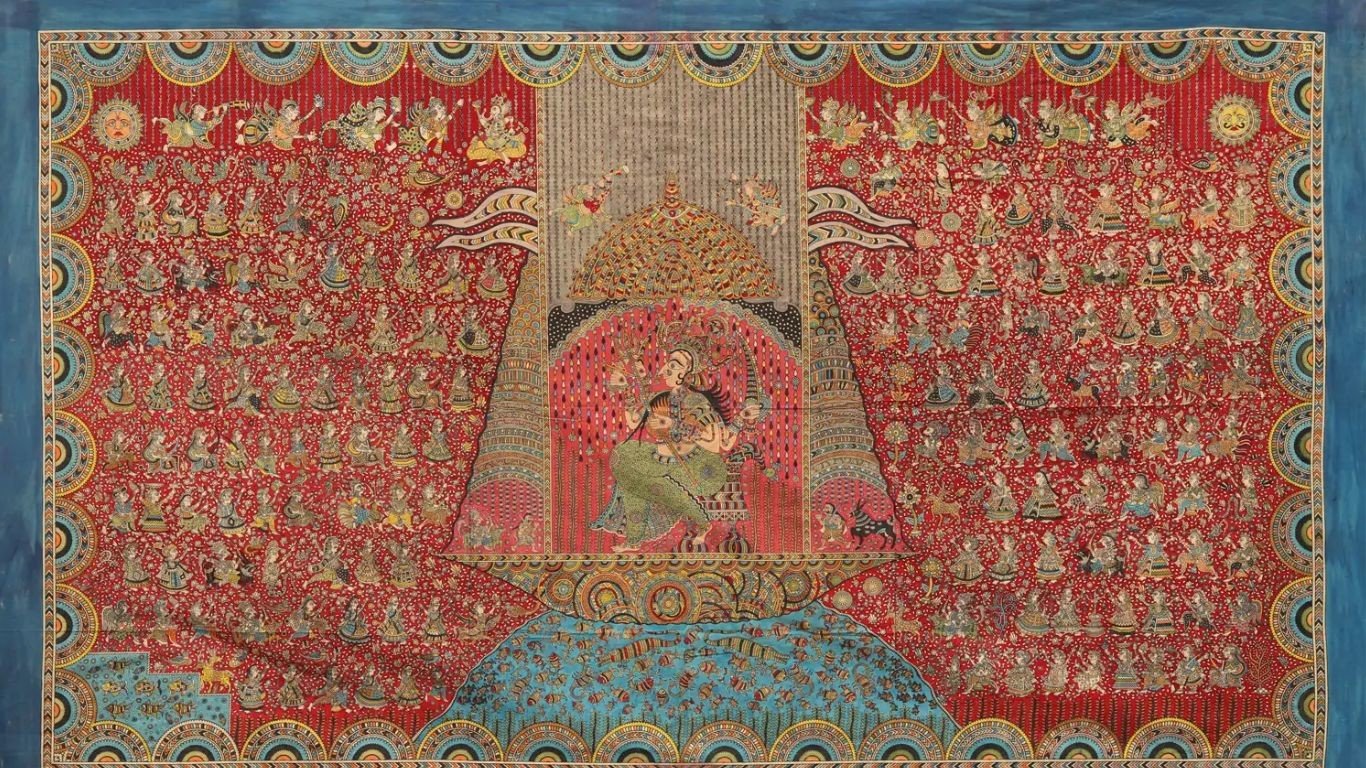
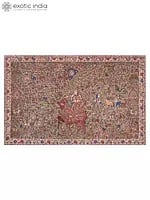
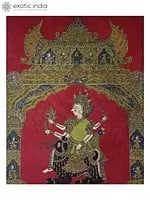
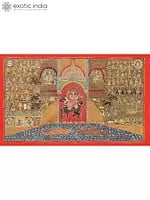
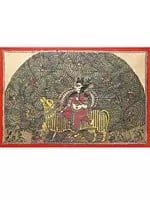
A Mata ni Pachedi masterpiece of Vahanati Mata which is eight feet tall and covered in traditional motifs and iconographies. The bright red canvas is created with an intricate painting technique of the local artists of Gujrat. The central figure of the painting is Mata Vahanati, sitting under a structured dome illustrating a symbol of mother nature. The cotton canvas is painted with natural pigments derived from flowers and plants. This painting is truly a celebration of traditional artwork.
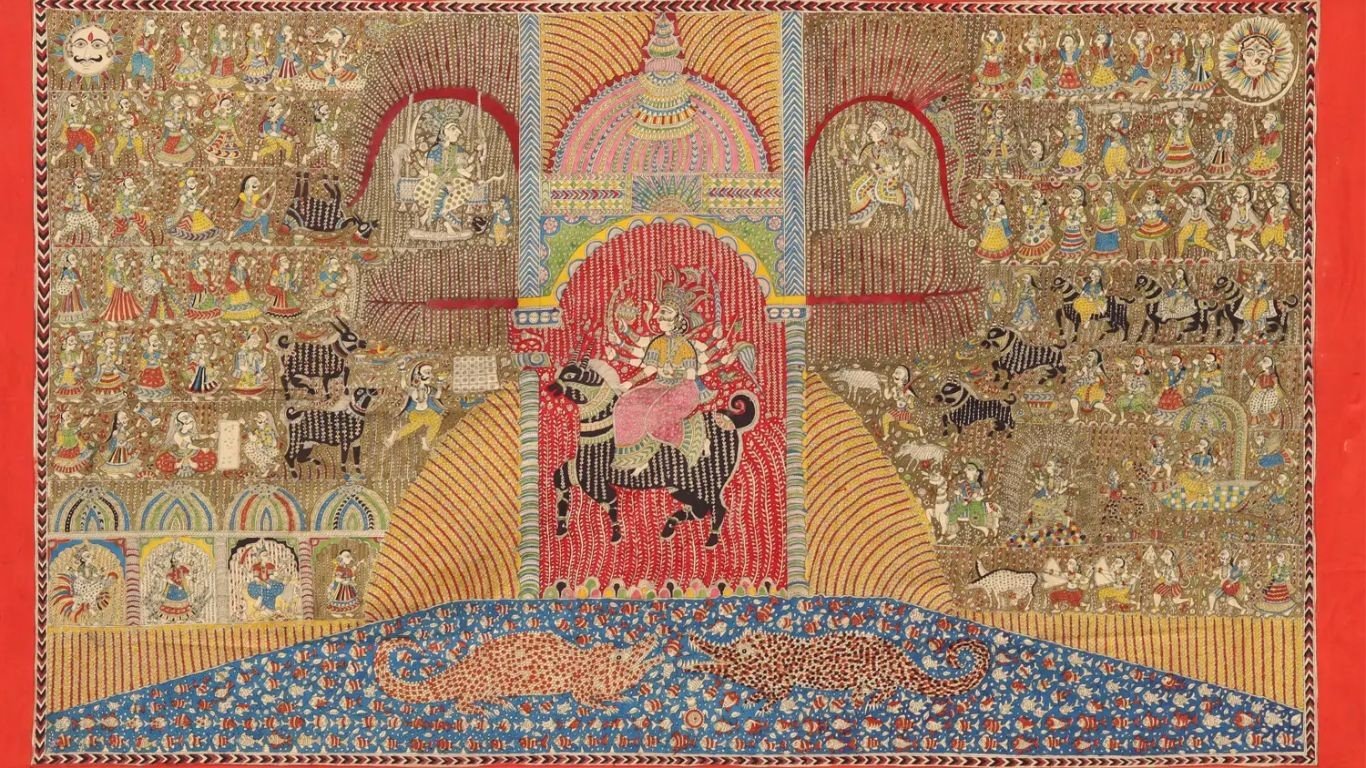
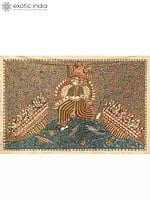
This Mata ni Pachedi Painting of Vahanati Mata is a complex and traditional narrative with vibrant color profiles. The foreground of the painting depicts the aquatic life with tiny details of under sea. Every space in the painting is covered in intricate details including a sun and a moon on the top corners of the painting. Incorporating the distinct elements of Ramayana with Rama and Lakshmana following a deer, Hanumana carrying the mountain of herbs, and Ravana lifting mata Sita is beautifully depicted in the scenery. The interactive appeal of this painting indeed speaks for itself.
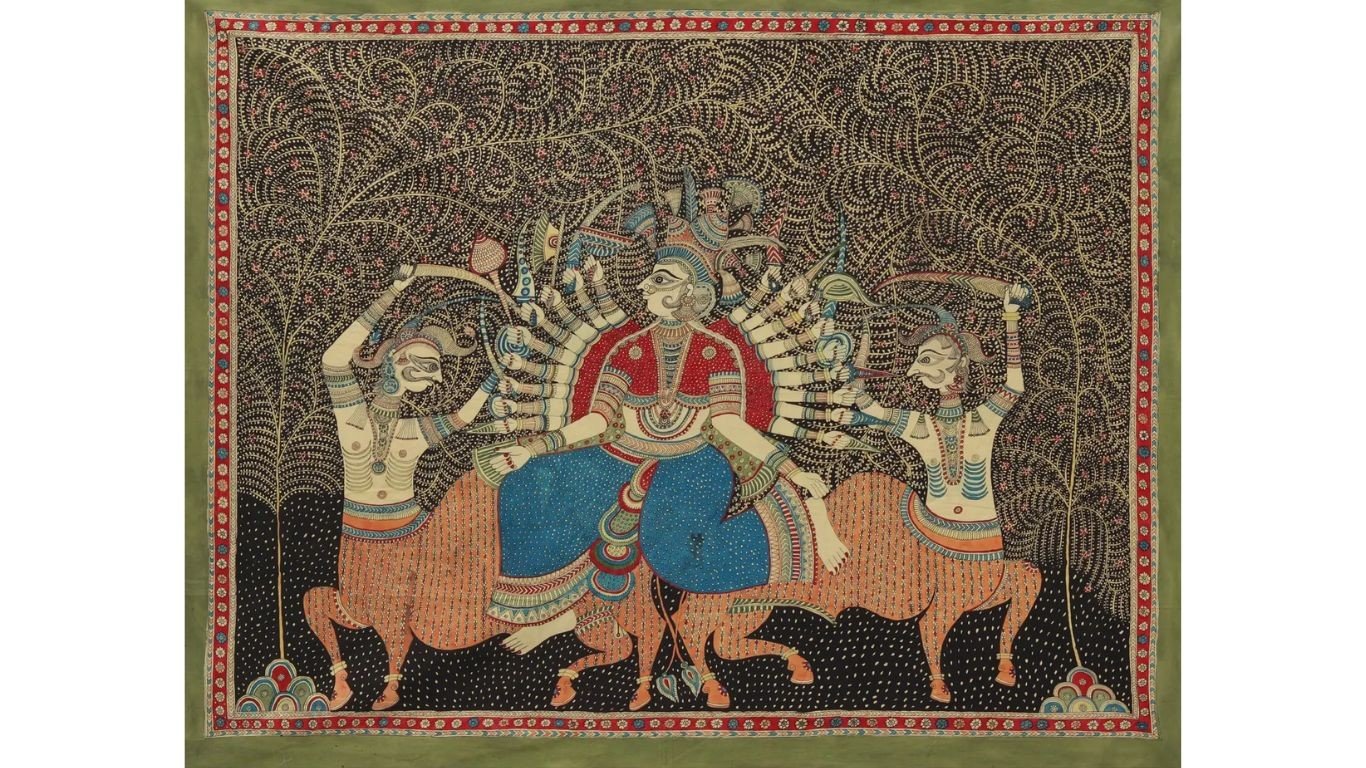
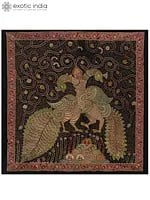
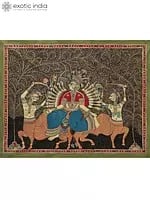
Well preserved as a symbol of fertility, abundance, and health, the Mata ni Pachedi painting of Visat Mata on a five-foot cotton canvas. Visat amata is revered as the Hindu goddess Durga Mahishasura Mardini because of the significant similarity in their iconography. The mystical dark background of the canvas beautifully highlights the vibrant patterns and motifs.
Conclusion:
The Mata ni Pachedi painting is indeed the heart of the Vaghri community incorporating the beautiful essence of the cultural history of Gujrat. The depiction of regional and nonregional devis signifies Shakti and power. Mata ni pachedi is not just the presence of the deity but also marking its existence as a decor element for the modern world in terms of garments and wall hangings. Check out the stunning collection of traditional Mata ni Pachedi from Exotic India. Exotic India is known for their conventional paintings that will surely bless your space with the godly energy of the goddesses.