Introduction
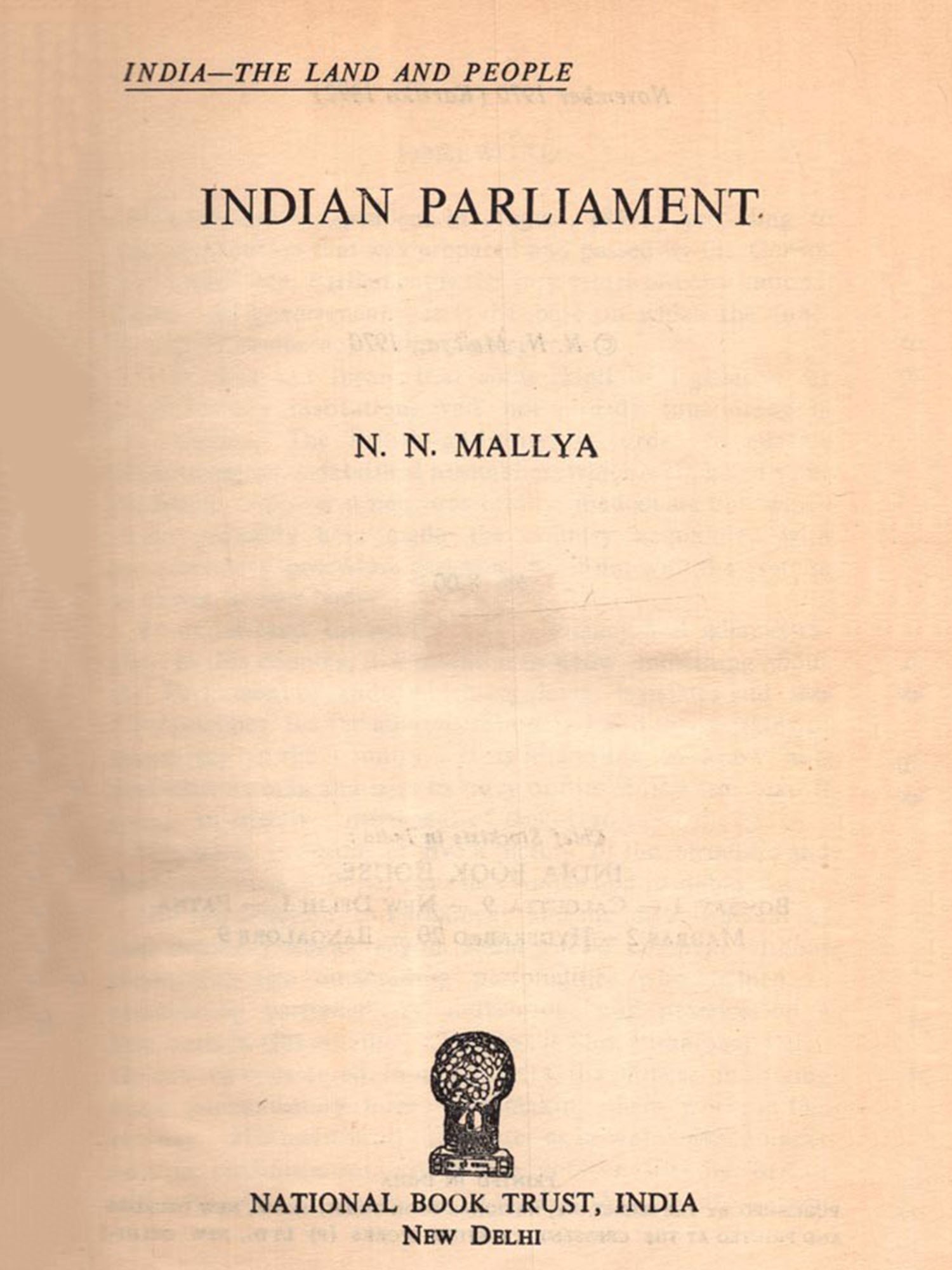
THE PARLIAMENT IN INDIA enjoys great prestige. Indeed the
struggle for independence from British rule till the late 'thirties of this
century was in essence a struggle for represen-tative and responsible
government. The twenty years that have elapsed since our independence have seen
parliamentary institutions take firm roots, whatever the critics might say. The
interest in Parliament is now widespread. When Parlia-ment is in session, one
of the common sights in towns and villages is someone reading aloud the
newspaper to a group of persons listening intentively to him and thereafter
discussing the happenings in Parliament. The working of the parliamentary
machine is, however, not so well known. Indeed it could be said that even an
educated citizen has no clear idea of the processes the manner and method by
which Parliament conducts its business. The present book aims at informing him
as to how Parliament gets about its work in the discharge of its
responsibilities. Care has been taken not to burden him with all the
technic-alities of procedure. The aim has been to instruct without repelling or
alarming the reader. The book deals not only with the constitutional provisions
pertaining to Parliament and the Executive, but also with the Rules of
Procedure and Conduct of Business in the Houses. Nowhere else is procedure of
such consequence and importance as it is in Parliament. Without these rules, it
would have been impossible to maintain order in the House or transact business
expeditiously. Then again rules are techniques and devices whereby Parliament
controls the Executive and the Executive controls Parliament and gets its work
transacted with the maximum expedition consonant with the demands of discussion
and debate by the representatives of the people. To a Member of Parliament,
rules are in one sense the tools of his trade. The effectiveness of a member
depends on the effectiveness with which he can wield these various techni. ques
and devices. When they are neglected, the effectiveness of Parliament itself
goes down and the whole House becomes an ineffective debating society. The
author of the book had the privilege of serving the Lok Sabha for fifteen years
when he had the unique oppor-tunity of watching Parliament in action. As Joint
Secretary, he had the privilege of working intimately with all the three
Financial Committees, viz., the Public Accounts Committee, the Estimates
Committee, and the Committee on Public Undertakings. The work of Parliamentary
Committees is not as well known as the questions and debates in the House. The
deliberations of these Committees are not open to the Press, and their reports,
which are presented once a year during the budget session, do not get
sufficient publicity in the daily newspapers which, due to limitations of
space, at best give only a gist of the report. To political scientists and students
of public administration, these reports are a veri-table mine of information.
In writing this book the material was so vast that the task of rejection and
selection was indeed formidable. The author hopes that apart from the general
reader, the university student will also find the book instructive. The
political scientist, the legislators and the Members of Parlia-ment will find
in it something which will interest them and perhaps make them think. In
writing this book the author has been greatly encourag-ed by Dr. B.V. Keskar,
Chairman of the National Book Trust, India, who took a keen interest in it.
Having once been a Minister of the Government of India, he had many valuable
suggestions to make for which the author is deeply indebted to him. The author
commends the book to the reading public and would be delighted to have any
comments or suggestions that any reader may have regarding it.