Divine Playfulness
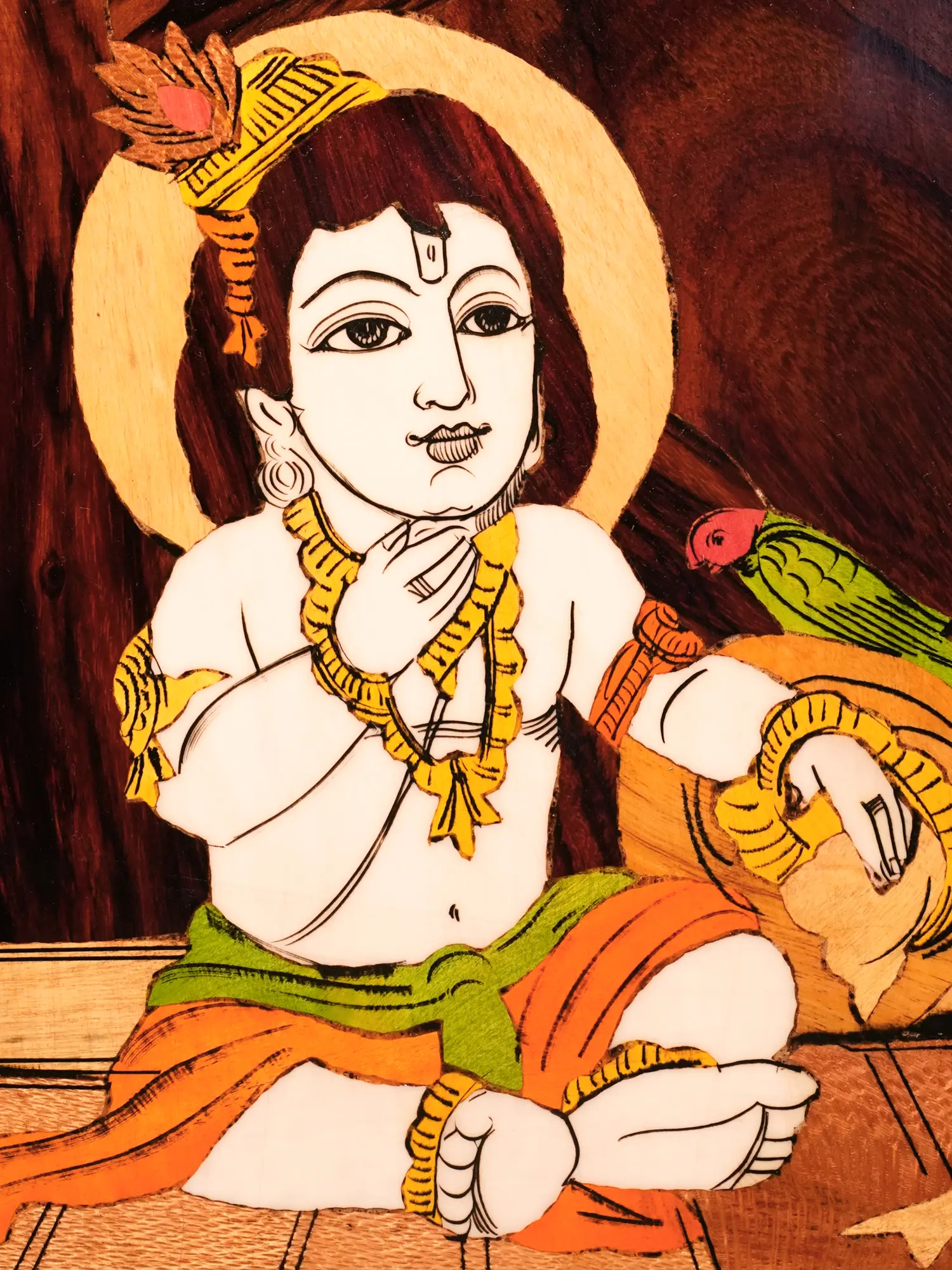
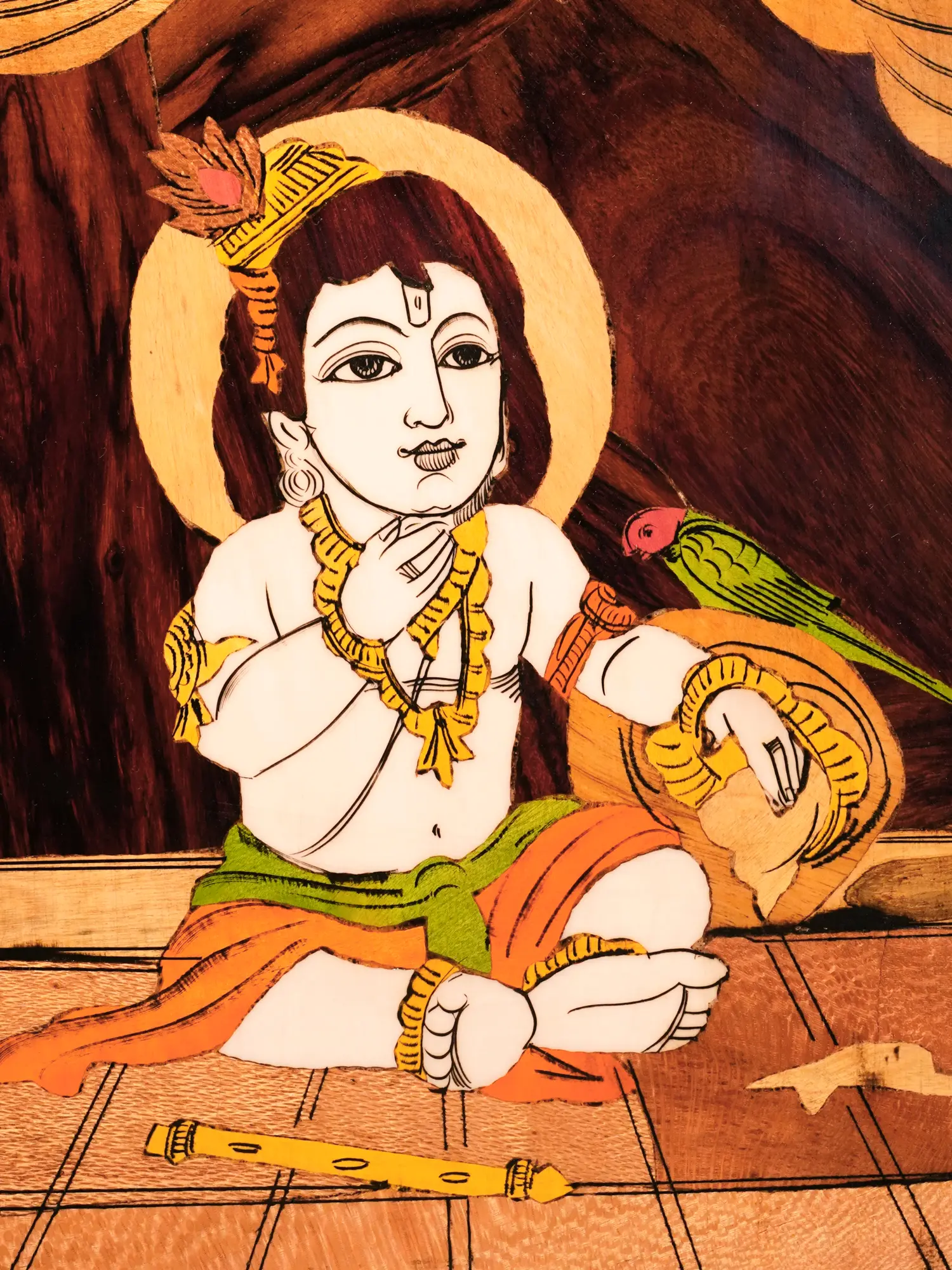
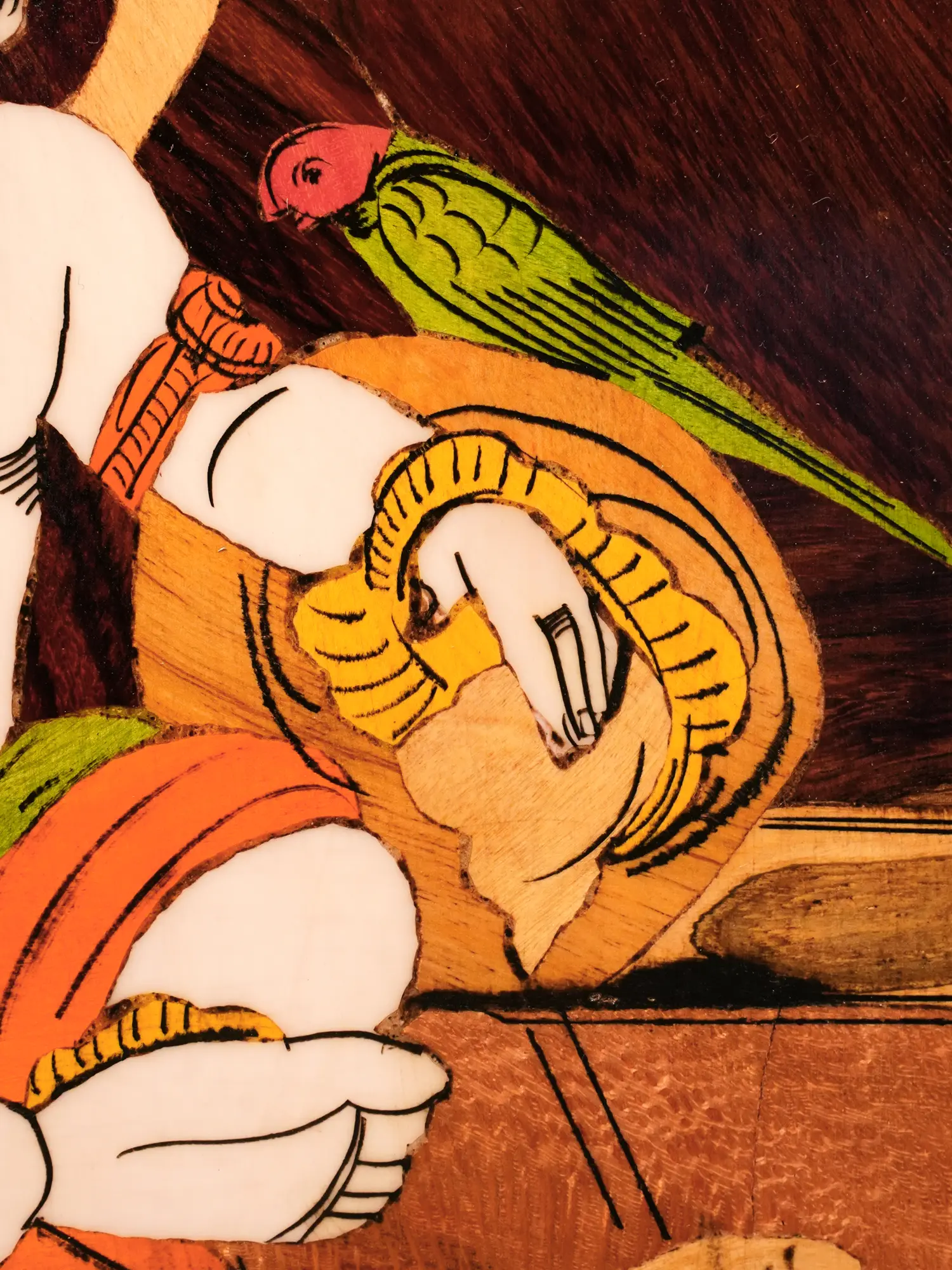
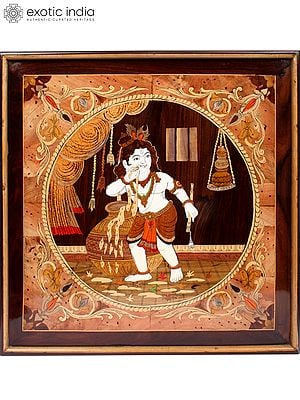
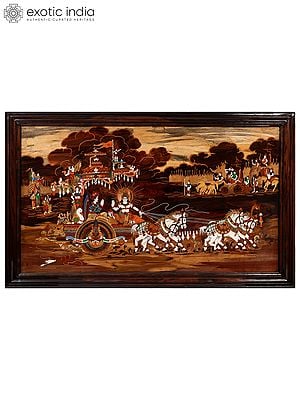
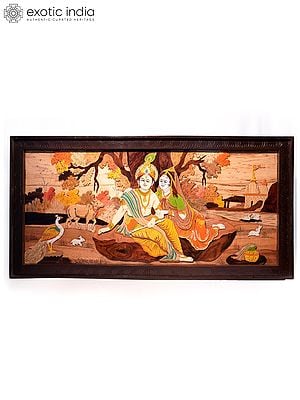
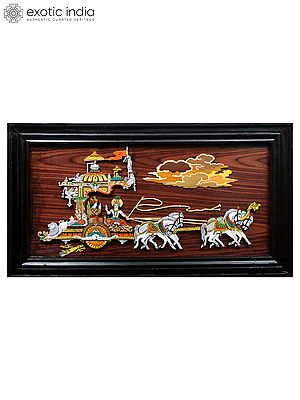
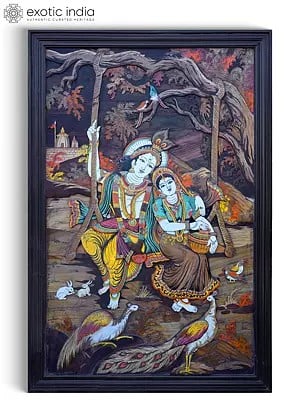
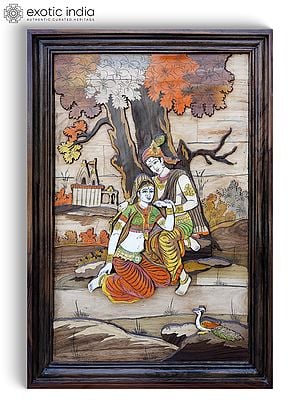
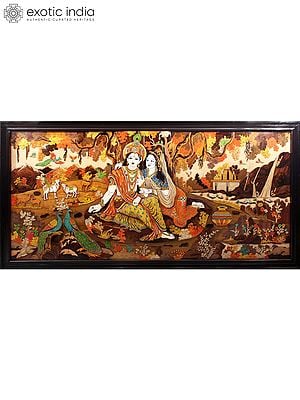
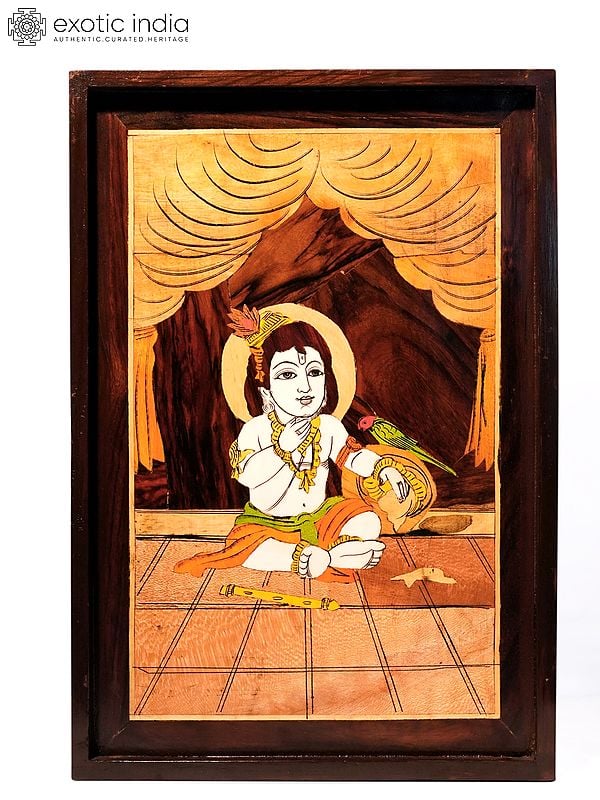
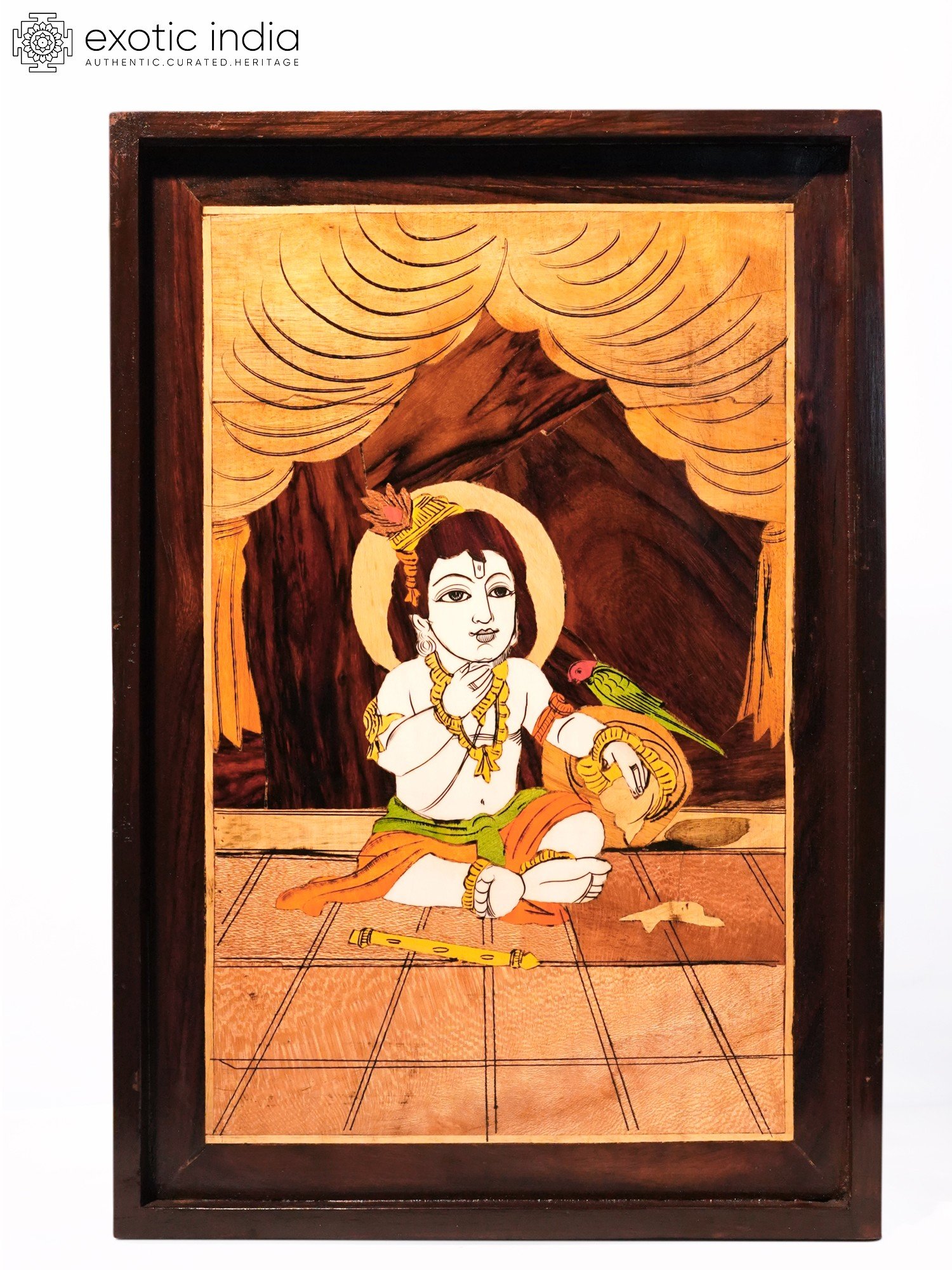
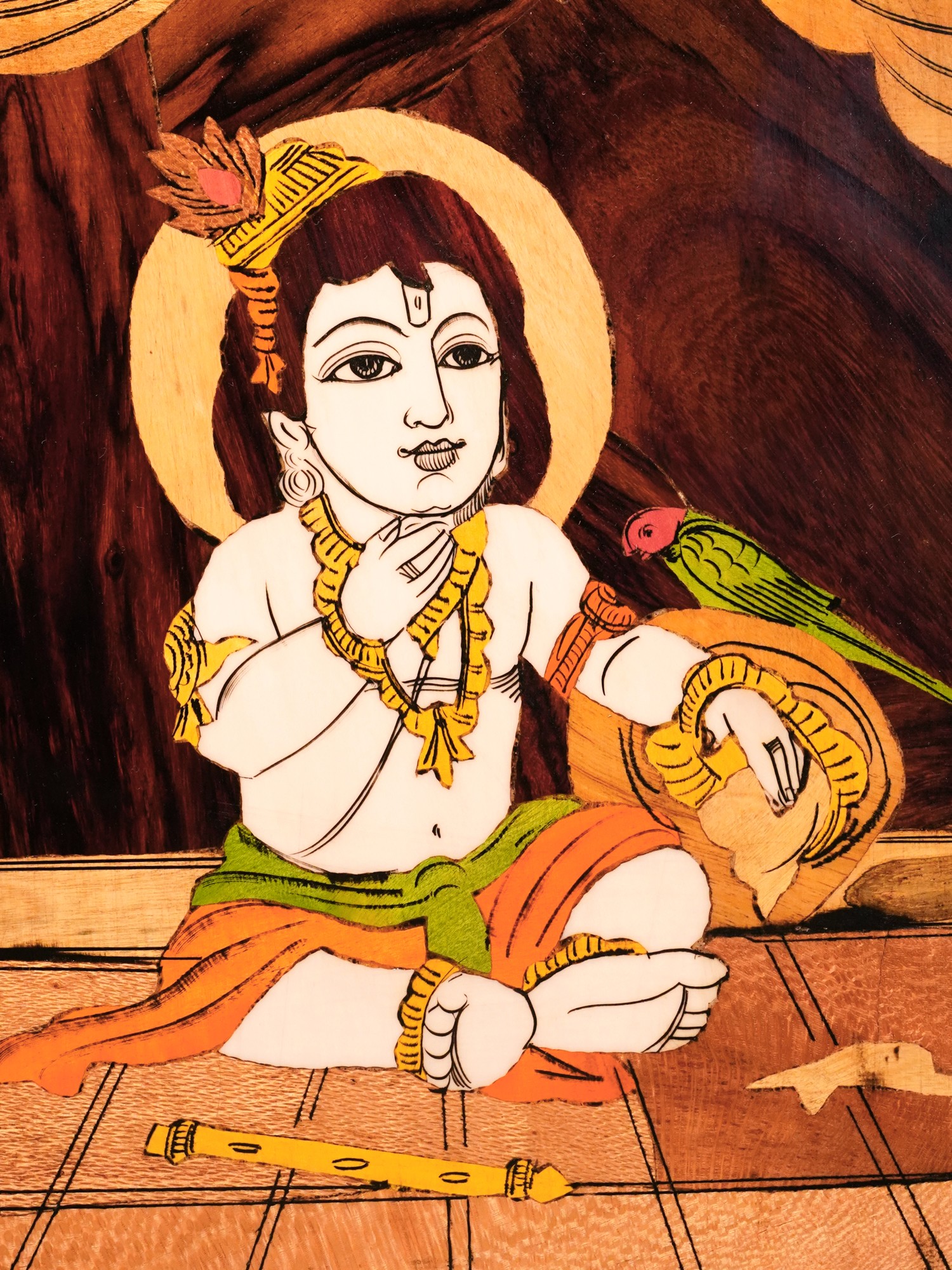
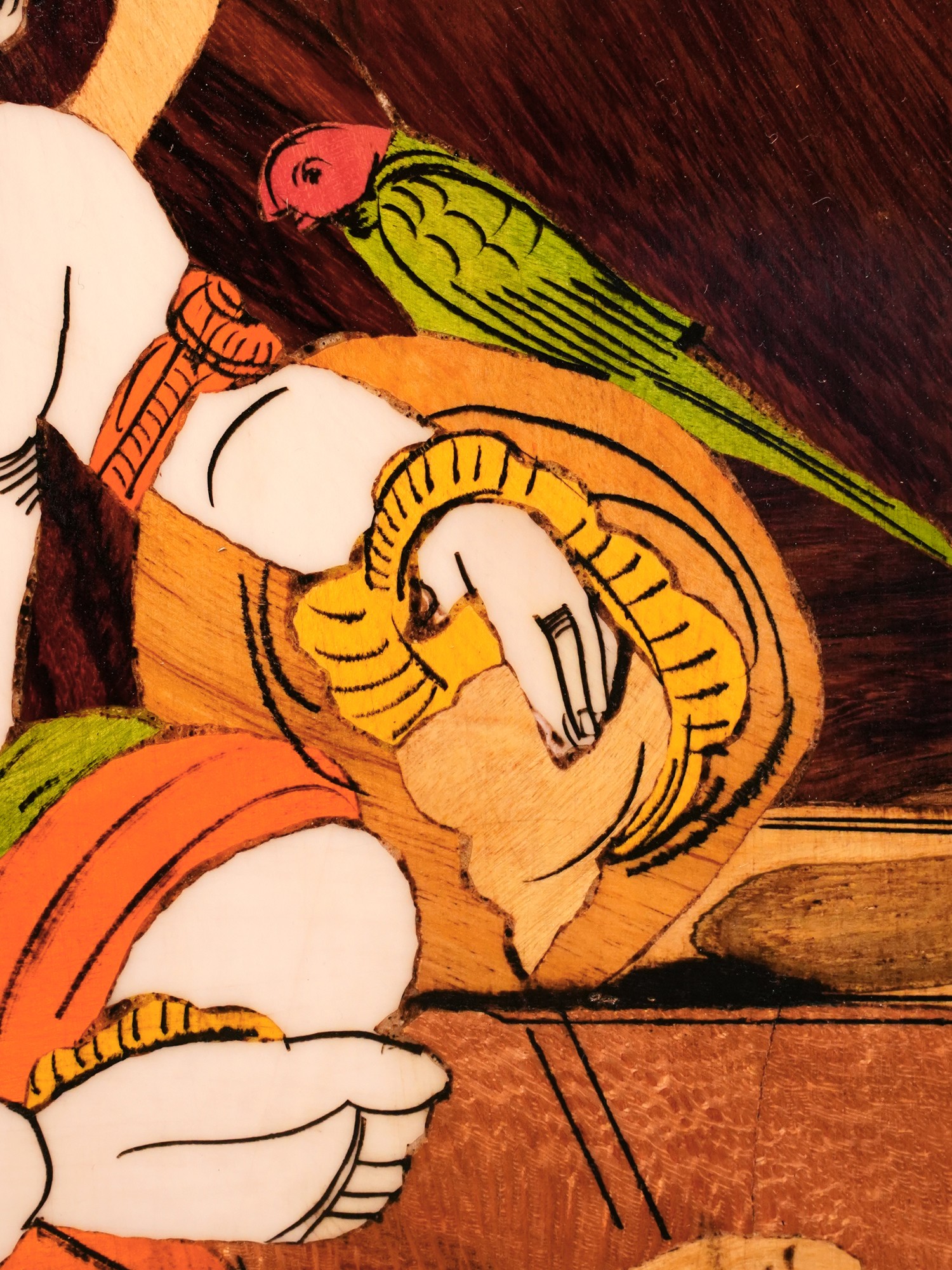
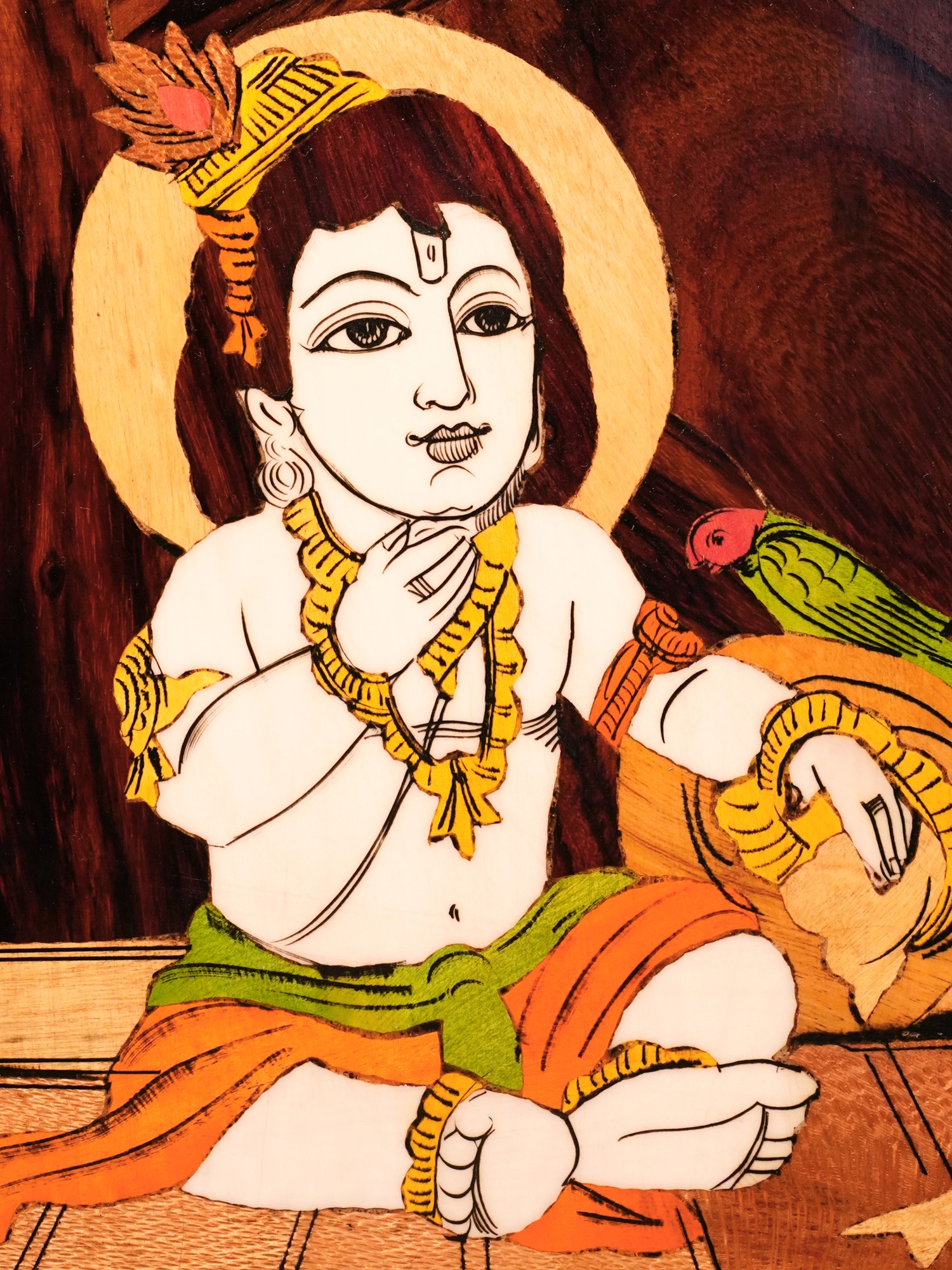
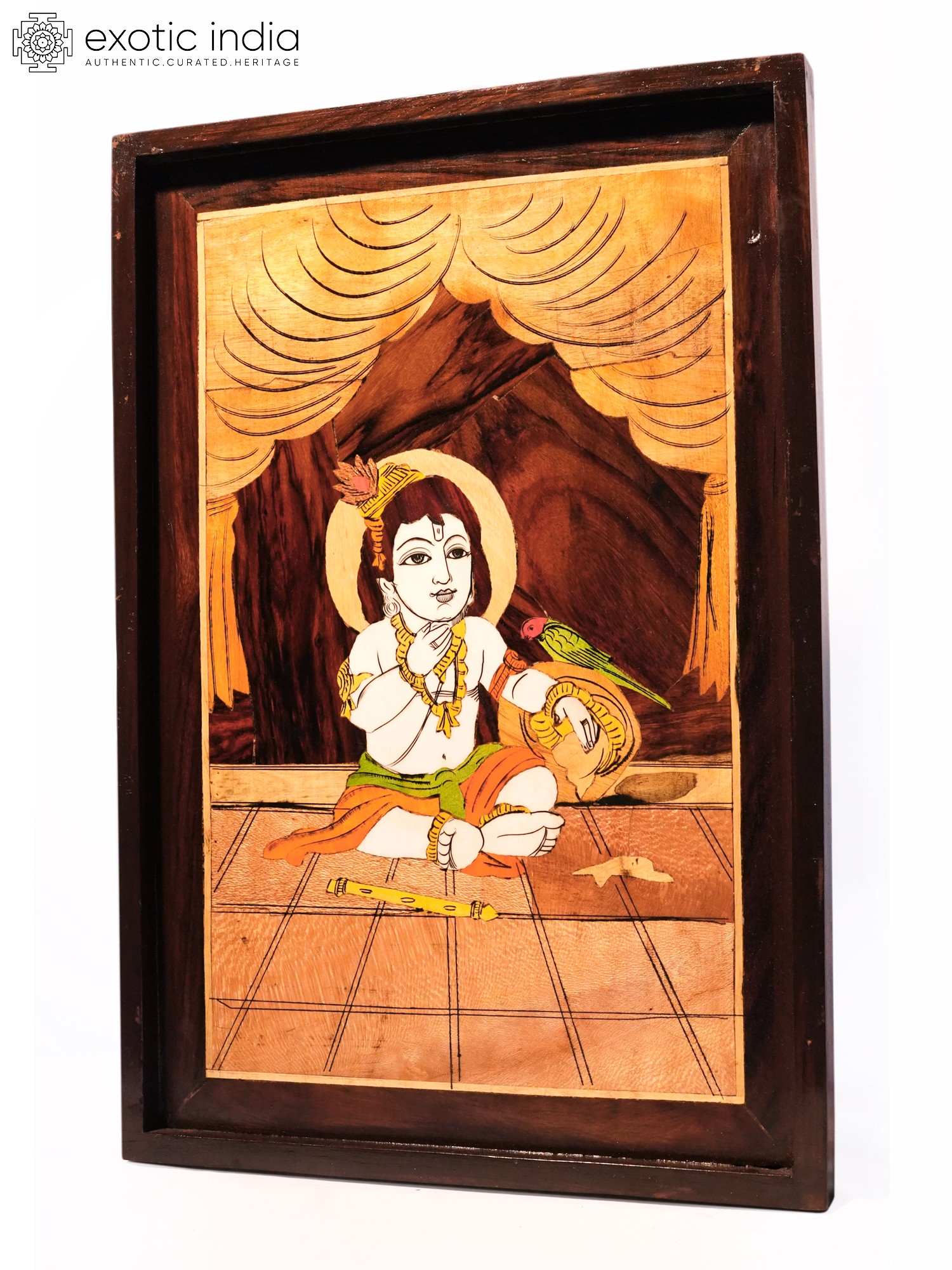
This handcrafted panel depicts a beloved scene from the life of Krishna, one of the most revered deities in Hinduism. The artwork captures Krishna as a young child, his endearing nature and mischievous spirit vibrantly present. The image presents Krishna caught in a moment of innocent indulgence, his hand reaching for butter, a treat he was famously fond of stealing. The natural colors of the wood enhance the simplicity and purity associated with Krishna's childhood, creating a sense of warmth and accessibility. The inlay work showcases remarkable craftsmanship, with each piece of wood carefully selected and placed to bring this delightful scene to life.The Legend of Krishna
Krishna's story is rich with symbolism and philosophical teachings. Born in Mathura, he was raised in Gokul to protect him from his malevolent uncle, King Kamsa, who sought to kill him. Krishna's childhood in Vrindavan is filled with tales of his playful nature, miraculous feats, and unwavering devotion. Stealing butter from the village women was one of his characteristic pranks, a testament to his mischievousness and a symbol of his divine play (Leela). These stories are not merely entertaining; they represent the eternal play of the divine and the human, a relationship filled with love, devotion, and joyous interaction. The butter, in this context, can also be seen as a metaphor for the devotee's heart, which Krishna playfully steals with his divine charm.Mysore Inlay Artistry
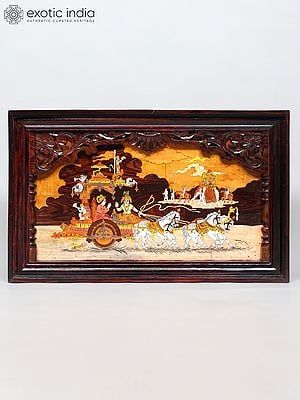
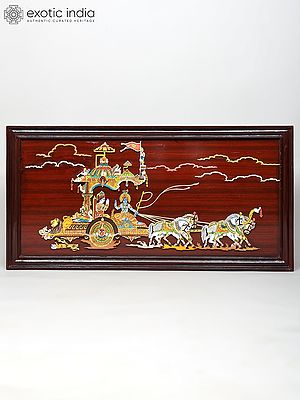
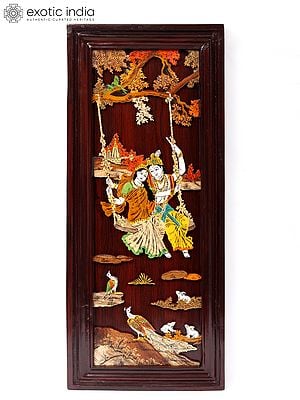
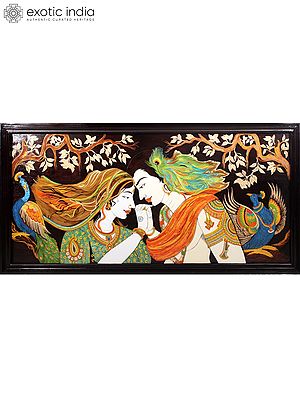
This panel is a testament to the rich tradition of Mysore wooden inlay, a unique art form that originated in the state of Karnataka, India. This technique involves carefully embedding pieces of wood, often of contrasting colors and textures, into a base panel to create intricate designs. The skilled artisans meticulously craft each element, ensuring a seamless integration that results in a stunning visual effect. The art of Mysore inlay has been passed down through generations, preserving the unique cultural heritage and artistic skills of the region. The choice of wood, the precision of the inlay, and the natural colors all contribute to the panel's exquisite beauty and enduring appeal. This piece is not just a visual representation of Krishna; it is also a piece of living history, reflecting the skill and dedication of the artisans who have kept this art form alive.How Mysore Wooden Inlay Paintings Are Made ?
Wood inlay is a historically significant art form from the 18th century. It arrived in India through Srirangaptnam in Mysore from Persia but has become an inevitable part of the Indian heritage. Tipu Sultan and the Wodeyars/Wadiyars are credited with the growth of this 400-year-old art form in Mysore and its neighboring areas.
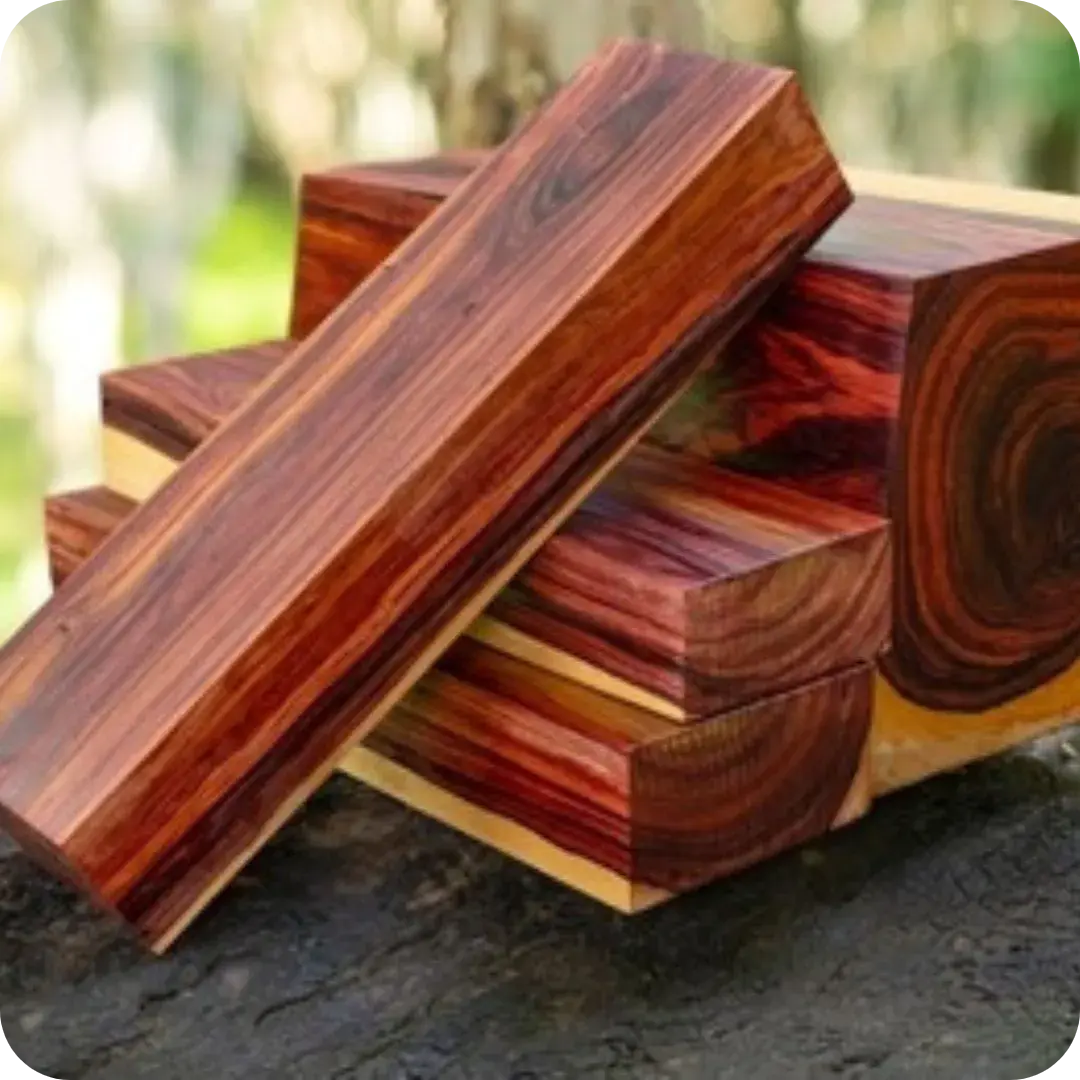
Wood inlay work is usually done on a Mysore rosewood base, and other woods are used, like mango, kadam, jackfruit, rubber, doodhi, etc. Pieces of wood are adorned with beautiful motifs and patterns made from various materials. From wall hangings and paintings to jewelry boxes and furniture, many items are made using the Mysore wood inlay technique.
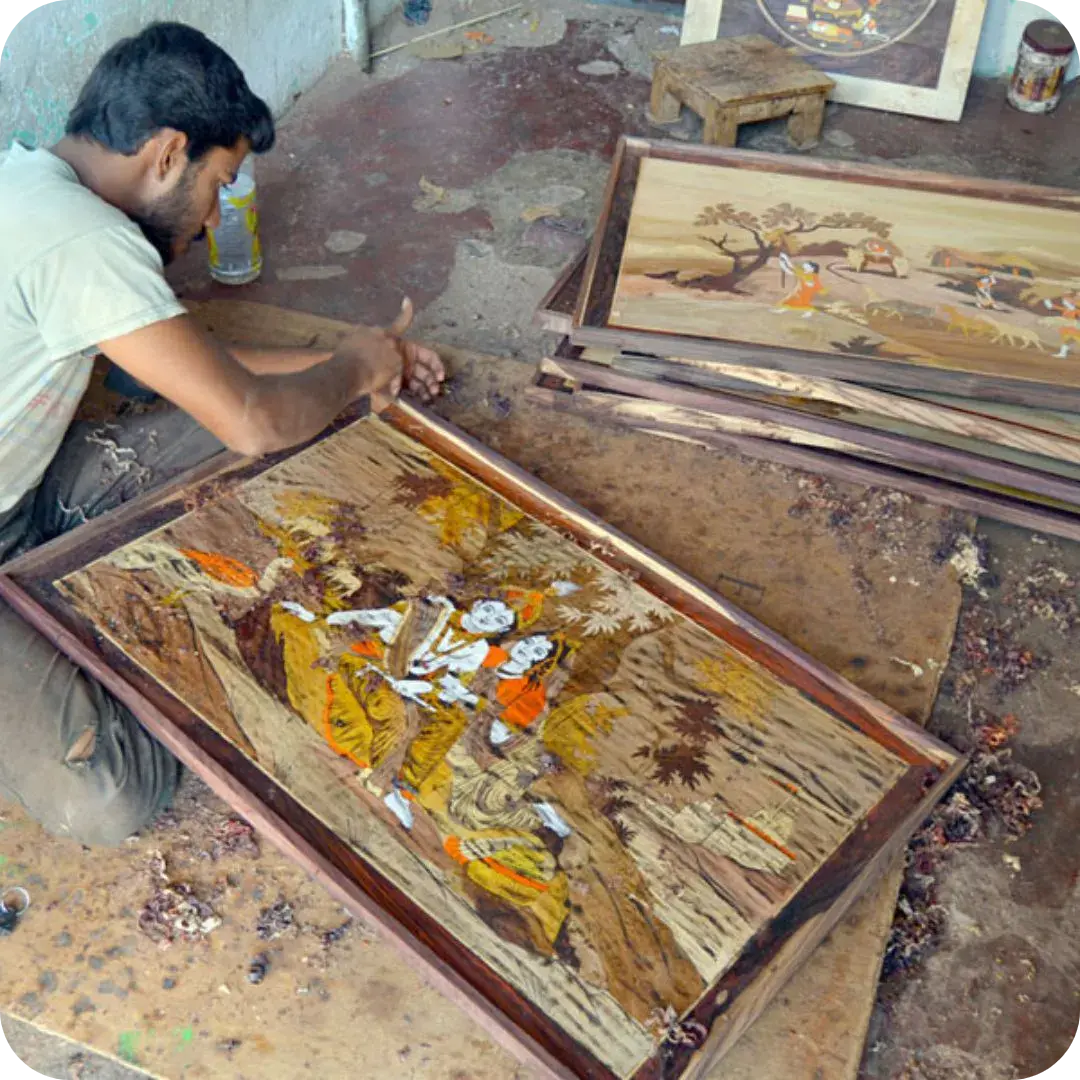
An outline is etched on a piece of rosewood with a sharp tool. Then, the area inside the outline is hollowed out, and materials like lacquer, enamel, contrasting wood, and sometimes even gold and silver are placed inside it. A sandpaper is used to give a
smooth finish to the surface.
Process of Mysore Wood Inlay Work -
The first step in the process is selecting the base and the design to be carved onto it. Planks are cut out of Rosewood logs in many shapes like square, rectangular, oval, or even circular. The surface is smoothened, and the sides are evened out.
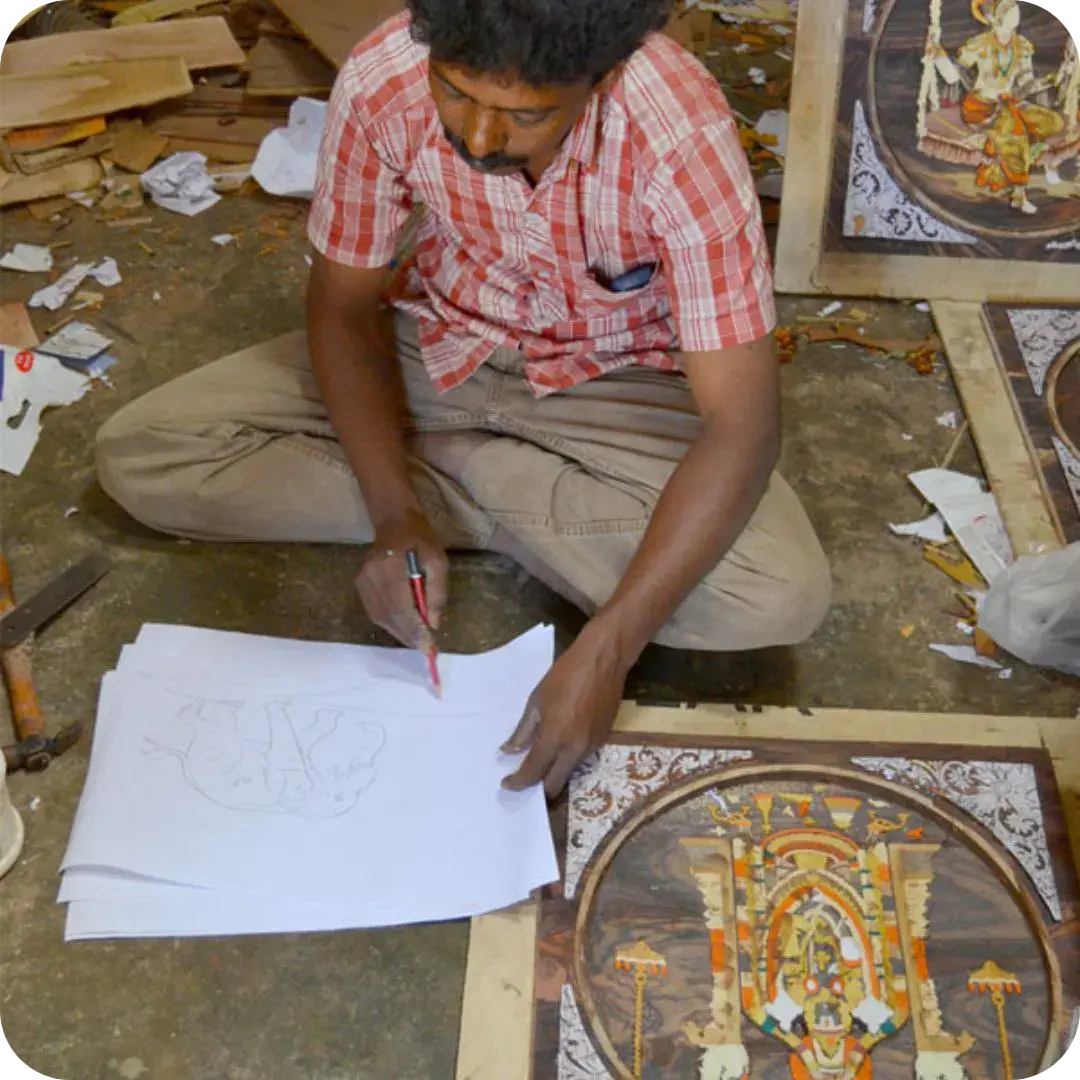
The second step is creating the designs for the inlay on paper. These designs are then traced on transparent paper and then transferred to the surface of the desired material, such as another type of wood, lacquer, plastic, etc.
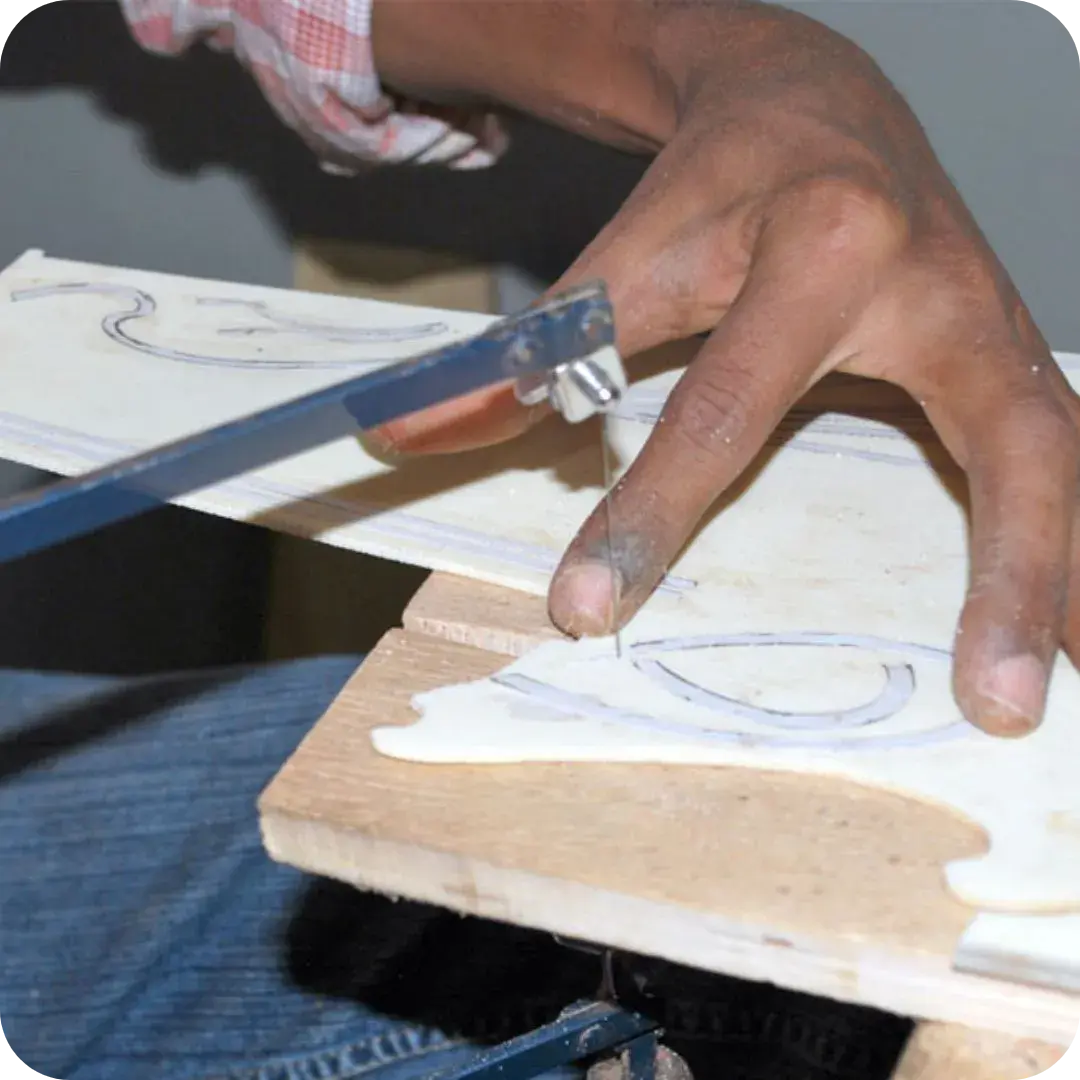
After that, the design is traced onto the rosewood planks. Using a coping saw, the designs are cut, and the rough edges are smoothened using a smooth file. Once that is done, the wood inside the outline is scooped out, leaving groves in the plank.
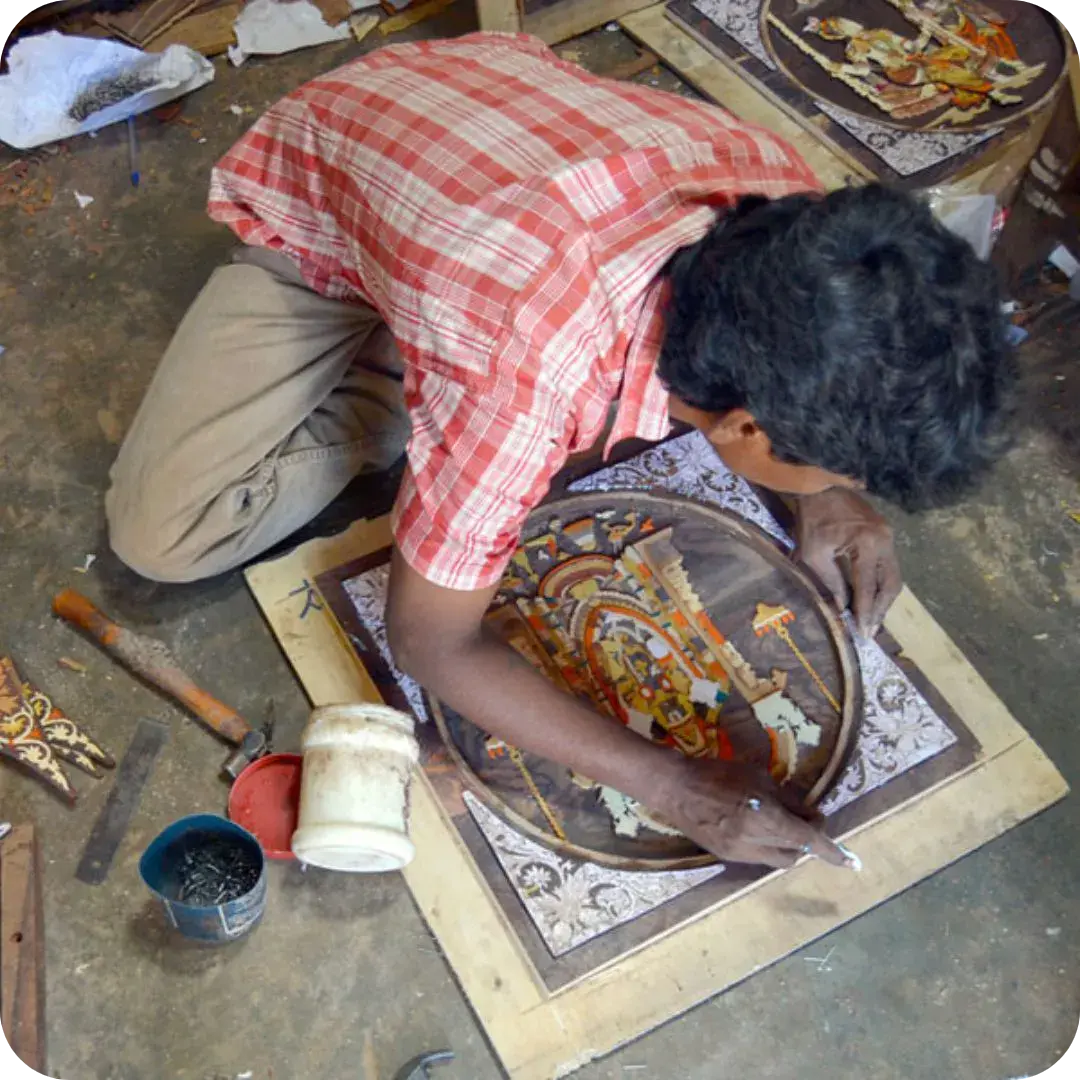
After that, the design cutouts are fitted in the groves, and the surface is beaten with a hammer to ensure the designs stay firm and in place. In case of any gaps, they are filled using a mixture of glue, rosewood, and sawdust.
The final step in creating Mysore wood inlay products is cleaning and polishing the items with beeswax. A coating of lacquer is applied to give them a glossy touch.