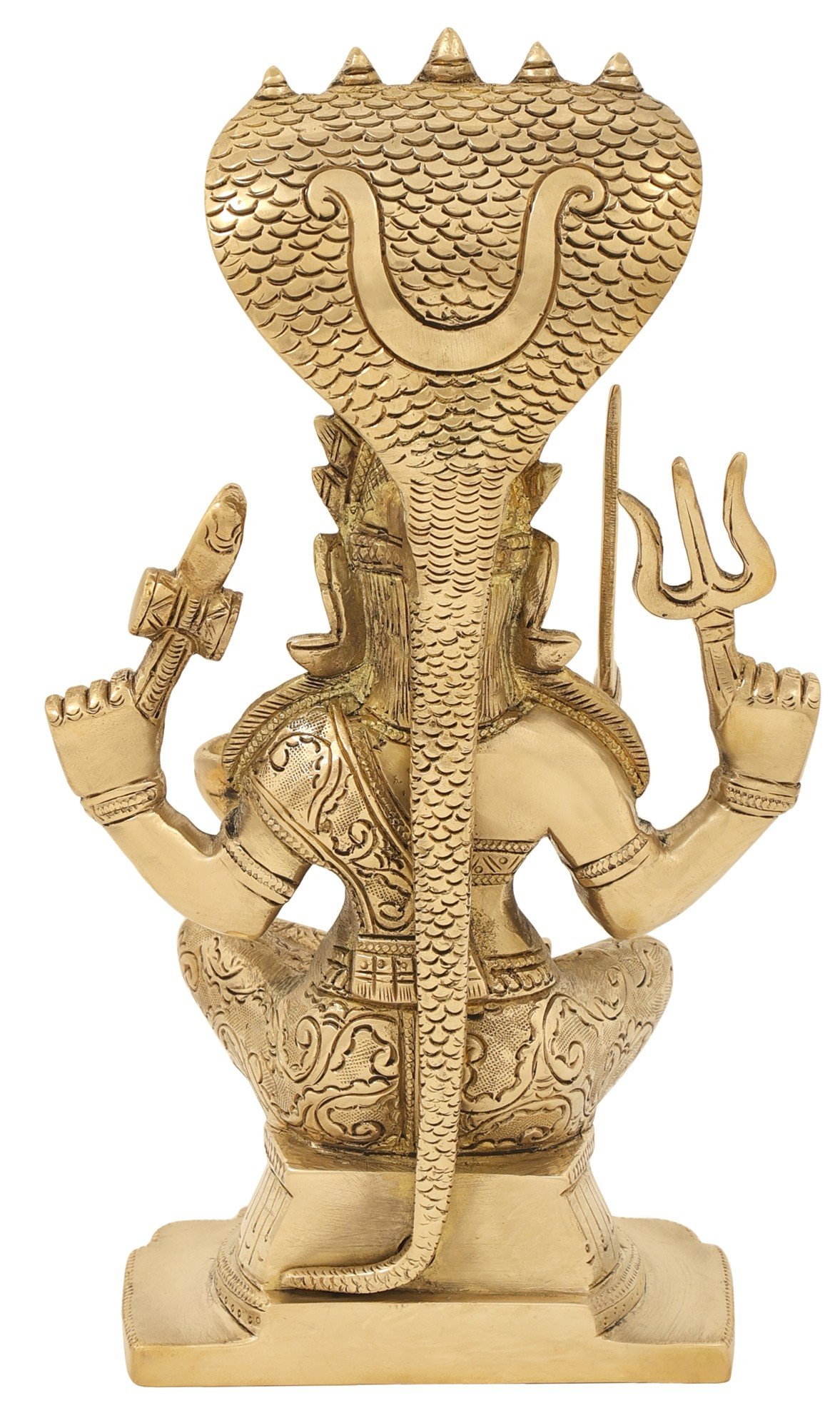
Mariamman-
the protector of locals of Tamil Nadu and the Deccan region, as the guardian
against diseases, and natural disasters and bringer of agricultural wealth
through rains, is an important deity to the culture, elevated to the status of
Durga, Kali, and Parvati, whose aspect she is worshiped as.
In this
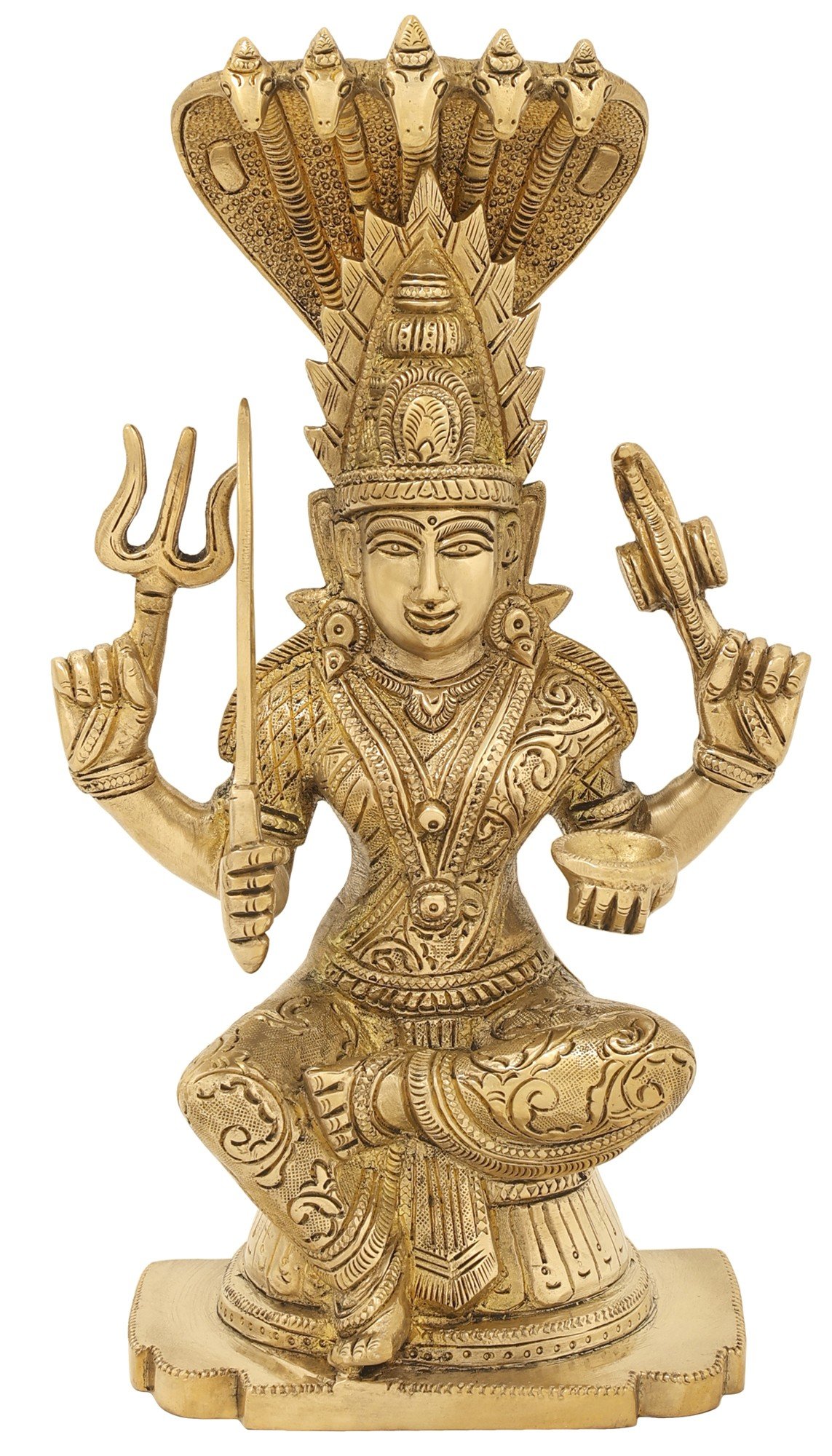
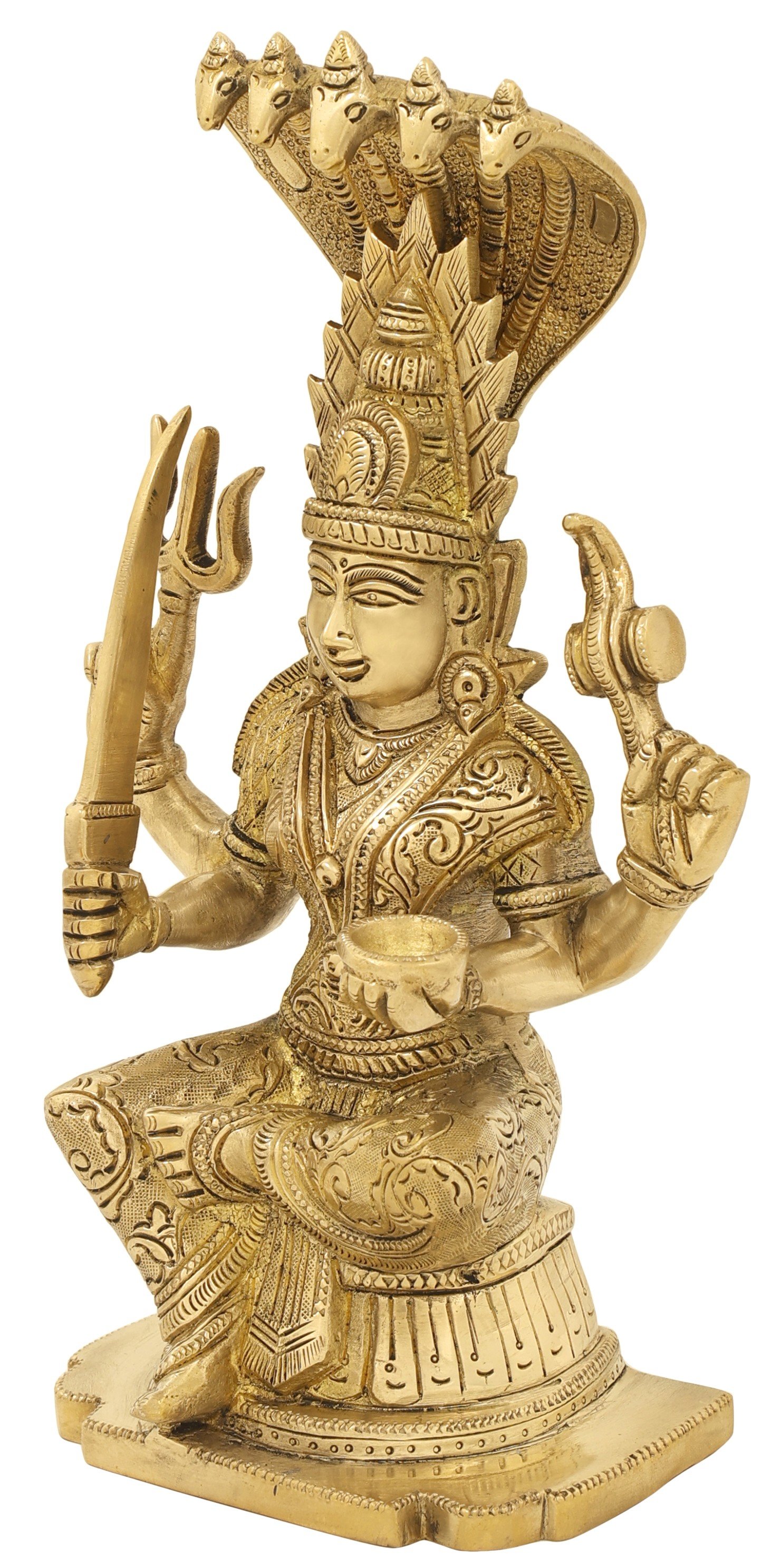
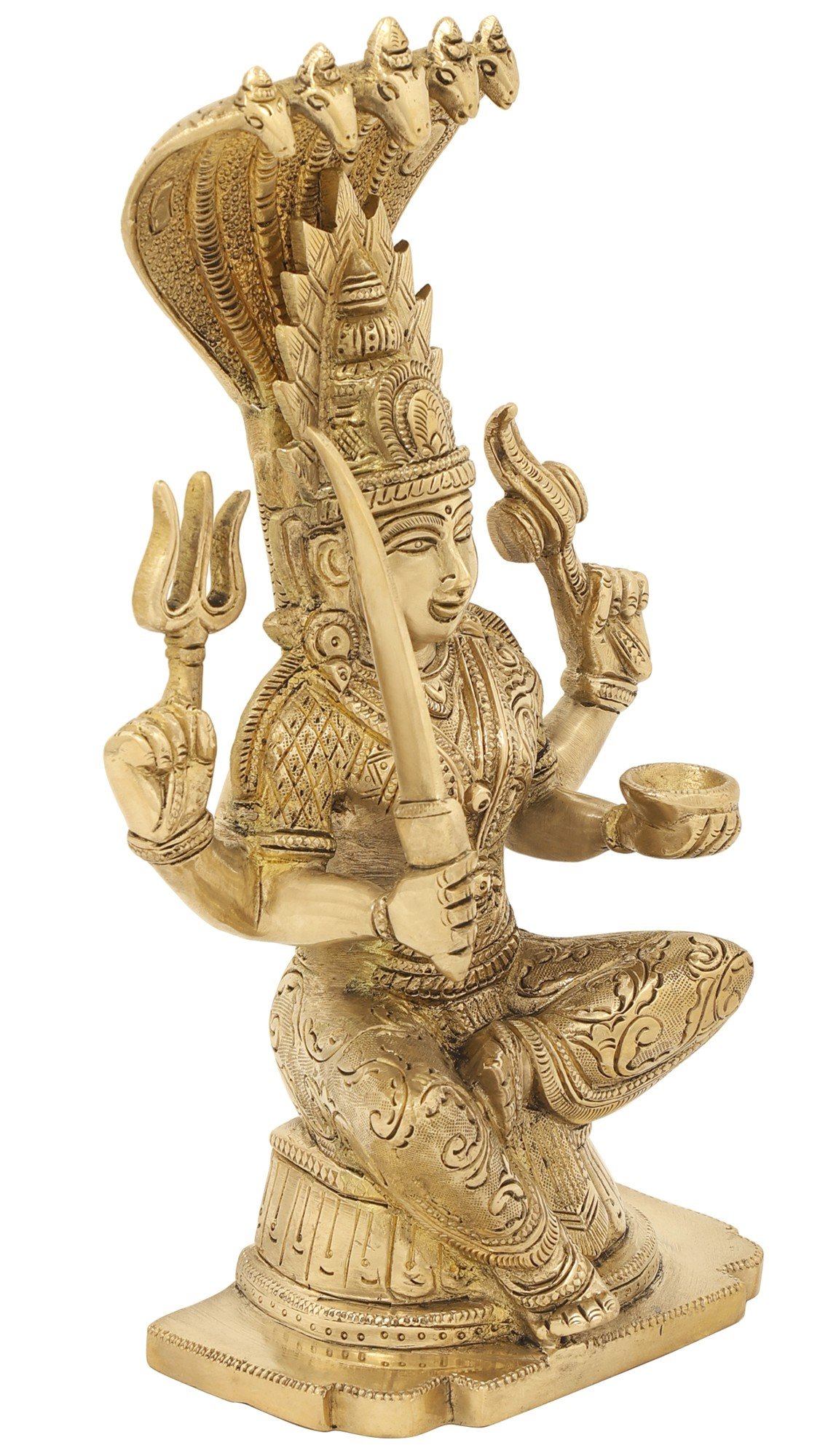
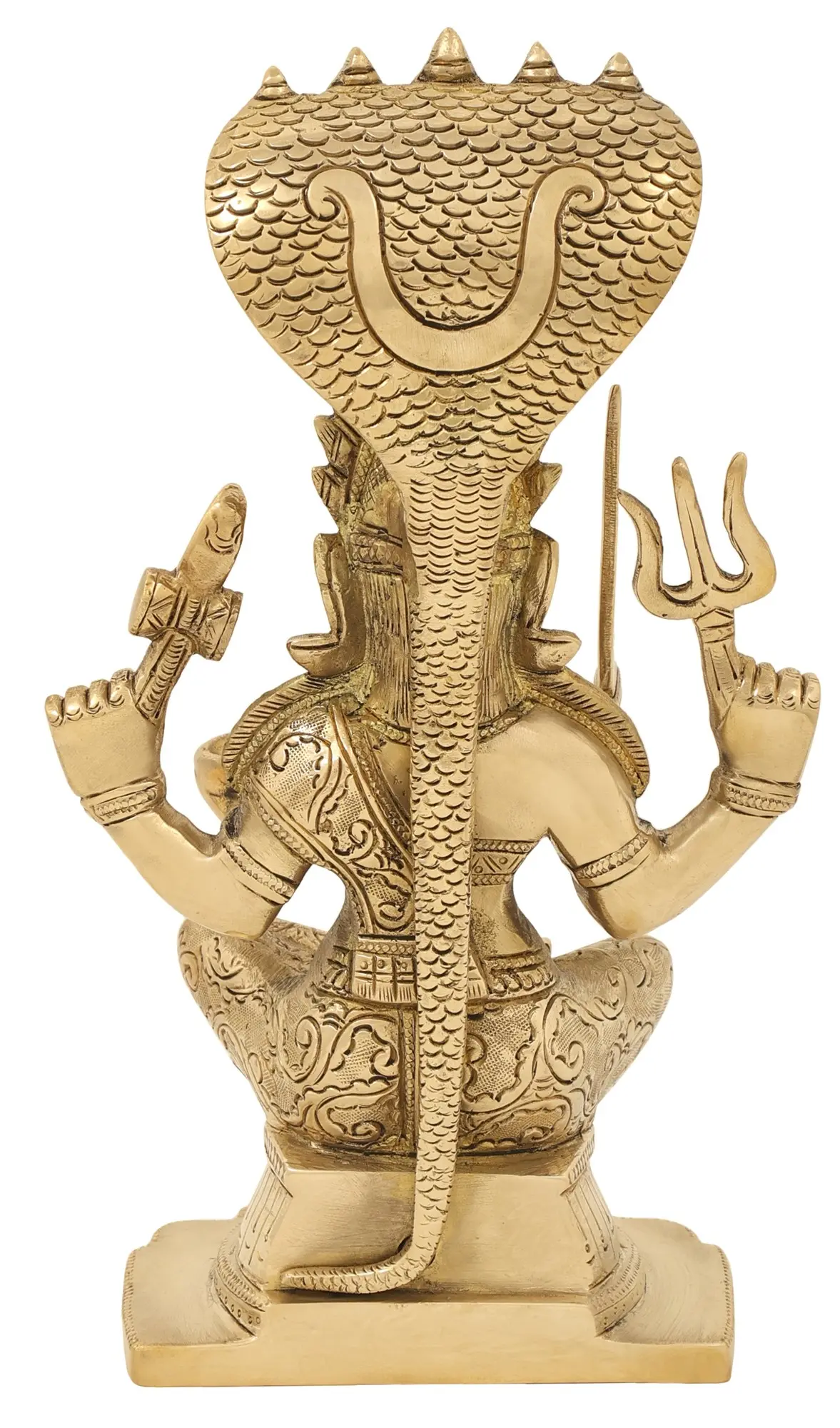
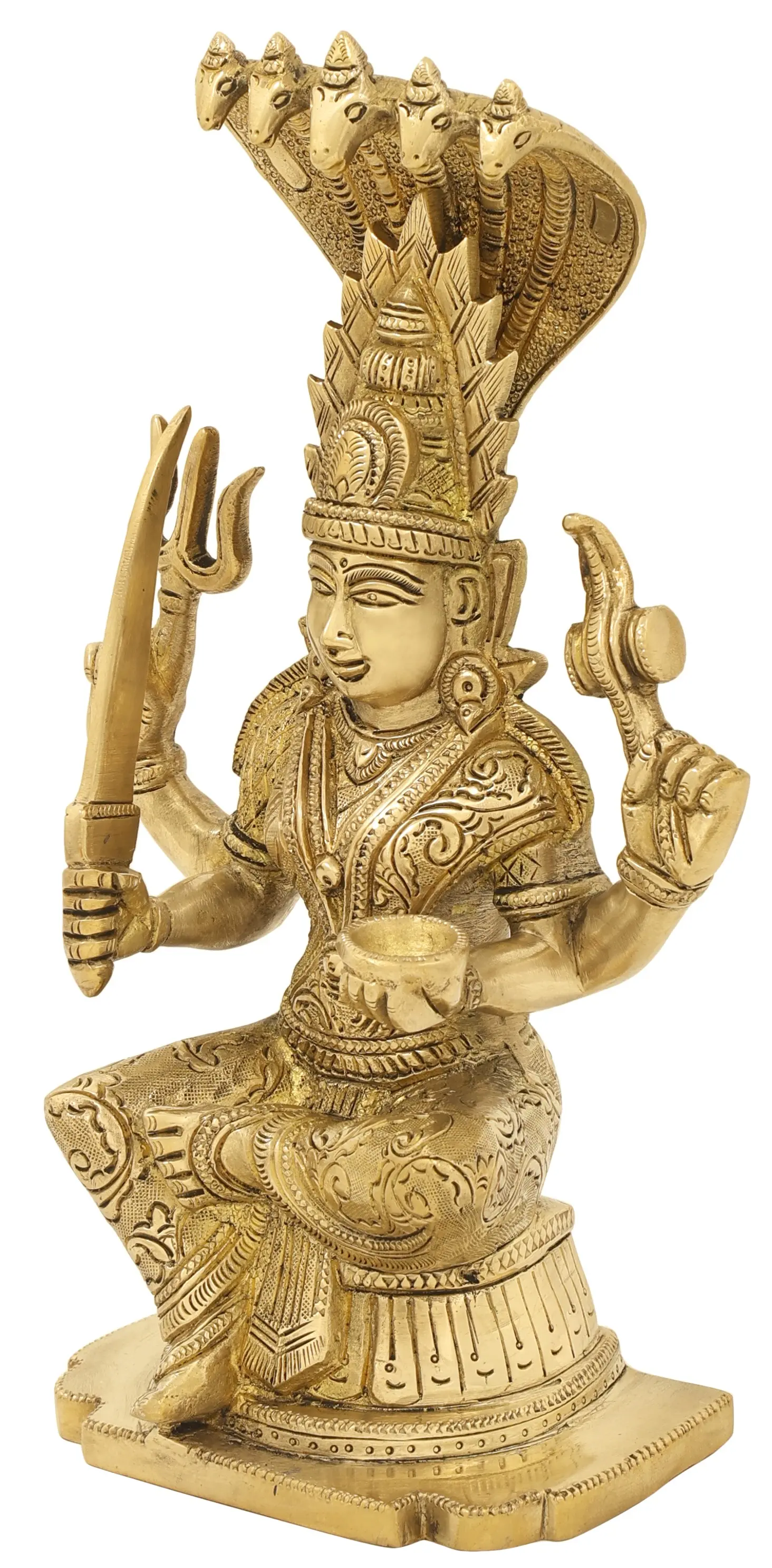
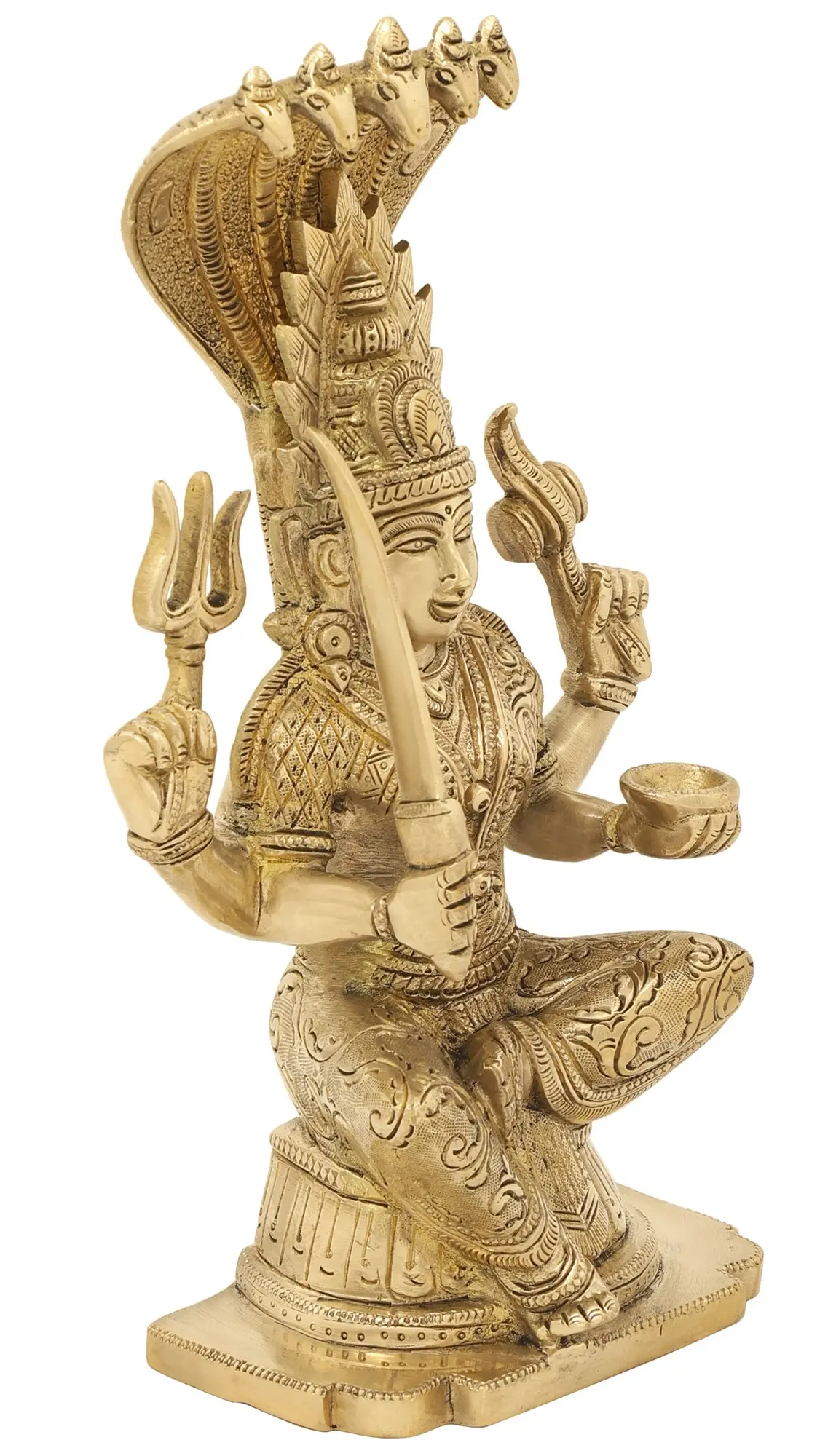
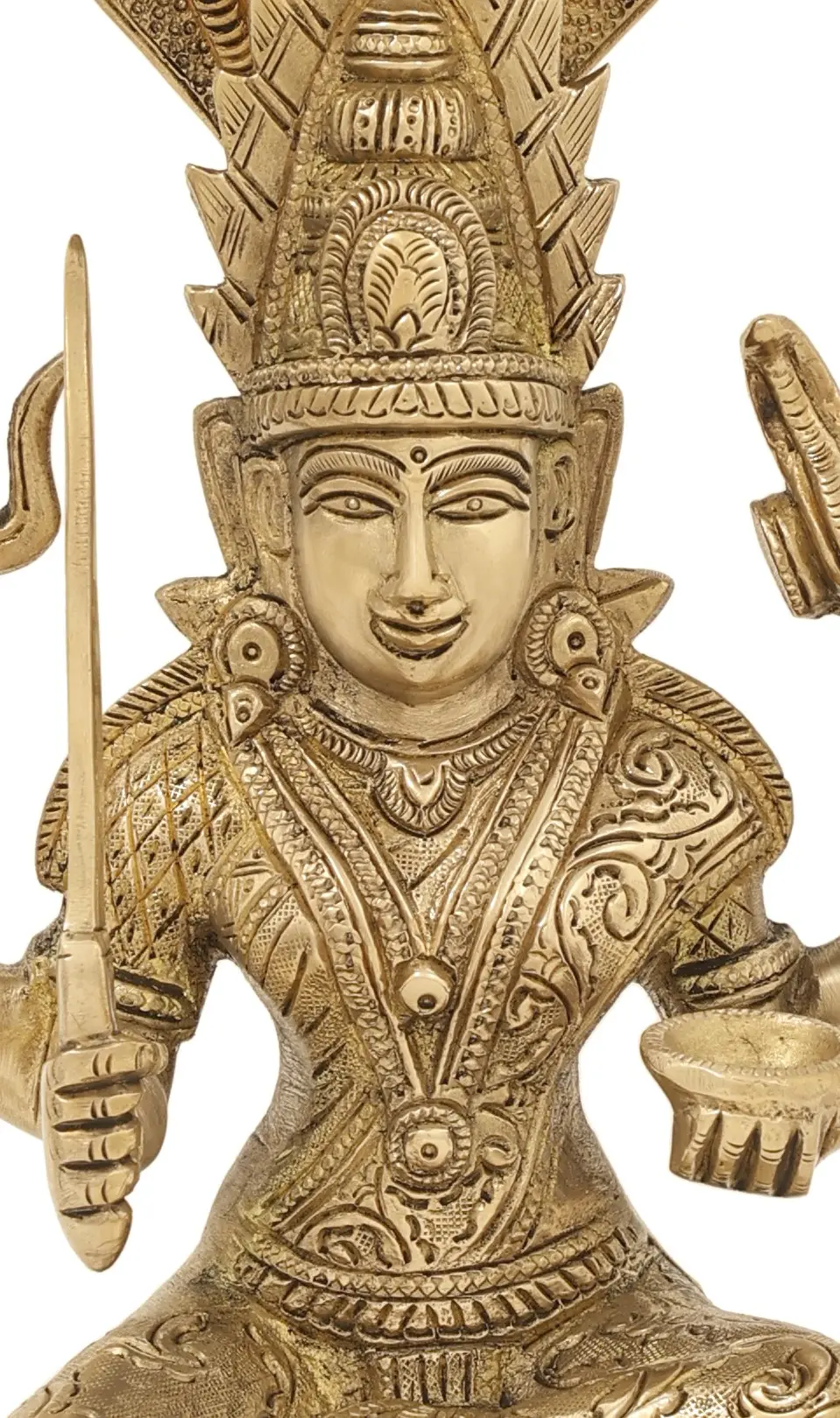
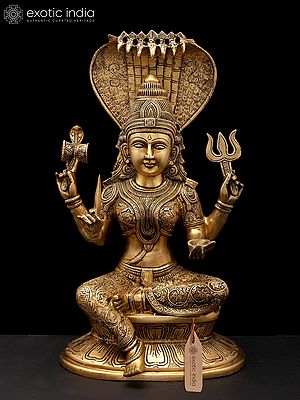
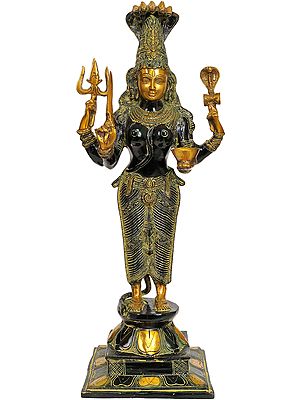
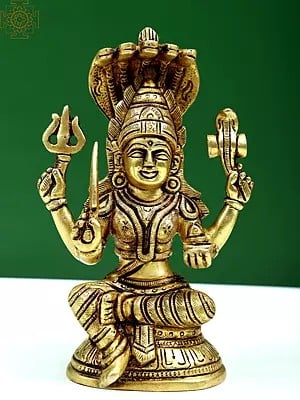
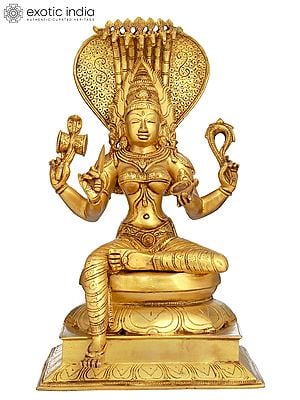
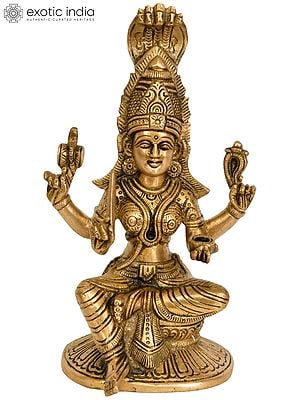
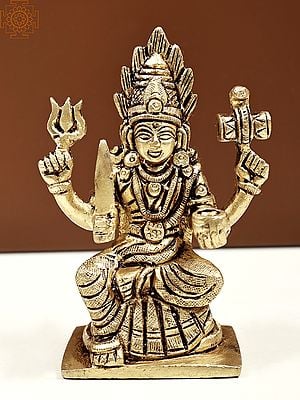
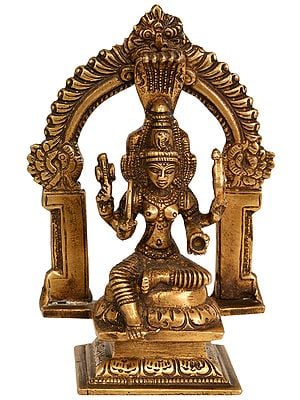
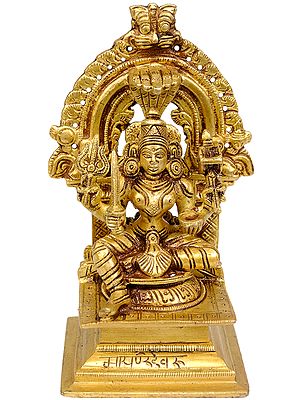
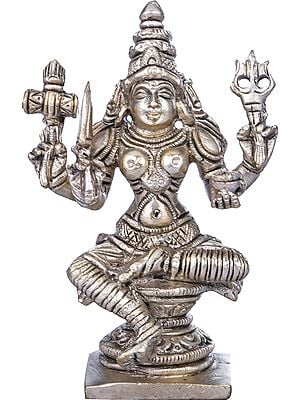
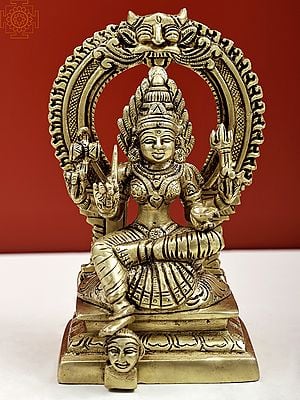
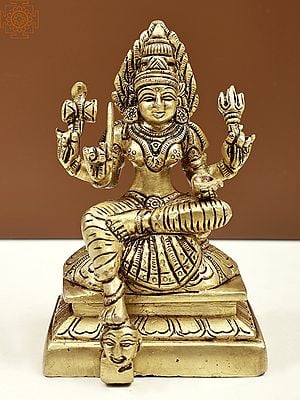
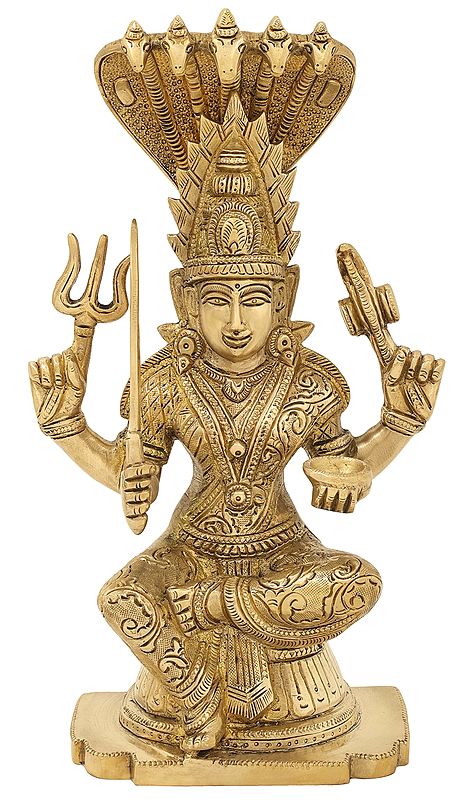
glimmering brass statue, the beauty and power of Mariamman are depicted,
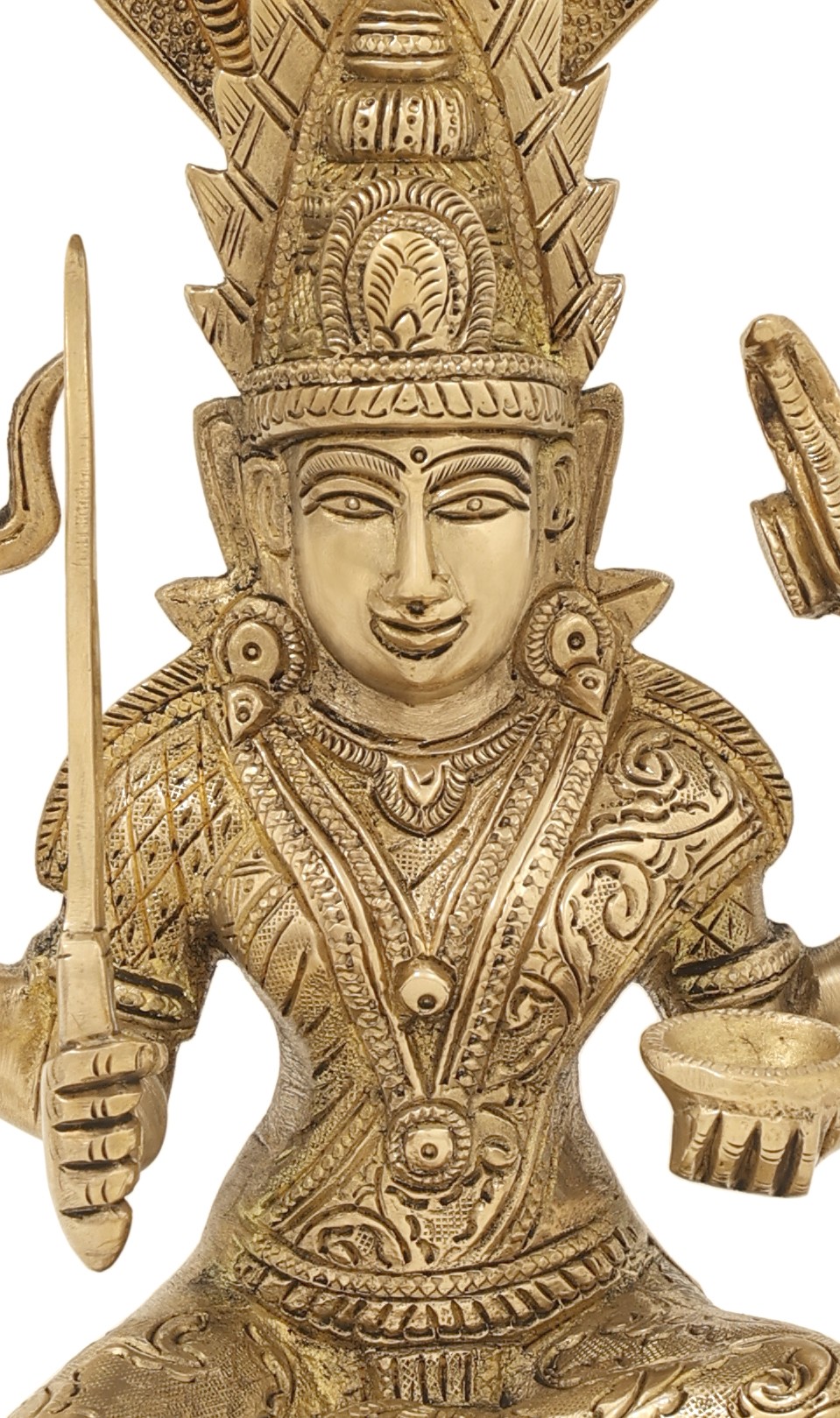
showing her as a youthful goddess, dressed in a patterned saree, elongated
crown, jewelry, and carrying weapons in her four hands.
Her eyes are
long and soft, and she smiles benevolently, like a divine mother as her face is
surrounded by the fiery aureole that rises above, highlighting her inner
powers, complemented by the seven-hooded serpent, visibly emerging from the
reverse of the throne of the goddess.
Embodiment of Divine Feminine Power
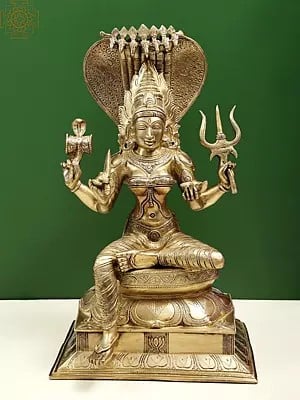
This exquisite brass statue captures the fierce and nurturing essence of Goddess Mariamman, a beloved deity revered across South India. Often invoked as the "Mother Goddess," Mariamman is the embodiment of feminine energy, fertility, and the power to protect her devotees from disease, drought, and misfortune. Her iconography is rich with symbolism, and this handcrafted piece masterfully translates those sacred attributes into a tangible form of devotion.A Protector from the Shadows
The most striking feature of this statue is the magnificent multi-headed cobra that forms a protective canopy above the Goddess's head. In Hindu mythology, snakes, particularly cobras, are often associated with primal energy, spiritual awakening, and protection from evil. The cobra's hood, spreading like an umbrella, symbolizes divine guardianship, warding off negative influences and shielding the faithful. Mariamman, like her northern counterpart Durga, is often depicted with serpentine power, signifying her ability to conquer malevolent forces and restore cosmic balance. She is the mother who embraces all, but also the fierce warrior who annihilates suffering.Iconography of Strength and Grace
This representation showcases Mariamman in a seated posture, radiating a commanding yet compassionate presence. Her multiple arms are adorned with potent symbols of her divine authority. In one hand, she holds a trident (trishul), a weapon signifying the destruction of ignorance, ego, and delusion, and also representing the three primary aspects of the divine: creation, preservation, and destruction. In another hand, she grasps a discus-like weapon, often interpreted as a tool to cut through obstacles and dispel negativity. The details in the intricate carvings of her attire, from the ornate jewelry to the flowing garments, speak of the skilled craftsmanship and the profound reverence with which this statue was created.A Legacy of Devotion
Mariamman's worship is deeply rooted in folk traditions and is particularly popular in Tamil Nadu and other parts of South India. She is often associated with smallpox, measles, and other viral diseases, and is invoked through fervent prayers and elaborate festivals, including fire-walking ceremonies, to seek her blessings for health and well-being. This brass statue serves as a powerful reminder of her enduring presence and the deep faith that she inspires. Whether for personal worship, as a spiritual centerpiece, or as a decorative item imbued with cultural significance, this handcrafted statue is a testament to the timeless power and grace of the Divine Mother.
The Fierce and Powerful Goddess Durga: Discovering the Symbolism
and Significance
Goddess Durga is a revered deity in Hinduism and she is
worshiped by many people in the eastern part of India and also
in other countries such as Nepal and Bangladesh. She is
considered the mother of this material world who takes care of
the conditioned souls trapped in the material existence. She
protects them from the demons who threaten peace and establishes
Dharma. In the Shakta tradition or Shaktism (those who believe
that feminine energy is supreme), Mother Durga has been given
the highest position. She is often considered the expansion of
Mother Parvati, the consort of Lord Shiva who is the destroyer
of the material world. The Vaishnavas consider Mother Durga as
the external energy of the Supreme Lord Krishna or Vishnu. She
takes charge of the material world and reforms those souls who
do not abide by the rules of the Supreme Lord.
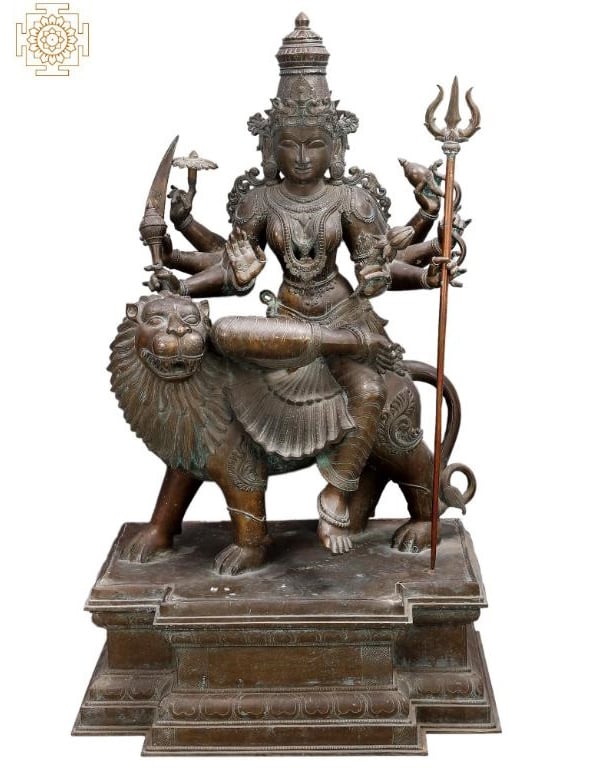
Mother Durga is often depicted as a young and beautiful woman,
wearing a saree, and sitting on a tiger or lion. She has
multiple arms (usually ten arms) that hold different items and
weapons that express her martial skills. She tramples down the
demon Mahishasura, with her trident, representing the subduer of
vices.
What does Durga symbolize?
Being the powerful assistant of the Supreme Lord, Mother Durga
tests our dedication to the Lord. She represents the material
nature and like a loving mother, she gives a clarion call to all
forgetful souls to turn their faces towards Lord Krishna, who is
the only well-wisher of all living entities. The depiction of
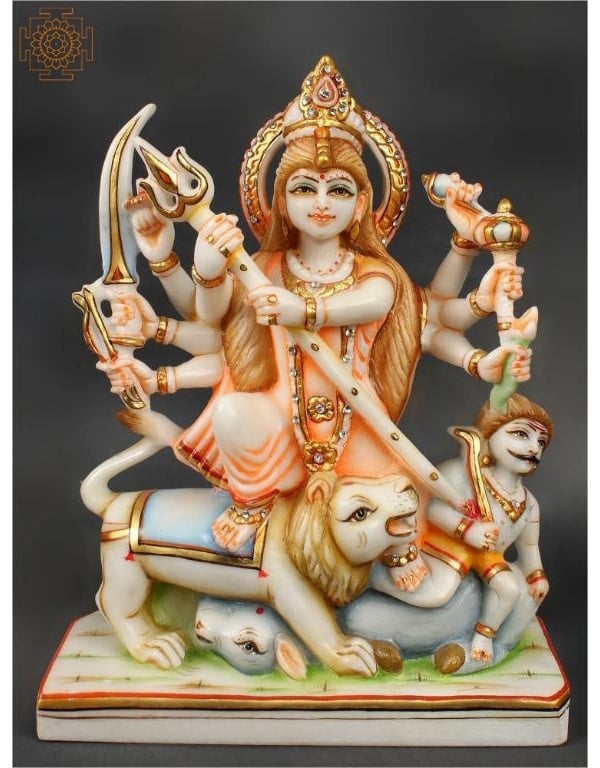
her violently killing the demon Mahishasura with her trident
shows her extraordinary prowess. Mahishasura represents our
demoniac mentality that wants to enjoy separately from the
Supreme Lord, forgetting our eternal relationship with Him.
Goddess Durga killing the demon symbolizes the victory of good
over evil or wisdom over ignorance.
Where are Durga statues made in Kolkata?
The worship of Goddess Durga is prominent in festivals such as
Durga Puja, Durga Ashtami, Navaratri, etc. On those days, people
gather at a place and a big idol or deity of Goddess Durga is
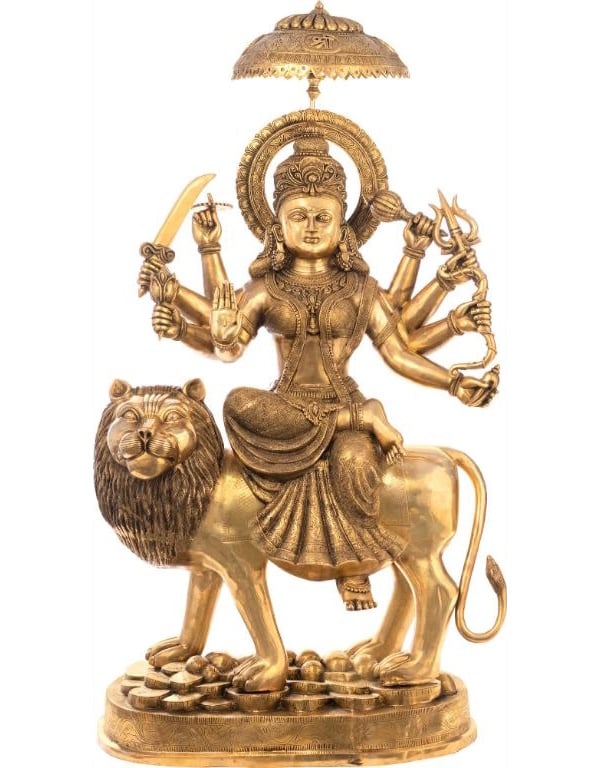
worshiped with faith and devotion. These idols of the Goddess
are made in a place called Kumortuli, located near Kolkata, West
Bengal. This city is renowned for its beautiful clay sculptures
made by local manufacturers.
Can we keep Durga idol at home?
You can keep a Durga deity at your home if you want to attract
her mercy into your life. Goddess Durga is very merciful toward
her devotees and when pleased, she bestows them with both
material and spiritual benefits. Those who approach and worship
Goddess Durga with material desires in their hearts, she
fulfills them. But if a person genuinely approaches her and
prays to her to reveal about the Absolute Truth and the real
goal of human life to them, being the superintendent of the
Supreme Lord Vishnu, she blesses them with the light of
knowledge about the Lord and inspires them to walk the path of
devotion to Lord Vishnu.
How to keep a Brass statue well-maintained?
Brass statues are known and appreciated for their exquisite beauty and luster. The brilliant bright gold appearance of Brass makes it appropriate for casting aesthetic statues and sculptures. Brass is a metal alloy composed mainly of copper and zinc. This chemical composition makes brass a highly durable and corrosion-resistant material. Due to these properties, Brass statues and sculptures can be kept both indoors as well as outdoors. They also last for many decades without losing all their natural shine.
Brass statues can withstand even harsh weather conditions very well due to their corrosion-resistance properties. However, maintaining the luster and natural beauty of brass statues is essential if you want to prolong their life and appearance.
- The best and simplest way to maintain a brass statue is to clean it at least twice a week using a soft cloth or cotton rag. This will prevent dust from accumulating on the surface. Dusting is especially important for outdoor statues since it is prone to dust accumulation much more than indoors.
- To give a natural shine and luster to the statue, you may apply coconut or olive oil using cotton on every portion. You can use a toothbrush to get to the small crevices but do not be too harsh. This will make the brass statue appear fresh and new with a polished look.
In case you have a colored brass statue, you may apply mustard oil using a soft brush or clean cloth on the brass portion while for the colored portion of the statue, you may use coconut oil with a cotton cloth.
Brass idols of Hindu Gods and Goddesses are especially known for their intricate and detailed work of art. Nepalese sculptures are famous for small brass idols portraying Buddhist deities. These sculptures are beautified with gold gilding and inlay of precious or semi-precious stones. Religious brass statues can be kept at home altars. You can keep a decorative brass statue in your garden or roof to embellish the area and fill it with divinity.







 Upload an Image