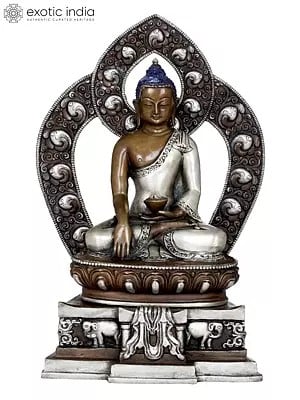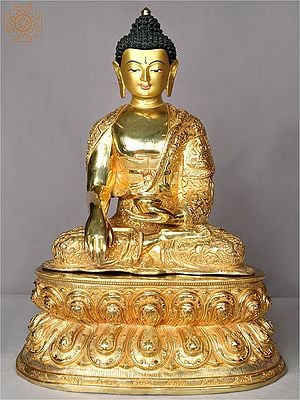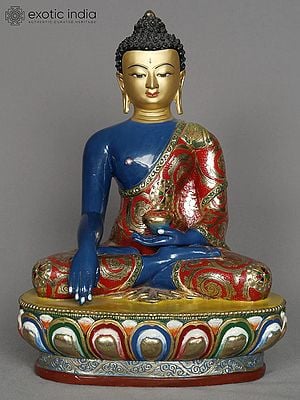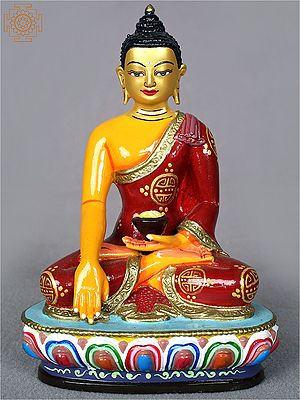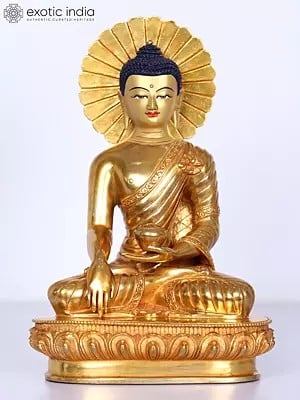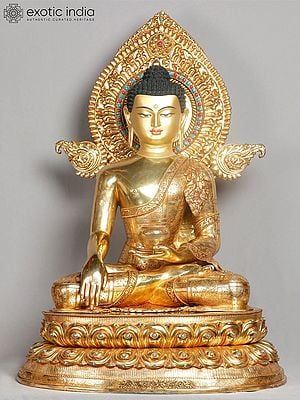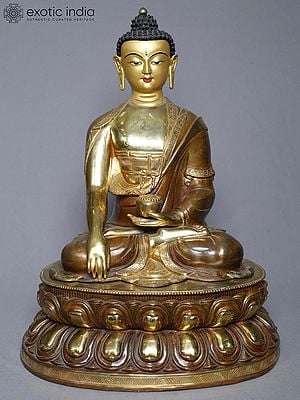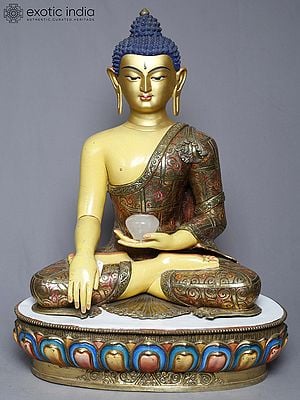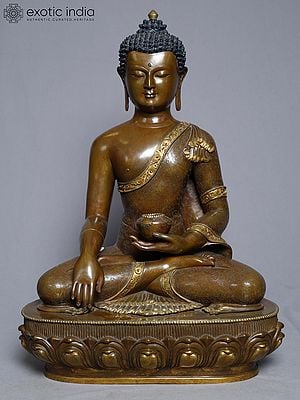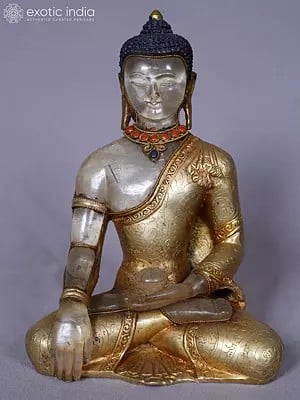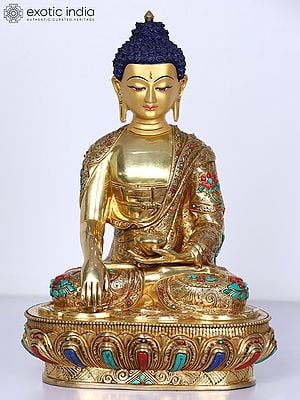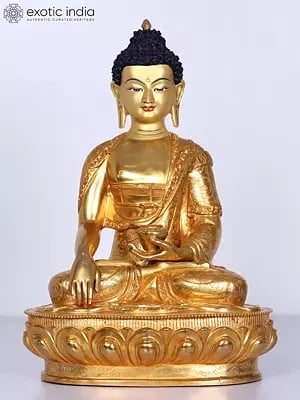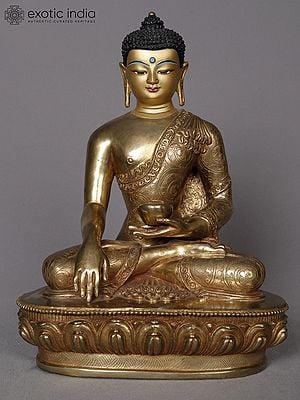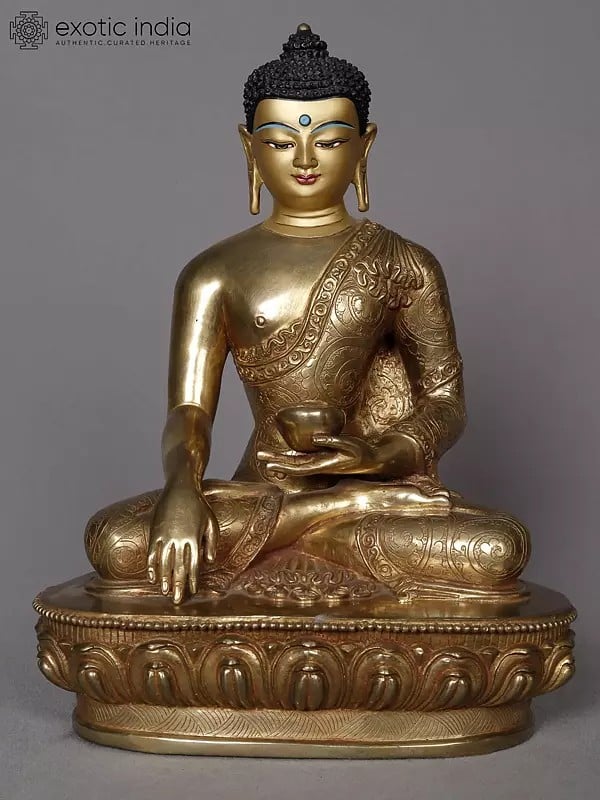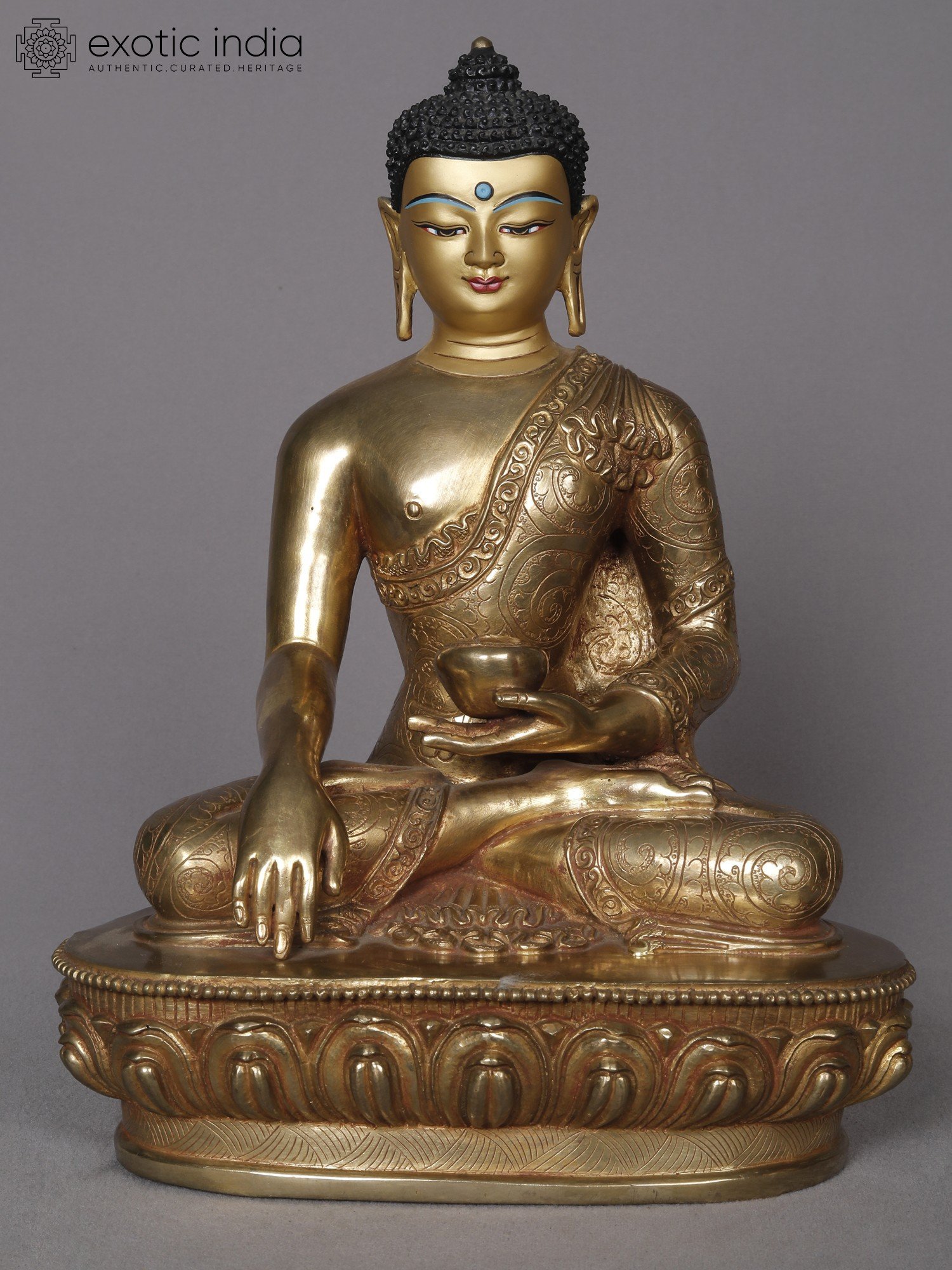
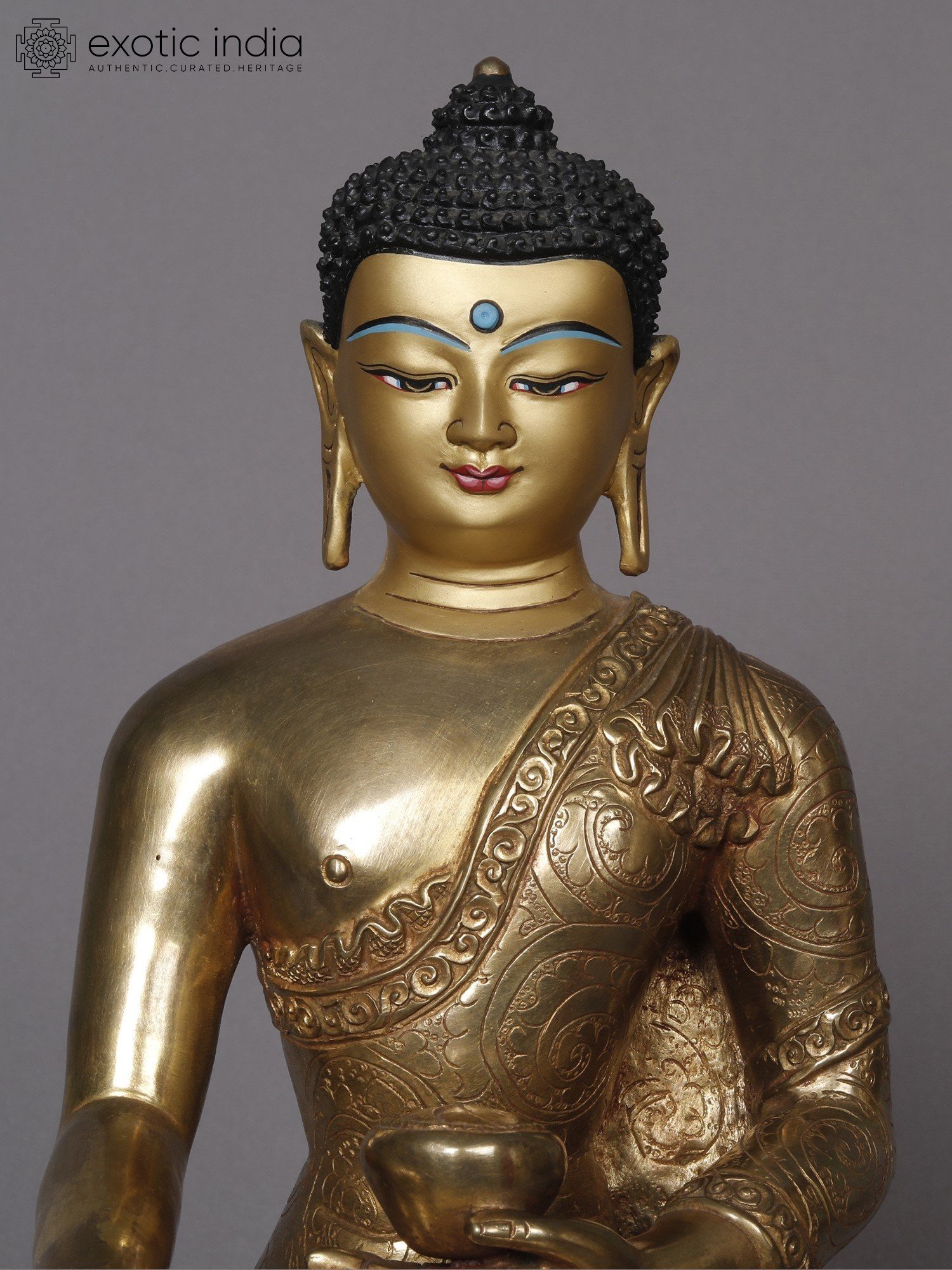
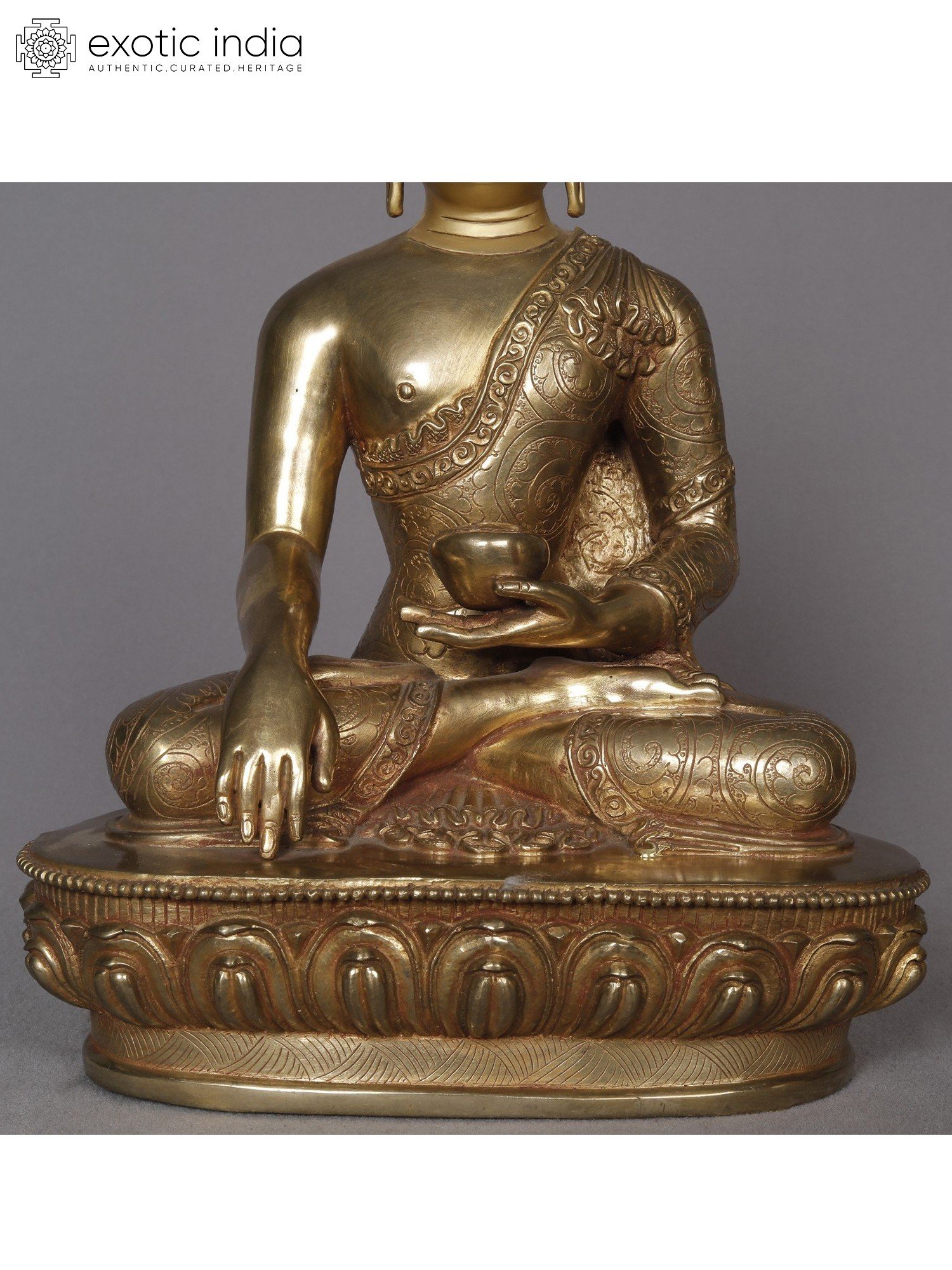
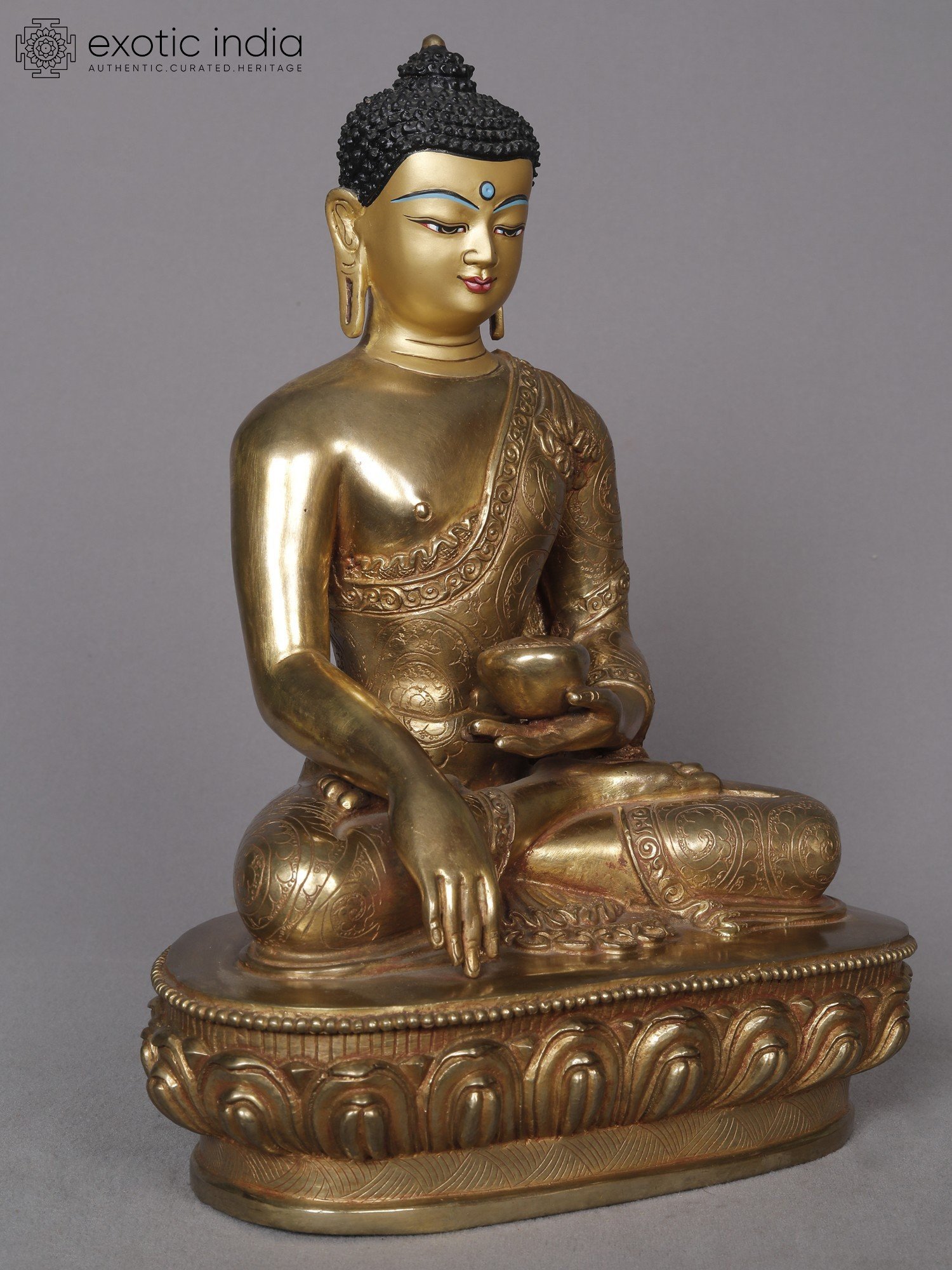
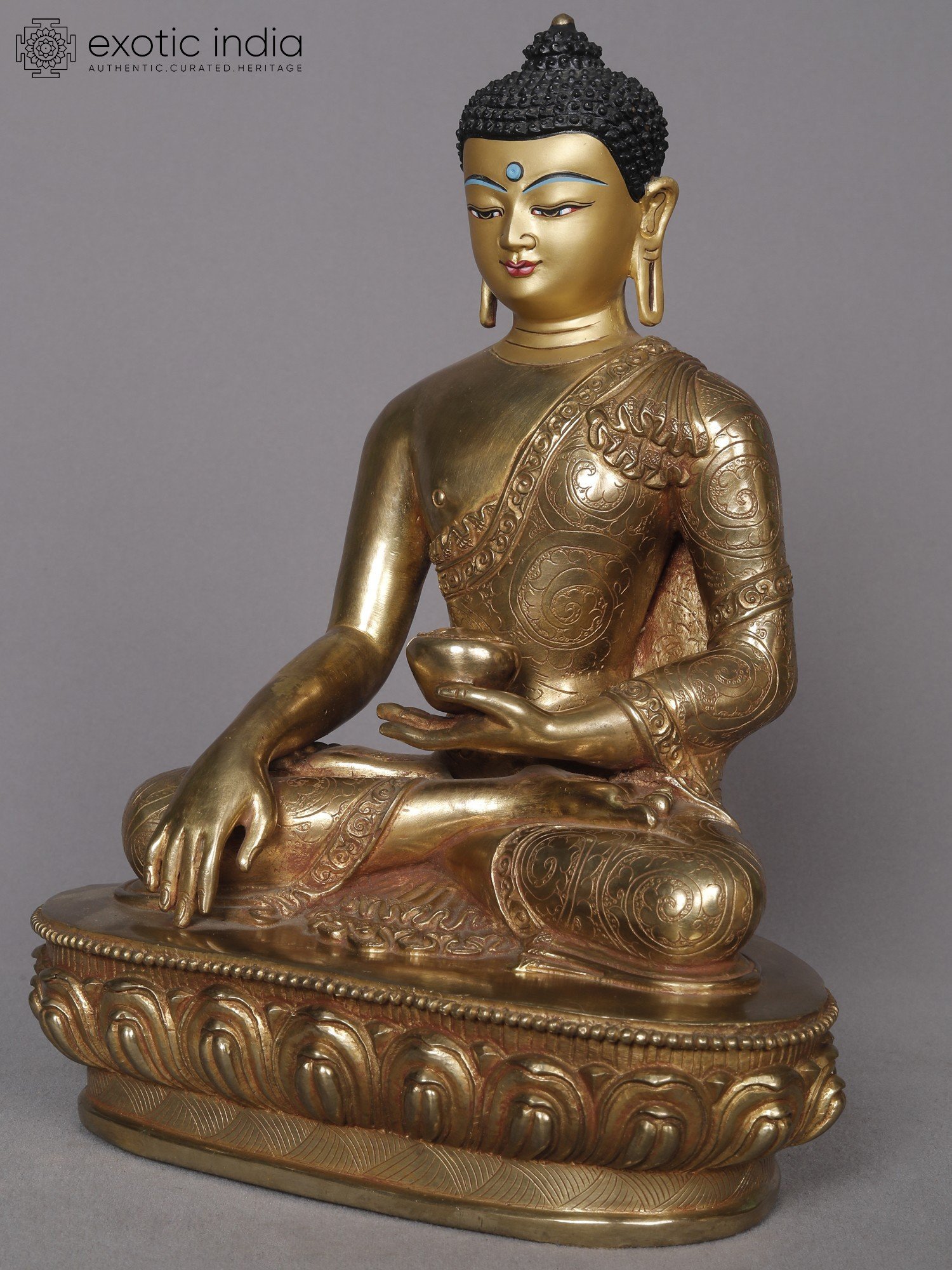
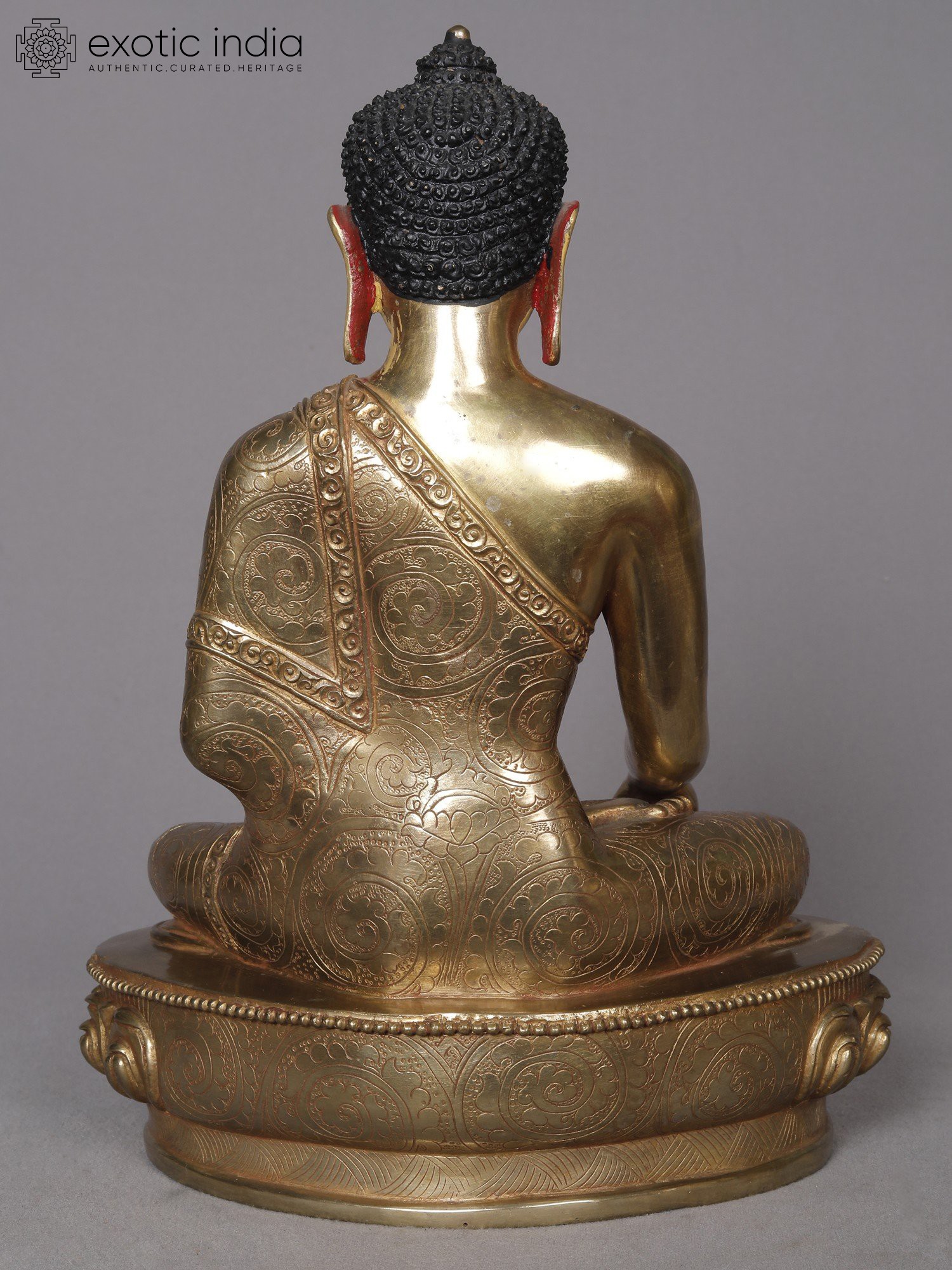
10" Lord Shakyamuni Buddha Copper Statue with Gilded Finish

| Specifications |
 |
CAA128 |
 |
Copper With Gold |
 |
Height: 10 inch |
| Width: 8 inch | |
| Depth: 4 inch | |
 |
Weight 2.50 kg |
| About the Item |
|
| Delivery and Return Policies |
 |
Usually ships in 6 days |
 |
Returns and Exchanges accepted within 7 days |
 |
Free Delivery |


When one mentions
Shakyamuni, they are referring to the historical figure known as Siddhartha,
the son of Suddhodana and Queen Maya. Through his enlightenment, he transformed
into the Buddha. The term "Shakyamuni'' translates to "the sage of the
Shakyas," indicating his clan's lineage.
The depiction of
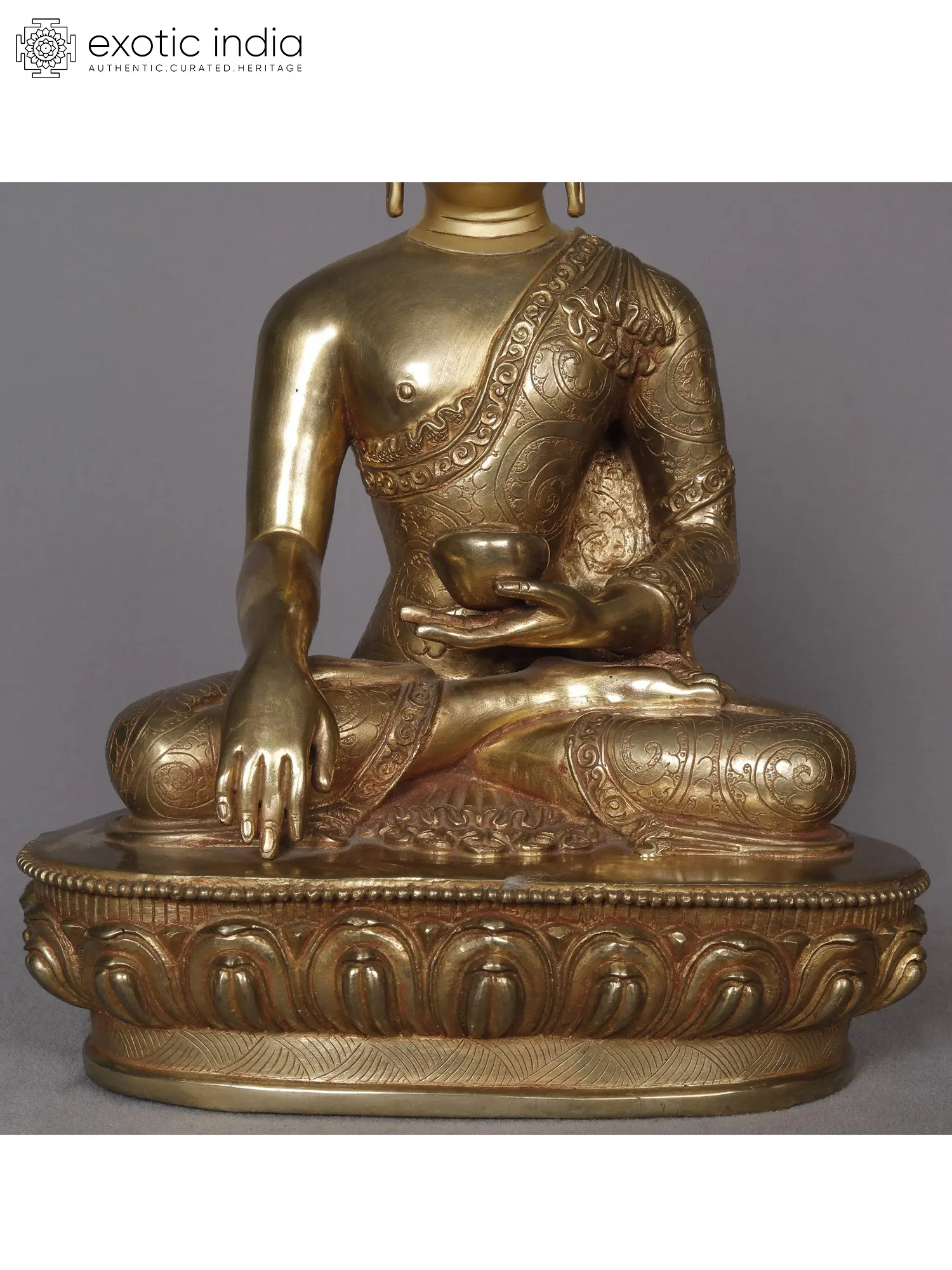
Buddha portrays him seated upon a double lotus pedestal. His right-hand cradles
a pot, while his left rests in the bhumisparsha mudra, symbolizing his encounter with Mara,
the temptress. By touching the earth, he invoked the Earth Goddess to bear
witness to his unwavering meditation and asceticism. The vajra, representing
the Vajrayana sect, is positioned nearby. Draped in a simple monastic robe, or
sanghati, he exudes an aura of profound spiritual serenity.
A Vision of Enlightenment
This exquisite statue captures the serene presence of Lord Shakyamuni Buddha, the founder of Buddhism. Crafted from radiant copper and adorned with a gilded finish, it emanates an aura of peace and spiritual wisdom. The Buddha is depicted in a meditative pose, seated on a lotus throne, his hands cradling a begging bowl. This posture, known as the *Bhumisparsha Mudra* or Earth-Touching gesture, symbolizes his enlightenment beneath the Bodhi tree, where he called upon the Earth as witness to his renunciation of worldly desires and his victory over the temptations of Mara. The intricate detailing on the statue speaks to the skill of Nepalese artisans, whose traditions in metalwork are steeped in centuries of devotion. The flowing robes, etched with delicate patterns, suggest the weight and texture of fine fabric, while the calm, contemplative expression on the Buddha's face invites introspection and tranquility. The urna, a small protuberance on his forehead symbolizing his spiritual insight, and the three lines on his neck, representing his auspicious marks, are all rendered with meticulous care. In Nepalese culture, copper statues with gilded finishes are highly prized for their spiritual significance and aesthetic beauty. They are often found in monasteries, temples, and private altars, serving as focal points for meditation and prayer. The metalwork tradition in Nepal has deep roots, influenced by both Indian and Tibetan artistic styles, resulting in a unique and revered form of Buddhist iconography. This statue embodies that rich heritage, offering a tangible connection to the spiritual journey of the Buddha and the timeless pursuit of enlightenment.Symbolism and Significance
The lotus flower, upon which the Buddha sits, is a potent symbol in Buddhism, representing purity, spiritual awakening, and the ability to rise above the mud and impurities of the world, just as the lotus blooms beautifully from murky waters. The begging bowl, held gently in his hands, signifies his renunciation of material possessions and his commitment to a life of simplicity and detachment, relying on the generosity of others for sustenance. The copper itself, often associated with purification and conductivity, enhances the spiritual energy of the piece. The gilded surface, reminiscent of the sun and divine radiance, further elevates the statue, suggesting the Buddha's enlightened nature and his role as a beacon of hope and wisdom for all beings. This representation of Lord Shakyamuni Buddha is not merely an object of art but a sacred artifact designed to inspire peace, cultivate mindfulness, and foster a deeper understanding of Buddhist philosophy. Its presence can transform a space into a sanctuary of calm, offering a constant reminder of the path to inner peace and liberation.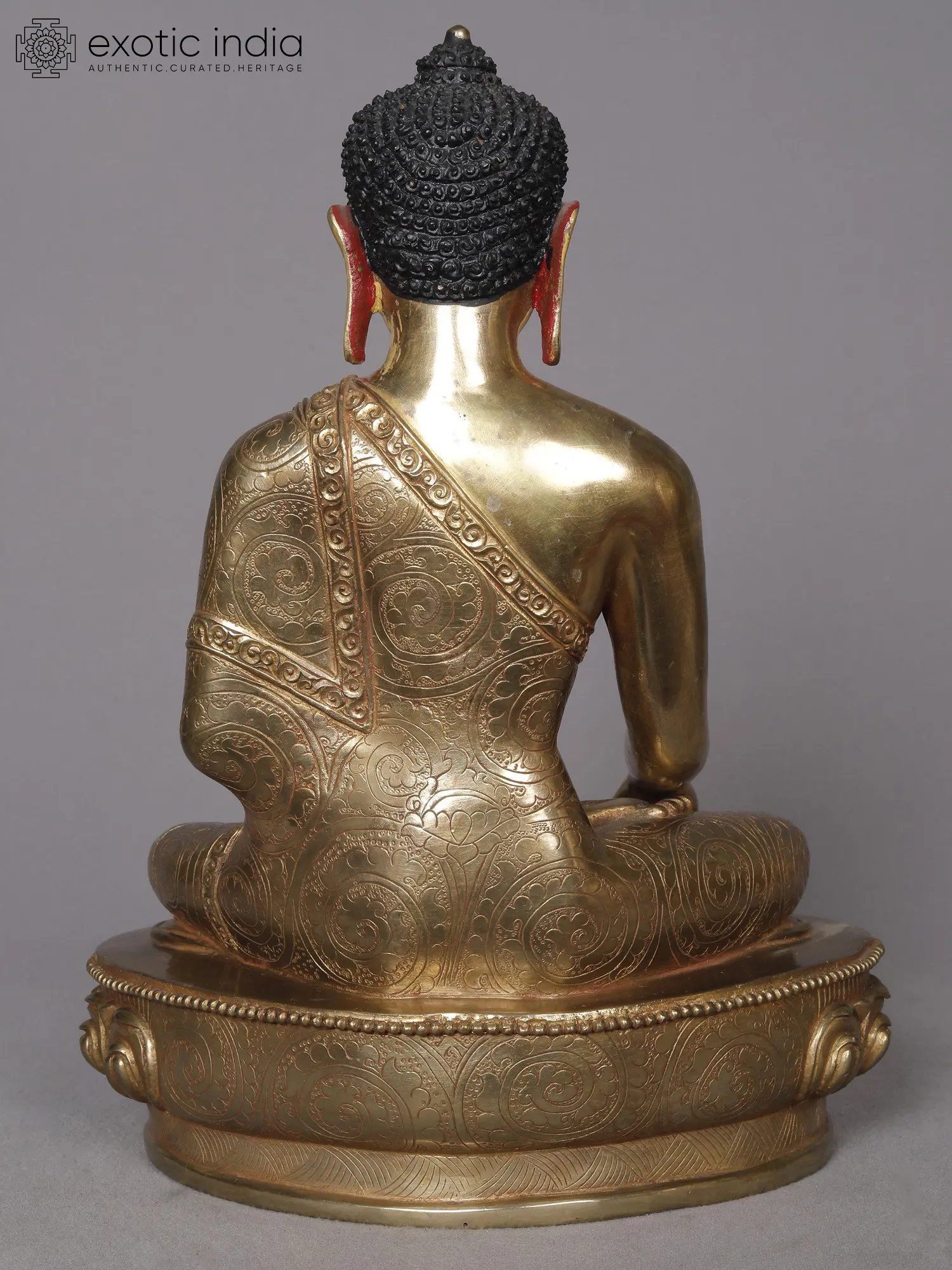
How are Nepalese copper statues made?
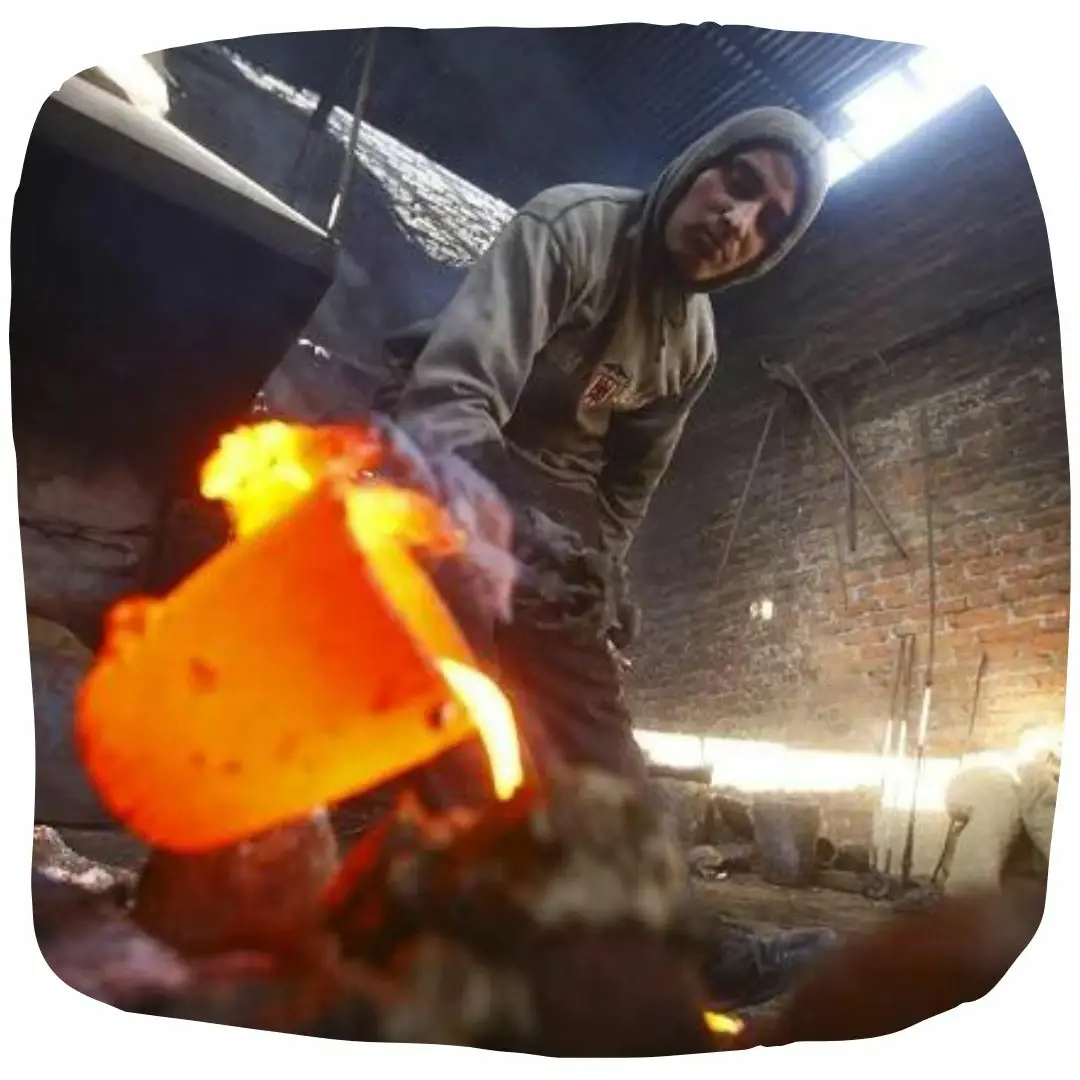
Nepalese statues and sculptures have a high copper content and therefore develop a slightly reddish patina on the surface as they age. However, the most unique feature of Nepalese copper statues is their decorative detailing. The pieces are heavily gilded and sometimes inlaid with semi-precious stones. This embellishment protects them from getting tarnished. The traditional lost-wax method for casting Nepalese copper statues remains the most practiced technique in Nepal for many centuries. This process involves many steps and requires skilled artists.
The first step in lost-wax sculpting is to make a wax replica of the desired Buddhist deity to be cast in copper. This replica is created by hand and therefore needs excellent artistic skills otherwise fine features will be lacking.
Once the wax replica is made, it is then coated with a special mixture of clay with a brush. This layer of clay is hardened when left to dry. A small hole is made on the base of the wax mould so that the wax flows away when it is heated.
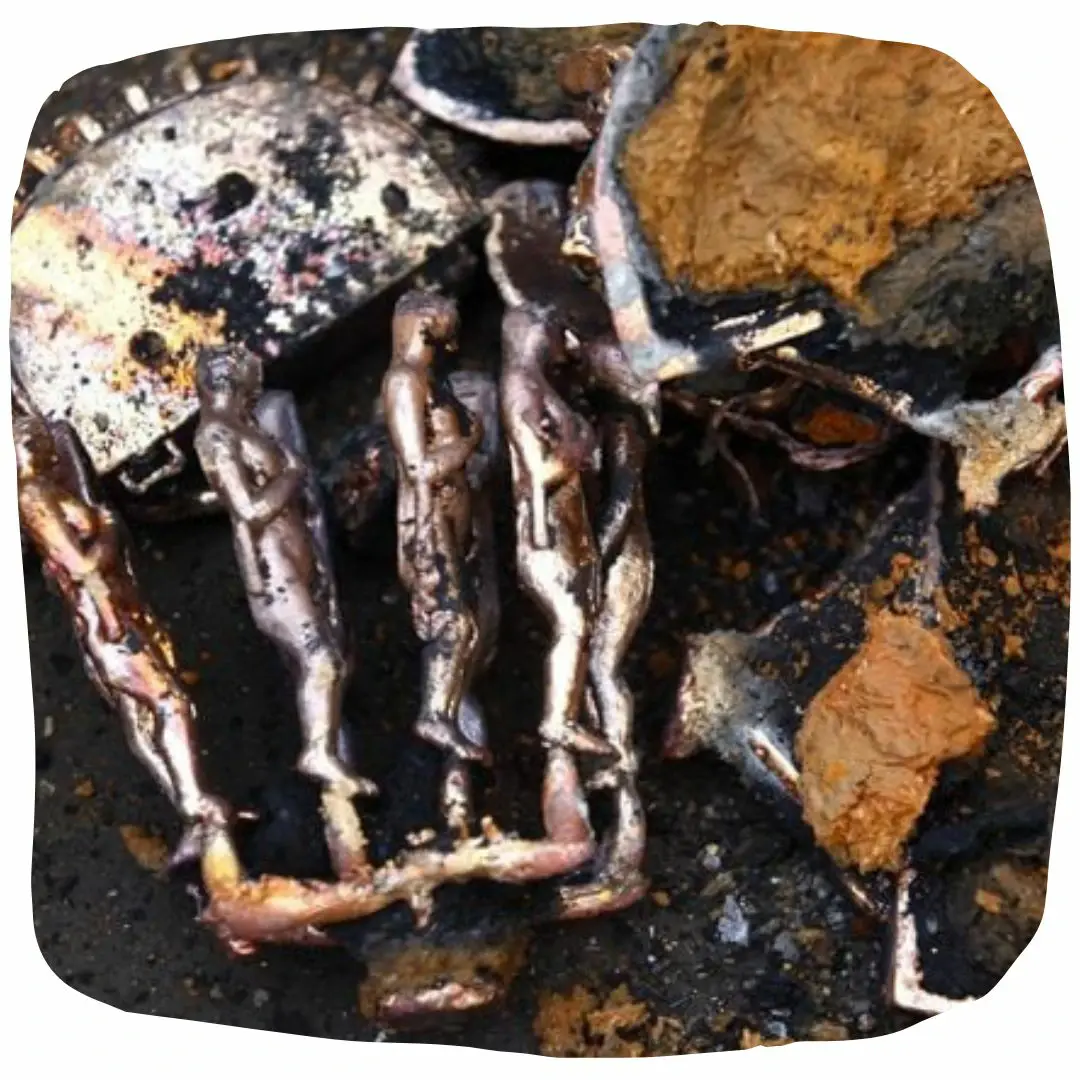
This is the time to pour liquid copper into the hollow mould which is then allowed to cool and harden inside a container of cold water. When the liquid metal has hardened, the mould is removed and the statue within is revealed.
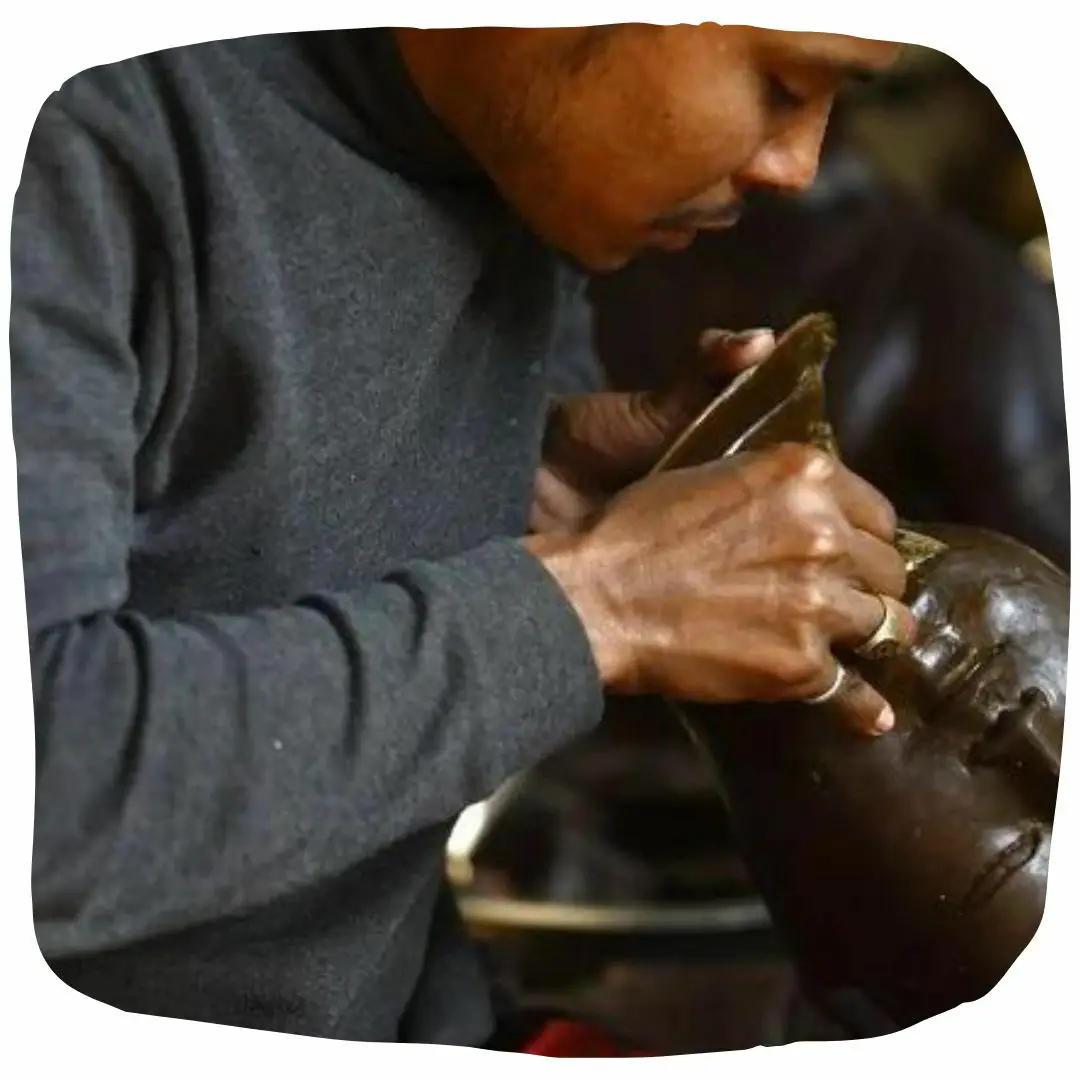
Now comes the most important part of Nepalese art which is gold gilding. This is done by the traditional fire gilding method. A mixture of mercury and 18K gold is applied on the surface of the statue and heat is applied using a flame torch. The result is that mercury evaporates along with impurities, leaving a pure 24K gold finish.
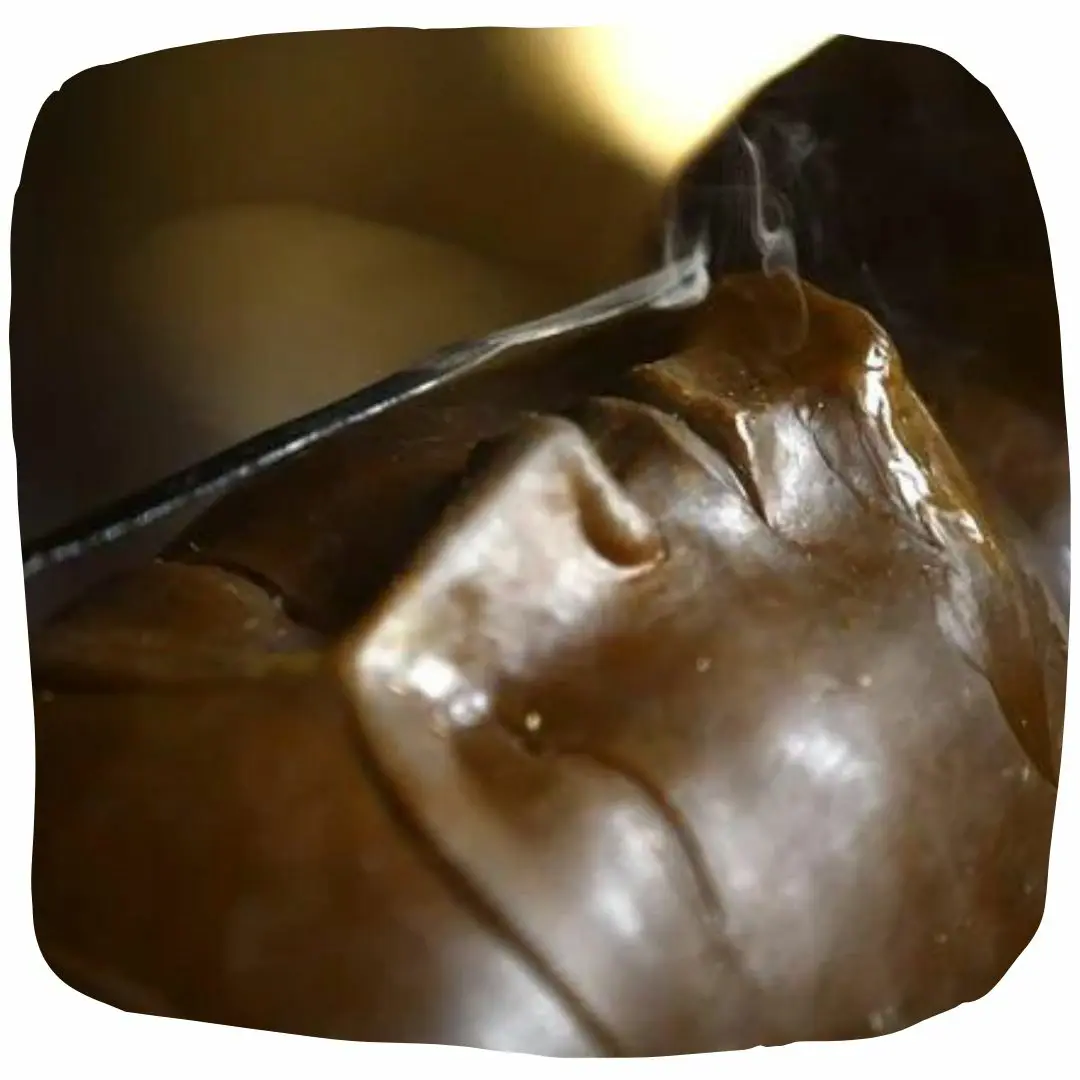
The lost-wax method of sculpting is the most preferred technique
for artists to cast a metallic statue having intricate details. Since Nepalese copper sculptures require extraneous effort for giving a majestic look by adding special embellishments, it takes several weeks to complete one masterpiece. A 24K gold gilded copper sculpture retains its brilliant luster for many years and appears as like before. Nepalese sculptures continue to remain one of the finest specimens of the art of the East that have a strong aesthetic appeal that other sculptures cannot match.