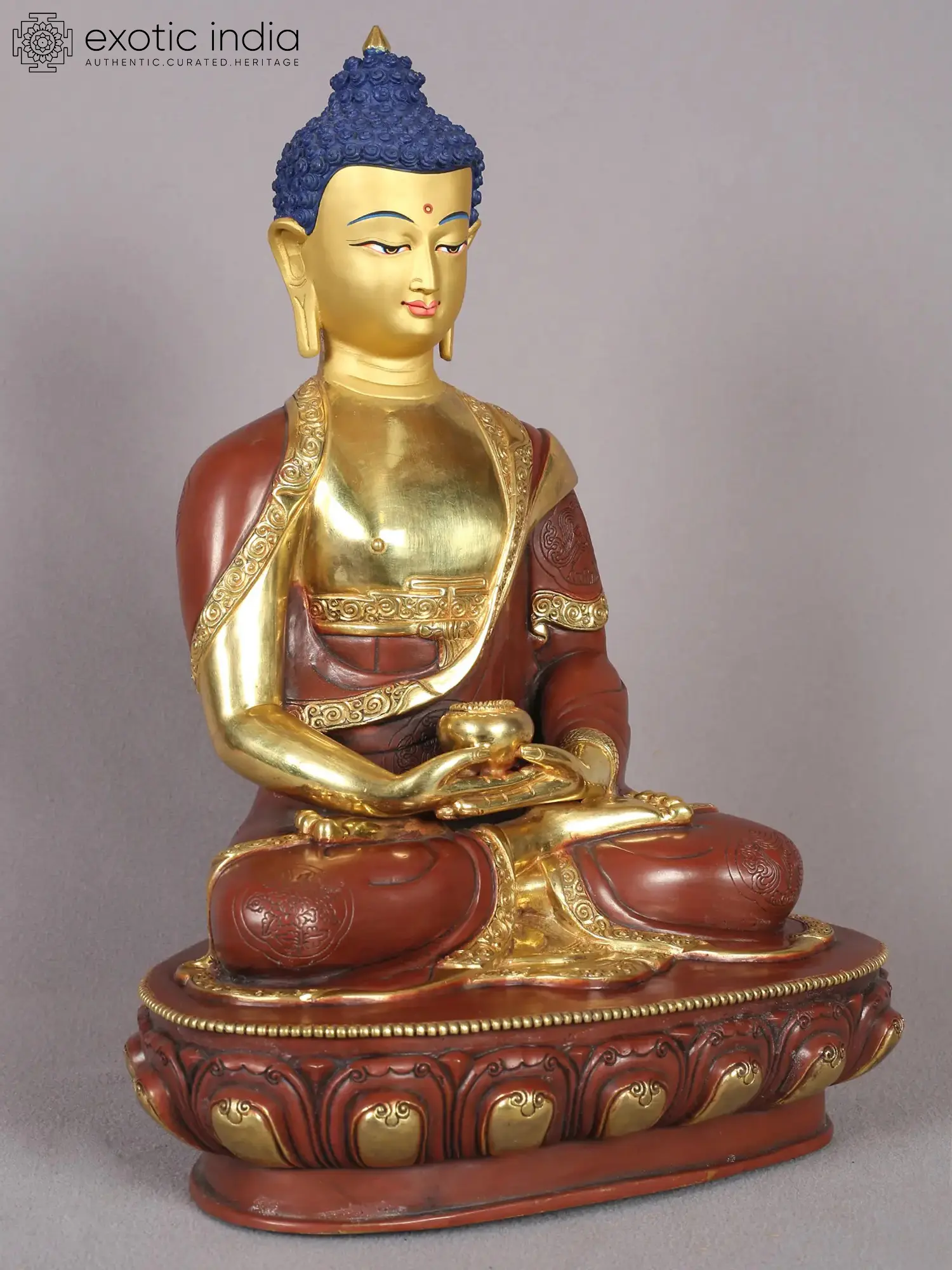
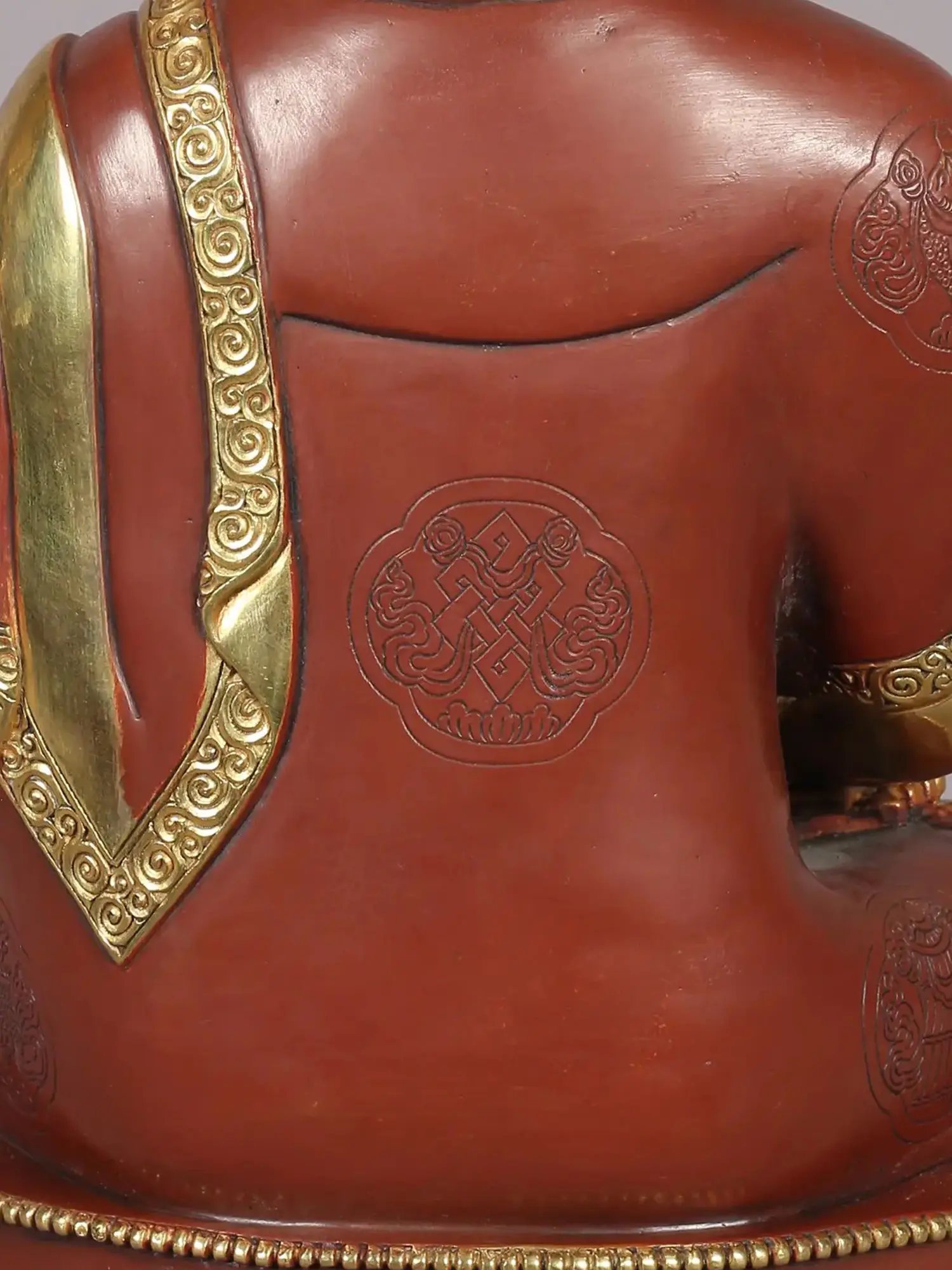
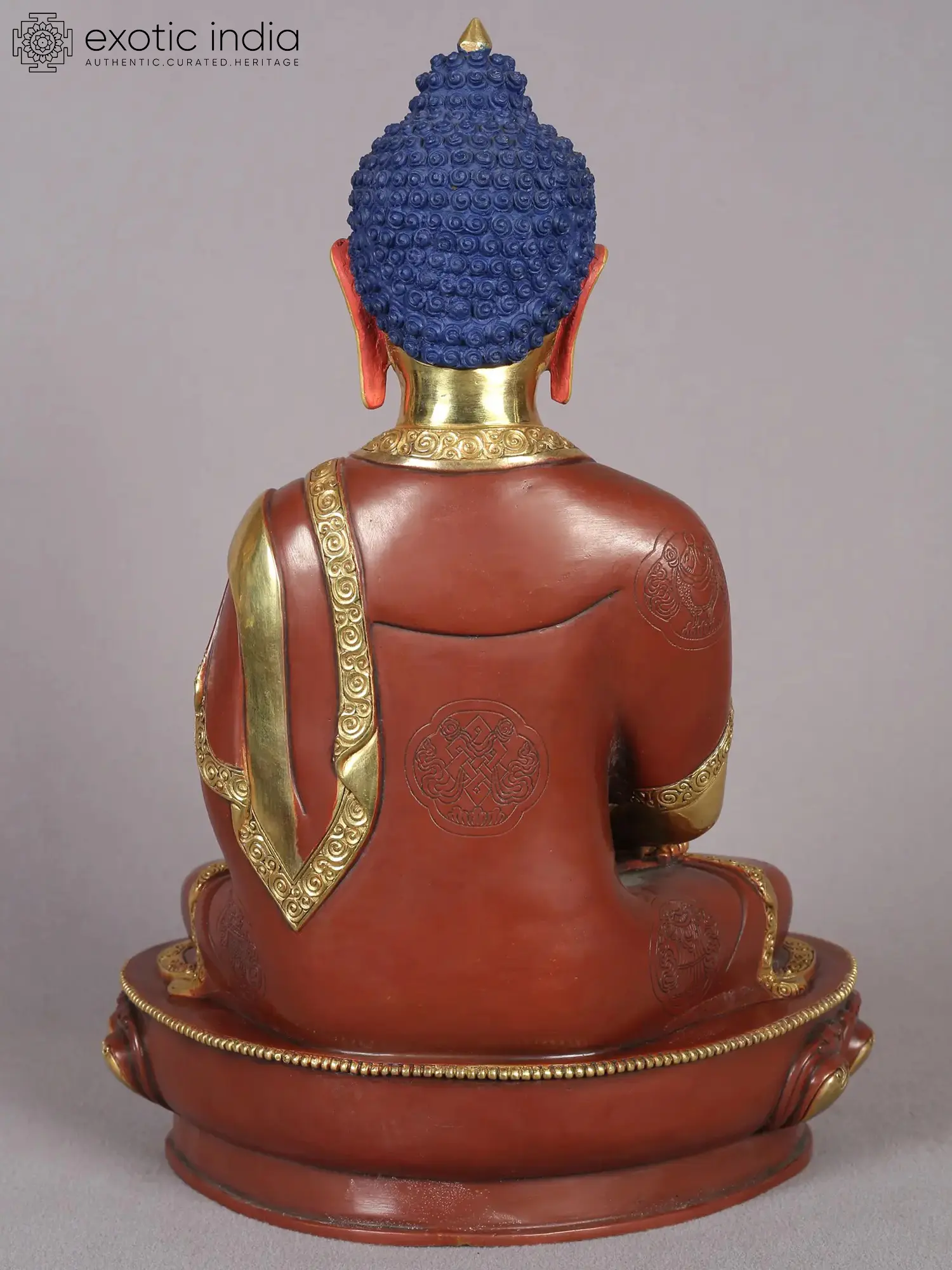
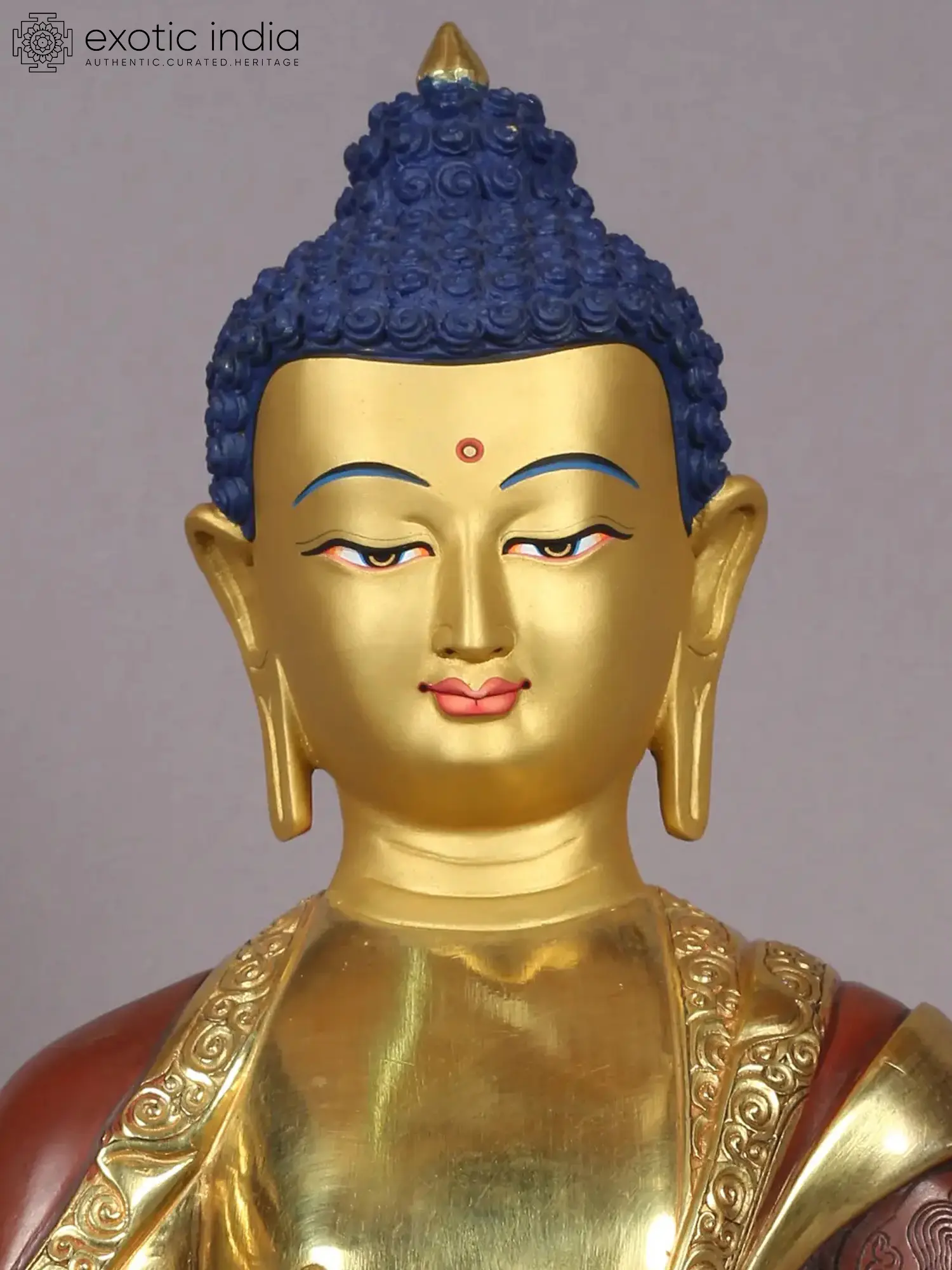
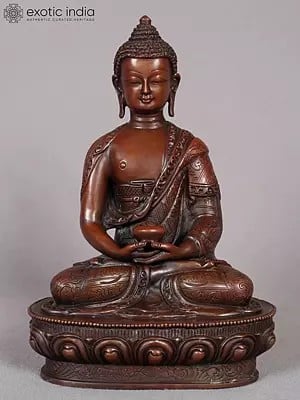
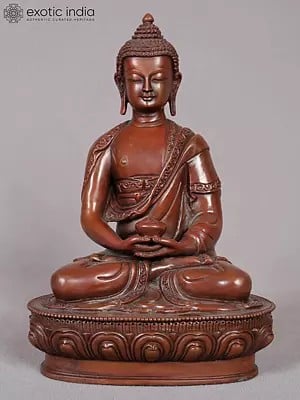
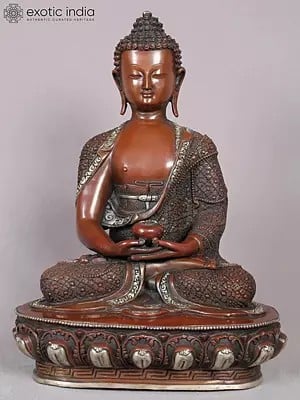
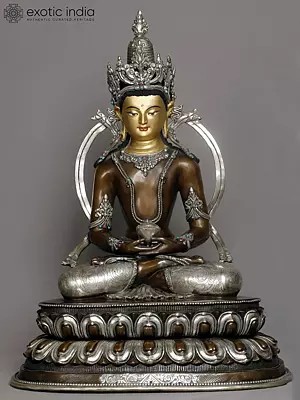
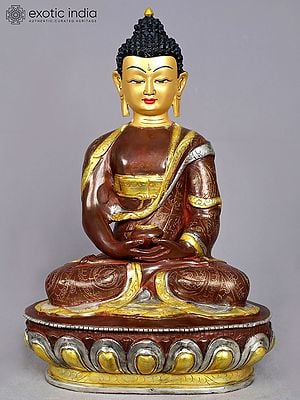
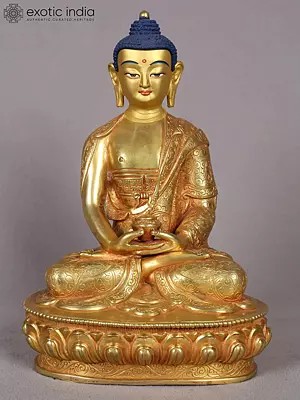
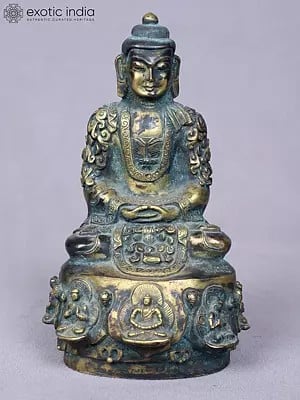
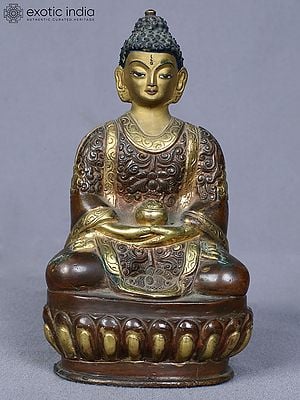
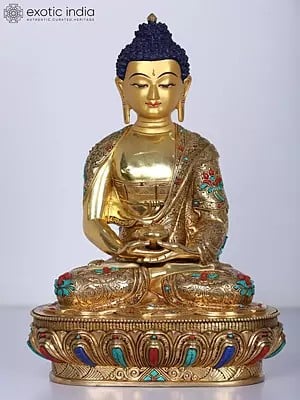
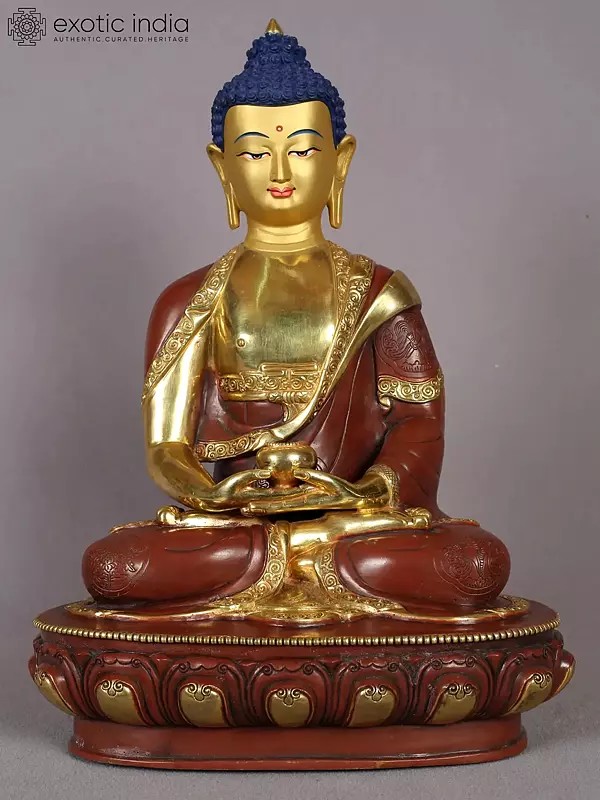
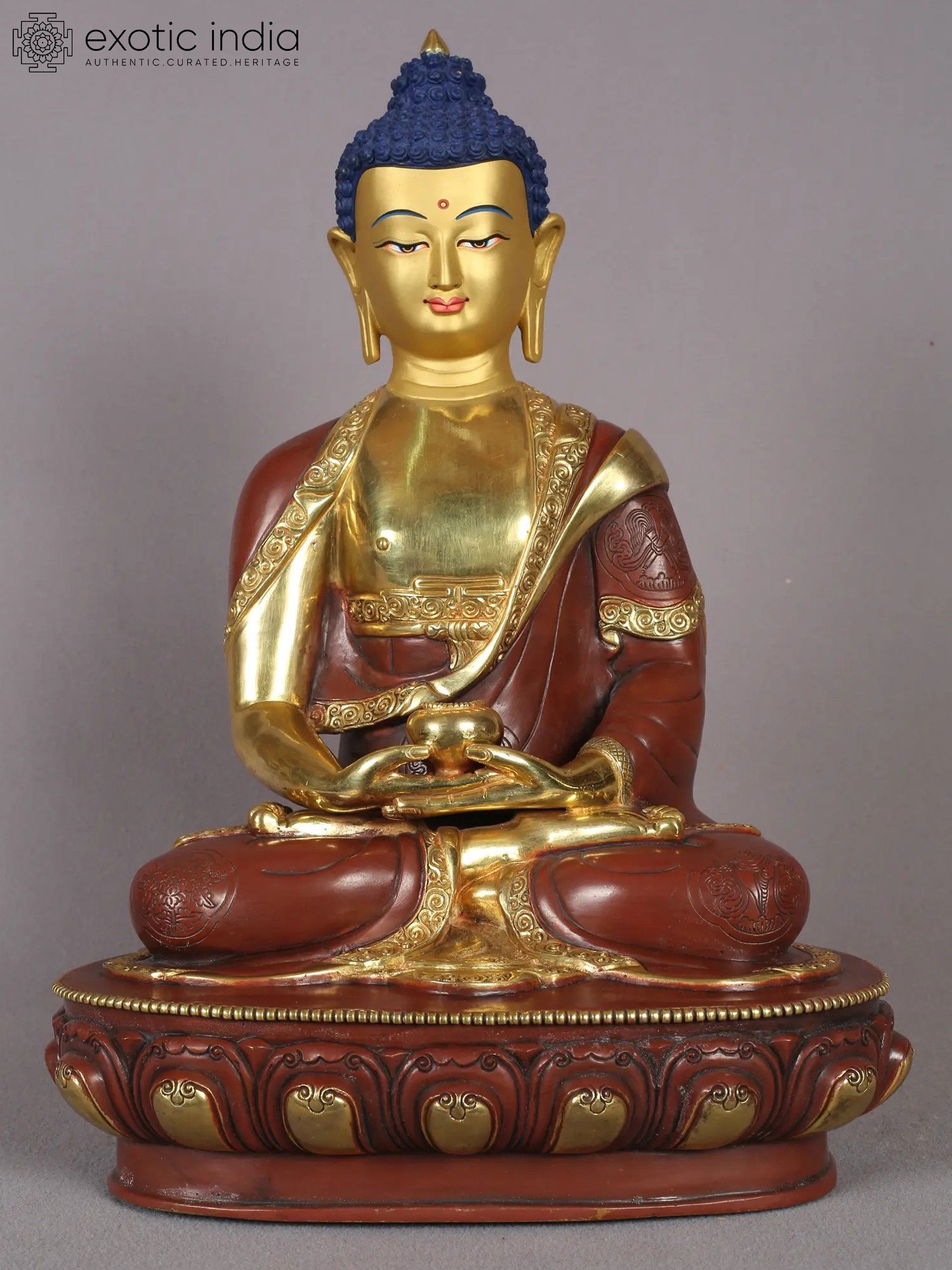
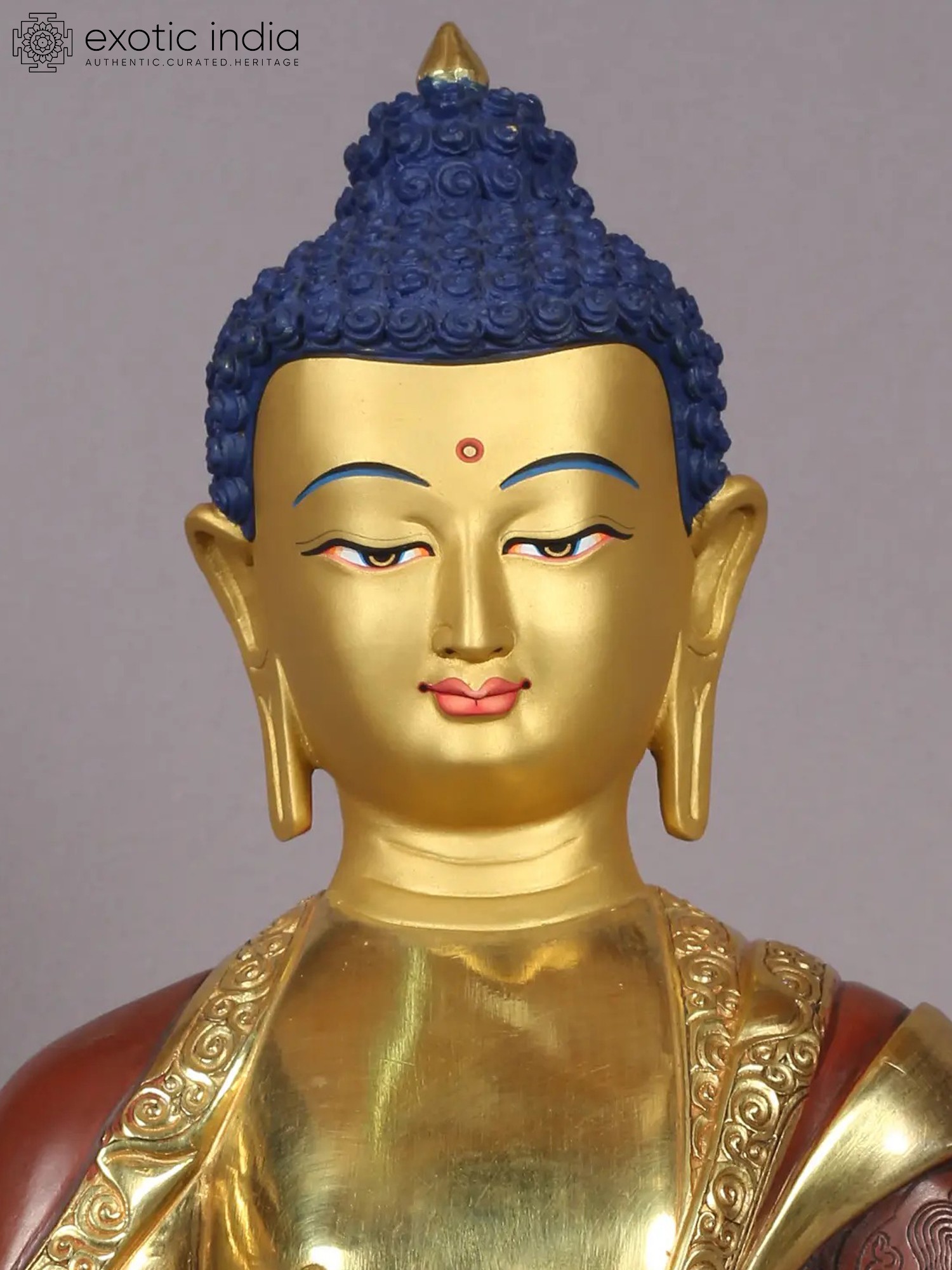
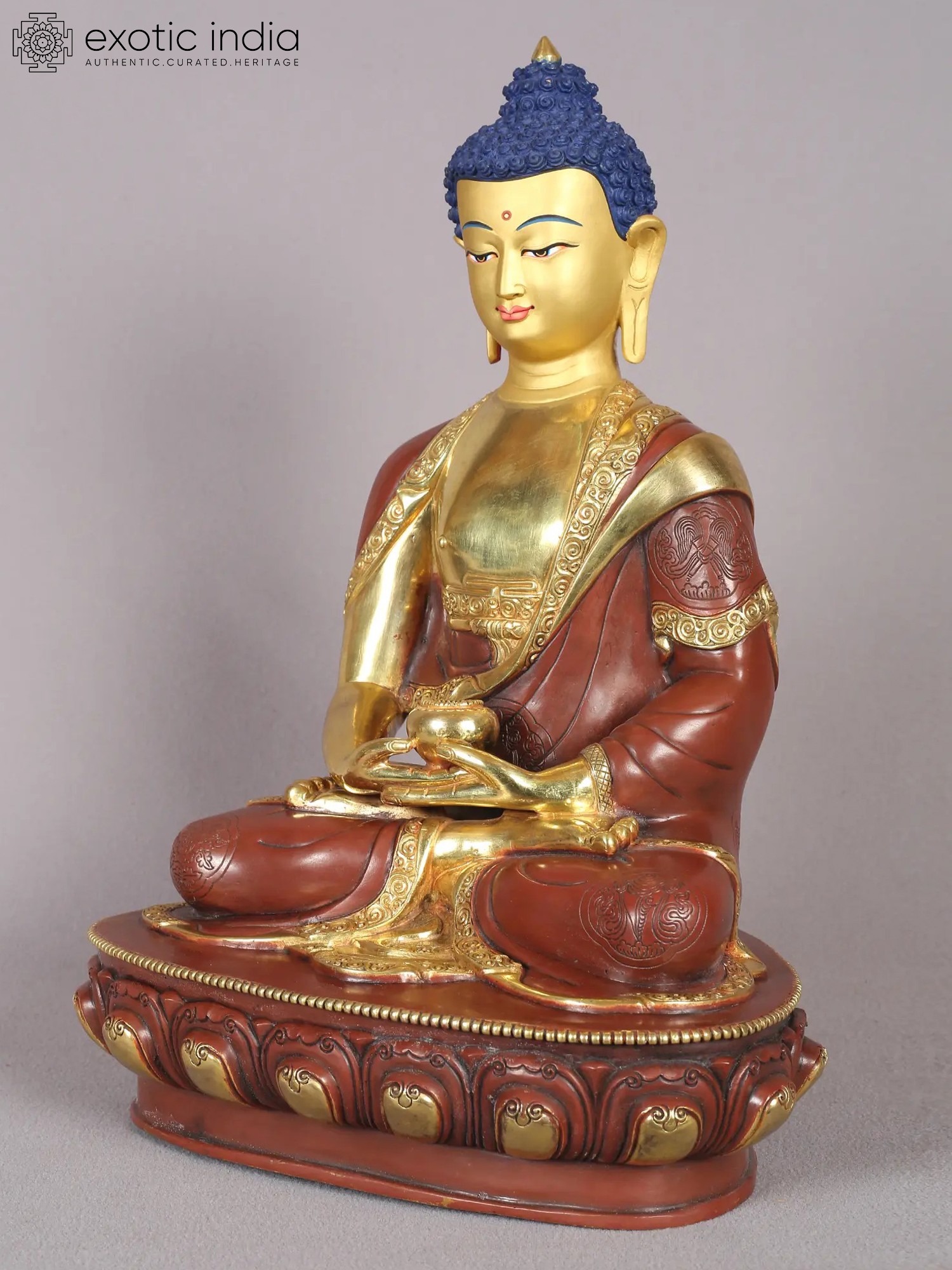
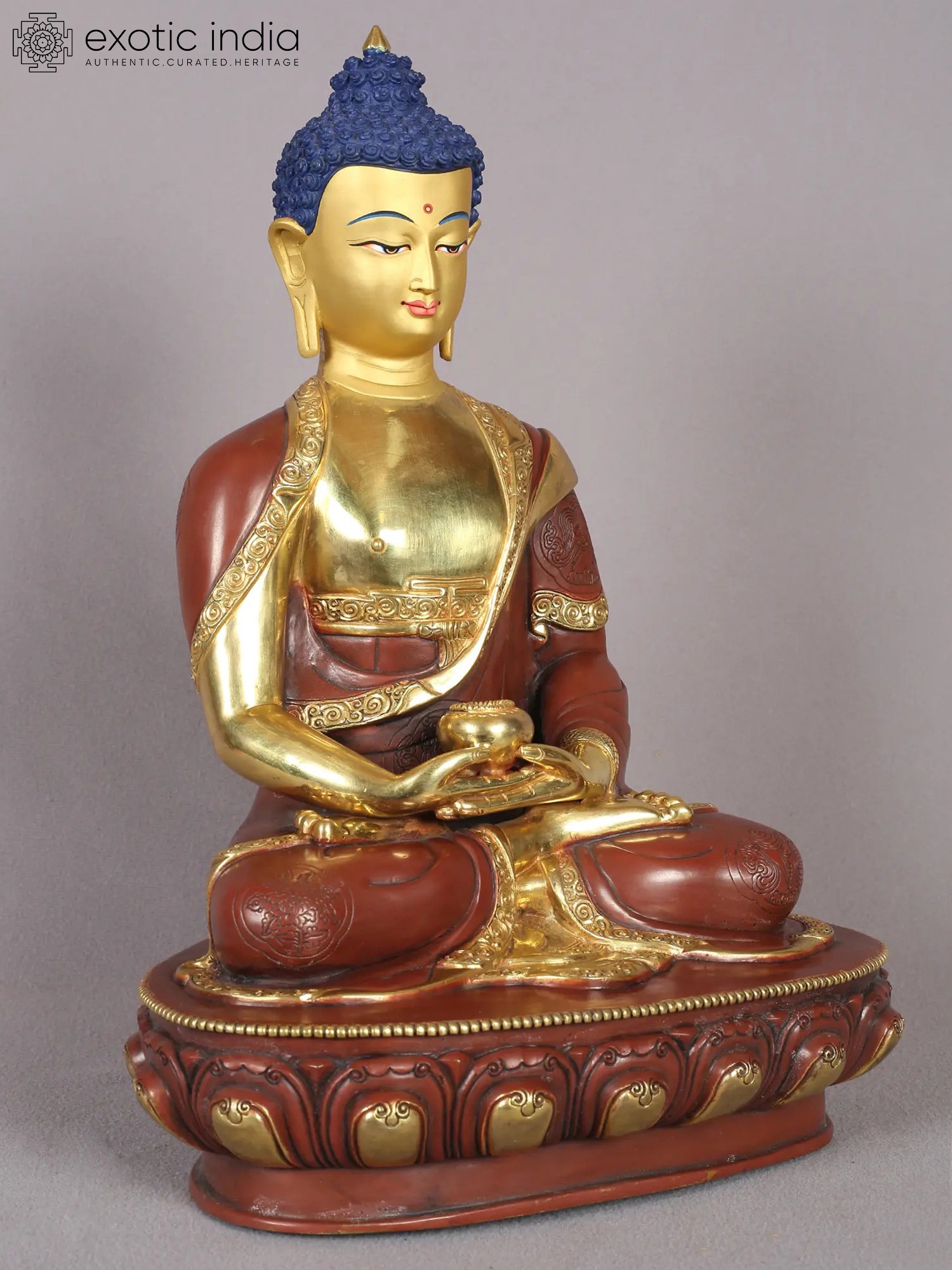
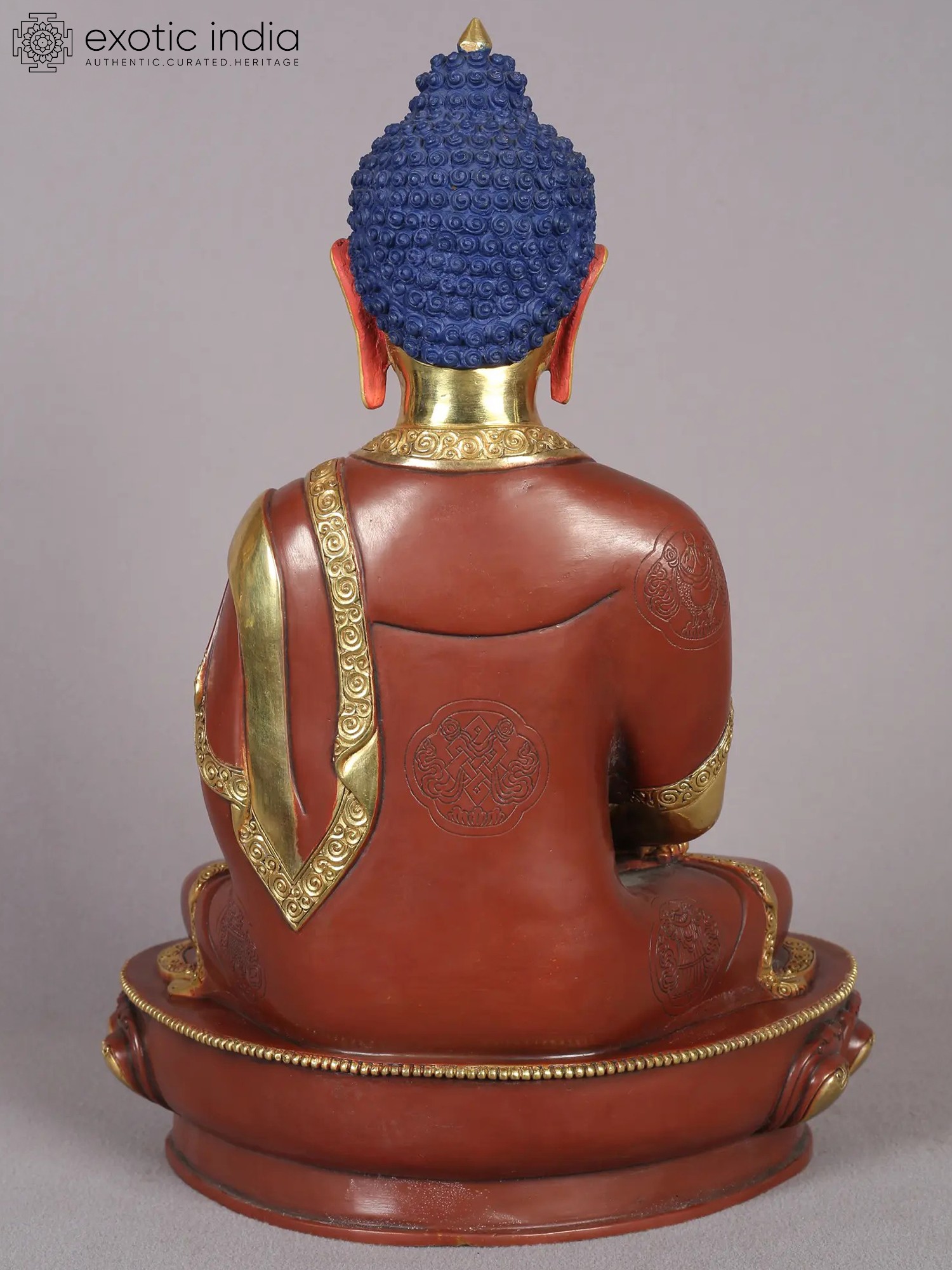
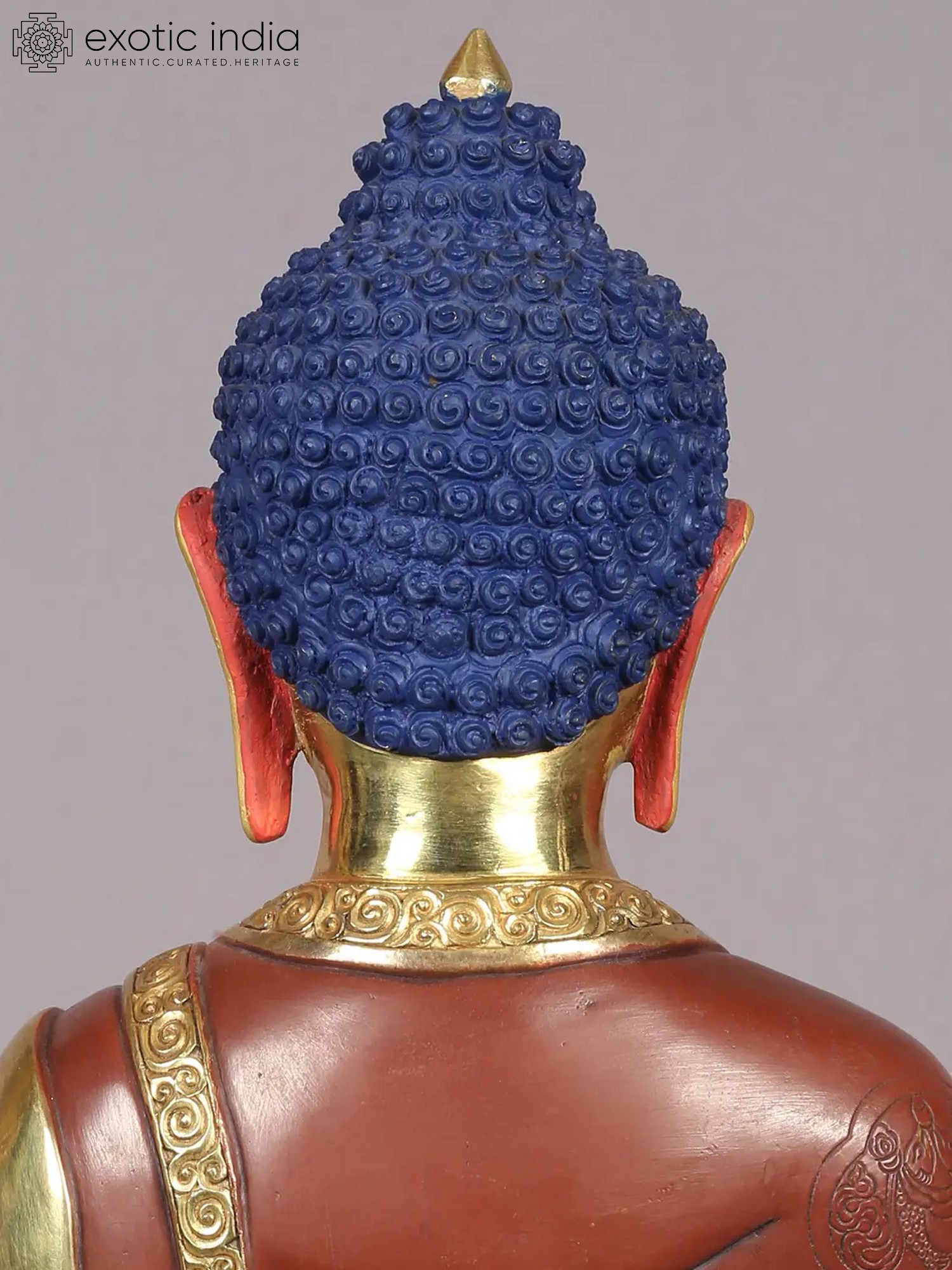
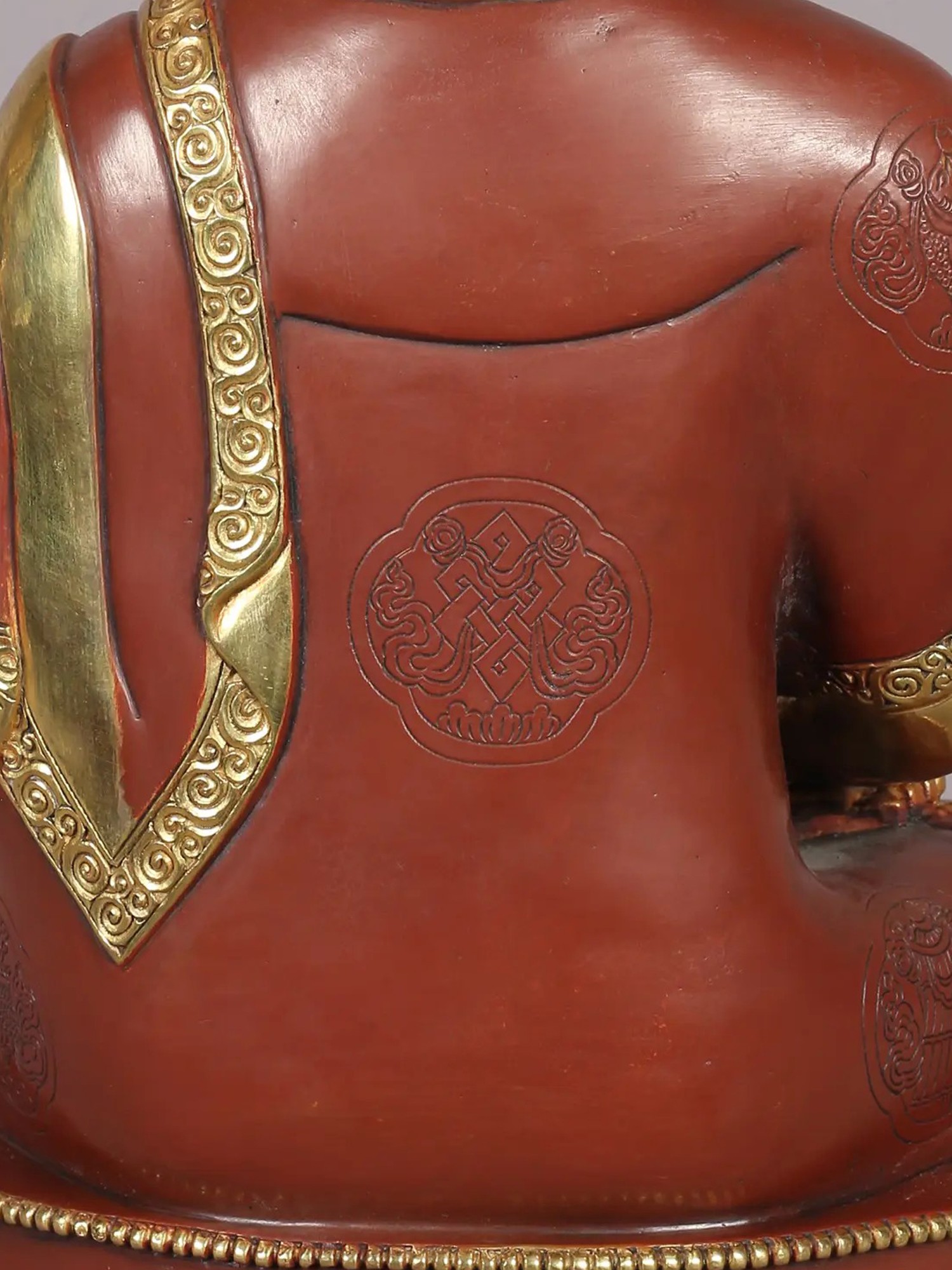
Amitabha, who shines eternally with the light of enlightenment, is invoked visually in this gilded copper statue from Nepal, bathed in pure gold and contrasted with the deep hue of copper. Mesmerizing symmetry is visible on Amitabha’s curls, and facial features, and a balance is felt in his gentle physique draped in luxurious robes etched with the Asthamangala or eight auspicious signs of Buddhism. The serenity of Amitabha in this statue comes from his benevolent eyes and youthful countenance, which make this a supremely aesthetic and divine artwork.
Embodiment of Infinite Light and Life
Behold the serene presence of Amitabha Buddha, the Buddha of Infinite Light and Life, masterfully rendered in this exquisite copper idol from Nepal. This divine representation captures the essence of Amitabha, a central figure in Mahayana Buddhism, revered as the celestial Buddha presiding over the Western Pure Land, Sukhavati. It is believed that by chanting his name and cultivating merit, sentient beings can attain rebirth in this blissful realm, free from suffering and delusion, and ultimately achieve enlightenment. The deep spiritual significance of Amitabha makes this idol a powerful object of devotion and a source of profound inspiration for practitioners.Artistry and Symbolism in Copper and Gold
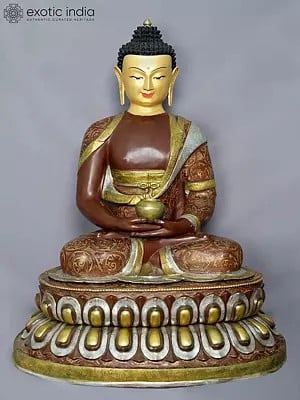
Crafted from robust copper, this idol stands as a testament to the rich artistic heritage of Nepal, where the creation of Buddhist imagery is a sacred practice passed down through generations. The opulent gold plating enhances the divine aura of Amitabha, symbolizing his luminous wisdom and boundless compassion. The rich, deep red of his monastic robe, meticulously detailed with intricate gold patterns along the edges and shoulders, speaks to the wearer's renunciation of worldly desires and his attainment of spiritual purity. His posture, seated in the lotus position (Padmasana), signifies stability and perfect equilibrium.The Mudra of Meditation and Contemplation
Amitabha's hands are delicately placed in his lap, forming the *Dhyana Mudra*, the gesture of meditation. This mudra symbolizes deep concentration, wisdom, and the realization of truth. The right hand rests atop the left, palms facing upwards, with the tips of the thumbs touching. This specific placement is often associated with the contemplation of the ultimate reality and the profound stillness of the enlightened mind. In his hands, he holds a begging bowl, a symbol of his humble beginnings as Siddhartha Gautama and a reminder of the impermanence of material possessions.A Celestial Throne of Lotus and Radiance
Amitabha rests upon a magnificent lotus throne, a universal symbol of purity, spiritual awakening, and transcendence. The multi-layered petals, rendered in a deep red with striking gold accents, suggest the unfolding of wisdom and the blossoming of enlightenment. The intricate detailing of the base, with its decorative motifs and the finely beaded border, adds to the overall majesty and sacredness of the idol. This throne represents the pure ground of Sukhavati, upon which Amitabha presides. The entire composition exudes an aura of peace, tranquility, and boundless grace, inviting contemplation and spiritual connection. This striking representation is a harmonious blend of spiritual symbolism and masterful craftsmanship.How are Nepalese copper statues made?
Nepalese statues and sculptures are best known for their unique
small religious figures and ritual paraphernalia for over two
thousand years. These are mainly cast in copper alloy. Nepal draws
influences from the artistic styles of Buddhism and Hinduism, and
therefore the sculptors of the country specialize in making the
icons of both these religions. Over the years, Nepalese sculptures
evolved into their own distinctive iconography. Some
characteristic features of these sculptures that differ from other
pieces are exaggerated physical postures, youthful and sensual
features, languid eyes, wider faces having serene expressions, and
ornate flourishes. The Buddhist deity icons of Nepal have
tremendous demand in countries such as China and Tibet for ritual
purposes in their temples and monasteries.
Nepalese statues and sculptures have a high copper content and
therefore develop a slightly reddish patina on the surface as they
age. However, the most unique feature of Nepalese copper statues
is their decorative detailing. The pieces are heavily gilded and
sometimes inlaid with semi-precious stones. This embellishment
protects them from getting tarnished. The traditional lost-wax
method for casting Nepalese copper statues remains the most
practiced technique in Nepal for many centuries. This process
involves many steps and requires skilled artists.
The first step in lost-wax sculpting is to make a wax replica of
the desired Buddhist deity to be cast in copper. This replica is
created by hand and therefore needs excellent artistic skills
otherwise fine features will be lacking.
Once the wax replica is made, it is then coated with a special
mixture of clay with a brush. This layer of clay is hardened when
left to dry. A small hole is made on the base of the wax mould so
that the wax flows away when it is heated.
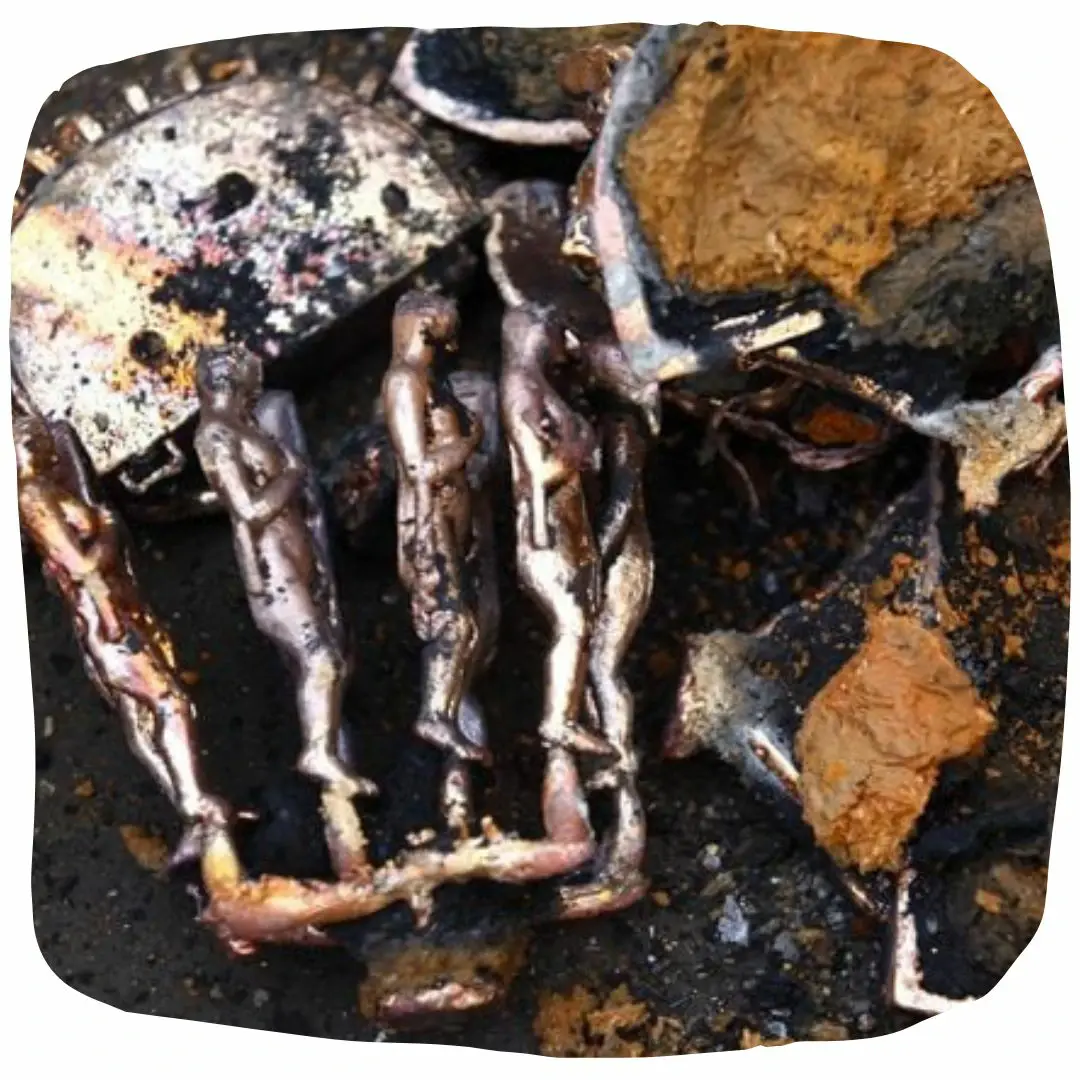
At this stage, a hollow mould in the shape of the deity is
obtained.
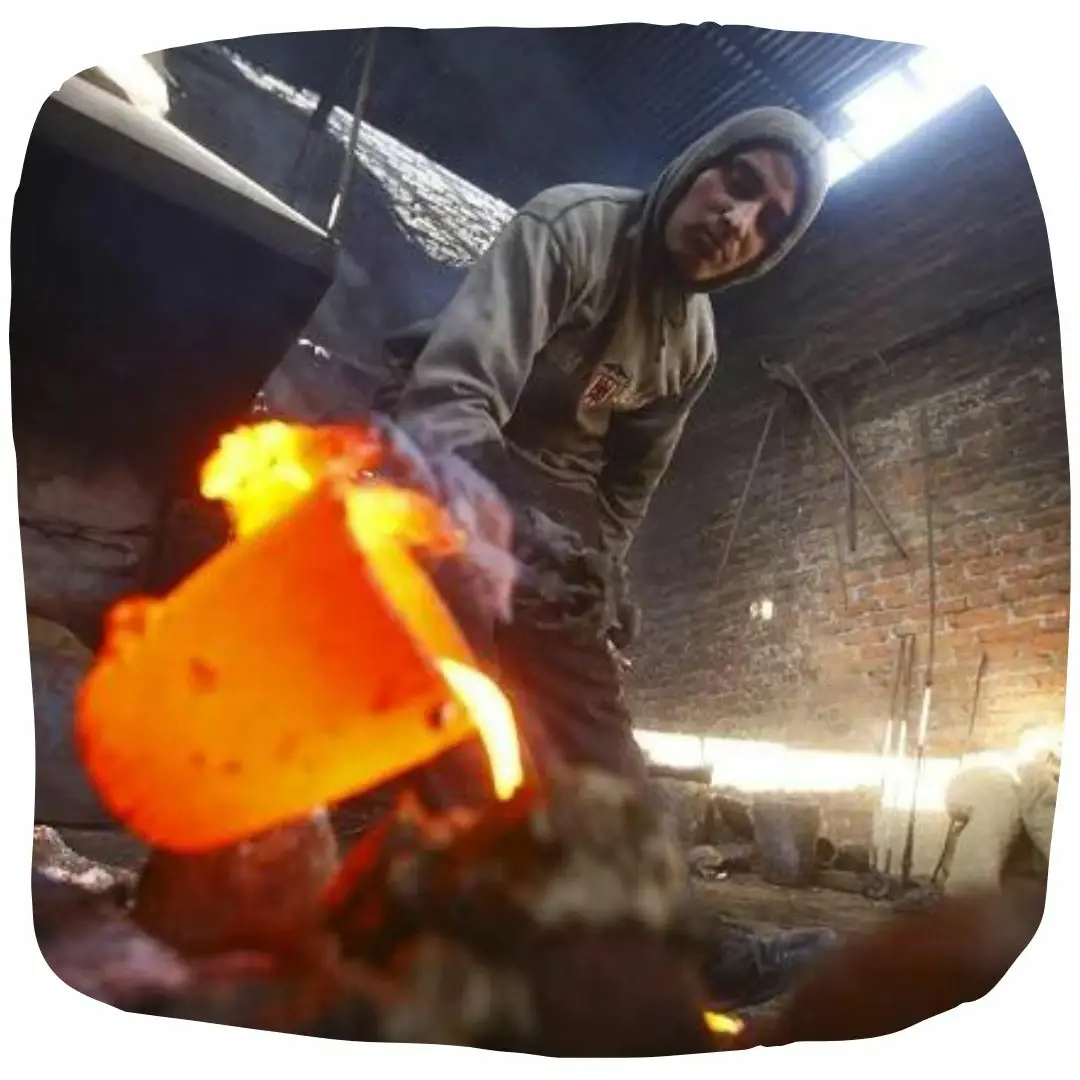
This is the time to pour liquid copper into the hollow mould which
is then allowed to cool and harden inside a container of cold
water. When the liquid metal has hardened, the mould is removed
and the statue within is revealed.
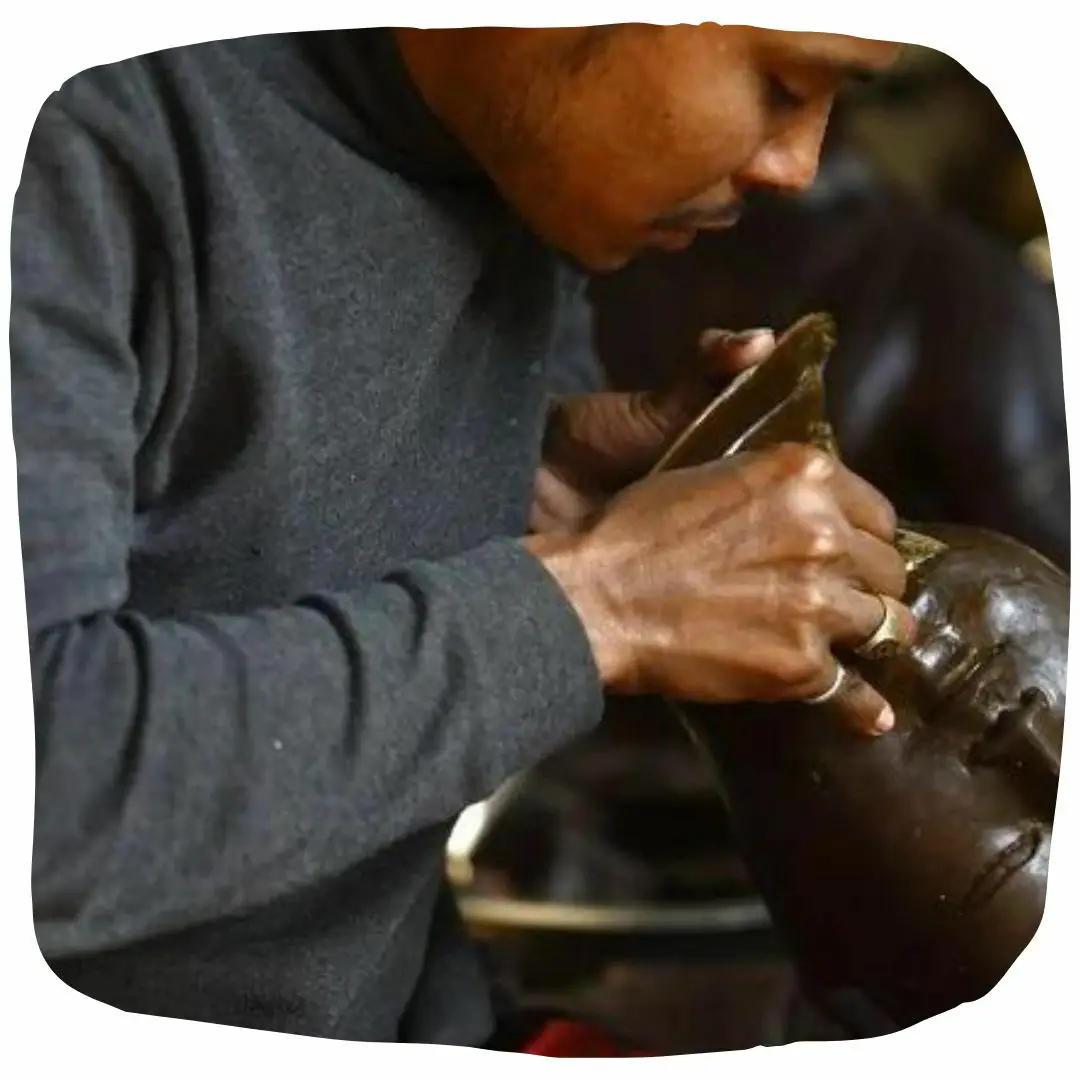
The artist works on the details of the statue using various tools.
It is then polished to get a shiny and lustrous surface.
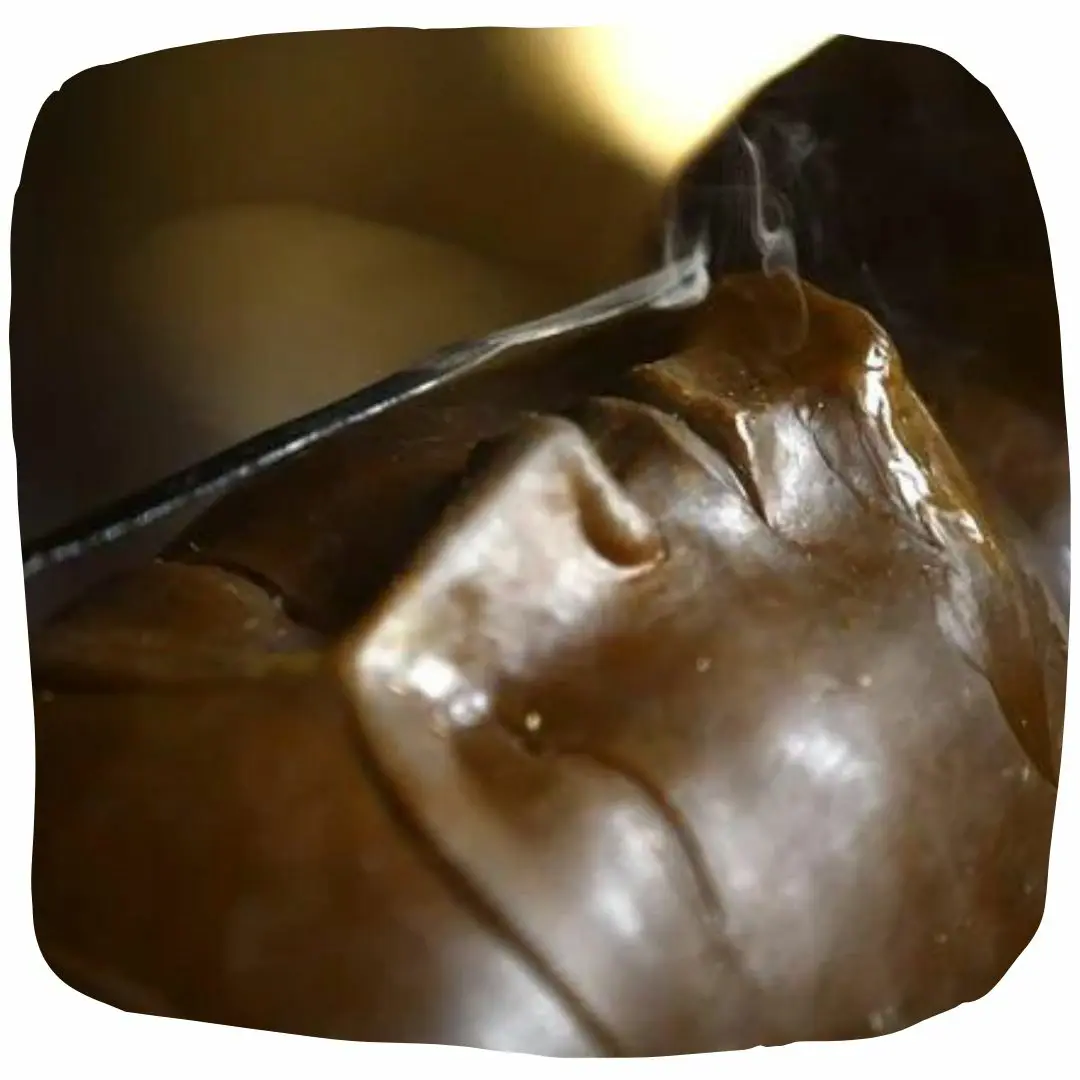
Now comes the most important part of Nepalese art which is gold
gilding. This is done by the traditional fire gilding method. A
mixture of mercury and 18K gold is applied on the surface of the
statue and heat is applied using a flame torch. The result is that
mercury evaporates along with impurities, leaving a pure 24K gold
finish.
The lost-wax method of sculpting is the most preferred technique
for artists to cast a metallic statue having intricate details.
Since Nepalese copper sculptures require extraneous effort for
giving a majestic look by adding special embellishments, it takes
several weeks to complete one masterpiece. A 24K gold gilded
copper sculpture retains its brilliant luster for many years and
appears as like before. Nepalese sculptures continue to remain one of the finest specimens of the art of the East that have a strong
aesthetic appeal that other sculptures cannot match.