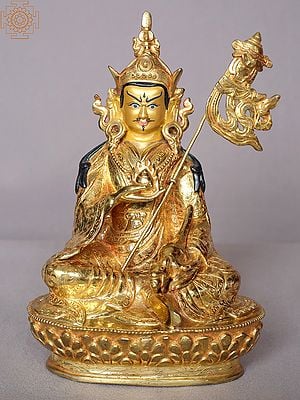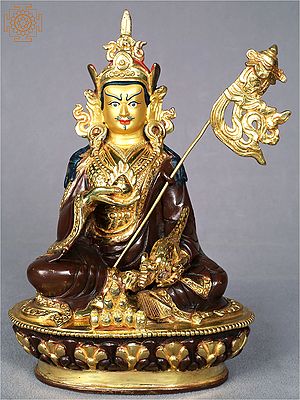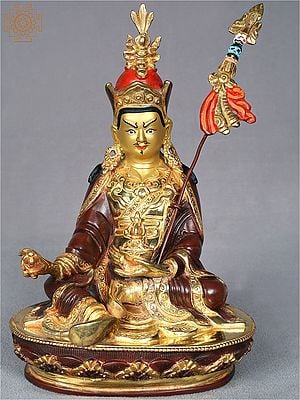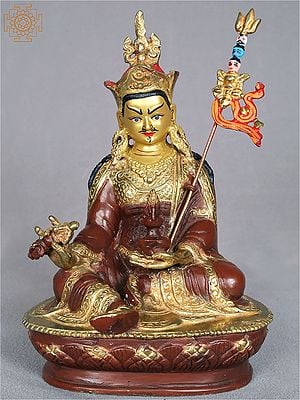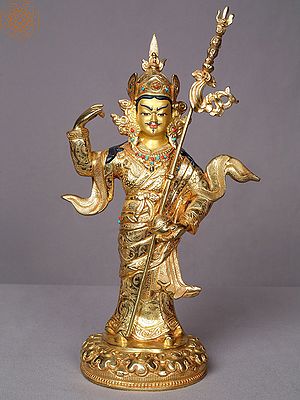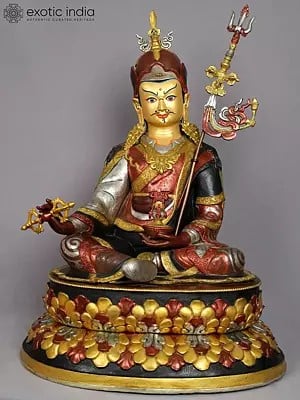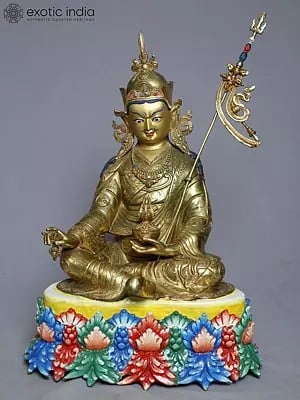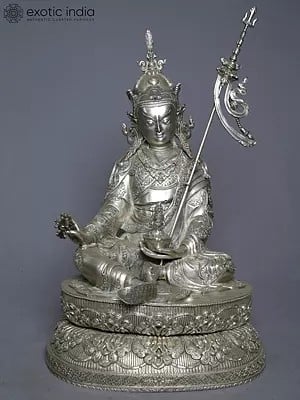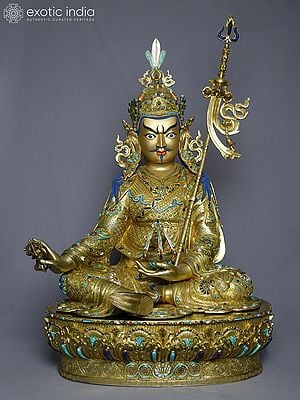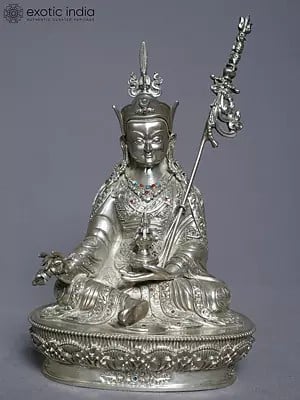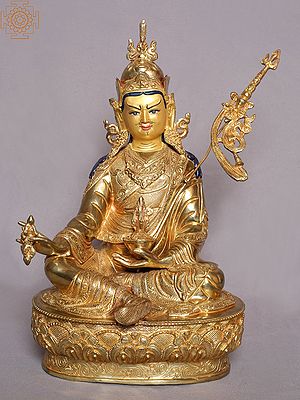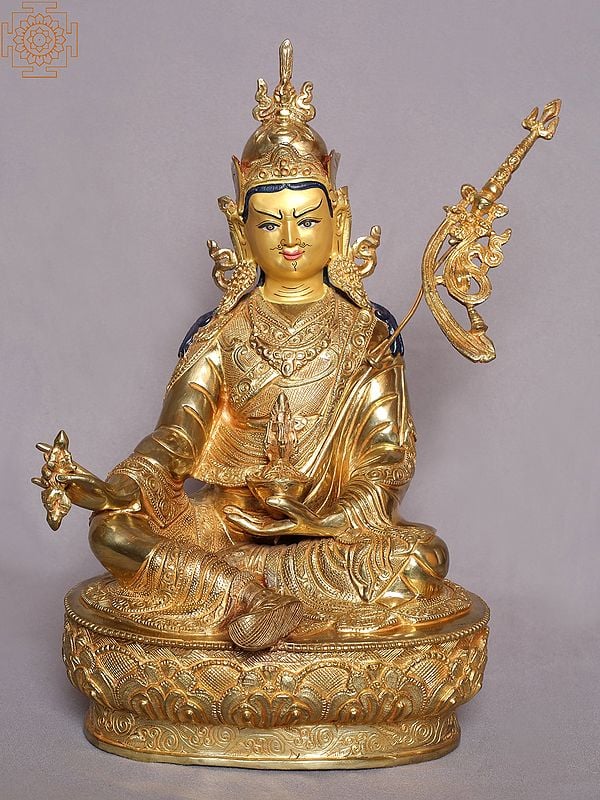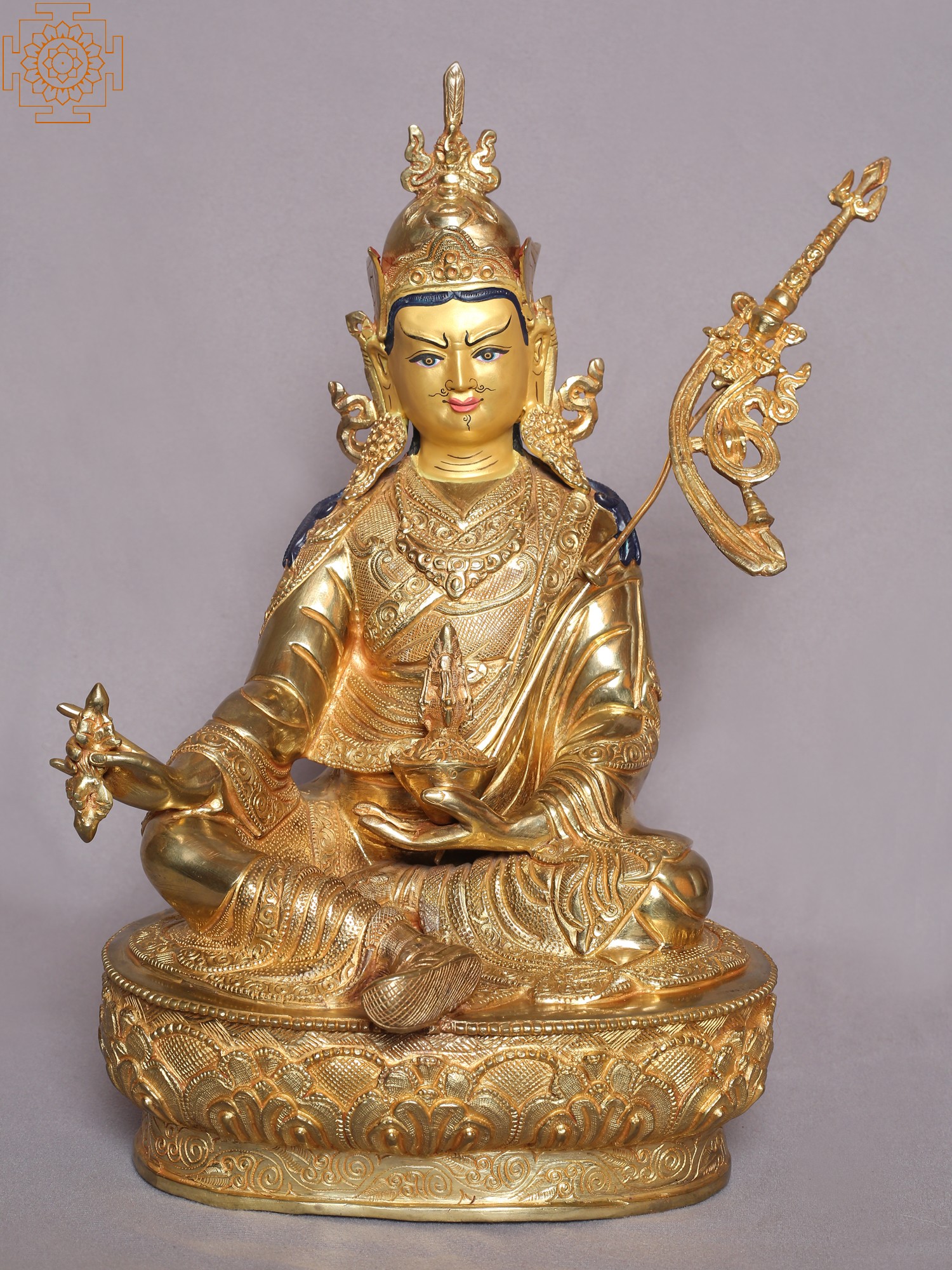
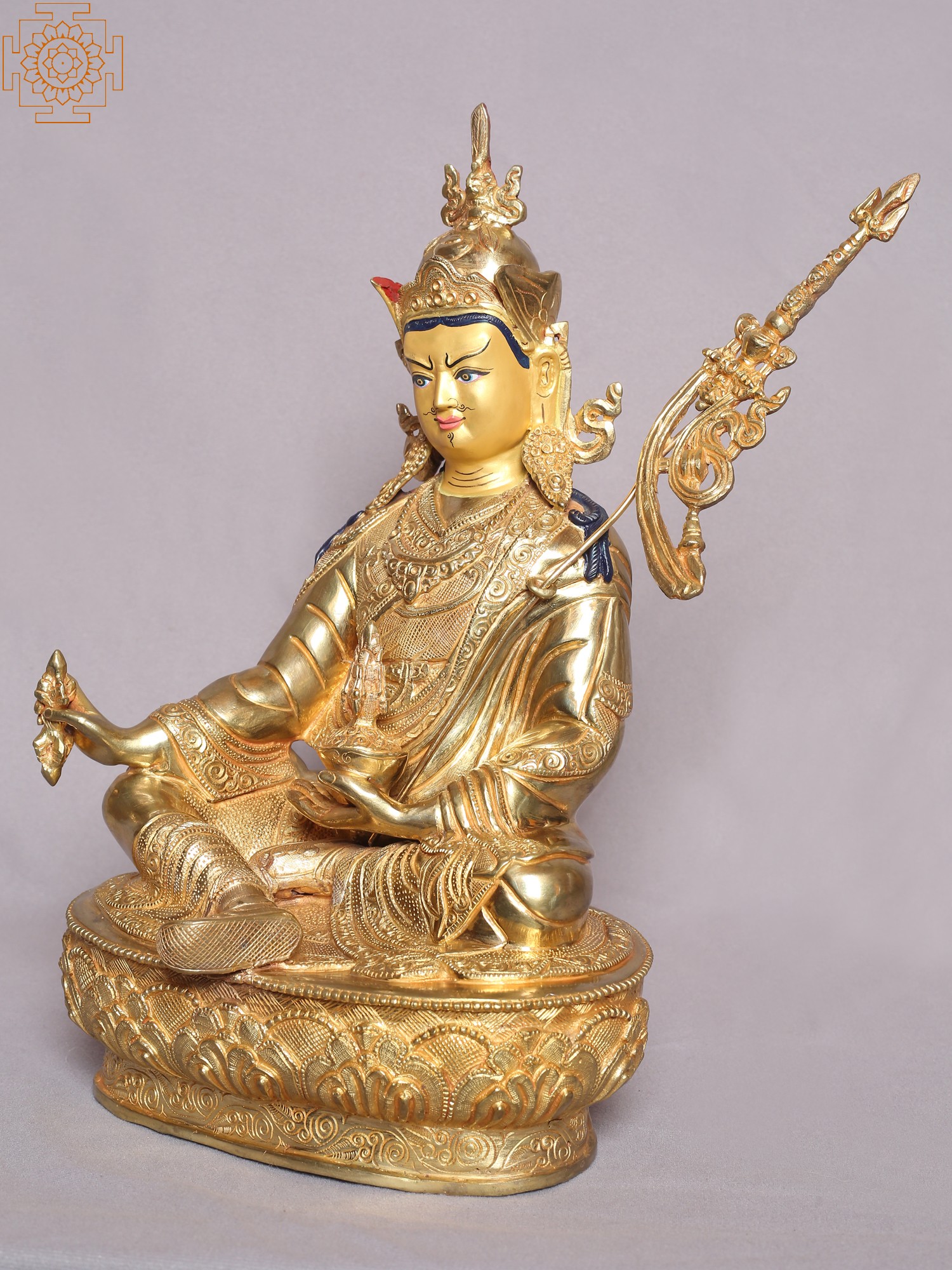
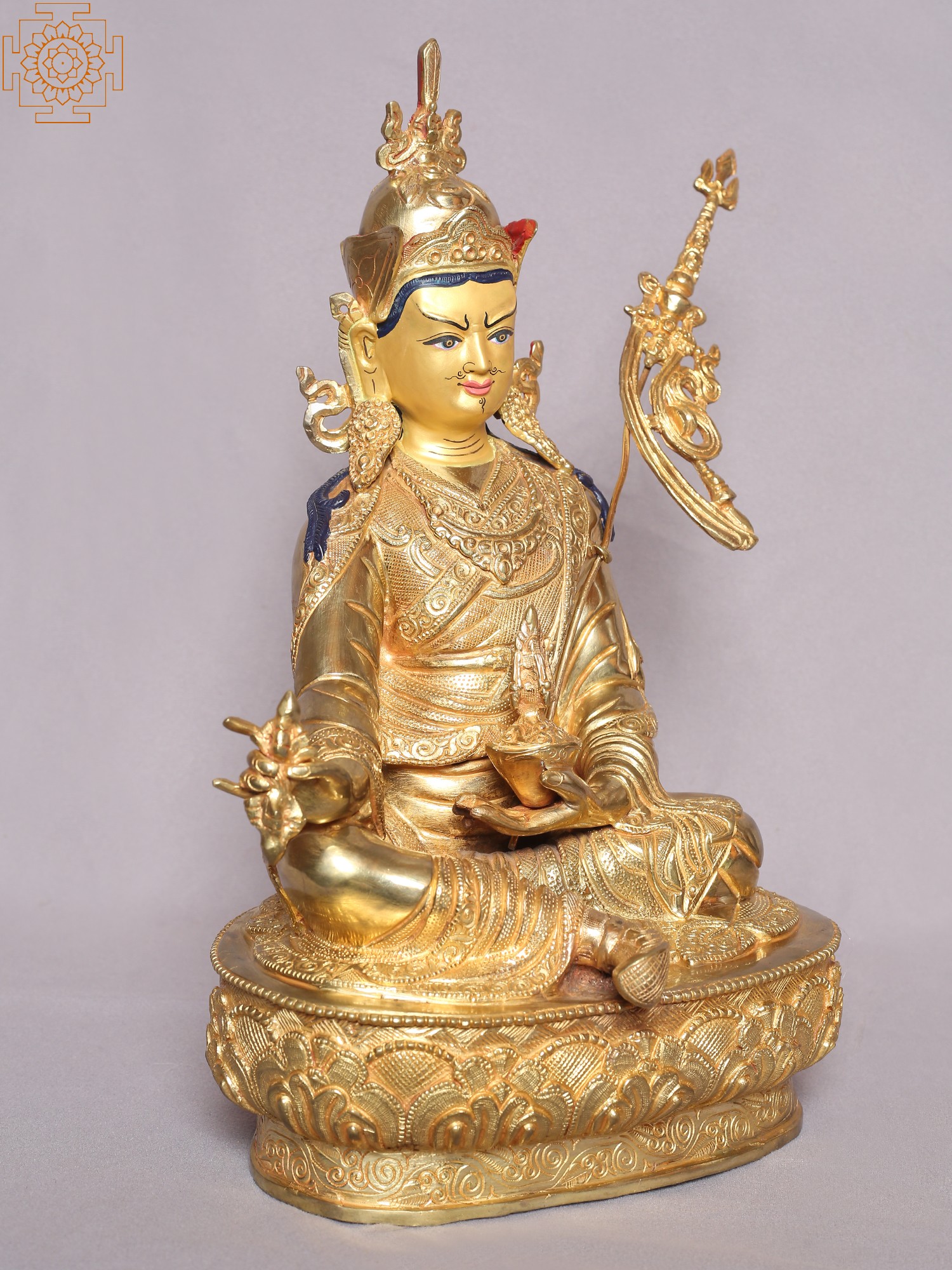
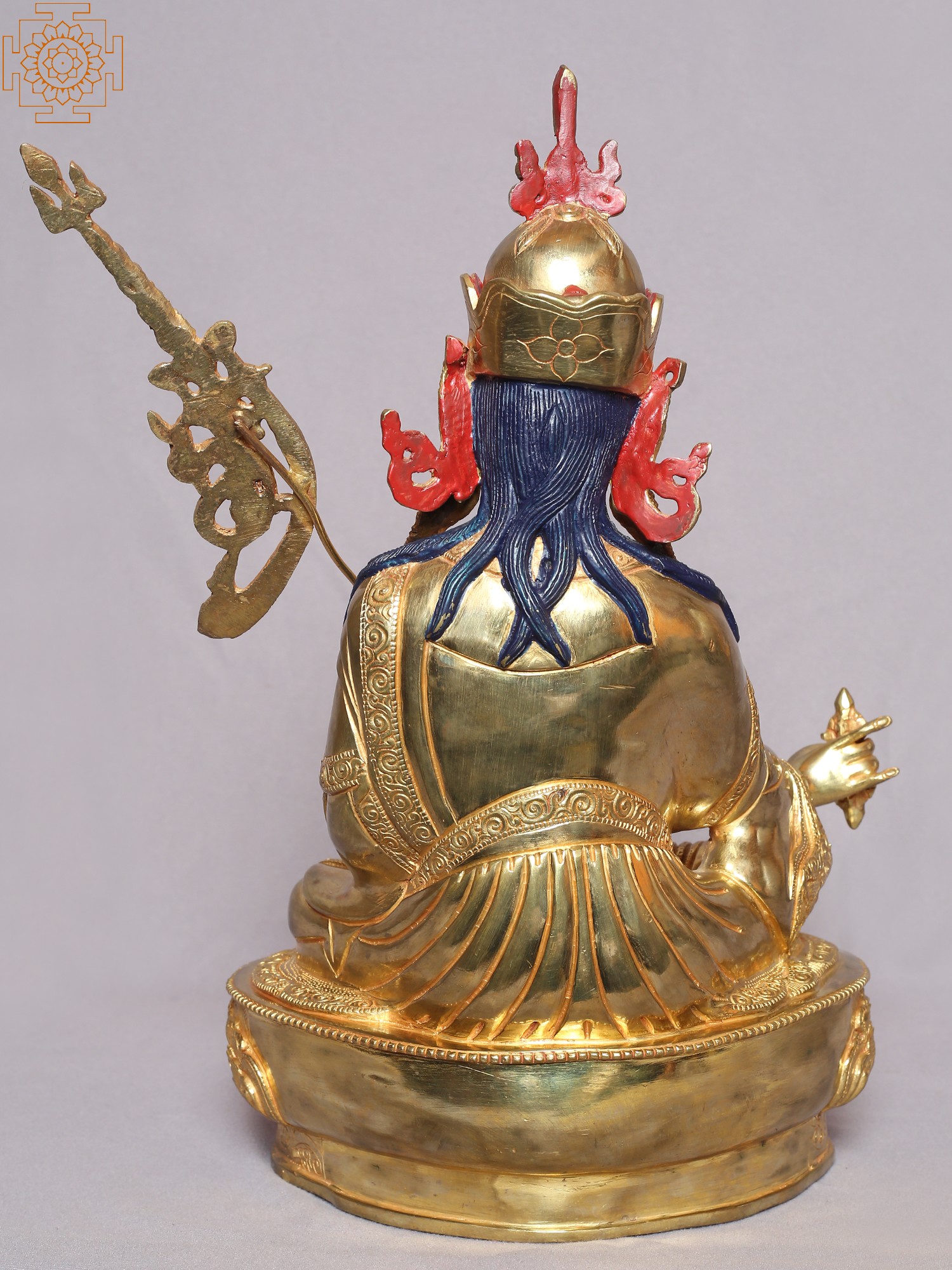
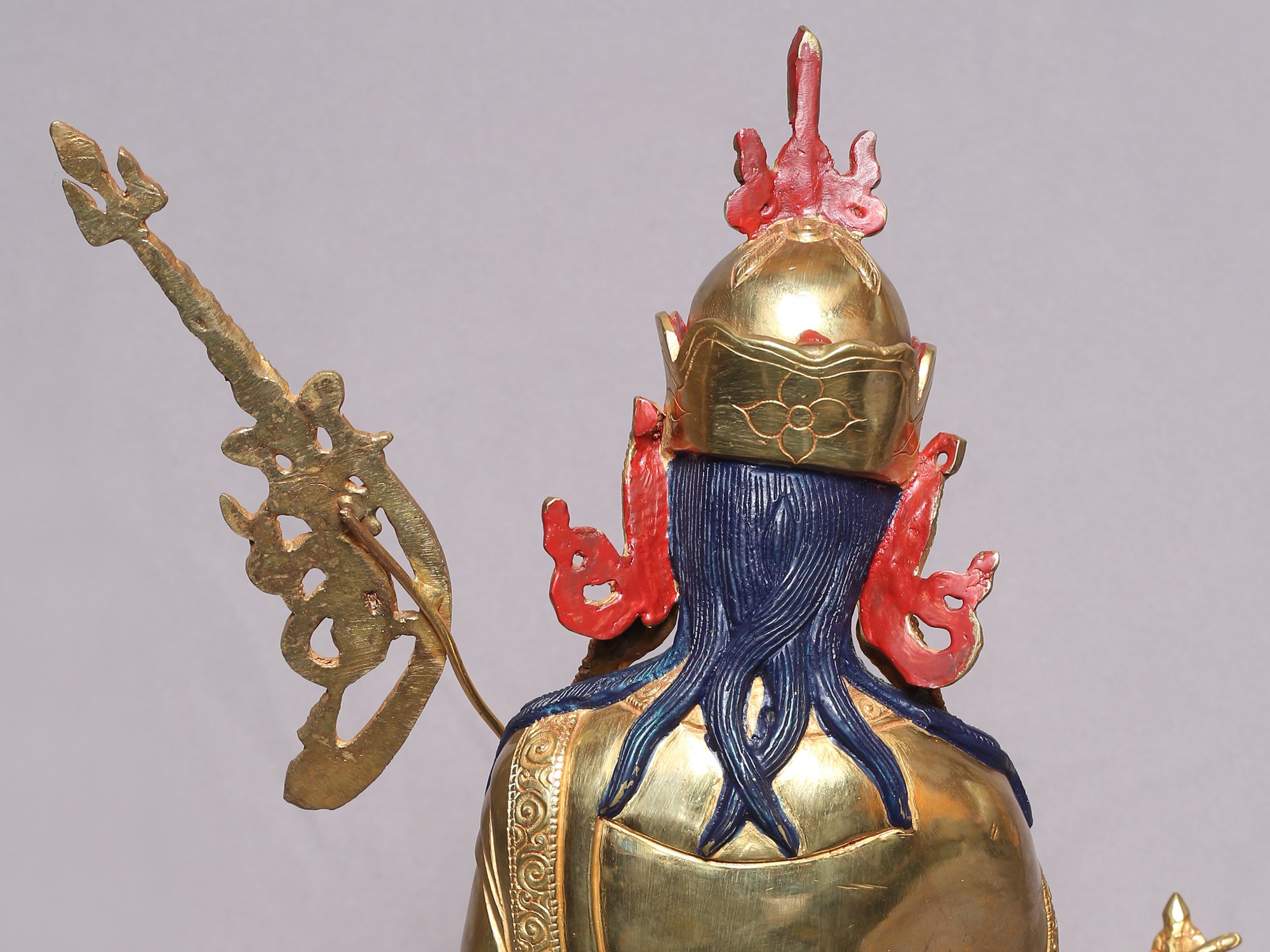
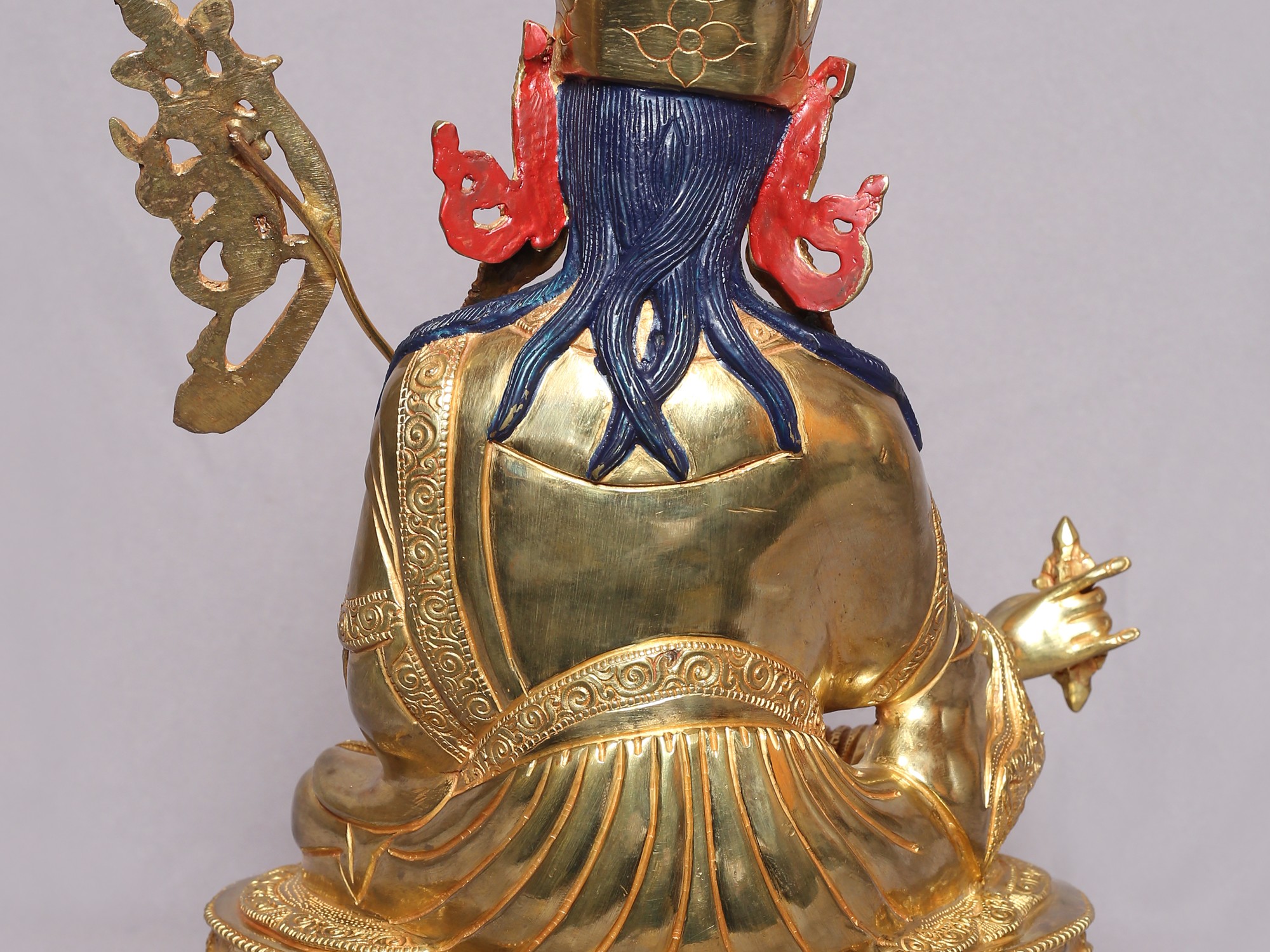
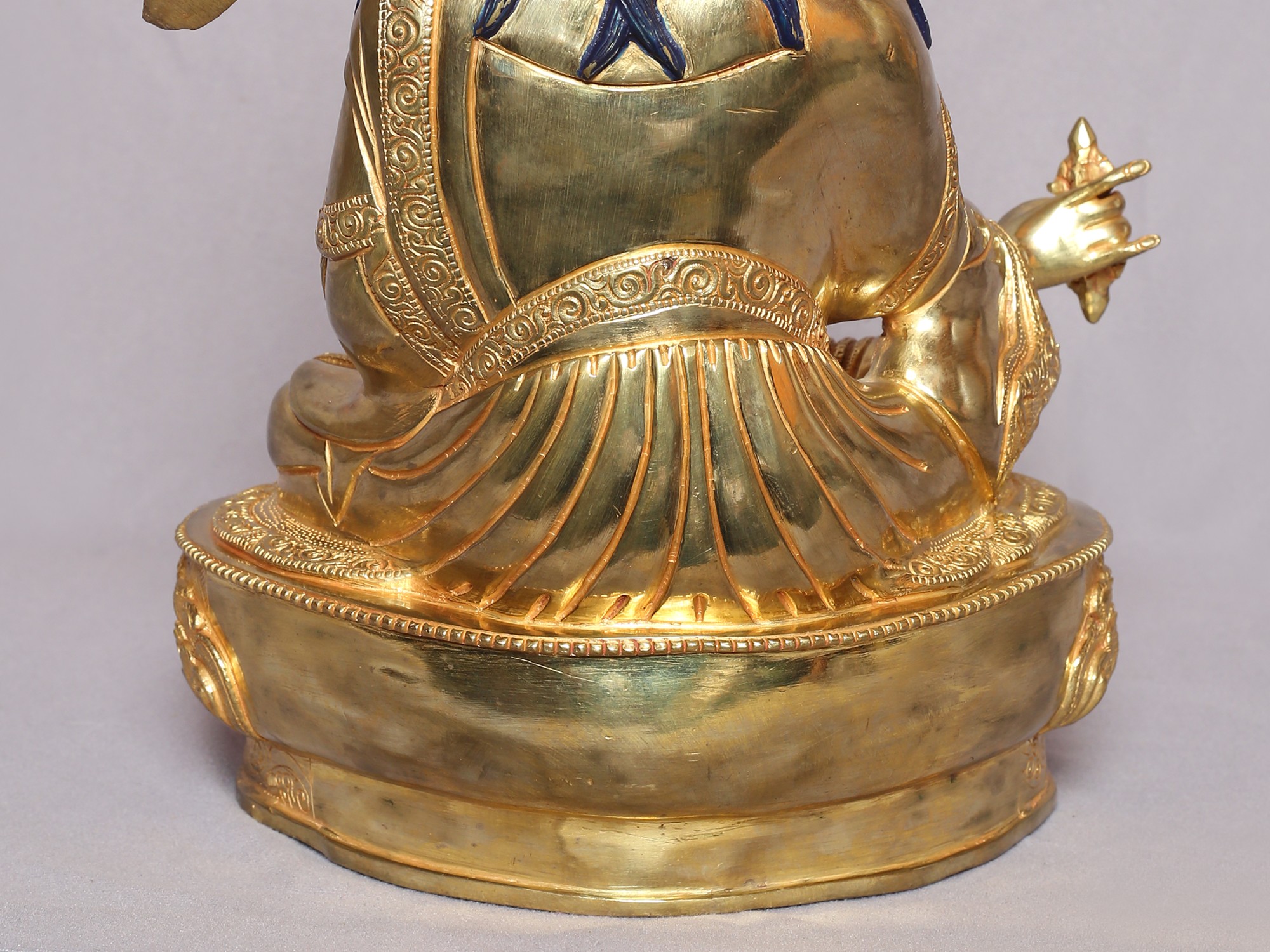
14" Nepalese Guru Padmasambhava Copper Figurine

| Specifications |
 |
MIU145 |
 |
Copper Gilded with Gold |
 |
Height: 14.5 inch |
| Width: 7.5 inch | |
| Depth: 9 inch | |
 |
Weight 4.50 kg |
| Delivery and Return Policies |
 |
Usually ships in 6 days |
 |
Returns and Exchanges accepted within 7 days |
 |
Free Delivery |


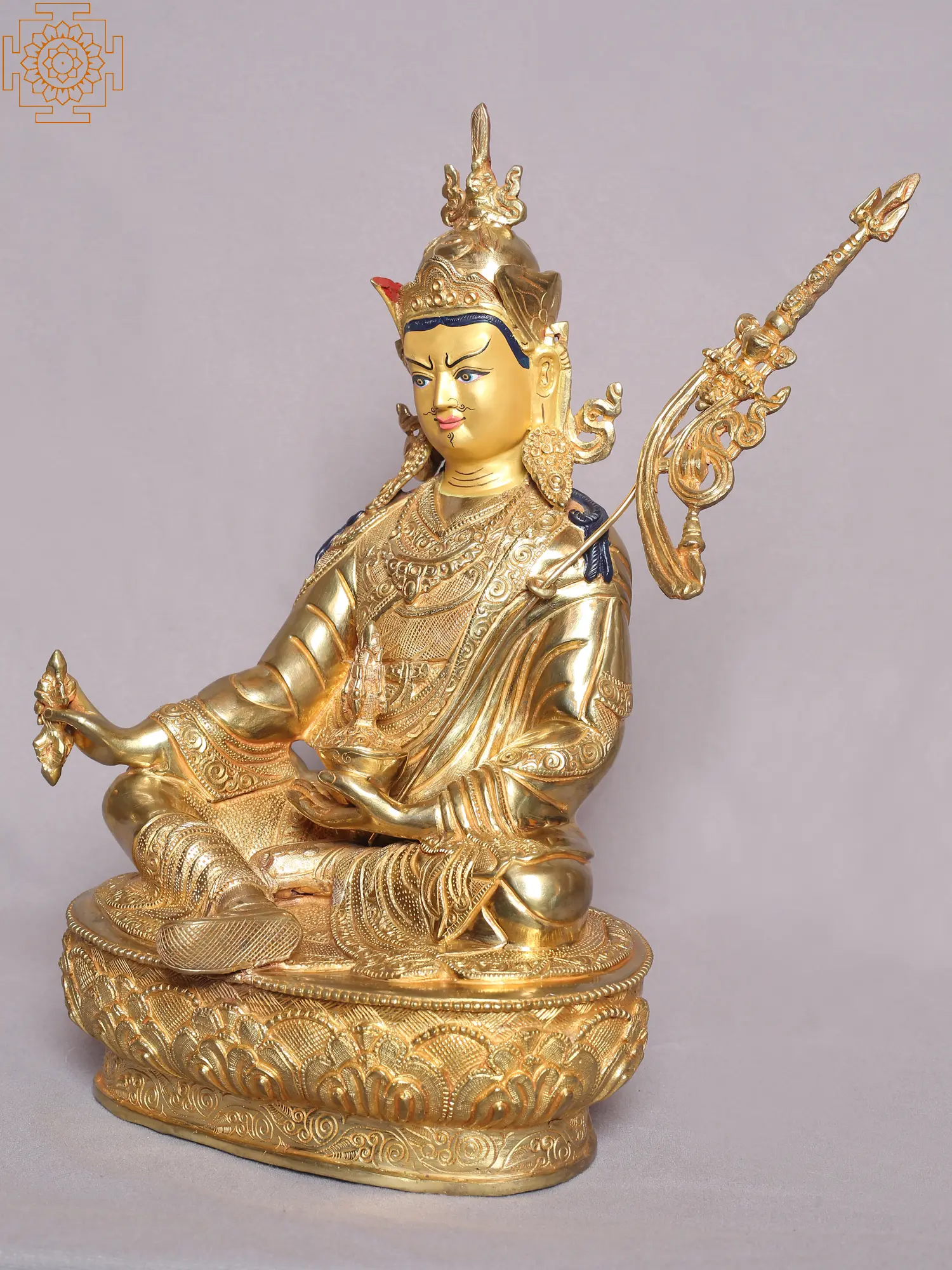
The term Guru Rinpoche, which means "Precious Master," is frequently used to refer to Guru Padmasambhava. It is believed that Guru Rinpoche is a fully realized and awakened entity, essentially a Buddha. Guru Rinpoche is thought to have incarnated as a fully enlightened entity from the beginning, in contrast to a progressive road to enlightenment or following Buddha Shakyamuni's teachings to achieve enlightenment over time.
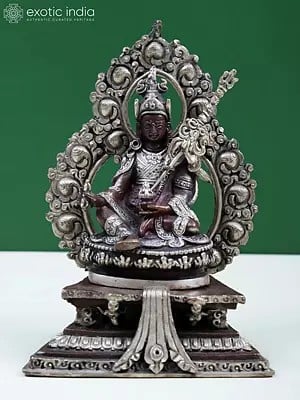
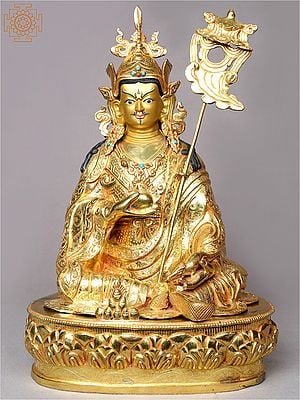
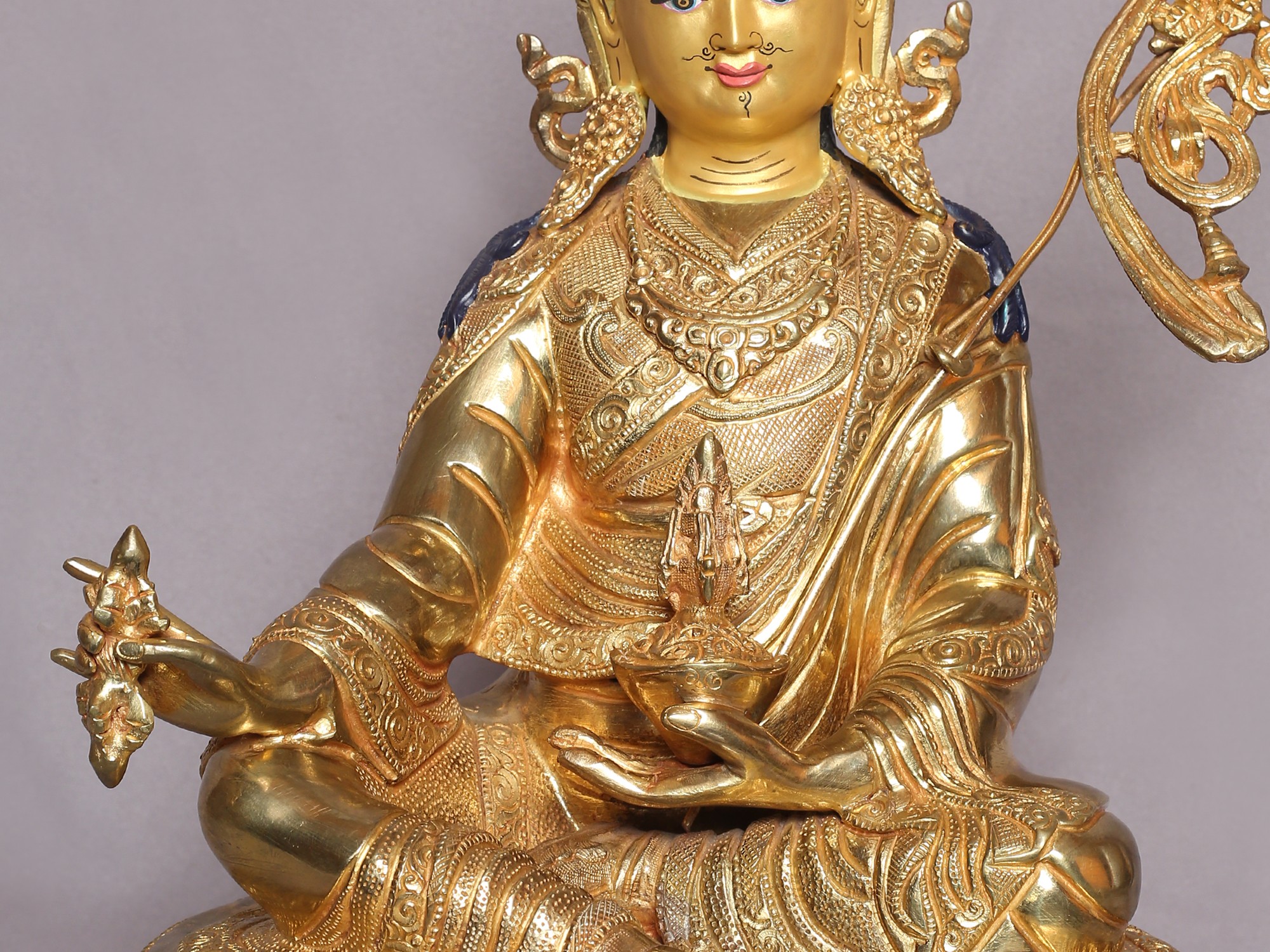
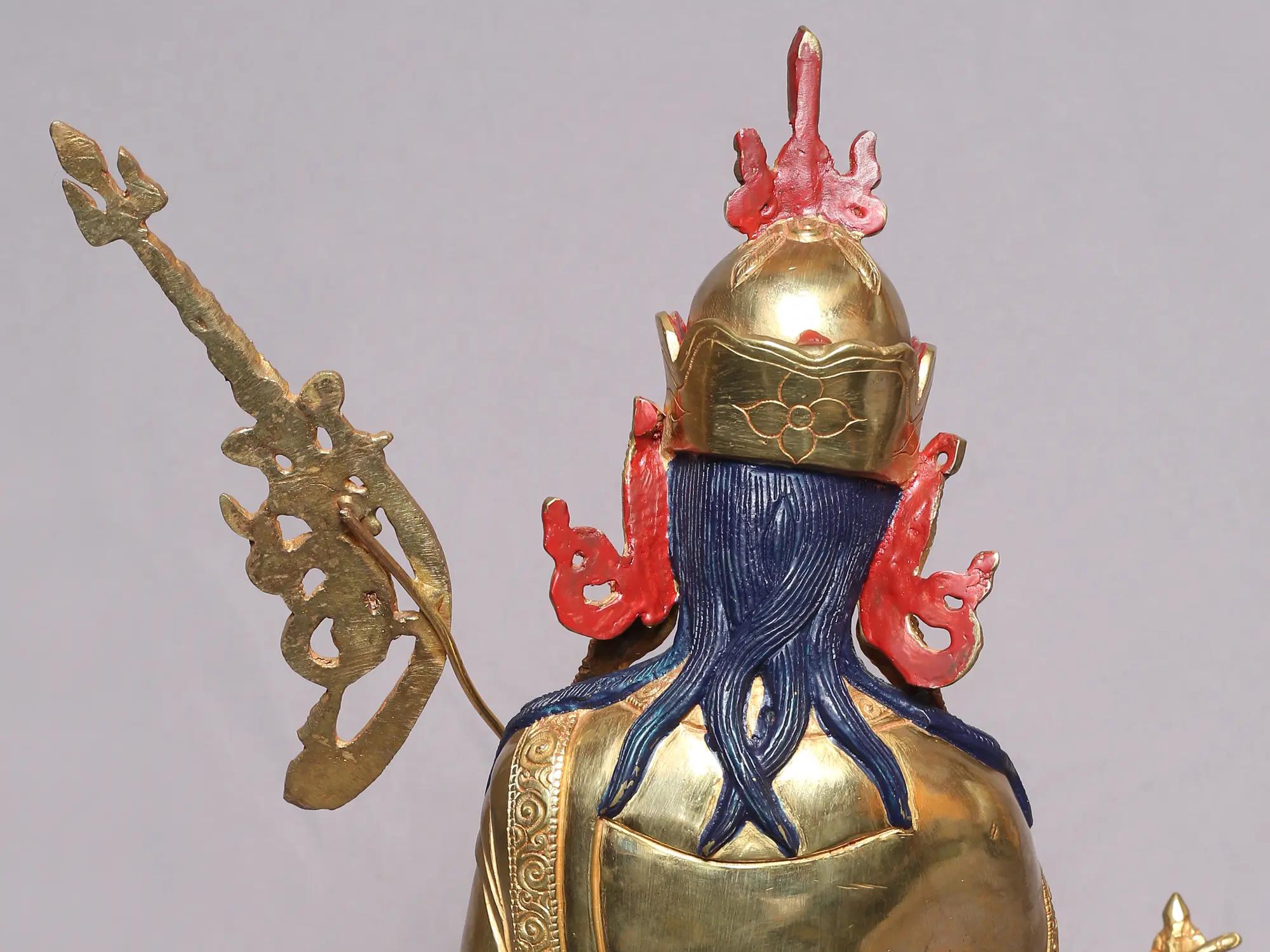
He is depicted clutching a five-pointed vajra in his right hand, which stands for the five kayas of the anuttarayoga tantra and the five Buddhas of the cosmic directions. He is grasping a skullcup, or Kapala, on the other hand, which stands for the conversion of illusion into complete knowledge. The skull also indicates immense happiness and impermanence.
Additionally, he is grasping a tantric staff, or Khatcanga, which is a ceremonial tool kept in the bend of the left arm. The seven-jewel insignia, or seven principal possessions of Chakravartin, were displayed below him. These included a pair of elephant tusks, a unicorn or rhinoceros horn representing the precious horse, a round golden earring belonging to the precious Queen, a square golden earring belonging to the precious Minister, a coral branch, and eight-faceted flaming jewels arranged in a pyramid formation with six visible jewels.
The Glorious Presence of Guru Rinpoche
Embrace the profound spiritual energy and exquisite artistry of this magnificent statue, depicting Guru Padmasambhava, also revered as Guru Rinpoche. This revered figure, whose name translates to "Lotus-Born," is credited with introducing Buddhism to Tibet in the 8th century CE. According to legend, he was miraculously born from a lotus blossom in the Dudh Kosi river, a testament to his divine nature and his pivotal role in shaping Tibetan Buddhism. His presence is said to dispel negativities, overcome obstacles, and bring forth blessings of wisdom and compassion.A Masterpiece of Nepalese Craftsmanship
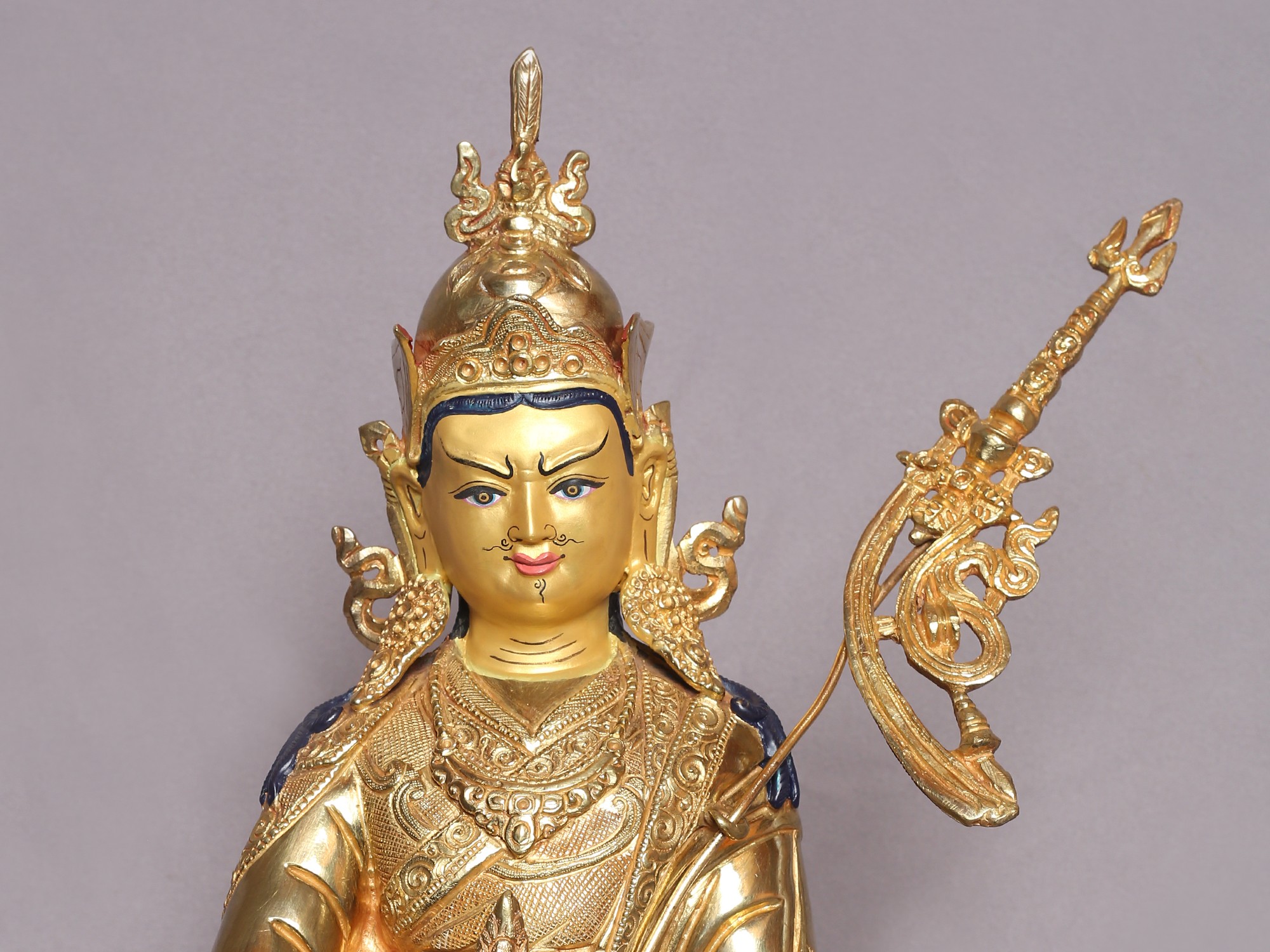
Meticulously crafted in Nepal, a land steeped in spiritual tradition and renowned for its artistic heritage, this statue embodies the pinnacle of traditional craftsmanship. Fashioned from copper and then lavishly gilded with gold, the lustrous finish emanates a radiant aura, symbolizing purity, enlightenment, and the preciousness of the teachings. The intricate details, from the serene expression on Guru Rinpoche's face to the delicate folds of his monastic robes, are rendered with remarkable skill. His posture, a relaxed yet regal seated pose, conveys a sense of peace and benevolent authority.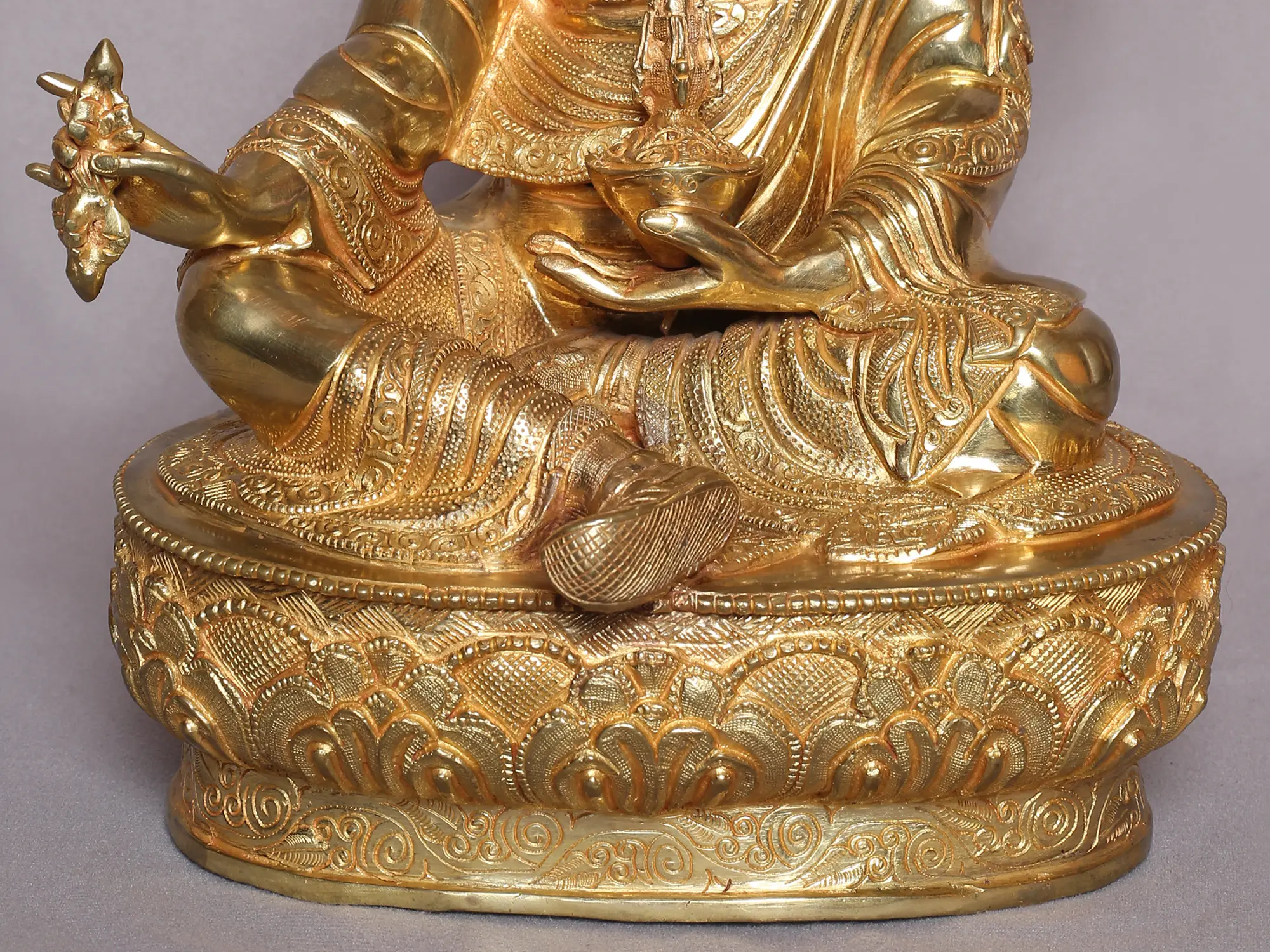
Symbolism and Iconography
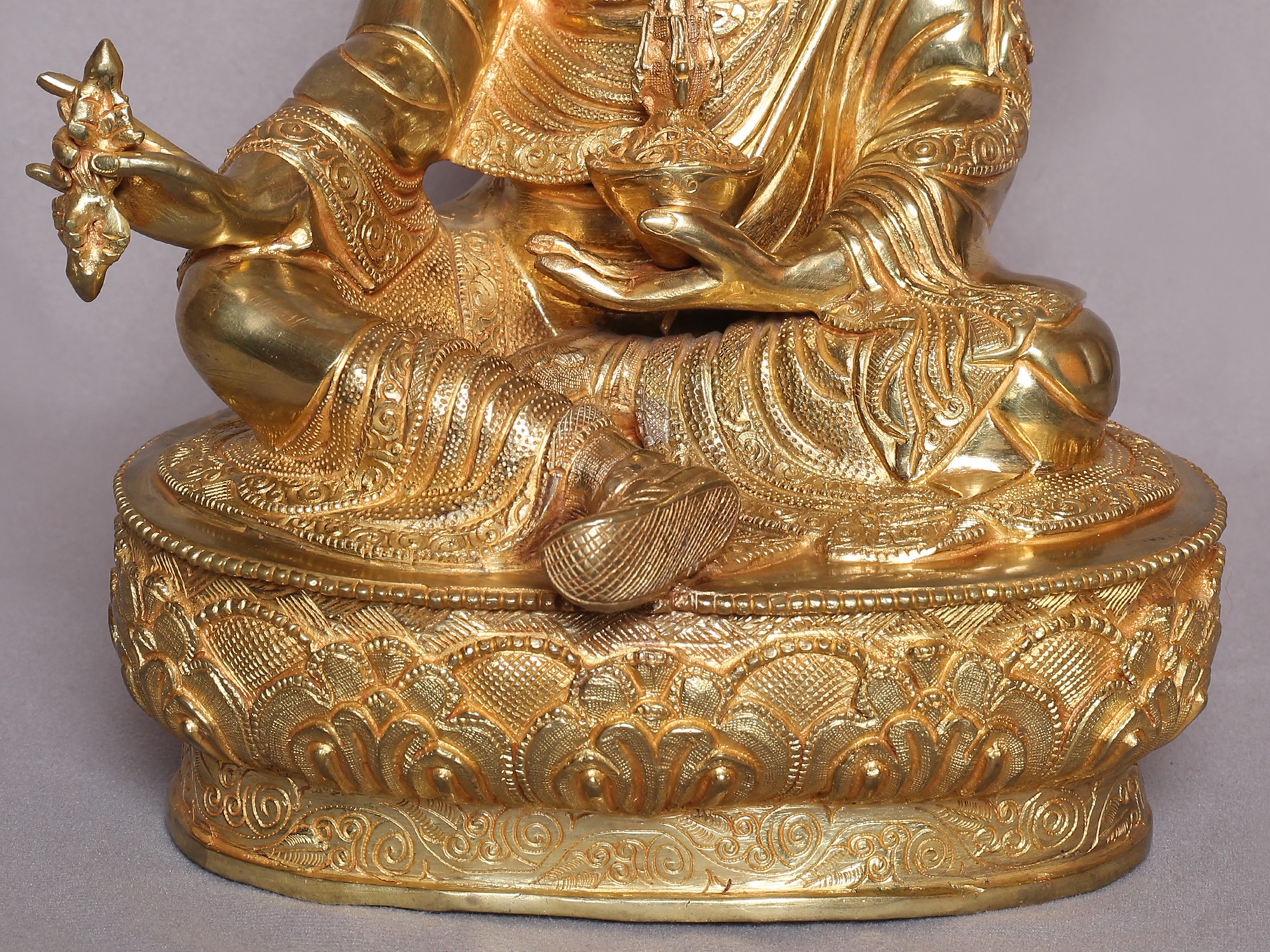
Every element of this statue is imbued with rich symbolism. In his left hand, Guru Rinpoche holds a skull-cup, representing the conquest of ego and the understanding of impermanence. The nectar within signifies the nectar of immortality and realization. His right hand may hold a ritualistic object, like the vajra or a dorje, symbolizing indestructible wisdom and the power to cut through illusion. The elaborate headdress signifies his spiritual authority and regal status. The base upon which he sits, often a lotus throne, represents purity and spiritual unfolding. The overall composition invites contemplation and reverence, serving as a focal point for meditation and devotion.Bringing Sacredness to Your Space
This 14-inch statue is more than just an object of art; it is a vessel of spiritual power and a conduit for blessings. Whether placed in a home altar, meditation room, or a space dedicated to peace and contemplation, it serves as a constant reminder of the path to enlightenment. The golden sheen is said to attract positive energy, while the presence of Guru Rinpoche is believed to offer protection from harm and guidance through life's challenges. This exquisite piece is a testament to the enduring legacy of Tibetan Buddhism and a beautiful way to invite its profound wisdom and compassion into your life.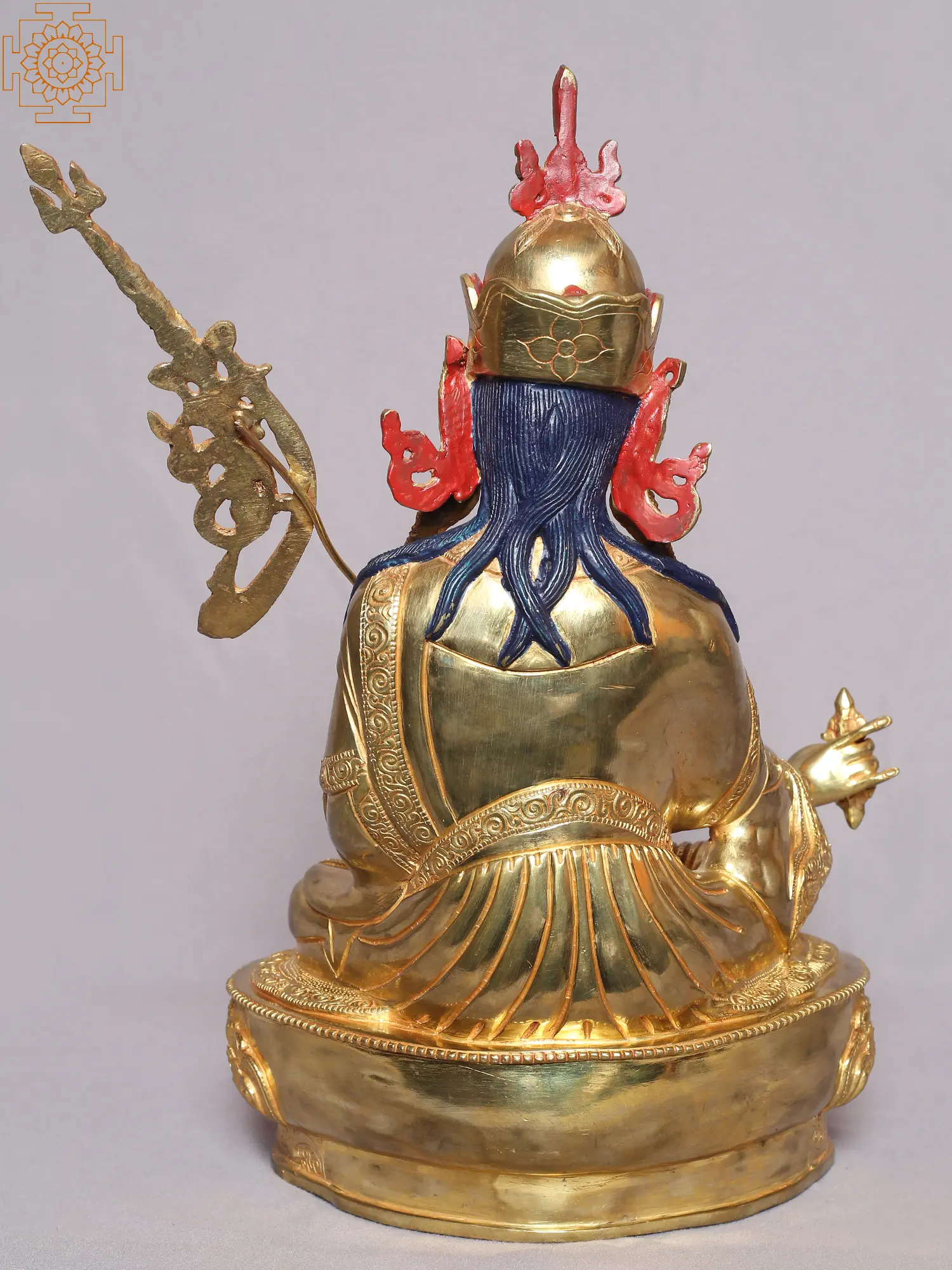
How are Nepalese copper statues made?
Nepalese statues and sculptures have a high copper content and therefore develop a slightly reddish patina on the surface as they age. However, the most unique feature of Nepalese copper statues is their decorative detailing. The pieces are heavily gilded and sometimes inlaid with semi-precious stones. This embellishment protects them from getting tarnished. The traditional lost-wax method for casting Nepalese copper statues remains the most practiced technique in Nepal for many centuries. This process involves many steps and requires skilled artists.
The first step in lost-wax sculpting is to make a wax replica of the desired Buddhist deity to be cast in copper. This replica is created by hand and therefore needs excellent artistic skills otherwise fine features will be lacking.
Once the wax replica is made, it is then coated with a special mixture of clay with a brush. This layer of clay is hardened when left to dry. A small hole is made on the base of the wax mould so that the wax flows away when it is heated.
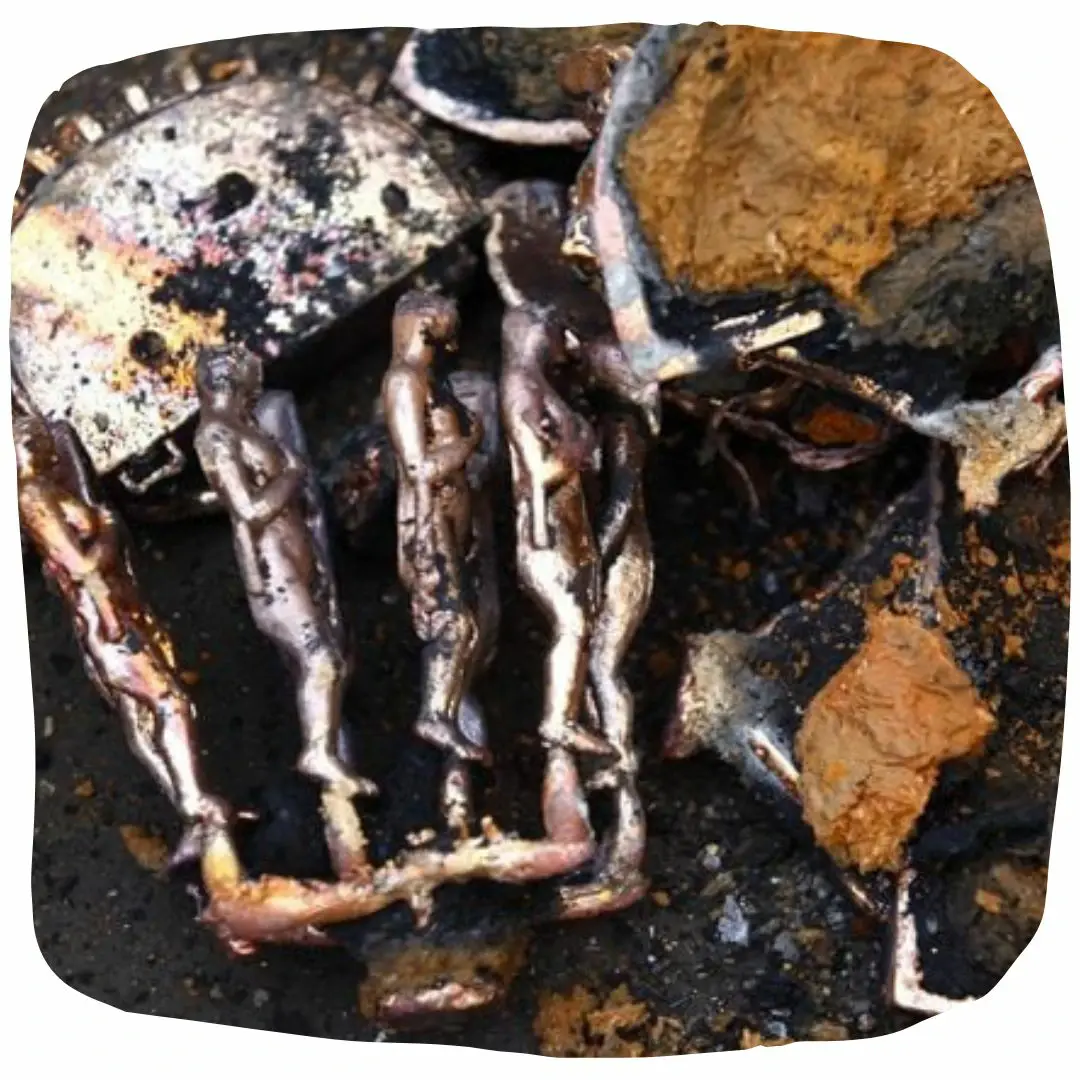
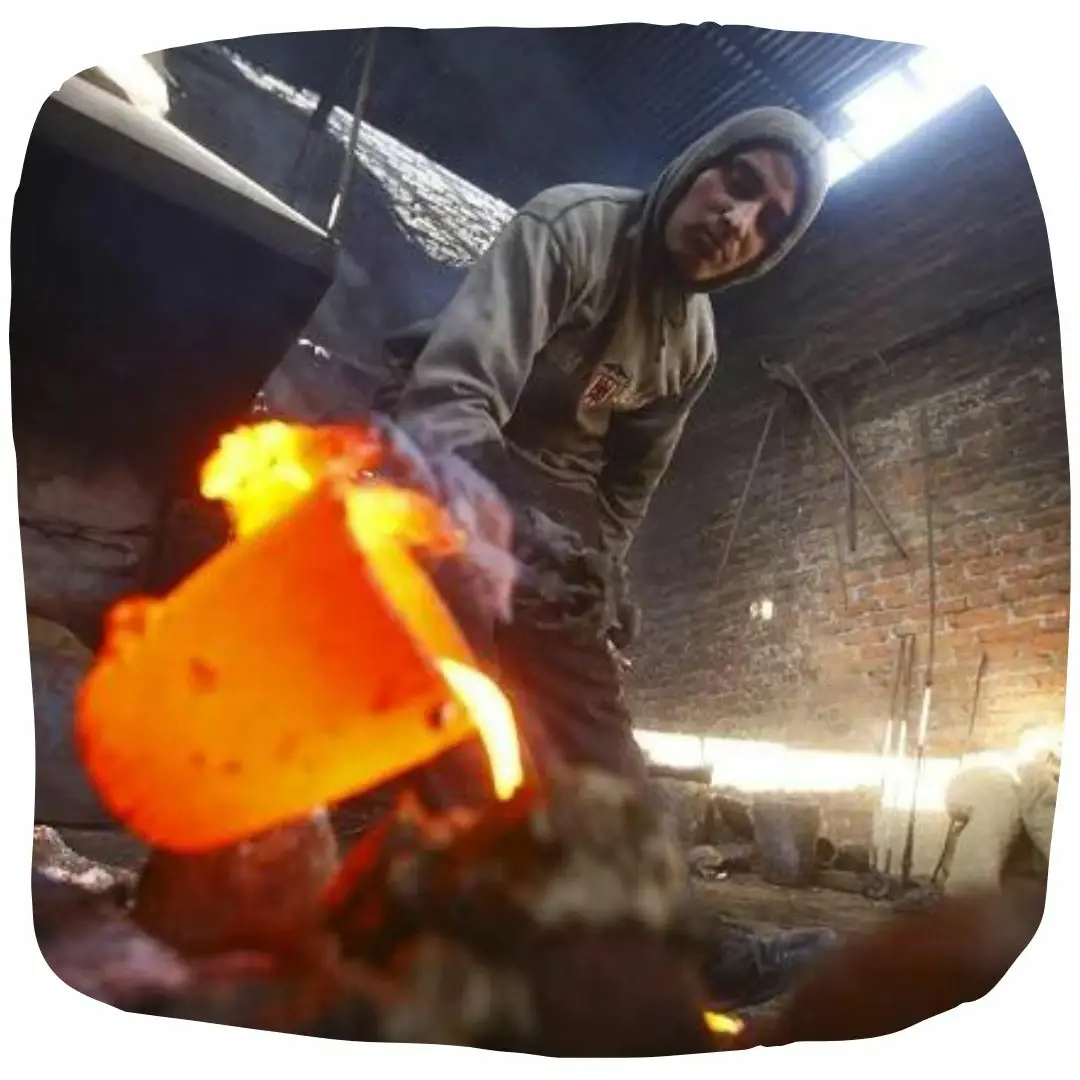
This is the time to pour liquid copper into the hollow mould which is then allowed to cool and harden inside a container of cold water. When the liquid metal has hardened, the mould is removed and the statue within is revealed.
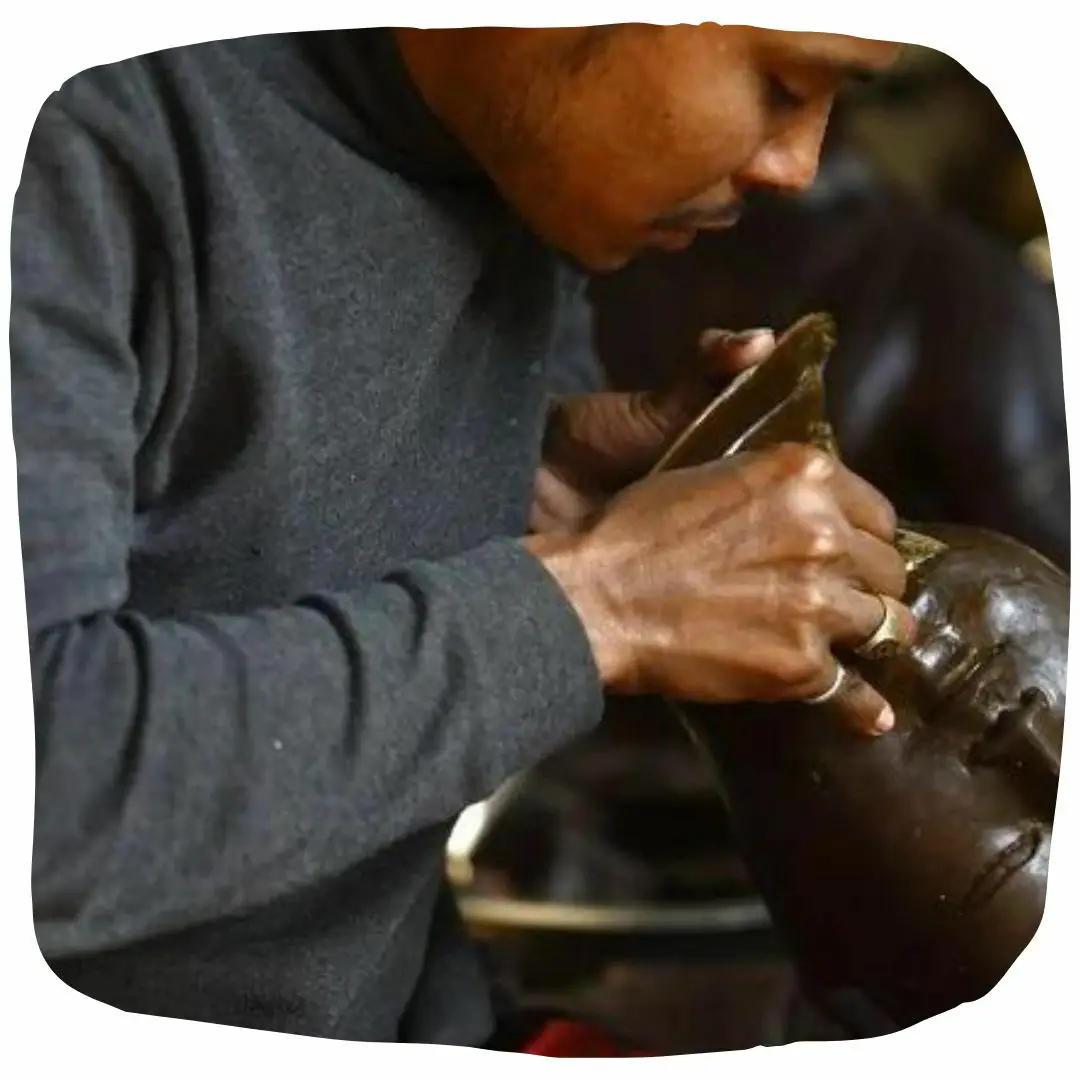
Now comes the most important part of Nepalese art which is gold gilding. This is done by the traditional fire gilding method. A mixture of mercury and 18K gold is applied on the surface of the statue and heat is applied using a flame torch. The result is that mercury evaporates along with impurities, leaving a pure 24K gold finish.
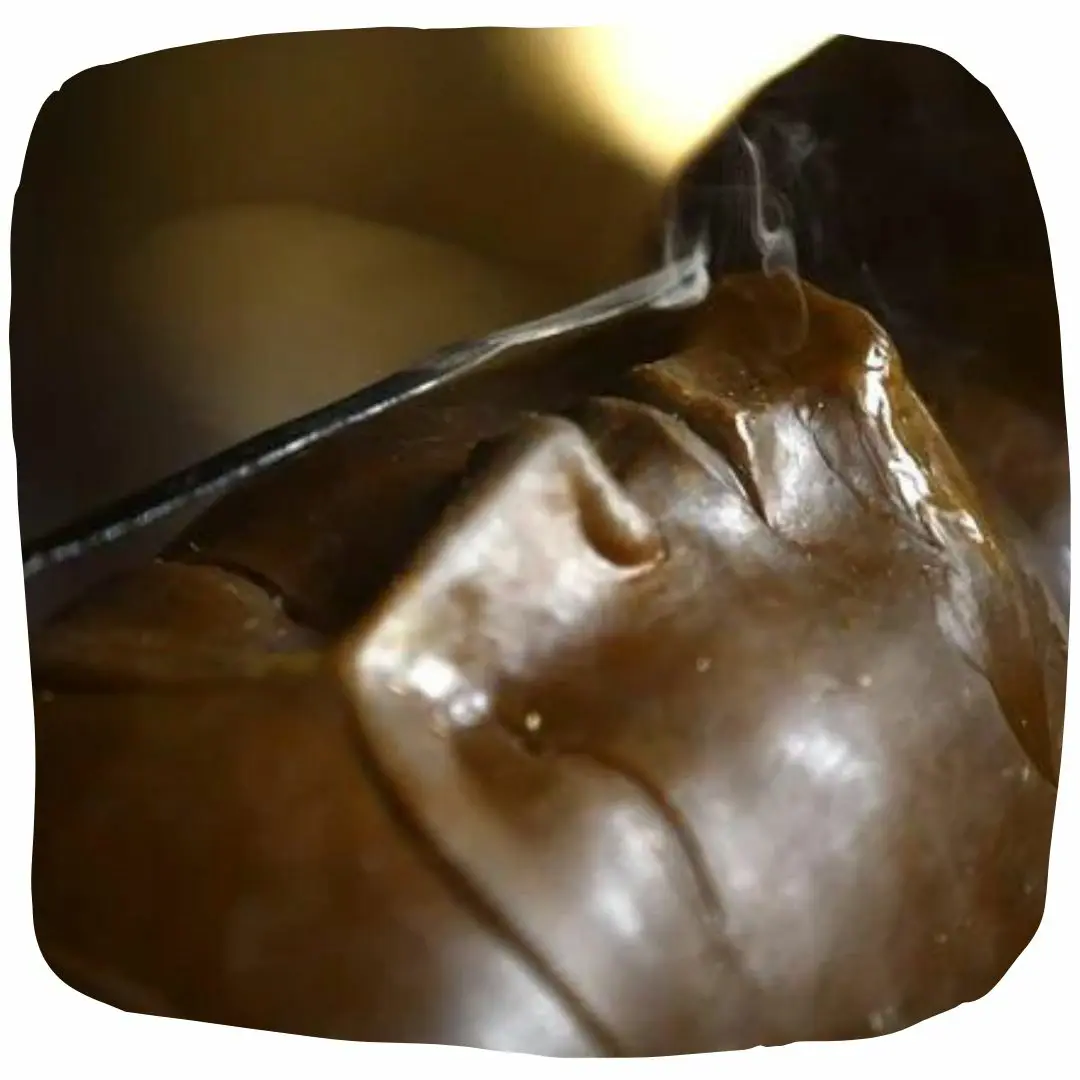
The lost-wax method of sculpting is the most preferred technique
for artists to cast a metallic statue having intricate details. Since Nepalese copper sculptures require extraneous effort for giving a majestic look by adding special embellishments, it takes several weeks to complete one masterpiece. A 24K gold gilded copper sculpture retains its brilliant luster for many years and appears as like before. Nepalese sculptures continue to remain one of the finest specimens of the art of the East that have a strong aesthetic appeal that other sculptures cannot match.