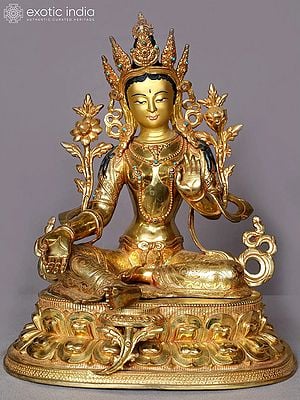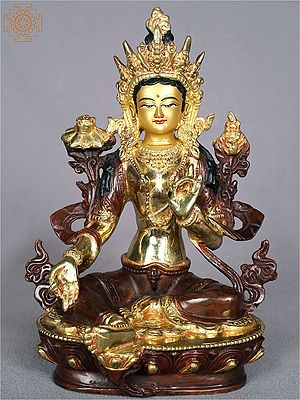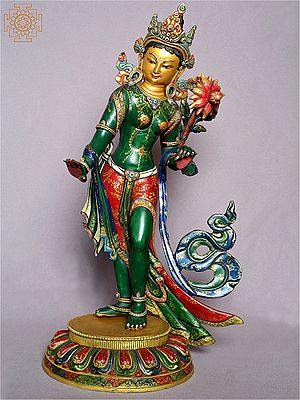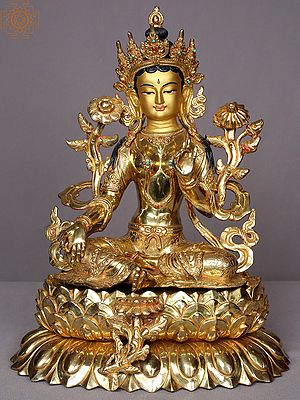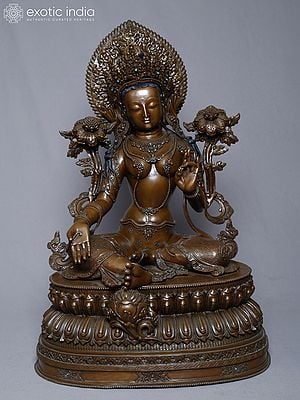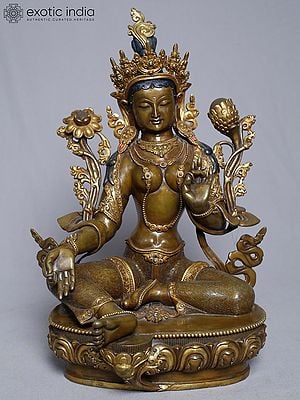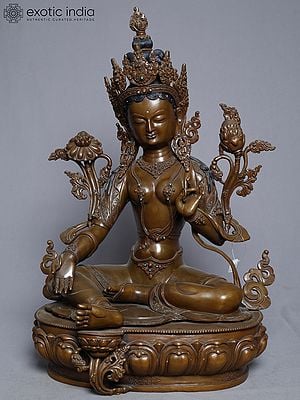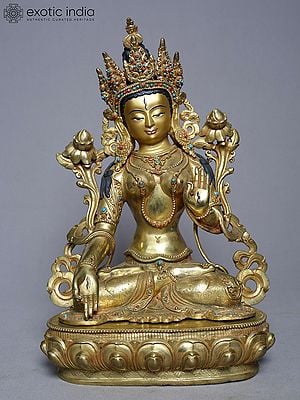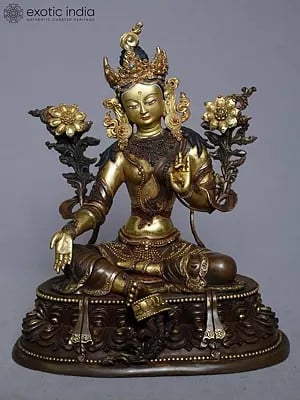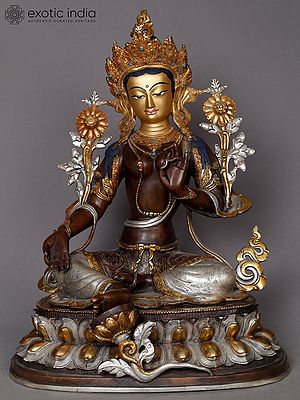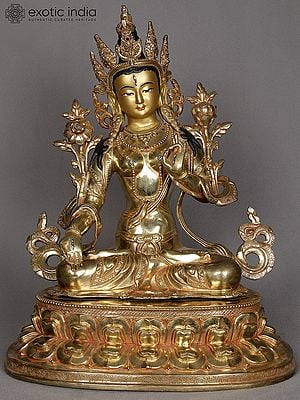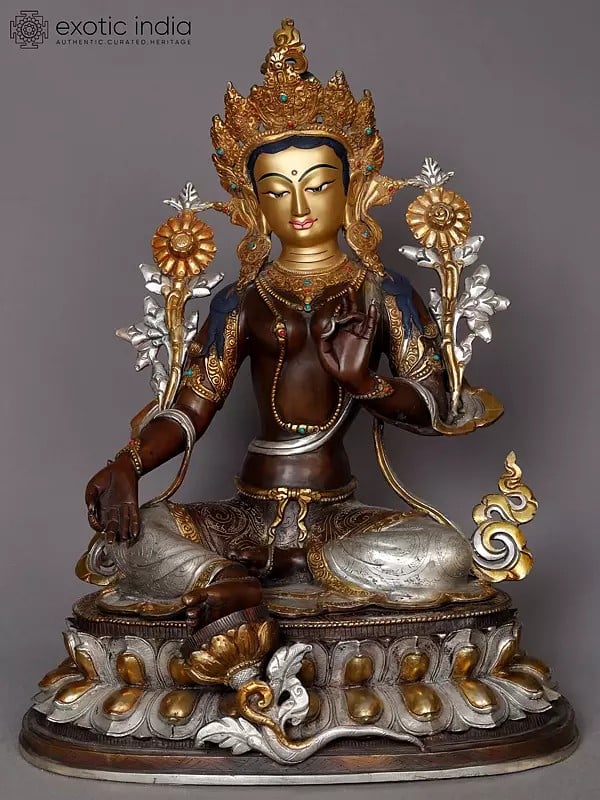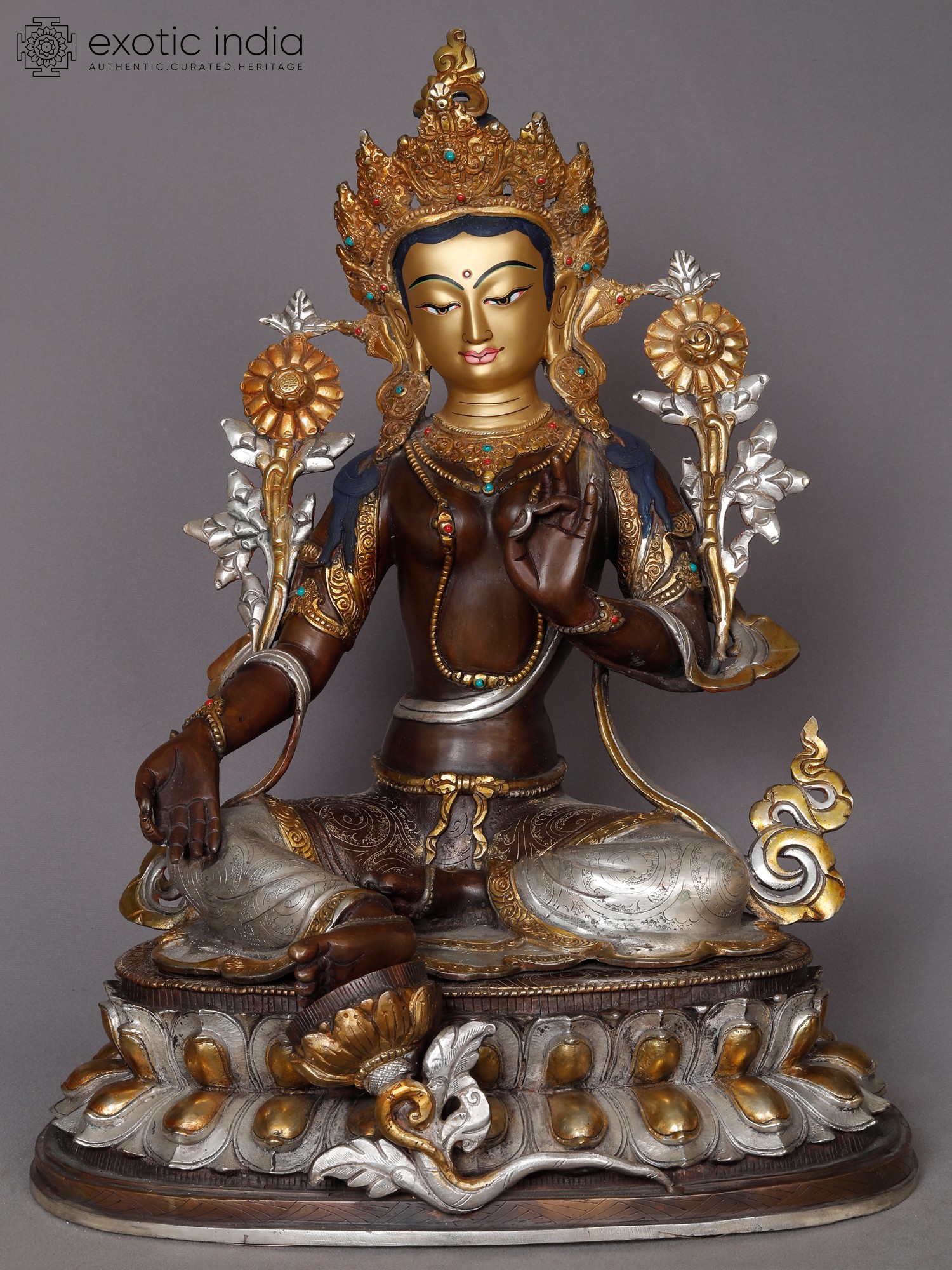

19" Green Tara Copper Statue from Nepal

| Specifications |
 |
CAA164 |
 |
Copper With Gold |
 |
Height: 19 inch |
| Width: 13 inch | |
| Depth: 11.5 inch | |
 |
Weight 9.60 kg |
| About the Item |
|
| Delivery and Return Policies |
 |
Usually ships in 6 days |
 |
Returns and Exchanges accepted within 7 days |
 |
Free Delivery |


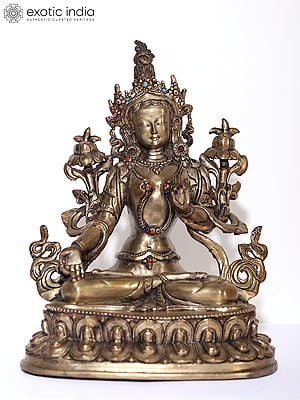
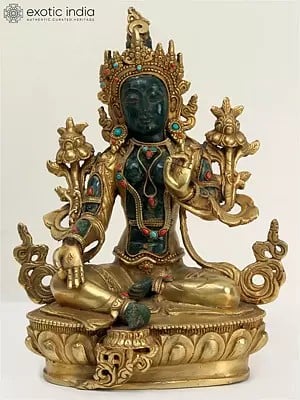
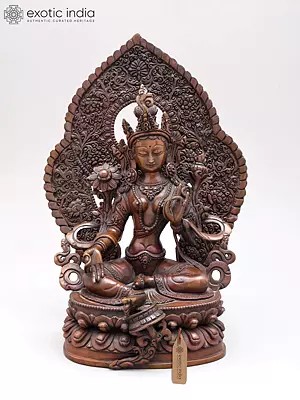
Tara
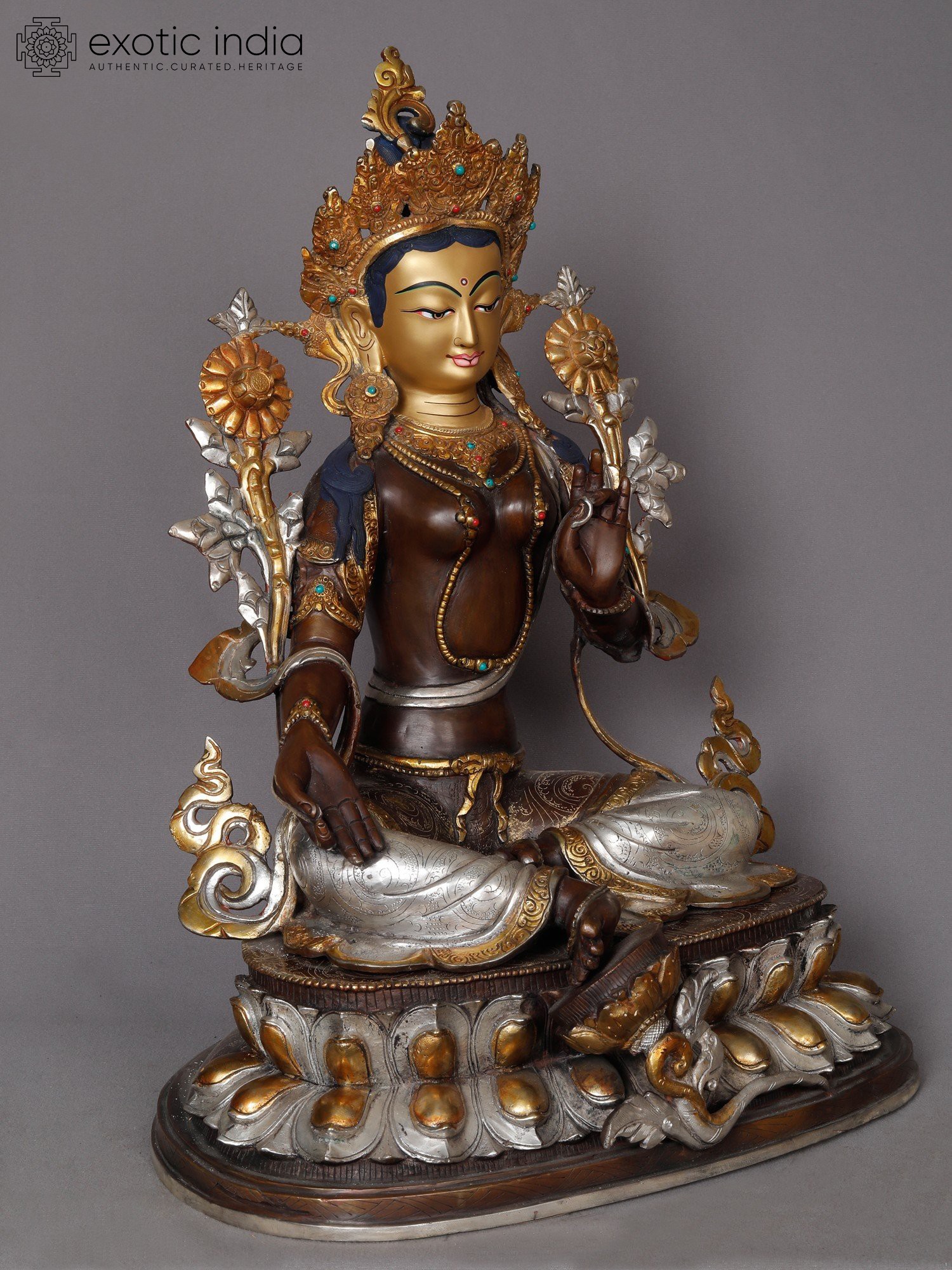
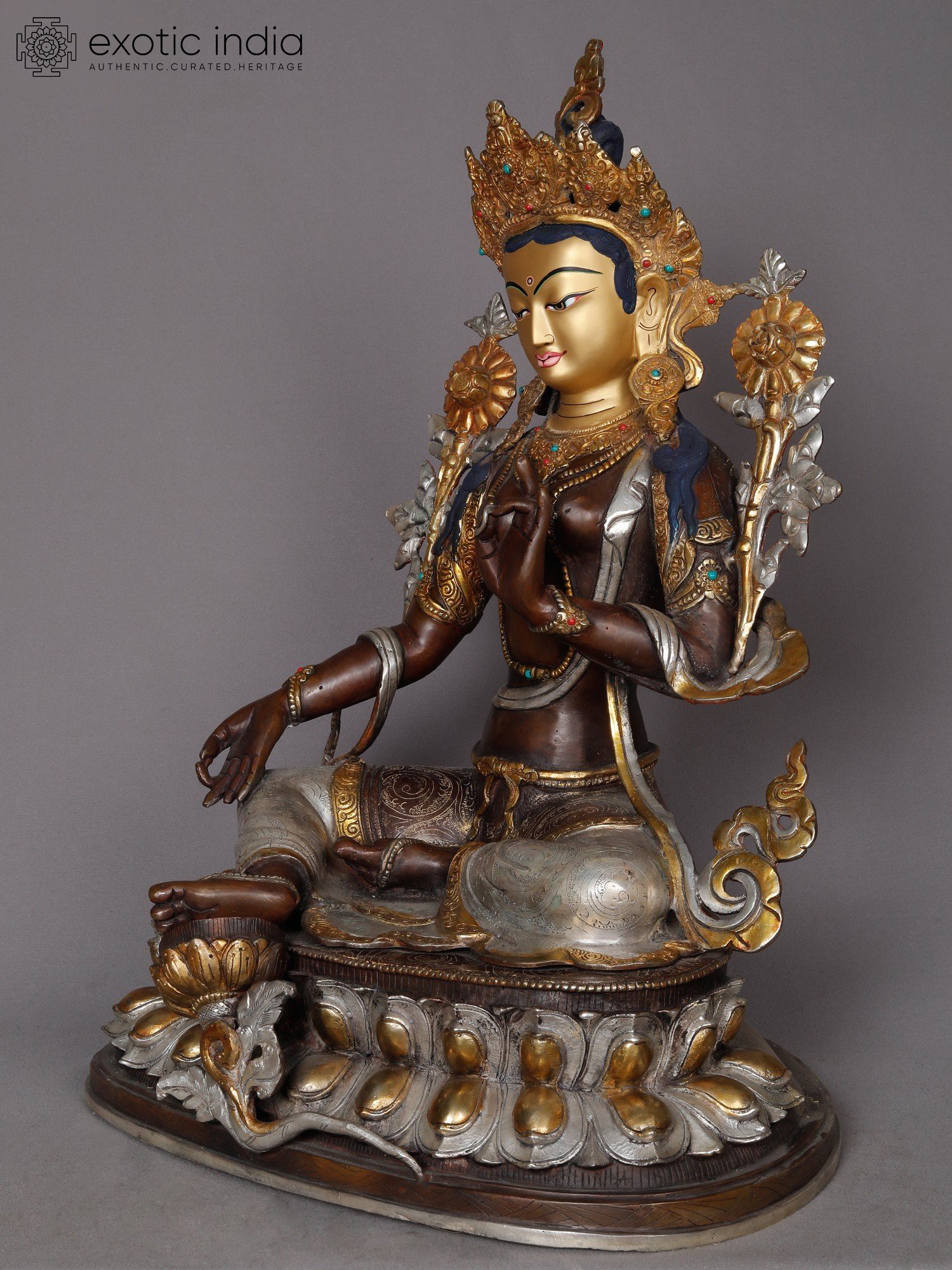
manifestations share a common portrayal with a single face and two hands,
adorned in a soothing green hue. Seated gracefully, the right leg is extended
while the left is drawn in. The right hand gracefully extends across the knee,
symbolizing generosity, while some depictions exhibit the hand placed over the
knee with fingers pointing skyward, invoking a fearless spirit. All Tara forms
exude serenity, complemented by celestial attire and intricate ornaments. An
exception arises with the Day's Peaceful form, transmuting into a Wrathful guise
come nightfall, embodying her fierce aspect.
Tara's
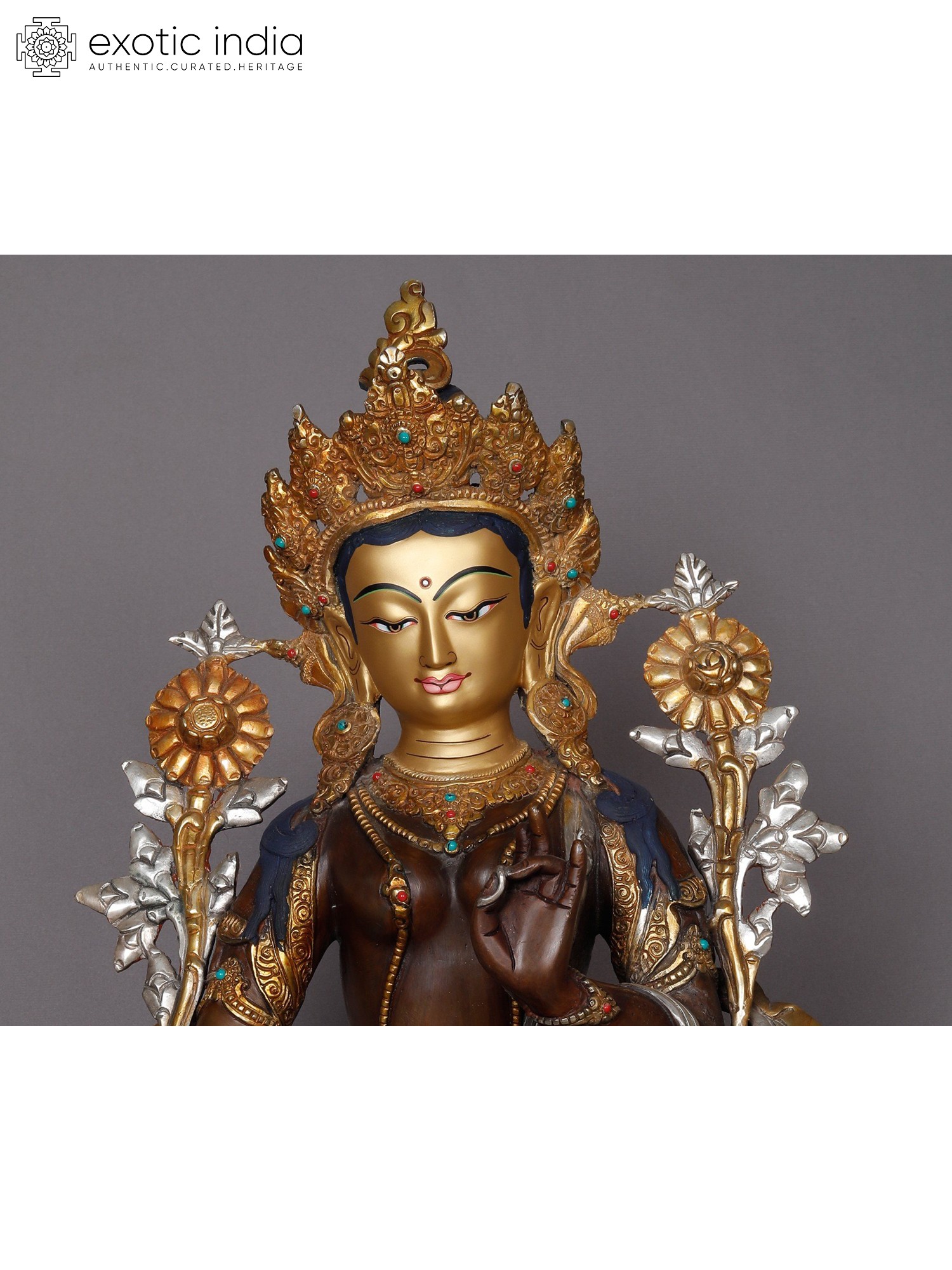
embellishments comprise a harmonious blend of red and blue jewels, harmonizing
against the backdrop of a copper base adorned with resplendent gold accents.
Embodying Compassion and Enlightenment
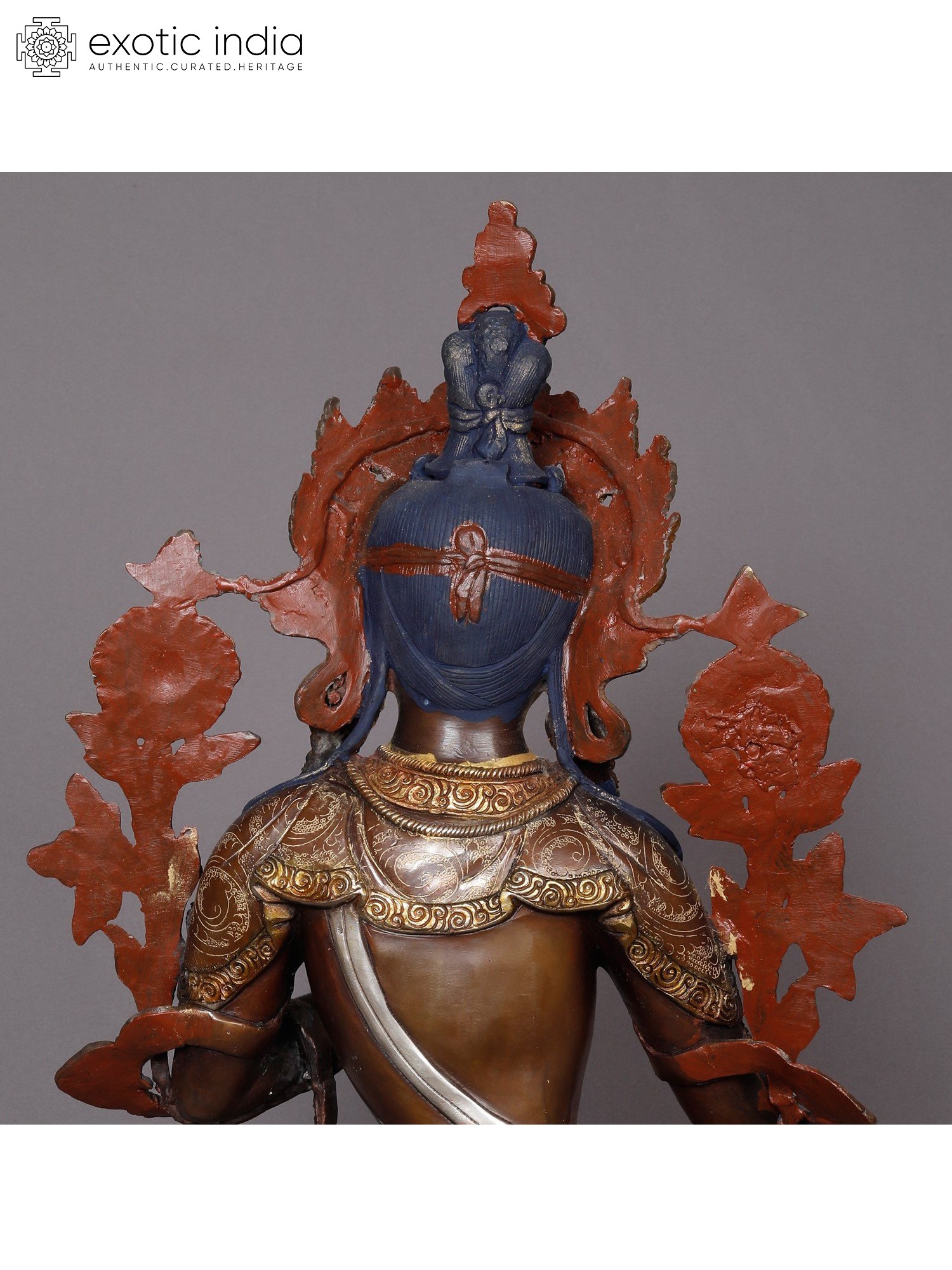
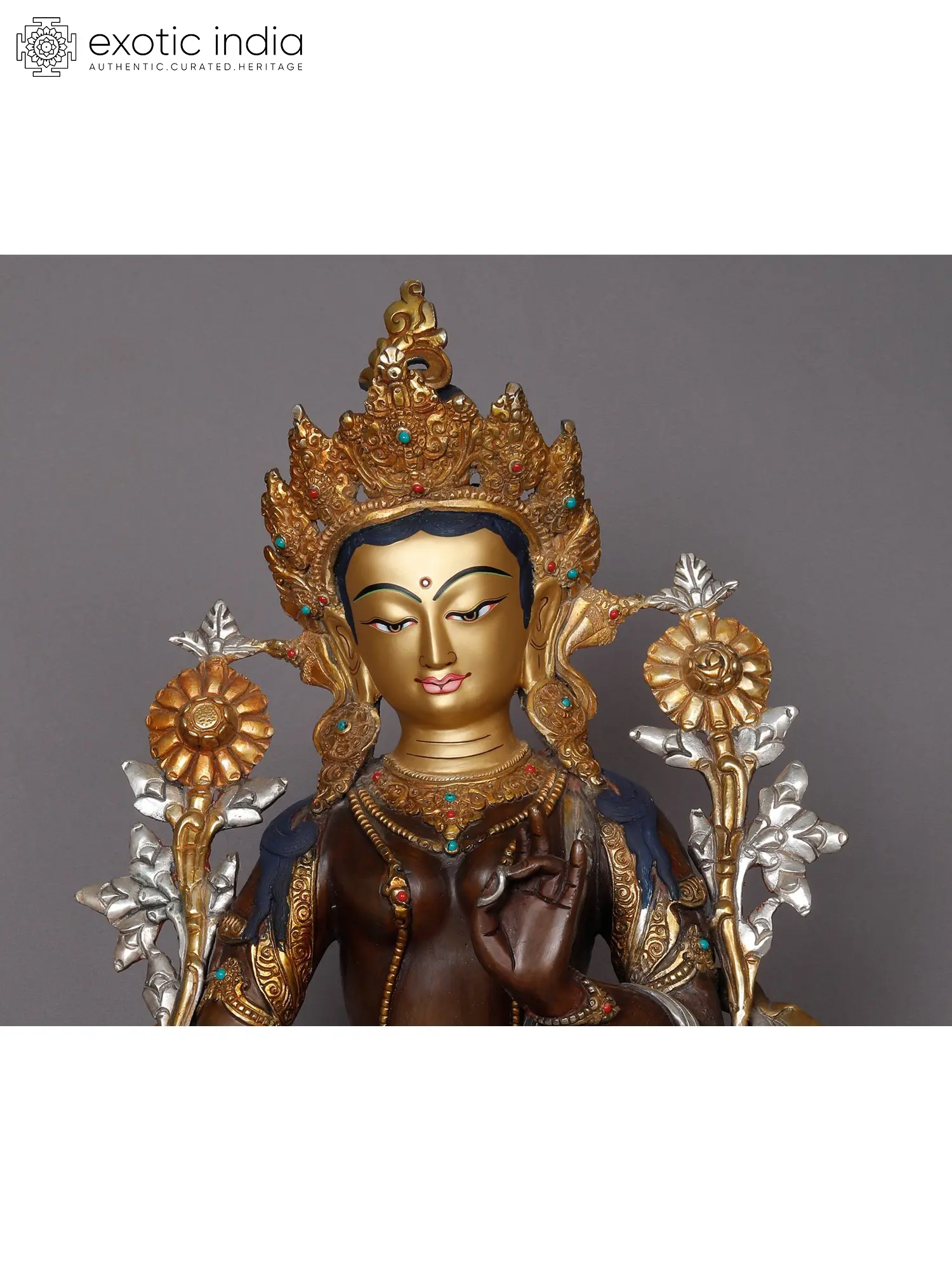
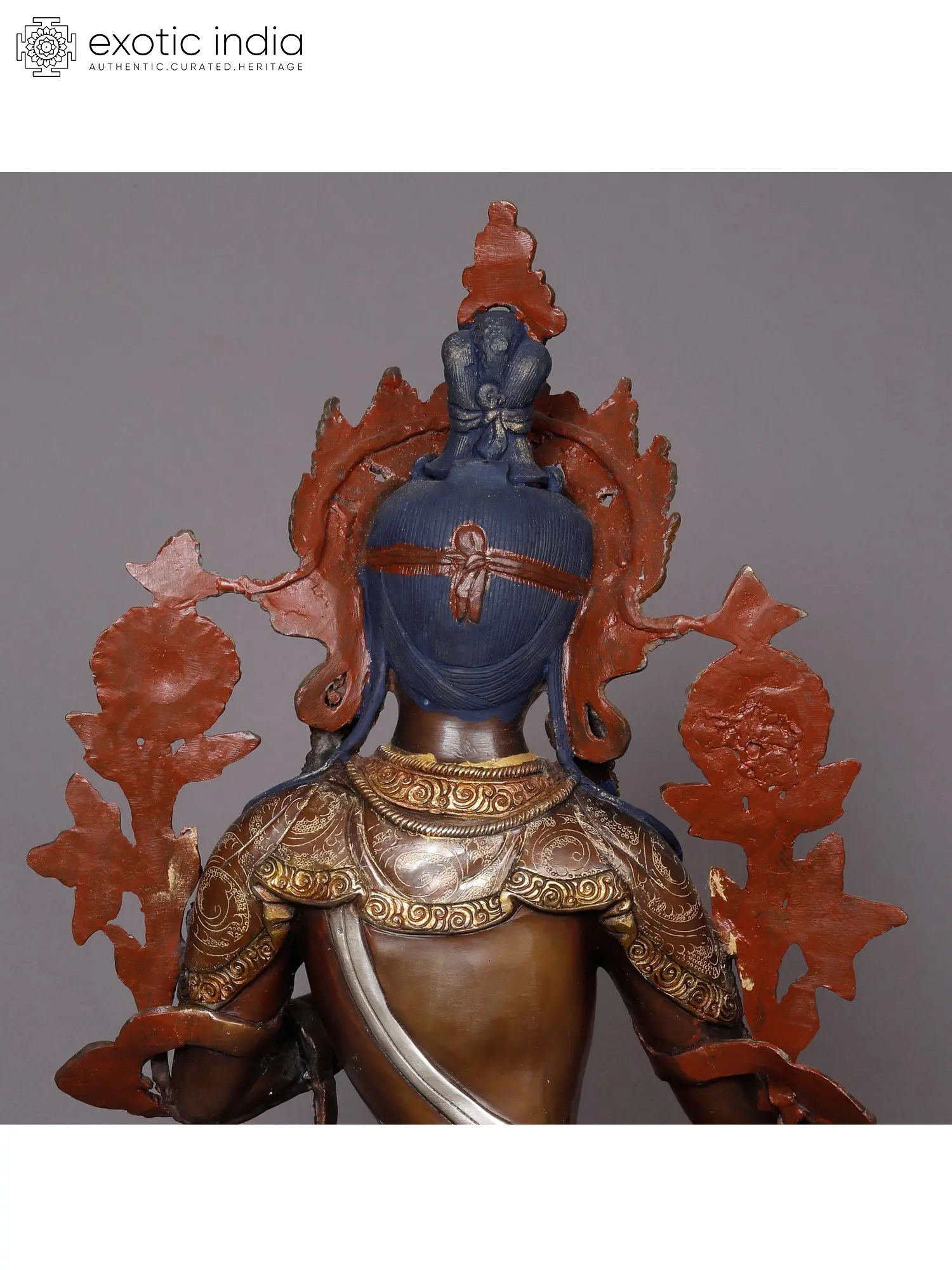
This exquisite copper statue, rendered in the rich traditions of Nepalese craftsmanship, portrays Green Tara, a beloved bodhisattva in Mahayana Buddhism. Her serene countenance, adorned with intricate gold accents, reflects a profound sense of compassion and benevolent wisdom. Seated gracefully in a full lotus posture upon an ornate lotus base, she embodies perfect composure and inner peace. The statue's impressive stature, standing at 19 inches tall, commands attention and inspires contemplation, making it a magnificent centerpiece for any sacred space or meditation room.The Divine Form and Symbolism
The deep, rich copper base of the statue serves as a grounding element, symbolizing the material world from which enlightenment arises. This is beautifully contrasted with the shimmering gold that highlights Tara's divine features, her elaborate headdress, and the detailed ornamentation that graces her form. Her right hand is raised in the gesture of *abhaya mudra*, the symbol of fearlessness and protection, offering solace and reassurance to devotees. In her left hand, she holds the stem of a lotus flower, a powerful symbol of purity, spiritual awakening, and the blossoming of the enlightened mind. The delicate turquoise and red stones embedded in her jewelry add vibrant pops of color, further enhancing the statue's spiritual aura and aesthetic appeal.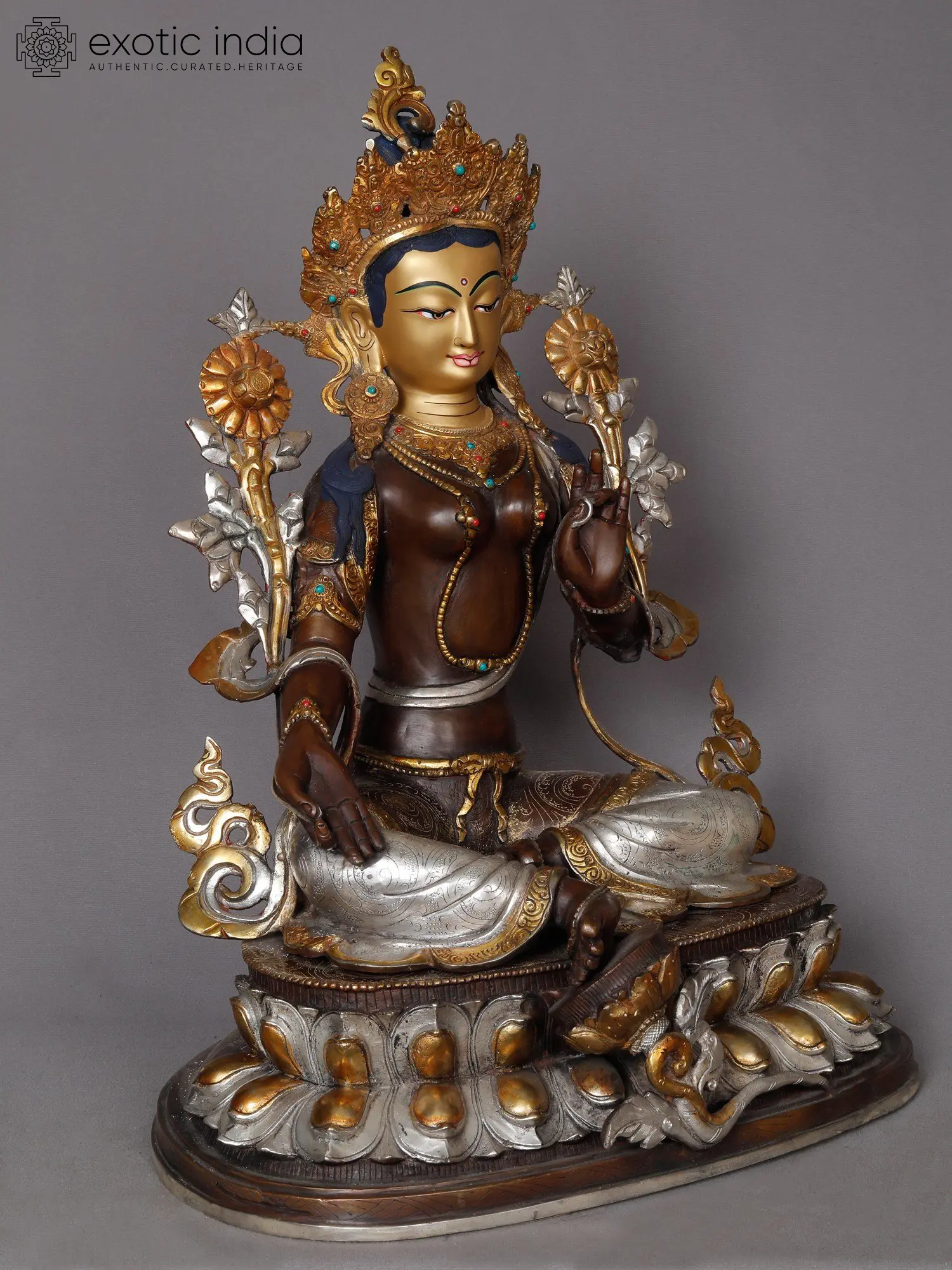
Echoes of Mythology and Tradition
Green Tara is often depicted as a swift and active savior, born from a tear shed by the bodhisattva Avalokiteshvara out of compassion for the suffering of the world. She is known as the "Mother of Liberation" and is believed to offer protection from the eight great fears, including pride, ignorance, anger, jealousy, wrong views, attachment, miserliness, and delusion. Her green hue signifies her active, dynamic nature and her association with flourishing life and prosperity, much like the vibrant green of a forest. This statue, crafted in Nepal, a land steeped in Buddhist heritage, is a testament to the enduring legacy of these sacred traditions, capturing the essence of Green Tara's transformative power. The meticulous attention to detail, from the serene expression on her face to the flowing robes and the symbolic accouterments, speaks volumes of the skill and devotion of the artisans who brought this divine form to life.How are Nepalese copper statues made?
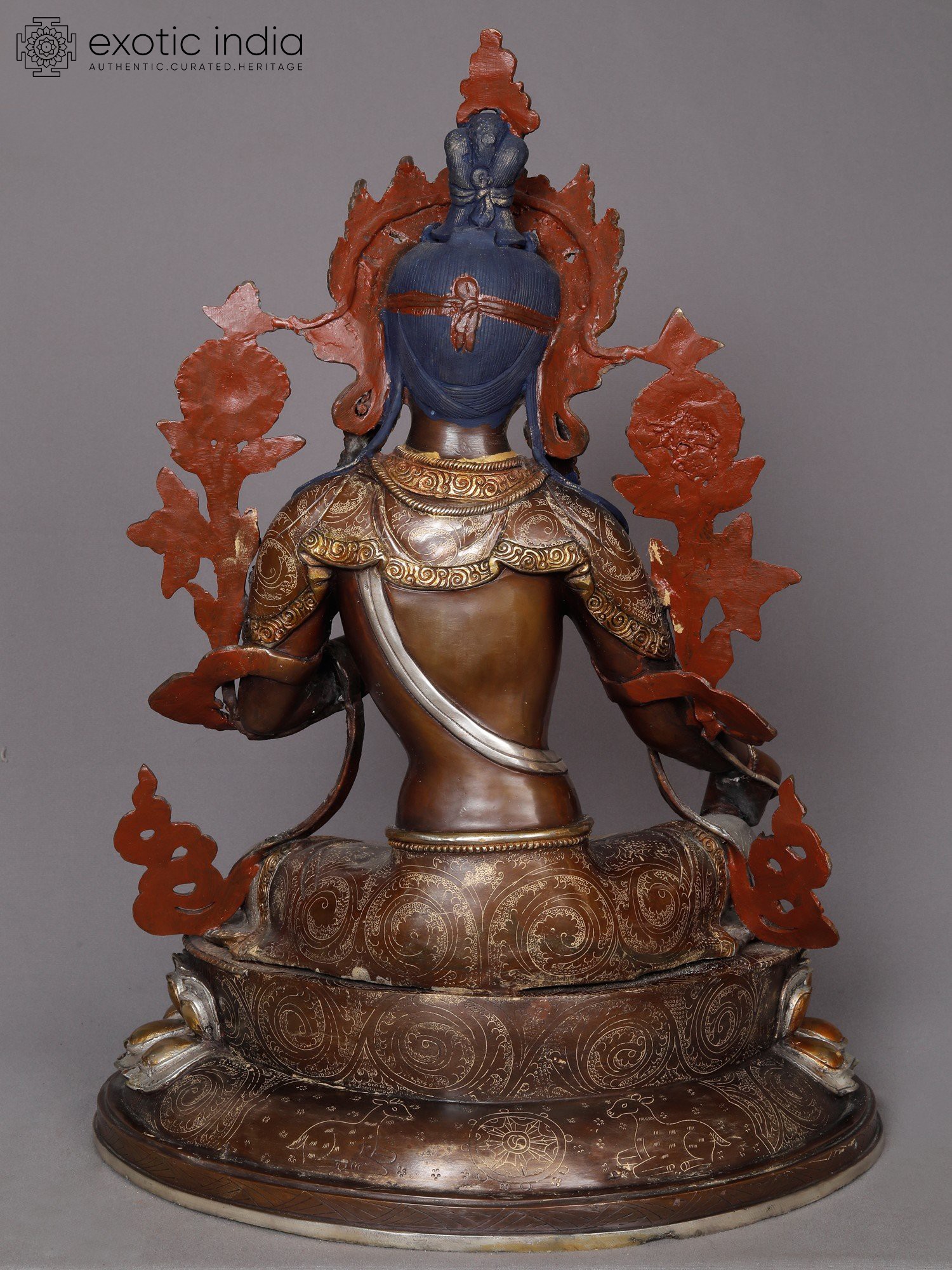
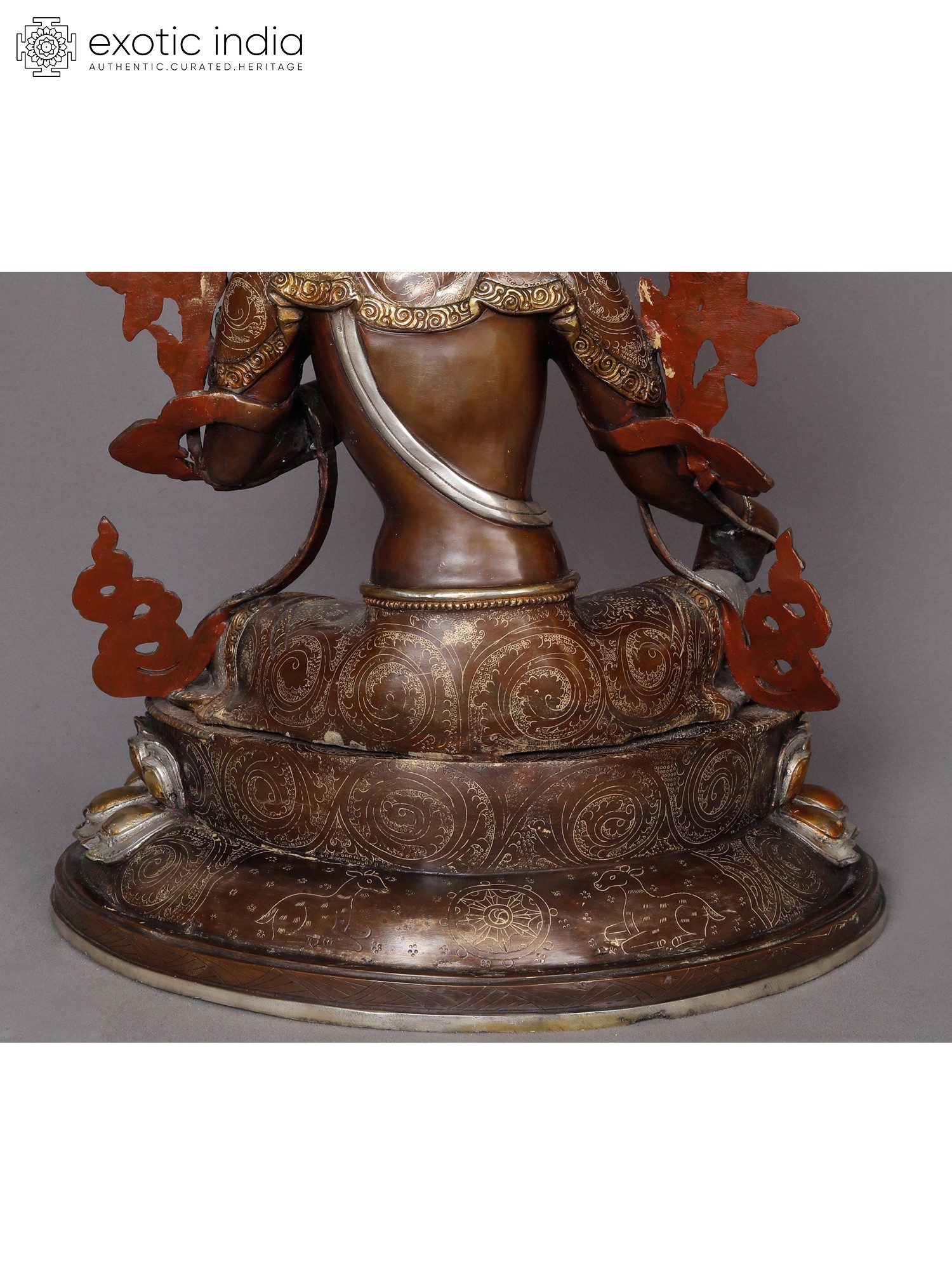
Nepalese statues and sculptures have a high copper content and therefore develop a slightly reddish patina on the surface as they age. However, the most unique feature of Nepalese copper statues is their decorative detailing. The pieces are heavily gilded and sometimes inlaid with semi-precious stones. This embellishment protects them from getting tarnished. The traditional lost-wax method for casting Nepalese copper statues remains the most practiced technique in Nepal for many centuries. This process involves many steps and requires skilled artists.
The first step in lost-wax sculpting is to make a wax replica of the desired Buddhist deity to be cast in copper. This replica is created by hand and therefore needs excellent artistic skills otherwise fine features will be lacking.
Once the wax replica is made, it is then coated with a special mixture of clay with a brush. This layer of clay is hardened when left to dry. A small hole is made on the base of the wax mould so that the wax flows away when it is heated.
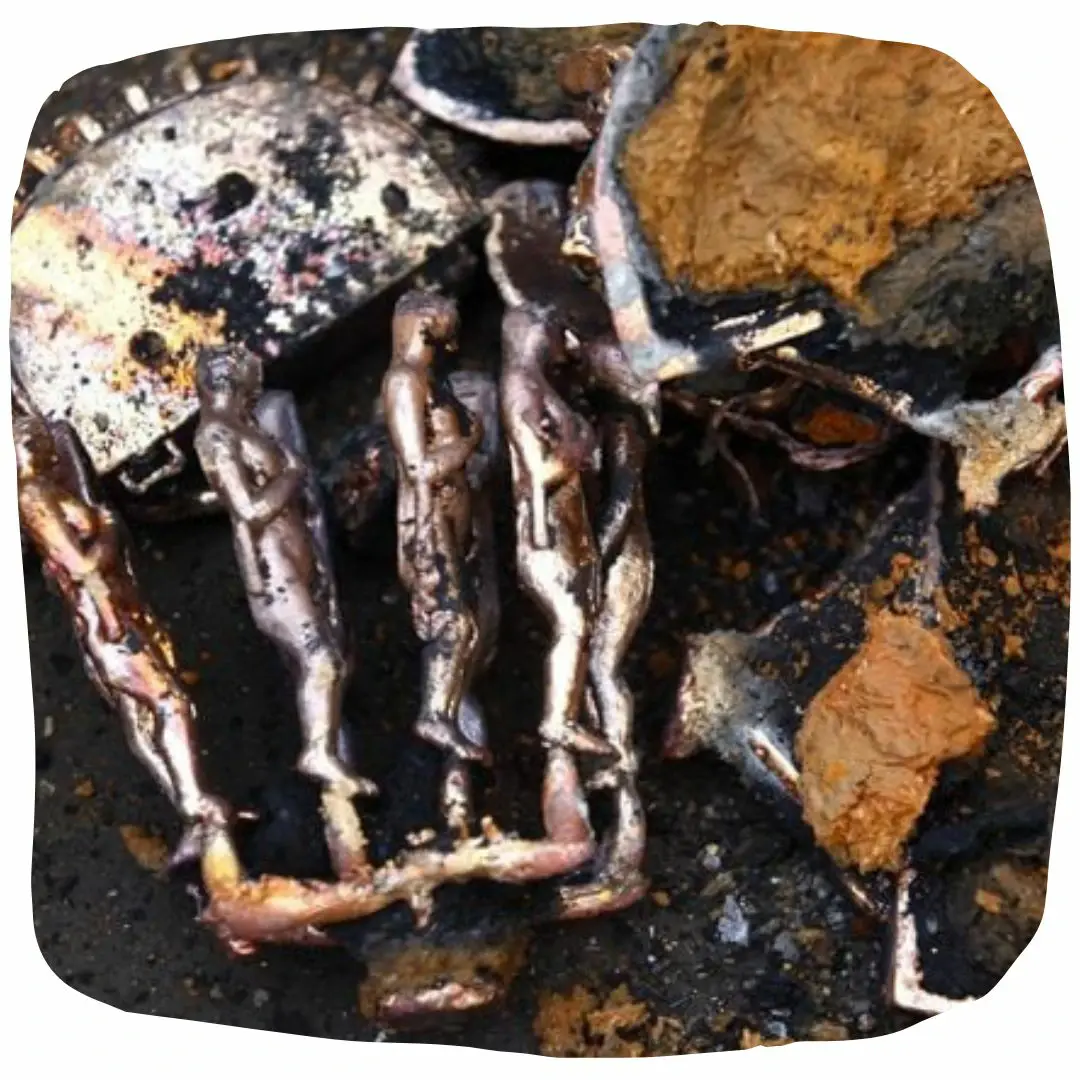
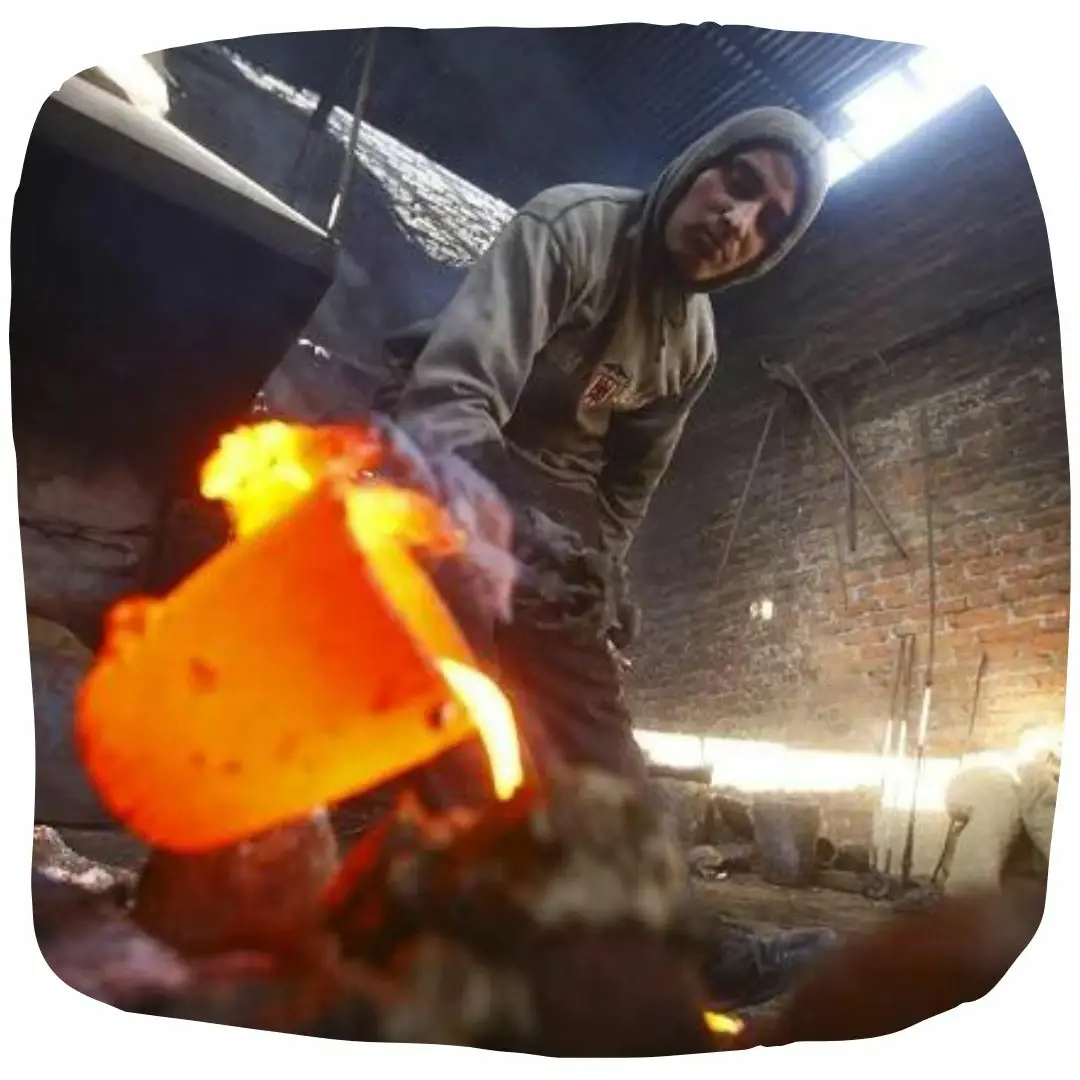
This is the time to pour liquid copper into the hollow mould which is then allowed to cool and harden inside a container of cold water. When the liquid metal has hardened, the mould is removed and the statue within is revealed.
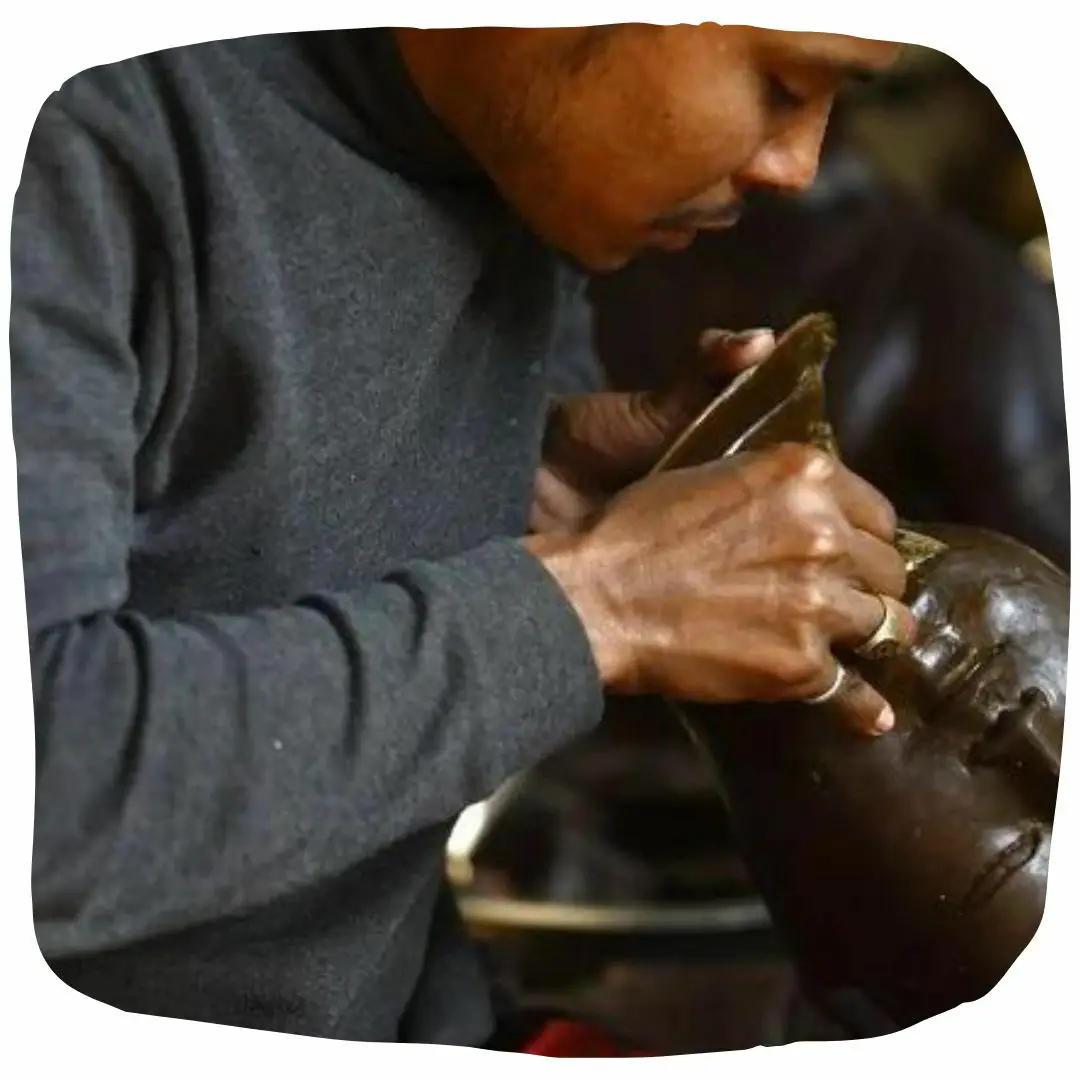
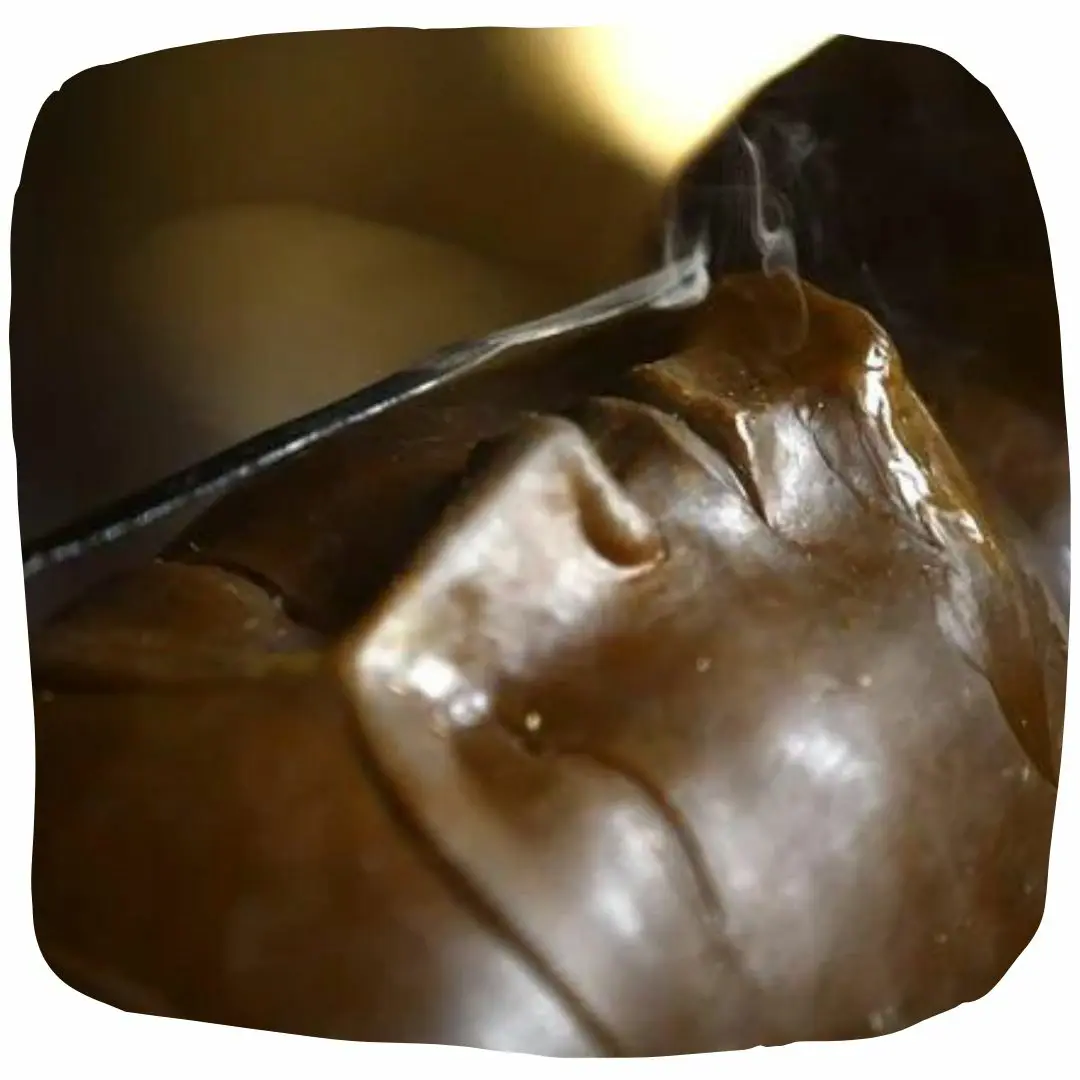
Now comes the most important part of Nepalese art which is gold gilding. This is done by the traditional fire gilding method. A mixture of mercury and 18K gold is applied on the surface of the statue and heat is applied using a flame torch. The result is that mercury evaporates along with impurities, leaving a pure 24K gold finish.
The lost-wax method of sculpting is the most preferred technique
for artists to cast a metallic statue having intricate details. Since Nepalese copper sculptures require extraneous effort for giving a majestic look by adding special embellishments, it takes several weeks to complete one masterpiece. A 24K gold gilded copper sculpture retains its brilliant luster for many years and appears as like before. Nepalese sculptures continue to remain one of the finest specimens of the art of the East that have a strong aesthetic appeal that other sculptures cannot match.