The Nirvana Pose: A Symbol of Peace and Enlightenment
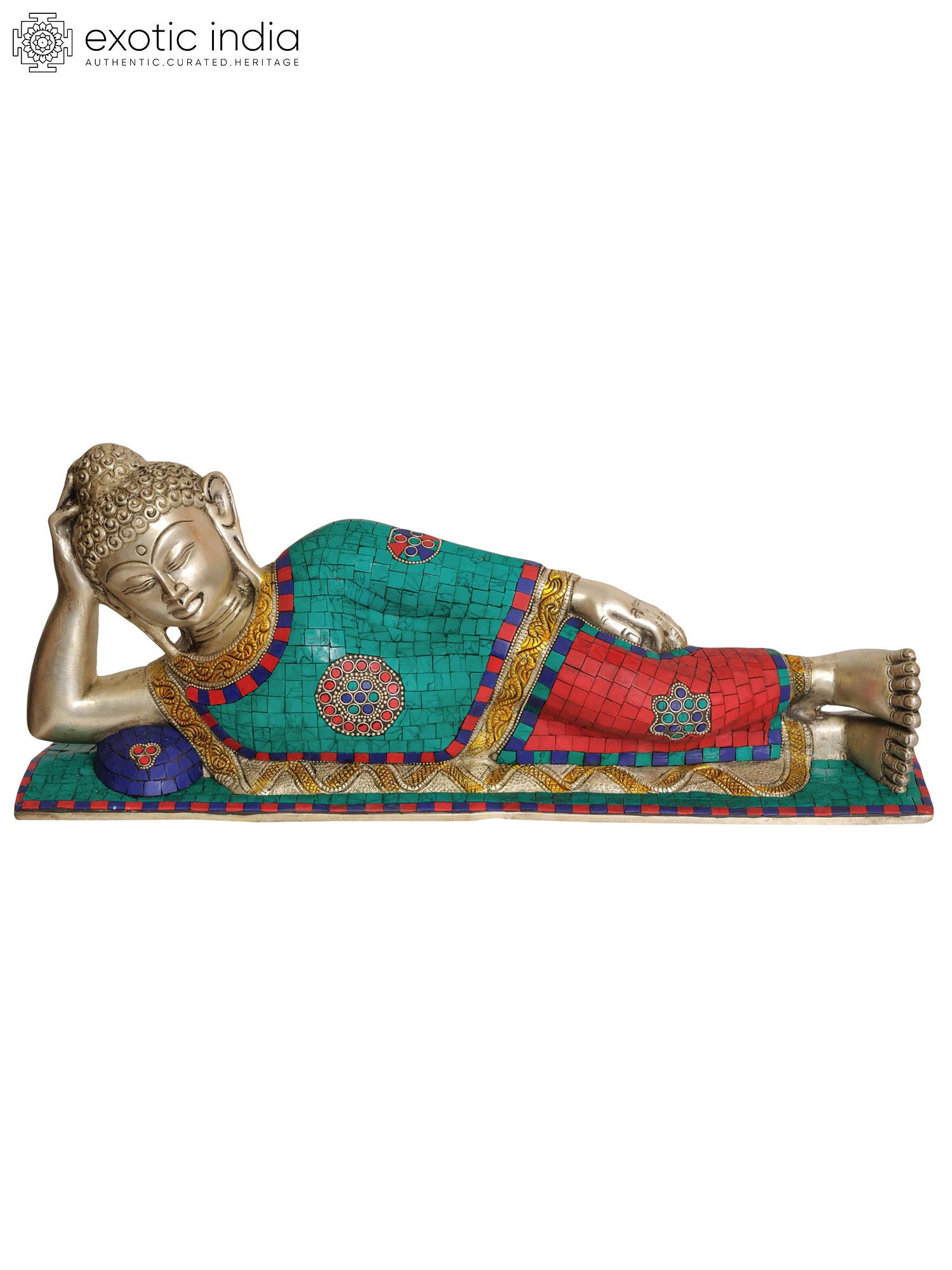
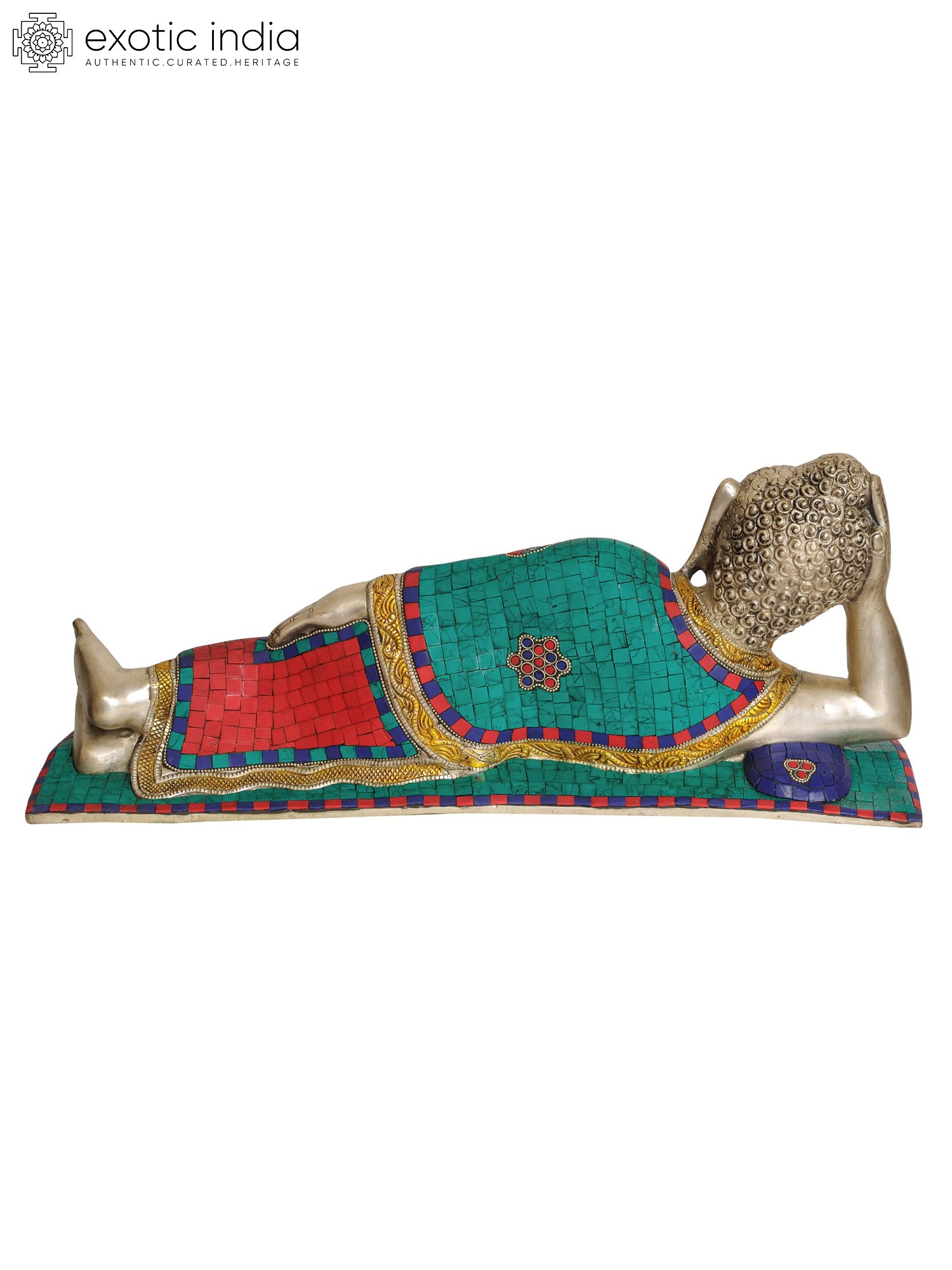
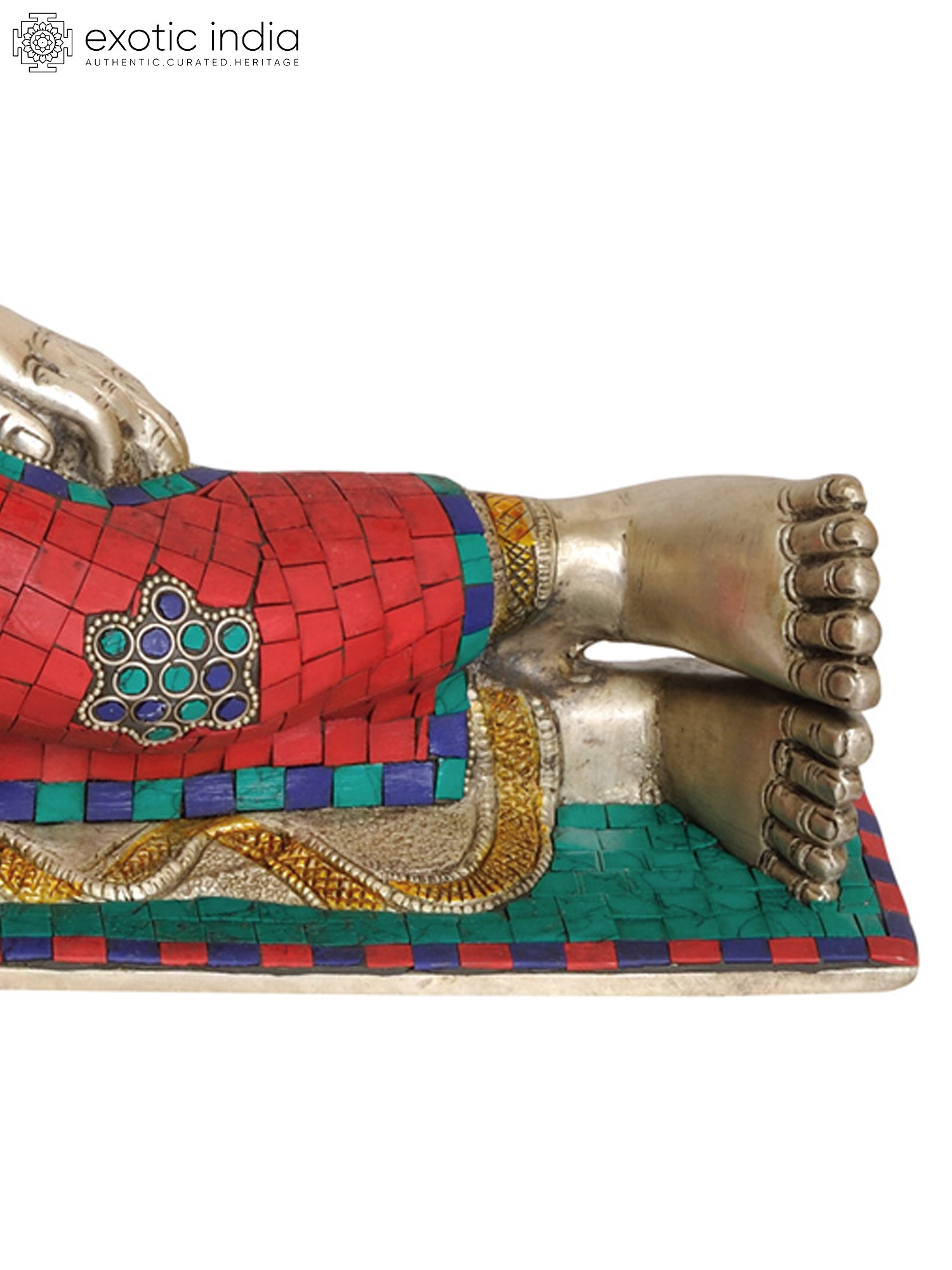
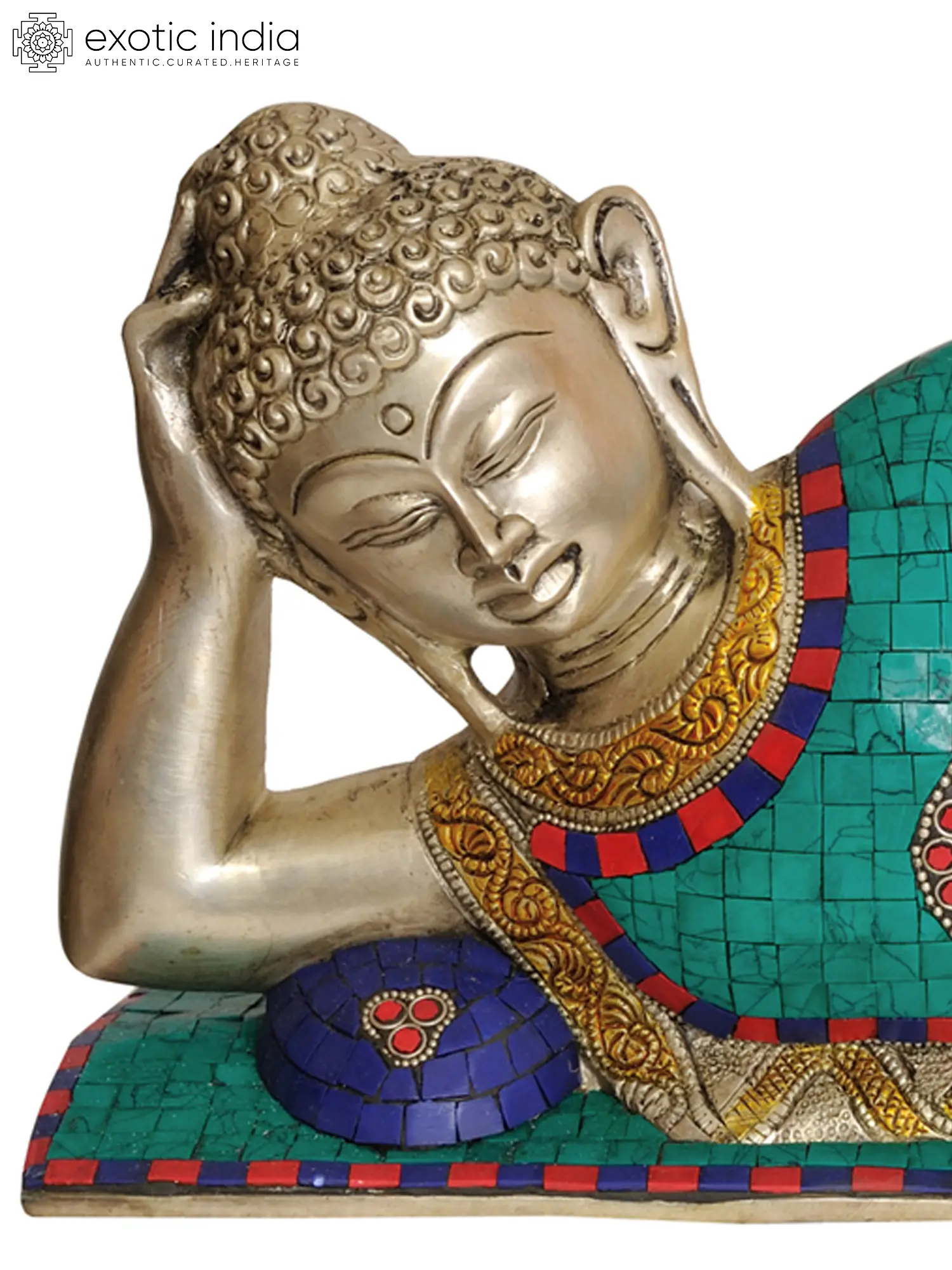
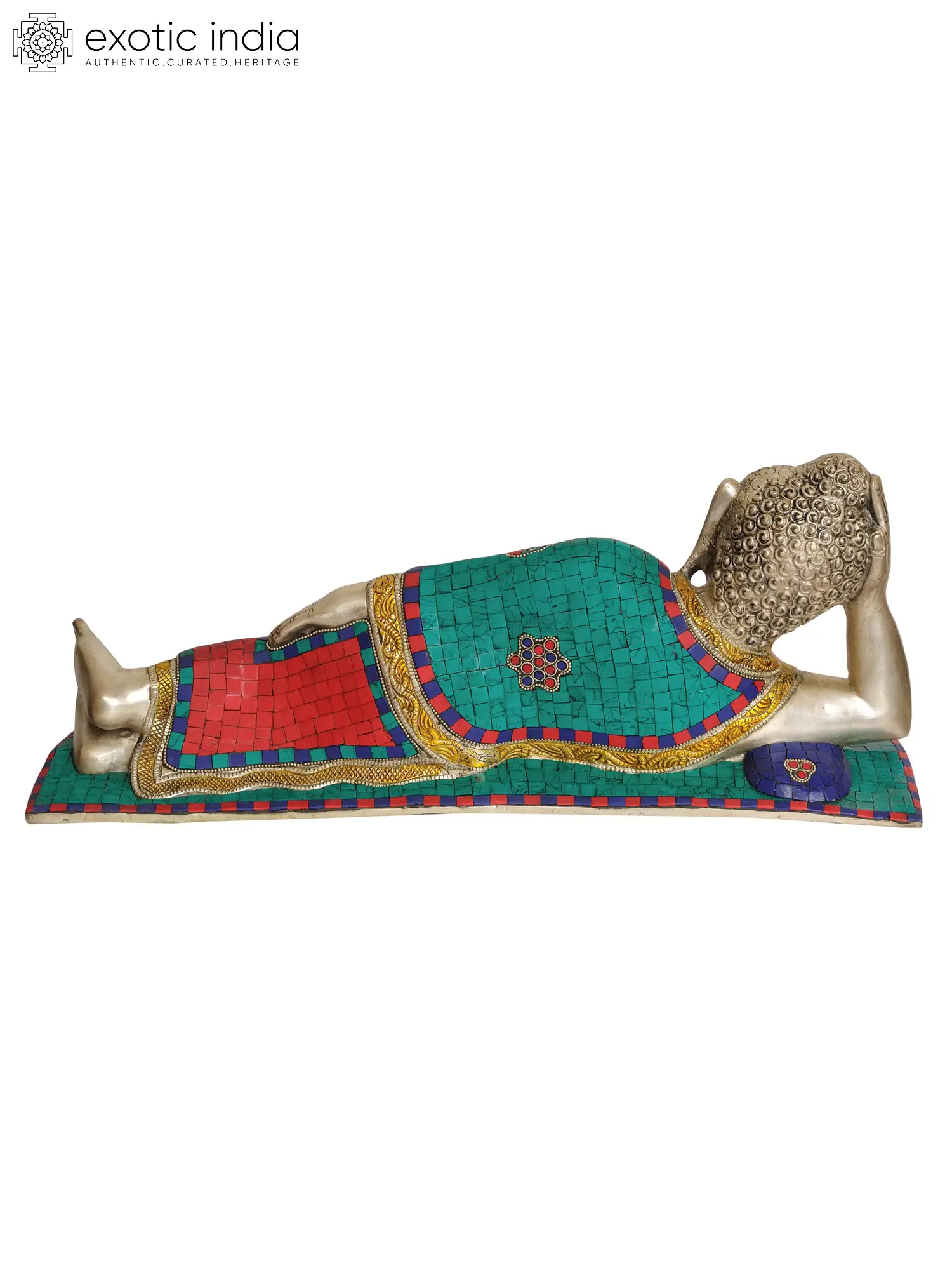
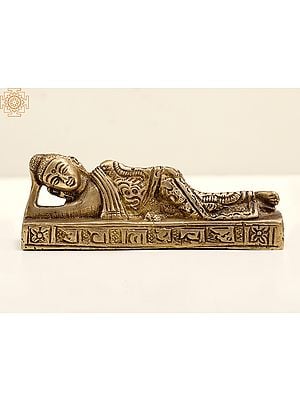
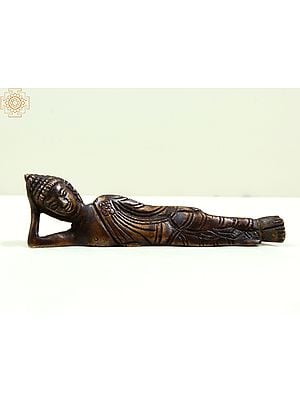
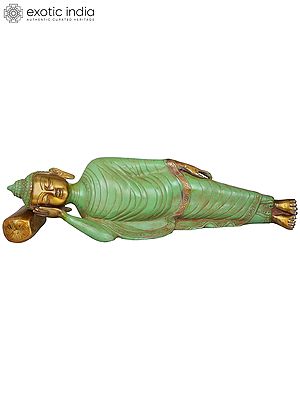
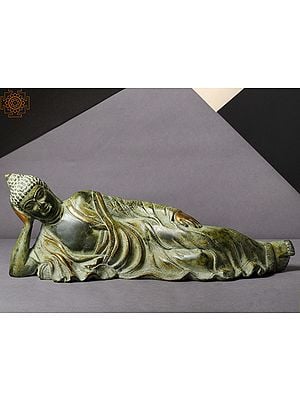
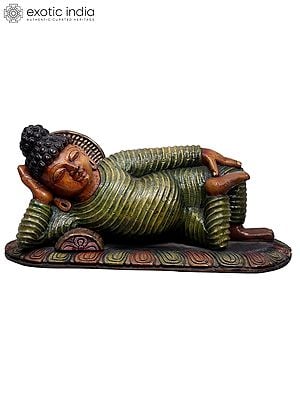
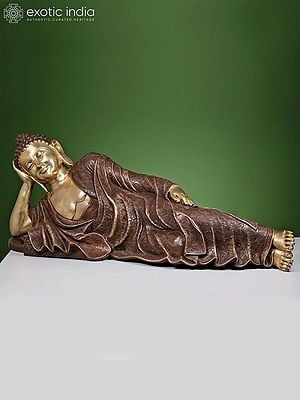
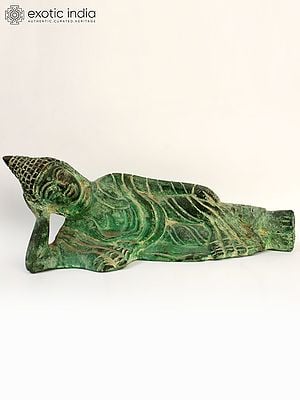
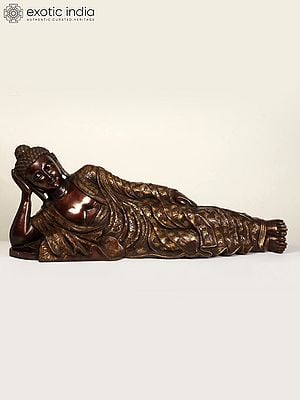
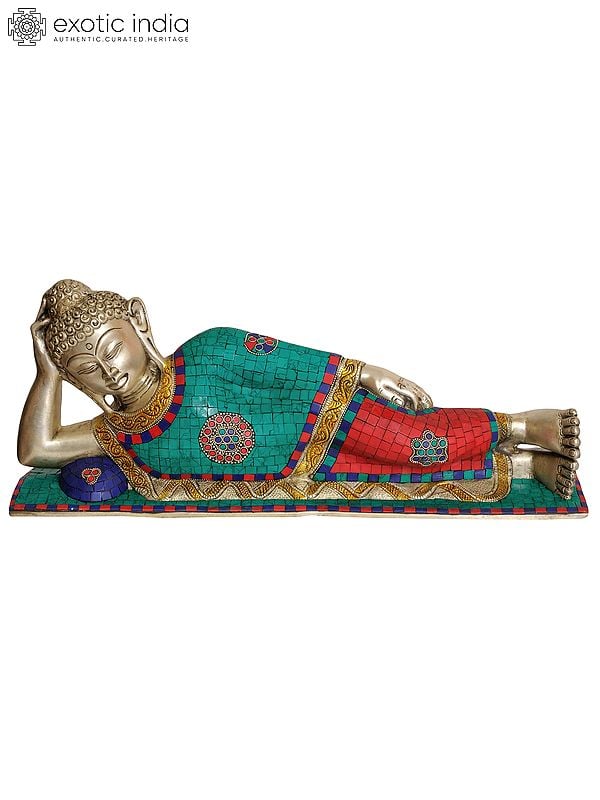
This exquisite brass statue depicts the Buddha in the iconic reclining pose, symbolizing his attainment of Nirvana and his final passing into parinirvana. The image of the reclining Buddha is deeply revered across Buddhist traditions, representing ultimate peace, tranquility, and the end of suffering. It is a powerful reminder of the Buddha's profound wisdom and his ultimate liberation from the cycle of birth and death. In Buddhist iconography, this pose is not one of slumber, but of serene repose, a state of perfect awareness and detachment from worldly concerns. It is said that the Buddha took this posture at Kusinara, his final resting place, and that his followers would meditate upon this image to cultivate similar states of inner peace.Artistry and Craftsmanship: A Testament to Indian Heritage
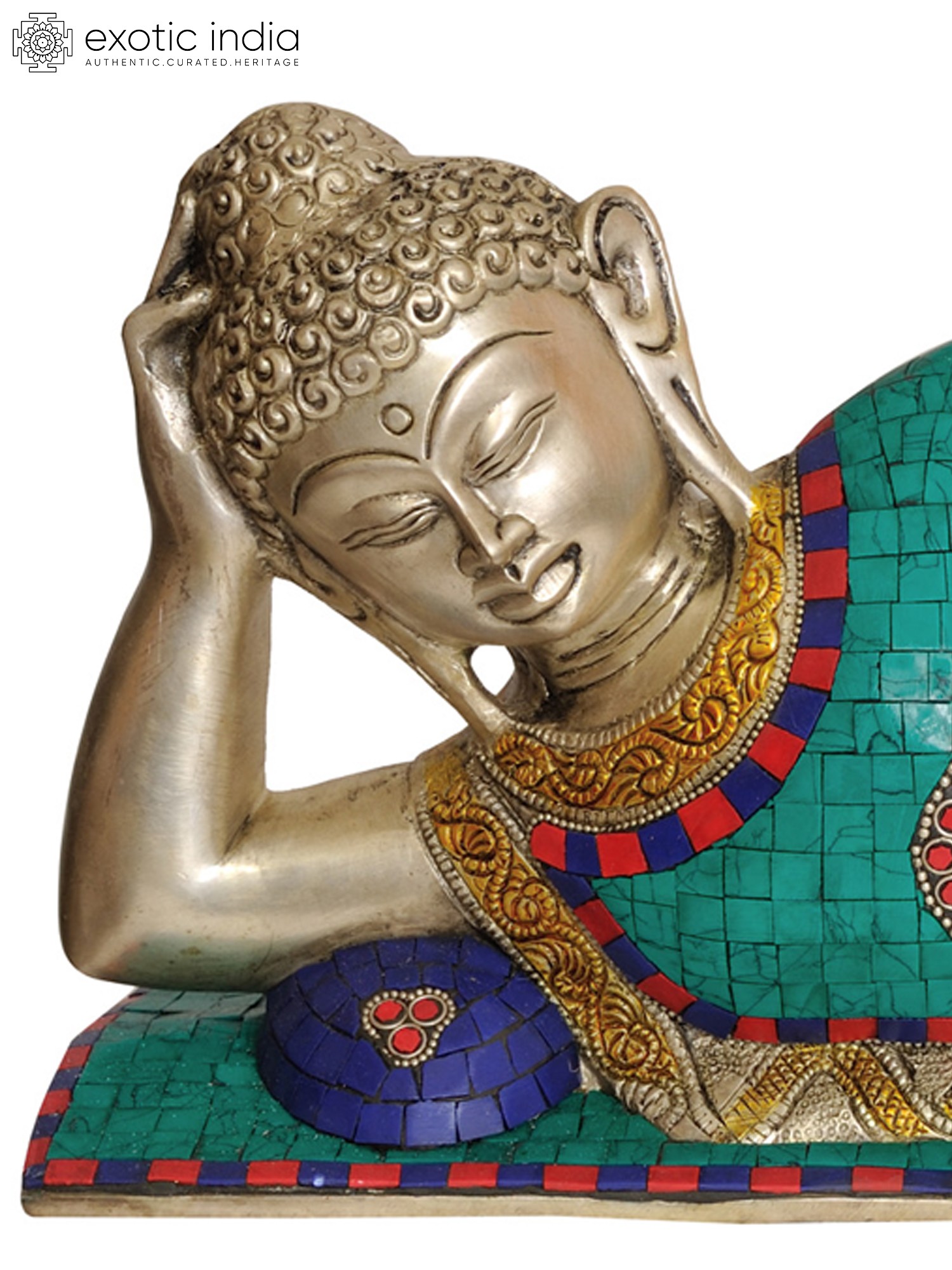
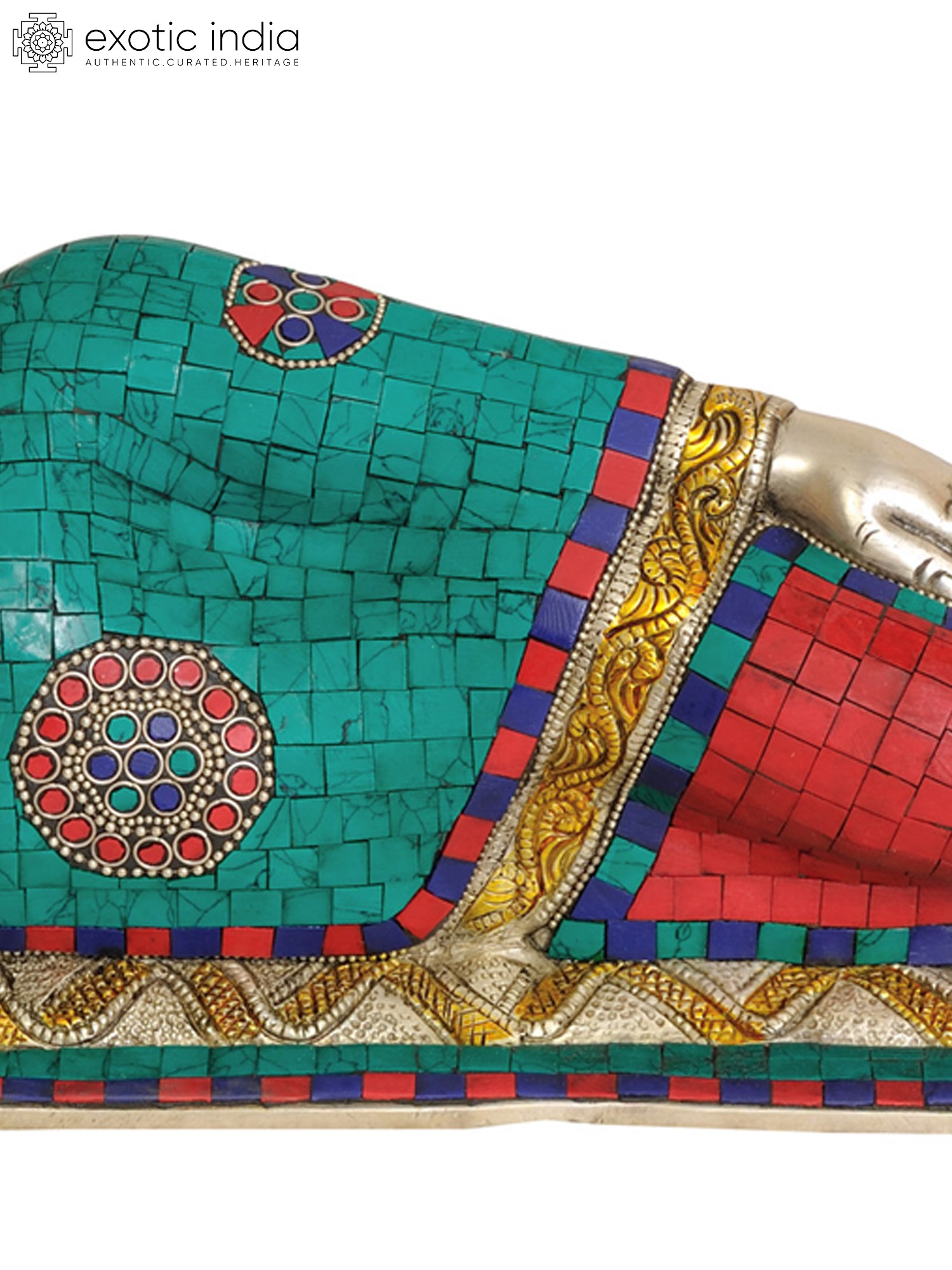
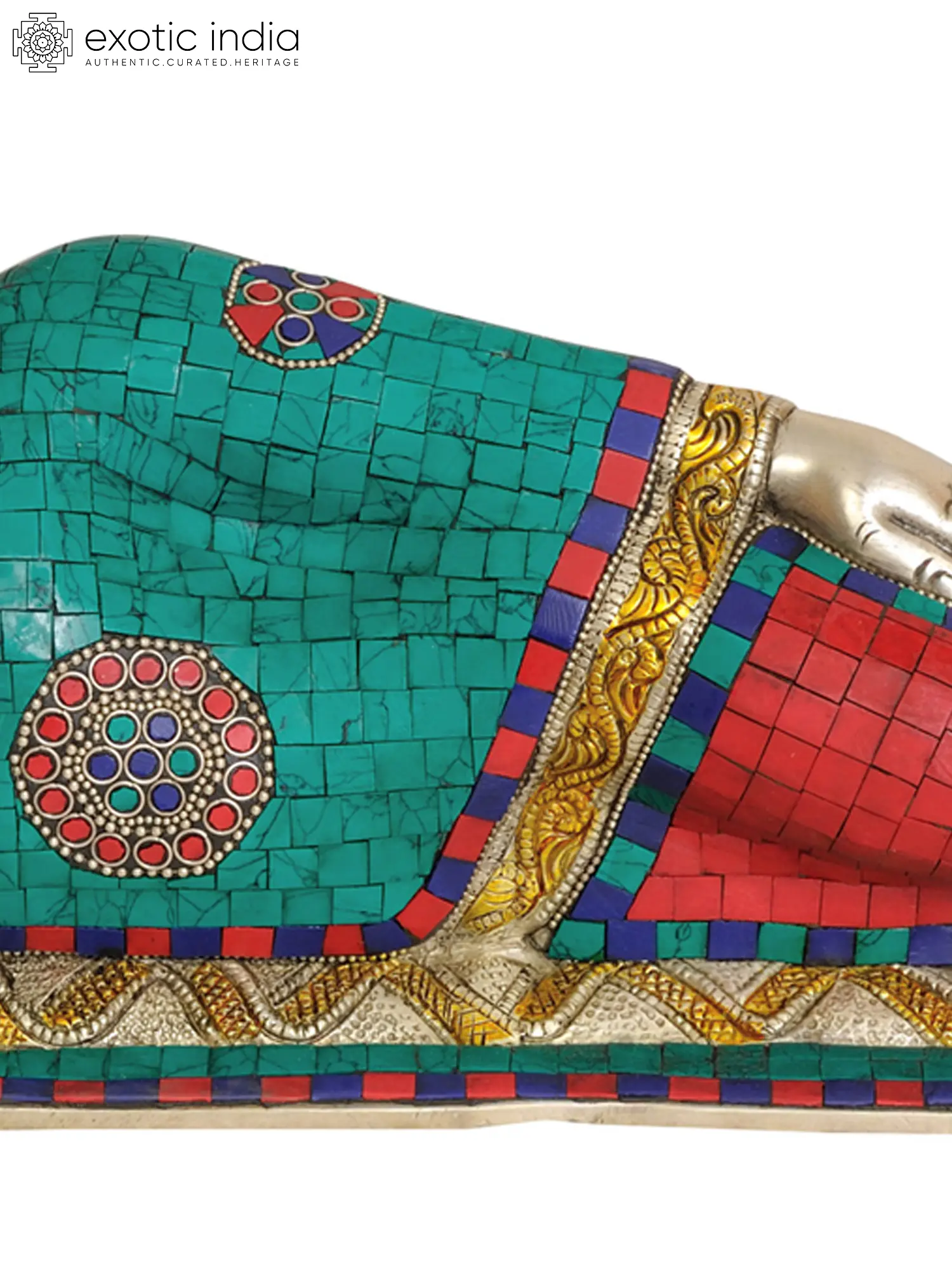
Handmade in India, this sculpture is a testament to the rich artistic traditions and meticulous craftsmanship that have been passed down through generations. The intricate details of the Buddha's serene face, the carefully rendered curls of his hair, and the gentle curve of his body are all brought to life through the skilled hands of artisans. The brass medium itself, a symbol of longevity and purity, is further enhanced by the stunning inlay work. Vibrant turquoise, deep red, and lustrous blue stones are precisely placed to create a mesmerizing mosaic on the Buddha's robes and the base. This inlay technique, often seen in Mughal-inspired art and architecture, adds a regal and opulent dimension to the sacred form, elevating it into a true masterpiece of devotional art. The golden accents further accentuate the divine aura of the figure.Cultural Significance and Spiritual Resonance
The reclining Buddha is a powerful symbol of peace and serenity, evoking a sense of calm and contemplation. This posture is often associated with the concept of impermanence, reminding us that all things are in a constant state of flux. By meditating on this image, devotees are encouraged to embrace the transient nature of life and cultivate acceptance and equanimity. The reclining Buddha is also seen as a representation of the Buddha's compassion and his desire to guide all sentient beings towards enlightenment. The peaceful expression and relaxed posture invite viewers to find solace and inner harmony in its presence. This statue, therefore, is more than just an object of art; it is a conduit for spiritual reflection and a beacon of peace in any environment. Its presence can transform a space into a sanctuary of tranquility, inviting mindfulness and a deeper connection to the teachings of Buddhism.How to keep a Brass statue well-maintained?
Brass statues are known and appreciated for their exquisite beauty and luster. The brilliant bright gold appearance of Brass makes it appropriate for casting aesthetic statues and sculptures. Brass is a metal alloy composed mainly of copper and zinc. This chemical composition makes brass a highly durable and corrosion-resistant material. Due to these properties, Brass statues and sculptures can be kept both indoors as well as outdoors. They also last for many decades without losing all their natural shine.
Brass statues can withstand even harsh weather conditions very well due to their corrosion-resistance properties. However, maintaining the luster and natural beauty of brass statues is essential if you want to prolong their life and appearance.
- The best and simplest way to maintain a brass statue is to clean it at least twice a week using a soft cloth or cotton rag. This will prevent dust from accumulating on the surface. Dusting is especially important for outdoor statues since it is prone to dust accumulation much more than indoors.
- To give a natural shine and luster to the statue, you may apply coconut or olive oil using cotton on every portion. You can use a toothbrush to get to the small crevices but do not be too harsh. This will make the brass statue appear fresh and new with a polished look.
In case you have a colored brass statue, you may apply mustard oil using a soft brush or clean cloth on the brass portion while for the colored portion of the statue, you may use coconut oil with a cotton cloth.
Brass idols of Hindu Gods and Goddesses are especially known for their intricate and detailed work of art. Nepalese sculptures are famous for small brass idols portraying Buddhist deities. These sculptures are beautified with gold gilding and inlay of precious or semi-precious stones. Religious brass statues can be kept at home altars. You can keep a decorative brass statue in your garden or roof to embellish the area and fill it with divinity.










 Upload an Image