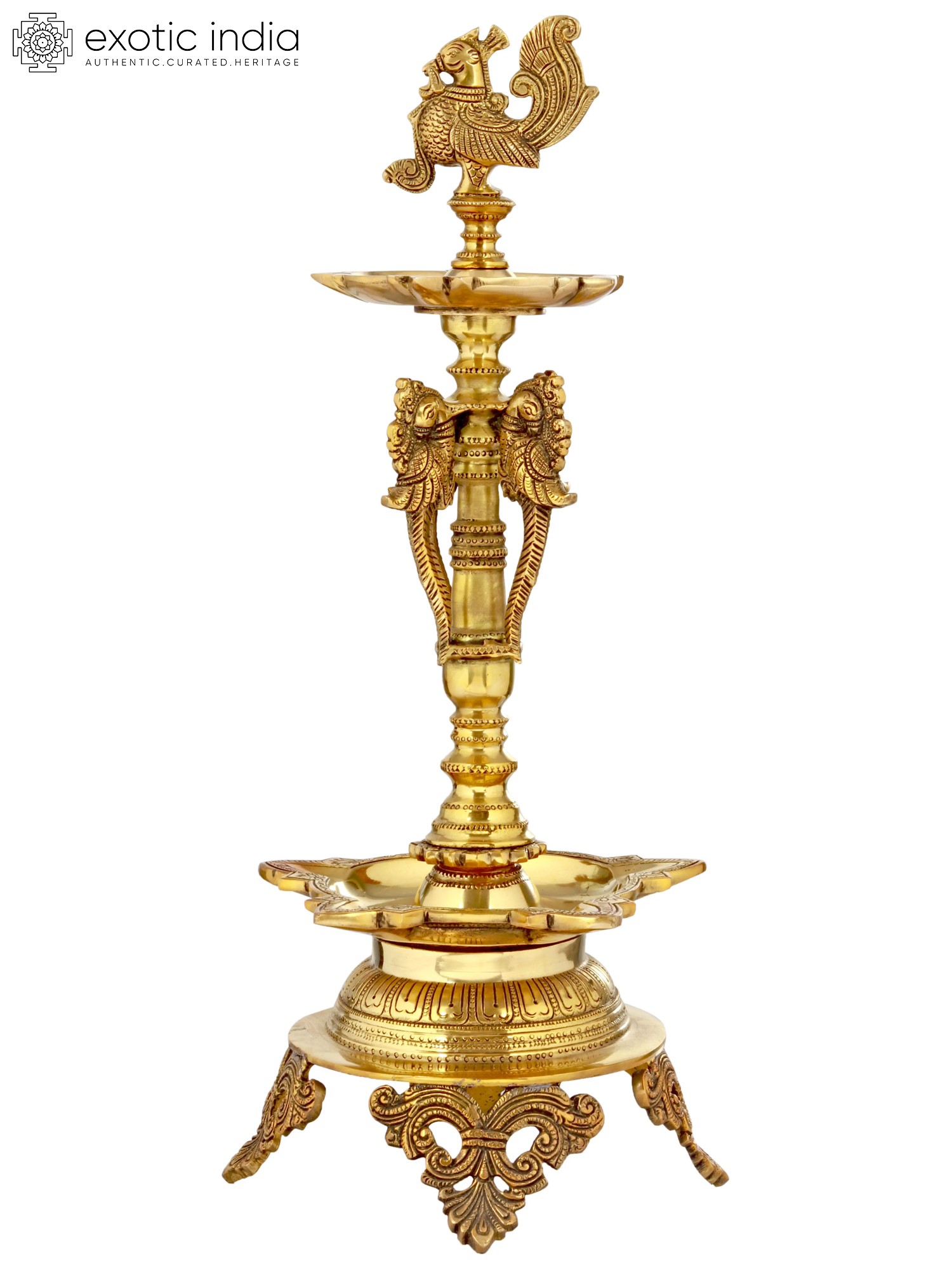
The
peacock is one of those legendary birds associated with time regulation. It is
thought to have arisen from Garuda's feathers. Because of its capacity to
transcend time, the peacock is revered by everybody and is an especially
desirable species for royalty. As a result, this majestic bird has inspired an
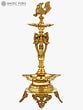
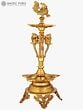
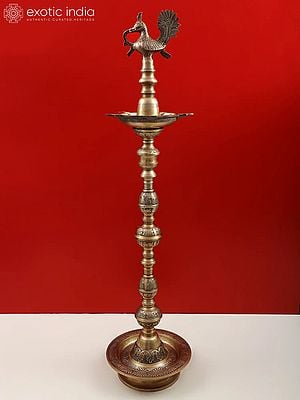
extraordinarily high number of works of art in India. This brass
lamp with a holy peacock motif is an homage to the majestic bird that brings
wealth and good fortune.
The
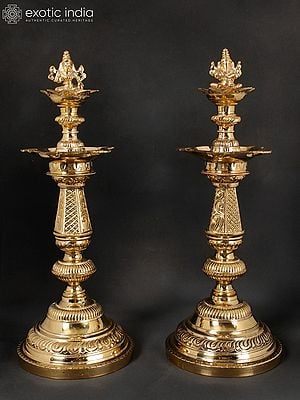
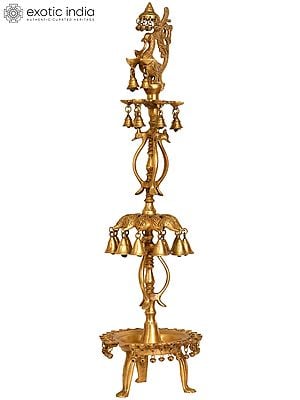
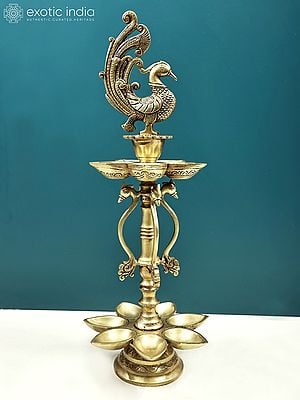
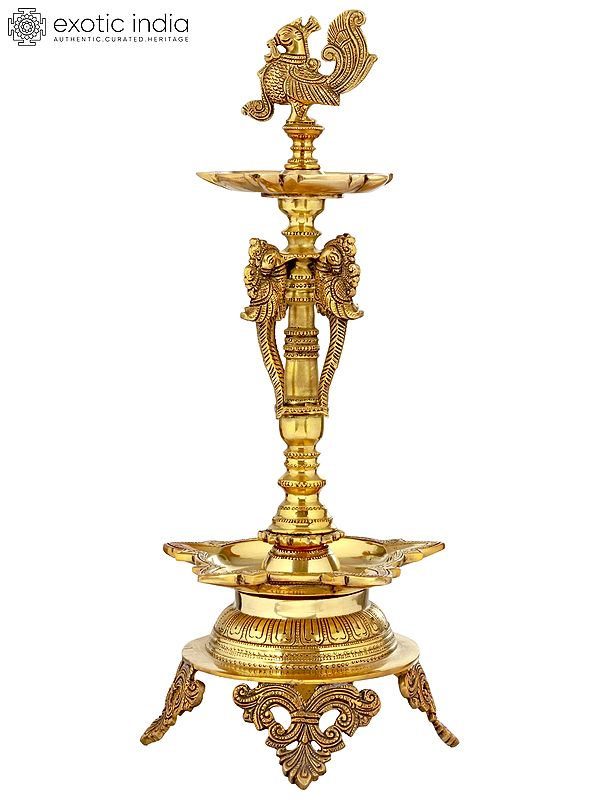
lamp is constructed traditionally with two tiers of lamps and a well-decorated
stem which develops into an even more intricate stand. The stem is also
decorated with the sacred image of a cluster of parrots. They make the piece
even more auspicious. The bright golden hue of the lamp that comes from the
brass finish makes it a perfect fit for traditional lighting options for
festivals.
An Auspicious Beacon
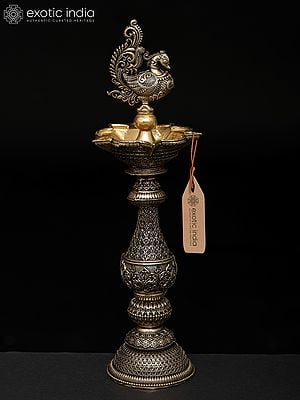
Radiating a warm, golden hue, this handcrafted brass lamp embodies the rich artistic heritage of India. More than just a source of light, it is a symbol of divine presence, prosperity, and the dispelling of darkness in both the literal and spiritual sense. Standing at approximately 19 inches tall, it commands attention with its intricate details and majestic design. This lamp adds an element of traditional elegance to any space and is ideal for use in daily rituals or as a sophisticated decorative piece.The Sacred Mayur: A Dance of Light and Divinity
At the apex of this stunning lamp sits the magnificent Mayur, or peacock. Revered across Indian culture, the peacock is deeply interwoven with mythology and symbolism. In Hinduism, the peacock is associated with several deities, most notably Lord Kartikeya, the god of war and victory, whose vahana (mount) is the peacock. This connection infuses the lamp with the attributes of bravery, triumph over adversity, and divine protection.
The peacock's vibrant plumage is considered a representation of the cosmos itself, its myriad colours mirroring the diverse wonders of the universe. In many traditions, the peacock's dance is seen as a symbol of joy, beauty, and the celebration of life. The inclusion of the Mayur in this lamp design brings a sense of vibrant energy and spiritual awakening to the space it inhabits.Craftsmanship Rooted in Tradition
This ten-wick lamp is a testament to the skill and dedication of Indian artisans. Meticulously crafted from brass, each curve and contour showcases the meticulous detail that is inherent to traditional Indian metalwork. The lamp features multiple tiers, each carefully shaped to both support and enhance the overall aesthetic. Ten individual receptacles accommodate wicks, providing a circle of radiant light that symbolizes completeness and divine unity.
Beyond the peacocks, delicate carvings add to the lamp's beauty. The detailed ornamentation evokes ancient temples and sacred spaces. The warm glow of the brass and the intricate patterns combine to create a mesmerizing visual experience, transforming your puja room or living space into a sanctuary of peace and beauty. With a base measuring approximately 8.5 inches in both length and width, this lamp has a majestic presence without dominating its surroundings.A Symbol of Sacred Ritual
Used during Hindu pujas (worship ceremonies) and festivals like Diwali, lamps like these hold deep significance. The act of lighting a lamp is symbolic of dispelling ignorance and ushering in knowledge and enlightenment. The light represents the divine spark within each of us, connecting us to the universal consciousness. The use of oil or ghee as fuel adds a layer of sacredness, as these substances are often offered to deities as symbols of devotion.
The multi-wick design allows for a brighter and more elaborate illumination, signifying an enhanced offering to the divine. Lighting this lamp during prayer, meditation, or simply as a daily ritual can create a powerful atmosphere of reverence and spirituality, bringing peace and positive energy to your home.How to keep a Brass statue well-maintained?
Brass statues are known and appreciated for their exquisite beauty and luster. The brilliant bright gold appearance of Brass makes it appropriate for casting aesthetic statues and sculptures. Brass is a metal alloy composed mainly of copper and zinc. This chemical composition makes brass a highly durable and corrosion-resistant material. Due to these properties, Brass statues and sculptures can be kept both indoors as well as outdoors. They also last for many decades without losing all their natural shine.
Brass statues can withstand even harsh weather conditions very well due to their corrosion-resistance properties. However, maintaining the luster and natural beauty of brass statues is essential if you want to prolong their life and appearance.
- The best and simplest way to maintain a brass statue is to clean it at least twice a week using a soft cloth or cotton rag. This will prevent dust from accumulating on the surface. Dusting is especially important for outdoor statues since it is prone to dust accumulation much more than indoors.
- To give a natural shine and luster to the statue, you may apply coconut or olive oil using cotton on every portion. You can use a toothbrush to get to the small crevices but do not be too harsh. This will make the brass statue appear fresh and new with a polished look.
In case you have a colored brass statue, you may apply mustard oil using a soft brush or clean cloth on the brass portion while for the colored portion of the statue, you may use coconut oil with a cotton cloth.
Brass idols of Hindu Gods and Goddesses are especially known for their intricate and detailed work of art. Nepalese sculptures are famous for small brass idols portraying Buddhist deities. These sculptures are beautified with gold gilding and inlay of precious or semi-precious stones. Religious brass statues can be kept at home altars. You can keep a decorative brass statue in your garden or roof to embellish the area and fill it with divinity.