The interplay of
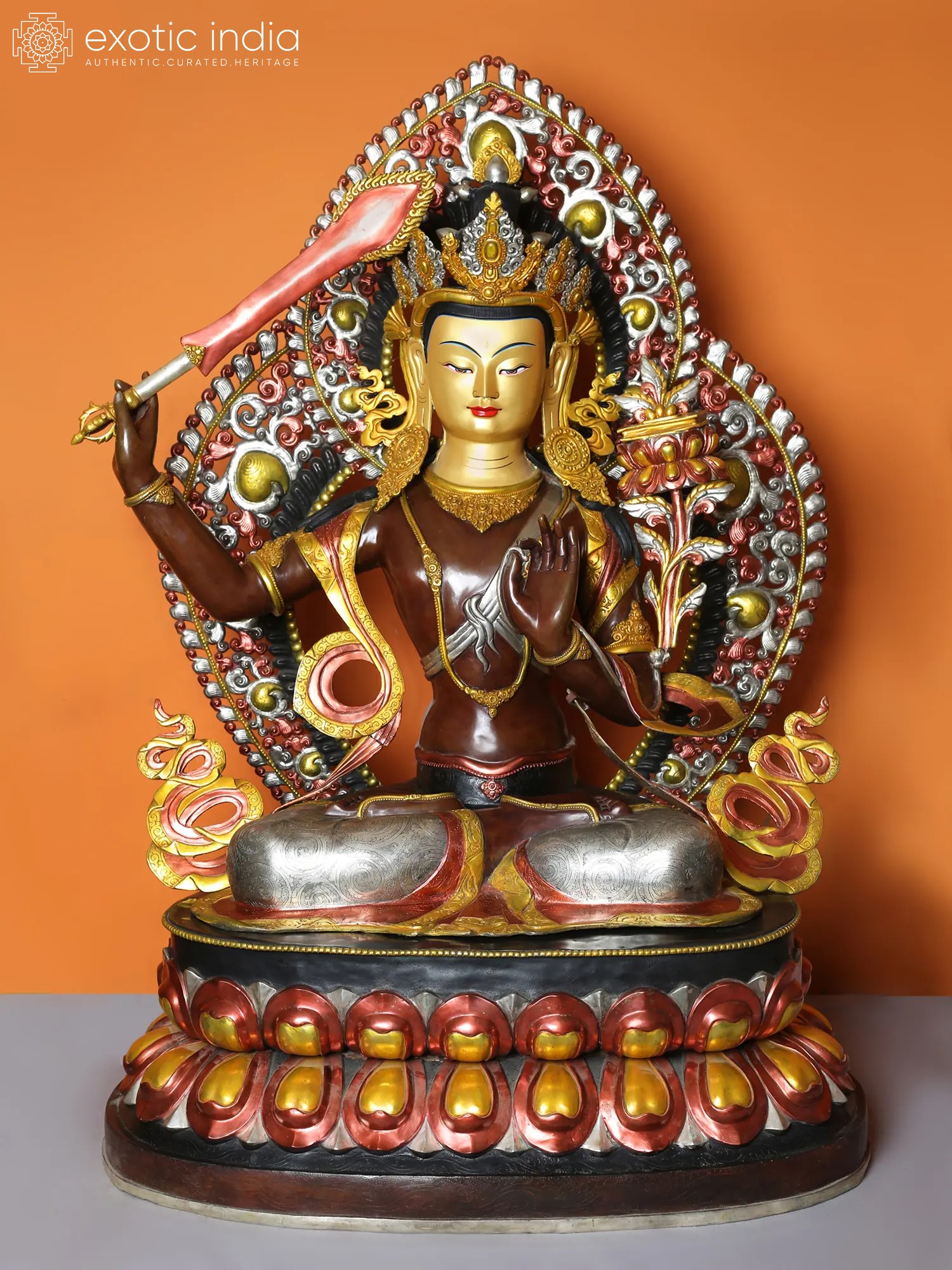
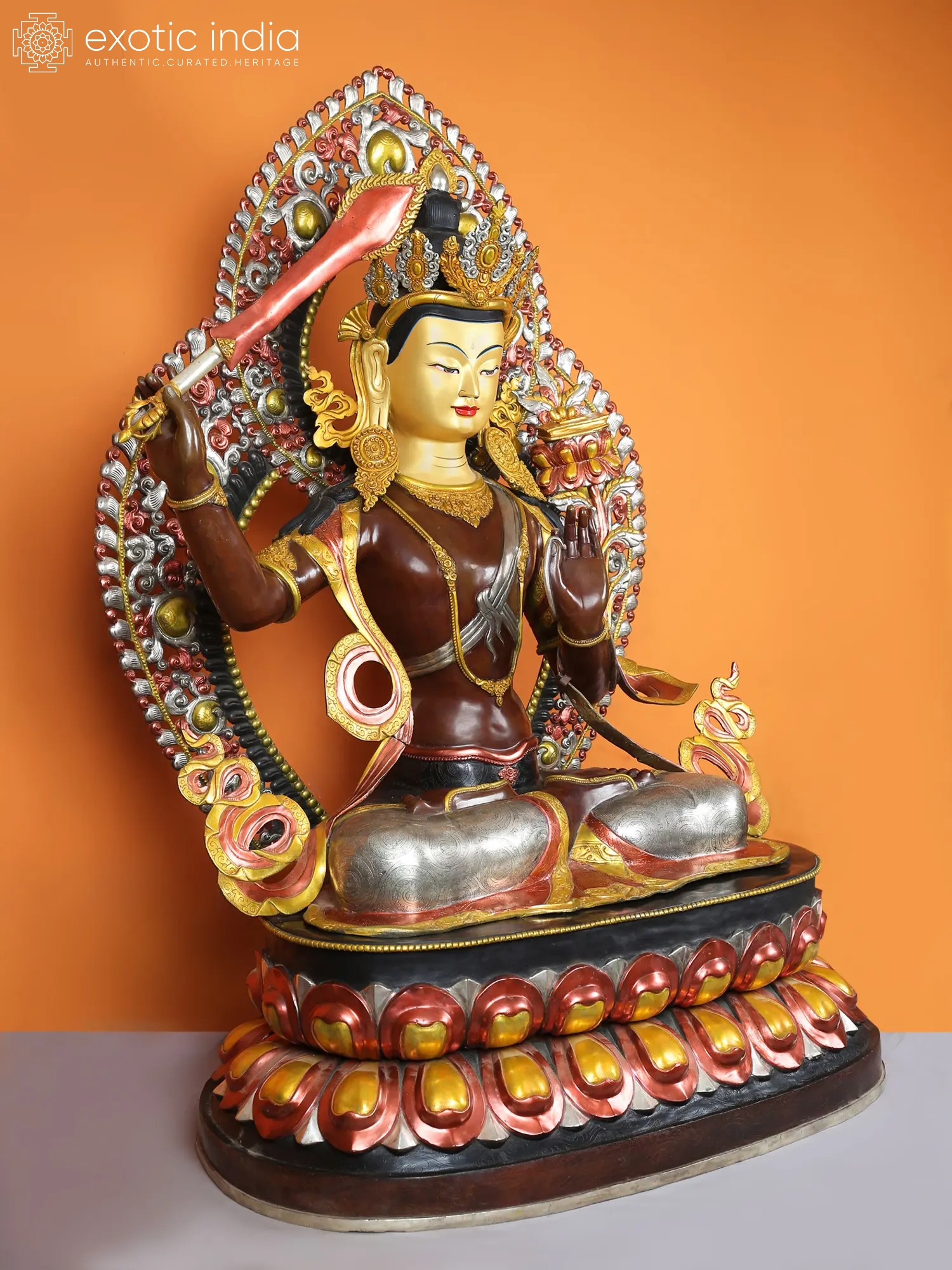
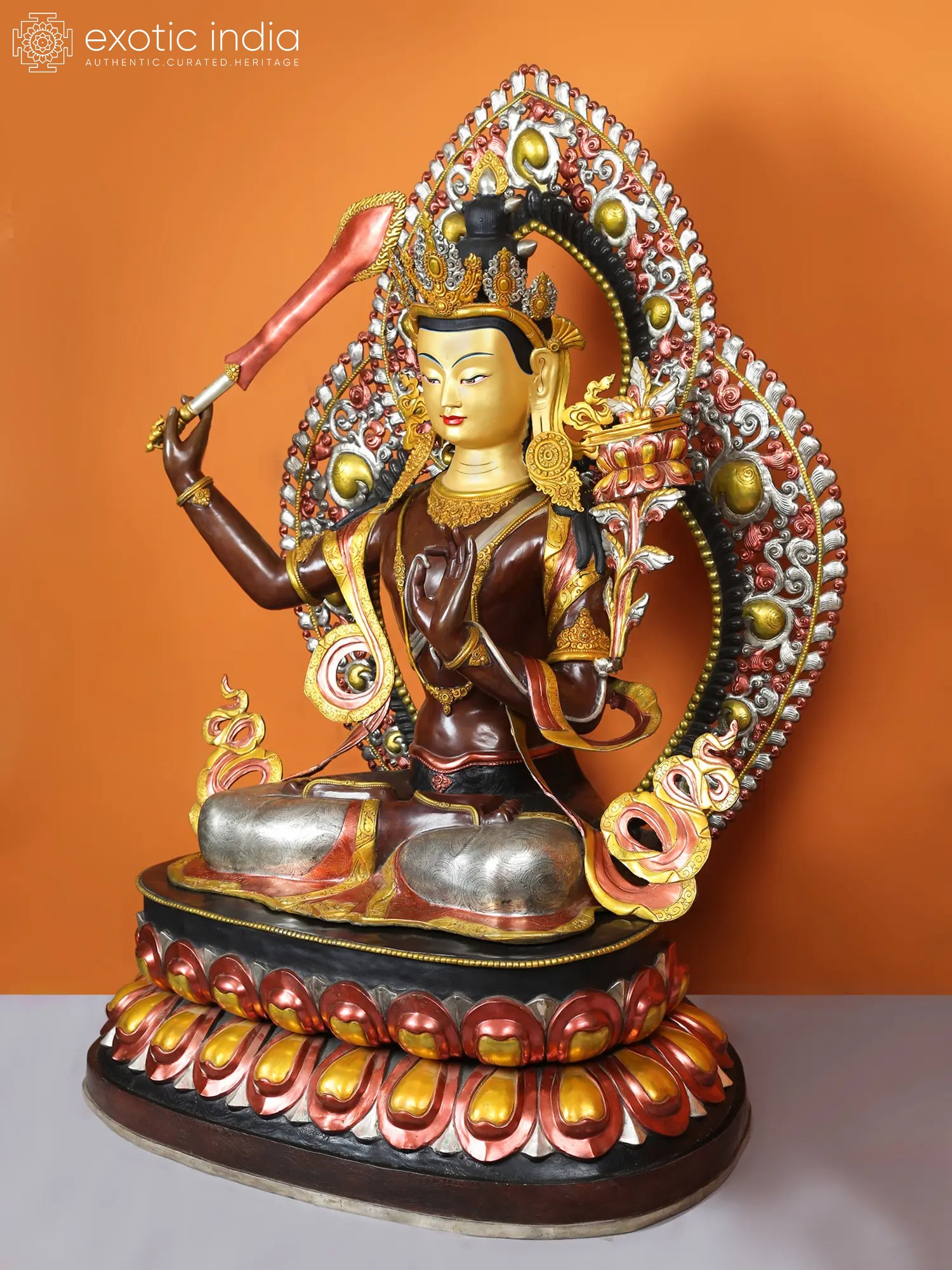
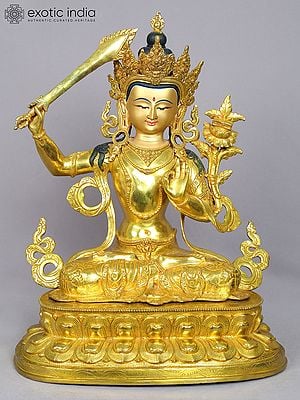
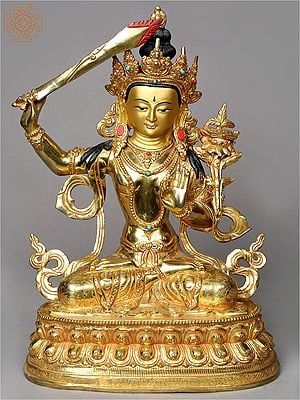
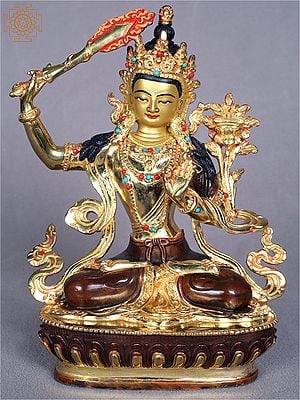
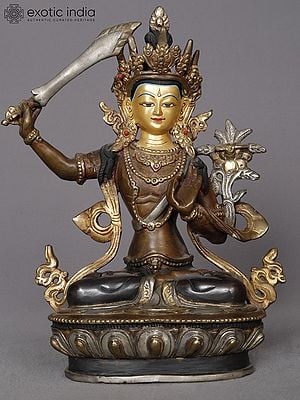
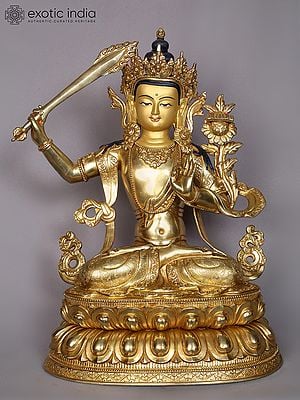
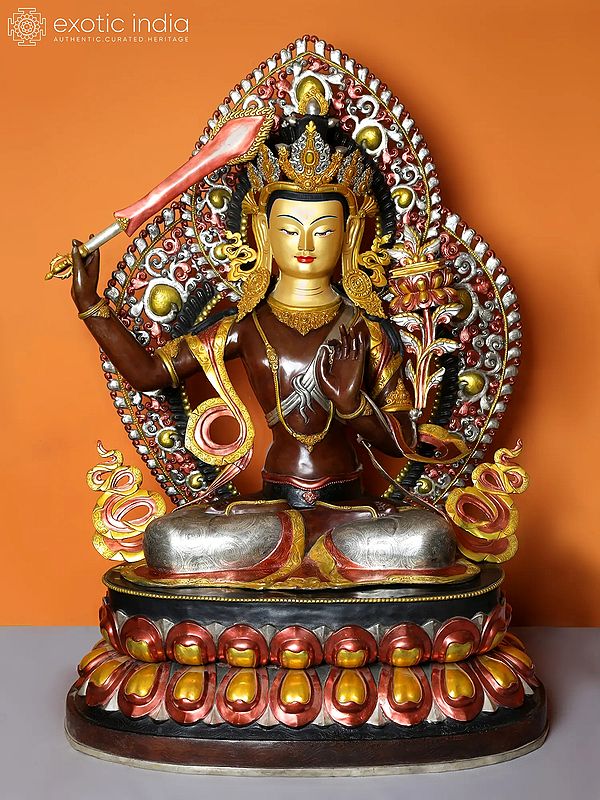
gold, silver, and copper tones in one artwork, this gilded copper statue of
Bodhisattva Manjushri highlights his aspect as the savior of Buddhism, who cuts
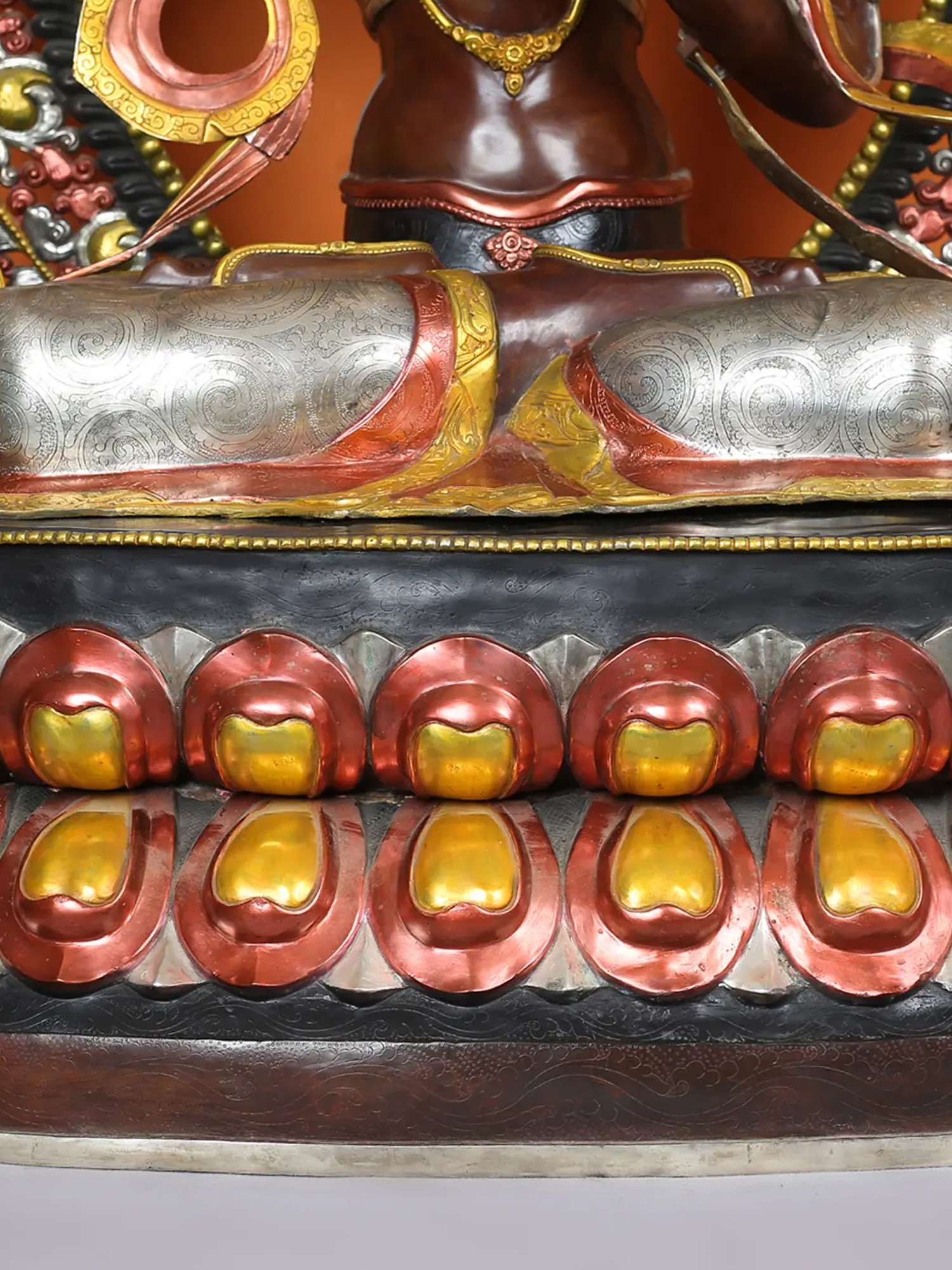
through the darkness of ignorance with his flaming sword. A beautifully
delineated Vishwapadmasana or double-layered lotus seat is presented to the
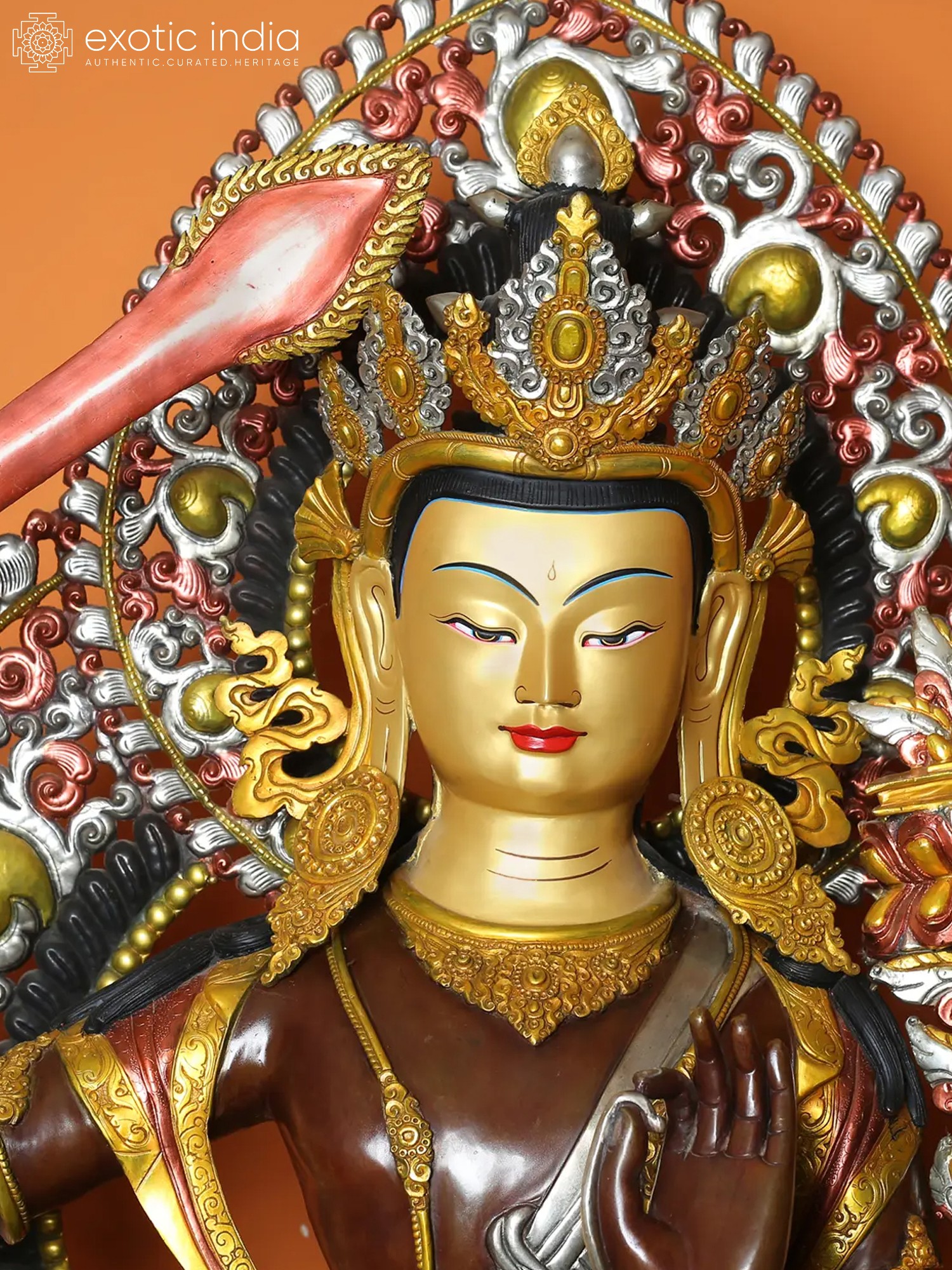
Bodhisattva, who is brilliantly ornamented, and wears a delicate attire whose
patterns are exquisitely depicted in the statue. With tranquil expressions,
Manjushri holds a lotus (symbol of enlightenment) and a sword, which clears the
path to that wisdom.
Wisdom Embodied: The Majestic Manjushri Statue
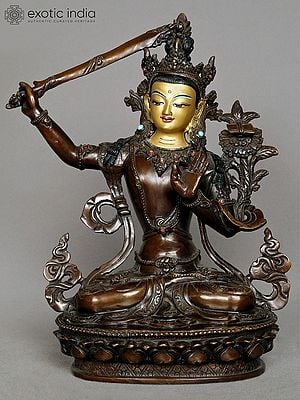
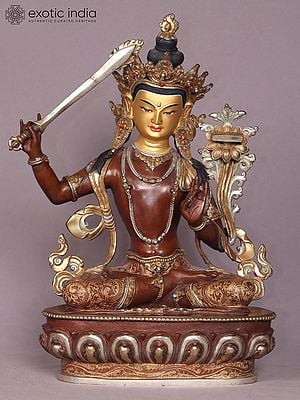
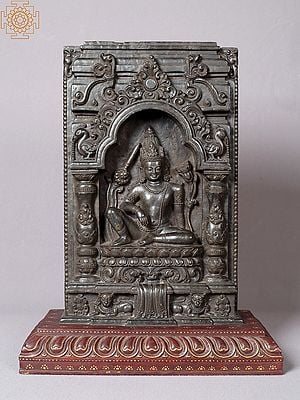
This magnificent statue, crafted from copper and exquisitely gilded with gold, depicts Manjushri, the Bodhisattva of Wisdom. Standing as a powerful embodiment of transcendental knowledge and discernment, Manjushri is a central figure in Mahayana Buddhism, revered as the patron of learning and intellect. His name, meaning "gentle glory," hints at the serene yet potent force of wisdom he represents. This idol serves as a profound reminder of the pursuit of enlightenment, urging practitioners to cultivate sharp intellect and unwavering clarity in their spiritual journey.
The serene countenance of Manjushri, rendered with meticulous detail, radiates a sense of profound peace and boundless compassion. His gaze is steady, focused on the ultimate truth, and his posture signifies unwavering stability and meditative depth. The rich, dark hue of the copper body, contrasted with the brilliant gold plating, creates a visually striking representation, symbolizing the transformation of ordinary consciousness into enlightened awareness. The intricate details of his royal attire and adornments speak to his divine status, further accentuating his importance as a celestial being who guides sentient beings towards liberation from ignorance.
––––––––––The Sword of Discernment and the Lotus of Purity
Manjushri is often depicted holding a flaming sword in his right hand, a potent symbol of his ability to cut through ignorance and illusion, much like a swift blade severs darkness. This sword represents prajna, or wisdom, which illuminates the path to understanding and dispels the veils of delusion that obscure reality. In his left hand, he holds a stem of a lotus flower, signifying the purity of the enlightened mind, which remains untainted by the muddy waters of samsara, the cycle of birth, death, and rebirth. This duality in his iconography beautifully encapsulates the active and passive aspects of wisdom – its power to eradicate negativity and its inherent, unblemished nature.
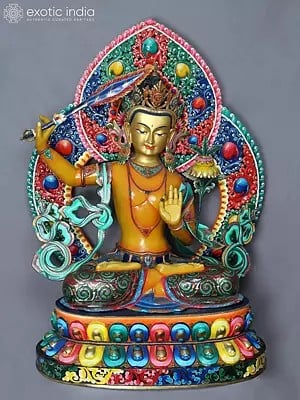
The ornate halo and base of this sculpture further enhance its grandeur. The halo, a riot of intricate patterns and vibrant colors, represents the radiant aura of enlightenment, a cosmic luminescence that emanates from the awakened mind. The layered base, reminiscent of a lotus throne, signifies the spiritual ascension and the foundation of compassion upon which wisdom rests. The craftsmanship evident in the repoussé work and the delicate embellishments showcases the mastery of Nepalese artisans, who have faithfully translated profound Buddhist philosophy into tangible, awe-inspiring art. This piece is not merely an object of devotion but a testament to a rich artistic heritage steeped in spiritual devotion.
––––––––––A Legacy of Enlightenment: Cultural Significance
Manjushri's presence is deeply woven into the fabric of Buddhist traditions across Asia. Tales abound of his intervention in helping disciples overcome intellectual obstacles and achieve profound insights. In many sutras, he appears as a primary interlocutor with the Buddha, asking crucial questions that reveal the deepest teachings. His worship is believed to enhance intelligence, memory, and the ability to grasp complex philosophical concepts, making him a revered figure for scholars and seekers alike. This statue, originating from Nepal, a land steeped in Buddhist history and artistry, carries with it the resonance of centuries of devotion and spiritual practice. It serves as a focal point for meditation, contemplation, and the cultivation of the very qualities Manjushri embodies, inviting a connection to the profound wisdom that can lead to ultimate peace and liberation.How are Nepalese copper statues made?
Nepalese statues and sculptures are best known for their unique
small religious figures and ritual paraphernalia for over two
thousand years. These are mainly cast in copper alloy. Nepal draws
influences from the artistic styles of Buddhism and Hinduism, and
therefore the sculptors of the country specialize in making the
icons of both these religions. Over the years, Nepalese sculptures
evolved into their own distinctive iconography. Some
characteristic features of these sculptures that differ from other
pieces are exaggerated physical postures, youthful and sensual
features, languid eyes, wider faces having serene expressions, and
ornate flourishes. The Buddhist deity icons of Nepal have
tremendous demand in countries such as China and Tibet for ritual
purposes in their temples and monasteries.
Nepalese statues and sculptures have a high copper content and
therefore develop a slightly reddish patina on the surface as they
age. However, the most unique feature of Nepalese copper statues
is their decorative detailing. The pieces are heavily gilded and
sometimes inlaid with semi-precious stones. This embellishment
protects them from getting tarnished. The traditional lost-wax
method for casting Nepalese copper statues remains the most
practiced technique in Nepal for many centuries. This process
involves many steps and requires skilled artists.
The first step in lost-wax sculpting is to make a wax replica of
the desired Buddhist deity to be cast in copper. This replica is
created by hand and therefore needs excellent artistic skills
otherwise fine features will be lacking.
Once the wax replica is made, it is then coated with a special
mixture of clay with a brush. This layer of clay is hardened when
left to dry. A small hole is made on the base of the wax mould so
that the wax flows away when it is heated.
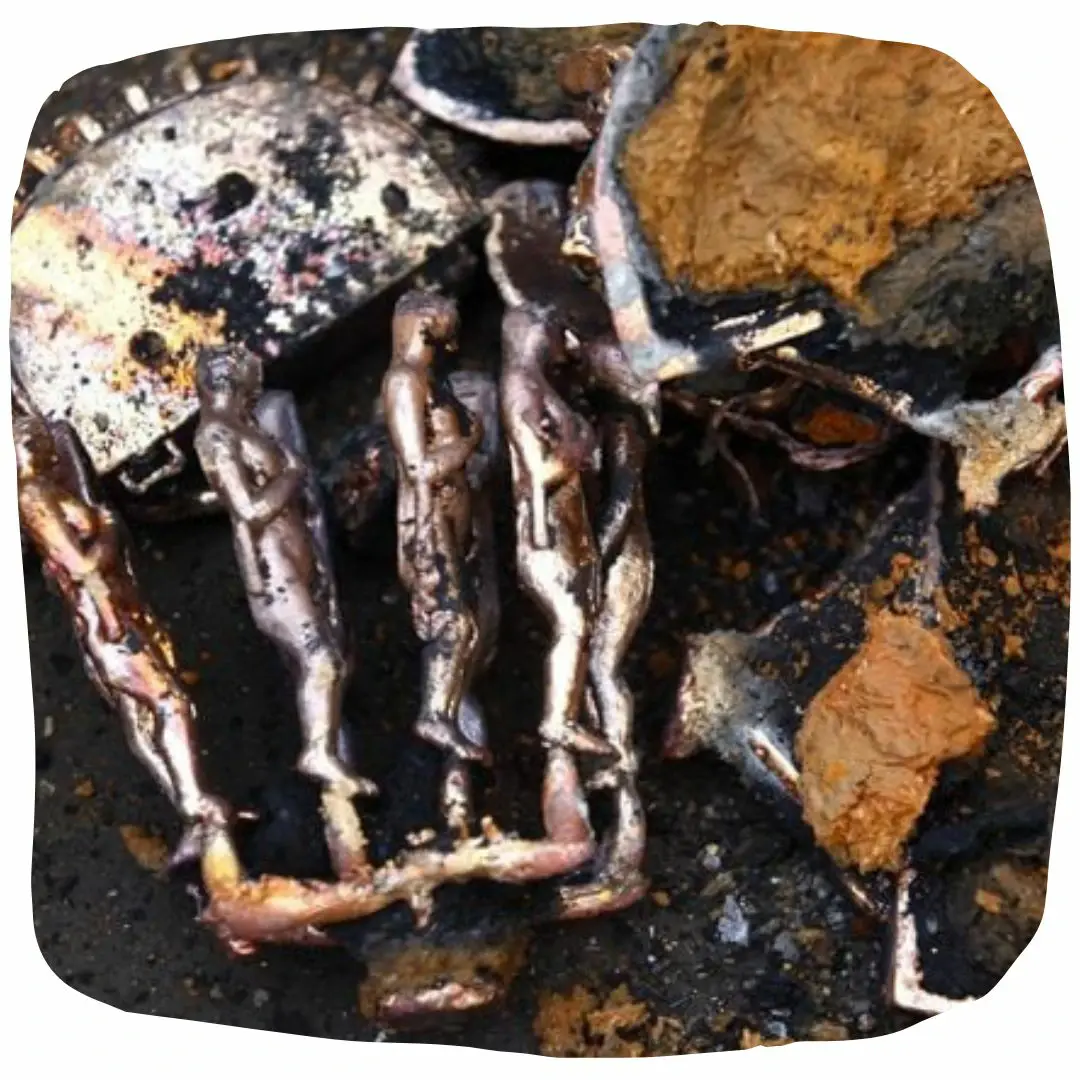
At this stage, a hollow mould in the shape of the deity is
obtained.
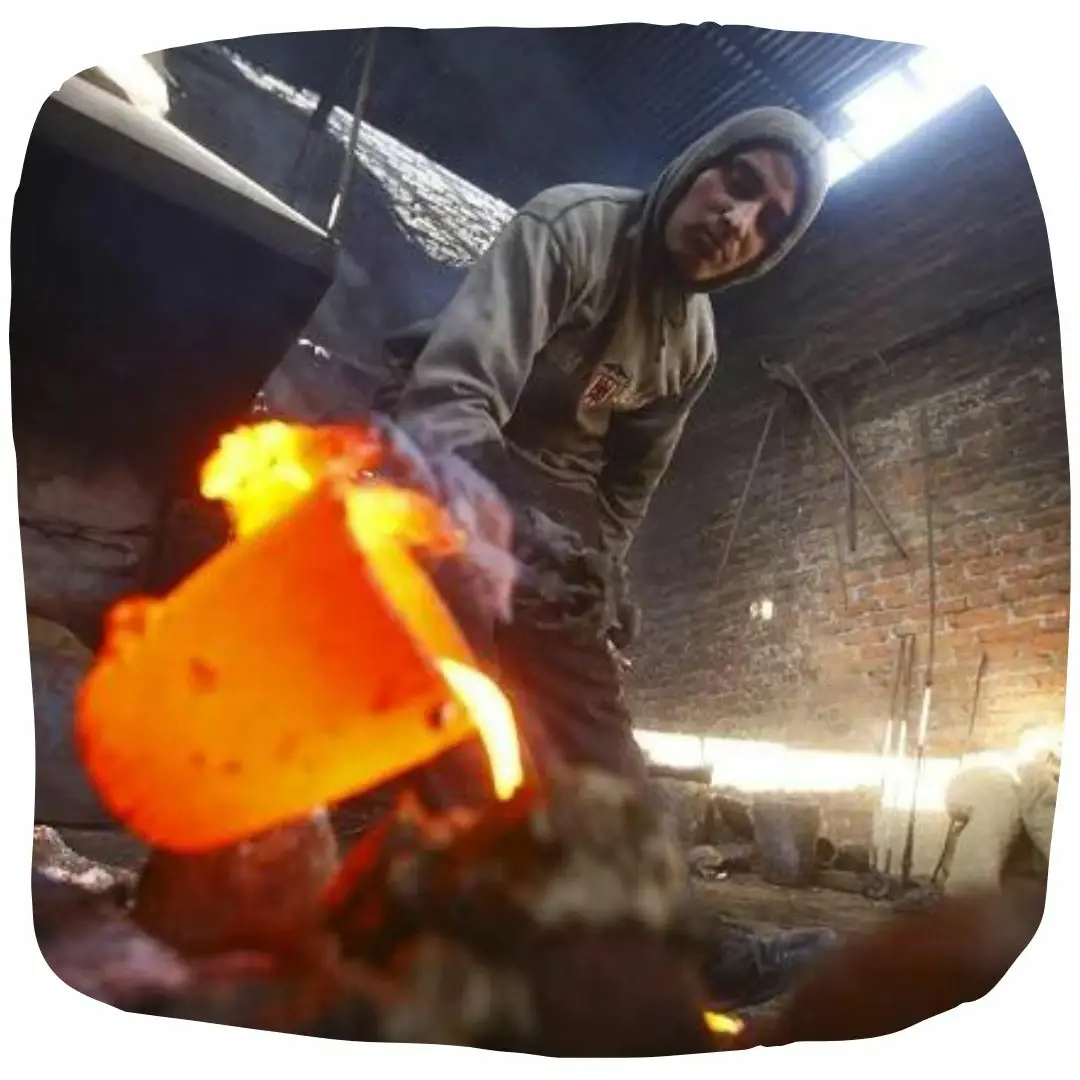
This is the time to pour liquid copper into the hollow mould which
is then allowed to cool and harden inside a container of cold
water. When the liquid metal has hardened, the mould is removed
and the statue within is revealed.
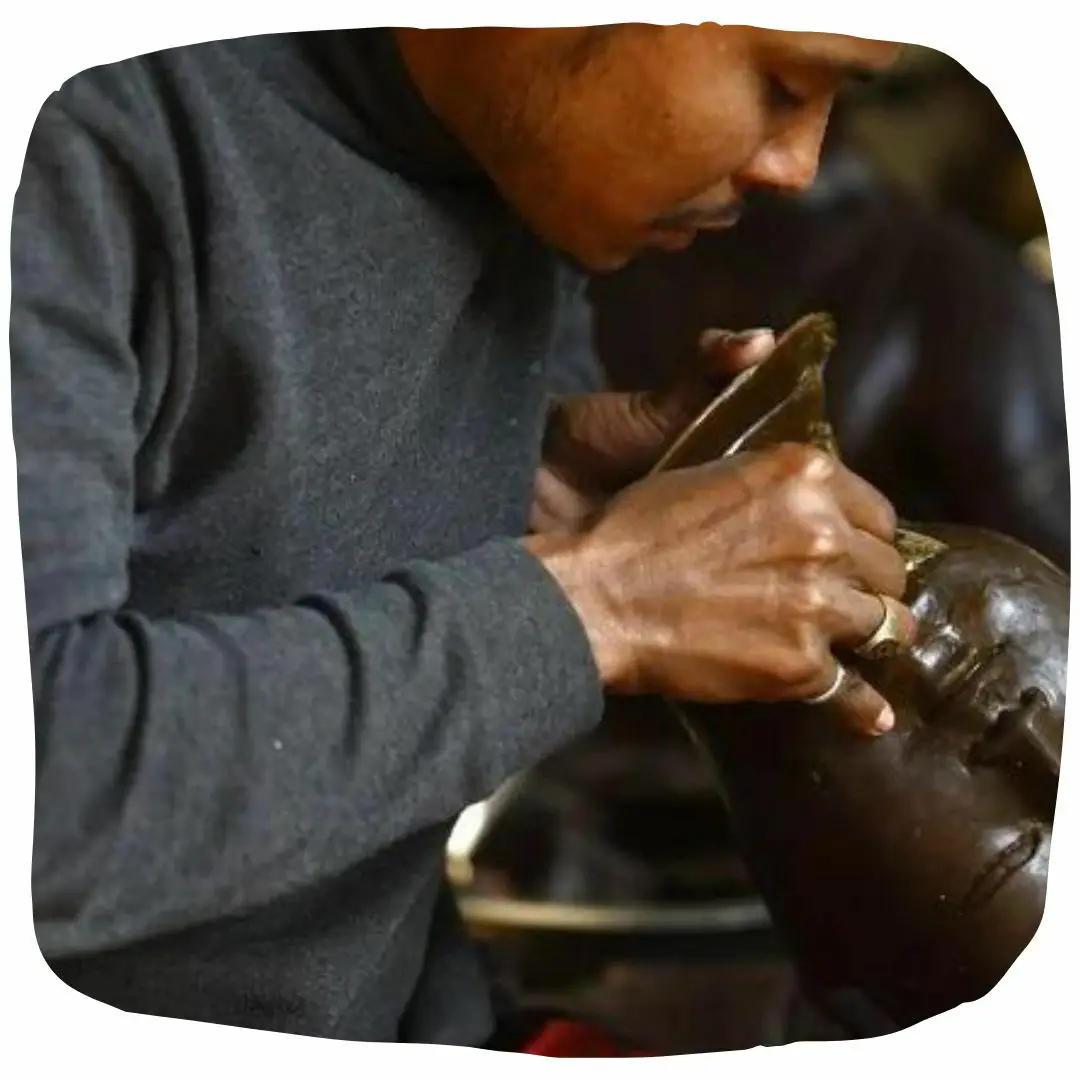
The artist works on the details of the statue using various tools.
It is then polished to get a shiny and lustrous surface.
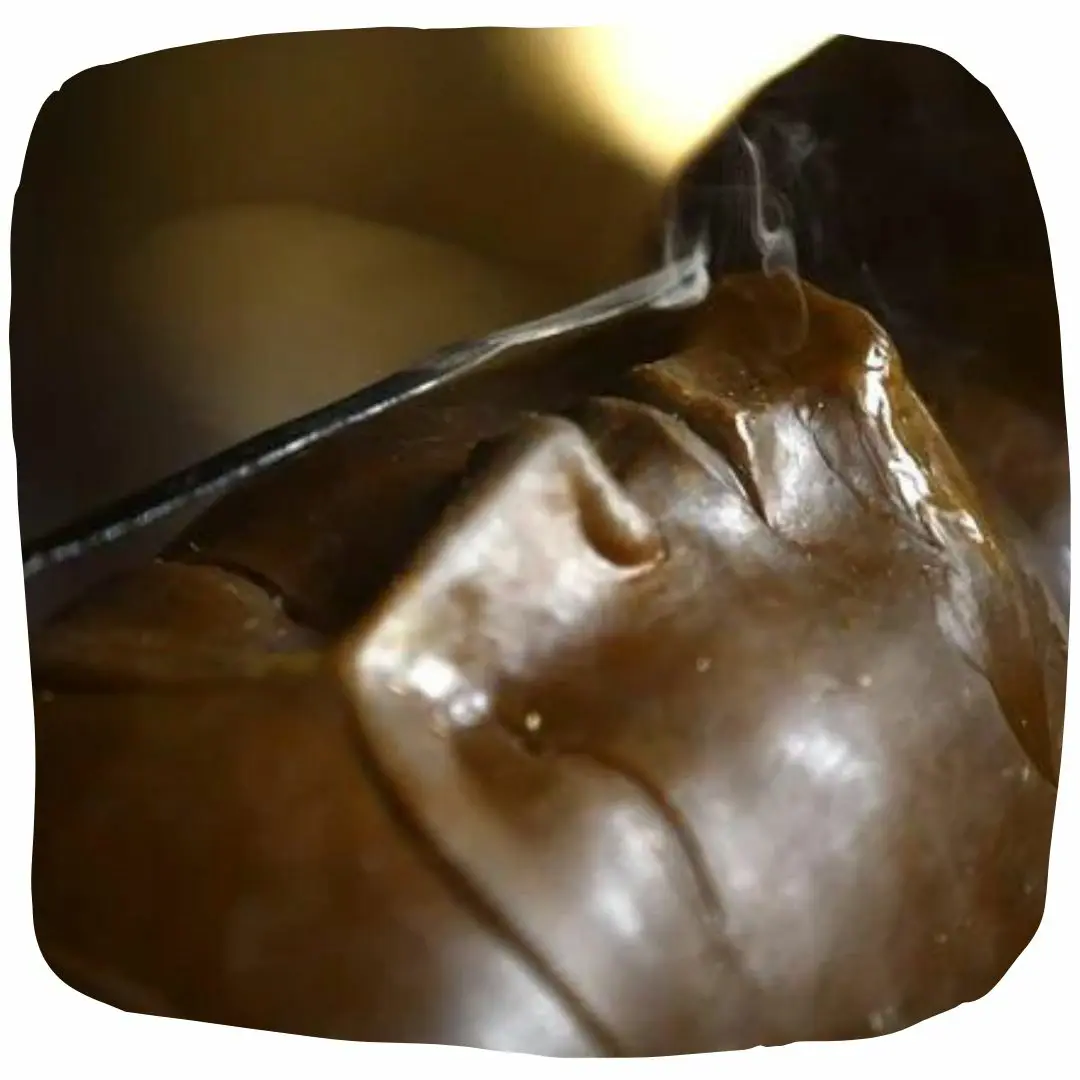
Now comes the most important part of Nepalese art which is gold
gilding. This is done by the traditional fire gilding method. A
mixture of mercury and 18K gold is applied on the surface of the
statue and heat is applied using a flame torch. The result is that
mercury evaporates along with impurities, leaving a pure 24K gold
finish.
The lost-wax method of sculpting is the most preferred technique
for artists to cast a metallic statue having intricate details.
Since Nepalese copper sculptures require extraneous effort for
giving a majestic look by adding special embellishments, it takes
several weeks to complete one masterpiece. A 24K gold gilded
copper sculpture retains its brilliant luster for many years and
appears as like before. Nepalese sculptures continue to remain one of the finest specimens of the art of the East that have a strong
aesthetic appeal that other sculptures cannot match.











 Upload an Image