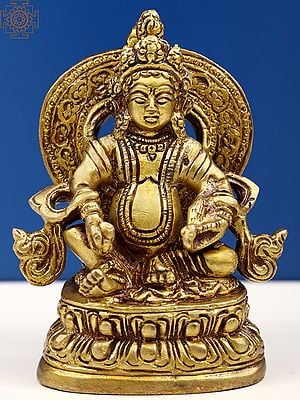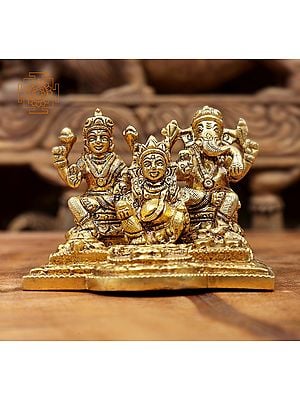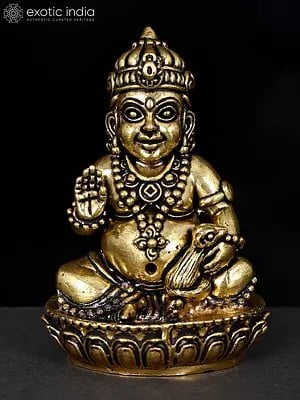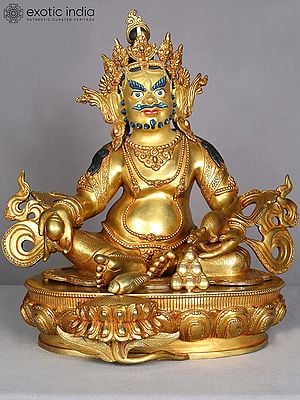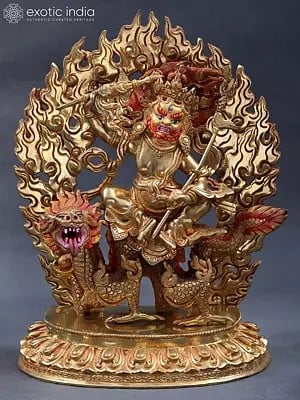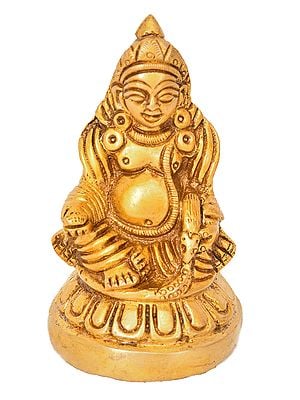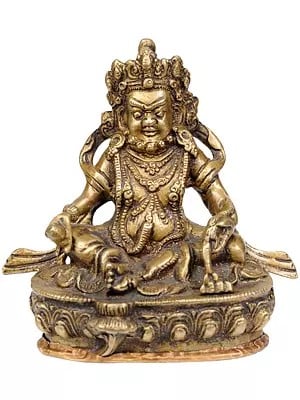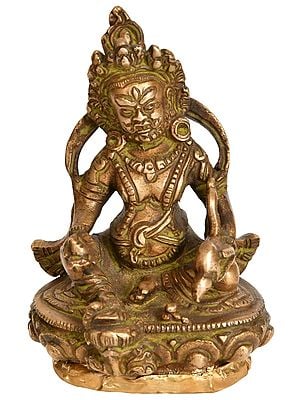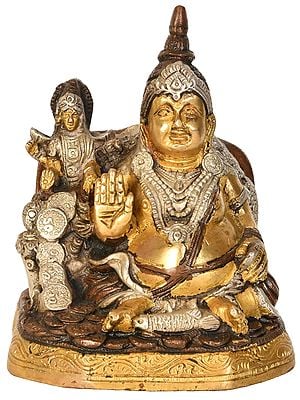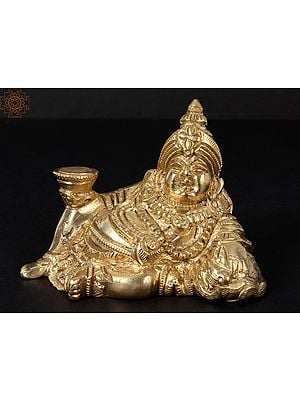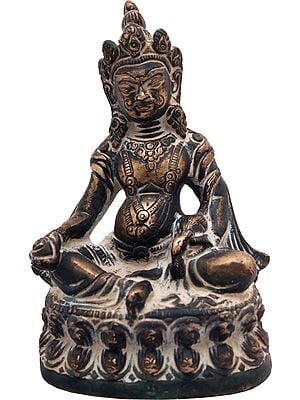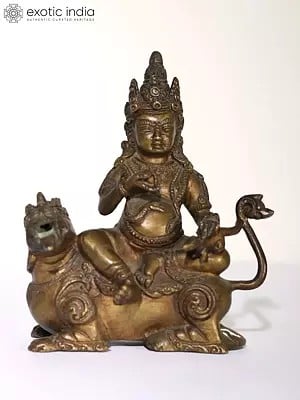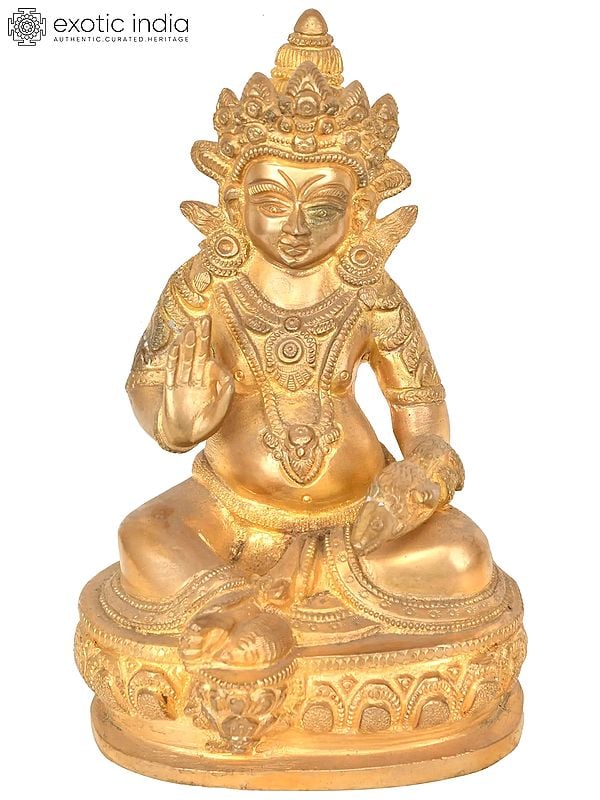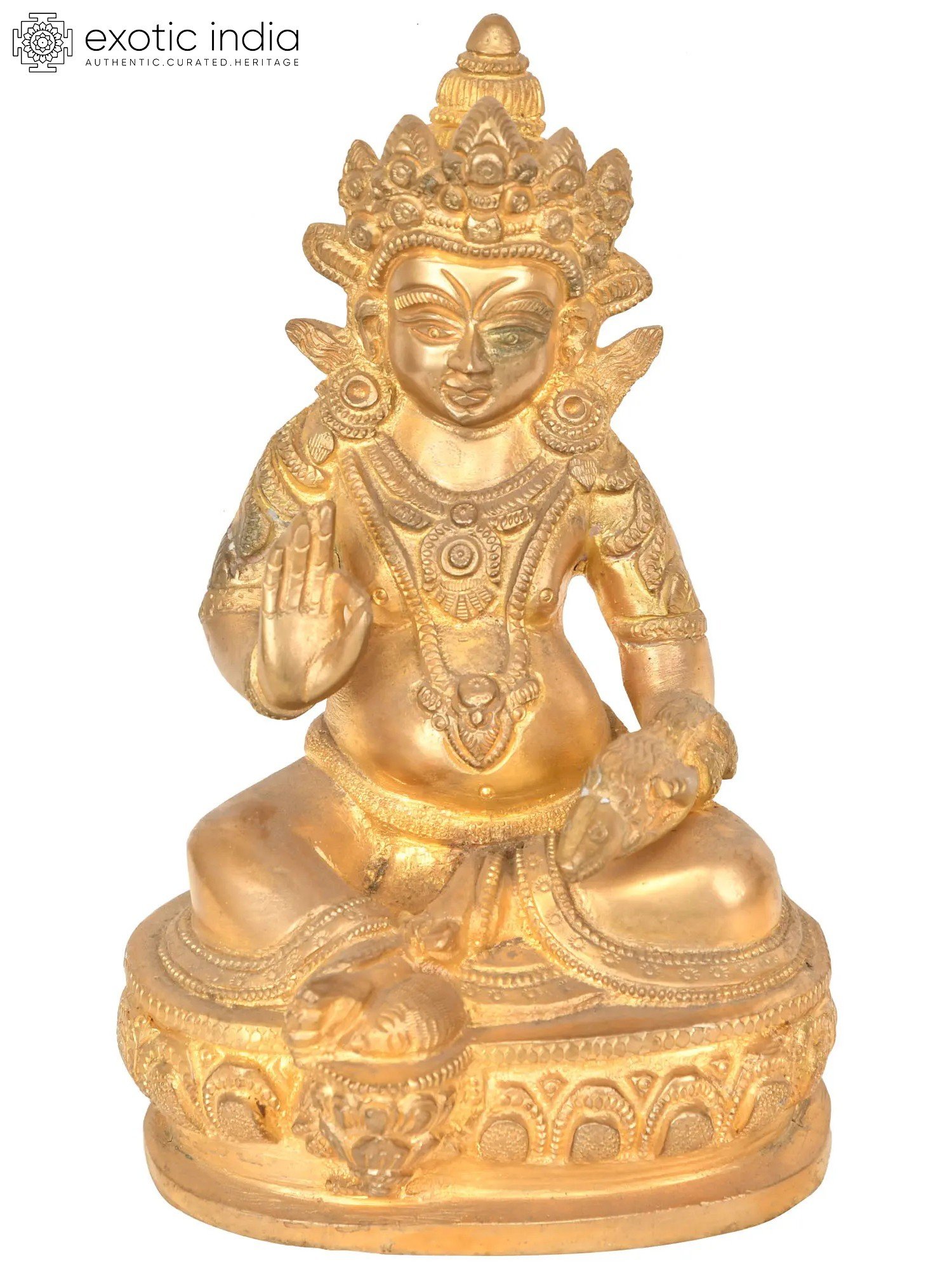
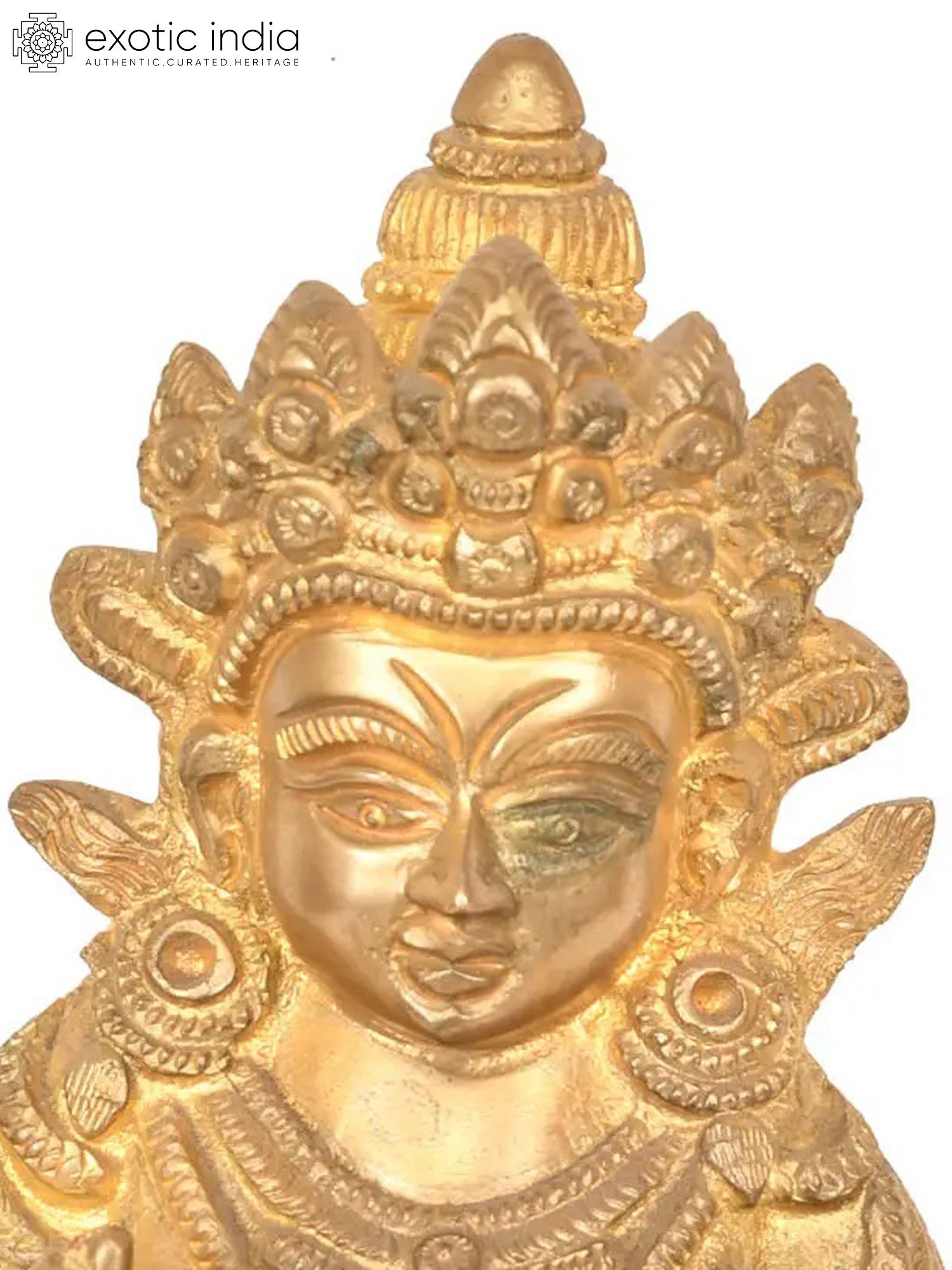
7" Kubera (Tibetan Buddhist Deity) In Brass | Handmade | Made In India


| Specifications |
 |
EQ99 |
 |
Brass Statue |
 |
Height: 7.4 inch |
| Width: 5 inch | |
| Depth: 4.2 inch | |
 |
Weight 2.17 kg |
| Delivery and Return Policies |
 |
Ships in 1-3 days |
 |
Returns and Exchanges accepted within 7 days |
 |
Free Delivery |


The Benevolent Lord of Wealth
This exquisite brass sculpture depicts Kubera, the king of the Yakshas and the Hindu god of wealth and fortune. Revered across various spiritual traditions, including Tibetan Buddhism, Kubera is often invoked for prosperity, abundance, and the dispelling of poverty. The deity is traditionally depicted as a stout, richly adorned figure, symbolizing the fullness and generosity of wealth. This particular representation, with its intricate detailing and luminous brass finish, captures the essence of this revered deity, making it a powerful object of devotion and a stunning piece of art. In Hindu mythology, Kubera is the son of Vishrava and Ilavida. He is often associated with the mythical kingdom of Lanka, which he ruled before being overthrown by his demon half-brother, Ravana. He later established his celestial city, Alaka, in the Himalayas. Kubera's patronage extends to all forms of wealth, including material riches, intellectual prowess, and spiritual merit. He is also believed to guard the treasures hidden within the earth. His iconography frequently includes a mongoose, which, according to legend, disgorges jewels, symbolizing the inexhaustible nature of wealth. ––––––––––A Masterpiece of Indian Craftsmanship
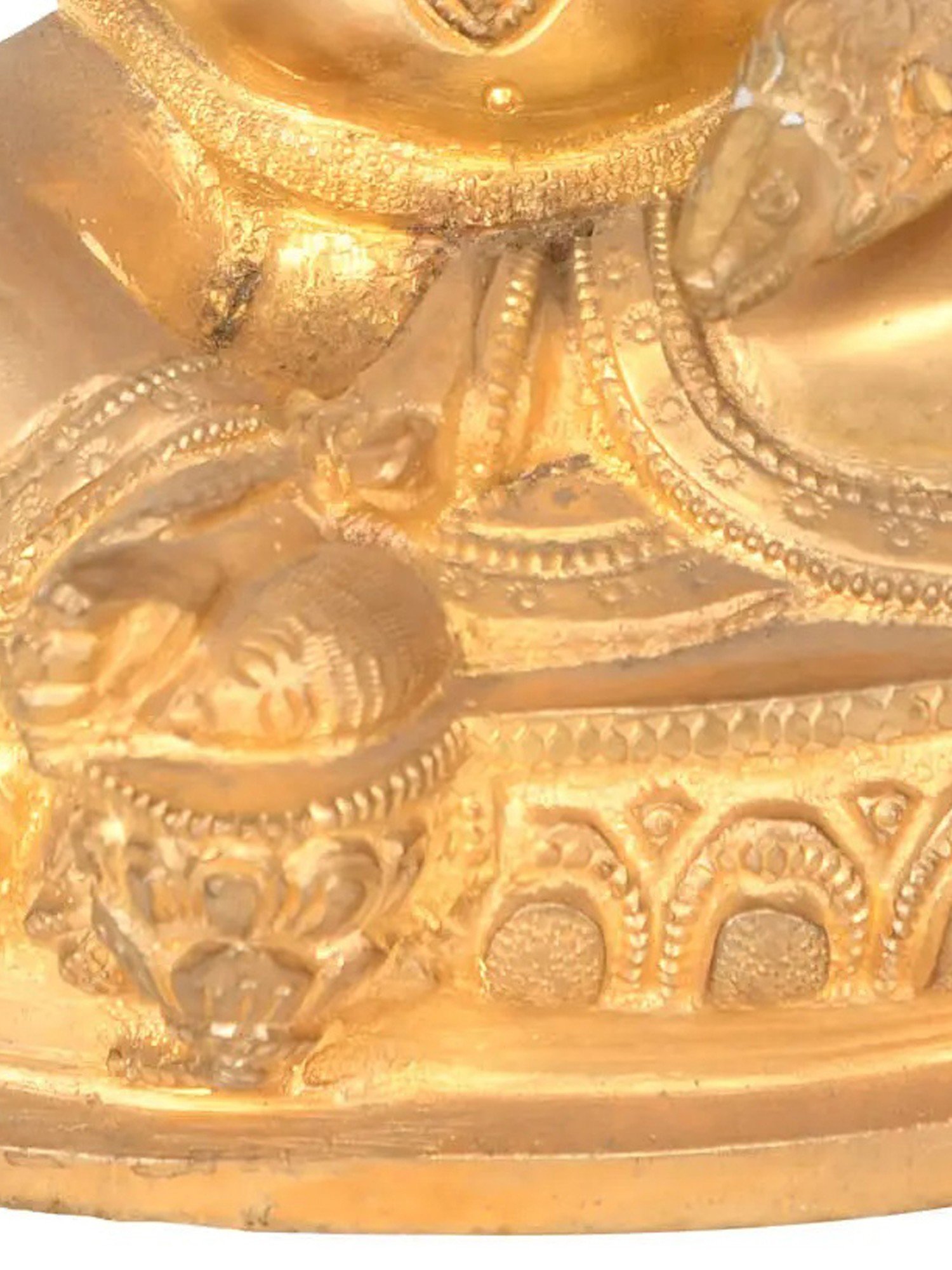
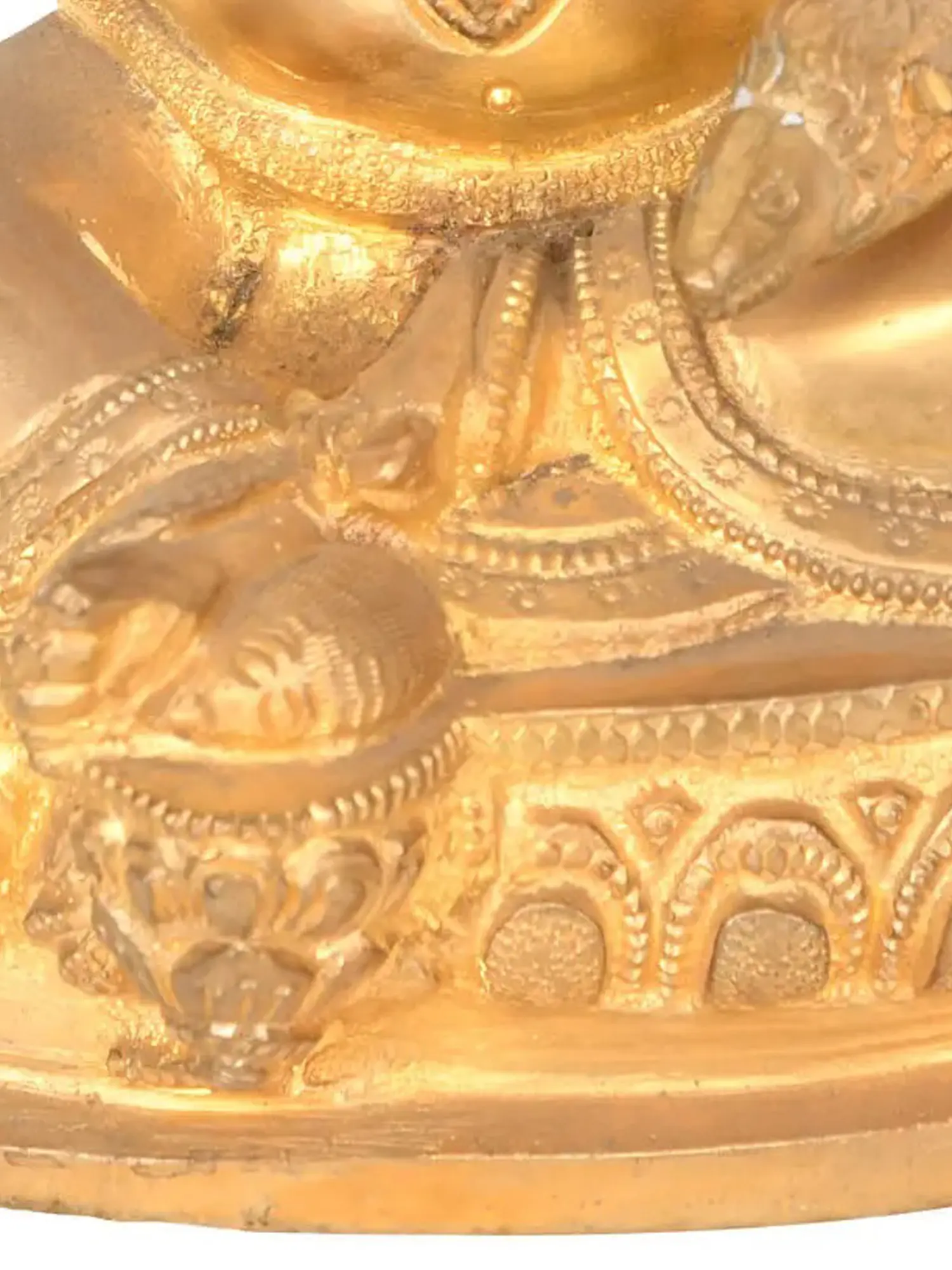
Handcrafted in India by skilled artisans, this brass statue is a testament to centuries-old traditions of metalwork. The lost-wax casting technique, or *Dokra* art, likely employed in its creation, allows for the rendition of incredibly fine details. From the elaborate crown adorning his head to the delicate jewelry that graces his form, every element of this sculpture speaks of meticulous craftsmanship and artistic dedication. The warm, golden hue of the brass imparts a sense of sacredness and enduring quality, while the polished finish enhances the play of light and shadow, bringing the deity to life. The posture of the deity is significant. Seated in a meditative pose, with one hand raised in a gesture of blessing or protection, and the other resting on a wealth-filled pot or symbolic treasure, this statue emanates serenity and grace. The intricate carvings on the base further enhance the visual narrative, often depicting motifs that symbolize prosperity and auspiciousness. This deity is not merely an idol but a conduit to invoking positive energies and a reminder of the divine presence that can bring abundance into one's life. Bringing this representation of Kubera into your home or sacred space is an invitation for blessings of wealth, well-being, and prosperity.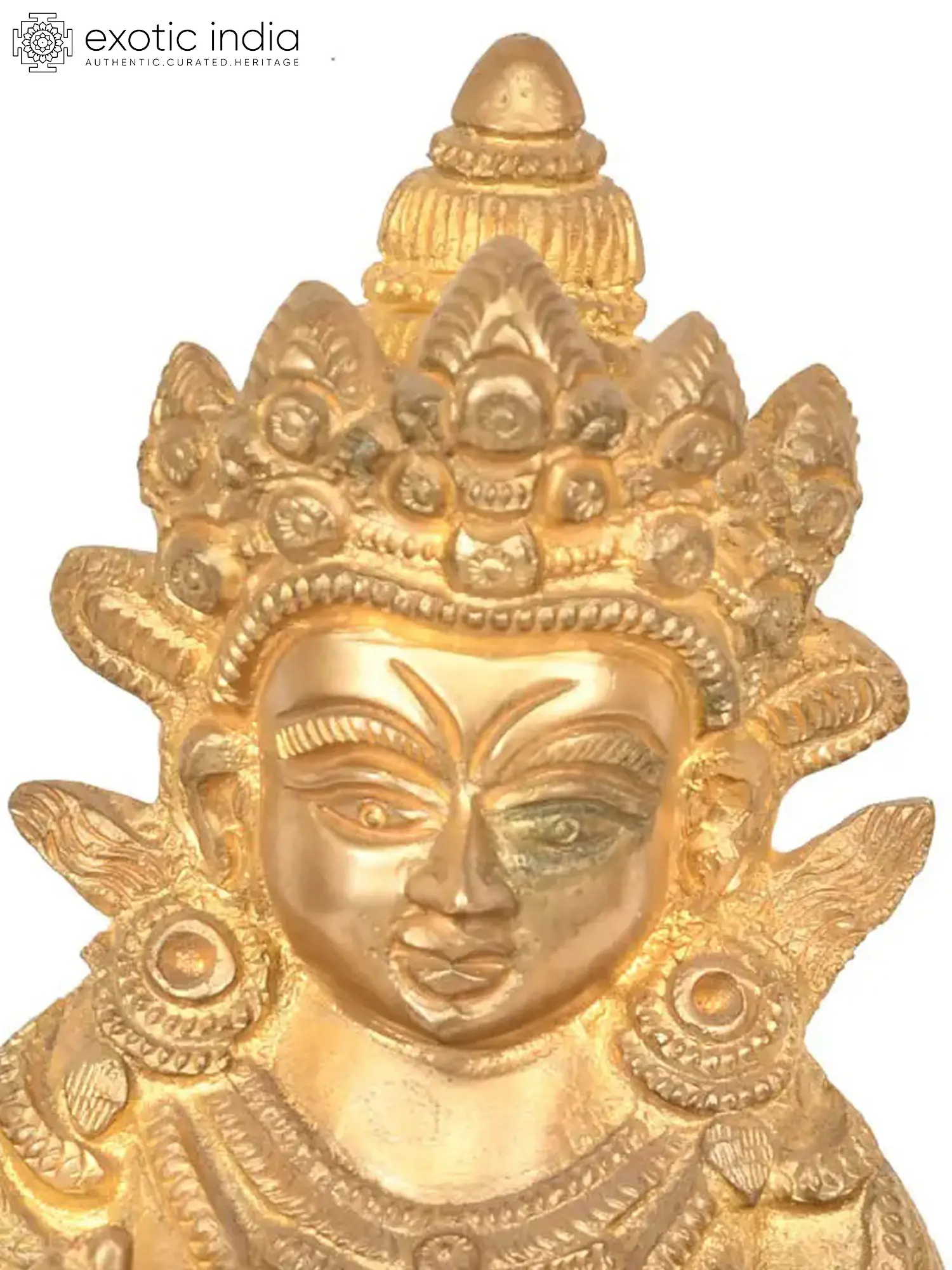
How to keep a Brass statue well-maintained?
Brass statues are known and appreciated for their exquisite beauty and luster. The brilliant bright gold appearance of Brass makes it appropriate for casting aesthetic statues and sculptures. Brass is a metal alloy composed mainly of copper and zinc. This chemical composition makes brass a highly durable and corrosion-resistant material. Due to these properties, Brass statues and sculptures can be kept both indoors as well as outdoors. They also last for many decades without losing all their natural shine.
Brass statues can withstand even harsh weather conditions very well due to their corrosion-resistance properties. However, maintaining the luster and natural beauty of brass statues is essential if you want to prolong their life and appearance.
- The best and simplest way to maintain a brass statue is to clean it at least twice a week using a soft cloth or cotton rag. This will prevent dust from accumulating on the surface. Dusting is especially important for outdoor statues since it is prone to dust accumulation much more than indoors.
- To give a natural shine and luster to the statue, you may apply coconut or olive oil using cotton on every portion. You can use a toothbrush to get to the small crevices but do not be too harsh. This will make the brass statue appear fresh and new with a polished look.
In case you have a colored brass statue, you may apply mustard oil using a soft brush or clean cloth on the brass portion while for the colored portion of the statue, you may use coconut oil with a cotton cloth.
Brass idols of Hindu Gods and Goddesses are especially known for their intricate and detailed work of art. Nepalese sculptures are famous for small brass idols portraying Buddhist deities. These sculptures are beautified with gold gilding and inlay of precious or semi-precious stones. Religious brass statues can be kept at home altars. You can keep a decorative brass statue in your garden or roof to embellish the area and fill it with divinity.
-
Q. Is the statue hollow or solid ?A. Brass statues are made through a process of clay casting, hence are hollow. Whereas, panchaloha bronze statues are made through a process of lost wax casting, hence they are solid.
-
Q. Can I return the statue ?A. Of course you can return a statue. Returns need to be initiated within seven (7) days after delivery. All returned items must be in new and unused condition, with all original tags and labels attached. To know more about our Return Policy, please visit Return Policy.
-
Q. Can you customise the statue for me ?A. For any customisation, kindly email us at help@exoticindia.com.