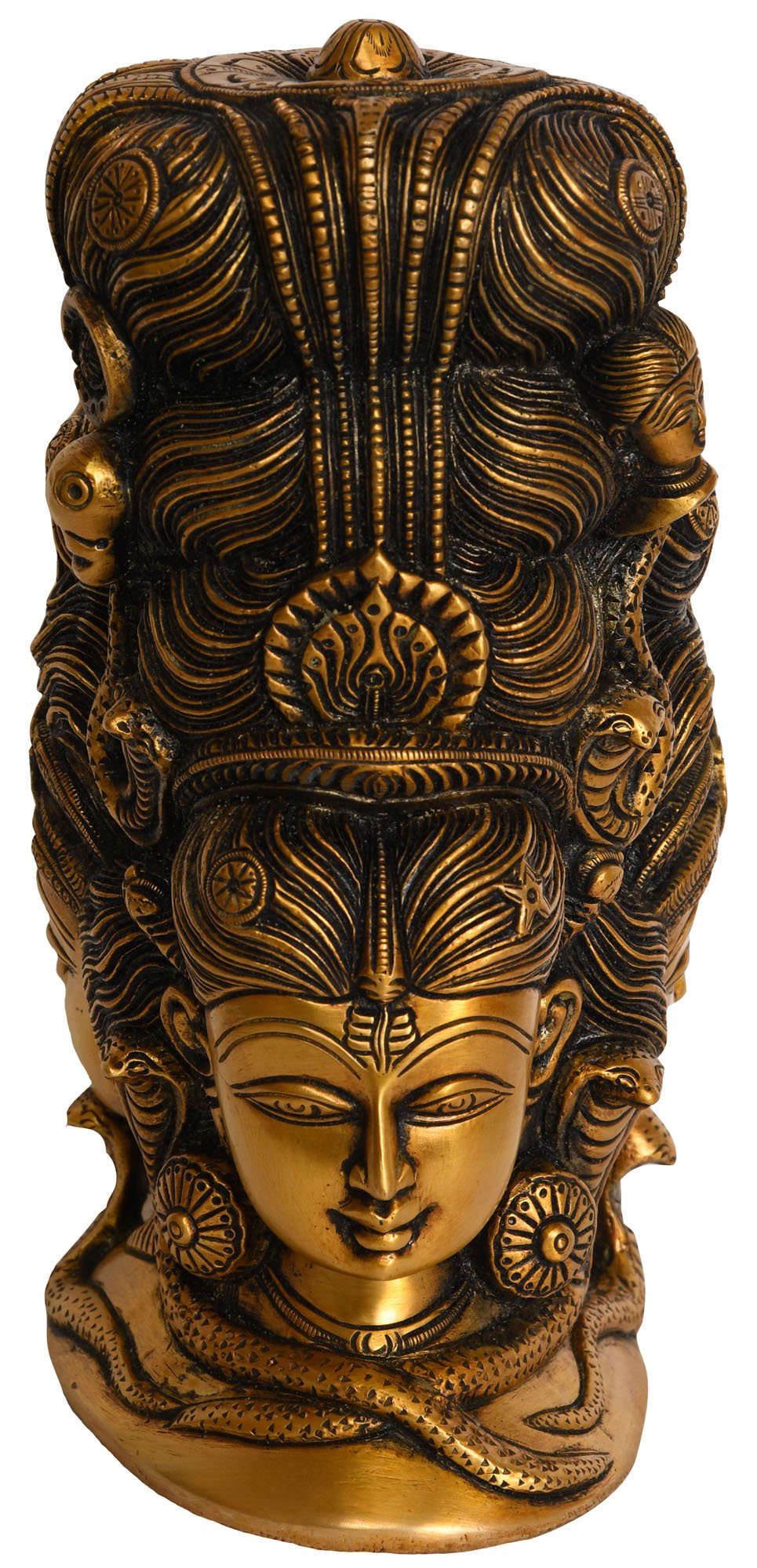
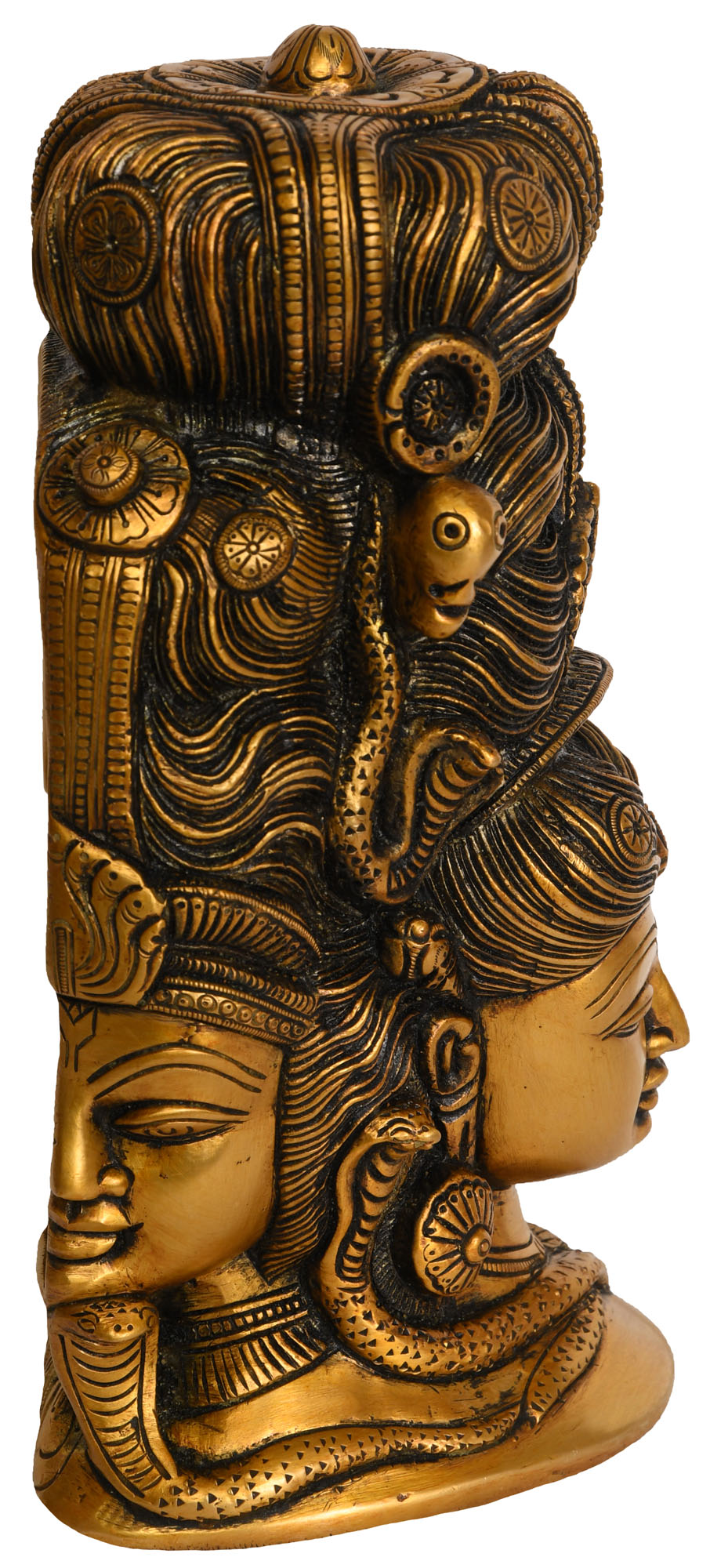
Celebrate the divine
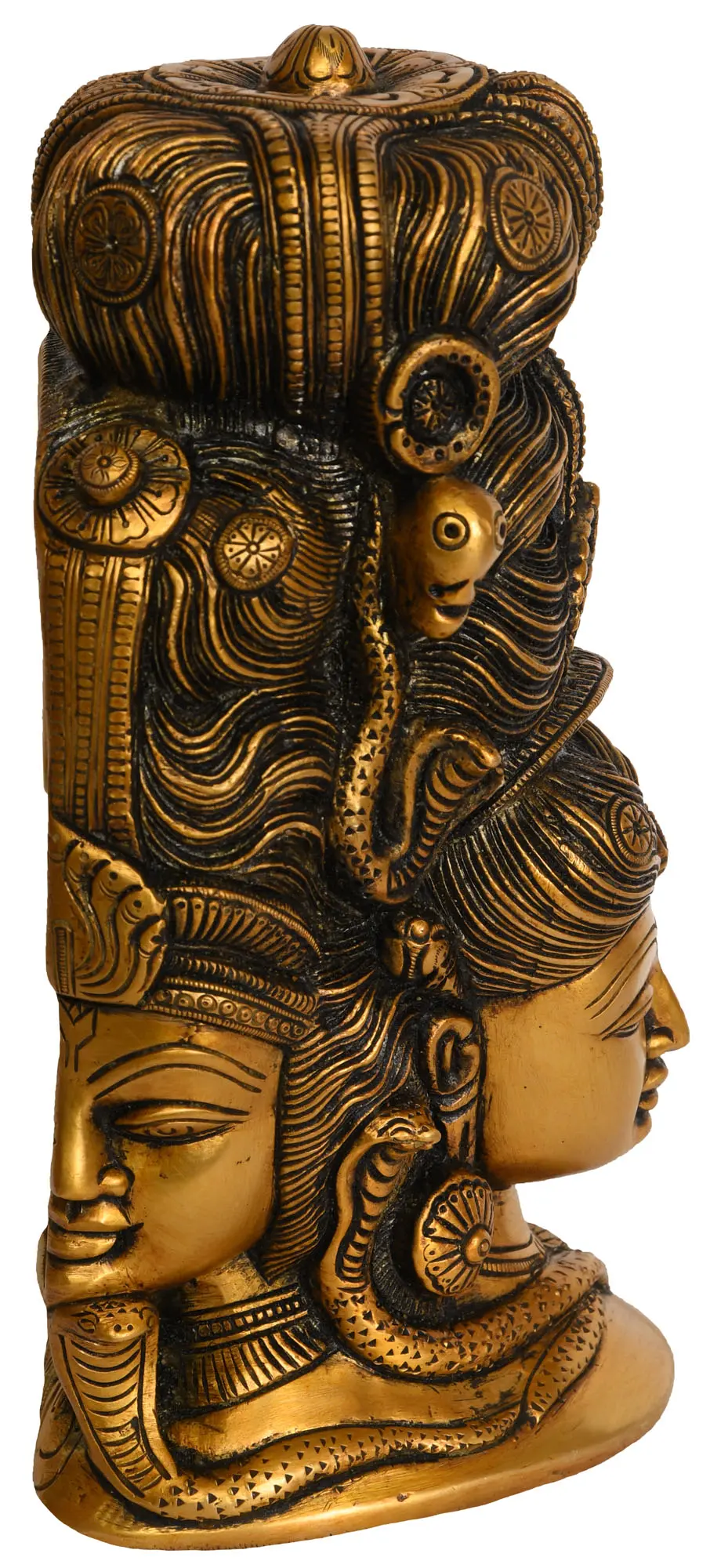
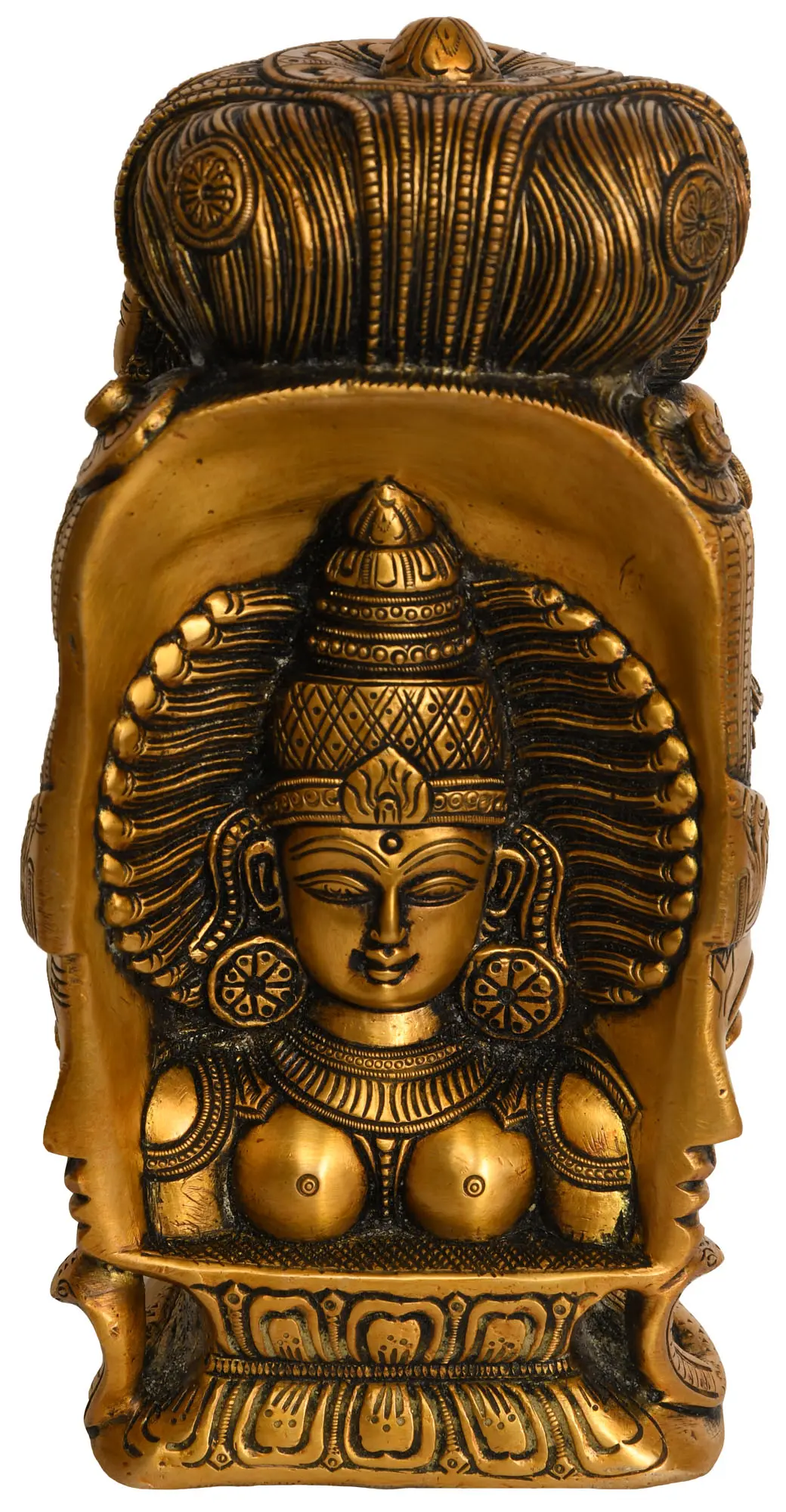
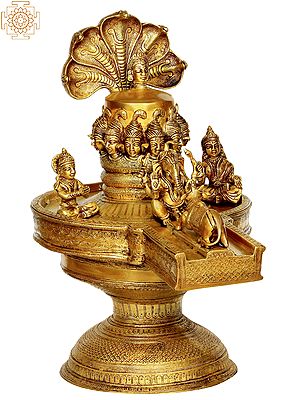
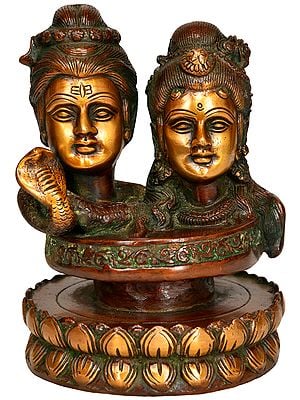
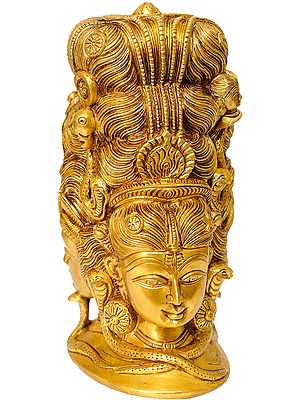
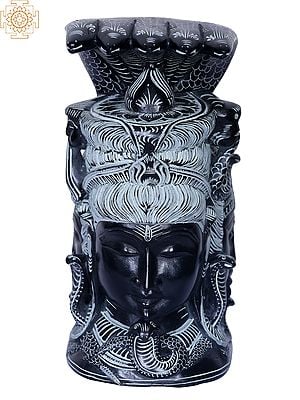
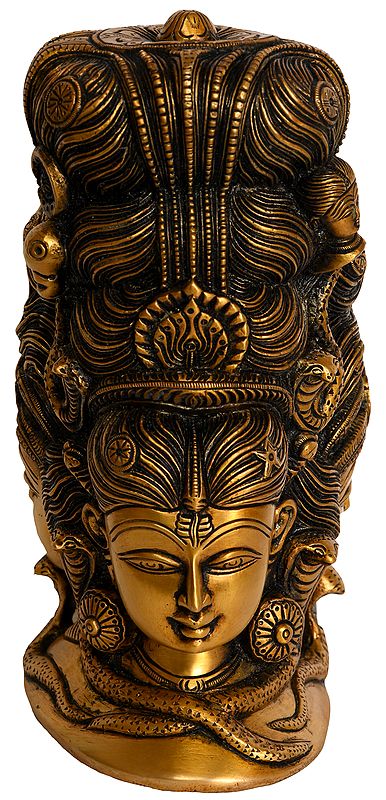
union of Shiva and Parvati with this beautifully crafted brass Mukhalingam.
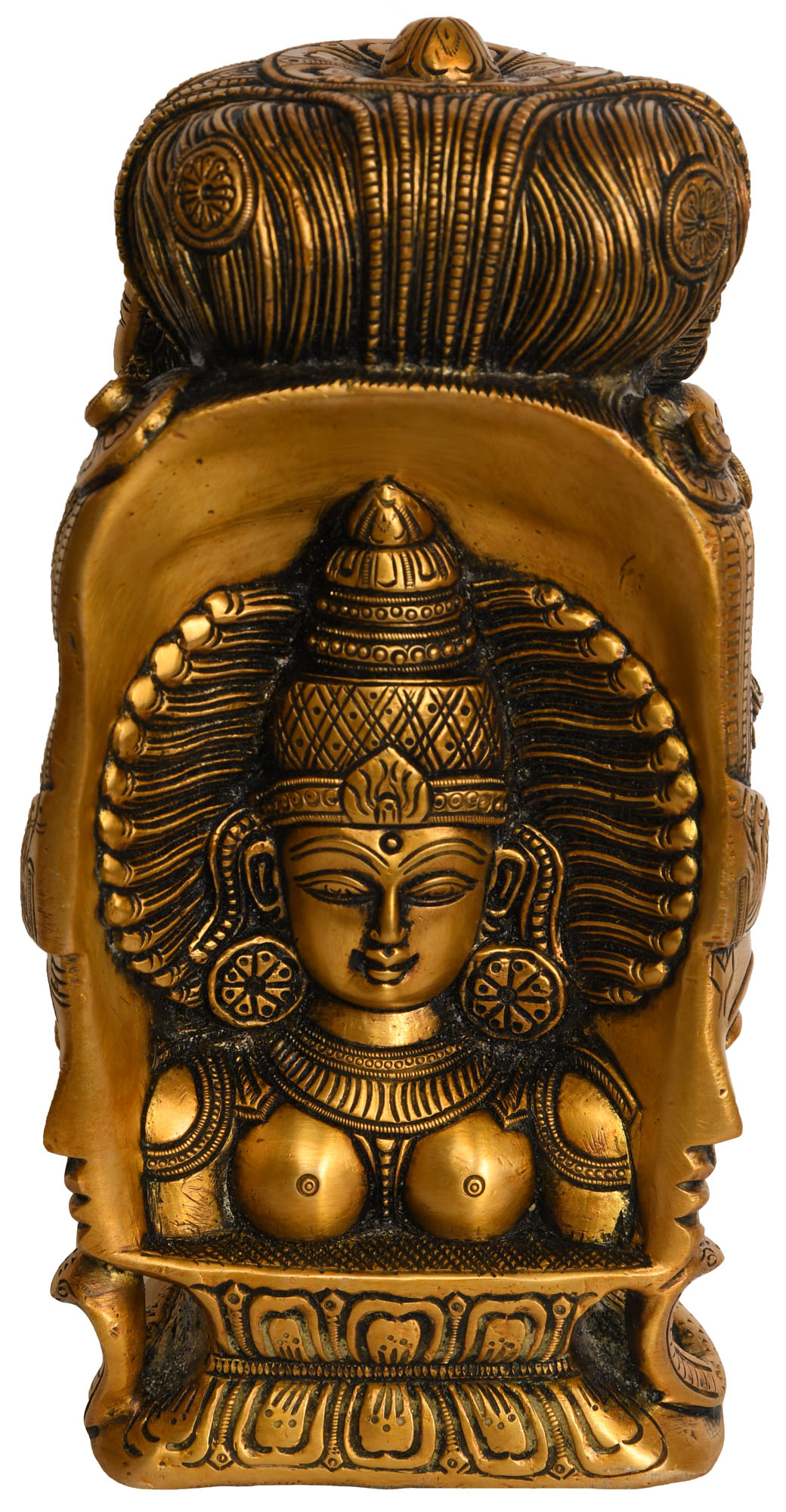
This sculpture not only showcases Lord Shiva's iconic lingam but also features
a depiction of Parvati on the rear side - it captures the deep spiritual
significance of their union. The presence of Parvati on the rear side of the
Lingam symbolises the unity of the divine masculine and feminine. Placing this
sculpture in your home invites the blessings of Shiva and Parvati, fostering an
atmosphere of love, harmony, and spiritual balance.
Divine Union: A Brass Representation of Shiva and Parvati
This exquisite brass sculpture is a masterful depiction of divine union, embodying the powerful cosmic dance between Lord Shiva and Goddess Parvati. Crafted with meticulous attention to detail by skilled artisans in India, this piece transcends mere ornamentation to become a focal point of spiritual devotion and artistic appreciation. The lustrous brass catches the light, highlighting the intricate carvings and lending a timeless aura to the sculpture.Symbolism of the Serpent and the Divine Couple
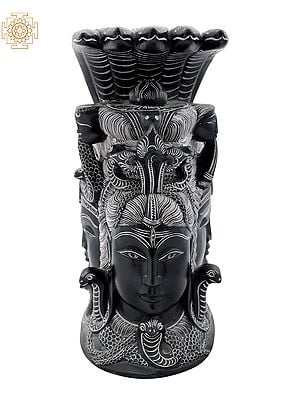
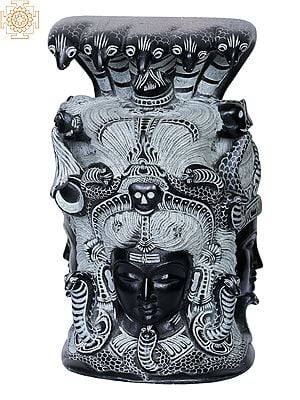
The presence of serpents, or Nagas, coiled around the form is deeply significant in Hindu mythology. Snakes are often associated with Shiva, representing his power over primal forces, eternity, and cosmic consciousness. Adorned with serpents, Shiva is seen as the destroyer and transformer, a force that renews the universe. The inclusion of Parvati on the reverse side signifies the fundamental duality of the divine, the inseparable union of the masculine and feminine principles that govern creation. This representation speaks to the concept of Ardhanarishvara, the half-male, half-female form of Shiva, where the divine feminine energy (Shakti) is united with the divine masculine (Shiva), symbolizing the completeness and balance of the universe.Artistry and Devotion
The serene face of the deity exudes an aura of profound peace and cosmic awareness. Every curve and contour is a testament to the artisan's dedication and their deep understanding of sacred iconography. The flowing locks, the serene expression, and the detailed ornamentation all contribute to the sculpture's powerful presence. This is more than just a decorative item; it is an invitation to contemplation and a conduit for connecting with the divine. Whether placed in a puja room for daily worship or displayed as a statement piece in your home, this brass Mukhalingam is destined to inspire awe and reverence. Its handmade nature ensures that each piece carries its own unique character, a subtle variation that makes it a truly special artifact.A Sacred Object for Your Sacred Space
This Mukhalingam is ideal for those seeking to enhance their spiritual practice or to bring a touch of divine grace into their living environment. The tradition of worshipping the Lingam, often adorned or represented with the divine feminine, is ancient and profound, symbolizing the formless absolute and its manifestation in the cosmos. This particular rendition, with the visual representation of Parvati, offers a holistic perspective of the divine, embracing both creation and destruction, stillness and dynamism. It is a powerful reminder of the interconnectedness of all things and the eternal cycle of existence. Bring this embodiment of divine harmony and artistic excellence into your home and experience its profound impact.
Exploring the Symbolism and Significance of Parvati in Hinduism
Goddess Parvati, the consort of Lord Shiva, is one of the
principal deities of Goddesses in Hinduism. She appeared in the
material world as the daughter of Himavan, king of the Himalayan
mountains. The Vedic scriptures describe her as a young,
beautiful woman who is chaste and faithful to her husband, Lord
Shiva. She is always engaged in the loving service of her
family; her two sons Ganesha and Kartikeya. Goddess Parvati is
the embodiment of devotion, love, power, and beauty. The
followers of the Shakta tradition (Shaktism) describe her as Adi
Shakti or the energy behind the creation of material nature. She
is very merciful toward all living entities like a mother who
cares for her children and manifests many forms to protect them
from miscreants. Her most venerated and important powerful forms
are Durga and Kali that she took to vanquish demons who created
havoc in the material world.
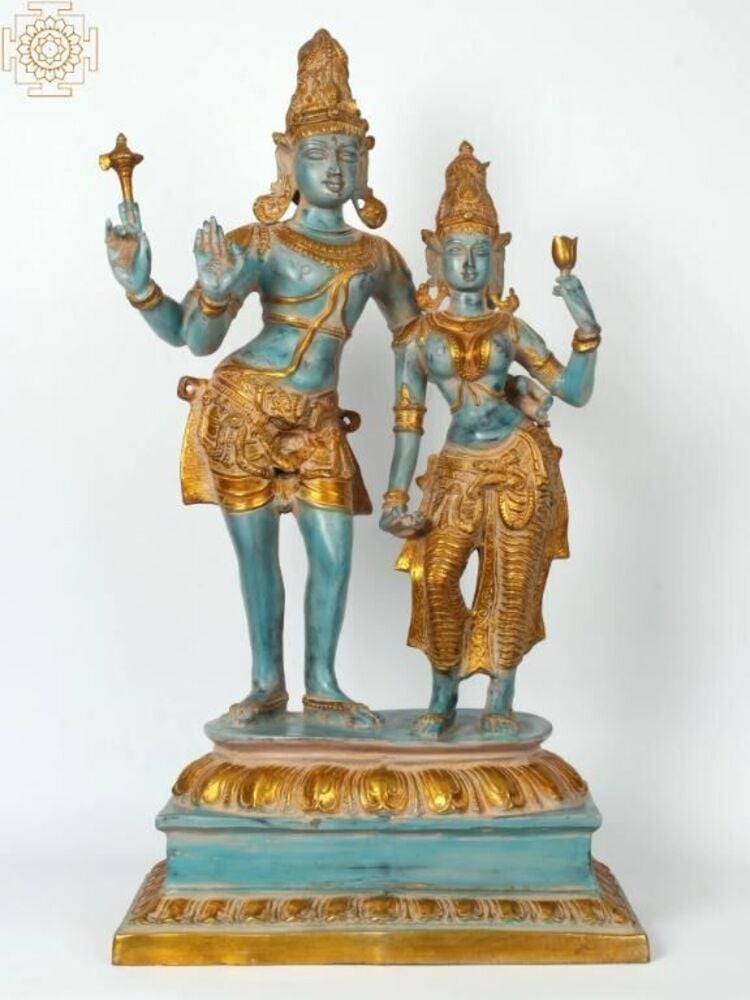
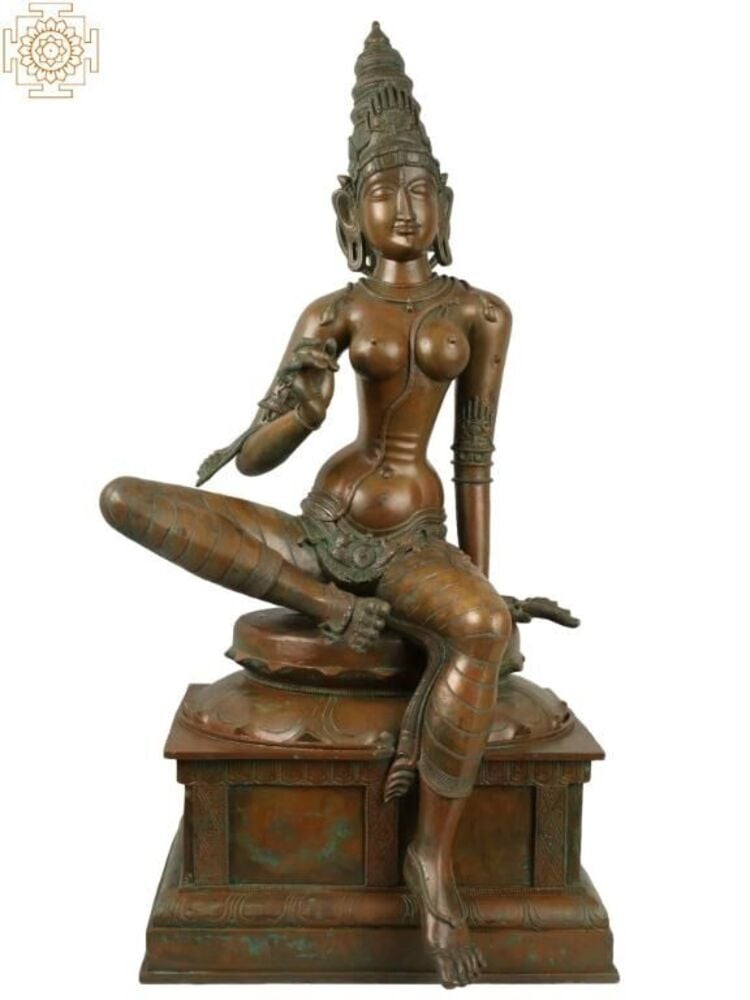
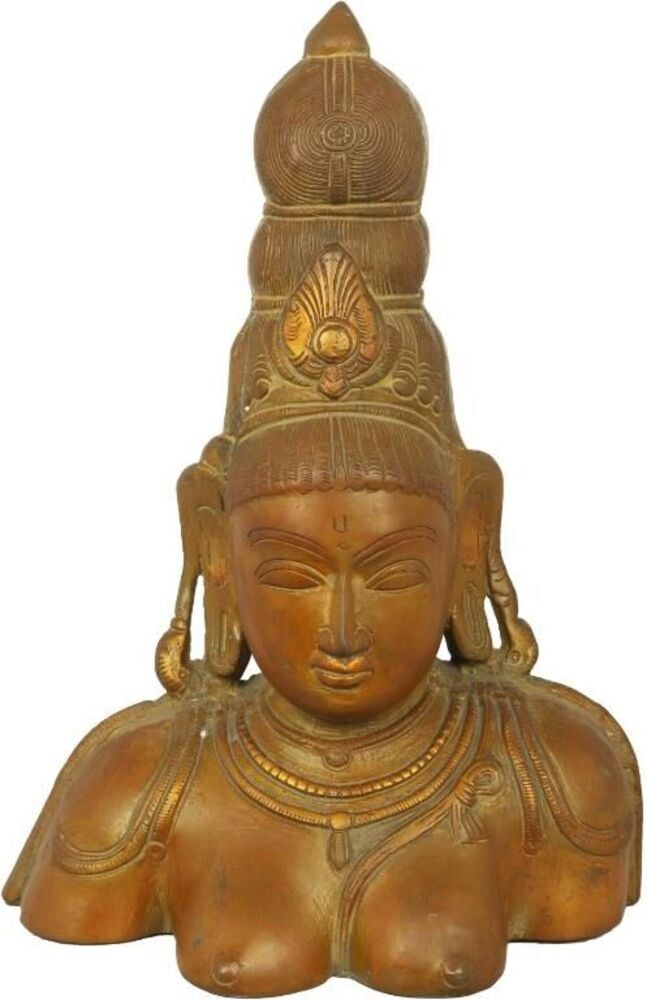
The Vedic scriptures talk of her beautiful form in detail. She
wears a red saree and is generally seated, having two or four
arms, beside Lord Shiva. Her younger son Ganesha sits on her
knee, while Kartikeya sits or stands near Lord Shiva. Goddess
Parvati is typically decorated with gold ornaments and a crown
on her head and also carries a lotus flower in one of her hands.
What does Parvati symbolize?
Goddess Parvati is gentle and loving toward everyone. She never
fails to help and guide those who approach her out of
helplessness. Just as a mother is always kind toward her
children, Goddess Parvati, being mother nature, is forgiving to
all living entities. But when the time comes, she assumes
different terrible forms such as Durga and Kali to defeat demons
in order to protect the material world. She took the form of
Durga and killed the demon Mahishasura. Kali, the most ferocious
form, slayed the demon Raktabija. Thus, Goddess Parvati not only
symbolizes love, fertility, motherhood, and harmony, but is also
the Goddess of power, energy, and destruction.
Can we keep Shiv Parvati statue at home?
It is stated in Srimad Bhagavatam, the most glorious Vedic
literature, that Lord Shiva is the topmost Vaishnava (devotee of
Lord Vishnu): vaiṣṇavānāṁ yathā śambhuḥ. In order to get the
mercy of the Supreme Lord Vishnu, it is important for us to
serve His pure devotees. Thus, worshiping Lord Shiva along with
his consort Goddess Parvati at home is the way to the heart of
Lord Vishnu. But you must also know the standards of worshiping
them so that no offense is committed at their lotus feet. If
Lord Shiva and Goddess Parvati are pleased with your devotional
service, you will easily get the causeless mercy of Lord Vishnu
and thus the ultimate goal of your life will be achieved.
How to keep a Brass statue well-maintained?
Brass statues are known and appreciated for their exquisite beauty and luster. The brilliant bright gold appearance of Brass makes it appropriate for casting aesthetic statues and sculptures. Brass is a metal alloy composed mainly of copper and zinc. This chemical composition makes brass a highly durable and corrosion-resistant material. Due to these properties, Brass statues and sculptures can be kept both indoors as well as outdoors. They also last for many decades without losing all their natural shine.
Brass statues can withstand even harsh weather conditions very well due to their corrosion-resistance properties. However, maintaining the luster and natural beauty of brass statues is essential if you want to prolong their life and appearance.
- The best and simplest way to maintain a brass statue is to clean it at least twice a week using a soft cloth or cotton rag. This will prevent dust from accumulating on the surface. Dusting is especially important for outdoor statues since it is prone to dust accumulation much more than indoors.
- To give a natural shine and luster to the statue, you may apply coconut or olive oil using cotton on every portion. You can use a toothbrush to get to the small crevices but do not be too harsh. This will make the brass statue appear fresh and new with a polished look.
In case you have a colored brass statue, you may apply mustard oil using a soft brush or clean cloth on the brass portion while for the colored portion of the statue, you may use coconut oil with a cotton cloth.
Brass idols of Hindu Gods and Goddesses are especially known for their intricate and detailed work of art. Nepalese sculptures are famous for small brass idols portraying Buddhist deities. These sculptures are beautified with gold gilding and inlay of precious or semi-precious stones. Religious brass statues can be kept at home altars. You can keep a decorative brass statue in your garden or roof to embellish the area and fill it with divinity.






















 Upload an Image