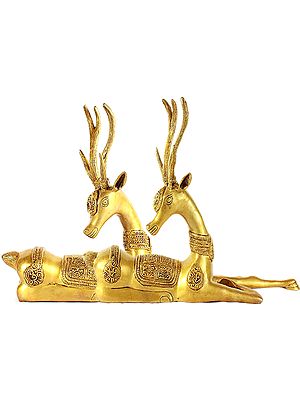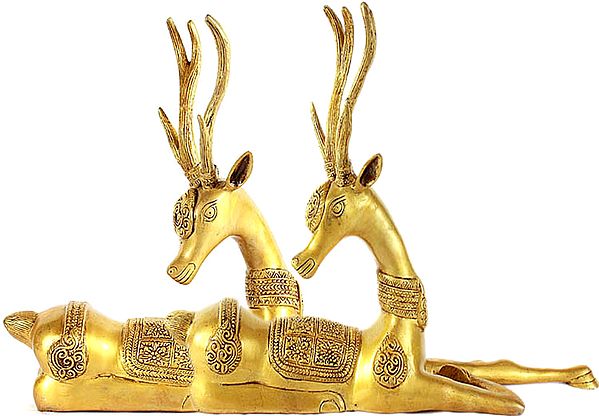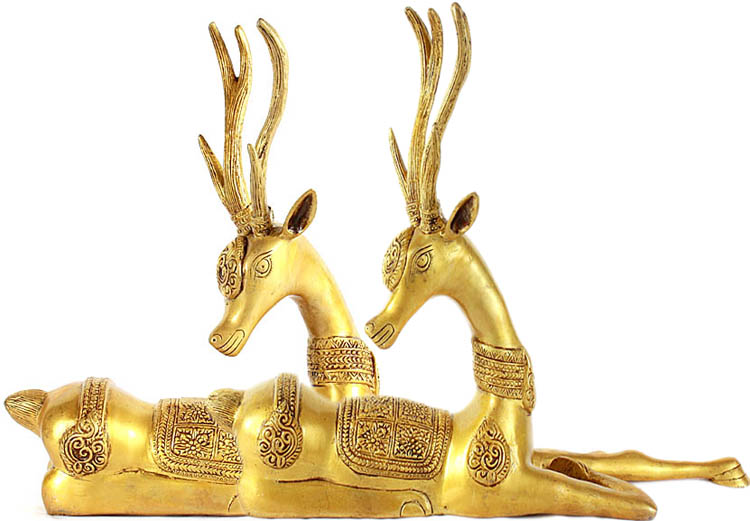
Antelope Pair


| Specifications |
 |
RY92 |
 |
Brass Sculpture |
 |
Height: 11.5 inch |
| Width: 14 inch | |
| Depth: 3.5 inch | |
 |
Weight 6.47 kg |
| Delivery and Return Policies |
 |
Usually ships in 10 days |
 |
Returns and Exchanges accepted within 7 days |
 |
Free Delivery |


Symbolism of the Antelope
The antelope, with its graceful form and swift movements, has held symbolic significance across various cultures for centuries. Often associated with gentleness, alertness, and intuition, the antelope embodies both beauty and vigilance. Its connection to nature and the wild spirit of the wilderness makes it a powerful symbol of freedom and independence. In some traditions, the antelope represents grace under pressure, demonstrating the ability to navigate challenges with poise and agility. Its keen senses and ability to quickly adapt to changing environments also associate it with adaptability and resourcefulness.Auspicious Pairings and Divine Connections
Within the Hindu tradition, animals often serve as "vahana" or vehicles of the Gods, highlighting their significance in the cosmic order. While the antelope isn't directly associated with a specific deity as a primary vahana, deer, which share symbolic similarities, are closely linked to various divinities. For example, the deer appears in depictions of Shiva as Pashupati, the lord of animals, underscoring the connection between the divine and the natural world. This representation highlights the interconnectedness of all beings and the importance of respecting the delicate balance of nature. Moreover, the presence of a pair reinforces the concepts of harmony, balance, and auspiciousness. Pairs often symbolize partnership, fertility, and the cyclical nature of life, making this sculpture a beautiful representation of wholeness.Craftsmanship and Detail
This exquisite brass sculpture showcases the timeless beauty and intricate artistry that characterizes traditional craftsmanship. Measuring 11.5 x 14.0 x 3.5 inches, the sculpture captures the elegance of these magnificent creatures with remarkable detail. The warm, golden hue of the brass adds a touch of richness and sophistication, while the intricate carvings emphasize the anatomical details. From the delicate curve of the necks to the texture of the antlers, every aspect of the sculpture reflects the skill and dedication of the artisan. The detailed ornamentation adorning the bodies further enhances the piece, lending it a sense of regality and cultural significance.Display and Decor
Perfect for adding a touch of elegance and cultural richness to any space, this sculpture is more than just a decorative object; it is a symbol of beauty, grace, and harmonious coexistence. Whether displayed on a mantelpiece, bookshelf, or altar, this brass sculpture of a pair of antelopes will surely become a cherished piece, adding a touch of sophistication and meaning to your home or office. Its symbolic weight and intricate detailing make it a captivating focal point, sparking conversation and contemplation.How to keep a Brass statue well-maintained?
Brass statues are known and appreciated for their exquisite beauty and luster. The brilliant bright gold appearance of Brass makes it appropriate for casting aesthetic statues and sculptures. Brass is a metal alloy composed mainly of copper and zinc. This chemical composition makes brass a highly durable and corrosion-resistant material. Due to these properties, Brass statues and sculptures can be kept both indoors as well as outdoors. They also last for many decades without losing all their natural shine.
Brass statues can withstand even harsh weather conditions very well due to their corrosion-resistance properties. However, maintaining the luster and natural beauty of brass statues is essential if you want to prolong their life and appearance.
- The best and simplest way to maintain a brass statue is to clean it at least twice a week using a soft cloth or cotton rag. This will prevent dust from accumulating on the surface. Dusting is especially important for outdoor statues since it is prone to dust accumulation much more than indoors.
- To give a natural shine and luster to the statue, you may apply coconut or olive oil using cotton on every portion. You can use a toothbrush to get to the small crevices but do not be too harsh. This will make the brass statue appear fresh and new with a polished look.
In case you have a colored brass statue, you may apply mustard oil using a soft brush or clean cloth on the brass portion while for the colored portion of the statue, you may use coconut oil with a cotton cloth.
Brass idols of Hindu Gods and Goddesses are especially known for their intricate and detailed work of art. Nepalese sculptures are famous for small brass idols portraying Buddhist deities. These sculptures are beautified with gold gilding and inlay of precious or semi-precious stones. Religious brass statues can be kept at home altars. You can keep a decorative brass statue in your garden or roof to embellish the area and fill it with divinity.
-
Q. Is the statue hollow or solid ?A. Brass statues are made through a process of clay casting, hence are hollow. Whereas, panchaloha bronze statues are made through a process of lost wax casting, hence they are solid.
-
Q. Can I return the statue ?A. Of course you can return a statue. Returns need to be initiated within seven (7) days after delivery. All returned items must be in new and unused condition, with all original tags and labels attached. To know more about our Return Policy, please visit Return Policy.
-
Q. Can you customise the statue for me ?A. For any customisation, kindly email us at help@exoticindia.com.