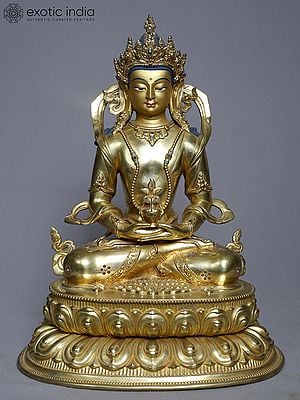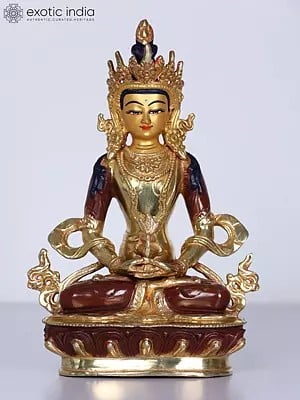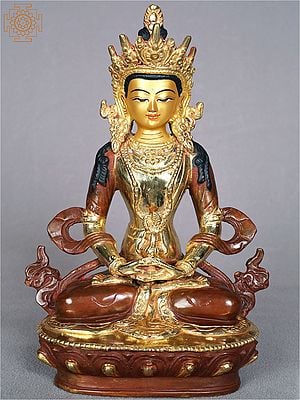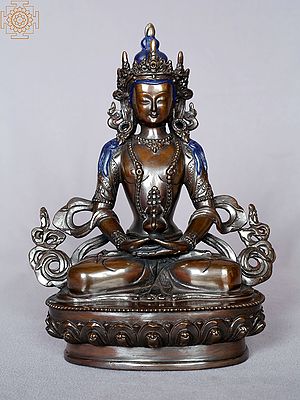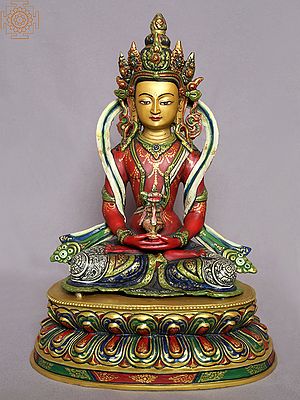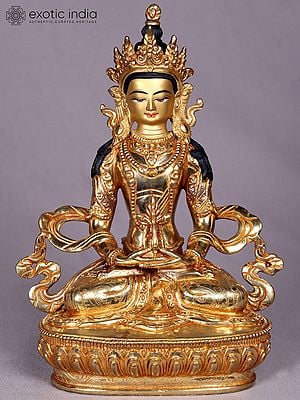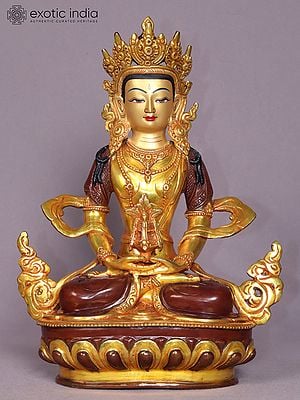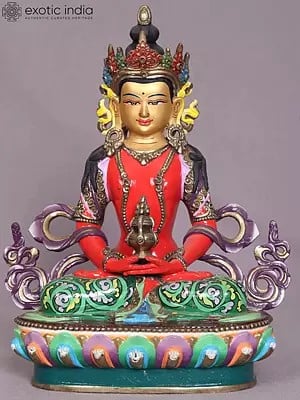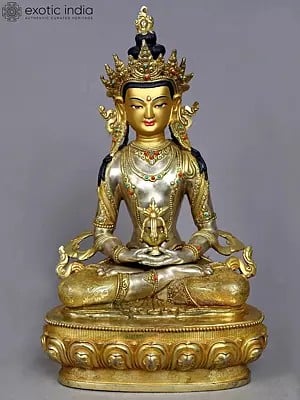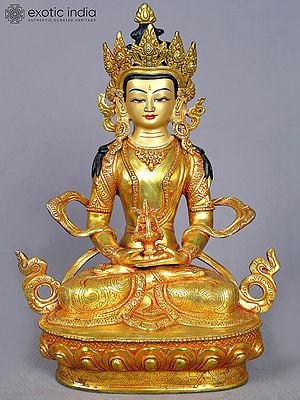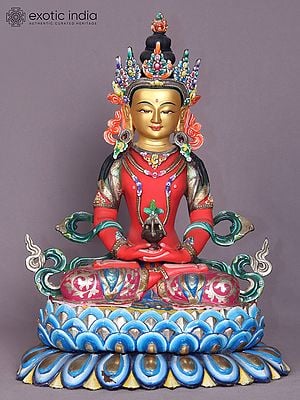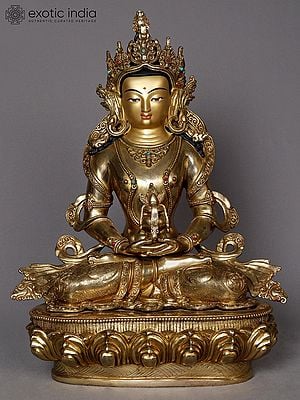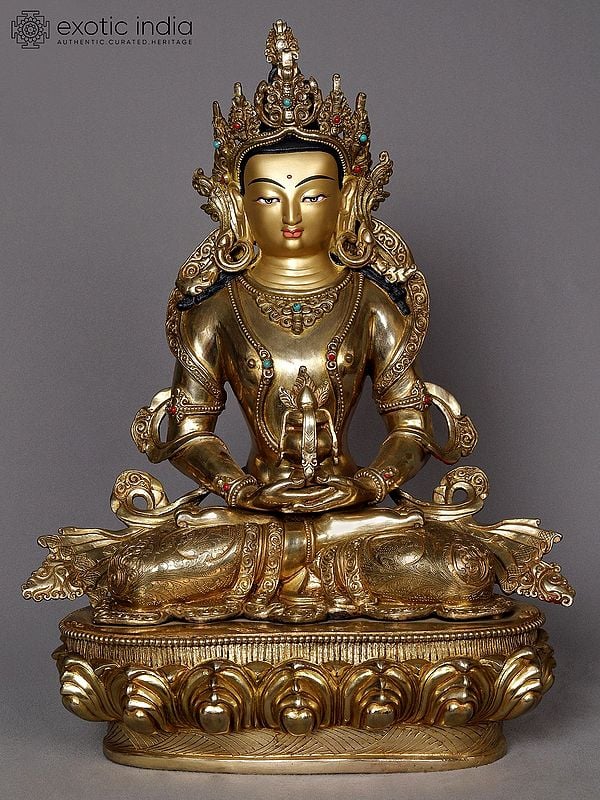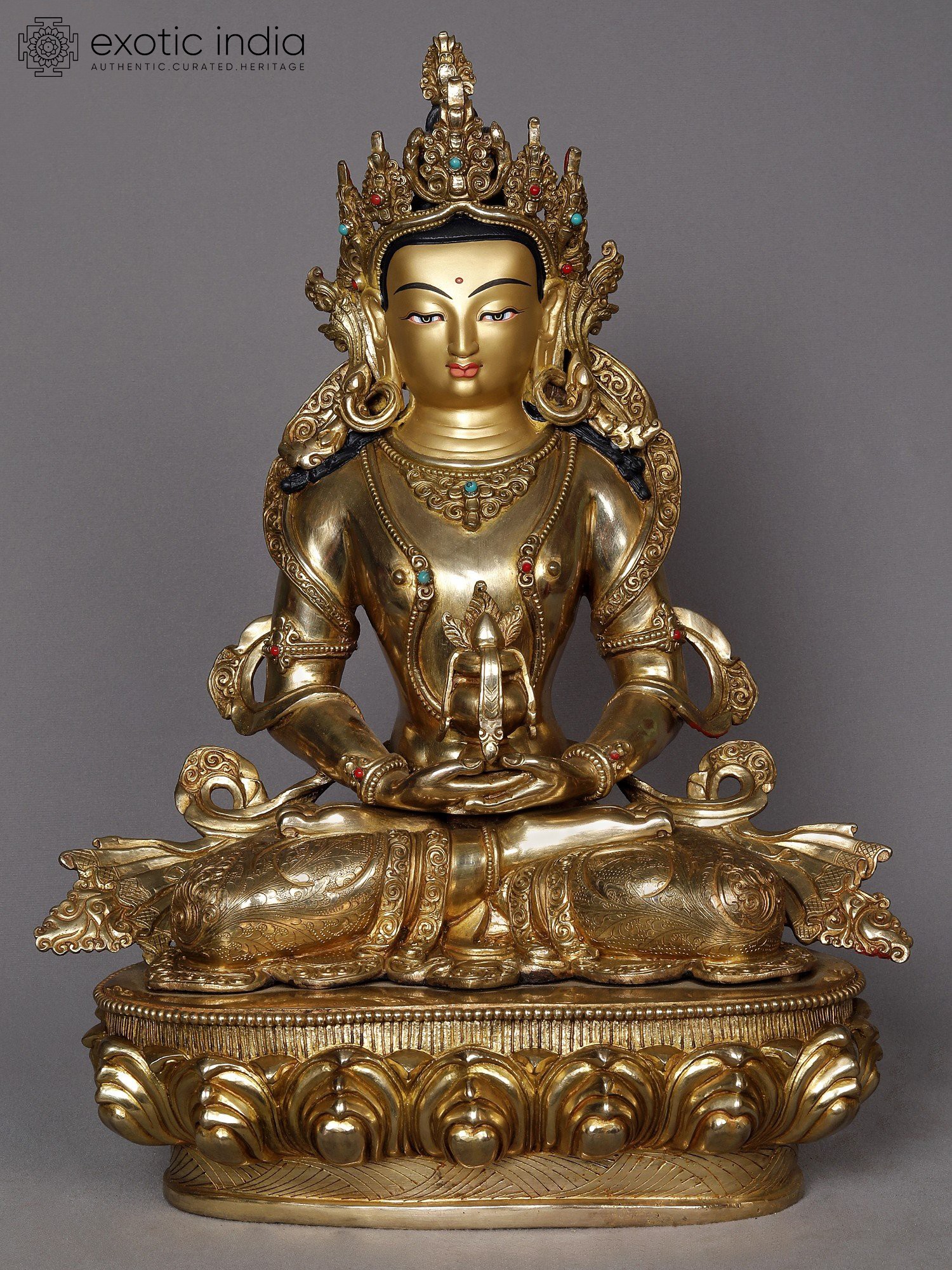
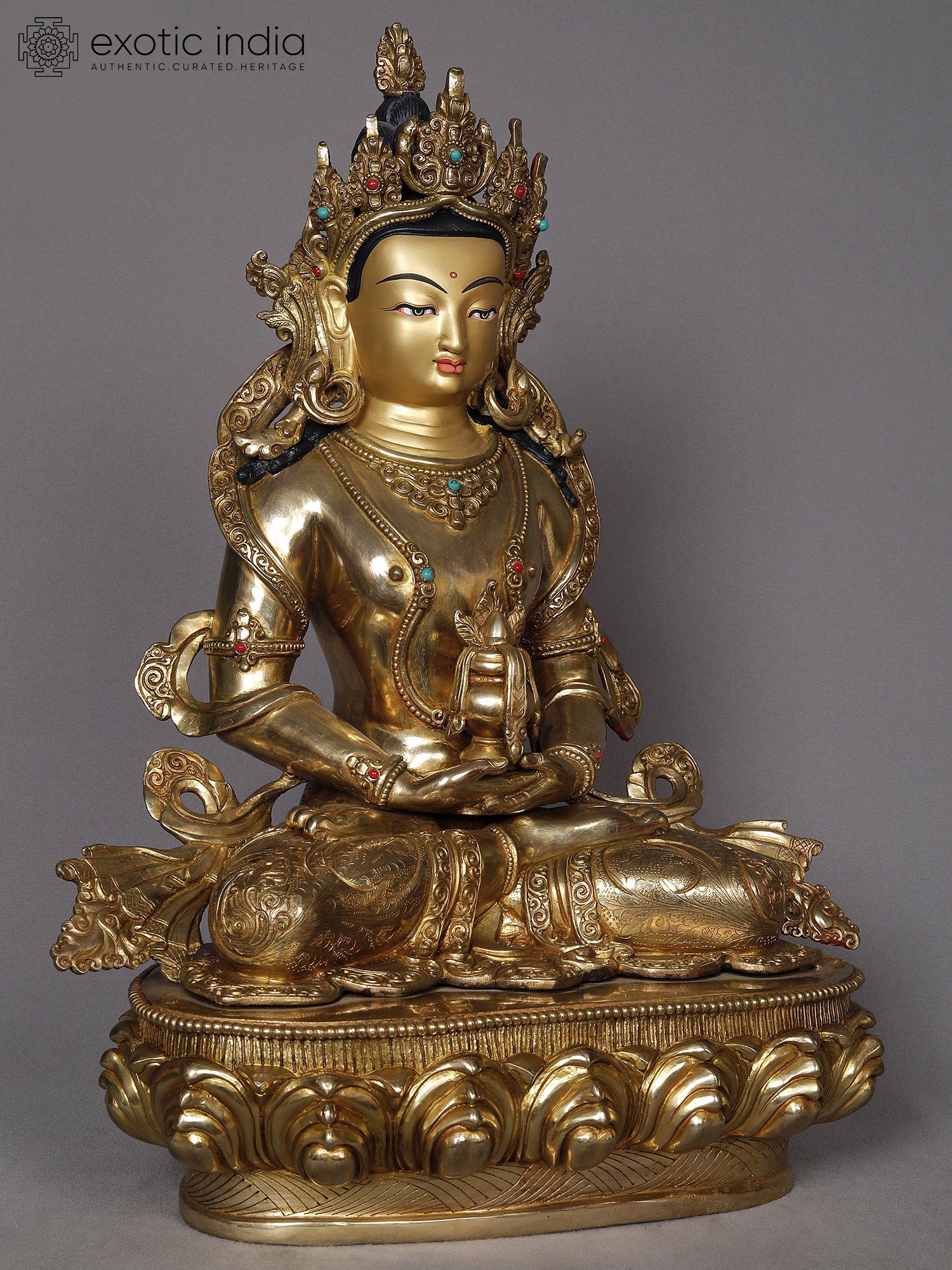
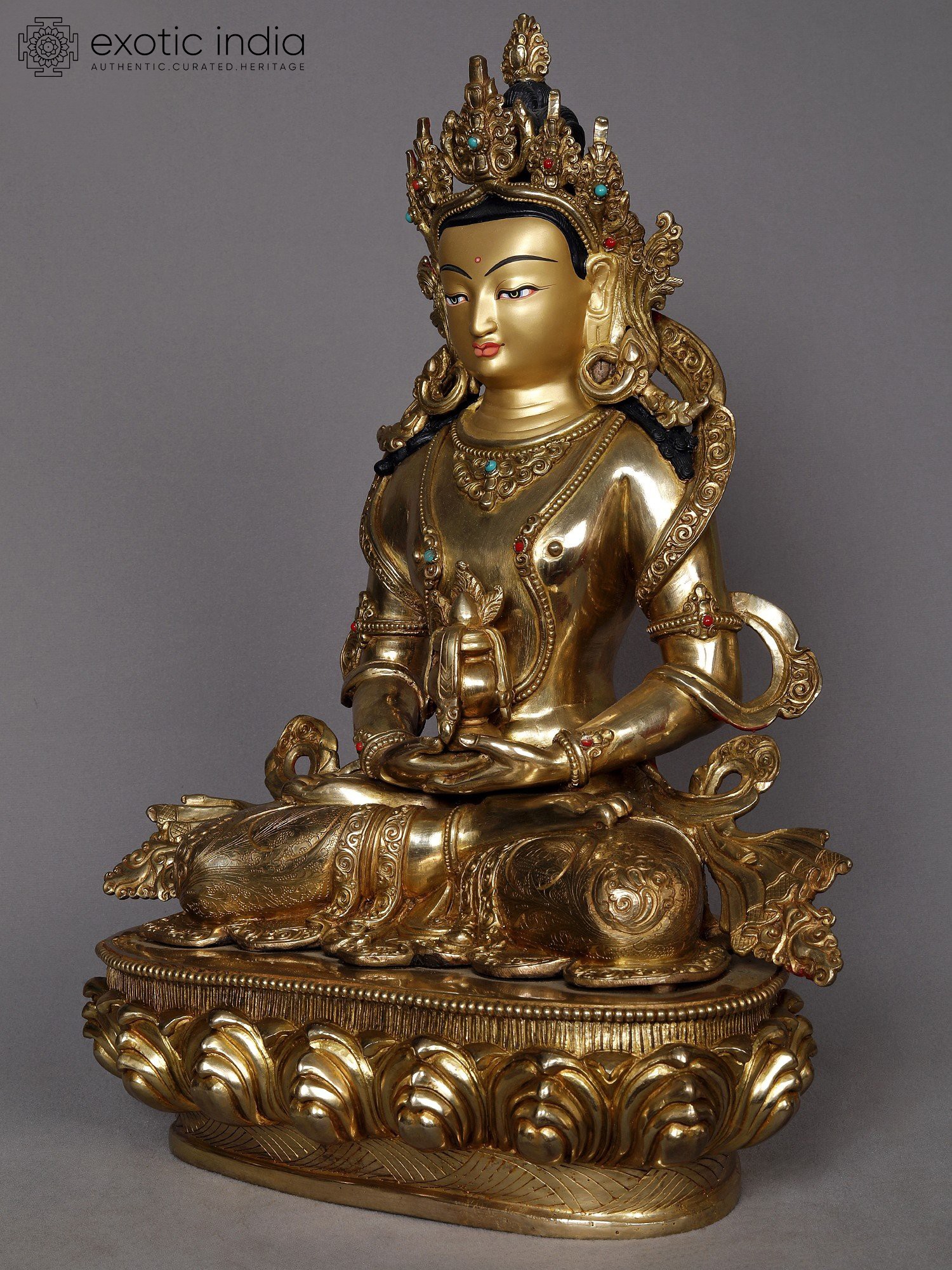
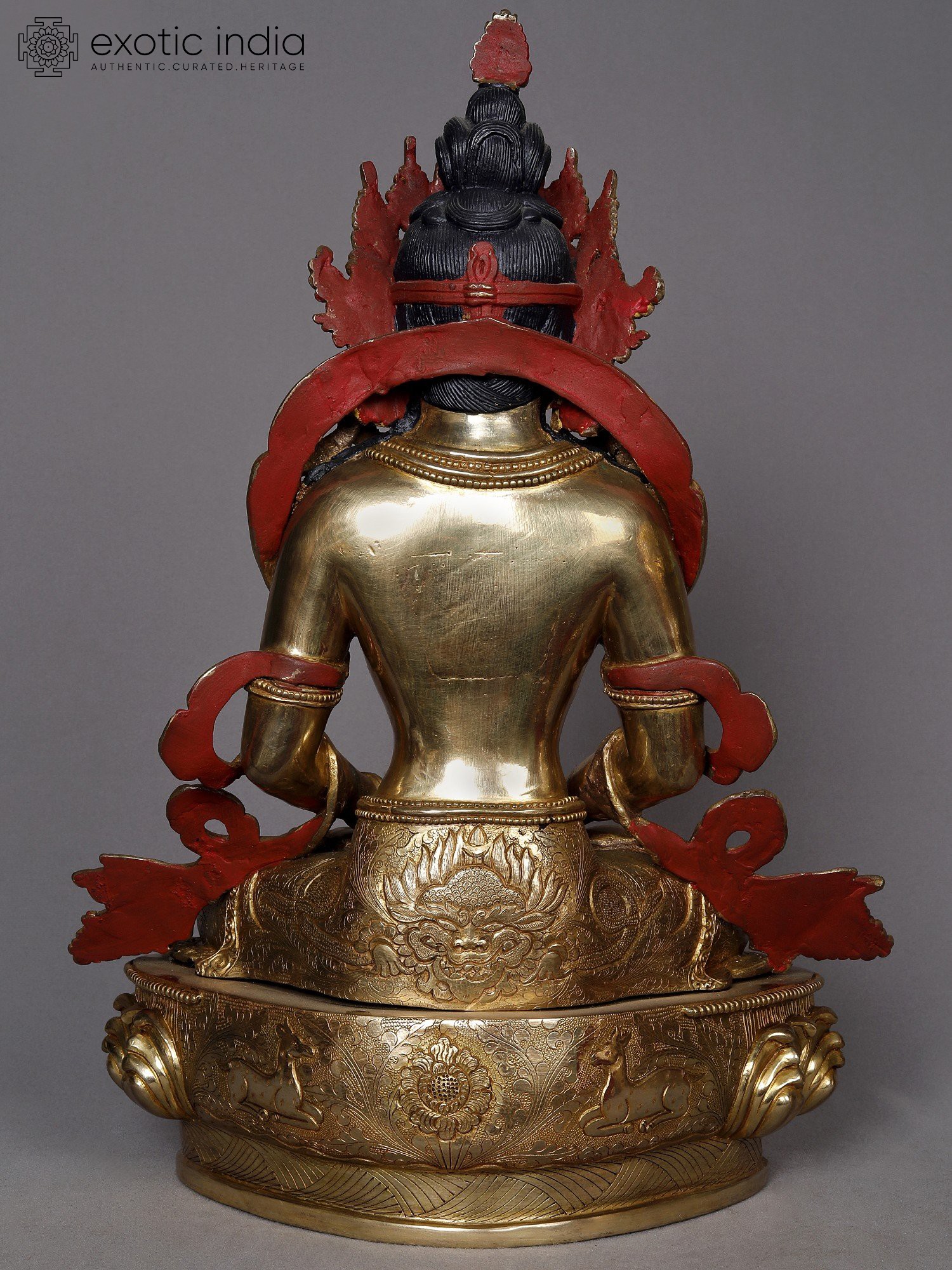
Aparmita Buddha: Longevity Deity 16" Copper Statue from Nepal

| Specifications |
 |
CAA150 |
 |
Copper With Gold |
 |
Height: 16 inch |
| Width: 12 inch | |
| Depth: 6.5 inch | |
 |
Weight 6.70 kg |
| About the Item |
|
| Delivery and Return Policies |
 |
Usually ships in 6 days |
 |
Returns and Exchanges accepted within 7 days |
 |
Free Delivery |


Aparmita, known
as Amitayus in Tibet, embodies the longevity aspect of Amitabha
Buddha. "Amitayus" translates to "infinite life" in
Sanskrit. An Aparmita statue symbolizes Amitabha's longevity attribute within
the Sambhogakaya realm. Rendered in a tranquil padmasana (full lotus pose), the
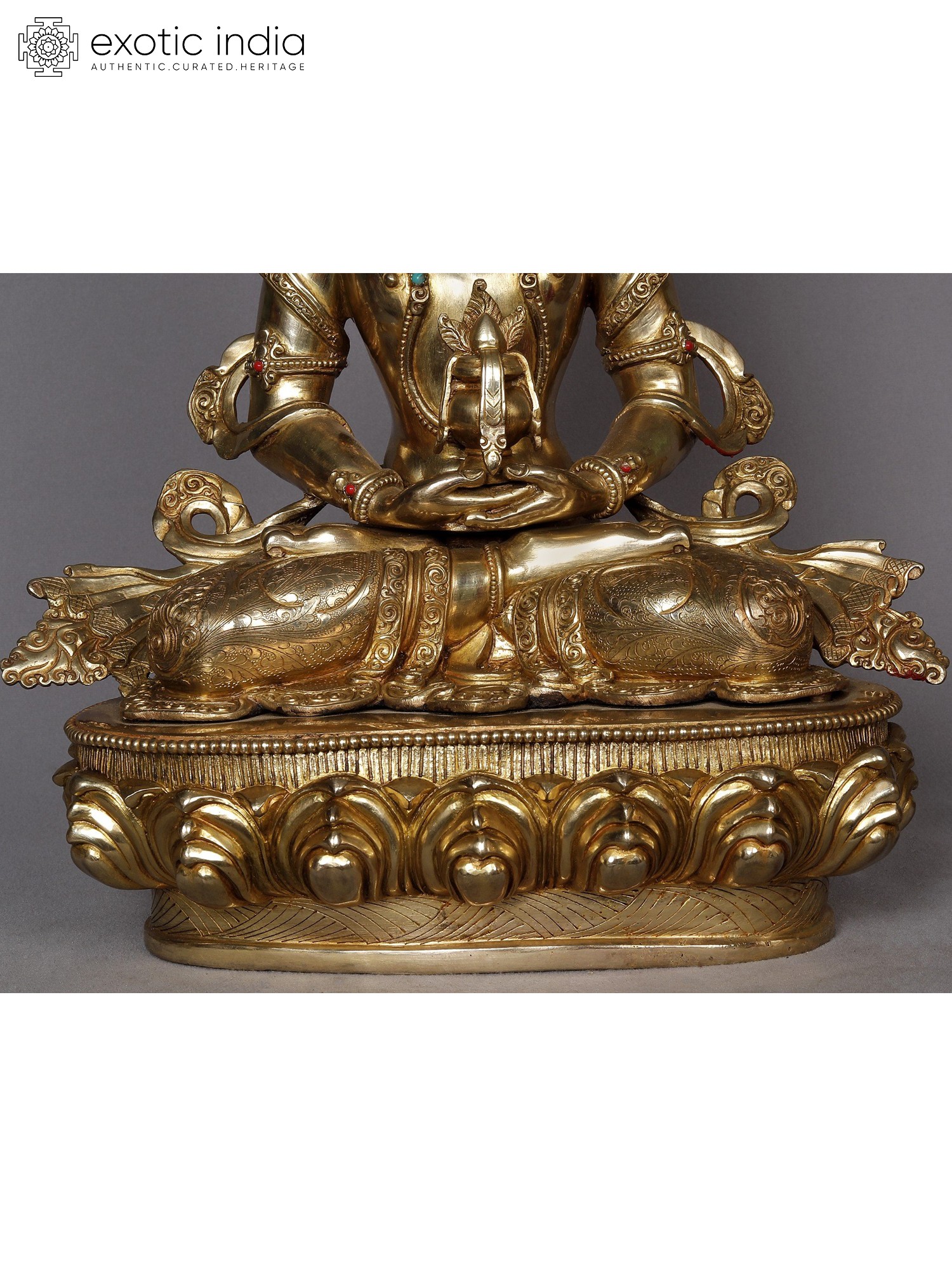
statue holds an immortality vessel brimming with "amrita" on its lap.
This portrayal
encapsulates the yearning for enduring life and spiritual vibrancy, echoing
Amitabha's compassionate vow of salvation and enlightenment. Aparmita's
presence serves as a reminder of the pursuit of boundless life and the
aspiration for everlasting wisdom on the path to liberation. In Tibetan Buddhism,
longevity rituals hold profound significance, and these rituals are intricately
woven around Aparmita statues.
Embodiment of Infinite Life and Light
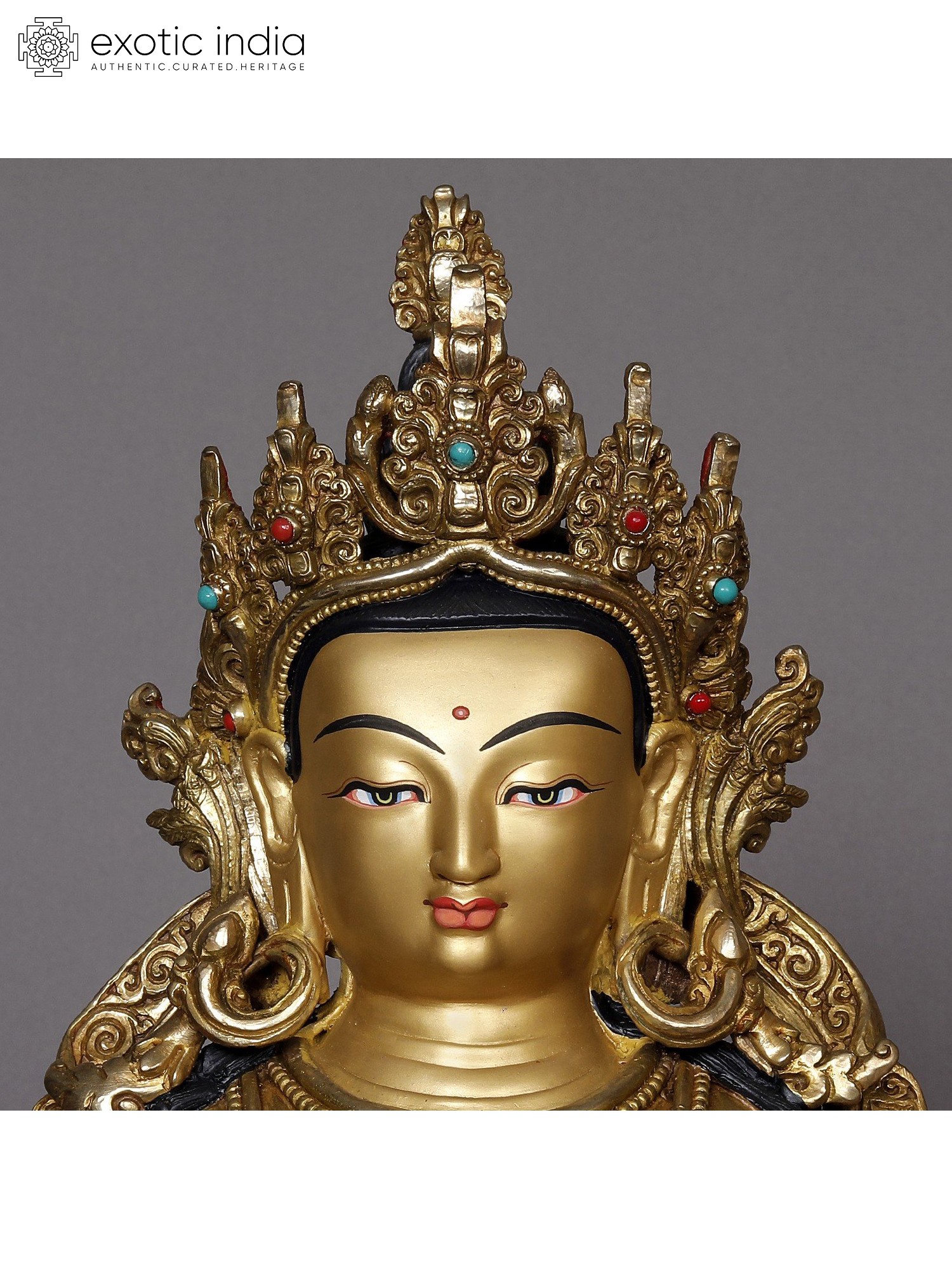
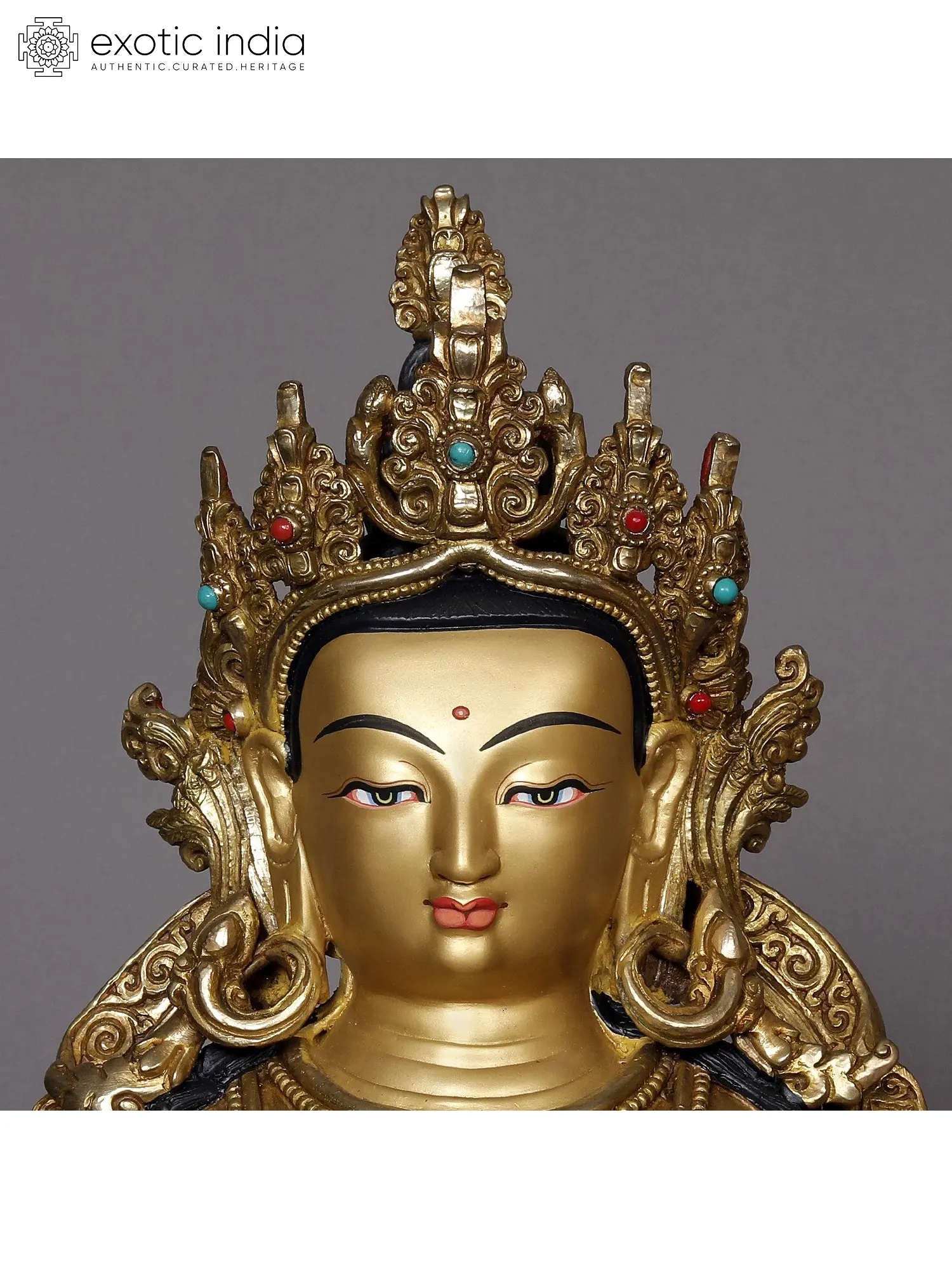
This magnificent statue captures the serene and benevolent form of Amitayus Buddha, also known as Aparmita Buddha, the Lord of Infinite Life and Bliss. Crafted with meticulous detail in Nepal, a land steeped in spiritual tradition, this piece is more than just an idol; it is a conduit for divine blessings and a testament to the enduring power of Buddhist philosophy. The Buddha is depicted in a seated posture, symbolizing his profound meditation and connection to the cosmos. His serene countenance, with half-closed eyes, suggests deep inner peace and boundless compassion, inviting contemplation and tranquility into any space.A Legacy of Longevity and Purity
Amitayus is a crucial figure in Vajrayana Buddhism, venerated for his association with longevity, merit, and the purification of negative karma. Legends tell of him being born from a ray of light emanating from Amitabha Buddha, the Buddha of Infinite Light. This lineage underscores Amitayus's inherent purity and his ability to bestow upon devotees the gift of extended life and spiritual progress. He is often invoked for blessings of health, long life, and the attainment of enlightenment, making this statue a powerful symbol of hope and aspiration. The practice of visualizing and meditating upon Amitayus is believed to help practitioners overcome the fear of death and cultivate a deeper appreciation for the present moment, leading to a more fulfilling existence.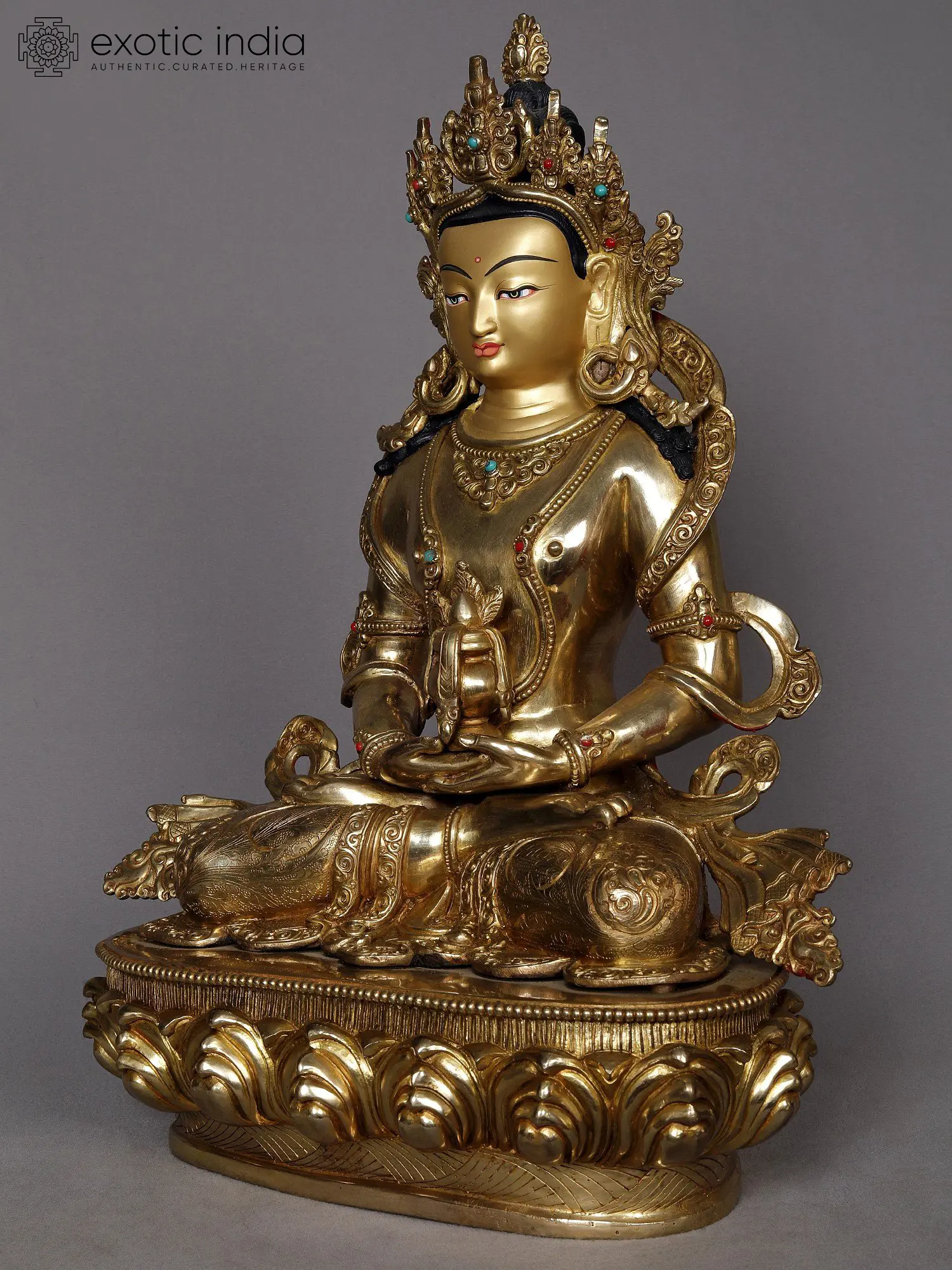
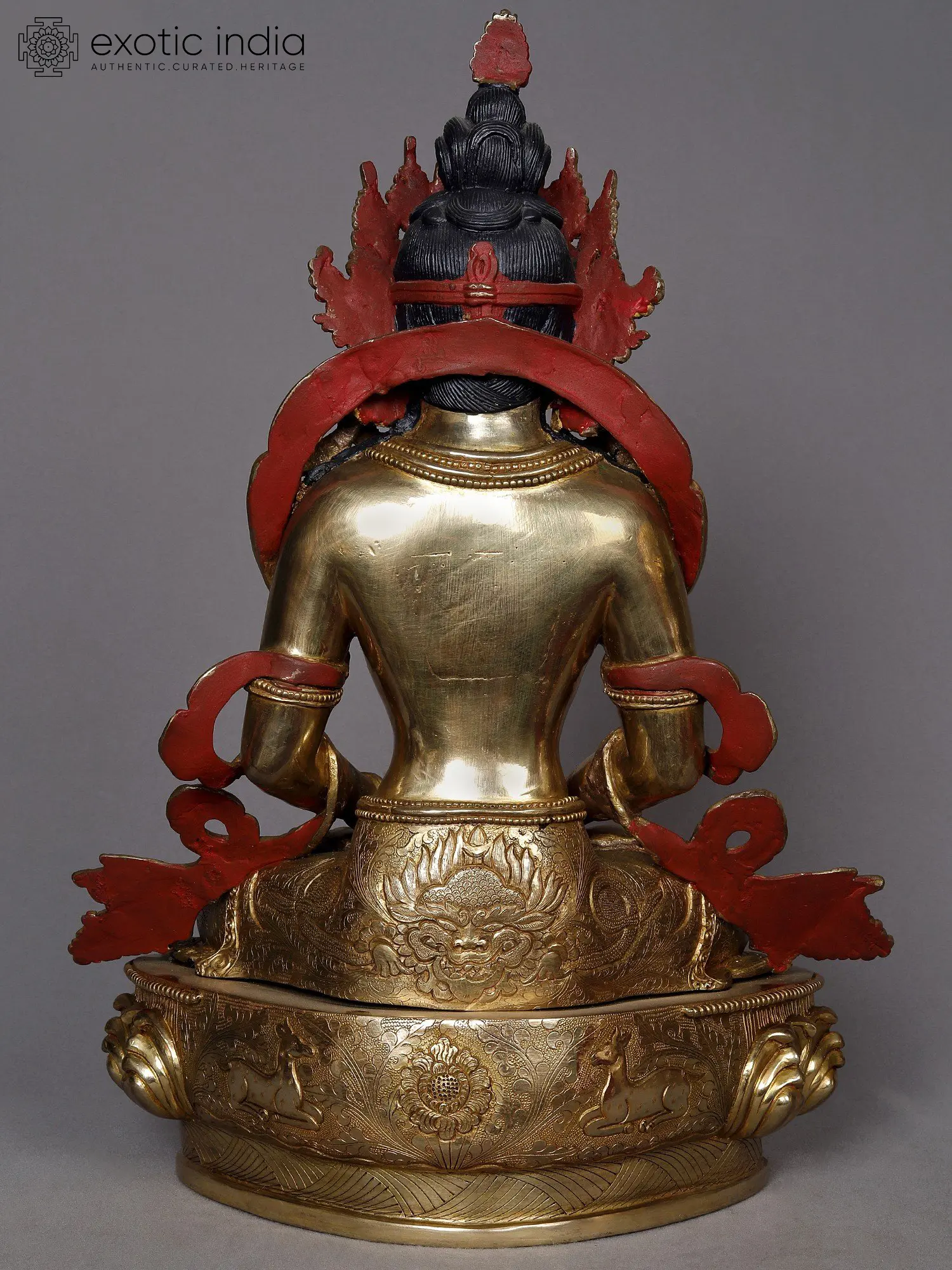
Exquisite Craftsmanship and Auspicious Symbolism
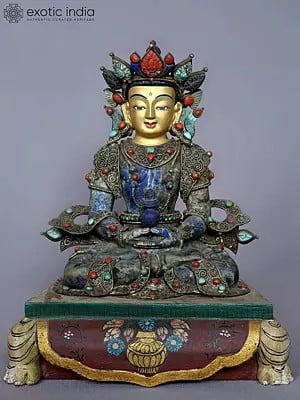
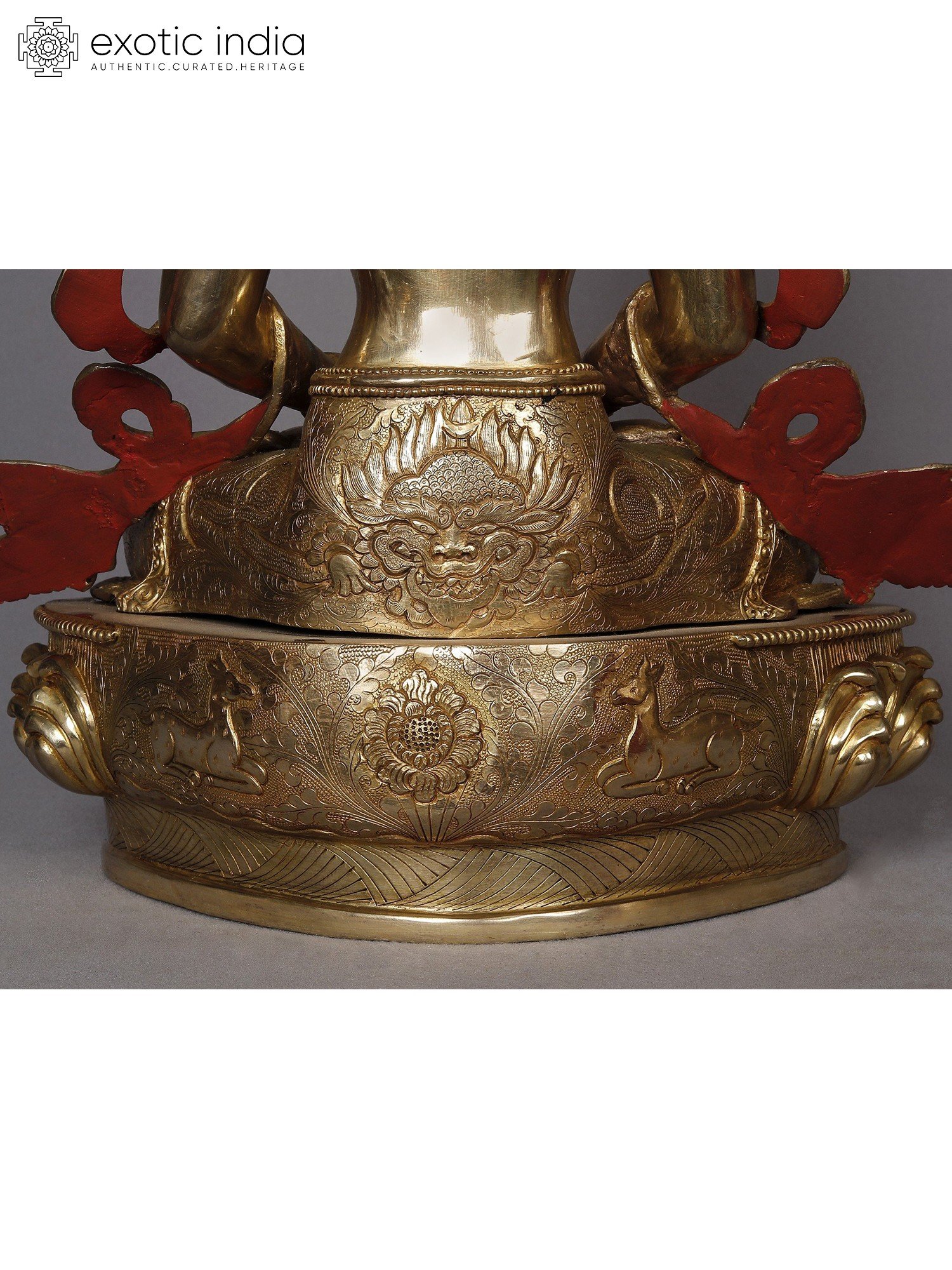
The statue is rendered in copper and finished with a lustrous gold plating, reflecting the radiant essence of Amitayus. The intricate detailing on his robes, adorned with delicate patterns, speaks to the skill of the Nepalese artisans. His regal headdress and ornate jewelry, embellished with vibrant semi-precious stones such as turquoise and coral, signify his enlightened status and the richness of his teachings. The elaborate lotus throne upon which he rests is a universal symbol of purity, spiritual awakening, and transcendence over worldly attachments. Each element, from the gentle curve of his fingers in the meditative mudra to the subtle smile on his lips, is imbued with meaning, creating an object of profound spiritual and aesthetic value. This statue serves as a reminder of the impermanence of life and the importance of cultivating positive actions to ensure a bright future, both in this life and in future rebirths.How are Nepalese copper statues made?
Nepalese statues and sculptures have a high copper content and therefore develop a slightly reddish patina on the surface as they age. However, the most unique feature of Nepalese copper statues is their decorative detailing. The pieces are heavily gilded and sometimes inlaid with semi-precious stones. This embellishment protects them from getting tarnished. The traditional lost-wax method for casting Nepalese copper statues remains the most practiced technique in Nepal for many centuries. This process involves many steps and requires skilled artists.
The first step in lost-wax sculpting is to make a wax replica of the desired Buddhist deity to be cast in copper. This replica is created by hand and therefore needs excellent artistic skills otherwise fine features will be lacking.
Once the wax replica is made, it is then coated with a special mixture of clay with a brush. This layer of clay is hardened when left to dry. A small hole is made on the base of the wax mould so that the wax flows away when it is heated.
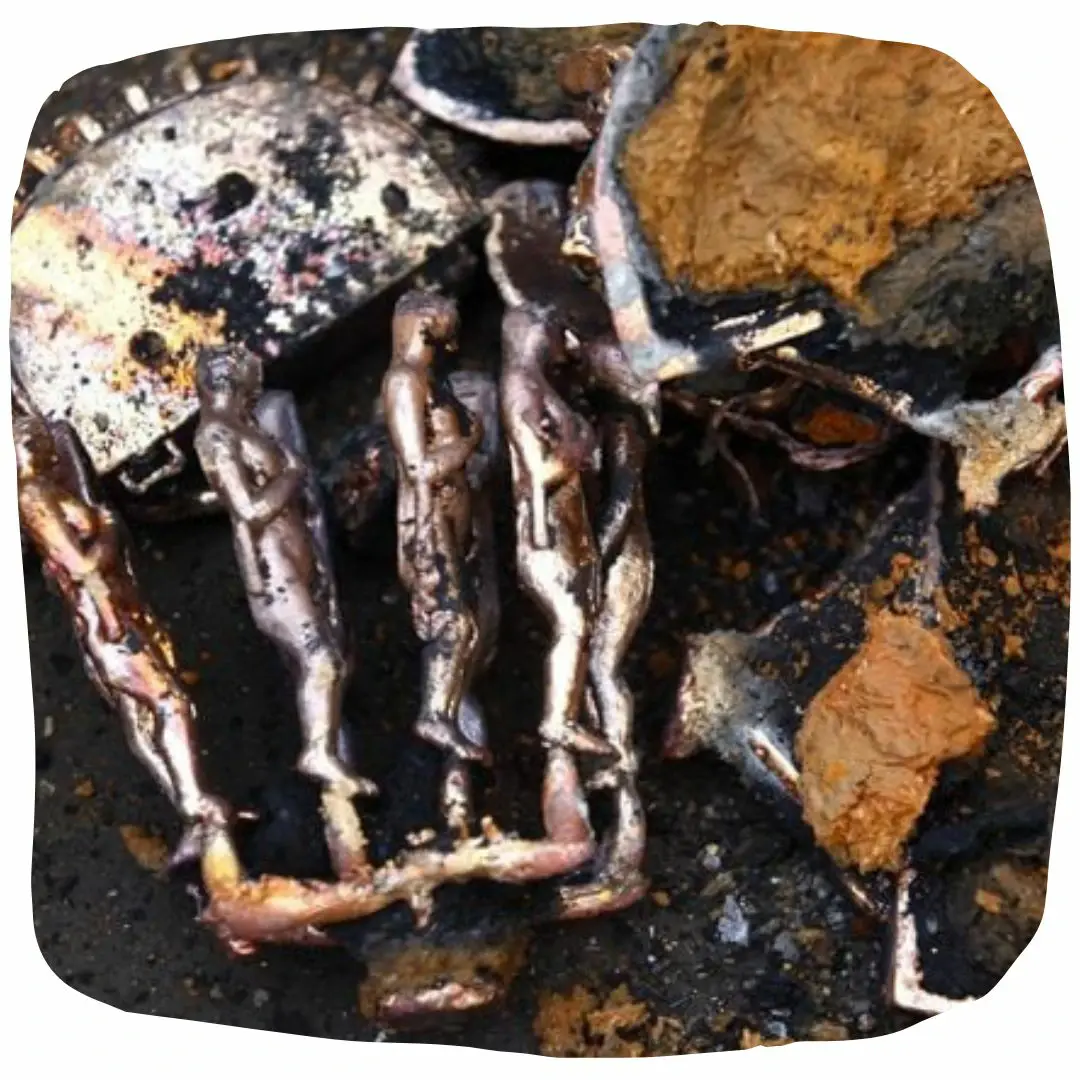
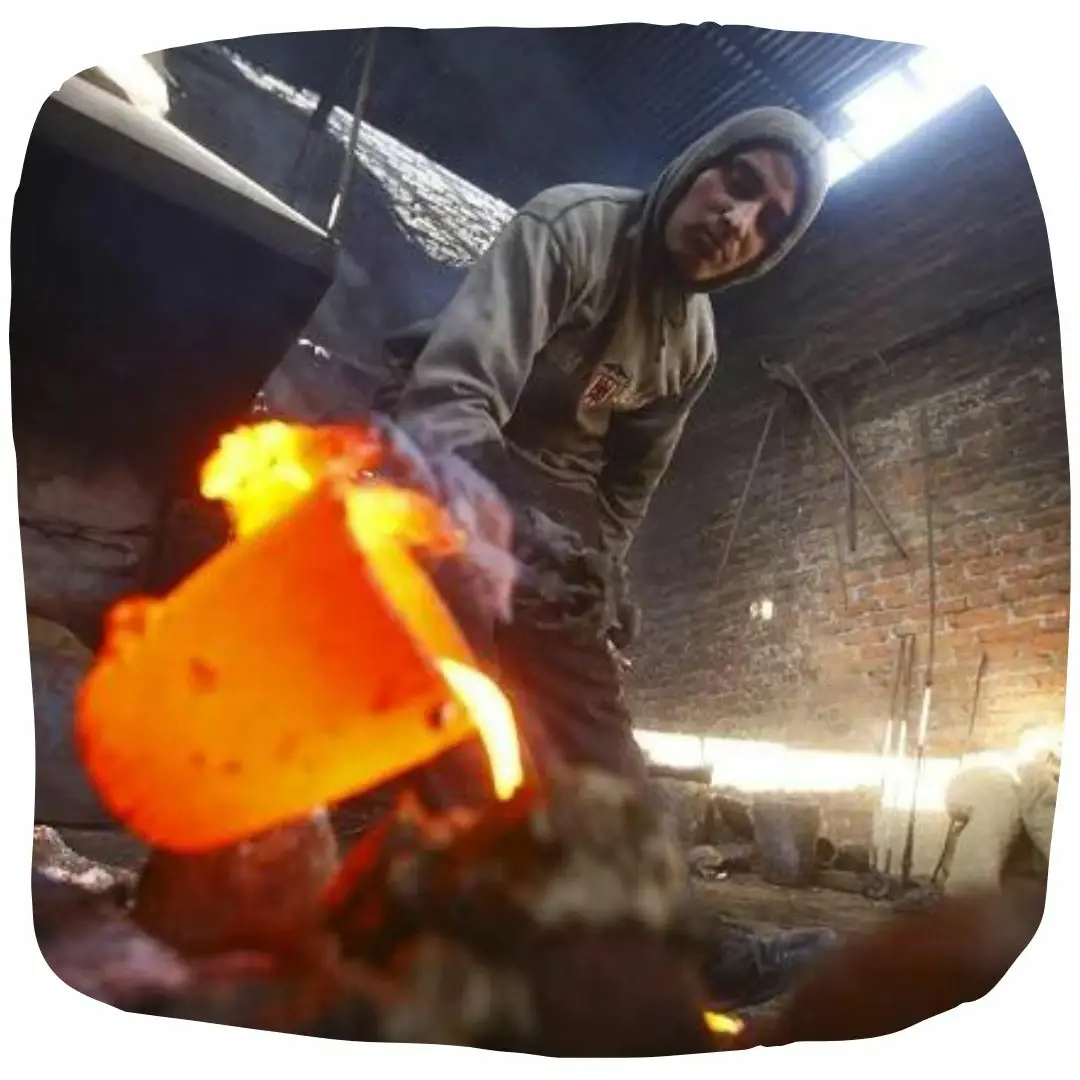
This is the time to pour liquid copper into the hollow mould which is then allowed to cool and harden inside a container of cold water. When the liquid metal has hardened, the mould is removed and the statue within is revealed.
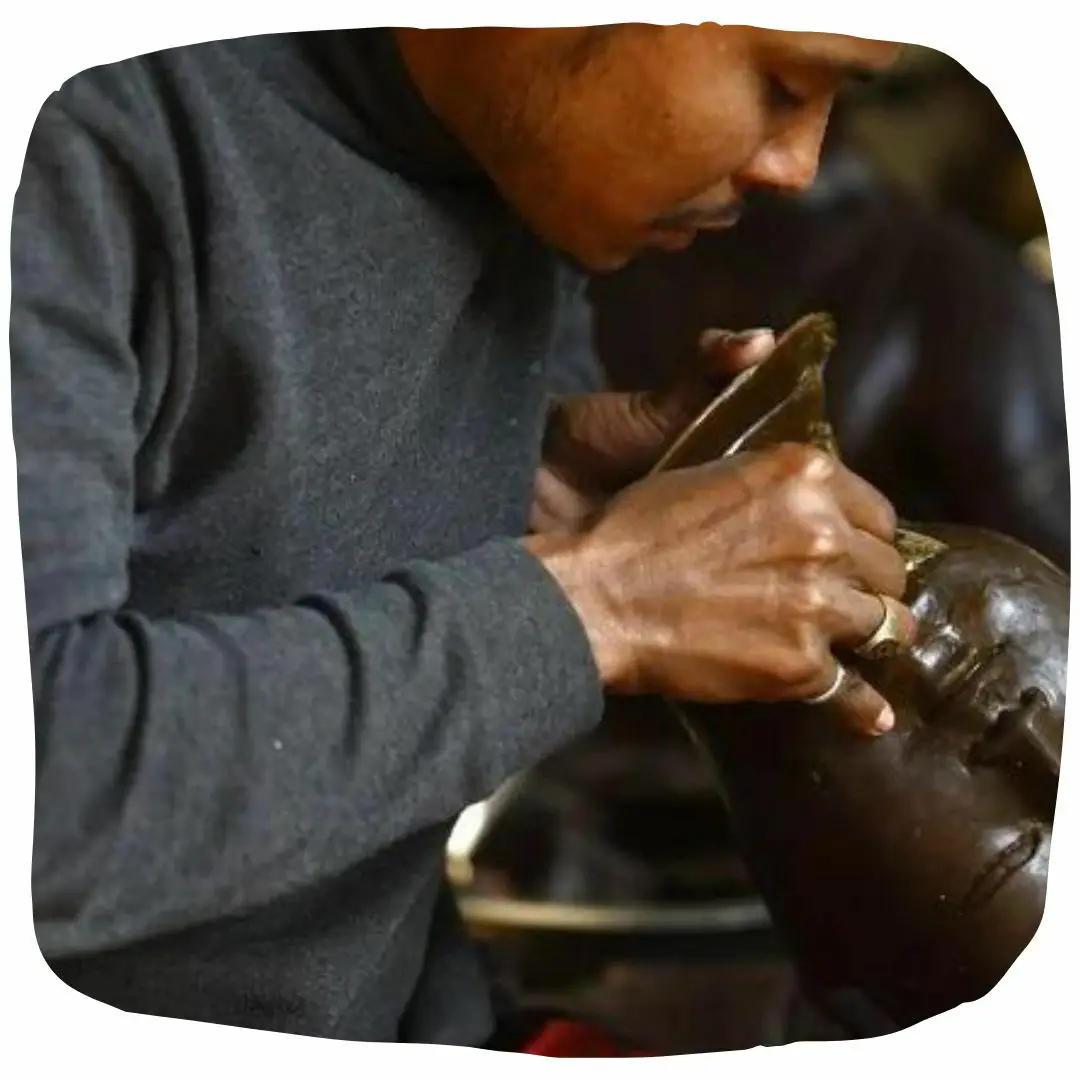
Now comes the most important part of Nepalese art which is gold gilding. This is done by the traditional fire gilding method. A mixture of mercury and 18K gold is applied on the surface of the statue and heat is applied using a flame torch. The result is that mercury evaporates along with impurities, leaving a pure 24K gold finish.
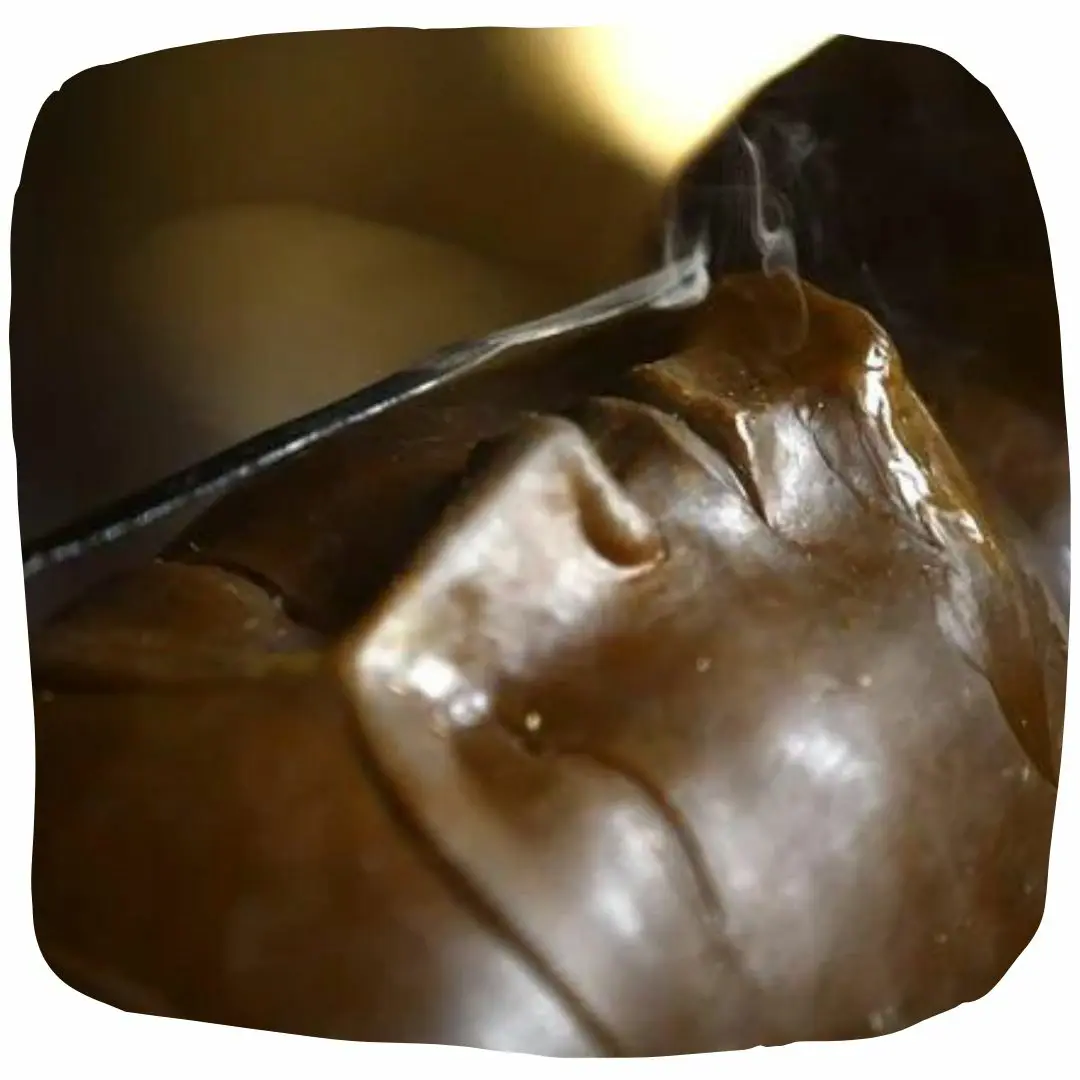
The lost-wax method of sculpting is the most preferred technique
for artists to cast a metallic statue having intricate details. Since Nepalese copper sculptures require extraneous effort for giving a majestic look by adding special embellishments, it takes several weeks to complete one masterpiece. A 24K gold gilded copper sculpture retains its brilliant luster for many years and appears as like before. Nepalese sculptures continue to remain one of the finest specimens of the art of the East that have a strong aesthetic appeal that other sculptures cannot match.