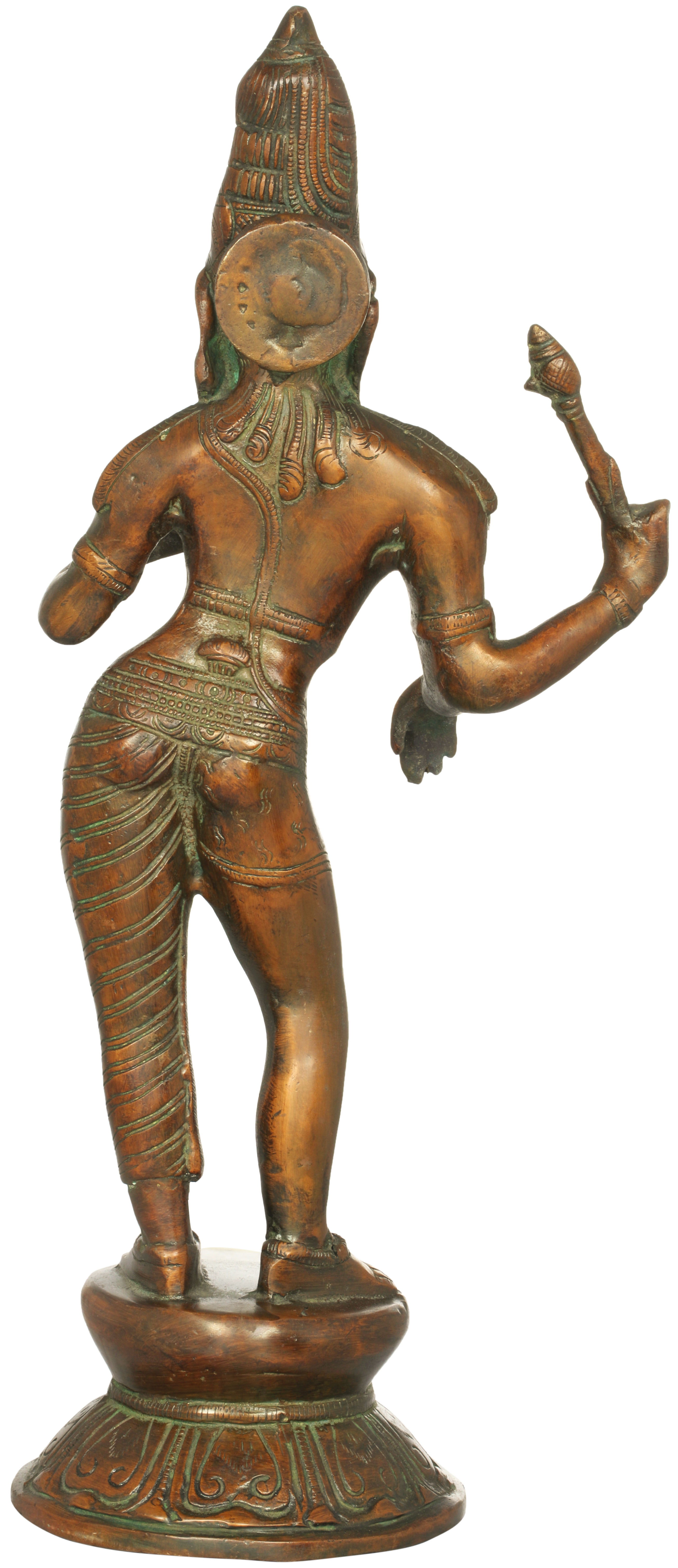
Embodiment of Divine Unity
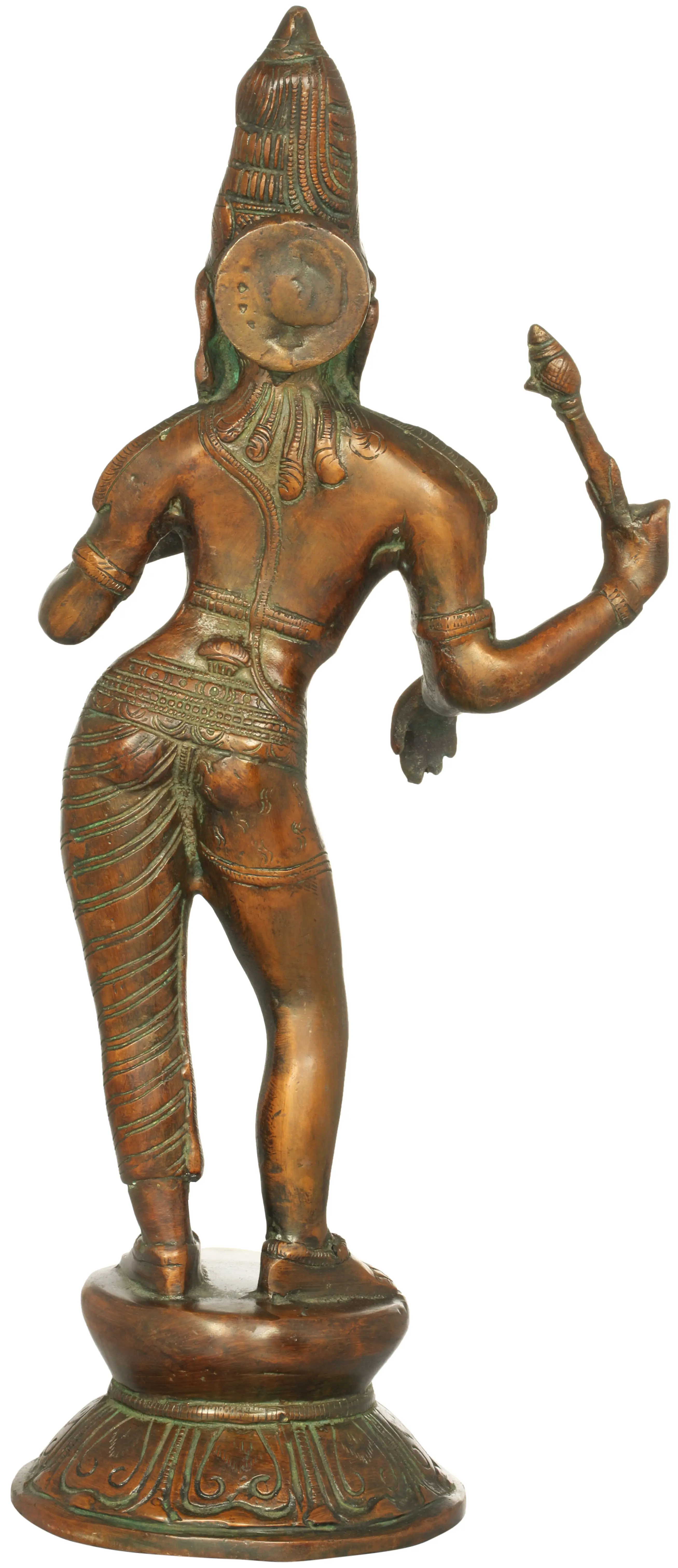
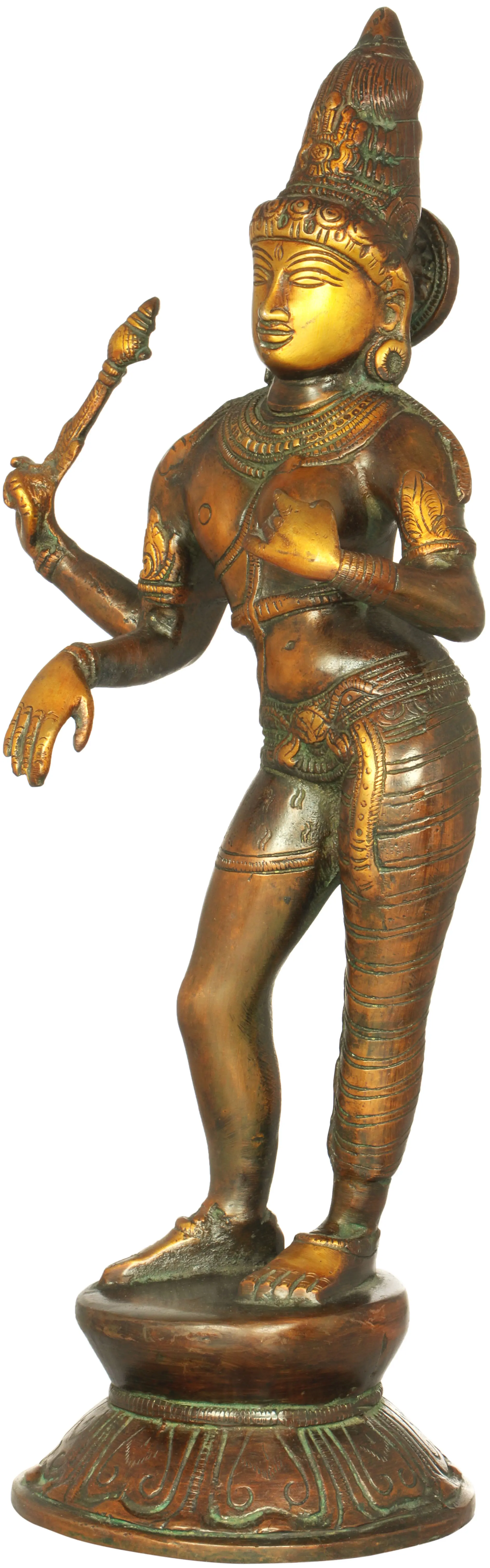
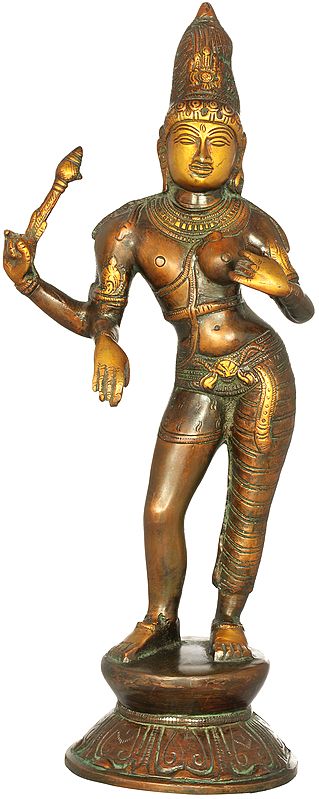
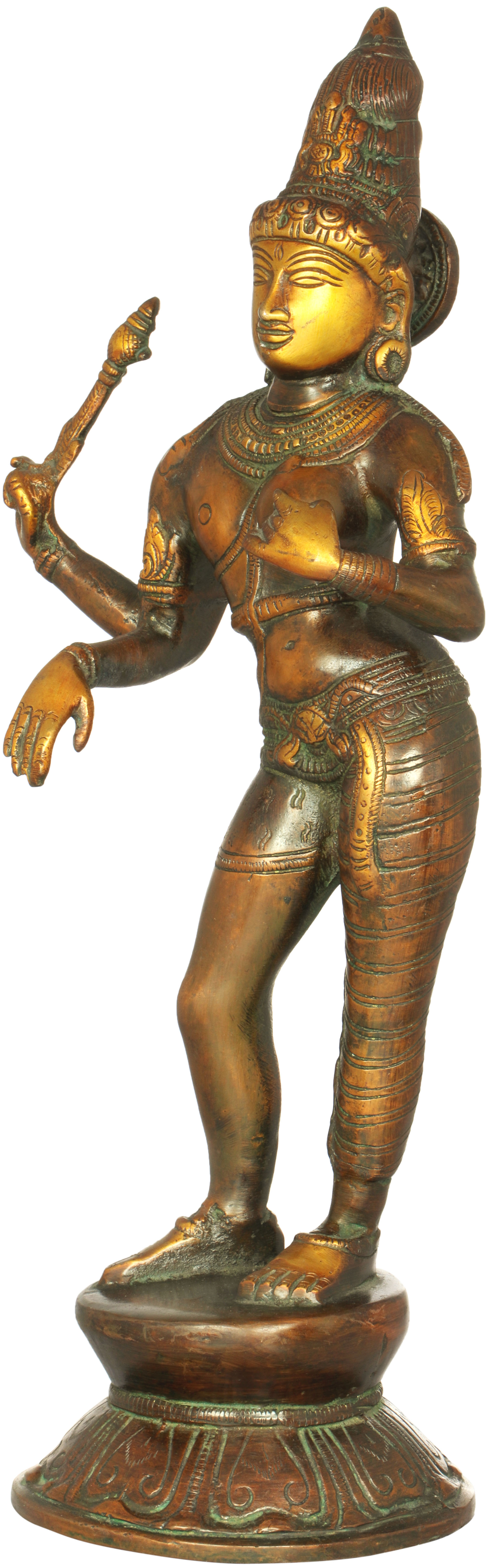
This exquisite brass statue captures the profound concept of Ardhanarishvara, a composite form of the Hindu deities Shiva and Parvati. This divine union represents the synthesis of masculine and feminine energies, the creative and destructive forces, and the fundamental duality that underpins the universe. The deity is depicted as half-man and half-woman, embodying the totality of existence. This form signifies that the universe is a manifestation of both Shiva (consciousness, masculine principle) and Shakti (energy, feminine principle), and that neither can exist independently of the other.Symbolism and Mythology
The iconography of Ardhanarishvara is rich with meaning. From Shiva's side, we see the traditional attributes of the destroyer and ascetic, often depicted with a serpent around his neck, a crescent moon in his hair, and a trident. From Parvati's side, the feminine aspect is evident in her graceful form, adorned with jewelry and a gentle demeanor. The union symbolizes the cosmic dance of creation and dissolution, the balance of opposing forces, and the ultimate oneness that underlies all phenomena. Legends tell that Parvati desired to be inseparable from Shiva, leading to this combined form. It is believed that the very essence of creation stems from this harmonious interplay between the masculine and feminine divine principles.Artistic Craftsmanship
This statue is a testament to skilled craftsmanship, rendered in durable brass. The artist has meticulously detailed the dual nature of Ardhanarishvara, with each side exhibiting distinct characteristics while seamlessly merging into a unified whole. The flowing drapery, the intricate adornments, and the serene yet powerful expression on the face all contribute to the statue's captivating presence. The patina developed over time adds to its antique charm and spiritual depth, making it a remarkable piece of art for any sacred space or collector's display. The posture suggests a dynamic movement, perhaps the cosmic dance, further enhancing the divine energy captured in the metal.A Sacred Icon for Your Home
Bringing the Ardhanarishvara idol into your home is an invitation to contemplate unity, balance, and the interconnectedness of all things. It serves as a constant reminder of the powerful feminine and masculine energies within ourselves and in the world around us. This statue is not merely an object of decor but a spiritual conduit, a representation of the ultimate truth that lies beyond dualities. Its presence can foster harmony, encourage introspection, and inspire a deeper understanding of the universal forces at play.How to keep a Brass statue well-maintained?
Brass statues are known and appreciated for their exquisite beauty and luster. The brilliant bright gold appearance of Brass makes it appropriate for casting aesthetic statues and sculptures. Brass is a metal alloy composed mainly of copper and zinc. This chemical composition makes brass a highly durable and corrosion-resistant material. Due to these properties, Brass statues and sculptures can be kept both indoors as well as outdoors. They also last for many decades without losing all their natural shine.
Brass statues can withstand even harsh weather conditions very well due to their corrosion-resistance properties. However, maintaining the luster and natural beauty of brass statues is essential if you want to prolong their life and appearance.
- The best and simplest way to maintain a brass statue is to clean it at least twice a week using a soft cloth or cotton rag. This will prevent dust from accumulating on the surface. Dusting is especially important for outdoor statues since it is prone to dust accumulation much more than indoors.
- To give a natural shine and luster to the statue, you may apply coconut or olive oil using cotton on every portion. You can use a toothbrush to get to the small crevices but do not be too harsh. This will make the brass statue appear fresh and new with a polished look.
In case you have a colored brass statue, you may apply mustard oil using a soft brush or clean cloth on the brass portion while for the colored portion of the statue, you may use coconut oil with a cotton cloth.
Brass idols of Hindu Gods and Goddesses are especially known for their intricate and detailed work of art. Nepalese sculptures are famous for small brass idols portraying Buddhist deities. These sculptures are beautified with gold gilding and inlay of precious or semi-precious stones. Religious brass statues can be kept at home altars. You can keep a decorative brass statue in your garden or roof to embellish the area and fill it with divinity.