Divine Union
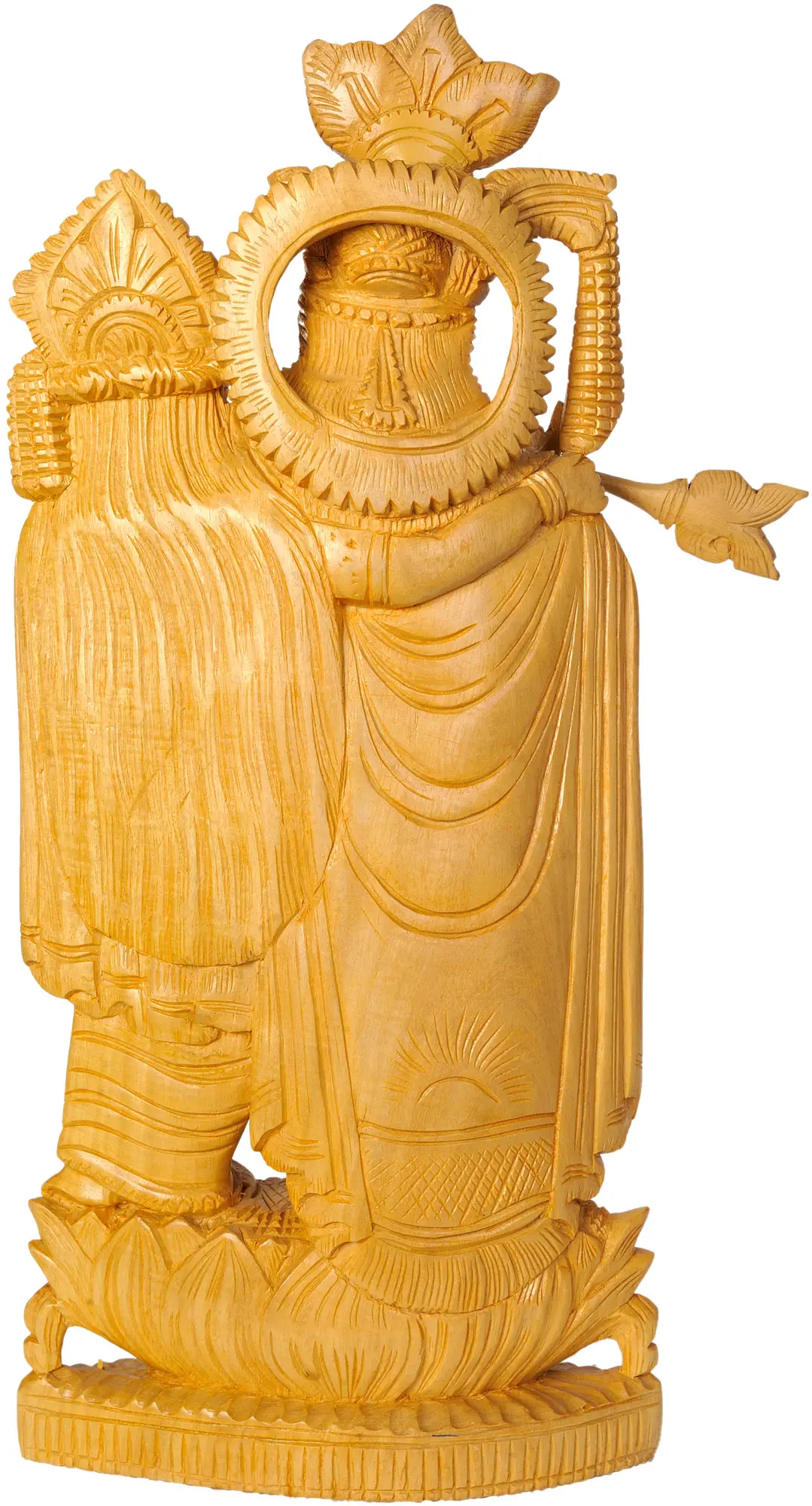
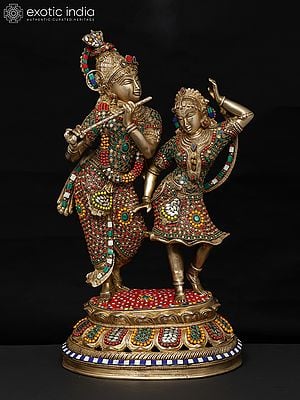
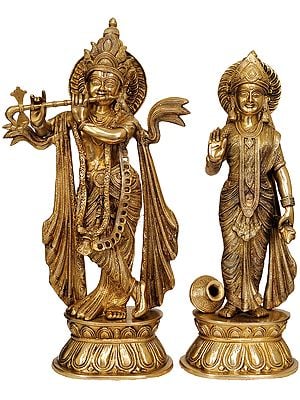
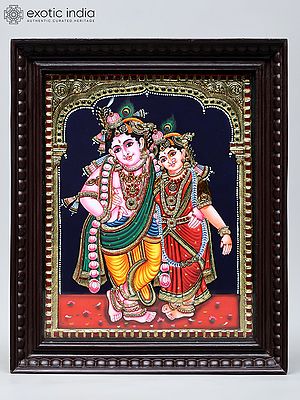
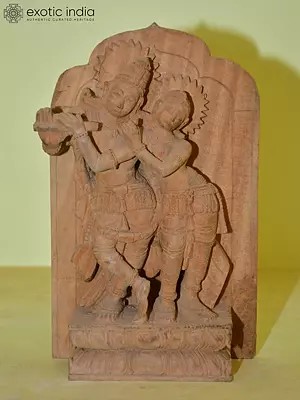
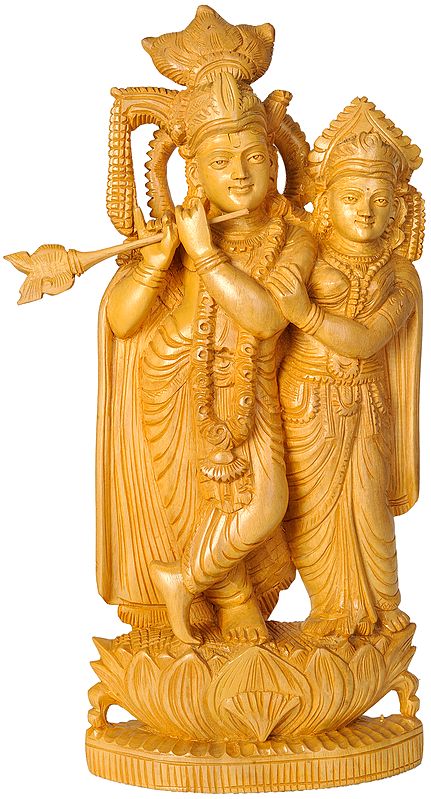
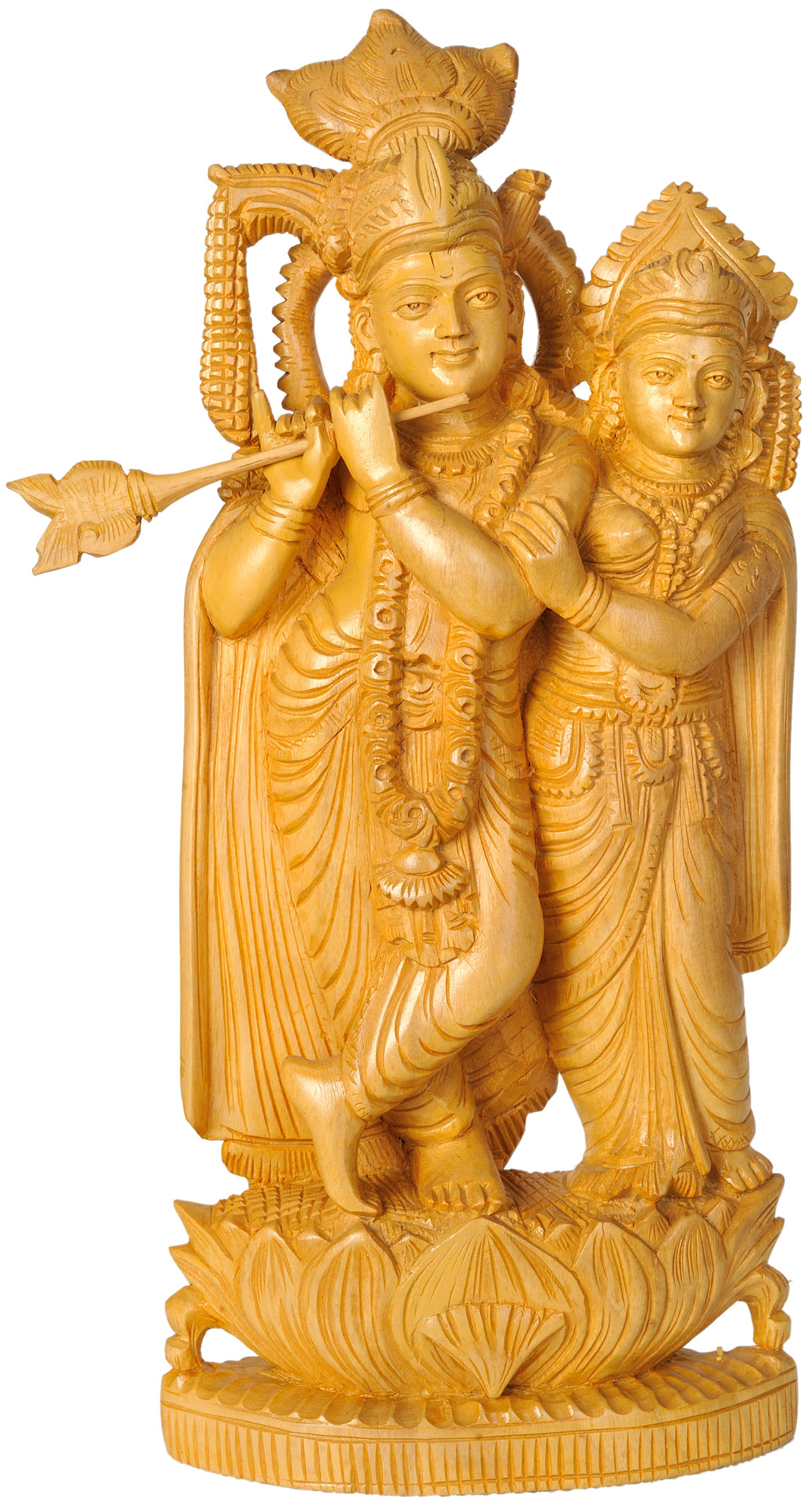
Experience the eternal love story of Krishna and Radha, beautifully captured in this exquisite hand-carved statue. Each curve and contour tells a tale of devotion, joy, and the boundless depths of divine affection. This piece serves not only as a decorative element but as a spiritual reminder of the power of love and faith. The delicate details bring the beloved deities to life, allowing you to connect with their energy and grace in your own home.Craftsmanship and Origin
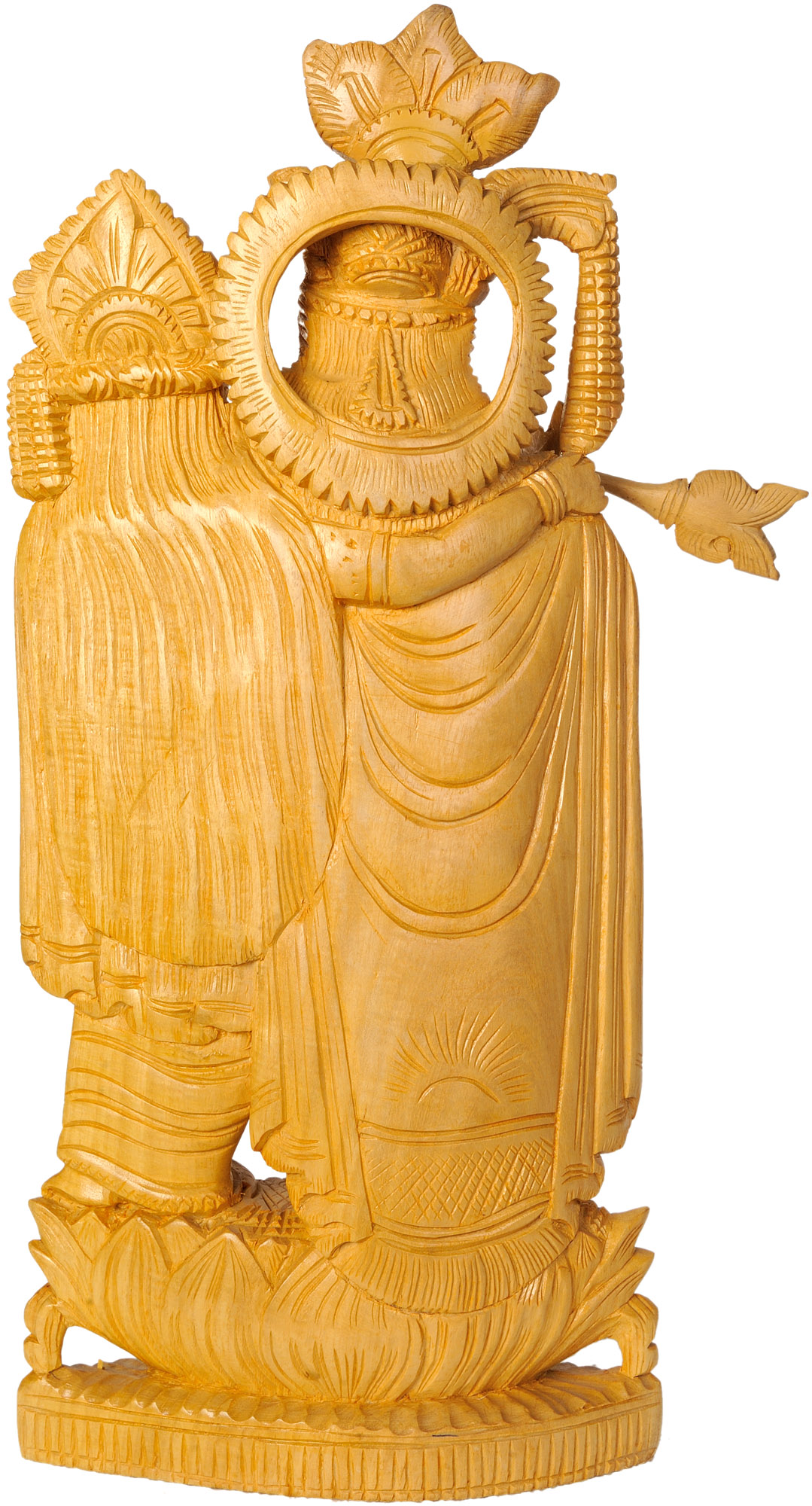
This elegant statue is meticulously crafted from White Cedar Wood sourced from the lush landscapes of Trivandrum. The choice of wood is significant, as cedar is often associated with purity, strength, and longevity. Skilled artisans have poured their heart and soul into every aspect of this creation, from the intricate carvings of Krishna's flute and Radha's adornments to the serene expressions on their faces. The smooth finish and warm tones of the wood enhance the overall aesthetic appeal, making it a captivating addition to any space.The Eternal Romance
The story of Krishna and Radha is central to Hindu mythology, symbolizing the ultimate devotion and selfless love. Krishna, the playful cowherd and divine incarnation of Vishnu, is irresistibly drawn to Radha, a gopi (milkmaid) whose love for him transcends all earthly desires. Their relationship is a powerful metaphor for the soul's longing for the divine, representing the union of the individual consciousness with the supreme reality. Depicted together, Krishna playing his enchanting flute and Radha gazing adoringly, they embody the perfect harmony of masculine and feminine energies, creating a sense of balance and spiritual fulfillment. The lotus base upon which they stand symbolizes purity, enlightenment, and spiritual awakening.Sculpting Serenity: Unveiling the Art of Crafting Wood Statues
Wood has been a preferred material for sculptures and statues since ancient times. It is easy to work with than most metals and stones and therefore requires less effort to shape it into any desired shape or form. The texture of the wood gives an element of realism to the sculpture. The selection of an appropriate wood type is necessary for carving. Woods that are too resinous or coniferous are not considered good for carving as their fiber is very soft and thus lacks strength. On the other hand, wood such as Mahogany, Oakwood, Walnut wood, Weet cherry wood, etc., are preferred by sculptors because their fiber is harder.
A wood sculptor uses various tools such as a pointed chisel in one hand and a mallet in another to bring the wood to the desired measurement and to make intricate details on it. A carving knife is used to cut and smooth the wood. Other tools such as the gouge, V-tool, and coping saw also serve as important tools in wood carving. Although the wood carving technique is not as complex and tough as stone carving or metal sculpting, nonetheless, a wood carver requires a high level of skills and expertise to create a stunning sculpture.
1. Selecting the right wood
The process of wood carving begins with selecting a chunk of wood that is required according to the type and shape of the statue to be created by the sculptor. Both hardwoods and softwoods are used for making artistic pieces, however, hardwoods are preferred more than softer woods because of their durability and longevity. But if heavy detailing is to be done on the statue, wood with fine grain would be needed as it would be difficult to work with hardwood.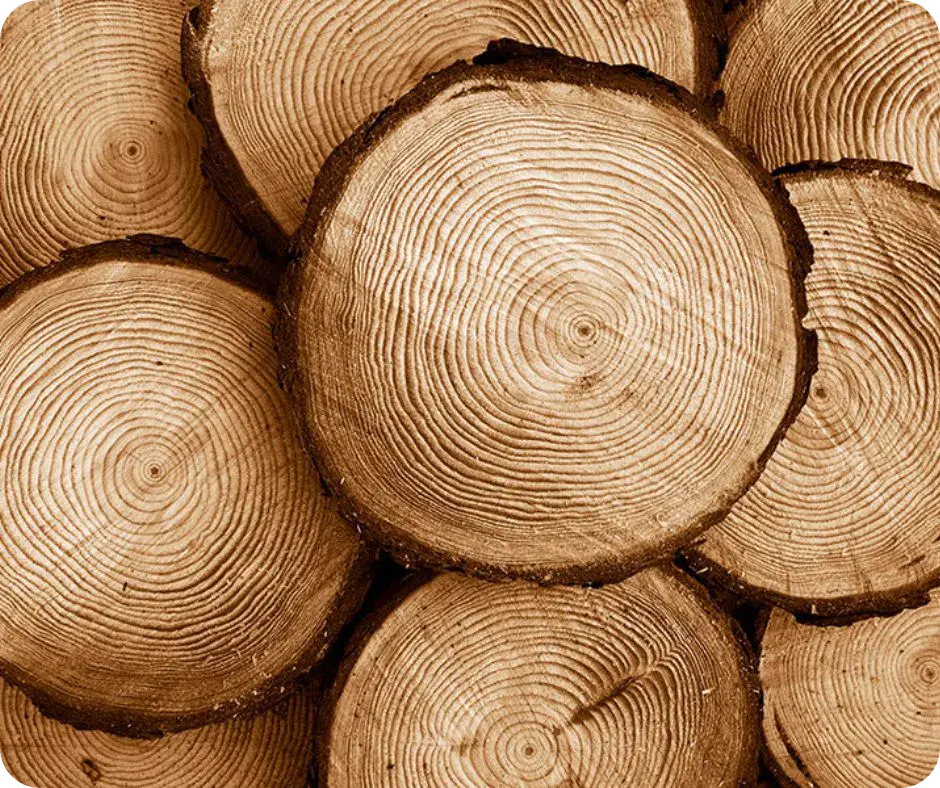
2. Shaping the wood
Once the wood type is selected, the wood carver begins the general shaping process using gouges of various sizes. A gouge is a tool having a curved cutting edge which is useful in removing large unwanted portions of wood easily without splitting the wood. The sculptor always carves the wood across the grain of the wood and not against it.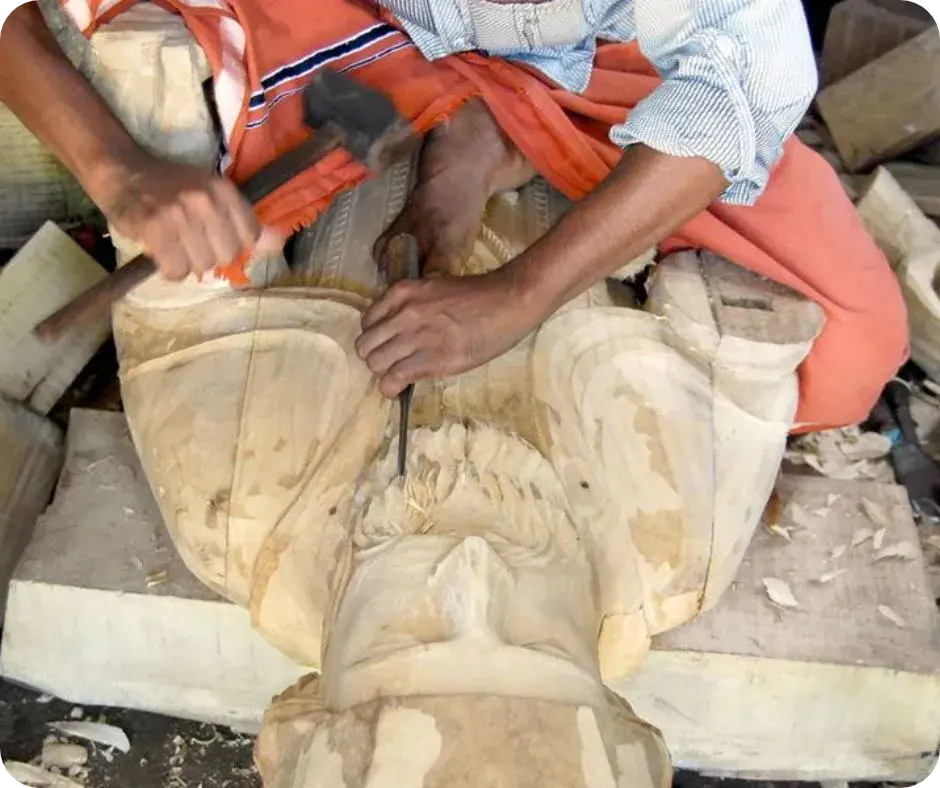
3. Adding detailing
When a refined shape of the statue is obtained, it is time for making details on the statue using different tools. This is achieved by using tools such as a veiner to make and a V-tool to create decorative and sharp cuts.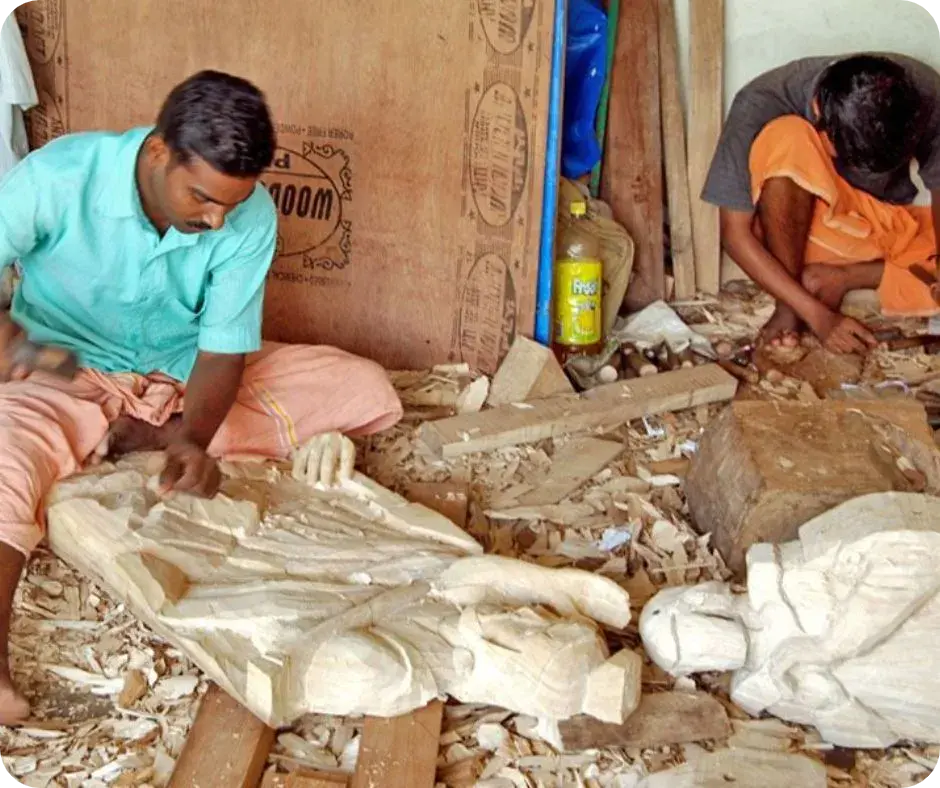
4. Surface finishing
Once finer details have been added, the sculptor is ready to smoothen the surface and give it a perfect finish. Tools such as rasps and rifflers are used to get a smooth surface. The finer polishing is obtained by rubbing the surface with sandpaper. If a textured surface is required, this step is skipped. Finally, to protect the statue from excessive dirt accumulation, the sculptor applies natural oils such as walnut or linseed oil all over it. This also brings a natural sheen to the statue.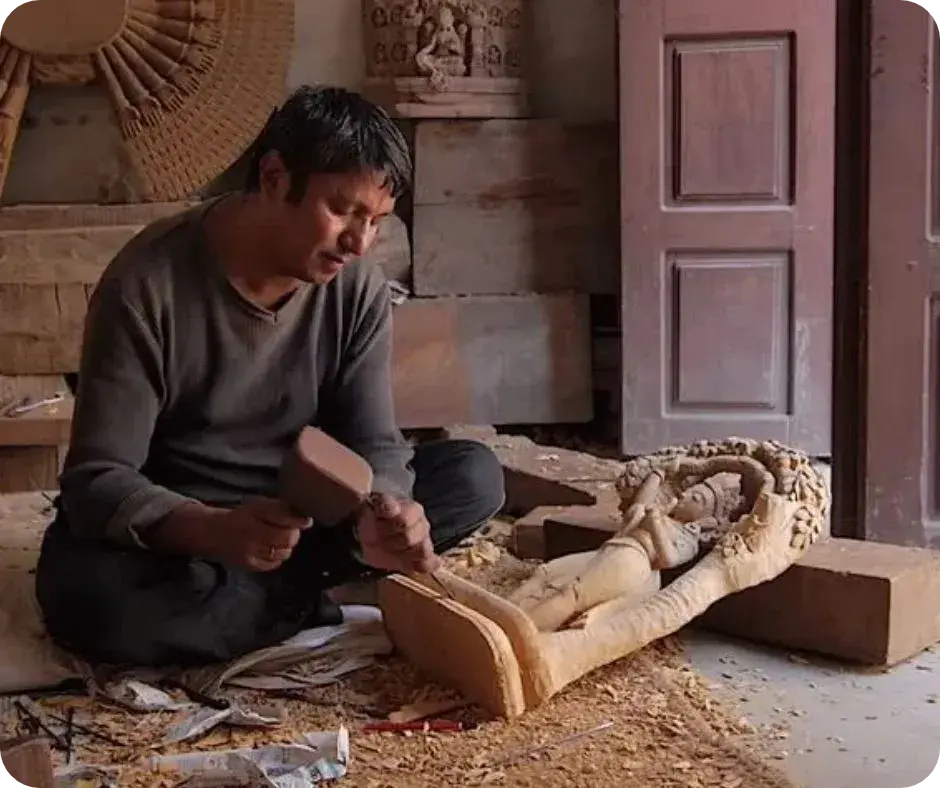
How to care for Wood Statues?
Wood is extensively used in sculpting especially in countries like China, Germany, and Japan. One feature that makes the wood extremely suitable for making statues and sculptures is that it is light and can take very fine detail. It is easier for artists to work with wood than with other materials such as metal or stone. Both hardwoods, as well as softwood, are used for making sculptures. Wood is mainly used for indoor sculptures because it is not as durable as stone. Changes in weather cause wooden sculptures to split or be attacked by insects or fungus. The principal woods for making sculptures and statues are cedar, pine, walnut, oak, and mahogany. The most common technique that sculptors use to make sculptures out of wood is carving with a chisel and a mallet. Since wooden statues are prone to damage, fire, and rot, they require proper care and maintenance.
- Wood tends to expand and contract even after it has been processed, thus it is always recommended to keep the wooden sculptures in rooms with little humidity. Excess moisture can harm your masterpiece.
- Periodical dusting of the finished piece is necessary to maintain its beauty as dust accumulation on the surface takes away the shine of the sculpture. You can use a clean and soft cloth or a hairbrush for this purpose.
- You must avoid applying any chemical-based solutions that may damage the wood from the inside. Instead, you can apply lemon oil or coconut oil using a cotton rag to the sculpture to bring out its natural shine. Lemon oil also helps to clean any stains on the sculpture.
- Applying a layer of beeswax protects the wood from sun damage and hides even the smallest imperfections on the wood.
It is extremely important to preserve and protect wooden sculptures with proper care. A little carelessness and negligence can lead to their decay, resulting in losing all their beauty and strength. Therefore, a regular clean-up of the sculptures is a must to prolong their age and to maintain their shine and luster.