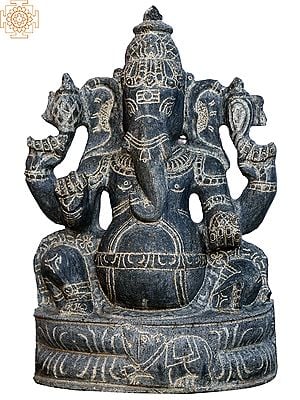
This
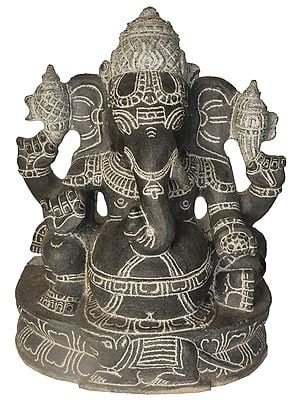
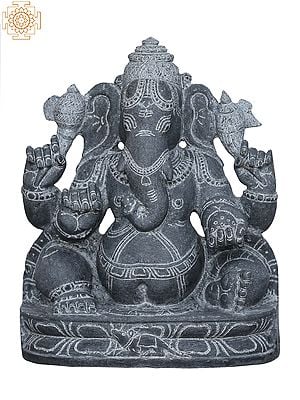
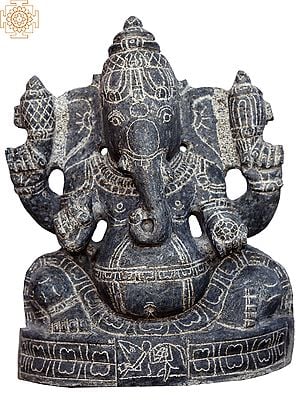
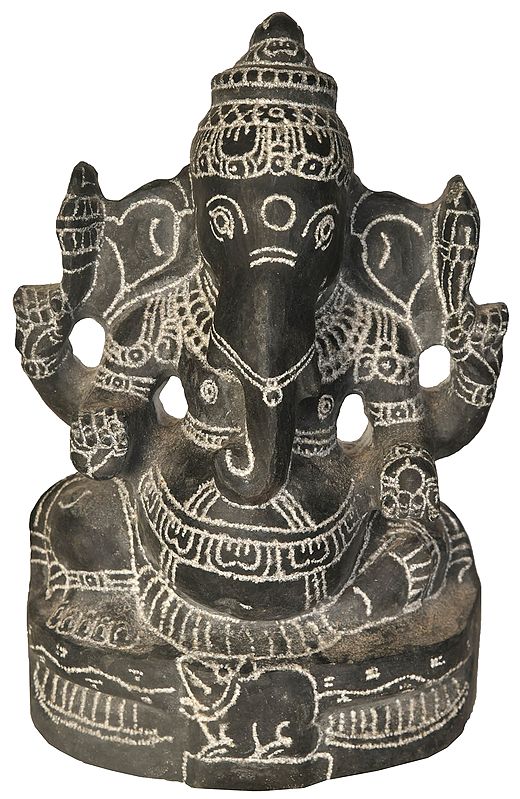
Chaturbuj Ganesha granite statue depicts the beloved deity with four arms,
representing his divine abilities to remove obstacles and bestow wisdom,
prosperity, and protection.
In this
depiction, he is clutching a goad and Pasha (Noose) on his upper hands, while
holding a trunk and a modak (Sweet) on his lower hands.
The carved
detailing showcases Ganesha’s ornate crown, peaceful expression, and detailed
ornaments, adding elegance and spiritual significance to the piece.
Divine Presence Carved in Stone
This exquisite statue captures the benevolent form of Ganesha, the elephant-headed deity revered as the remover of obstacles, the patron of arts and sciences, and the intellect personified. Crafted from hard granite, this piece embodies a timeless solidity and enduring grace, a testament to the skill of artisans from Mahabalipuram. The intricate white etching adorning the dark stone brings the divine figure to life, highlighting each detail with striking clarity. The artist has meticulously rendered Ganesha's iconic features, from the wise curve of his trunk to the majestic expanse of his ears, imbuing the sculpture with a sense of profound spiritual energy.A Legacy of Mahabalipuram
Mahabalipuram, a UNESCO World Heritage site on the Coromandel Coast of Tamil Nadu, India, boasts a rich history of stone carving that spans over a millennium. The tradition dates back to the Pallava dynasty, whose sculptors created magnificent monolithic rock-cut temples and intricate stone carvings, many of which depict Hindu deities and mythological scenes. This statue carries that legacy forward, reflecting the deep-rooted artistic heritage and spiritual devotion of the region. The choice of hard granite not only ensures the statue's durability but also speaks to the ancient techniques employed by these master craftsmen, who transformed raw stone into objects of spiritual significance and artistic marvel.The Symbolism of Chaturbhuj Ganesha
The form of Ganesha depicted here, with his four arms, symbolizes his omnipotence and multifaceted nature. Each hand is believed to hold symbolic objects that represent his divine powers and attributes. The Chaturbhuj
aspect, meaning 'four-armed', allows Ganesha to bestow blessings, offer protection, grant wisdom, and remove hindrances simultaneously. In mythology, Ganesha is often depicted with one tusk broken, which he is said to have used as a pen to write the Mahabharata, showcasing his immense intellect and dedication to knowledge. His large ears signify his ability to listen intently to the prayers of his devotees, and his ever-present sweet tooth is a reminder of the joys and rewards that come from righteous endeavors. This statue, therefore, is not merely a decorative object but a powerful symbol of divine grace and intellectual pursuit.









 Upload an Image
