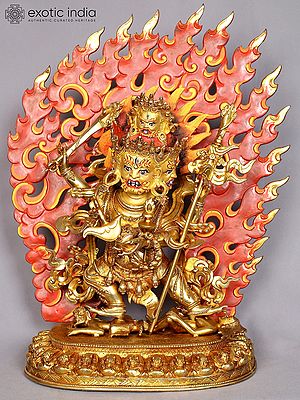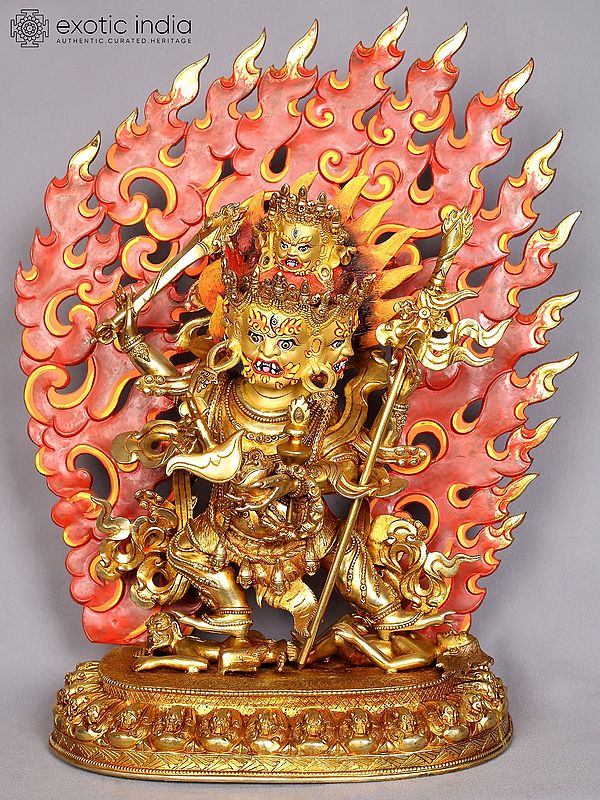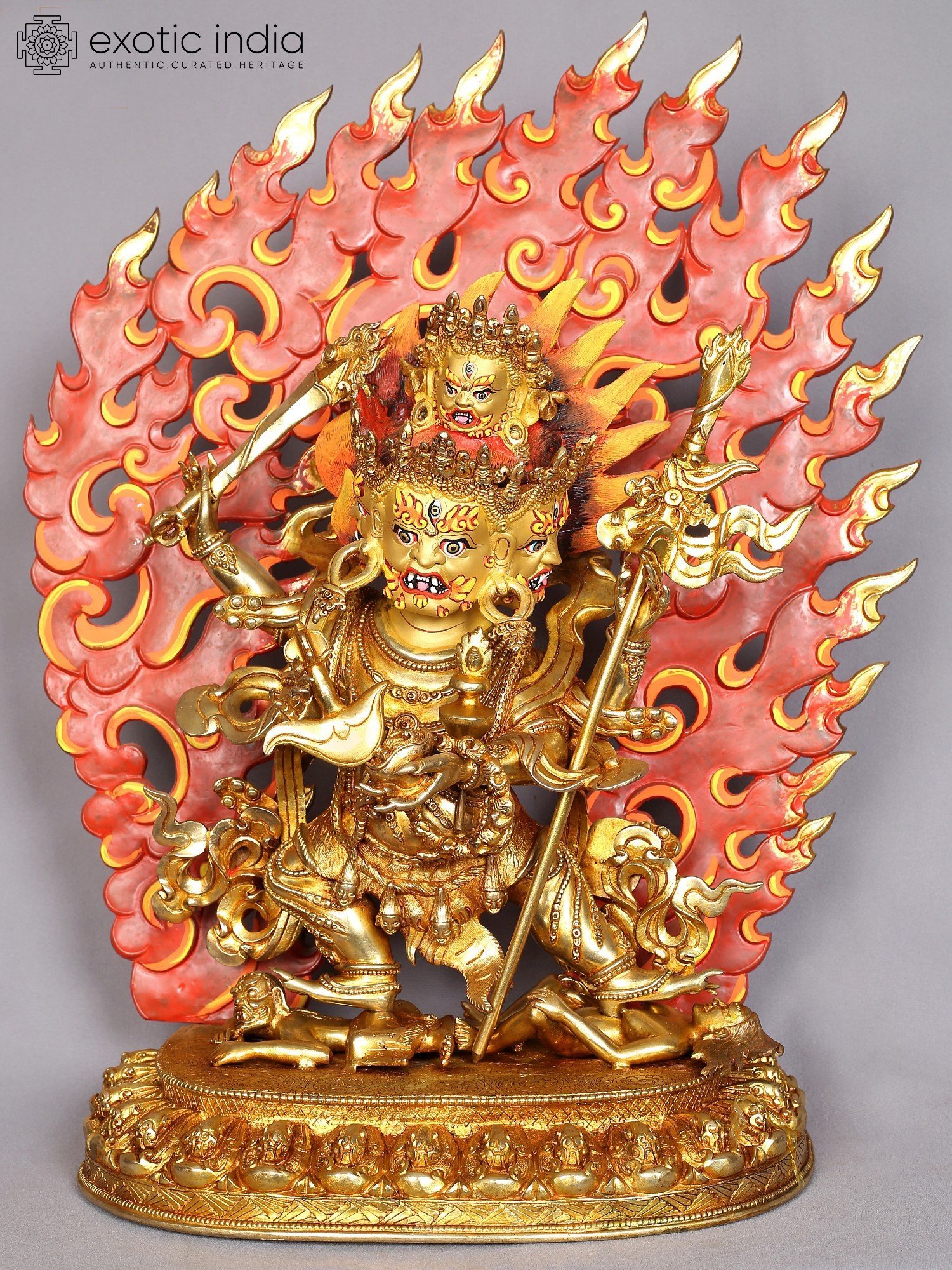
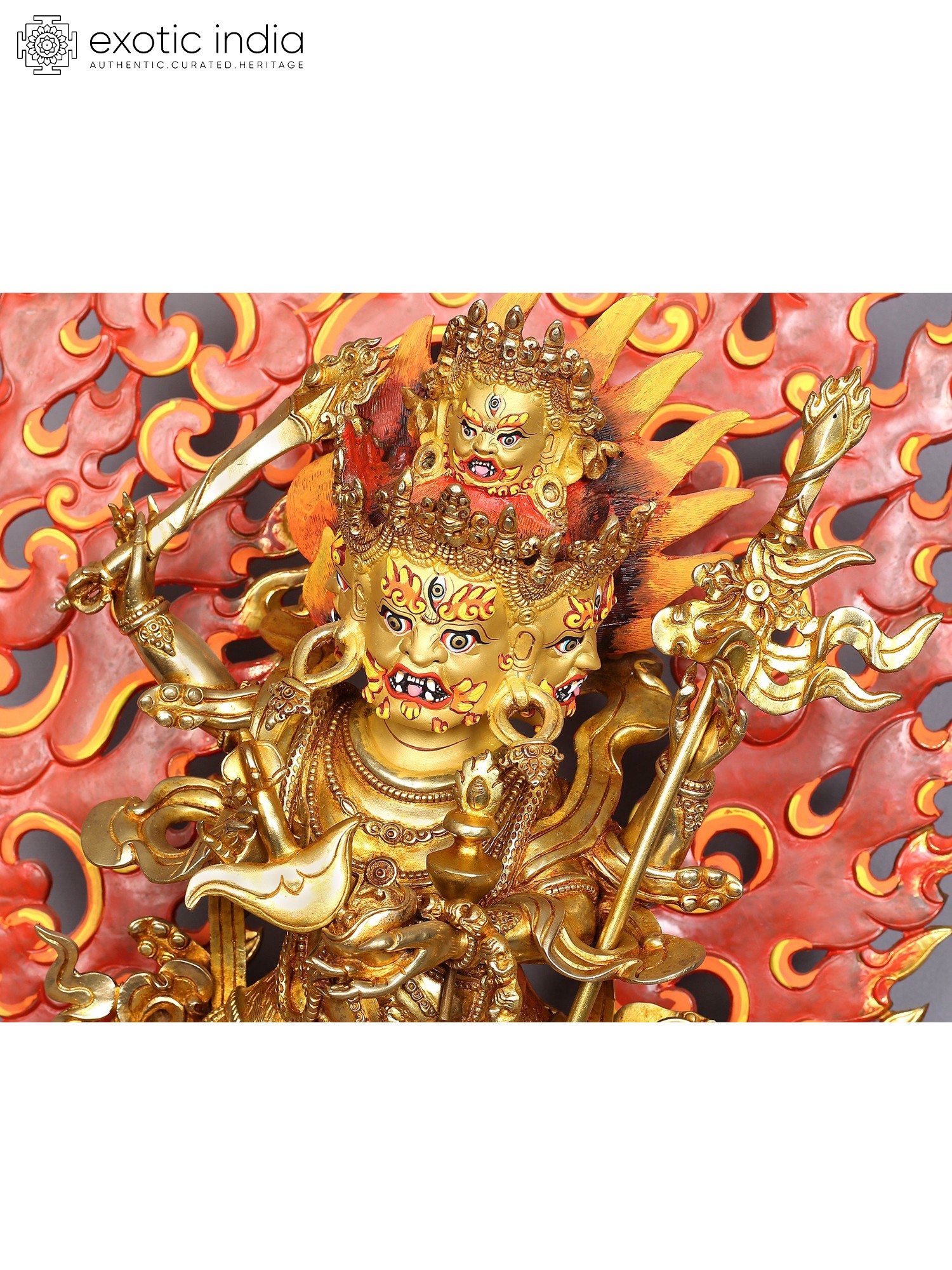

Four Headed Mahakala Copper Idol with Gold Plated
$3220
Includes any tariffs and taxes

Only 1 available
Notify me when this item is available
| Specifications |
 |
MIS639 |
 |
Copper with Gold Plated |
 |
Height: 20 inch |
| Width: 16 inch | |
| Depth: 7 inch | |
 |
Weight 9.50 kg |
| Delivery and Return Policies |
 |
Usually ships in 6 days |
 |
Returns and Exchanges accepted within 7 days |
 |
Free Delivery |

Easy Returns

Fully Insured

100% Handmade
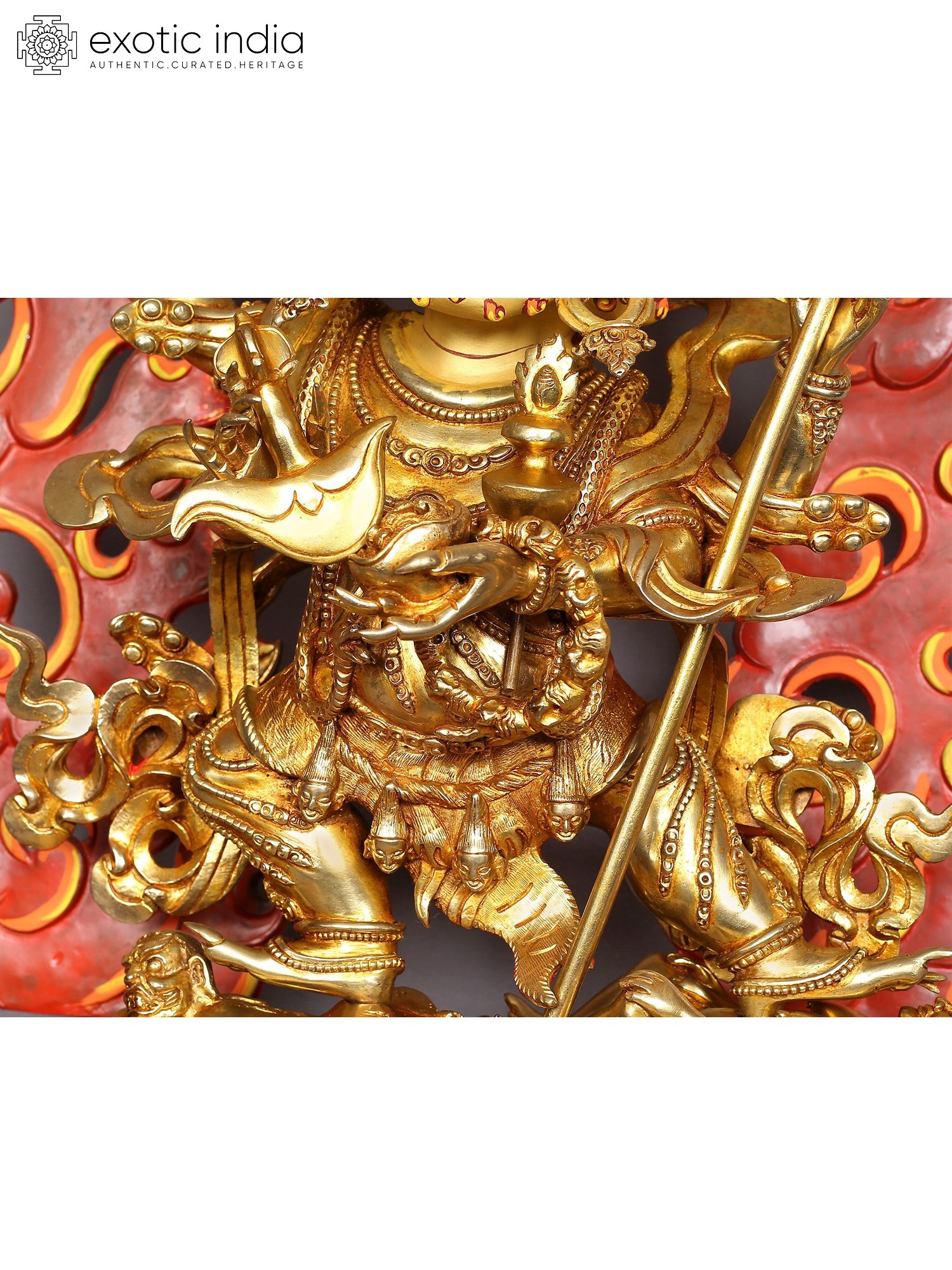
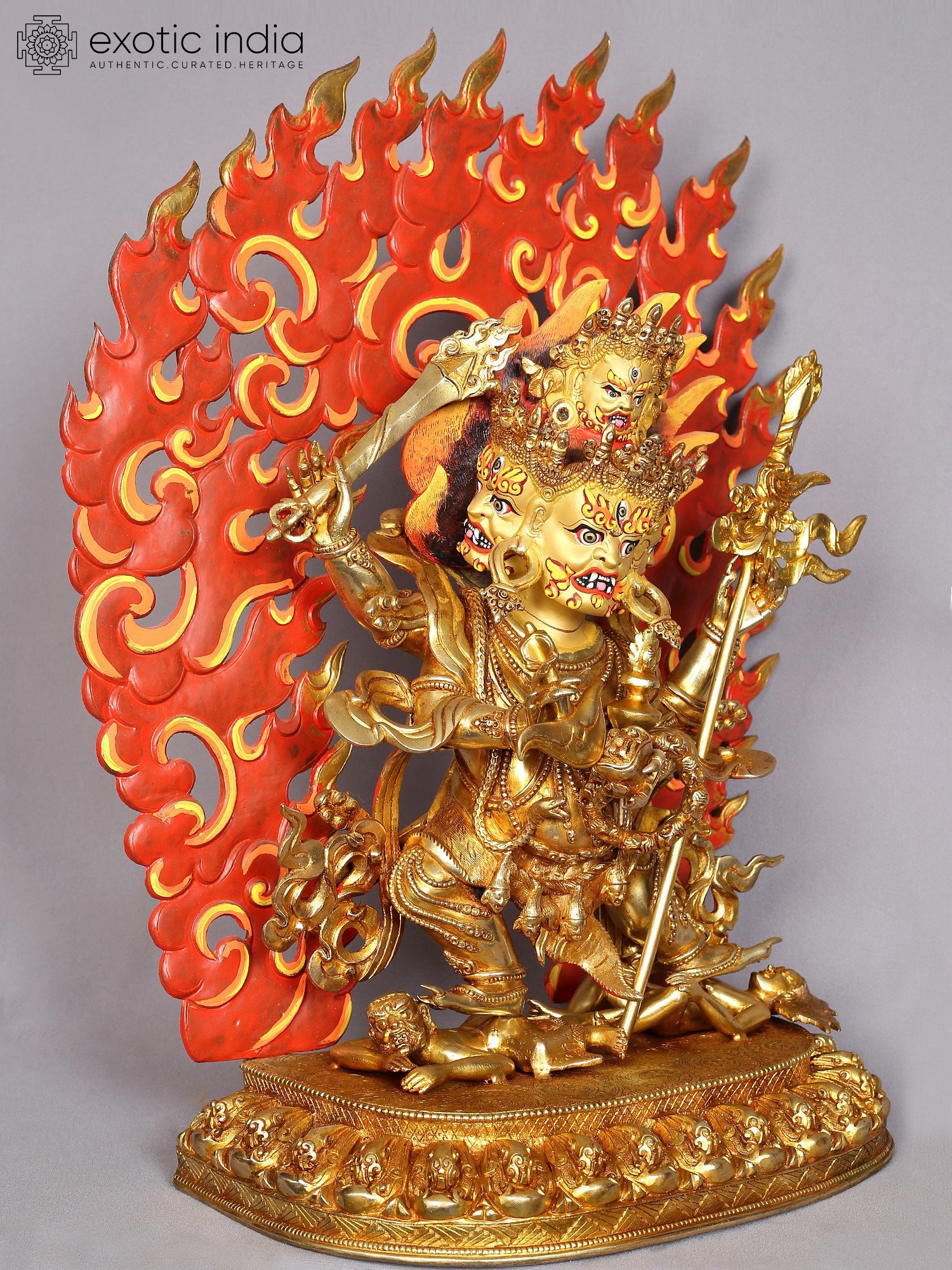
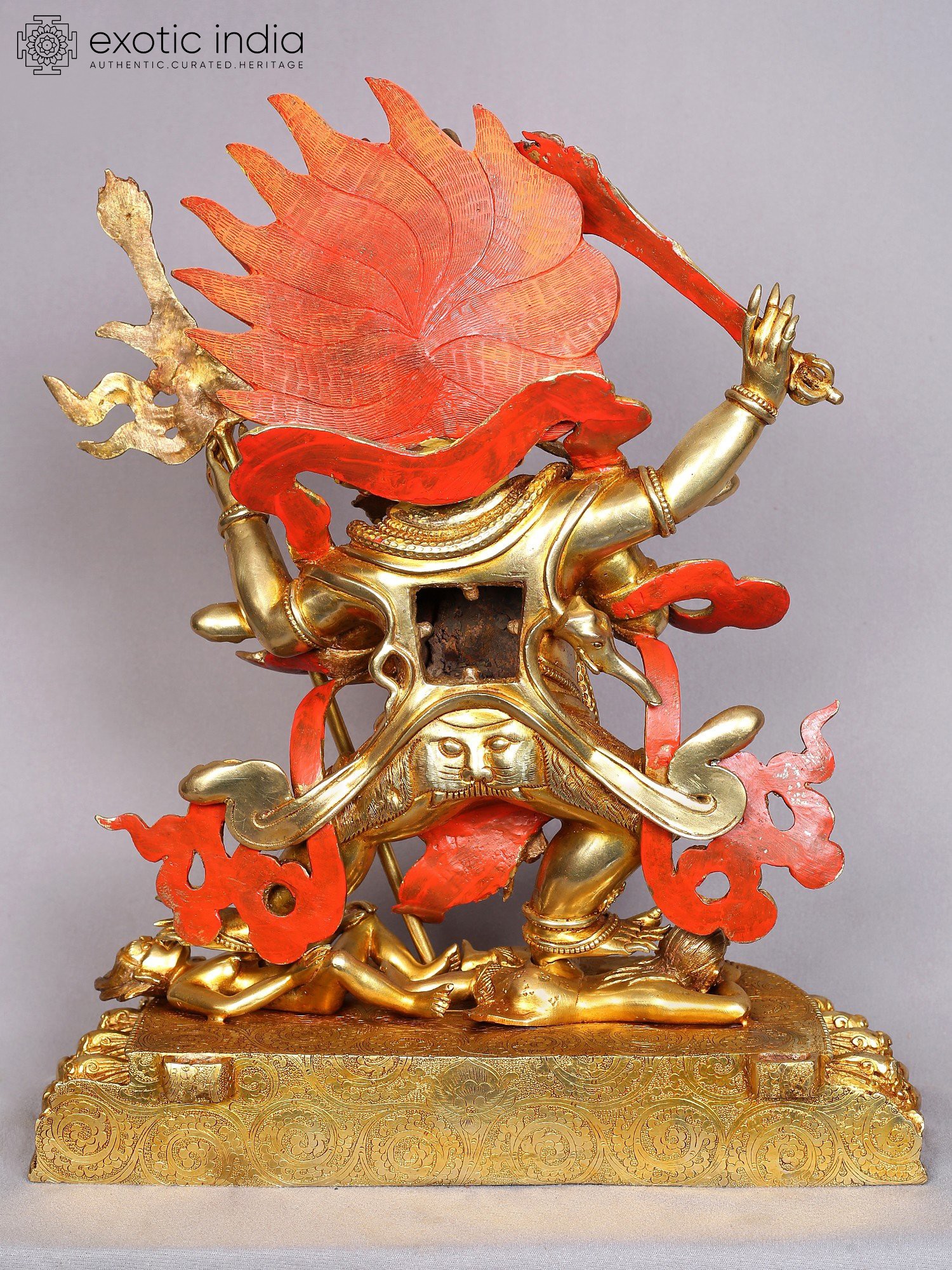
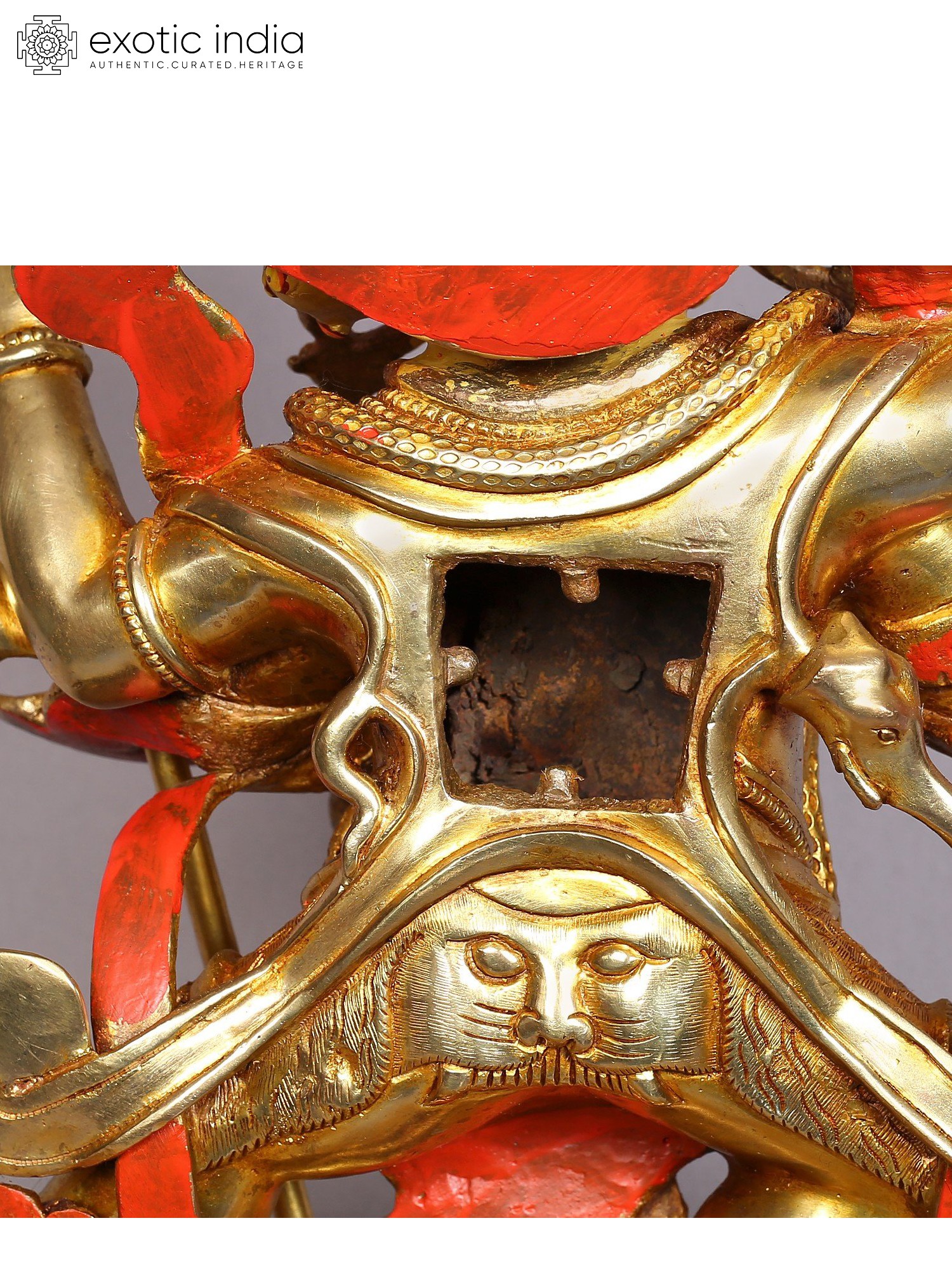
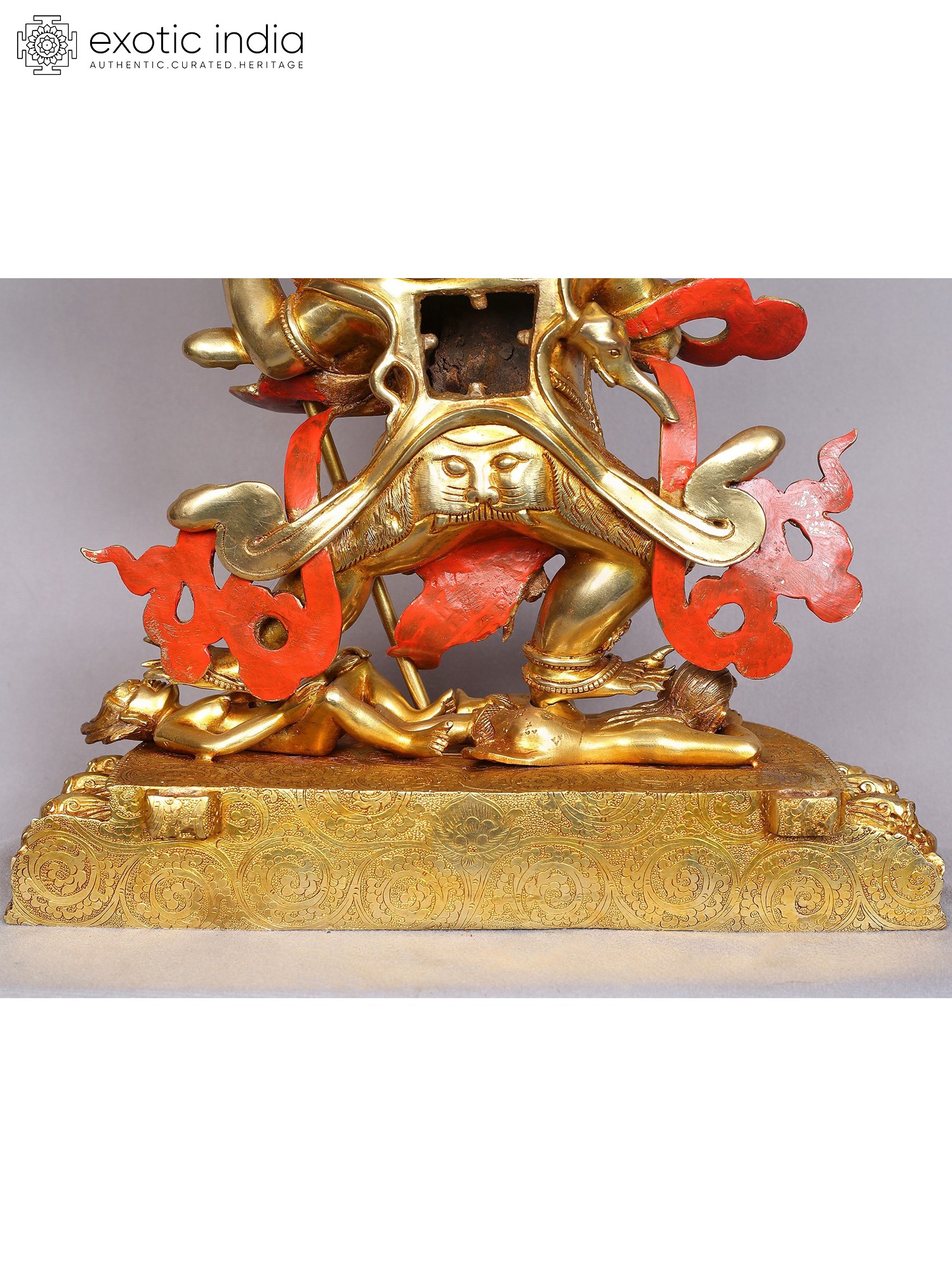
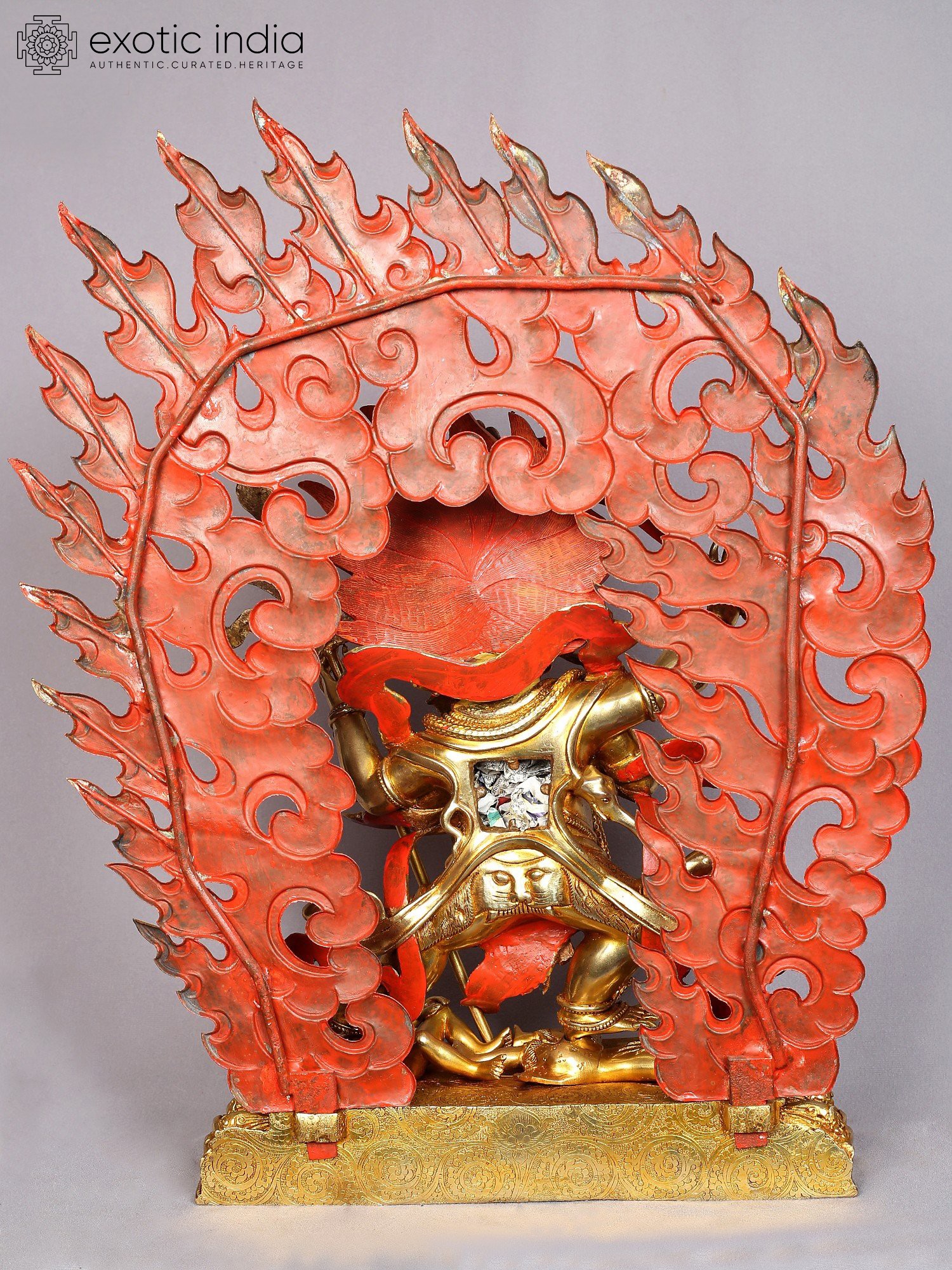
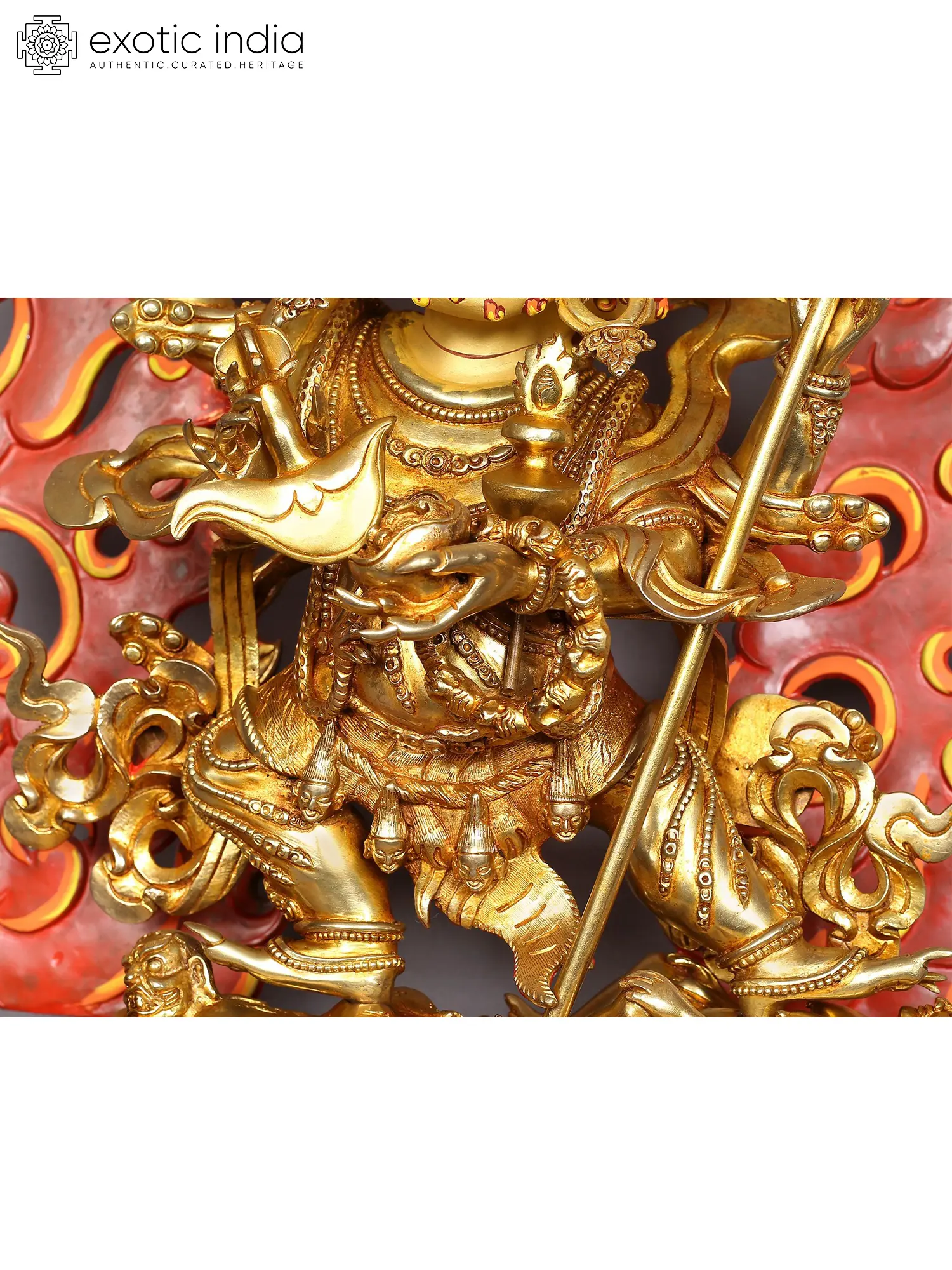
This Chaturmukha (four-headed) and Chaturbhuja (four-armed) Mahakala statue from Nepal is a potent manifestation of the Buddhist deity. The gilded copper icon is heavily ornamented with traditional jewelry and haloed by a stunning flaming aureole.
Quelling the enemies of Dhamma with
his massive legs, Mahakala in this form annihilates the fear of death (Kala)
from the heart of his devotees, clearing their minds and path to attain the
supreme wisdom.
The Imposing Presence of Mahakala
This magnificent sculpture depicts Mahakala, a wrathful deity revered in Tibetan Buddhism. Mahakala, whose name translates to "Great Black One," is a fierce protector of the Dharma, embodying the transformative power that destroys obstacles and negative forces on the path to enlightenment. In this dynamic rendition, Mahakala is presented with four heads, each representing a different aspect of his powerful energy and the overcoming of various impediments. The multiple heads symbolize his all-seeing nature and his capacity to address multifaceted challenges simultaneously. ––––––––––––––––––––Symbols of Power and Protection
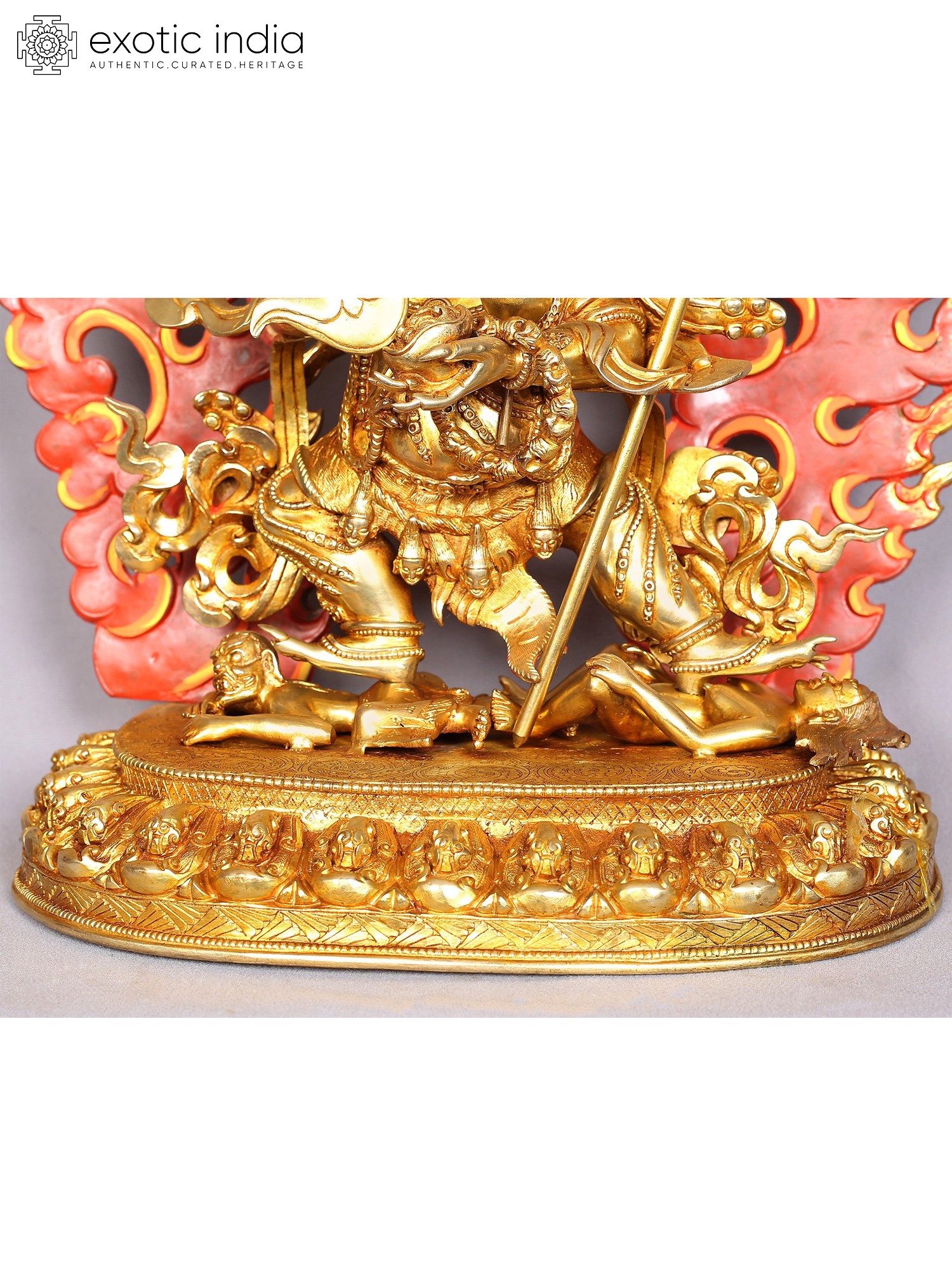
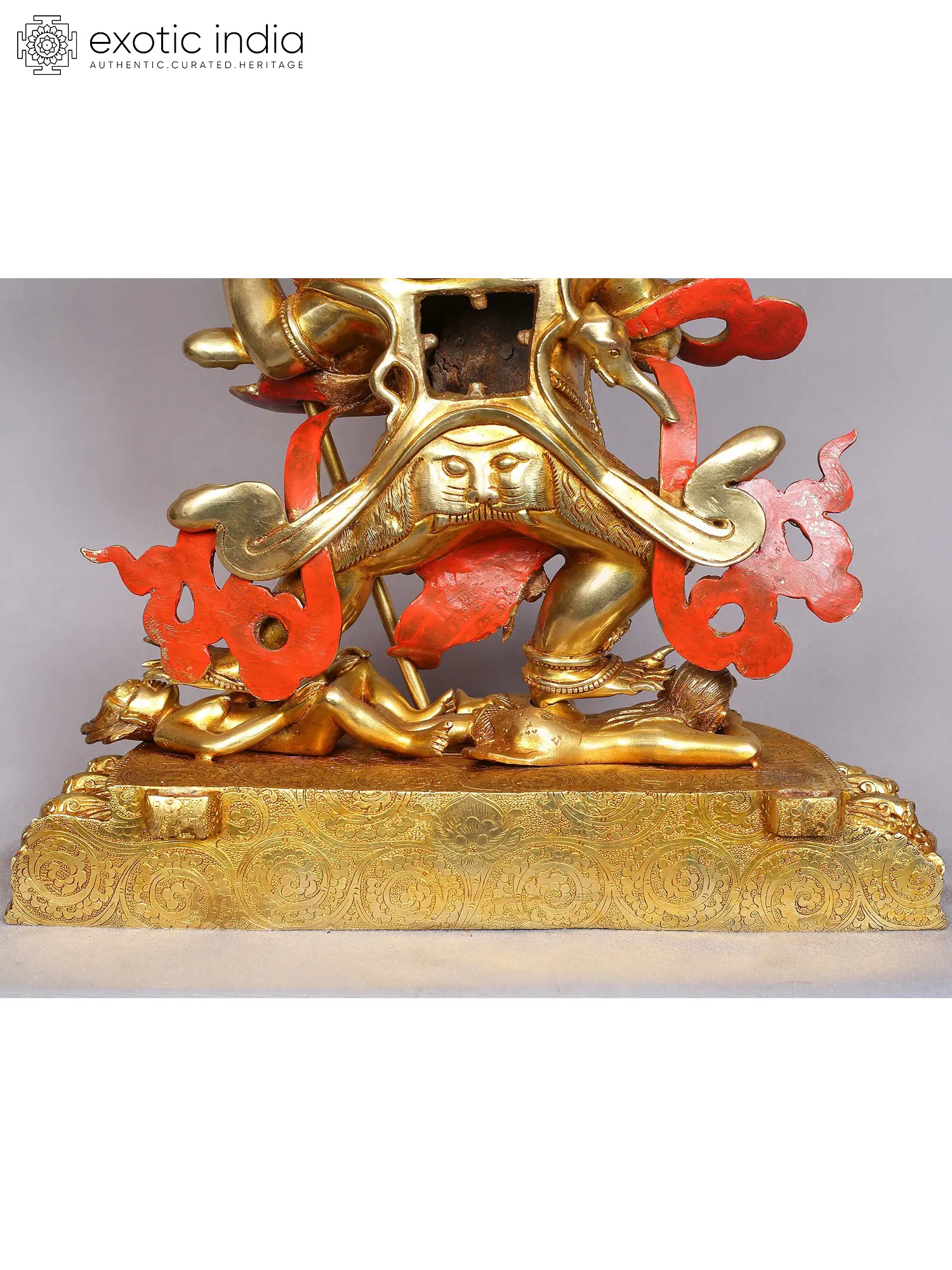
The iconographic details of this idol are rich with symbolism. Mahakala's fierce countenance, with bared fangs and wide, piercing eyes, is not one of malice but of intense focus and unwavering determination. His multiple arms are laden with various implements of spiritual warfare, each holding a specific symbol of power. These might include a vajra, representing indestructibility; a kapala (skull cup), signifying the transmutation of negative emotions; a sword, for cutting through ignorance; and a damaru (drum), producing the primordial sound that sustains creation. The fiery aura that surrounds him is a visual representation of his purifying energy, burning away impurities and dispelling darkness. This fiery halo is often associated with the primal cosmic energy that fuels the universe. In some traditions, Mahakala is depicted trampling on a prostrate figure, representing the subjugation of ego, attachment, and ignorance. ––––––––––––––––––––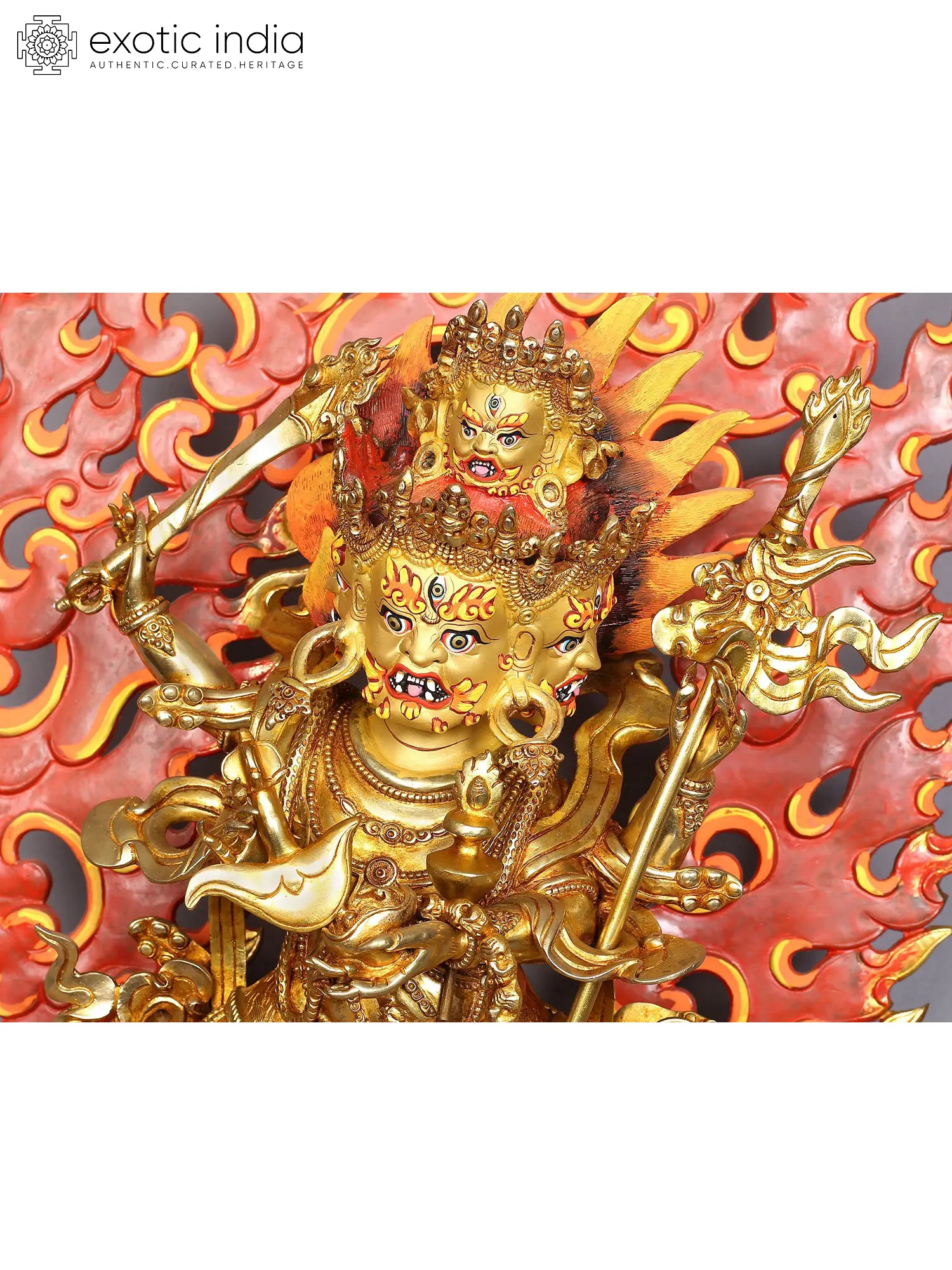
Craftsmanship and Divine Aura
Crafted from copper and meticulously gold-plated, this idol possesses a luminous sheen that amplifies its divine presence. The intricate detailing, from the elaborate crowns adorning each head to the finely sculpted musculature and the ornate jewelry, speaks to the skill of the artisans. The choice of copper as the base material is significant, as it is often considered a sacred metal in many spiritual traditions, believed to possess purifying properties. The gold plating adds a layer of preciousness and further enhances the radiant aura of the deity, making this sculpture a truly captivating object of devotion and artistic admiration. The detailed base, often adorned with lotus motifs or representations of defeated adversaries, grounds the celestial power of Mahakala in the earthly realm. ––––––––––––––––––––Mahakala in Tradition
Mahakala is a complex figure, appearing in various forms across different Buddhist lineages, each with unique attributes and functions. He is considered a manifestation of Avalokiteshvara, the Bodhisattva of Compassion, and represents the compassionate wrath that arises to protect practitioners when all else fails. His fierce appearance is a skillful means to shock individuals out of their complacency and to overcome internal and external hindrances to spiritual progress. The worship of Mahakala is believed to grant protection from harm, remove obstacles to one's spiritual path, and foster the accumulation of merit. This deity's powerful presence is said to ward off negative influences and ensure swift progress towards liberation.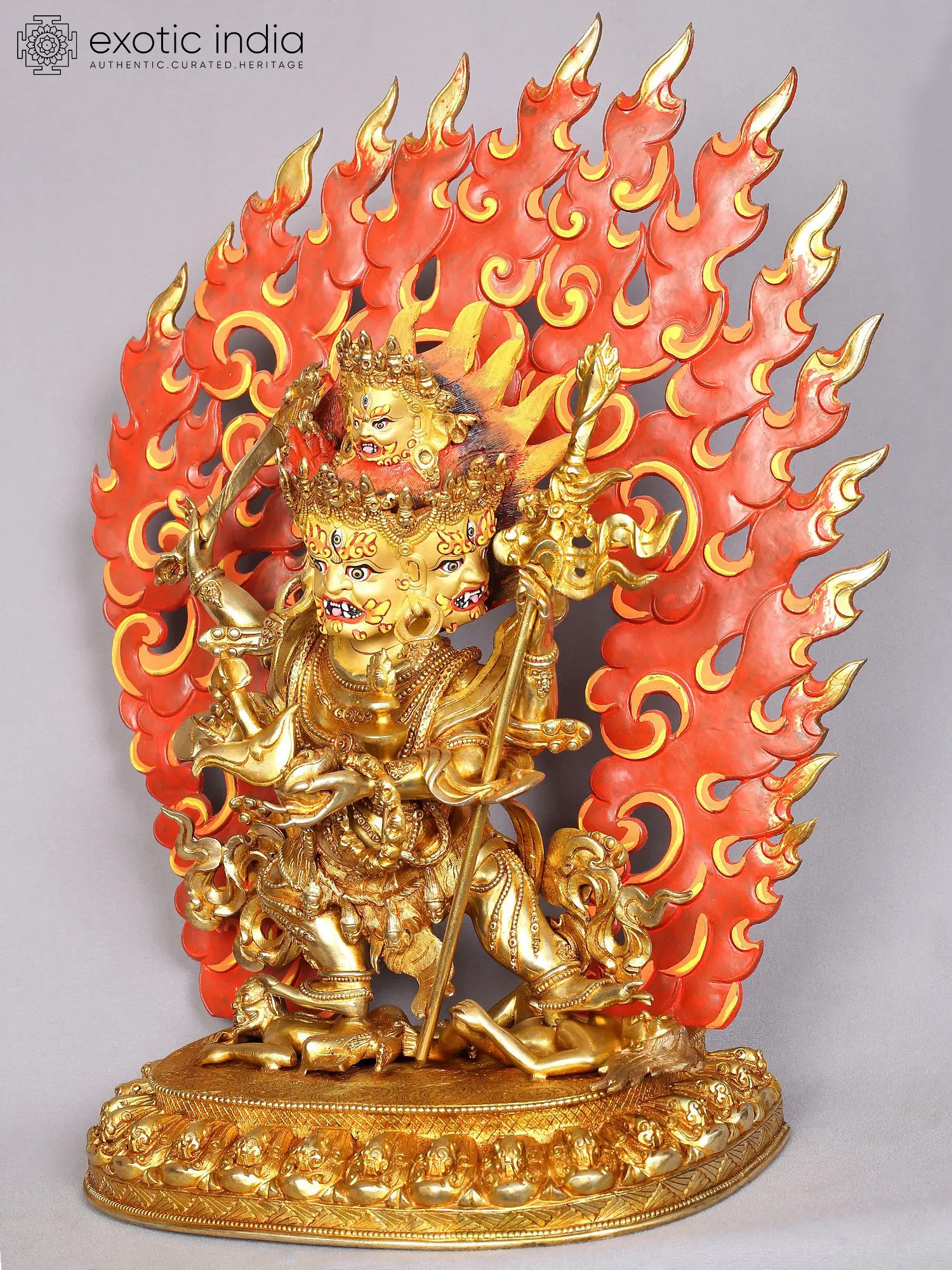
How are Nepalese copper statues made?
Nepalese statues and sculptures are best known for their unique
small religious figures and ritual paraphernalia for over two
thousand years. These are mainly cast in copper alloy. Nepal draws
influences from the artistic styles of Buddhism and Hinduism, and
therefore the sculptors of the country specialize in making the
icons of both these religions. Over the years, Nepalese sculptures
evolved into their own distinctive iconography. Some
characteristic features of these sculptures that differ from other
pieces are exaggerated physical postures, youthful and sensual
features, languid eyes, wider faces having serene expressions, and
ornate flourishes. The Buddhist deity icons of Nepal have
tremendous demand in countries such as China and Tibet for ritual
purposes in their temples and monasteries.
Nepalese statues and sculptures have a high copper content and therefore develop a slightly reddish patina on the surface as they age. However, the most unique feature of Nepalese copper statues is their decorative detailing. The pieces are heavily gilded and sometimes inlaid with semi-precious stones. This embellishment protects them from getting tarnished. The traditional lost-wax method for casting Nepalese copper statues remains the most practiced technique in Nepal for many centuries. This process involves many steps and requires skilled artists.
The first step in lost-wax sculpting is to make a wax replica of the desired Buddhist deity to be cast in copper. This replica is created by hand and therefore needs excellent artistic skills otherwise fine features will be lacking.
Once the wax replica is made, it is then coated with a special mixture of clay with a brush. This layer of clay is hardened when left to dry. A small hole is made on the base of the wax mould so that the wax flows away when it is heated.
Nepalese statues and sculptures have a high copper content and therefore develop a slightly reddish patina on the surface as they age. However, the most unique feature of Nepalese copper statues is their decorative detailing. The pieces are heavily gilded and sometimes inlaid with semi-precious stones. This embellishment protects them from getting tarnished. The traditional lost-wax method for casting Nepalese copper statues remains the most practiced technique in Nepal for many centuries. This process involves many steps and requires skilled artists.
The first step in lost-wax sculpting is to make a wax replica of the desired Buddhist deity to be cast in copper. This replica is created by hand and therefore needs excellent artistic skills otherwise fine features will be lacking.
Once the wax replica is made, it is then coated with a special mixture of clay with a brush. This layer of clay is hardened when left to dry. A small hole is made on the base of the wax mould so that the wax flows away when it is heated.
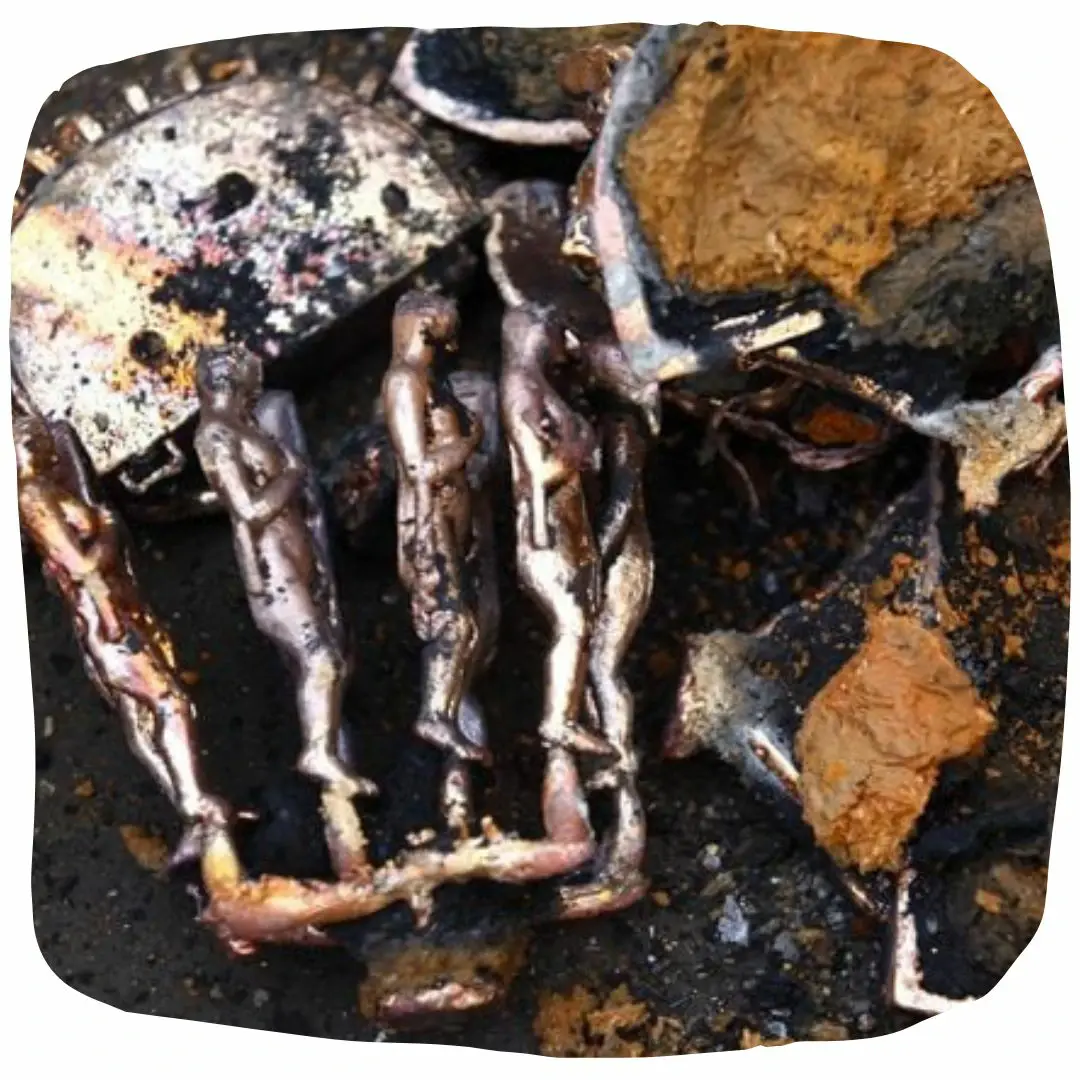
At this stage, a hollow mould in the shape of the deity is
obtained.
This is the time to pour liquid copper into the hollow mould which is then allowed to cool and harden inside a container of cold water. When the liquid metal has hardened, the mould is removed and the statue within is revealed.
This is the time to pour liquid copper into the hollow mould which is then allowed to cool and harden inside a container of cold water. When the liquid metal has hardened, the mould is removed and the statue within is revealed.
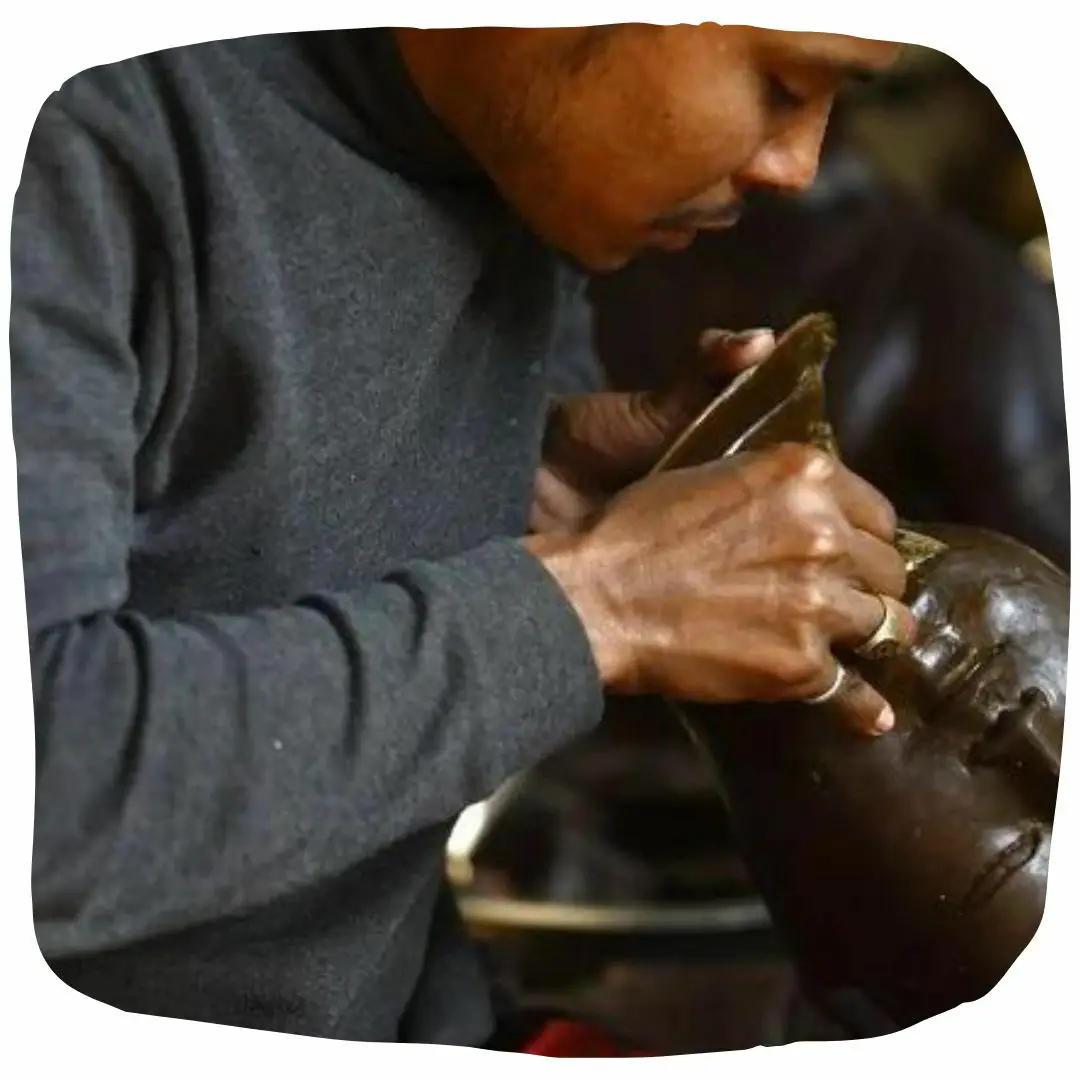
The artist works on the details of the statue using various tools.
It is then polished to get a shiny and lustrous surface.
Now comes the most important part of Nepalese art which is gold gilding. This is done by the traditional fire gilding method. A mixture of mercury and 18K gold is applied on the surface of the statue and heat is applied using a flame torch. The result is that mercury evaporates along with impurities, leaving a pure 24K gold finish.
Now comes the most important part of Nepalese art which is gold gilding. This is done by the traditional fire gilding method. A mixture of mercury and 18K gold is applied on the surface of the statue and heat is applied using a flame torch. The result is that mercury evaporates along with impurities, leaving a pure 24K gold finish.
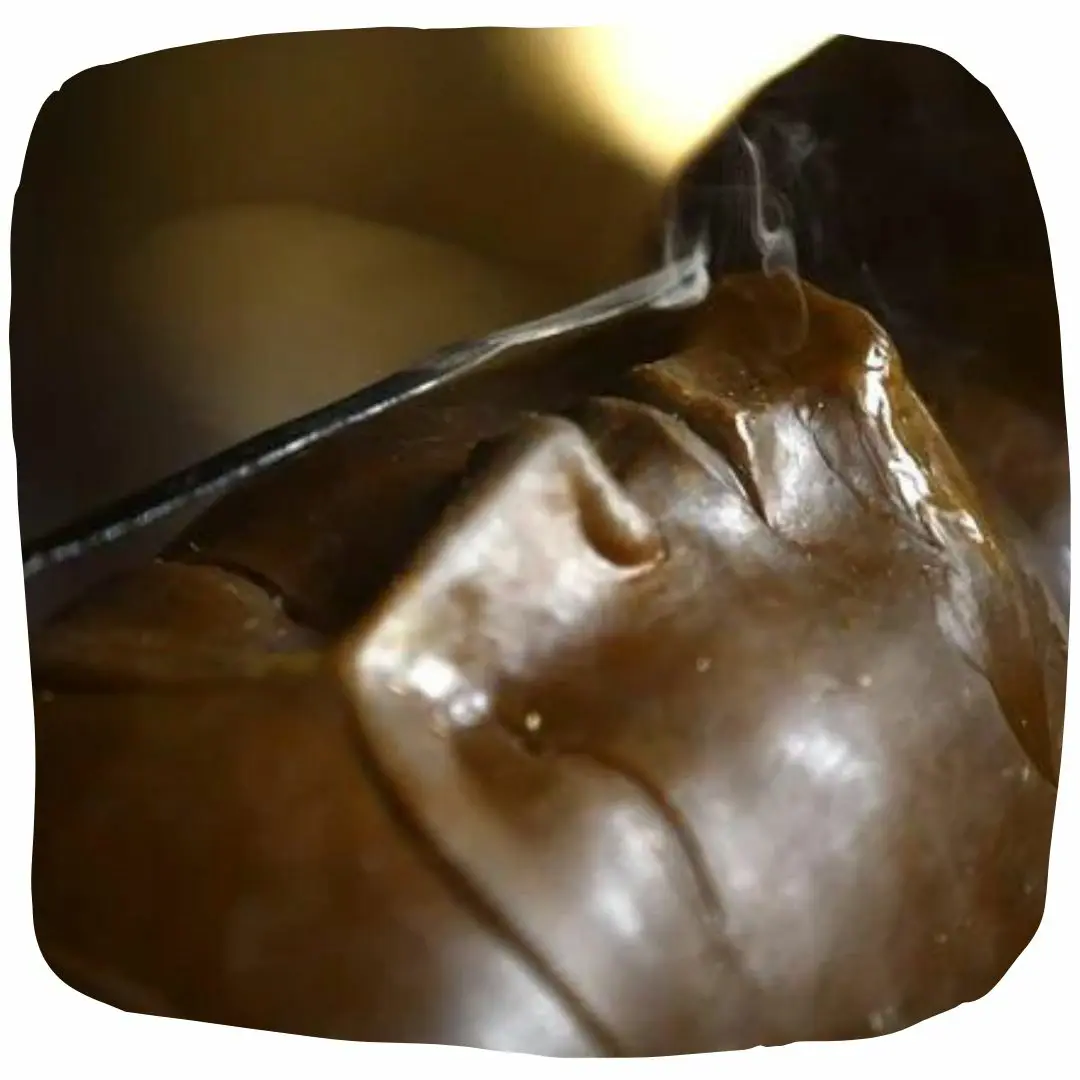
The lost-wax method of sculpting is the most preferred technique
for artists to cast a metallic statue having intricate details. Since Nepalese copper sculptures require extraneous effort for giving a majestic look by adding special embellishments, it takes several weeks to complete one masterpiece. A 24K gold gilded copper sculpture retains its brilliant luster for many years and appears as like before. Nepalese sculptures continue to remain one of the finest specimens of the art of the East that have a strong aesthetic appeal that other sculptures cannot match.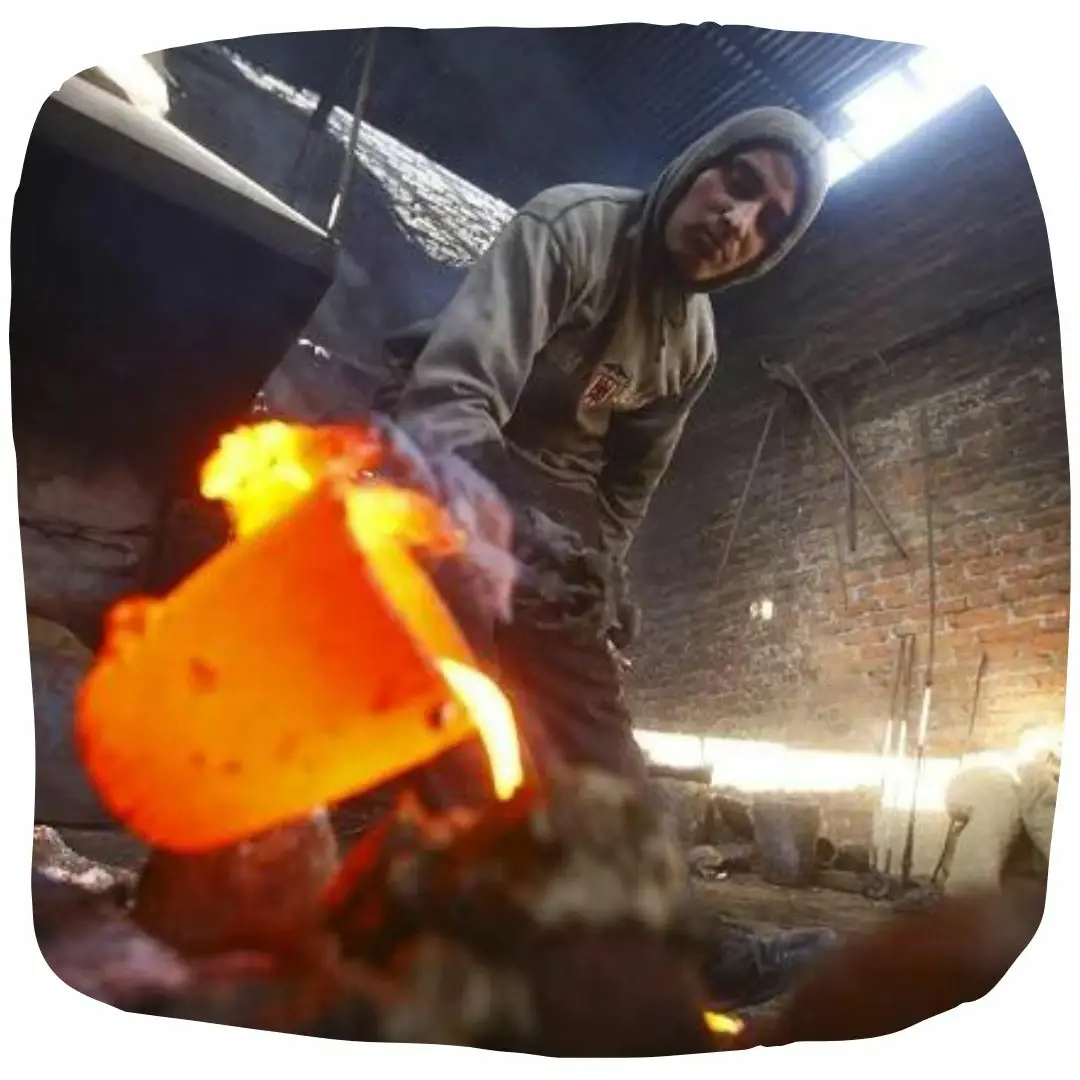
Products related to this item
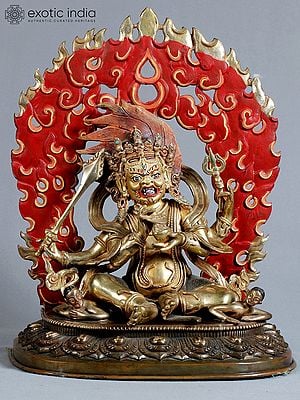
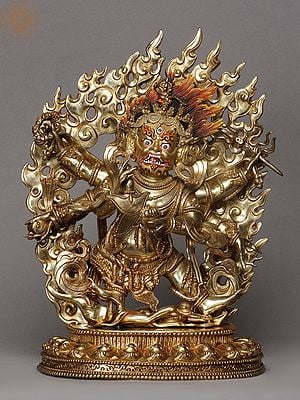
15 inch Height X 12 inch Width X 6 inch Depth
$1702
Includes any tariffs and taxes
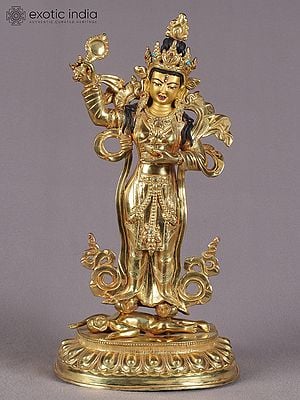
12 inch Height X 10 inch Width X 6 inch Depth
$1691
Includes any tariffs and taxes
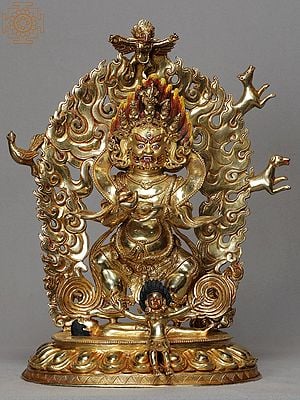
14 inch Height X 7 inch Width X 4 inch Depth
$1426
Includes any tariffs and taxes
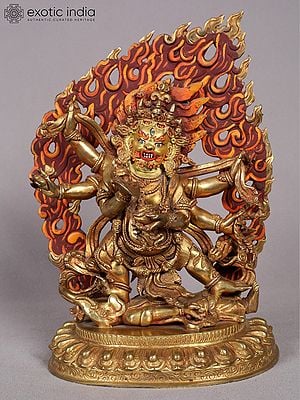
12 inch Height X 10 inch Width X 6 inch Depth
$1558
Includes any tariffs and taxes
9.00 inch Height X 7.00 inch Width X 3.00 inch Depth
$1886
Includes any tariffs and taxes
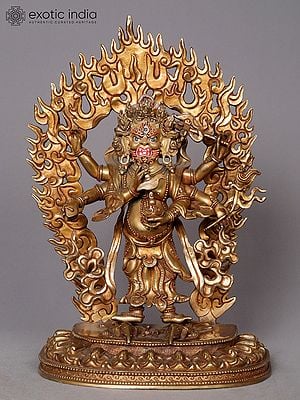
12 inch Height X 7.5 inch Width X 4 inch Depth
$1144
Includes any tariffs and taxes
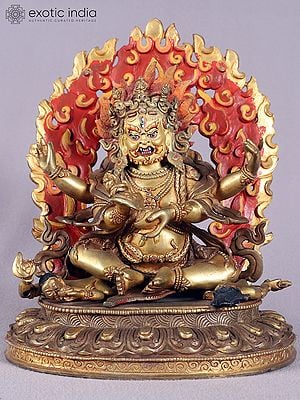
9.5 inch Height X 7.5 inch Width X 4 inch Depth
$926
Includes any tariffs and taxes
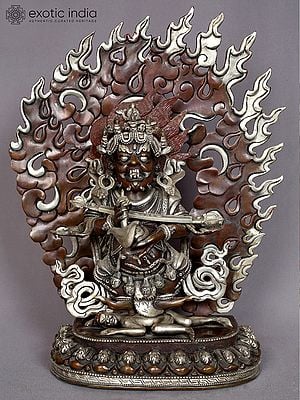
14.00 inch Height X 10.00 inch Width X 5.00 inch Depth
$1300
Includes any tariffs and taxes
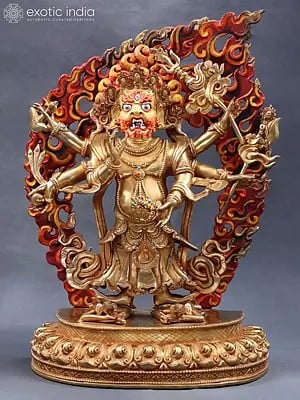
13.50 inch Height x 10.00 inch Width x 5.00 inch Depth
$834.90
Express Shipping
$1518 45% off
Includes any tariffs and taxes
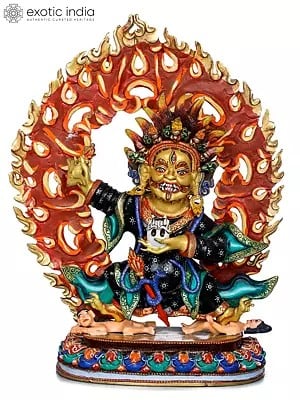
13.00 inch Height x 10.50 inch Width x 4.20 inch Depth
$904.75
Express Shipping
$1645 45% off
Includes any tariffs and taxes
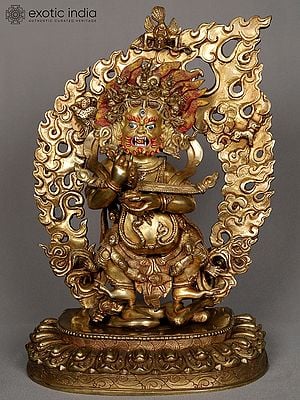
13 inch Height X 9.5 inch Width X 5 inch Depth
$1190
Includes any tariffs and taxes