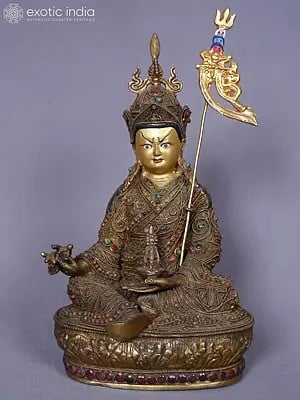
Guru Padmasambhava Seated Statue from Nepal
$4313
Includes any tariffs and taxes

Only 1 available
Notify me when this item is available
| Specifications |
 |
CAA190 |
 |
Copper With Gold |
 |
Height: 31 inch |
| Width: 17 inch | |
| Depth: 13.5 inch | |
 |
Weight 15.50 kg |
| About the Item |
|
| Delivery and Return Policies |
 |
Usually ships in 6 days |
 |
Returns and Exchanges accepted within 7 days |
 |
Free Delivery |

Easy Returns

Fully Insured

100% Handmade
Born from
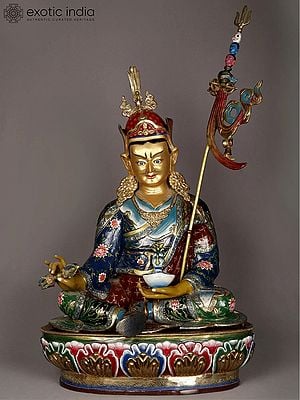
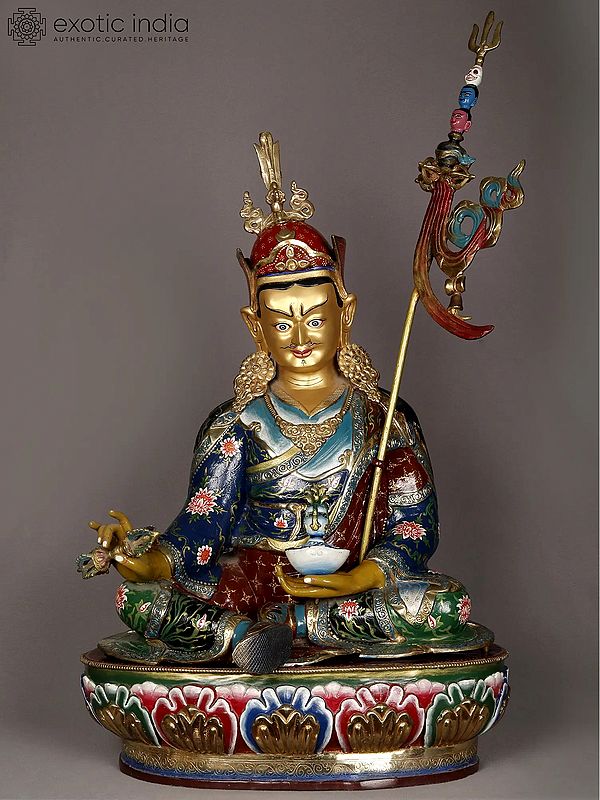
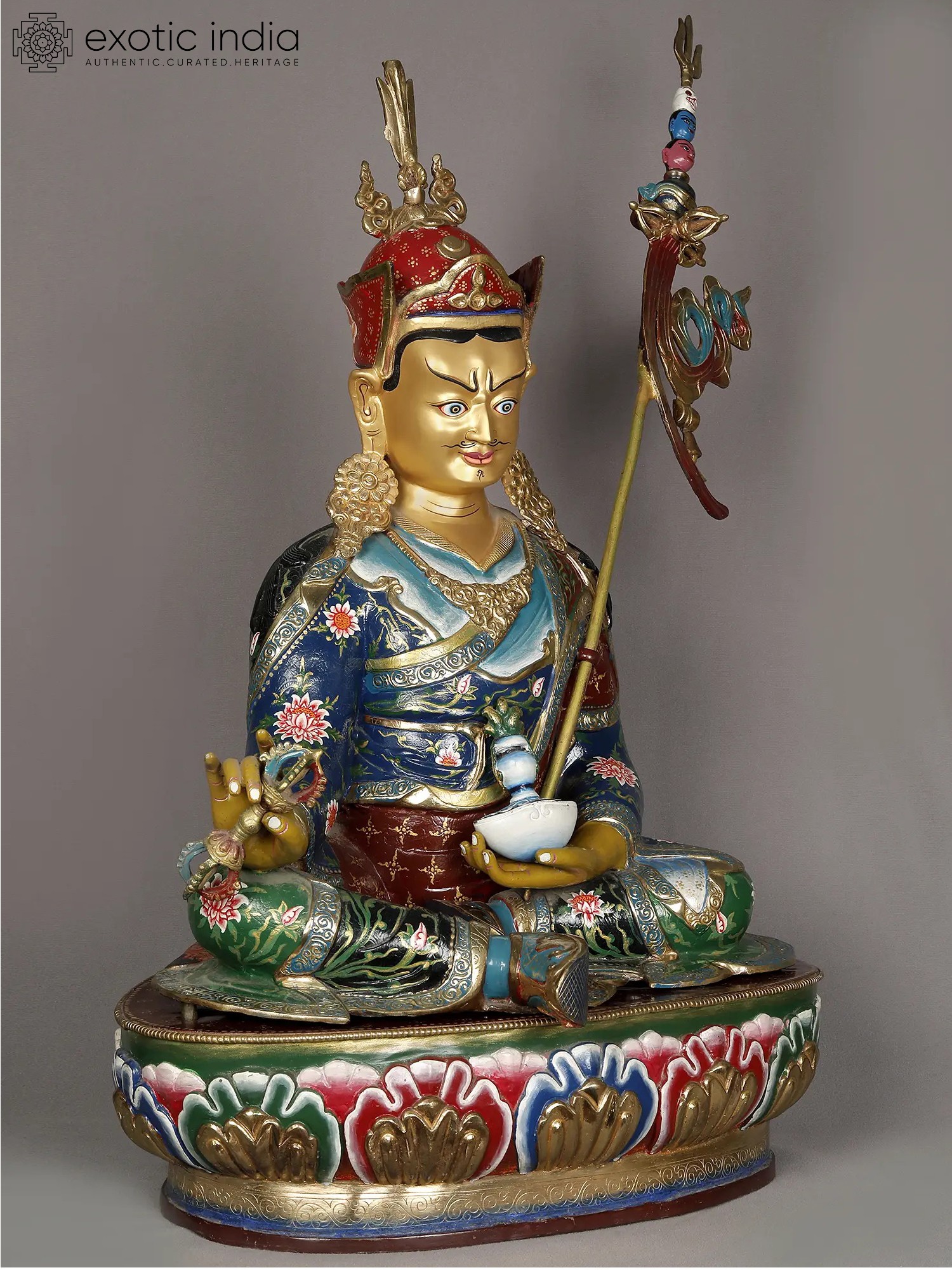
the lotus which is the symbol of supreme enlightenment in Buddhism, Guru
Padmasambhava represents the pinnacle of wisdom. In this gilded copper
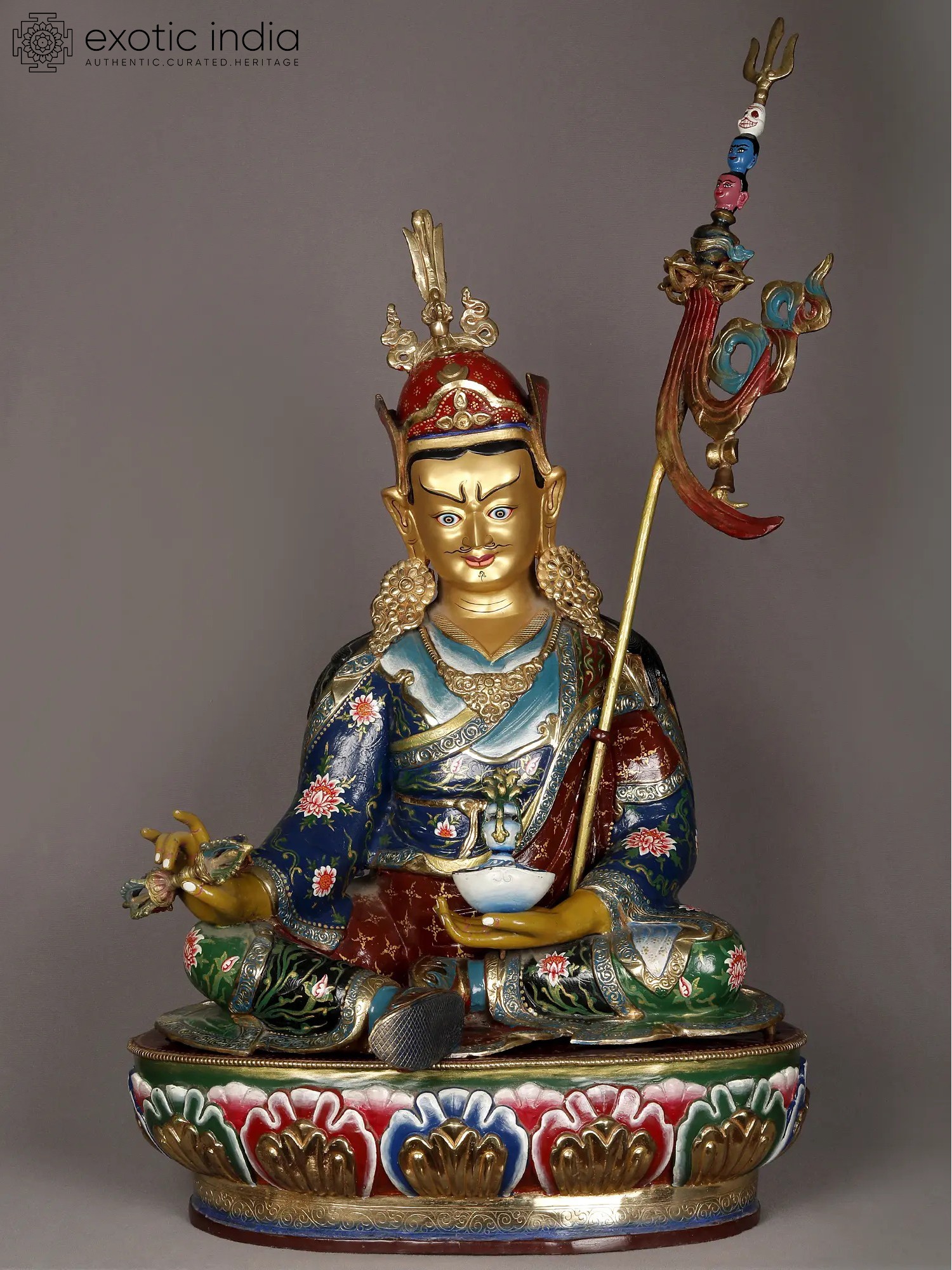
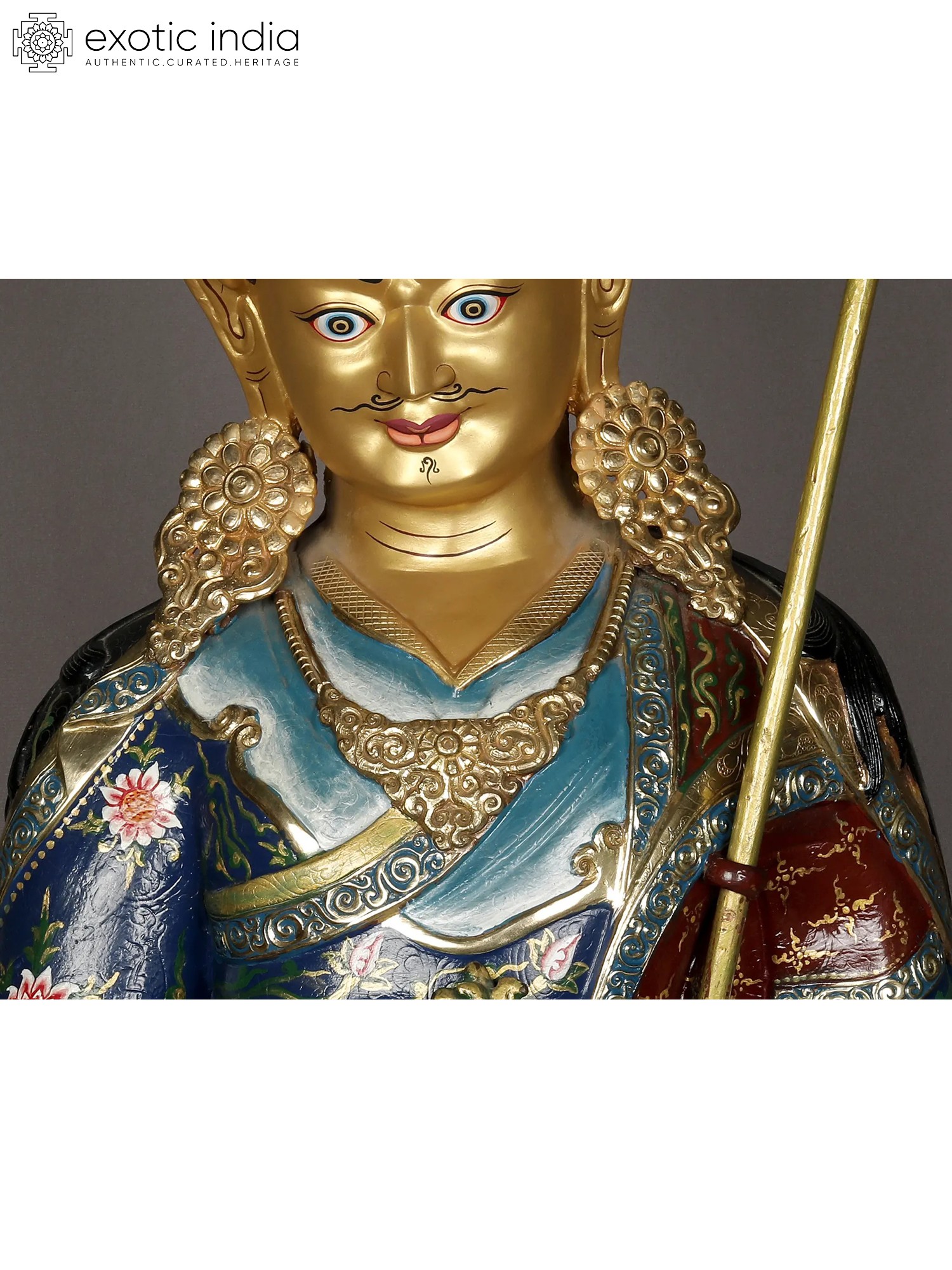
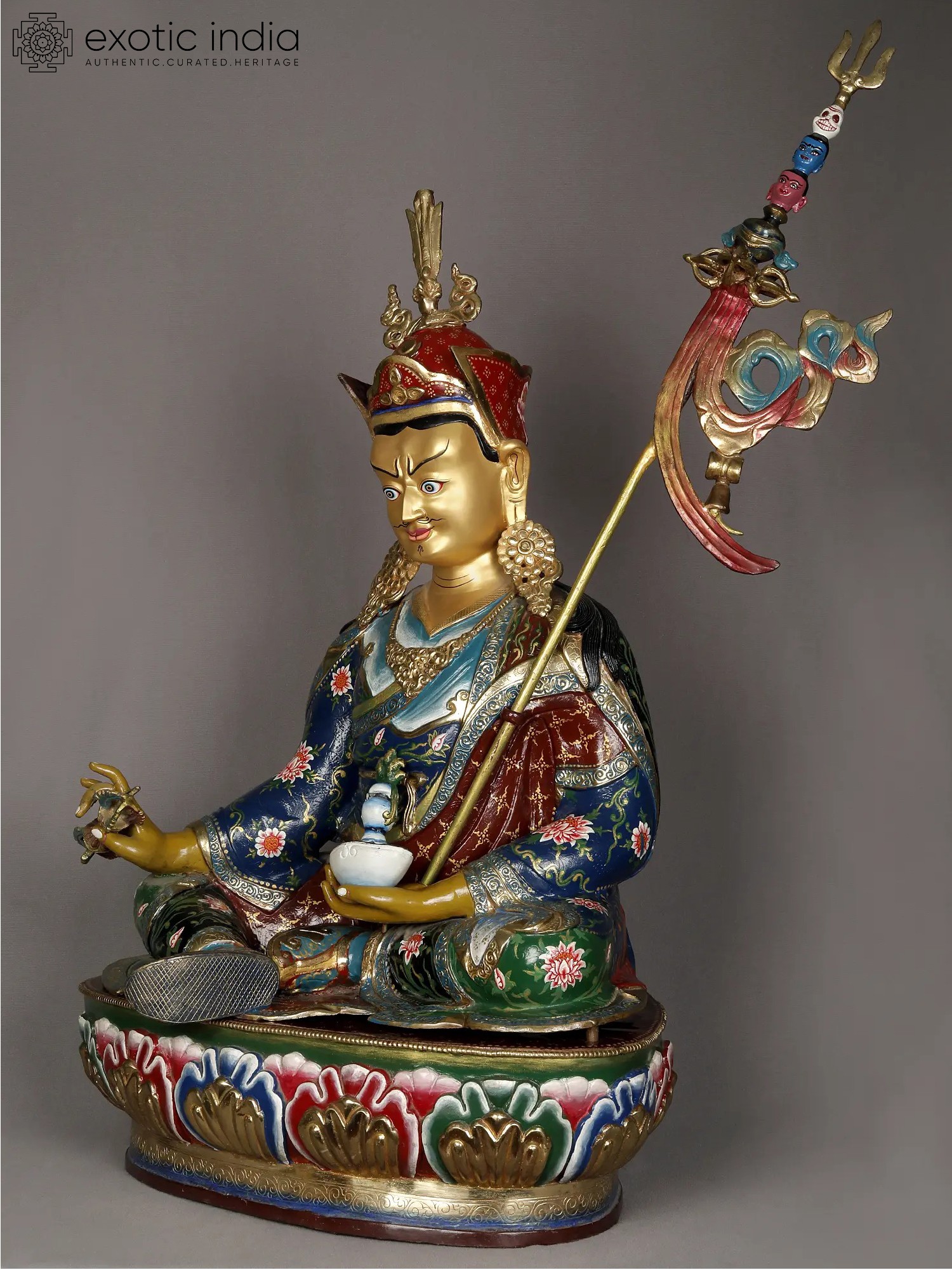
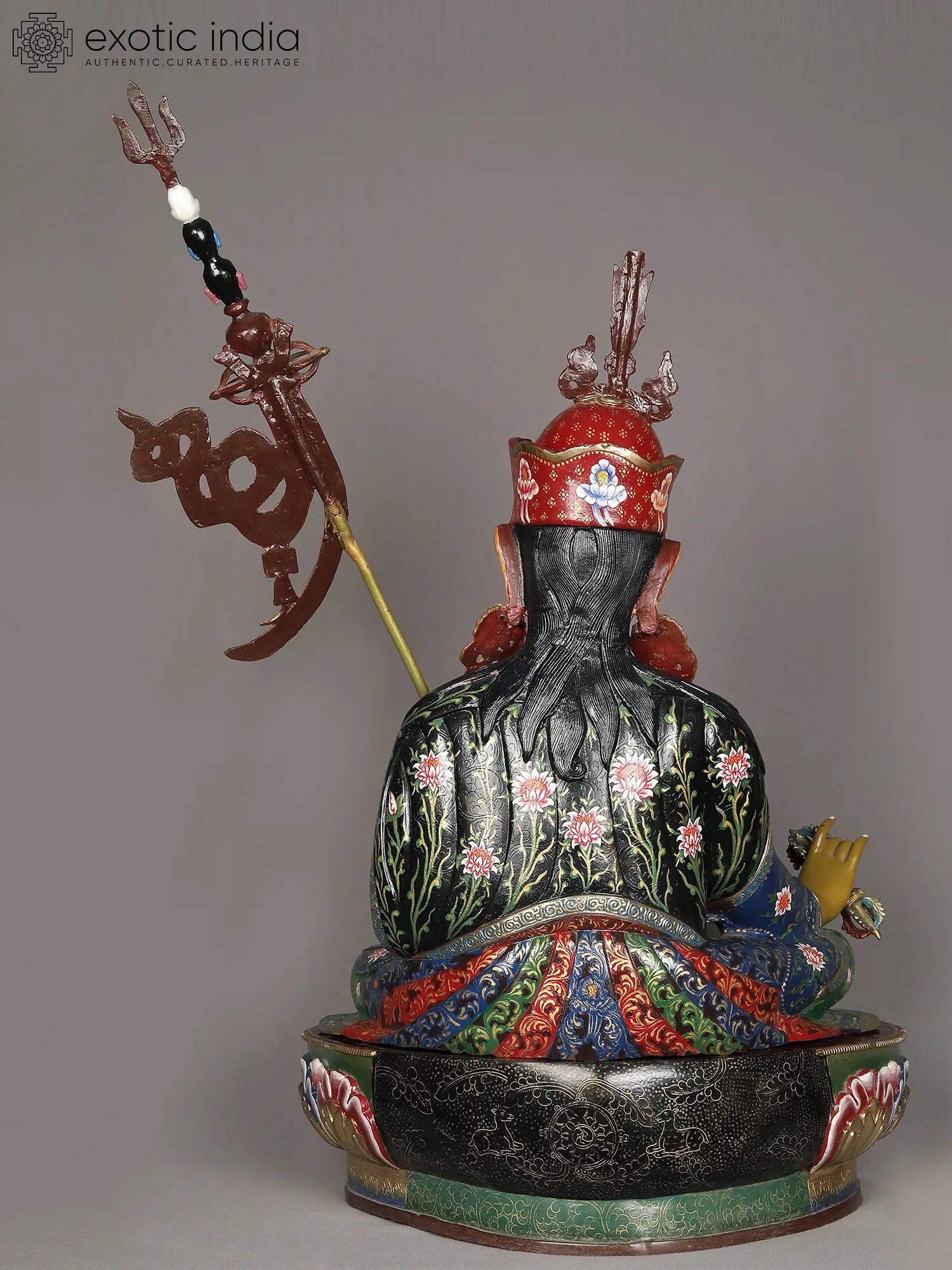
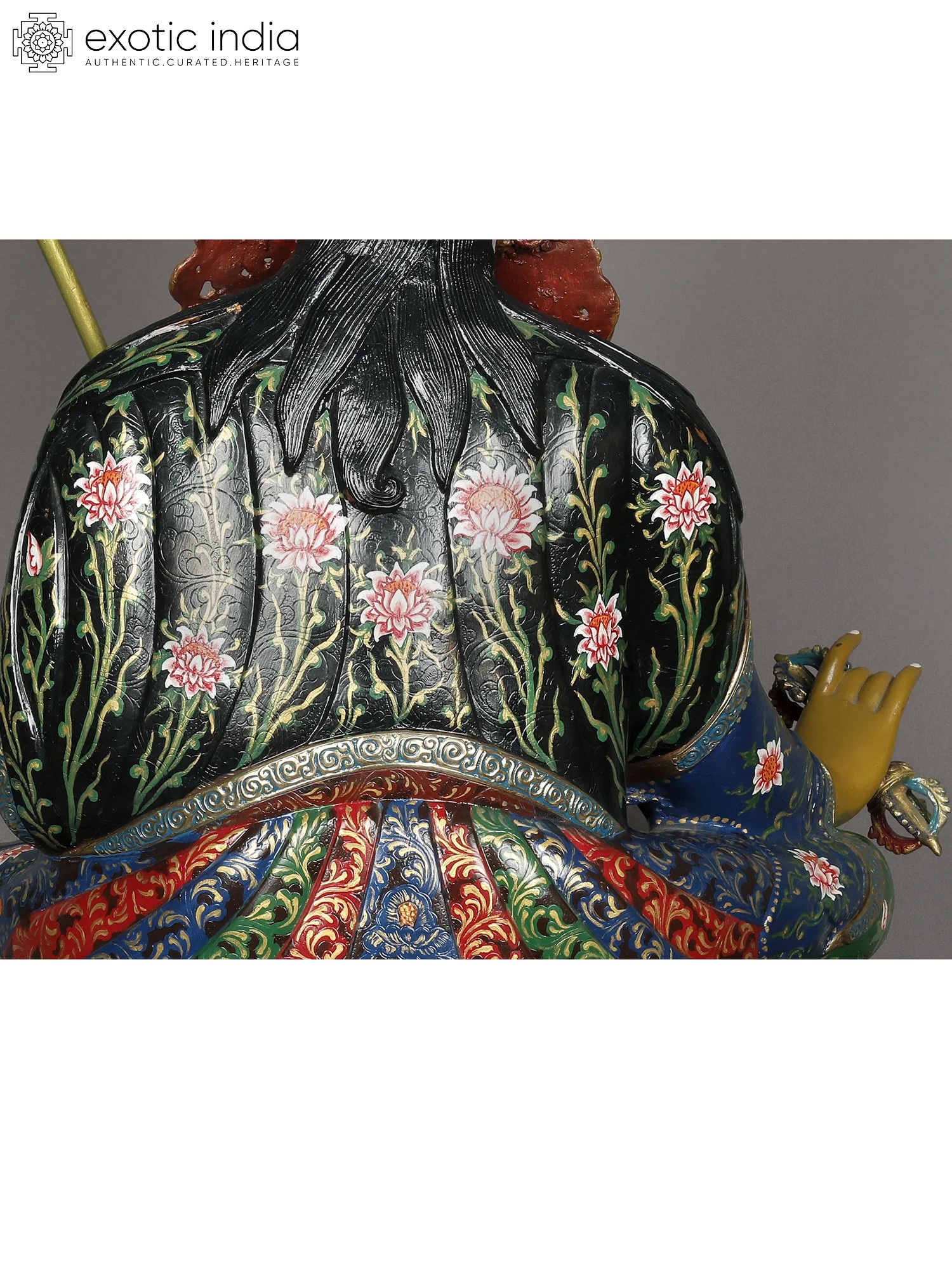
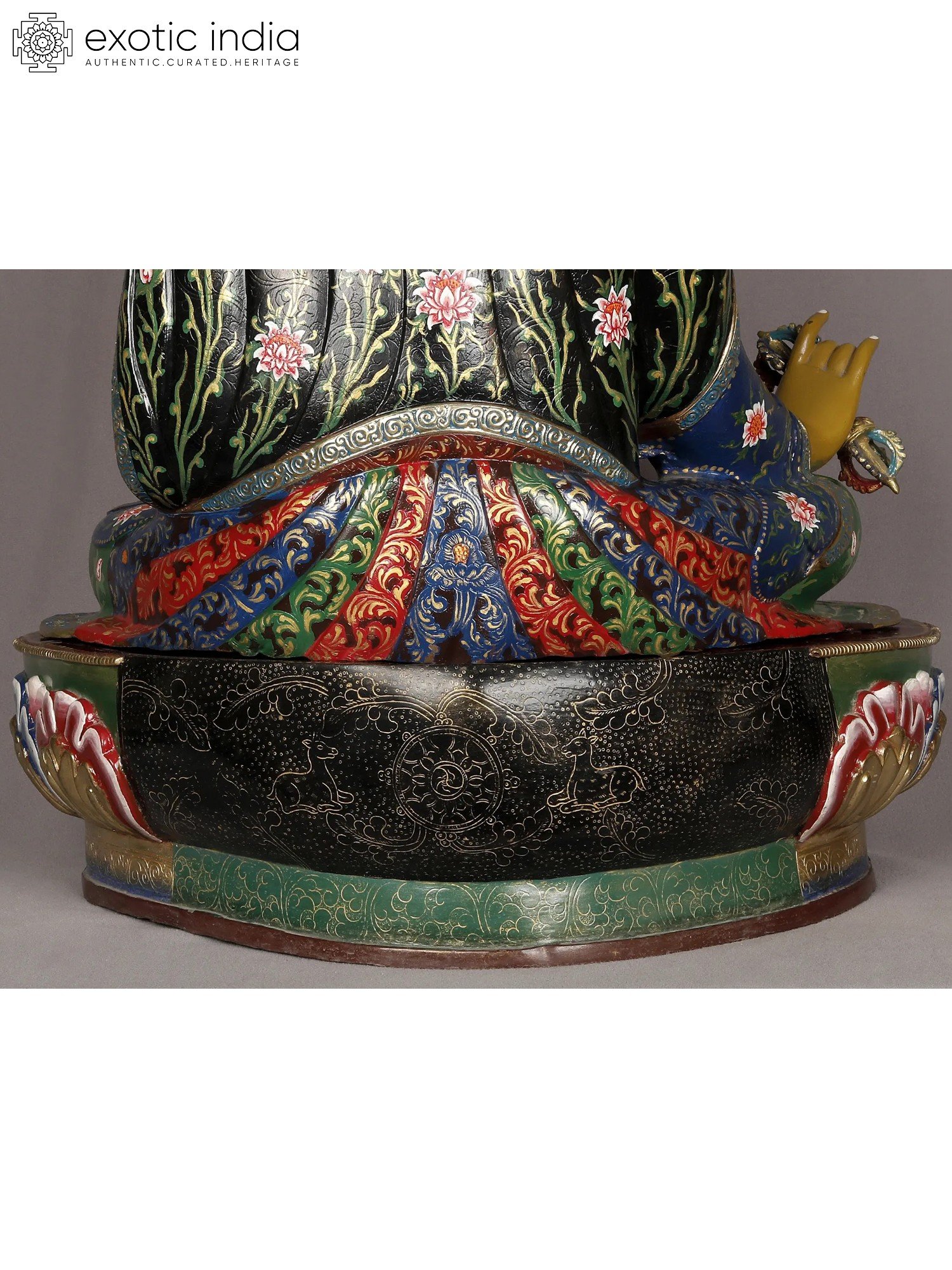
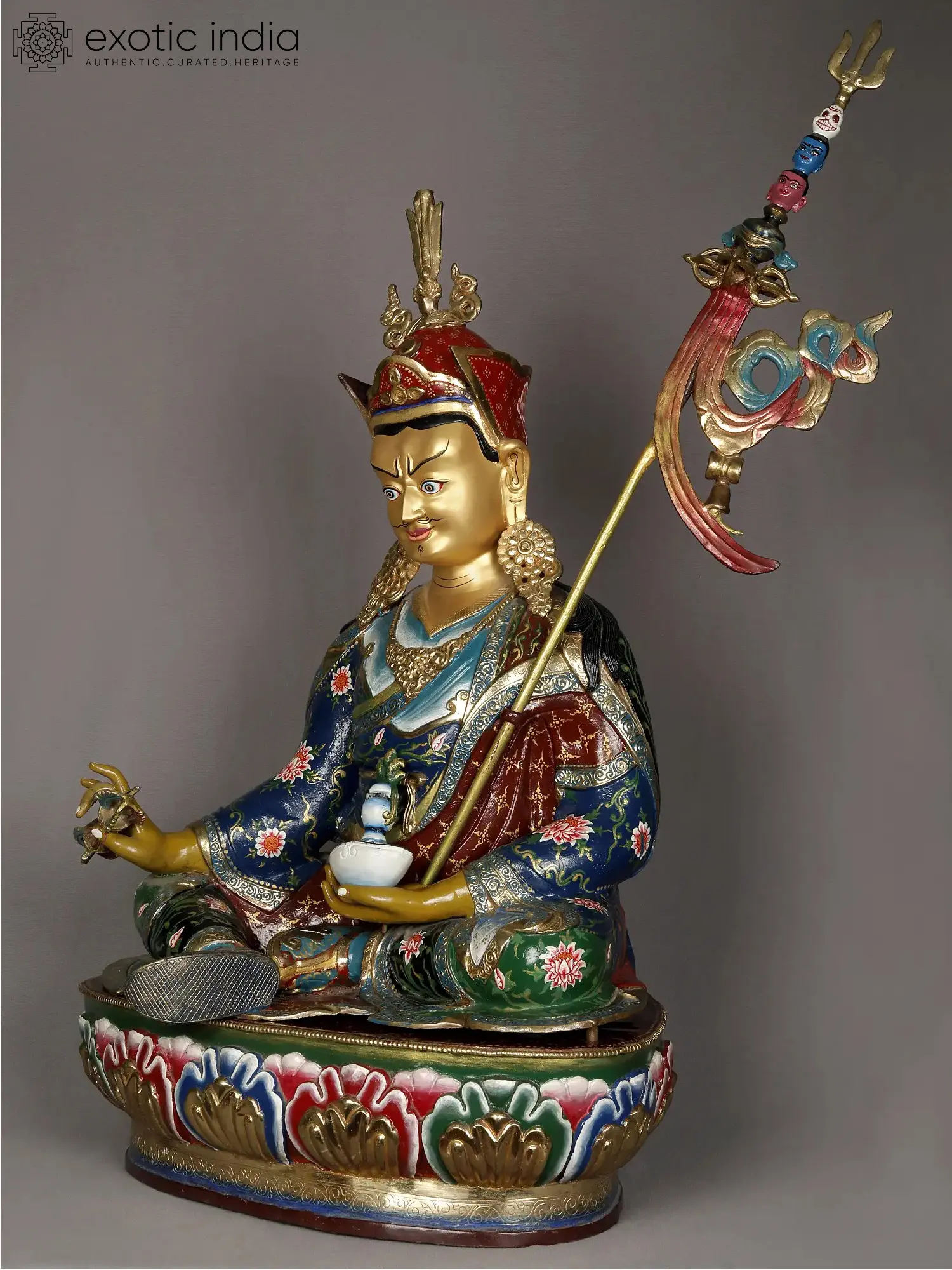
Padmasambhava statue from Nepal, Guru Padmasambhava is attired vibrantly, with
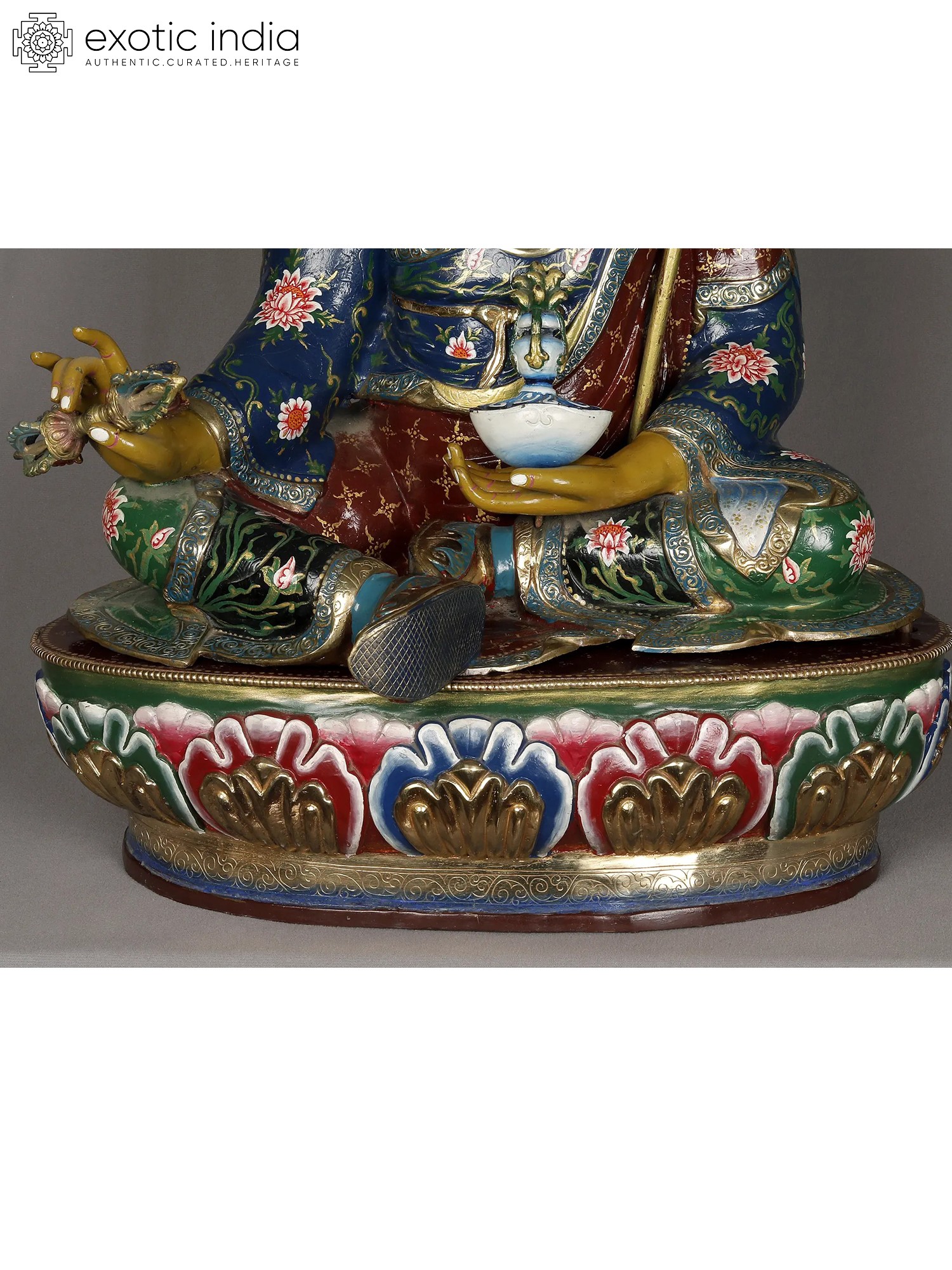
blooming lotuses patterned on it. With the pot of ambrosia, Vajra, and staff with
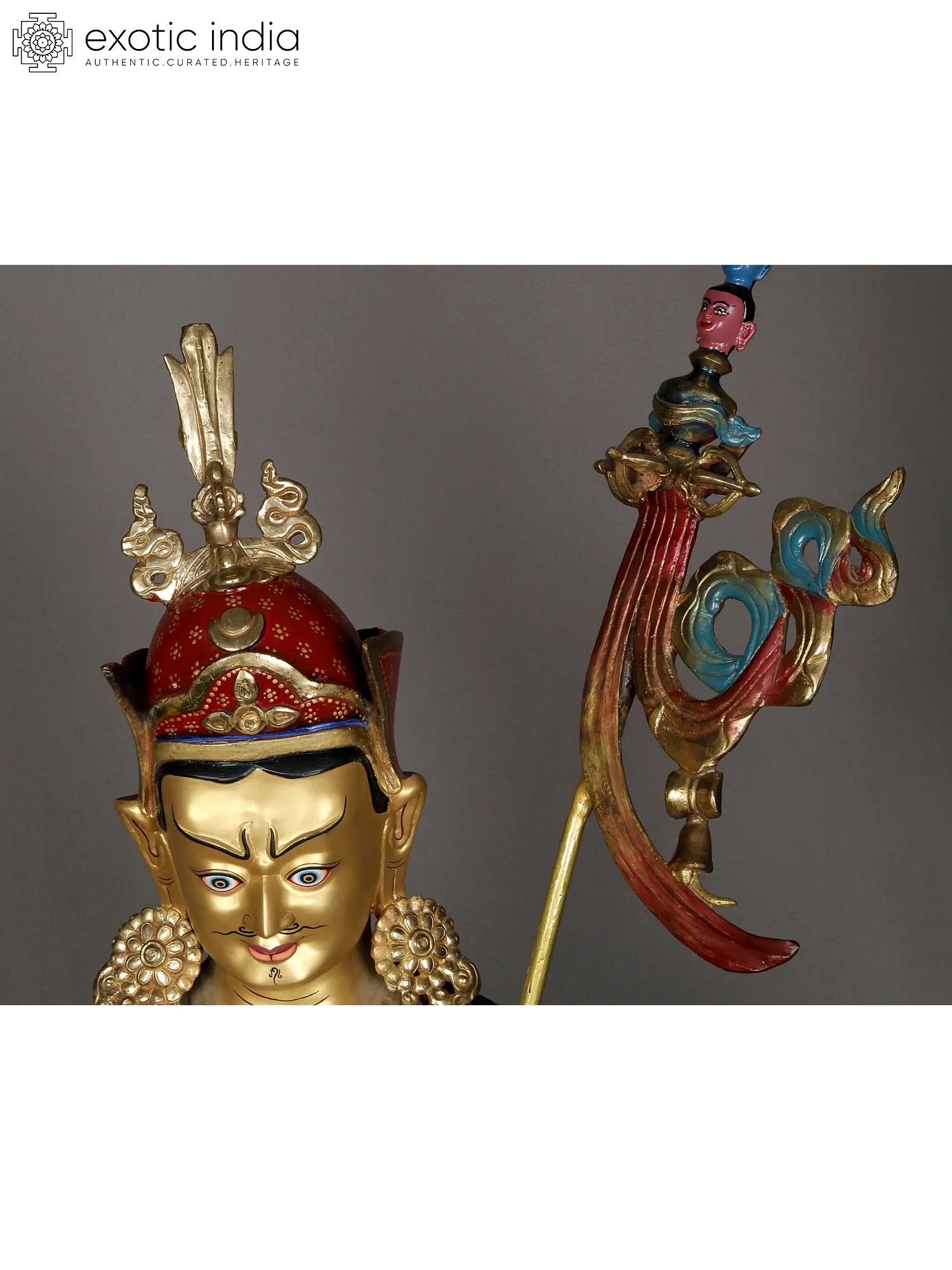
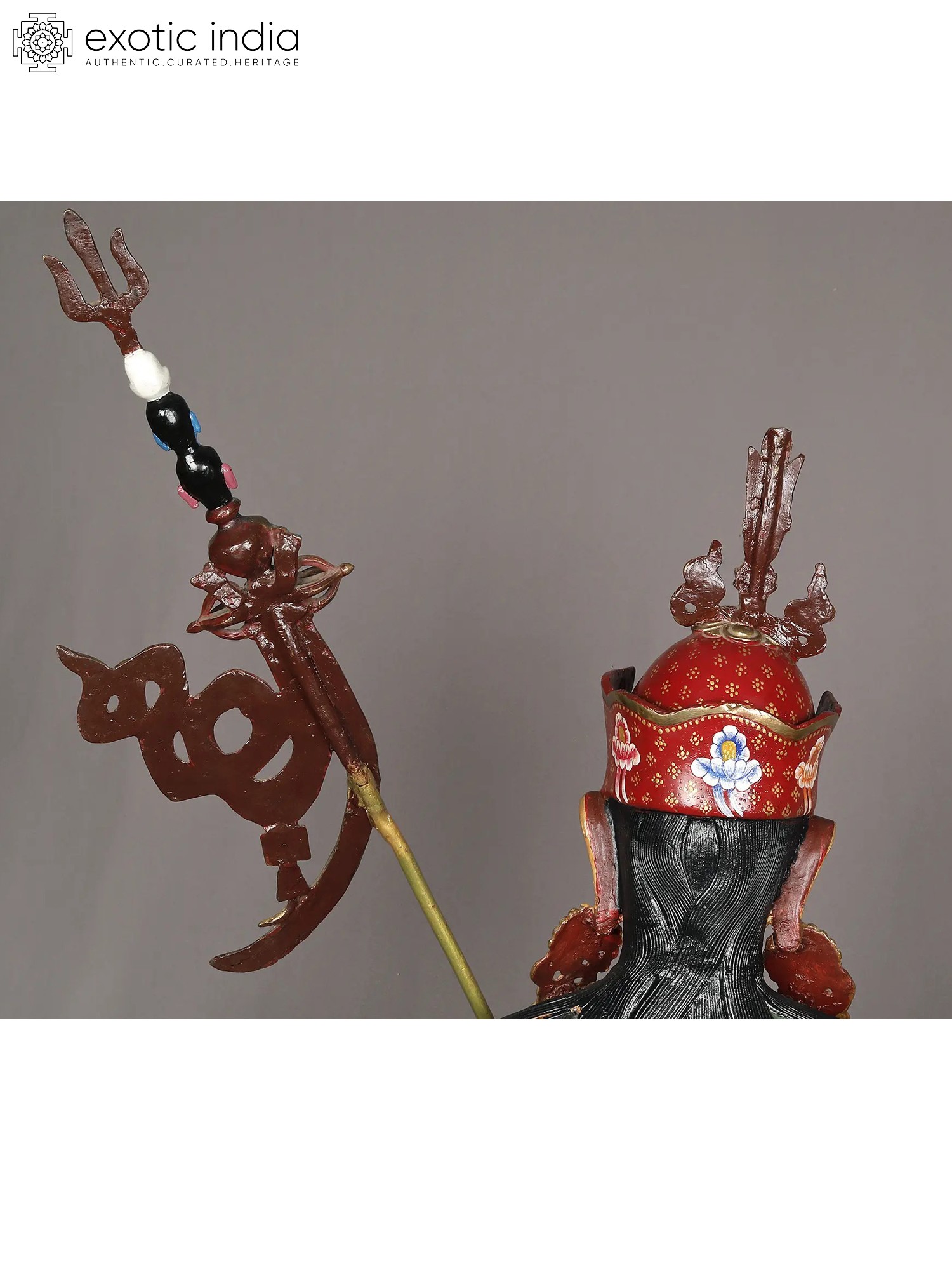
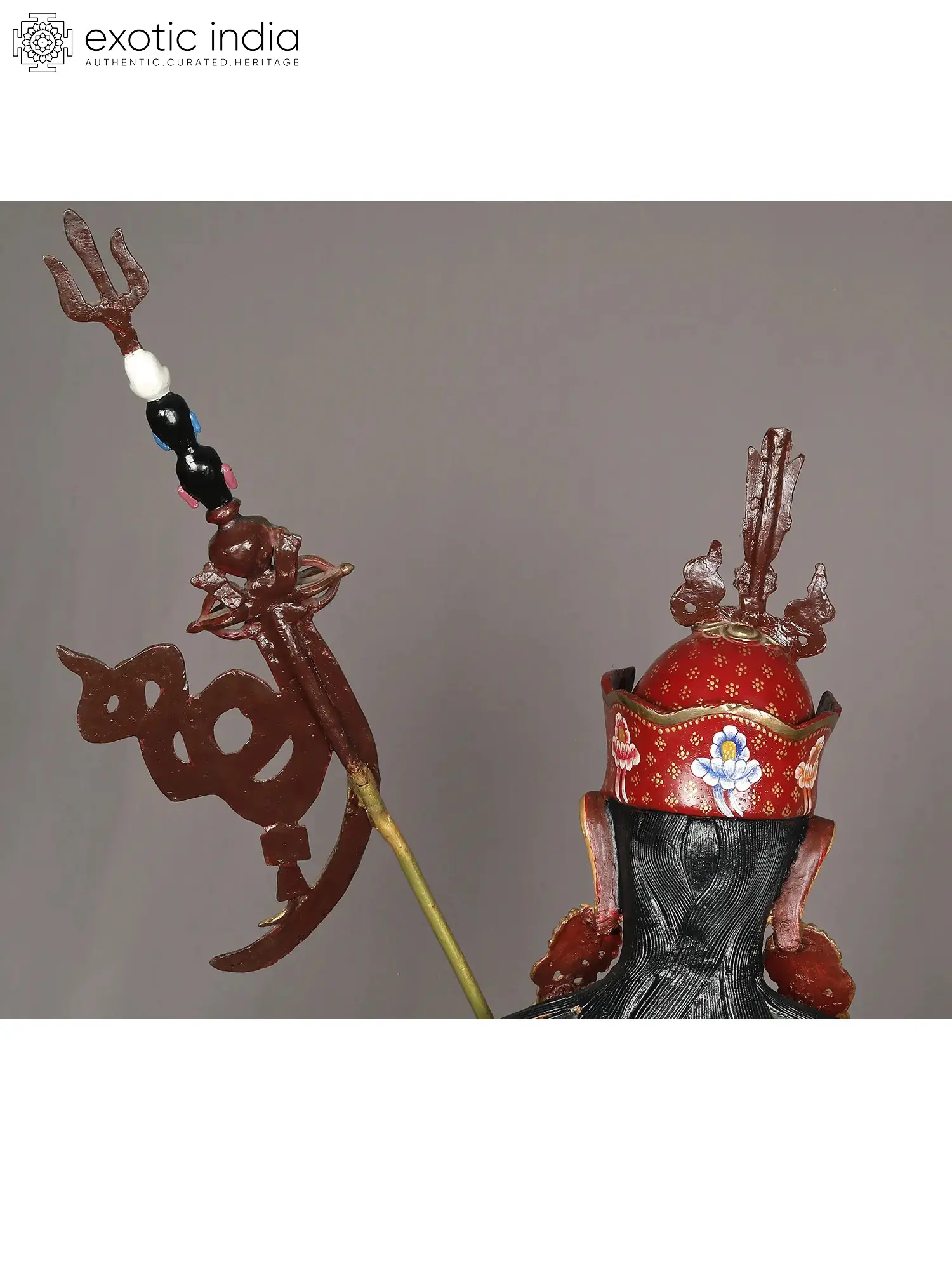
three heads presenting youth, old age, and death, Padmasambhava in this statue underlines
the impermanence of life while holding the nectar of knowledge in his hands.
Embodiment of a Guru: A Masterpiece of Nepalese Artistry
This magnificent statue captures the very essence of Guru Padmasambhava, also known as Guru Rinpoche, the "Precious Master." Revered as the second Buddha, he is credited with establishing Buddhism in Tibet in the 8th century. Crafted in Nepal, a land steeped in spiritual heritage, this exquisite piece is a testament to the profound artistry and devotion of its creators. The statue is rendered in copper, meticulously gilded with pure gold, bestowing upon it a radiant aura that speaks of divine presence and eternal wisdom.Iconography and Symbolism: A Vision of Enlightenment
Guru Padmasambhava is depicted here in his seated posture, a symbol of serene contemplation and unwavering stability. His facial features exude a benevolent wisdom, with eyes that seem to hold the secrets of the universe and a gentle smile that promises solace. He wears a jeweled crown, signifying his royal lineage and his mastery over all phenomena. His elaborate robes are adorned with intricate floral patterns, representing the blooming of enlightenment in the hearts of all beings. In one hand, he holds a kapala, a skull cup, symbolizing the transcendence of ego and the understanding of impermanence. In the other, he gestures with a Vajra, the diamond thunderbolt, representing indestructibility and the ultimate reality. Perched atop his staff is a symbolic ghanta, or bell, accompanied by a triptych of disembodied heads. The ghanta signifies the wisdom that cuts through ignorance, while the heads, often representing the overcoming of obstacles, are rendered in vivid, symbolic colors: white for the awakened mind, blue for compassion, and pink for the enlightened essence. This visual narrative unfolds the profound teachings of Padmasambhava, inviting contemplation and spiritual growth.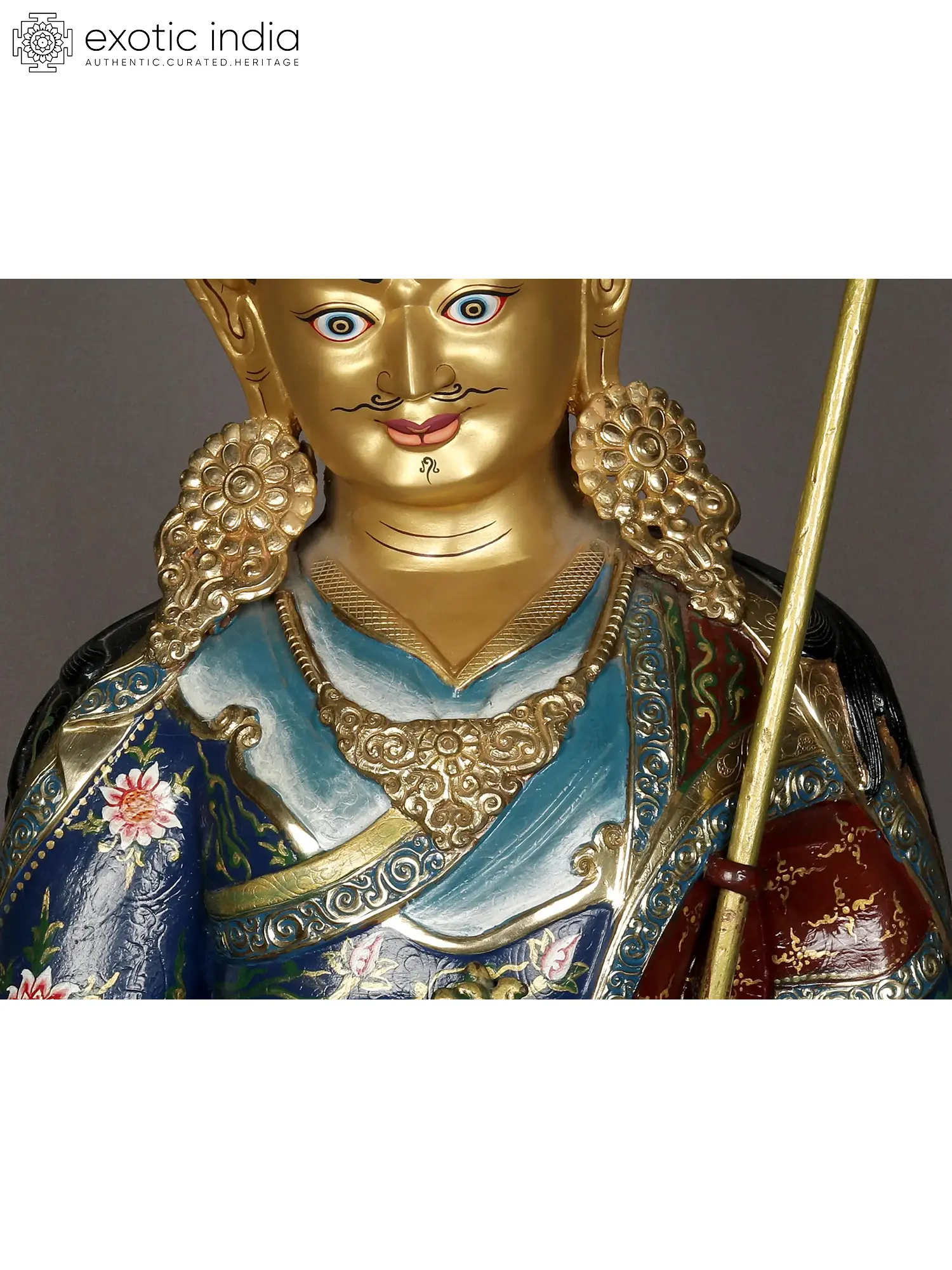
A Legacy of Spiritual Transmission: From India to Tibet
The story of Guru Padmasambhava is woven into the fabric of Tibetan Buddhism. He was born miraculously from a lotus flower in Uddiyana, a mythical land often associated with ancient India. Prophesied to bring the Dharma to the land of snows, he journeyed to Tibet at the request of King Trisong Detsen. There, he encountered fierce opposition from local deities and spirits who resisted the Dharma. Through his immense power and wisdom, Padmasambhava subdued these negative forces, transforming them into protectors of the Buddhist teachings. He is credited with establishing the Nyingma school of Tibetan Buddhism and is revered as the embodiment of the eight manifestations of the guru, each representing a different aspect of his enlightened activity. This statue, therefore, is not merely an artistic representation, but a tangible connection to this powerful lineage and the transformative teachings of the Precious Master.Craftsmanship and Devotion: A Sacred Object
The meticulous craftsmanship evident in this statue speaks volumes about the dedication of the Nepalese artisans. The use of copper as a base material ensures durability and a rich patina over time, while the liberal application of gold leaf imbues the piece with a divine luminescence. Every detail, from the delicate folds of the silk robes to the expressive contours of the face and the symbolic accouterments, is rendered with exceptional precision and care. The vibrant polychrome accents on the robes and the lotus throne further enhance the visual splendor, creating a masterpiece that is both awe-inspiring and spiritually resonant. This statue is intended to be more than just a decorative object; it is a sacred icon, designed to facilitate meditation, inspire devotion, and serve as a constant reminder of the path to enlightenment. Its substantial presence makes it a commanding centerpiece for any altar or sacred space, inviting contemplation and a deeper connection to the spiritual legacy of Guru Padmasambhava.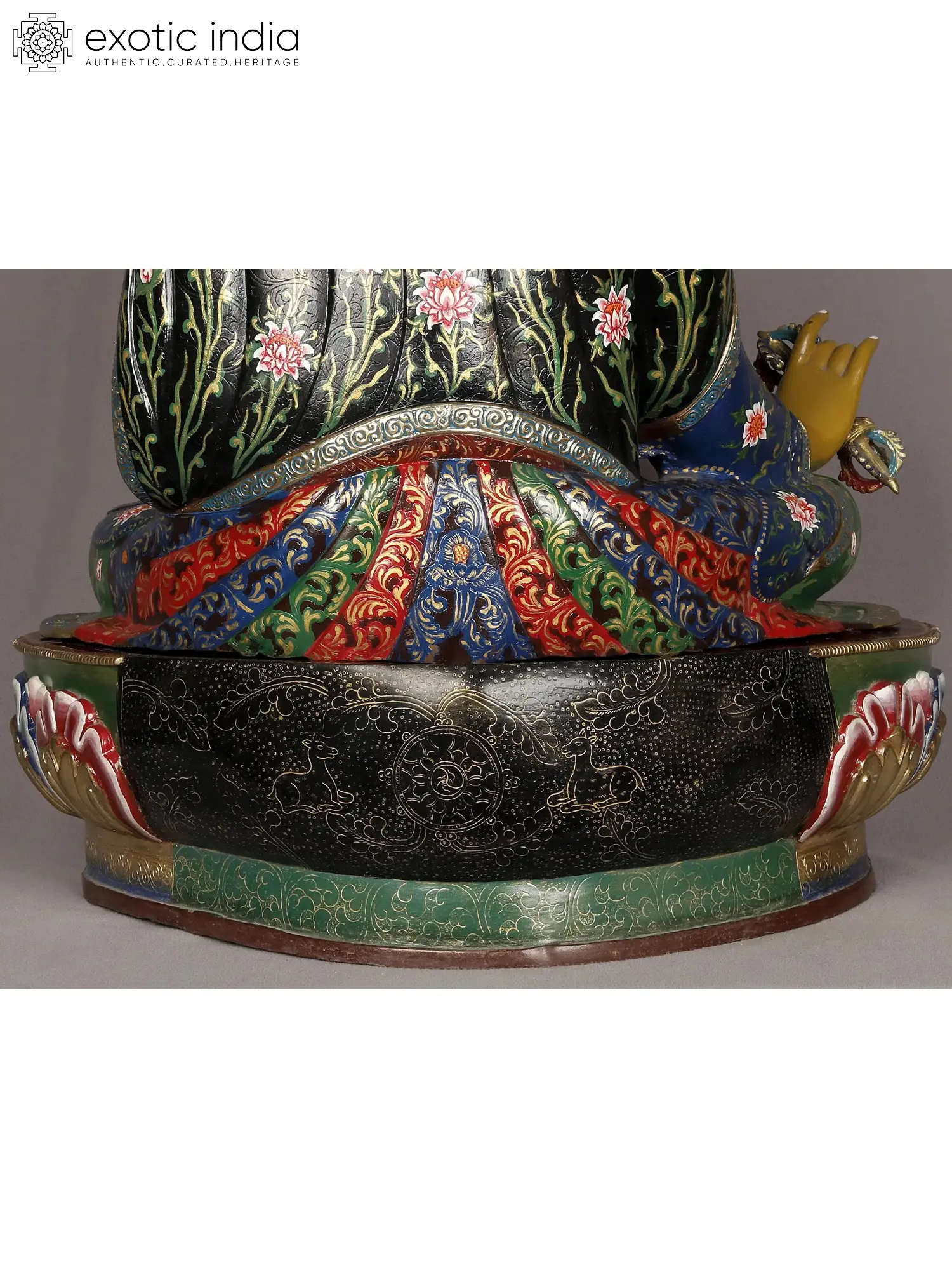
How are Nepalese copper statues made?
Nepalese statues and sculptures are best known for their unique
small religious figures and ritual paraphernalia for over two
thousand years. These are mainly cast in copper alloy. Nepal draws
influences from the artistic styles of Buddhism and Hinduism, and
therefore the sculptors of the country specialize in making the
icons of both these religions. Over the years, Nepalese sculptures
evolved into their own distinctive iconography. Some
characteristic features of these sculptures that differ from other
pieces are exaggerated physical postures, youthful and sensual
features, languid eyes, wider faces having serene expressions, and
ornate flourishes. The Buddhist deity icons of Nepal have
tremendous demand in countries such as China and Tibet for ritual
purposes in their temples and monasteries.
Nepalese statues and sculptures have a high copper content and therefore develop a slightly reddish patina on the surface as they age. However, the most unique feature of Nepalese copper statues is their decorative detailing. The pieces are heavily gilded and sometimes inlaid with semi-precious stones. This embellishment protects them from getting tarnished. The traditional lost-wax method for casting Nepalese copper statues remains the most practiced technique in Nepal for many centuries. This process involves many steps and requires skilled artists.
The first step in lost-wax sculpting is to make a wax replica of the desired Buddhist deity to be cast in copper. This replica is created by hand and therefore needs excellent artistic skills otherwise fine features will be lacking.
Once the wax replica is made, it is then coated with a special mixture of clay with a brush. This layer of clay is hardened when left to dry. A small hole is made on the base of the wax mould so that the wax flows away when it is heated.
Nepalese statues and sculptures have a high copper content and therefore develop a slightly reddish patina on the surface as they age. However, the most unique feature of Nepalese copper statues is their decorative detailing. The pieces are heavily gilded and sometimes inlaid with semi-precious stones. This embellishment protects them from getting tarnished. The traditional lost-wax method for casting Nepalese copper statues remains the most practiced technique in Nepal for many centuries. This process involves many steps and requires skilled artists.
The first step in lost-wax sculpting is to make a wax replica of the desired Buddhist deity to be cast in copper. This replica is created by hand and therefore needs excellent artistic skills otherwise fine features will be lacking.
Once the wax replica is made, it is then coated with a special mixture of clay with a brush. This layer of clay is hardened when left to dry. A small hole is made on the base of the wax mould so that the wax flows away when it is heated.
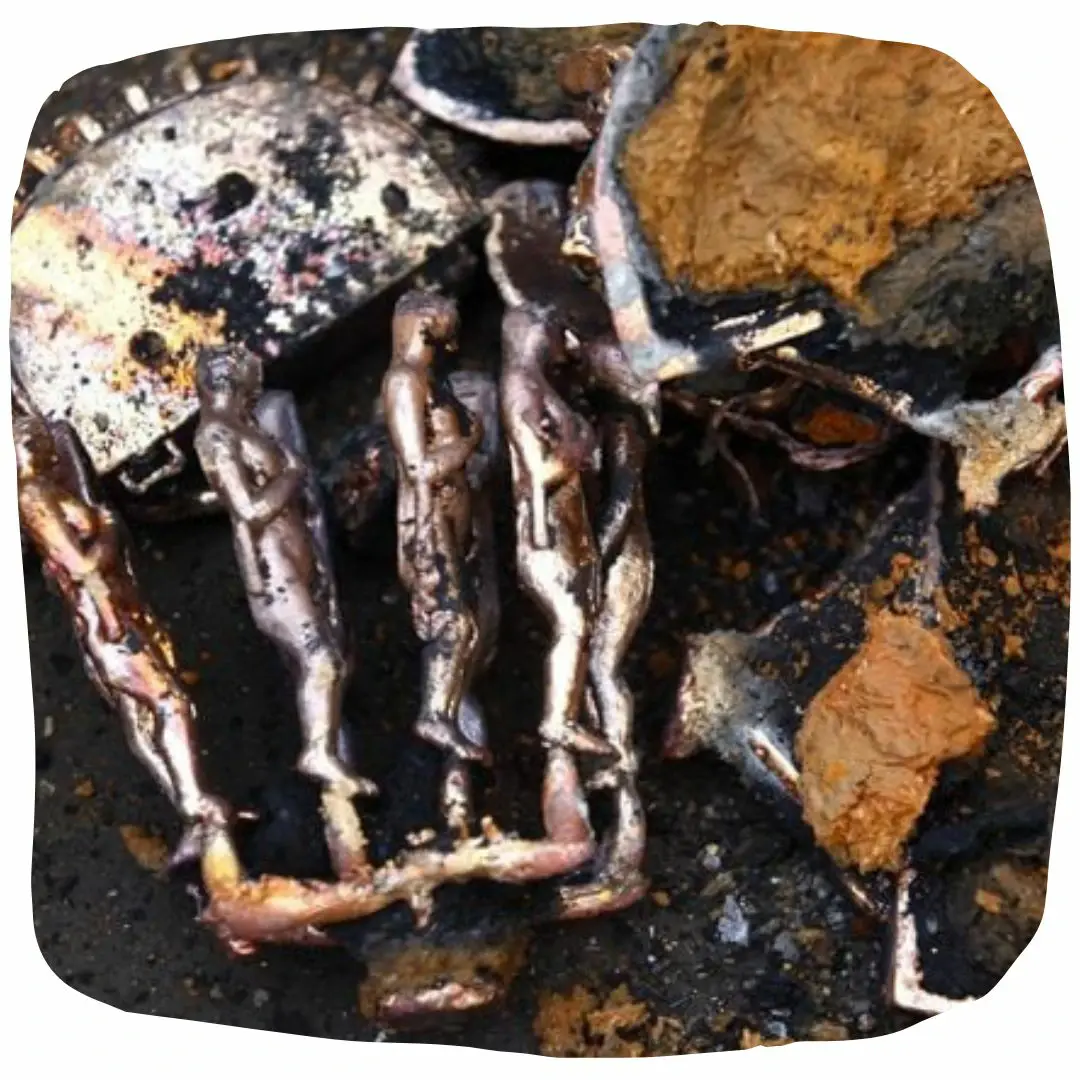
At this stage, a hollow mould in the shape of the deity is
obtained.
This is the time to pour liquid copper into the hollow mould which is then allowed to cool and harden inside a container of cold water. When the liquid metal has hardened, the mould is removed and the statue within is revealed.
This is the time to pour liquid copper into the hollow mould which is then allowed to cool and harden inside a container of cold water. When the liquid metal has hardened, the mould is removed and the statue within is revealed.
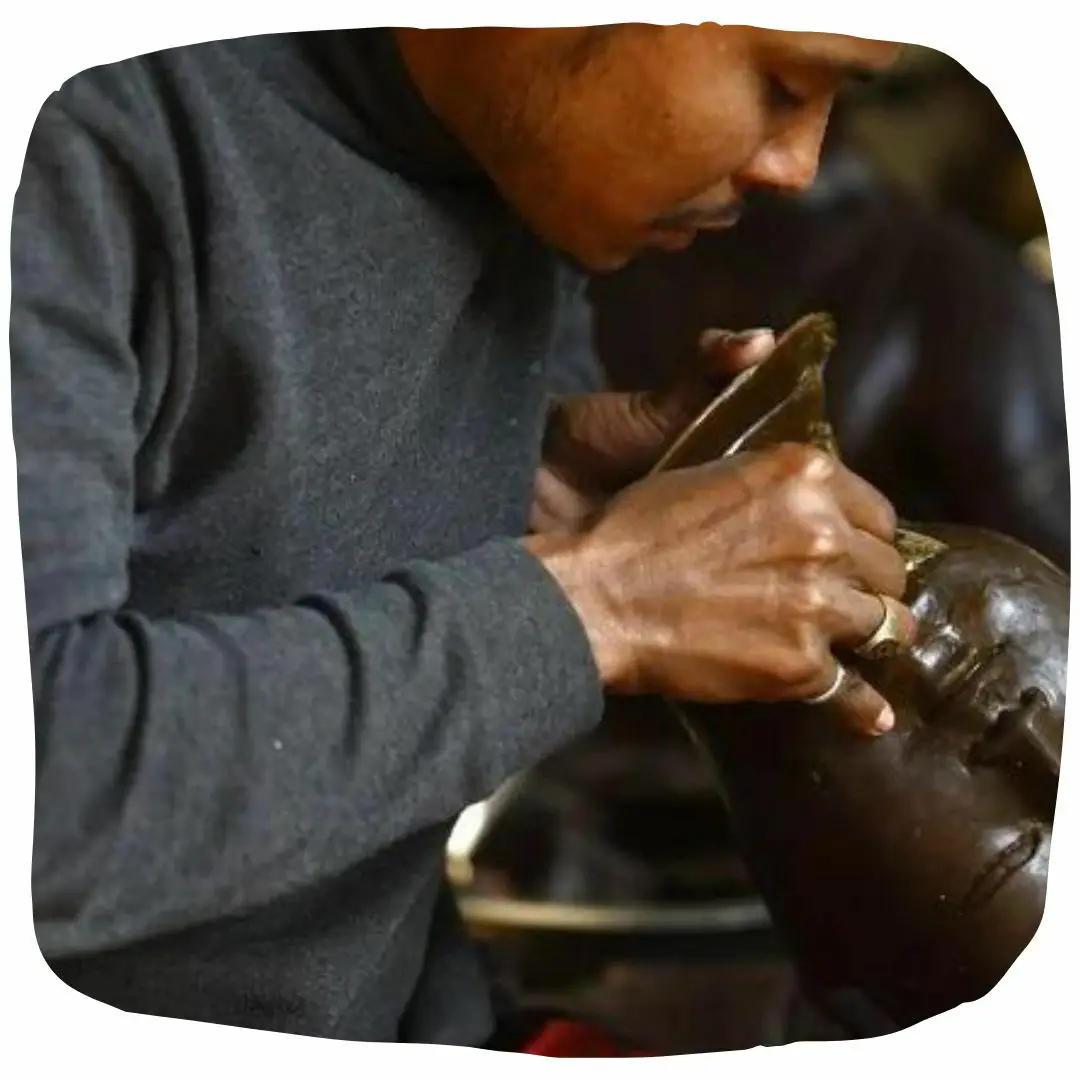
The artist works on the details of the statue using various tools.
It is then polished to get a shiny and lustrous surface.
Now comes the most important part of Nepalese art which is gold gilding. This is done by the traditional fire gilding method. A mixture of mercury and 18K gold is applied on the surface of the statue and heat is applied using a flame torch. The result is that mercury evaporates along with impurities, leaving a pure 24K gold finish.
Now comes the most important part of Nepalese art which is gold gilding. This is done by the traditional fire gilding method. A mixture of mercury and 18K gold is applied on the surface of the statue and heat is applied using a flame torch. The result is that mercury evaporates along with impurities, leaving a pure 24K gold finish.
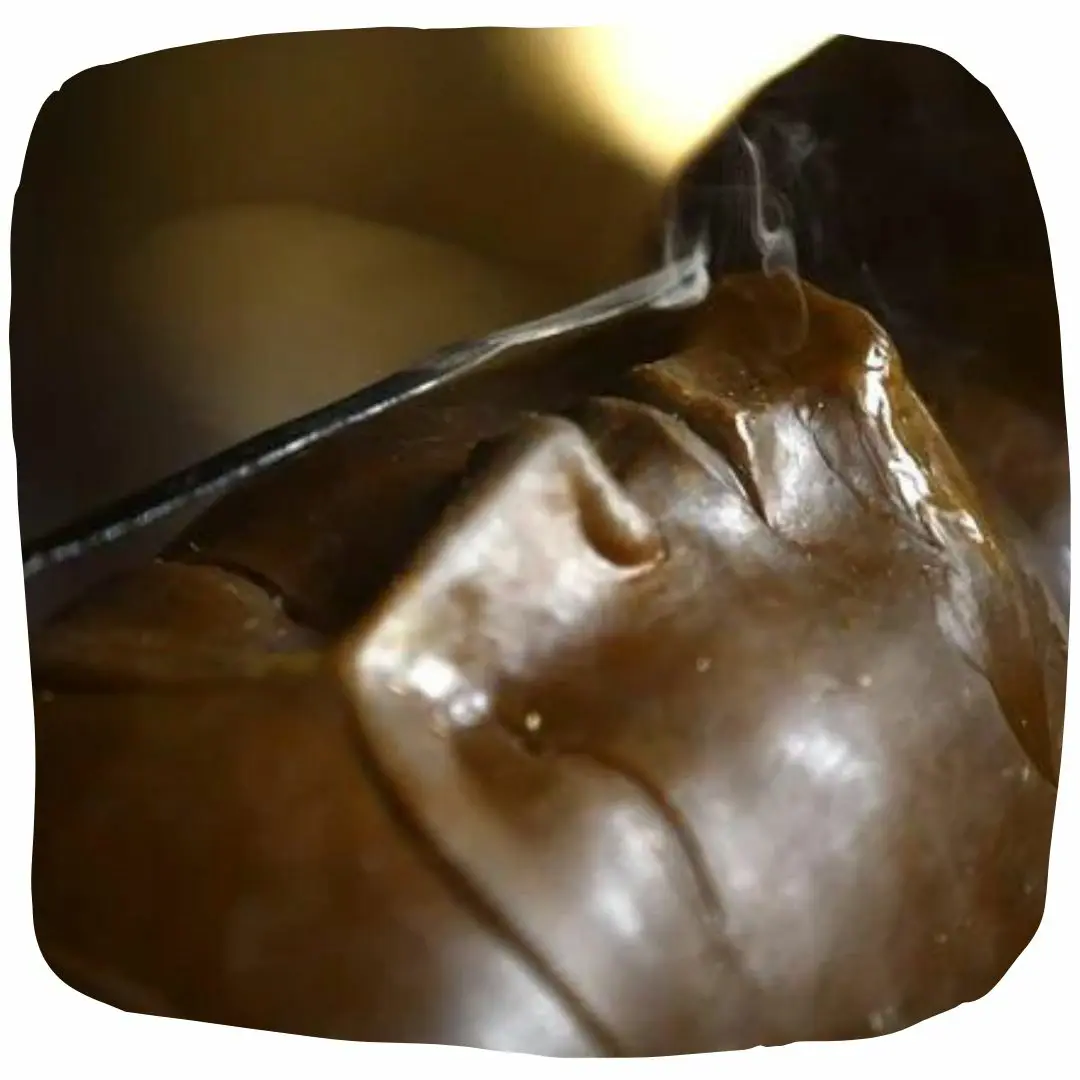
The lost-wax method of sculpting is the most preferred technique
for artists to cast a metallic statue having intricate details. Since Nepalese copper sculptures require extraneous effort for giving a majestic look by adding special embellishments, it takes several weeks to complete one masterpiece. A 24K gold gilded copper sculpture retains its brilliant luster for many years and appears as like before. Nepalese sculptures continue to remain one of the finest specimens of the art of the East that have a strong aesthetic appeal that other sculptures cannot match.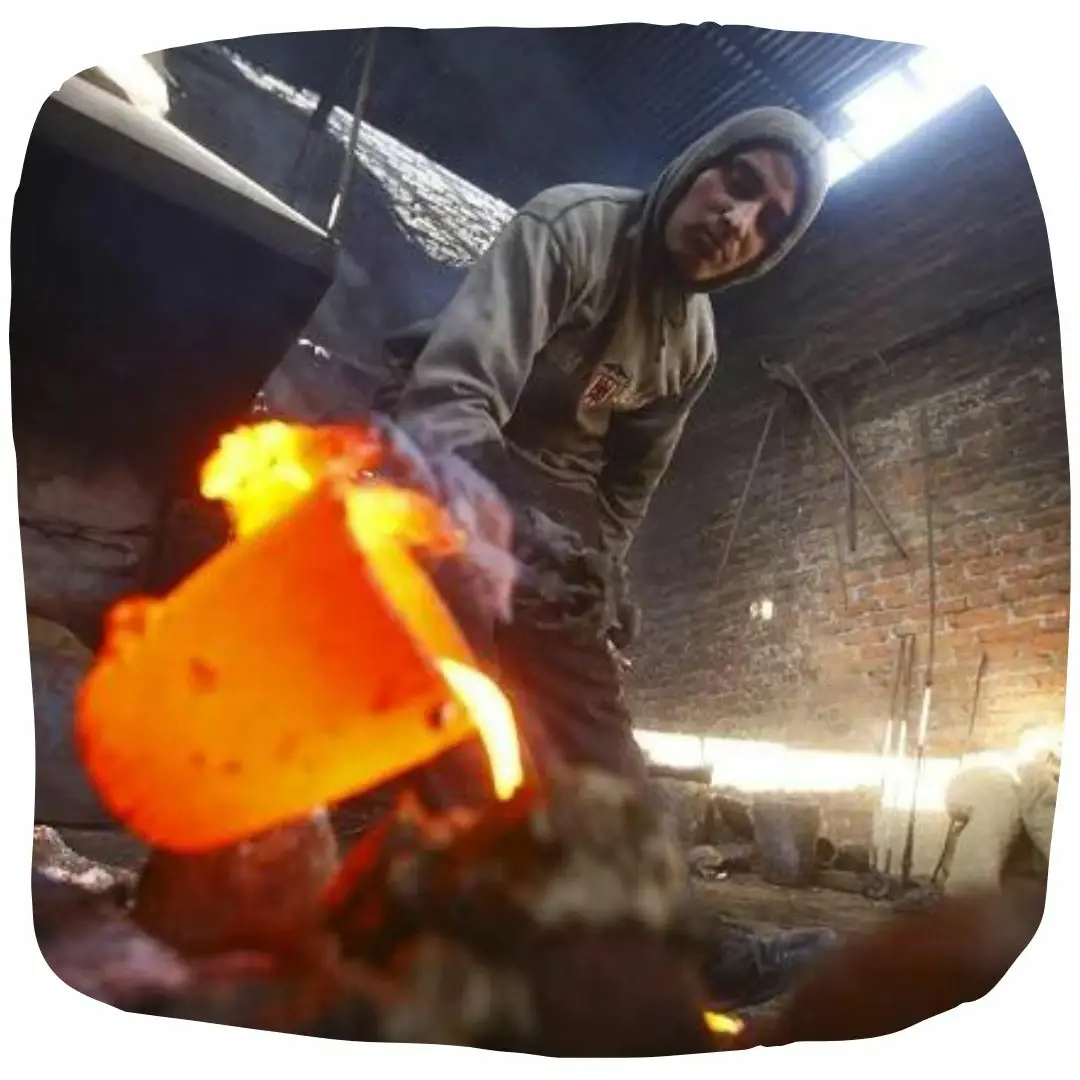
Products related to this item
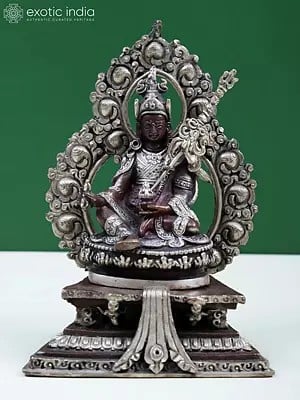
5.00 inch Height X 3.60 inch Width X 2.30 inch Depth
$506
Express Shipping
Includes any tariffs and taxes
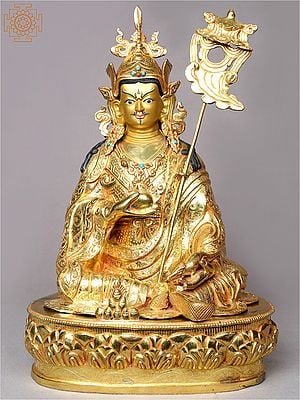
15.50 inch Height X 11.00 inch Width X 8.00 inch Depth
$1990
Includes any tariffs and taxes
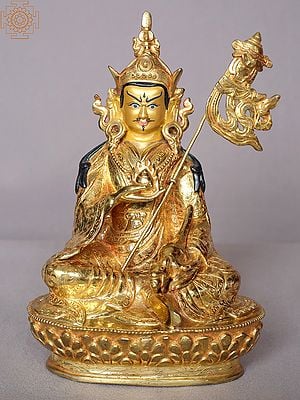
9.00 inch Height X 6.00 inch Width X 4.00 inch Depth
$966
Includes any tariffs and taxes
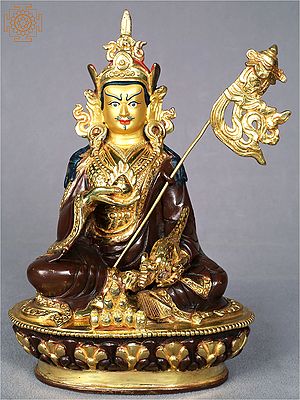
9.00 inch Height X 6.00 inch Width X 4.00 inch Depth
$667
Includes any tariffs and taxes
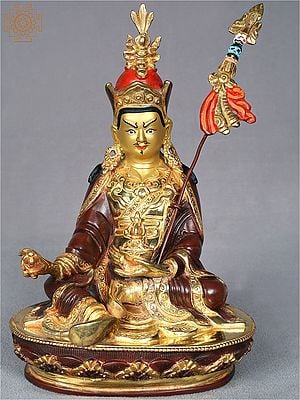
9.00 inch Height X 6.00 inch Width X 4.50 inch Depth
$541
Includes any tariffs and taxes
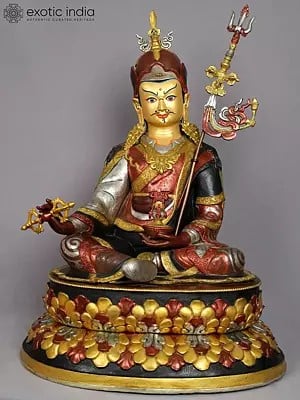
24.00 inch Height X 18.00 inch Width X 14.00 inch Depth
$3663
Includes any tariffs and taxes
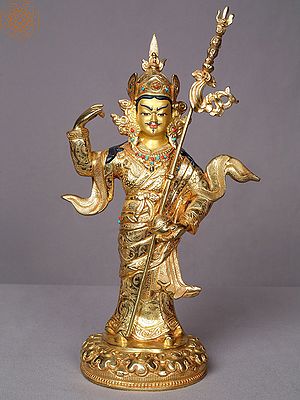
13.00 inch Height X 7.50 inch Width X 5.00 inch Depth
$1524
Includes any tariffs and taxes
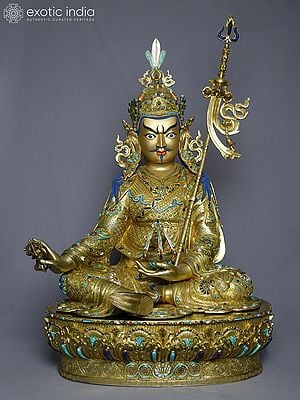
29 inch Height X 19 inch Width X 14 inch Length
$29,705
Includes any tariffs and taxes
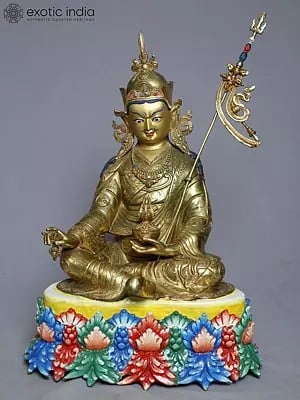
16 inch Height X 11 inch Width X 9 inch Length
$4865
Includes any tariffs and taxes
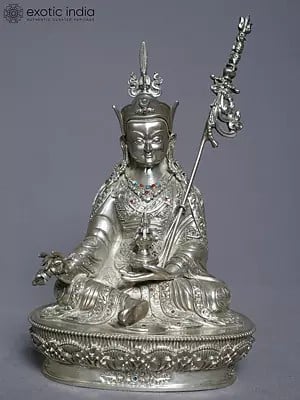
10 inch Height X 6 inch Width X 4 inch Length
$7964
Includes any tariffs and taxes
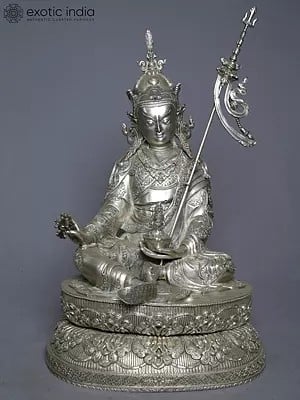
16.5 inch Height X 10 inch Width X 8 inch Length
$32,482
Includes any tariffs and taxes
15 inch Height X 7 inch Width X 8 inch Length
$1915
Includes any tariffs and taxes