Ganesha: Hindu Lord of Success, Wisdom & Remover of Obstacles

(Viewed 11930 times since Nov 2021)

🔹 Summary

Ganesha, the beloved elephant-headed god, is revered as the Lord of Success and Remover of Obstacles in Hinduism. Son of Shiva and Parvati, he embodies wisdom, prosperity, and intellect. Celebrated during Ganesh Chaturthi and worshipped daily, Ganesha guides devotees in studies, ventures, and spiritual growth. Known as the scribe of the Mahabharata, he is depicted with a broken tusk, a potbelly, and a mouse as his vehicle, symbolizing perseverance, abundance, and the ability to overcome challenges.

What are the Legends of Ganesha’s Birth?

One of the most well-known deities in Hindu tradition is Ganesha, who is depicted as an elephant headed god. The name Ganesha means the “Lord of the People.” Ganesha is the son of Shiva, one of the main gods in the Hindu trimurti, and his consort Parvati.
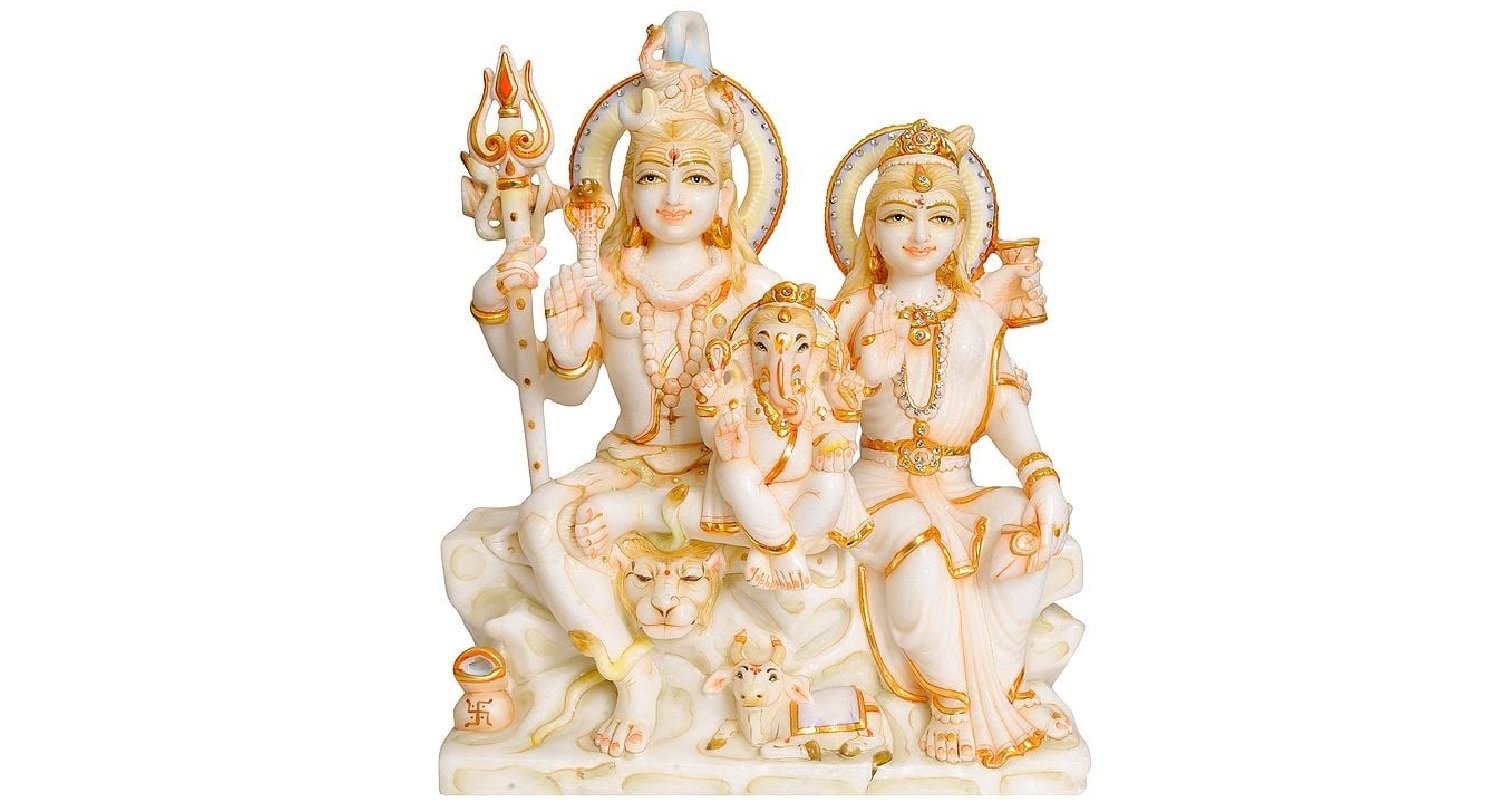

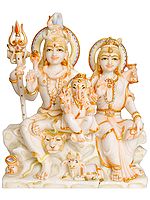
Shiva Family

There are a few different legends that explain the birth of Ganesha. According to one, Parvati created her son out of a piece of cloth, which she asked Shiva to bring to life. However, another popular myth tells the story of how Parvati was taking a bath and molded the dirt that she was rubbing off of herself into the shape of a child, who then came to life.

How did Ganesha get his Elephant Head?

Upon seeing the boy, either Shiva or one of his attendants cut the child’s head off. Shiva then got an elephant and cut its head off as well in order grant it to the headless Ganesha. Thus, the icon of Ganesha as a lord with an elephant head came to be.
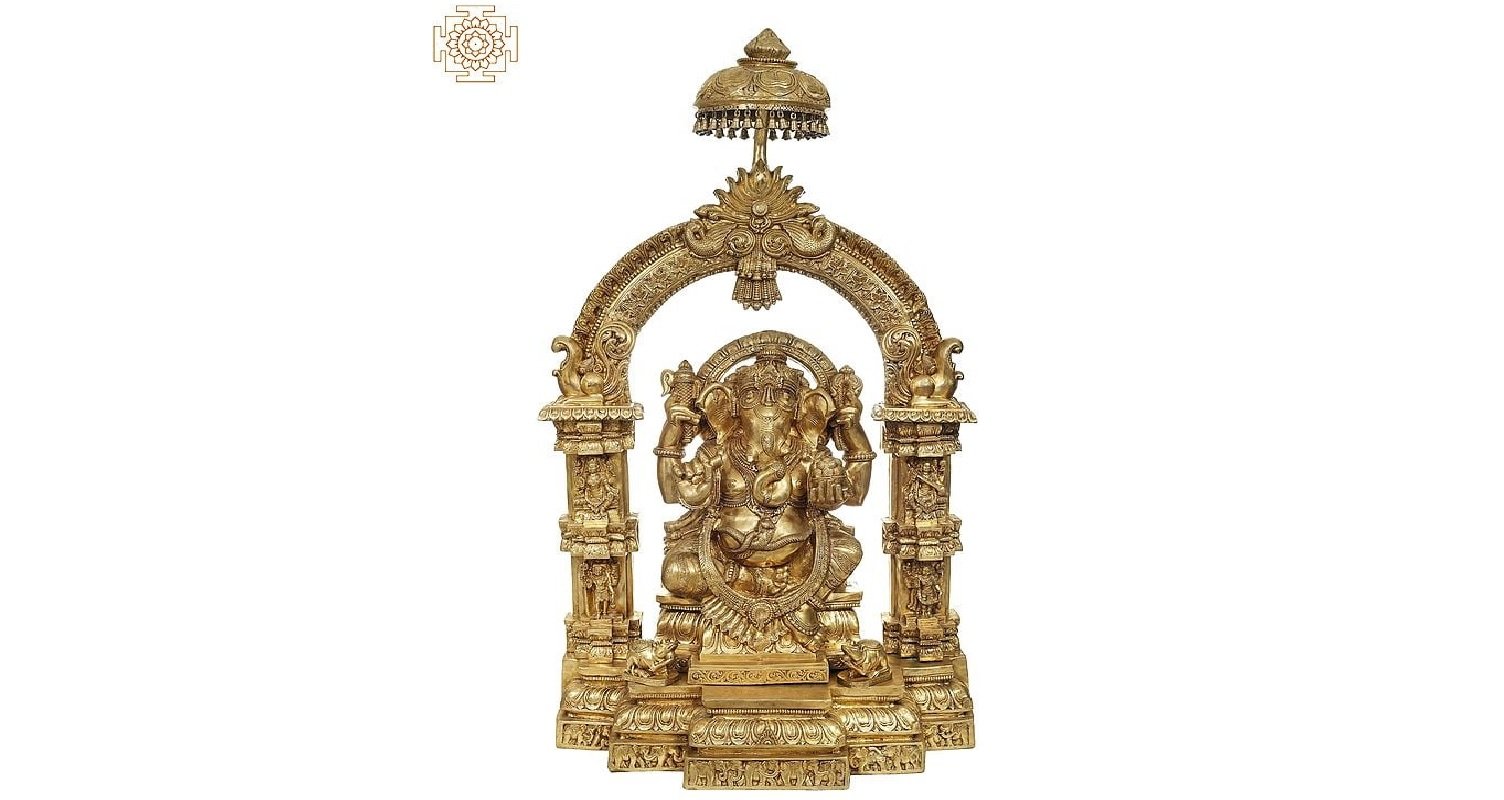

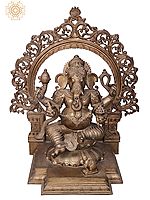
Large Lord Ganesha with a Traditional Prabhavali and Parasol Atop
Ganesha is worshipped as the Lord of success and the god of knowledge, wisdom, and wealth. His large elephant head, accordingly, represents deep wisdom, understanding, and an astute intellect. Hindus also believe that he is the destroyer of evils and obstacles, paving the way for one to move forward in life. He is, therefore, considered the patron of bankers, intellectuals, scribes, and authors.

Many devotees worship Ganesha before embarking on a new enterprise. The Hindu tradition of Ganapatya worships Ganesha as their supreme deity. The Ganesh Chaturthi, which is a ten-day summer festival between August to September, is celebrated in his honor. In 2025, Ganesh Chaturthi will be celebrated on Wednesday, 27th August.

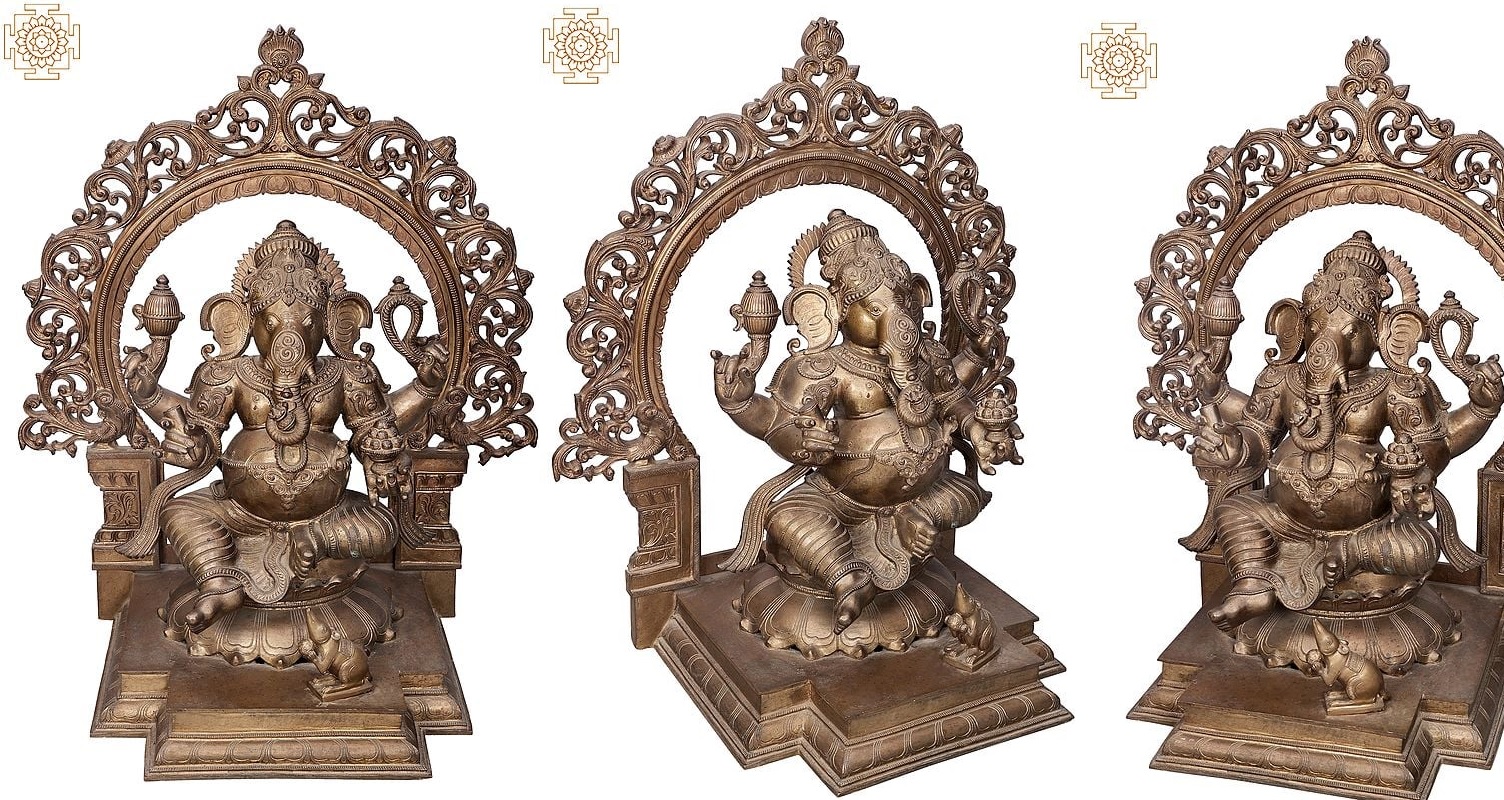
38" Large Ganesha with Designer Arch | Handmade | Madhuchista Vidhana (Lost-Wax) | Panchaloha Bronze from Swamimalai

What does Ganesha symbolize?

Aside from his elephant head, Ganesha is depicted as having a large mouth and a hefty potbelly. These are said to represent the innate human desire to enjoy life. As such, Ganesha is also often portrayed holding Indian sweets in his one hand, which he’s fond of.

Ganesha is likewise frequently portrayed with an Indian bandicoot rat or small mouse as his vahana or vehicle. This is meant to symbolize Ganesha’s ability to overcome any seemingly insurmountable challenge and achieve what he wants.

Legend also has it that the mouse was actually an evil demon that Ganesha defeated and trapped. As punishment, from that day forward, the demon mouse was made to carry Ganesha wherever he went.

Consorts of Ganesha

Some Hindus believe that Ganesha has two wives – Buddhi, who represents intelligence and Siddhi who is synonymous for success. However, other traditions state that Ganesha has a third wife called Riddhi, representing prosperity.

How did Ganesha write the Mahabharata?

Ganesha is very well-known for having written the legendary Mahabharata. It is believed that the sage Vyasa wanted to dictate an epic poem as it came to his mind. However, he couldn’t find anyone on Earth who could write it down for him. Vyasa then went to Ganesha as the destroyer of obstacles and Lord of success in order to help him. Ganesha then wrote down the Mahabharata as Vyasa recited it.

The Broken Tusk

While writing it down, Ganesha’s pen broke. Having agreed to write the epic poem in its entirety without stopping, Ganesha then broke one of his tusks and used it to finish writing the Mahabharata. This is the reason behind the popular image of Ganesha with a broken tusk held in his other hand.
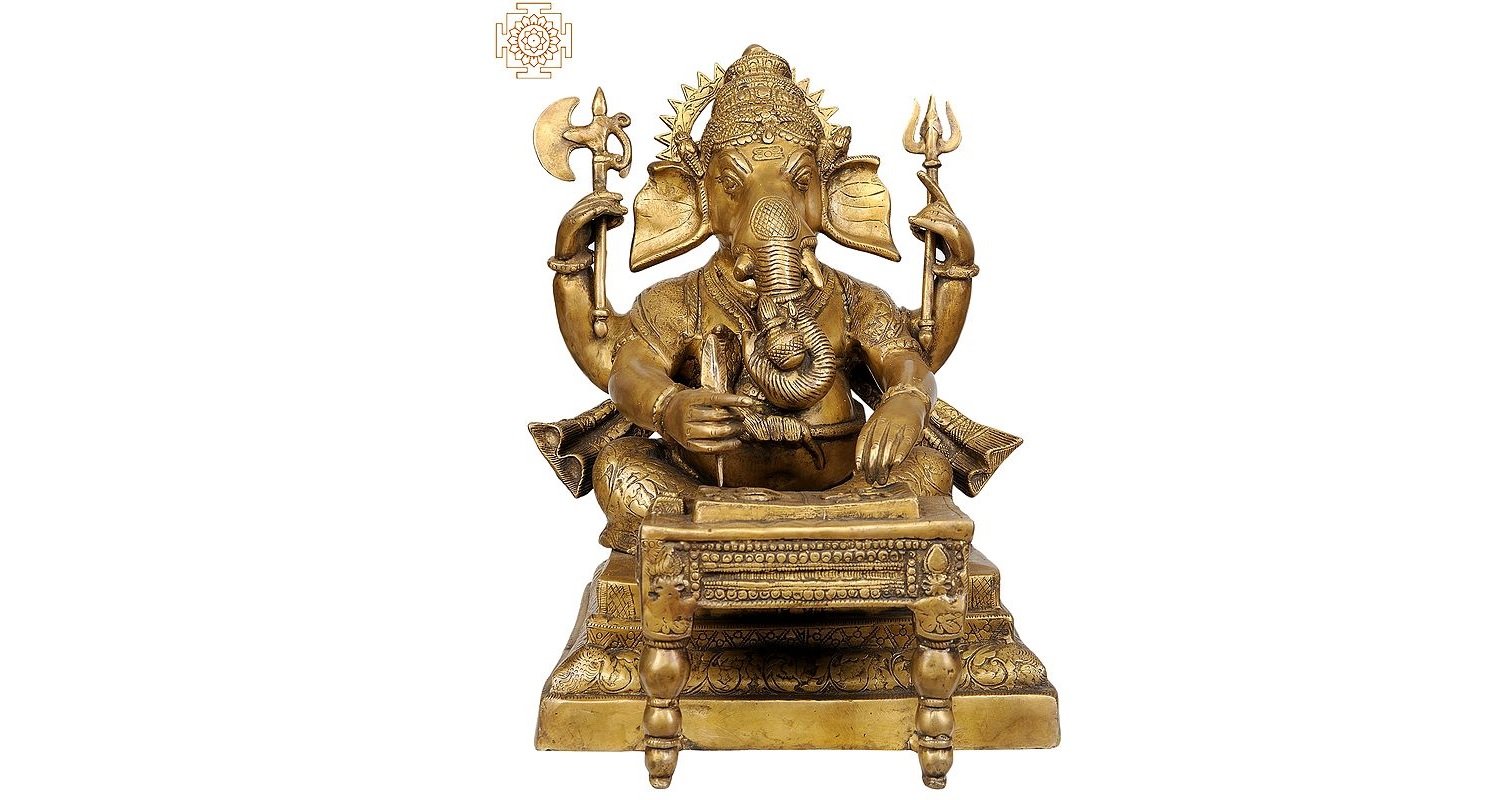

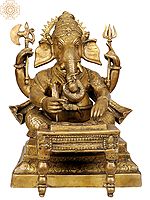
Lord Ganesha Writing the Mahabharata
As the Lord of success and the writer of one of the most important Hindu legends, it is no surprise that Ganesha is one of the most worshipped and well-known gods in Hinduism. Ganesha’s multifaceted symbolism makes him approachable yet revered, blending spiritual guidance with practical life lessons. This universal appeal explains why he remains one of the most widely worshipped gods in Hinduism.

🔹 Key Takeaways

🔸Elephant-headed wisdom: Represents knowledge and intelligence.
🔸Remover of obstacles: Worshipped before new ventures.
🔸Love of sweets: Symbolizes enjoyment of life and prosperity.
🔸Scribe of Mahabharata: Known for his dedication and broken tusk.
🔸Mouse as vehicle: Demonstrates overcoming challenges.
🔸Ganesh Chaturthi: Ten-day festival celebrating his birth.
🔸Patron of success: Revered by writers, scholars, bankers, and students.

🔹 PAA Questions & FAQ Schema

Q1. Who is Ganesha in Hinduism?

Ganesha is the elephant-headed god, son of Shiva and Parvati, worshipped as the Lord of Success and Remover of Obstacles.

Q2. Why does Ganesha have an elephant head?

Legends say Shiva replaced Ganesha’s head with an elephant’s after a beheading incident, symbolizing wisdom and strength.

Q3. What is Ganesha’s favorite sweet?

Ganesha loves modak, a sweet dumpling that represents joy, prosperity, and spiritual rewards.

Q4. When is Ganesh Chaturthi celebrated?

Ganesh Chaturthi is a ten-day festival between August and September honoring Ganesha’s birth.

Q5. Why does Ganesha have a broken tusk?

Ganesha broke his tusk to finish writing the Mahabharata, symbolizing perseverance and sacrifice.

Q6. Who are Ganesha’s consorts?

Ganesha’s consorts are Buddhi (intelligence), Siddhi (success), and sometimes Riddhi (prosperity).

Q7. What is Ganesha’s vehicle?

A mouse, symbolizing his ability to overcome obstacles and conquer challenges.
Share Post:
Add a review

Your email address will not be published *

Popular Blogs
What is the Significance of Nandi?
12 November 2022
Nandi, the sacred bull of Lord Shiva, holds a special place in Hinduism as a symbol of devotion, purity, and strength. Always seated before the Shiva Linga, Nandi represents the soul focused on the divine, reminding devotees of life’s ultimate goal God-realization. Beyond being Shiva’s vahana (vehicle), Nandi embodies meditation, patience, and Dharma, making him one of the most revered figures in Hindu temples and scriptures.
Lakshmi Mantra for Financial, Prosperity & Intelligence
10 February 2022
Goddess Lakshmi is the Goddess of wealth and prosperity in Hindu mythology. The wife of Lord Vishnu, the preserver in the Hindu pantheon, Lakshmi is regularly summoned by businesspersons, legislators, and women who are searching for peace and prosperity in their personal and professional life. Born as sister to the moon and the Amrit, the remedy of eternality, she rises out of the stirring of the ocean of milk and takes the decision to marry Lord Vishnu. This article will guide you through the most powerful Lakshmi Mantras that help invoke the great Goddess, that will bring you peace and wealth
The 10 Avatars (Incarnation) of Vishnu - Dashavatara Stories & Meaning
9 March 2022
Vishnu is the second god in the trifecta of divinities in Hinduism; which comprises three divine beings who are answerable for the creation, upkeep, and annihilation of the world. The other two divine beings are Brahma and Shiva. Brahma is the maker of the universe and Shiva is the destroyer. Vishnu is the preserver and defender of the universe. His job is to get back to the earth in grieved times and reestablish the equilibrium of good and malevolence. Up until this point, he has been embodied multiple times, however, Hindus accept that he will be resurrected one final time close to the doomsday.
Subscribe to our newsletter for new stories