
Back of the Book
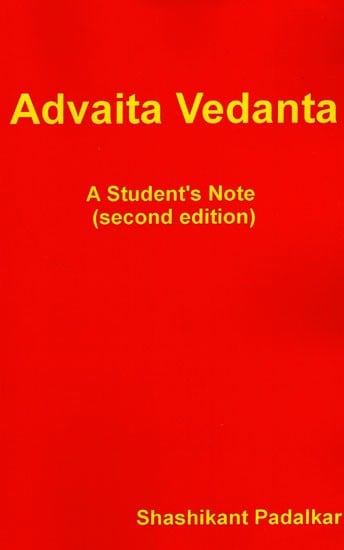
This is a constructive introduction to Advaita Vedanta. The philosophical development of the tradition is discerned on the basis of metaphysical and exegetical criteria. Vedanta's history is traced right from its protohistoric origins to the New Vedanta of twentieth century. In the process, entire landscape of non-dualist traditions of the Indian subcontinent is sought to be explored.
This second edition retains the basic organization and information of the first edition and adds new annexes viz. (a) brief synopsis of competing Vedic schools to give the basis of their polemics, (b) alignment of the contemporary social and liberal democracies with the central doctrines of Advaita, and (c) deconstruction of the concept of God to reconcile Advaita and science.
The last two annexes along with revised chapters six and seven posit Advaita as the new age universal philosophy of unity.
Preface
My interest in Advaita-Vedanta was kindled by the excellent Marathi text-book of philosophy, "भारतीय तत्त्वज्ञान" by श्रीनिवास हरि दीक्षित, which I came across in 1991. I found the foundational status ascribed to conscious- ness aka awareness (ufae, fa) to be an interesting speculation though it did not induce me to study Advaita seriously at that time. Monism for me, then, was only an energetic principle-- a 'matter-energy equi- valence'; while, I considered consciousness to be an emergent prop- erty of particular types of biological processes. My interest in the awareness and Advaita was rekindled after a decade when I had read more about 'quantum measurement paradox' and the role of 'conscious observer' in the measurement process. This was supplemented by my own understanding of the "hard problem of consciousness" and vari- ous consciousness theories of the contemporary philosophy of mind. Awareness, I thought, could be that irreducible and fundamental entity after all, as claimed by Advaita!
Introduction
The terms Knowledge and Ignorance have special meanings in Advaita. Knowledge has the everyday meaning, that of 'knowledge' of the world; it has another metaphysical meaning, that of 'Knowledge of brahman' [brahma GYAna] or 'ultimate Knowledge' [paramArtha]. The main purport of this latter Knowledge is the 'realization' that there is only one, non-dual, limitless, eternal, and attributeless reality called brahman, which is of the nature of undifferentiated Consciousness, and which constitutes the essential core or Self called Atman of all the beings.
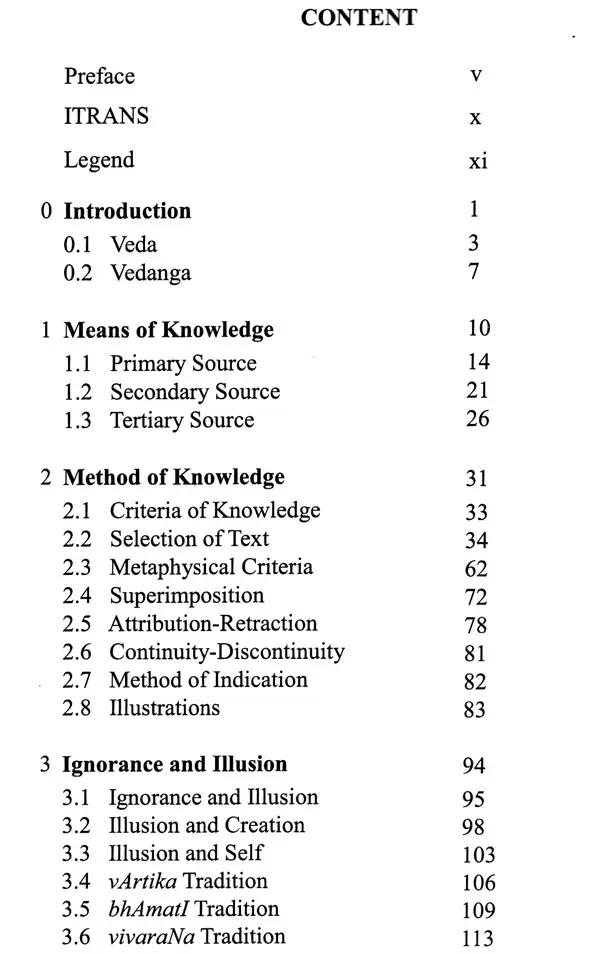
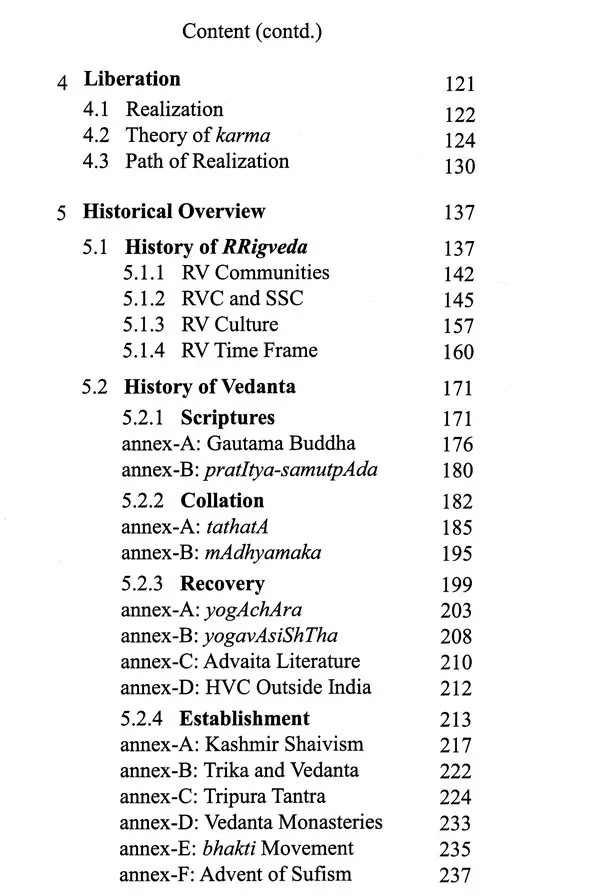
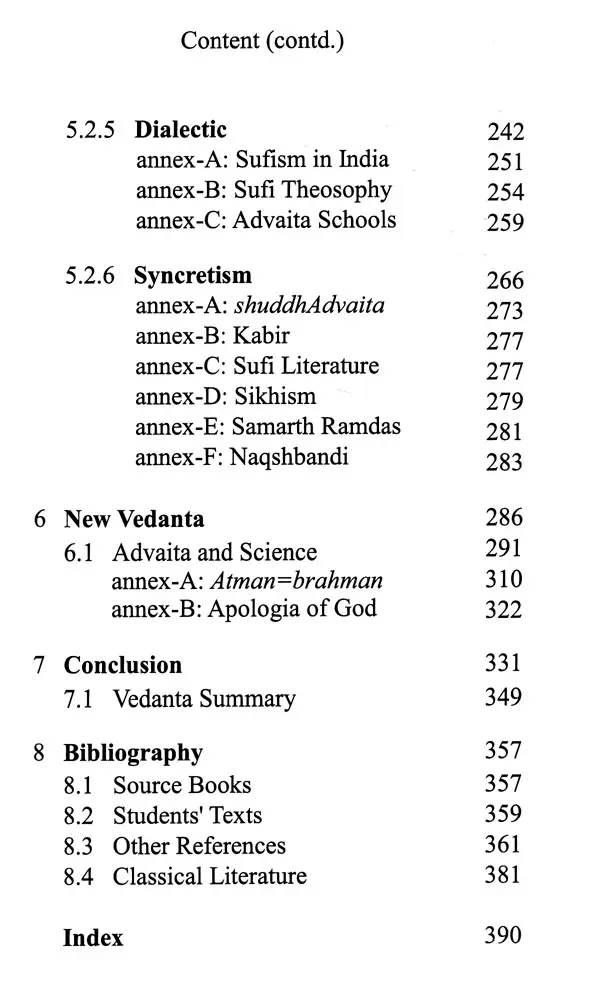
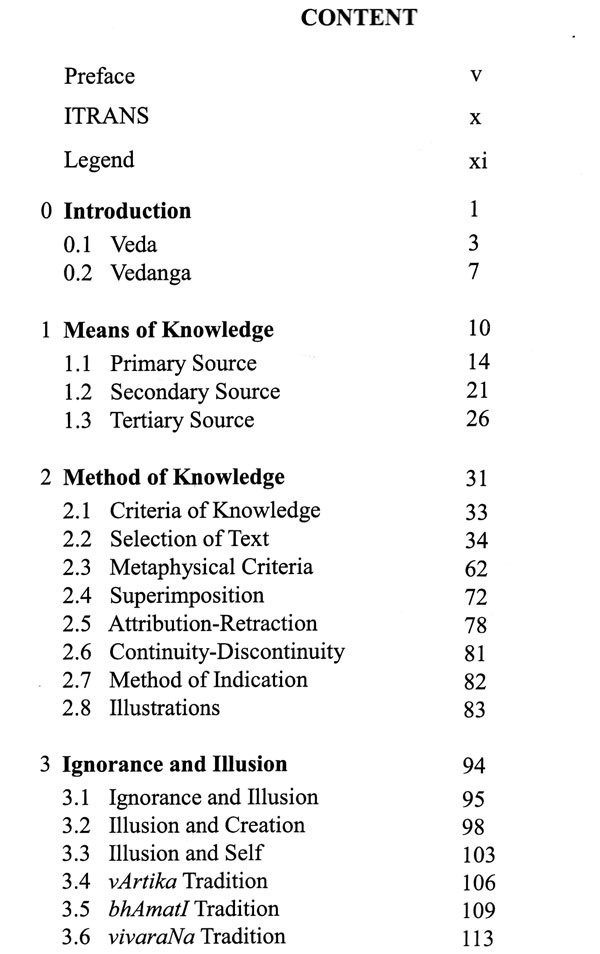
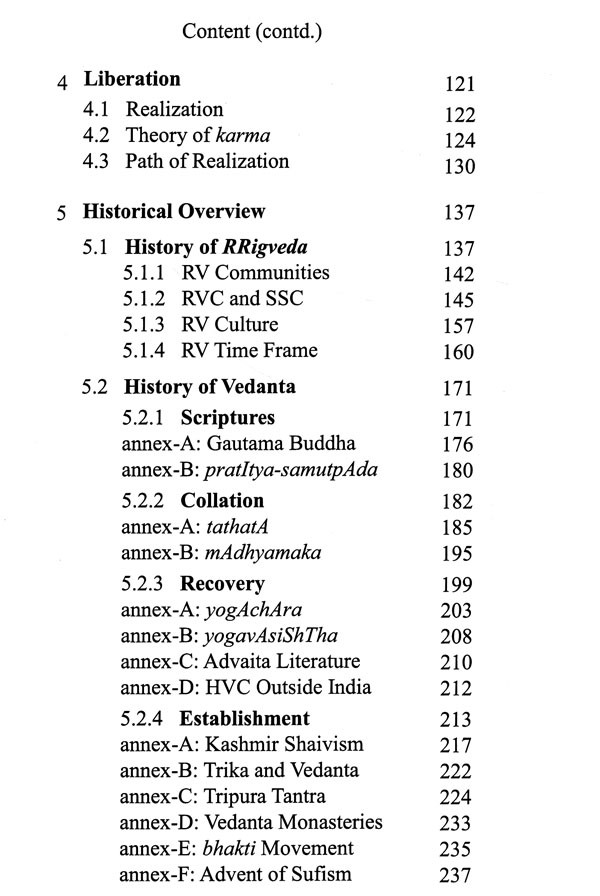
**Contents and Sample Pages**