
| Specifications |
 |
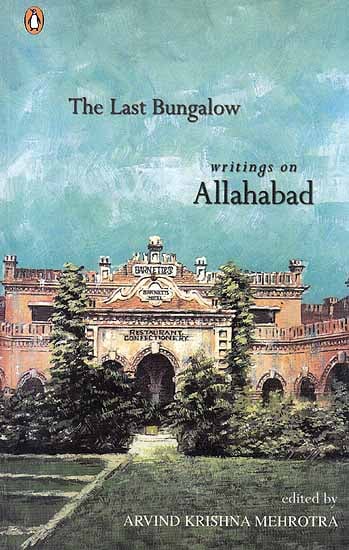
Publisher: Penguin Books India Pvt. Ltd. |
| Author Arvind Krishna Mehrotra | |
| Language: English | |
| Pages: 230 | |
| Cover: Paperback | |
 |
8.5 Inch X 5.5 Inch |
| Edition: 2007 | |
| ISBN: 9780143101185 | |
 |
IHL289 |
| a53_books |
| Delivery and Return Policies |
 |
Usually ships in 7 days |
 |
Returns and Exchanges accepted within 7 days |
 |
Free Delivery |


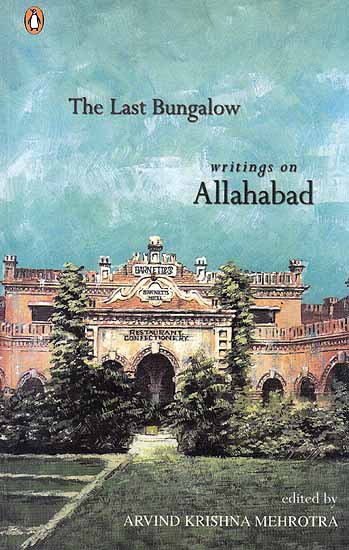
Located at the confluence of the Ganga, Yamuna and the invisible Saraswati, Allahabad, or ‘Godville’ - the ‘babu’ translation of the name that Mark Twain came across-has been frequented by pilgrims for two thousand years. However it was only towards the latter half of the nineteenth century that Allahabad shed its identity as another dusty north Indian town and emerged as one of the premier cities of the Raj and the capital of the North-West Provinces. This metamorphosis, ironically, was brought about by colonial rule, whose beginnings Fanny Parkes has described at great length. Allahabad was the home not only of the Pioneer, where Kipling was employed, but also of literary figures like Harivansh Rai Bachchan and Suryakant Tripathi ‘Nirala’. Its university, one of the oldest in the country, attracted students from far and wide. Visited by the Buddhist scholar Hsiuan Tsang in the seventh century, the city is today visited by spiritual con men and con women, as well as ordinary pilgrims, who come to attend the Magh and Kumbh Melas. As Kama Maclean’s essay shows, far from being an ancient religious festival, the Kumbh Mela, which is held every twelve years, originated as recently as the 1860s.
Colonial Allahabad, along with the intellectual energy that colonialism generated, has all but disappeared. The bungalows have gone, and so have the lat of those who inhabited them. Their descendants can only recall a lost time.
In 1824, Bishop Heber wrote that Allahabad was a ‘desolate and ruinous’ place. Three years later, Mirza Ghalib compared it to hell, only hell was better. But for Jawaharlal Nehru, Allahabad was where he was born and where he cut his political teeth; for Nayantara Sehgal, it was a model. For civilized living; for Ved Mehta, it was, like other Indian cities, ‘a jumble of British, Muslim, and Hindu influences’; for Saeed Jaffrey, it was a place where a good time could be had, while one picked up a decent education; for Gyanranjan, it was a city one could fall in love with in one’s youth; and for I. Allan Sealy, it was his parents’ home town, a reservoir of family lore.
The Last Bungalow: Writings on Allahabad is a memorial to a now forgotten city, whose rise was as meteoric as its fall.
Arvind Krishna Mehrotra was born in Lahore in 1947. He is the author of four books of poems, the most recent of which is The Transfiguring Places (1998), and one of translation, The Absent Traveller: Prakrit Love Poetry from the Gathasapatasathi (1991). His edited books include The Oxford India Anthology of Twelve Modern Indian Poets (1992) and An Illustrated History of Indian Literature in English (2003). He lives in Allahabad and Dehra Dun.
Back of the Book
Hsiuan Tsang Ralph Fitch Reginald Heber Ghalib Bahadur Singh Bhatnagar Fanny Parkes Matilda Spry Bholanauth Chunder Edmonia Hill Mark Twain David Lelyved Jawaharlal Nehru Harivansh Rai Bachchan Narmadeshwar Upadhyaya Amaranatha Jha Sudhir Kumar Rudra Rajeshwar Dayal Suryakant Tripathi ‘Nirala’ Nayantara Sehgal Kate Chisholm Saeed Jaffrey Esther Mary Lyons Ved Mehta Pankaj Mishra Kama Maclean Gyanranjan I. Allan Sealy Palash Krishna Mehrotra.
| List of Illustrations | x |
| Acknowledgements | xi |
| A Note on the Selection | xi |
| A Note on the Text | xi |
| Descendants: An Introduction | 1 |
| Arvind Krishna Mehrotra | |
| Hsiuan Tsang | 32 |
| from Buddhist Records of the Western World | |
| Ralph Fitch | 36 |
| from Richard Hakluyt’s Principal Navigations, Voiages, Traffiques and Discoveries of the English Nation | |
| Reginald Heber | 38 |
| from Narrative of a Journey Through the Upper Provinces of India from Calcutta to Bombay, 1824-25 | |
| Ghalib | 46 |
| ‘A letter of grievance from my wanderings’ | |
| Bahadur Singh Bhatnagar | 48 |
| from Yadgar-i-Bahaduri | |
| Fanny Parkes | 50 |
| from Wanderings of a Pilgrim | |
| Matilda Spry | 70 |
| ‘Our pretty bungalow is now a heap of ruins’ | |
| Bholanauth Chunder | 78 |
| from The Travels of a Hindoo to Various Parts of Bengal and Upper India | |
| Rudyard Kipling | 91 |
| from Something of Myself | |
| Edmonia Hill | 96 |
| ‘The Young Kipling’ | |
| Mark Twain | 113 |
| from Following the Equator: A Journey Around the World | |
| David Lelyveld | 119 |
| ‘Swaraj Bhavan and Sir Sayyid Ahmad Khan’ | |
| Jawaharlal Nehru | 128 |
| from An Autobiography | |
| Harivansh Rai Bachchan | 134 |
| from In the Afternoon of Time | |
| Narmadeshwar Upadhyaya | 149 |
| from ‘Snippets from Memory’ | |
| Amaranatha Jha | 154 |
| from Sarojini Naidu: A Personal Homage | |
| Sudhir Kumar Rudra | 163 |
| from ‘The Rudra Book’ | |
| Rajeshwar Dayal | 172 |
| from A Life of Our Times | |
| Suryakant Tripathi ‘Nirala’ | 180 |
| ‘Breaking Stones’ | |
| Nayantara Sahgal | 183 |
| from Prison and Chocolate Cake | |
| Kate Chisholm | 191 |
| ‘Best Bakery in Town’ | |
| Saeed Jaffrey | 218 |
| from An Actor’s Journey | |
| Esther Mary Lyons | 229 |
| ‘Railway Colony’ | |
| Ved Mehta | 237 |
| from Portrait of India | |
| Arvind Krishna Mehrotra | 245 |
| ‘Partial Recall’ ‘The Roys’ | |
| Pankaj Mishra | 270 |
| from An End of Suffering | |
| Kama Maclean | 285 |
| ‘On the Modern Kumbh Mela’ | |
| Gyanranjan | 307 |
| ‘Vagabond Nights’ | |
| I. Allan Sealy | 316 |
| ‘Three Gandhis’ | |
| Palash Krishna Mehrotra | 321 |
| ‘Sex and the Small Town’ | |
| Permissions Acknowledgements | 330 |






Send as free online greeting card



Visual Search
 Upload an Image