
| Specifications |
 |
Publisher: Niyogi Books |
| Author Edited By Mrinalini Venkateswaran, Giles Tillotson | |
| Language: English | |
| Pages: 192 (Throughout Color Illustrations) | |
| Cover: PAPERBACK | |
 |
9.5x7 inch |
 |
Weight 550 gm |
| Edition: 2022 | |
| ISBN: 9789391125615 | |
 |
HBW072 |
| Delivery and Return Policies |
 |
Usually ships in 3 days |
 |
Returns and Exchanges accepted within 7 days |
 |
Free Delivery |


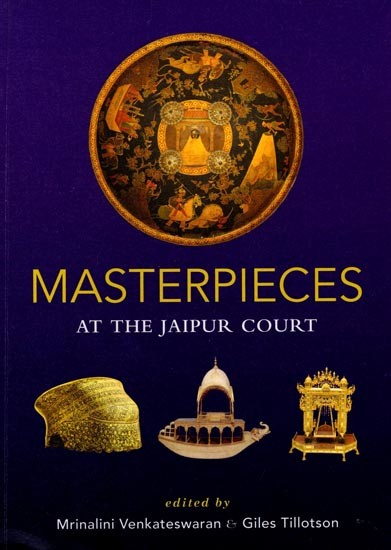
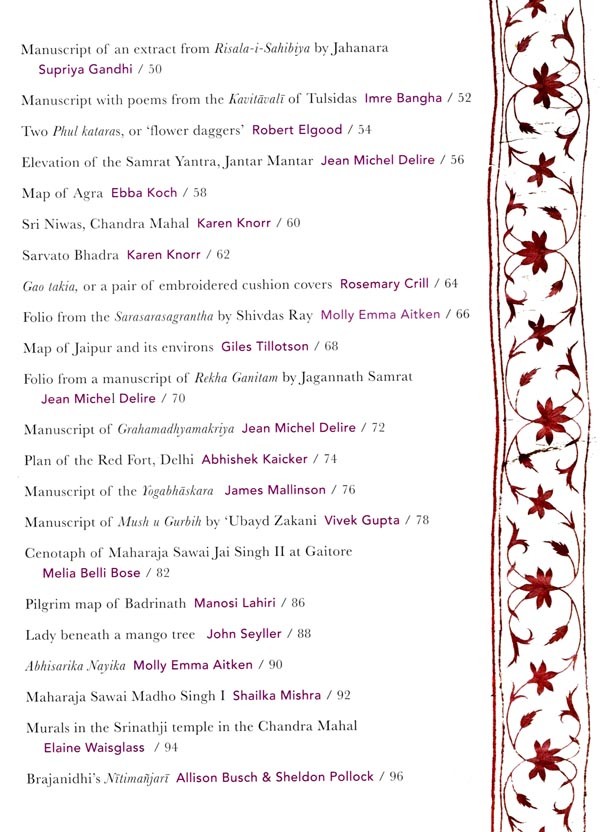
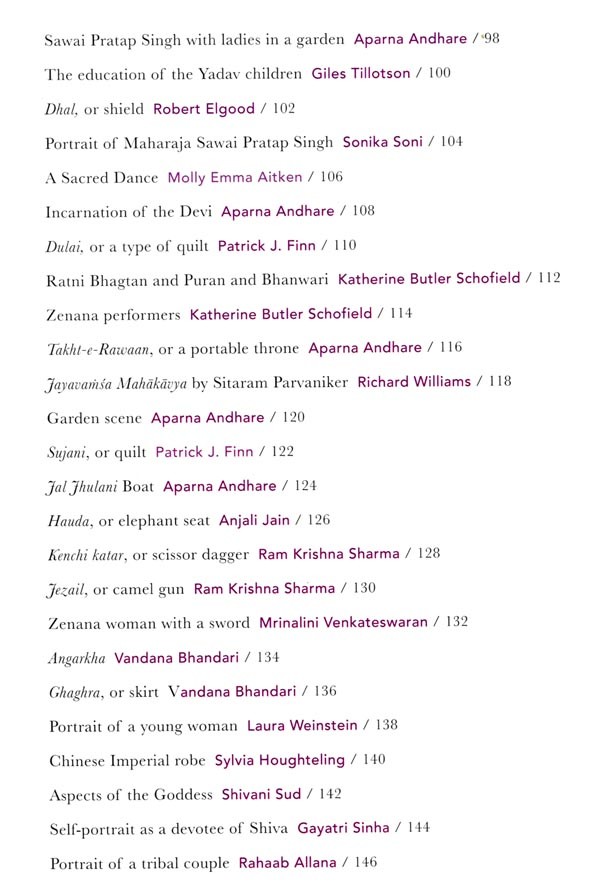
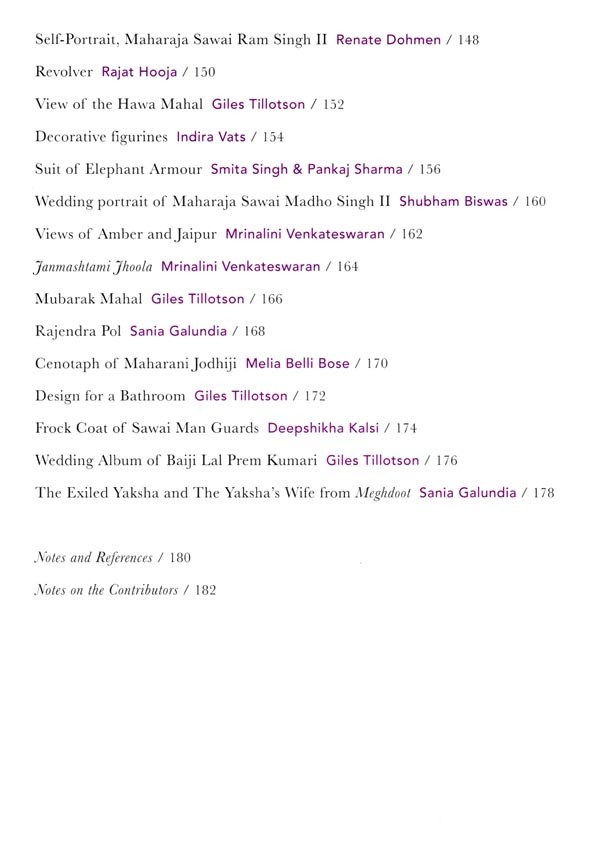
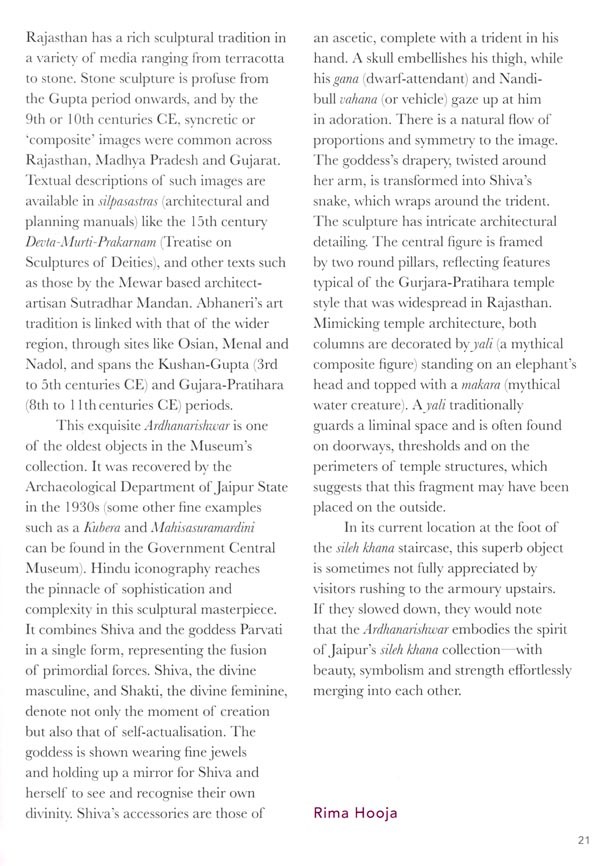
Masterpieces at the Jaipur Court is the sixth in a new series of books initiated by the Maharaja Sawai Man Singh II Museum, City Palace, Jaipur. Written by leading specialists, they are designed to be accessible and attractive for a new generation of readers and researchers. Each of the other volumes covers one aspect of the collections. But the need was felt for something handier, which would showcase the highlights of the collection as a whole. This selection features some of the most exquisite images, artefacts, paintings. monuments and historical treasures of the Jaipur Court.
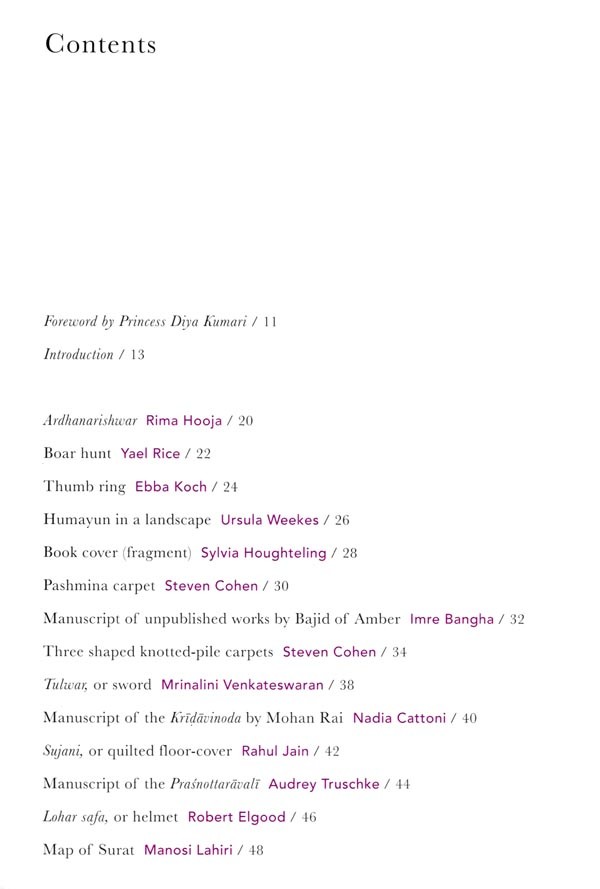
Over the years, it has been an honour for the Museum Trust to welcome a variety of visiting scholars from India and abroad. The editors are pleased and grateful that some three dozen visiting scholars readily contributed two-thirds of the entries in this volume, making this a celebration of collaboration, in addition to a tribute to the Museum's collections.
The contributors were asked to pick their favourite object from among those they had worked on recently, so that readers perceive a diversity of voices and views. Apart from this, current and recent members of the curatorial team have contributed entries, to complete the selection of the Museum's finest objects across all categories, and all historical periods.
Mrinalini Venkateswaran is Museum Consultant to the MSMS II Museum Trust, with experience in the museum sector in collections management, and on research-led exhibitions and publications, since 2006. She has published widely on the history of photography in India. As an historian of modern South Asia, she seeks to connect museums and the academy. Her work has been supported by the Cambridge Trust, Rajiv Gandhi Foundation, J.N. Tata Endowment, Royal Asiatic Society, and Royal Historical Society, among others. She is the recipient of a Leverhulme Early Career Fellowship at Royal Holloway, University of London.
Giles Tillotson has been Consultant Director (Research, Publications & Exhibitions) at the MSMS II Museum since 2011. He was earlier Reader in History of Art at the School of Oriental and African Studies, University of London; and is a Fellow (and former Director) of the Royal Asiatic Society, London. He has written and edited many books on Indian architecture, history, and landscape, including Jaipur Nama: Tales from the Pink City (2006), and has curated exhibitions in Jaipur, Delhi, Mumbai and New York. He is currently Senior Vice President, Museum Exhibitions for DAG, based in New Delhi.
When my grandfather, Maharaja Sawai Man Singh II established a museum in the City Palace, India had only recently become independent. Jaipur State had acceded to the Indian Union as part of Rajasthan, because he could see that a democracy was the logical next step in the evolution of the people's political aspirations. I grew up in that democracy the largest in the world. His far-sighted decision boosted my aspirations too and I am proud to represent the people of Rajasthan in the Parliament of India. At the same time, he felt that it was our duty to preserve Jaipur's history, its legacy and the traditions that make it special. Sharing the treasures of the palace through a museum was as much about delighting visitors with the beauty and splendour of our collections, as it was about celebrating the fine creative ability that generations of our family had nurtured. Over the centuries, the Jaipur court supported the work of superh scholars and artists in Jaipur and beyond, through its discerning patronage of literature, paintings, textiles, architecture, and armour. And, of course, there are some items that are unique to the family, like the remarkable manuscripts that Maharaja Sawai Jai Singh II collected for his astronomical work and the photographic materials of Maharaja Sawai Ram Singh II. My father, Brigadier Maharaja Sawai Bhawani Singh MVC, formalised our commitment to this duty when he re-established the Museum Trust in his father's name. However he would never have guessed that our role would not just be to preserve, but that art would be such an important source of comfort and strength to so many. During the lockdowns and loneliness of the Covid-19 pandemic, we have been encouraged by the joy that sharing the collections through online talks has brought to audiences around India and the world. Although Jaipur is already a popular destination, not enough people know of the wonders of the Museum. Our curatorial team has worked hard to rebuild our reputation for research over the last decade. This book is a testament to that, for it brings together highlights from our collection put together with a personal touch, by the many scholars who have worked on them. We hope to welcome more in future. But in the meanwhile. whether you know some objects well, or not at all, I hope you will enjoy the new perspectives this book brings to the masterpieces at the Jaipur court.
Maharaja Sawai Man Singh II knew what Jaipur's heritage was worth. After independence in 1947, the Government of India sought to persuade him to loan or gift items from the Jaipur royal collections to the new National Museum then being set up in New Delhi. His response (filed away at the National Archives of India) was polite, but firm. He pointed out that Jaipur was already a well-known centre of cultural riches and artistic excellence. Why send items to Delhi to showcase Jaipur's heritage, when the world had been visiting Jaipur for at least two centuries to marvel at its art and architecture?
What was more, Sawai Man Singh's adoptive father, Maharaja Sawai Madho Singh II, had opened Jaipur's first museum, the Albert Hall, as early as 1887 (handed over in 1949 to the Government of Rajasthan, when Jaipur State acceded to the Union of India, and now known as the Government Central Museum). And it was no ordinary institution, drawing praise from Rudyard Kipling, who, in the same breath, bestowed stinging censure on all British-run museums in comparison. The journalist (better known as a poet and novelist) was the son of the Director of the Lahore Museum, John Lockwood Kipling, and knew what he was talking about. So, when Maharaja Sawai Man Singh opened the Maharaja of Jaipur Museum in 1959 in the City Palace of Jaipur, he was building on an existing reputation for excellence.
His son, Maharaja Sawai Bhawani Singh, re-founded the museum in his father's name after Sawai Man Singh's demise in 1970. The Museum's collection today consists of items that they gave, with great foresight, to showcase Jaipur's history and promote its rich artistic legacy. That legacy survives and thrives in independent India, as Jaipur continues to reinvent itself for new generations of visitors and art lovers.
Masterpieces at the Jaipur Court is the sixth in a new series of books that the Trust, launched in 2014. Written by leading specialists, they are designed to be accessible and attractive for a new generation of readers and researchers. Each of the other volumes covers one aspect of the collections. But we felt and many visitors suggested the need for something handier, that would showcase the highlights of the collection as a whole We also want to share our growing knowledge with a wider audience.
We owe much of what we have learnt to visiting scholars. Over the years, it has been a treat for us to welcome a great variety of them from India and abroad. They have pursued a range of enquiries whose breadth and sometimes delightful obscurity have renewed our own interest in the collections, and improved the quality of what we offer our visitors. Part of the purpose of a museum is to be a place that both generates scholarship and kindles a love of learning We are pleased and grateful that some three dozen of our visiting scholars readily contributed two-thirds of the entries in this volume, making this a celebration of our collaboration, in addition to the Museum's collections.
We asked contributors to pick their favorite object from among those they had worked on recently, so that readers perceive a diversity of voices and views. In addition to what our visiting scholars chose, current and recent members of the curatorial team lave contributed entries, to complete our selection of the Museum's finest objects across all categories, and all historical periods.
"
![A Critical Survey of The Madras Art Movement [1950s to 2000]: Including The Madras School of Arts and Crafts](https://cdn.exoticindia.com/images/products/thumbnails/t400x300/books/nak316.jpg "A Critical Survey of The Madras Art Movement [1950s to 2000]: Including The Madras School of Arts and Crafts")
Send as free online greeting card