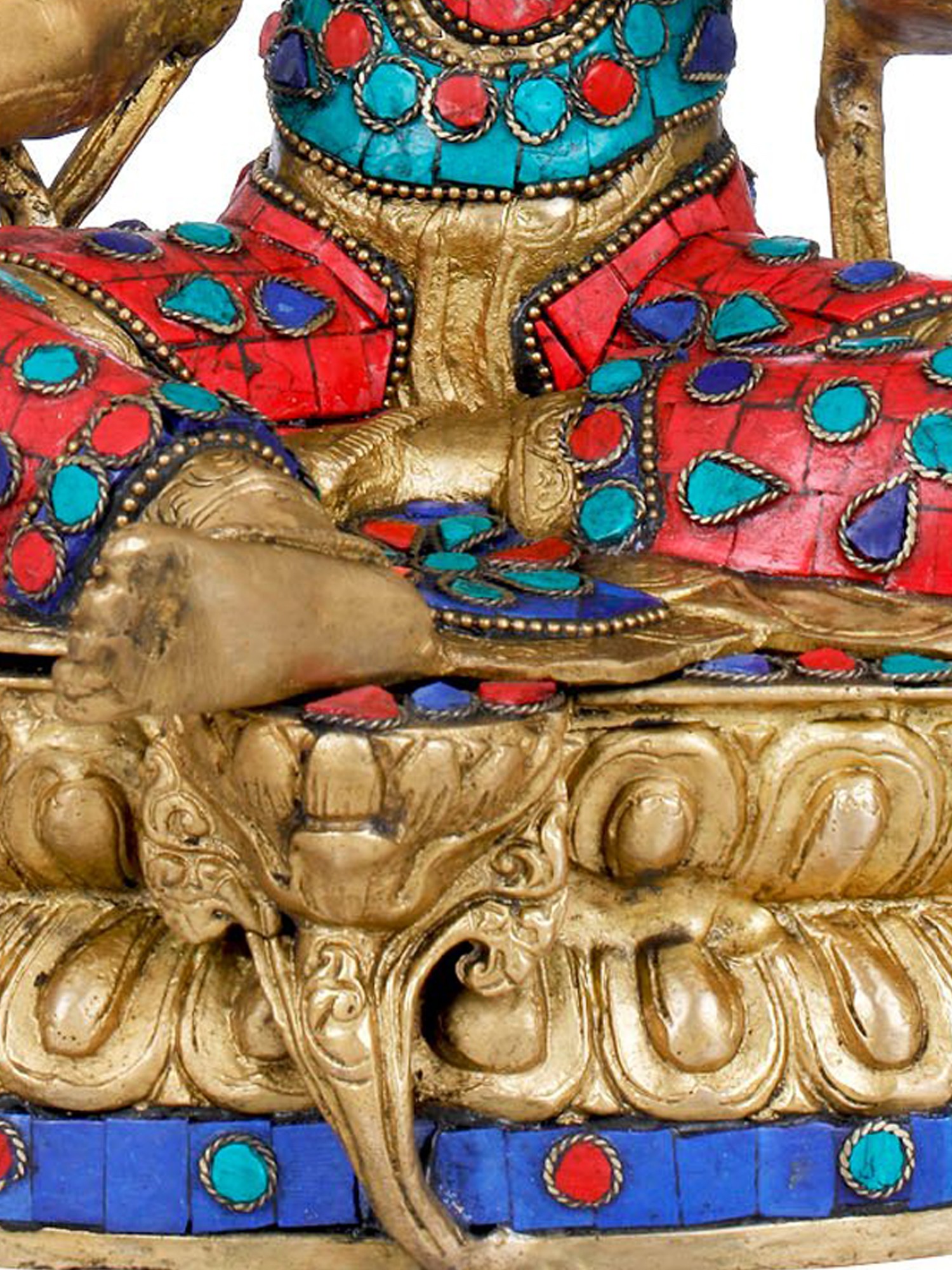
Embodiment of Compassion: The Green Tara Brass Statue
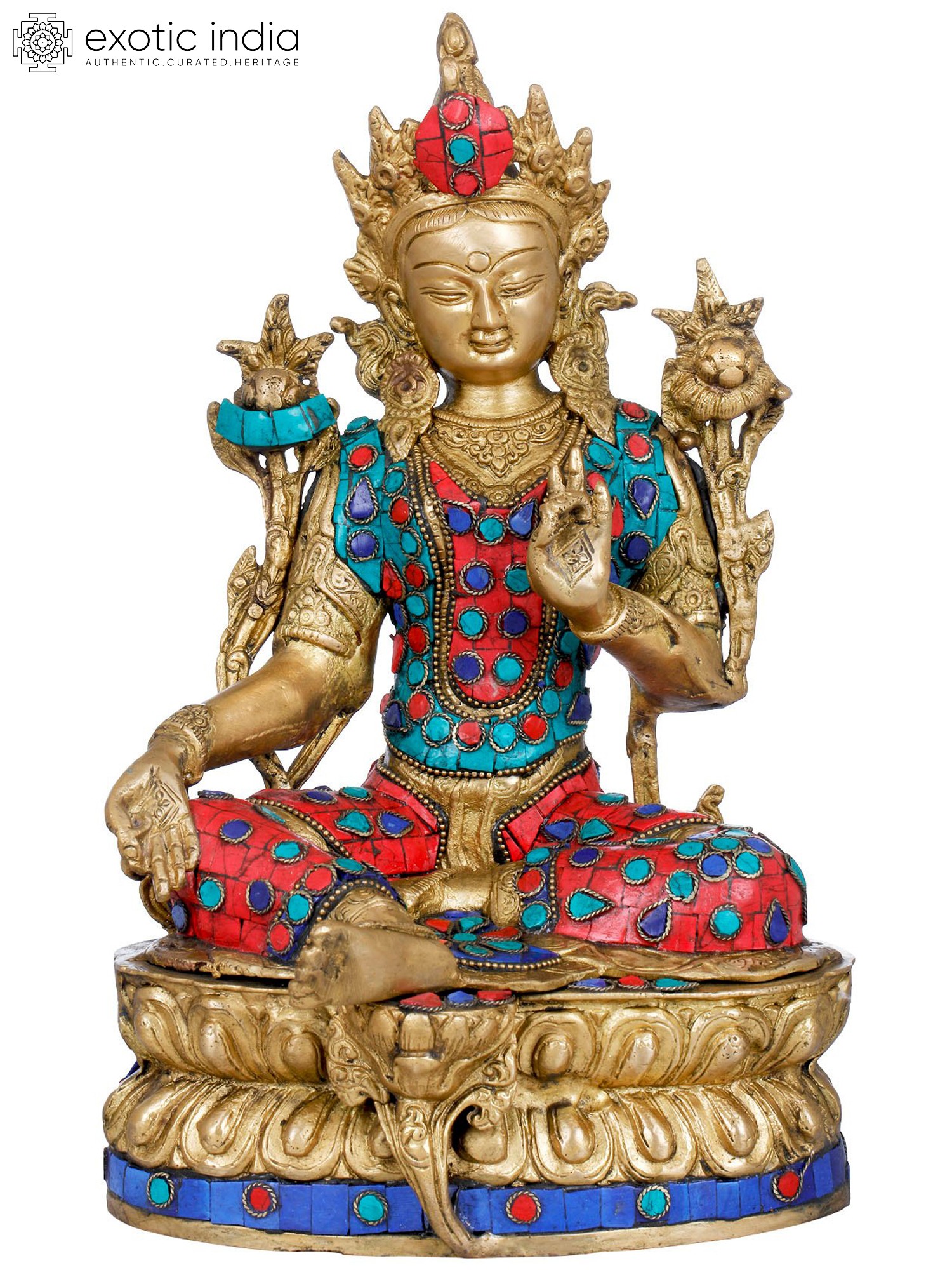
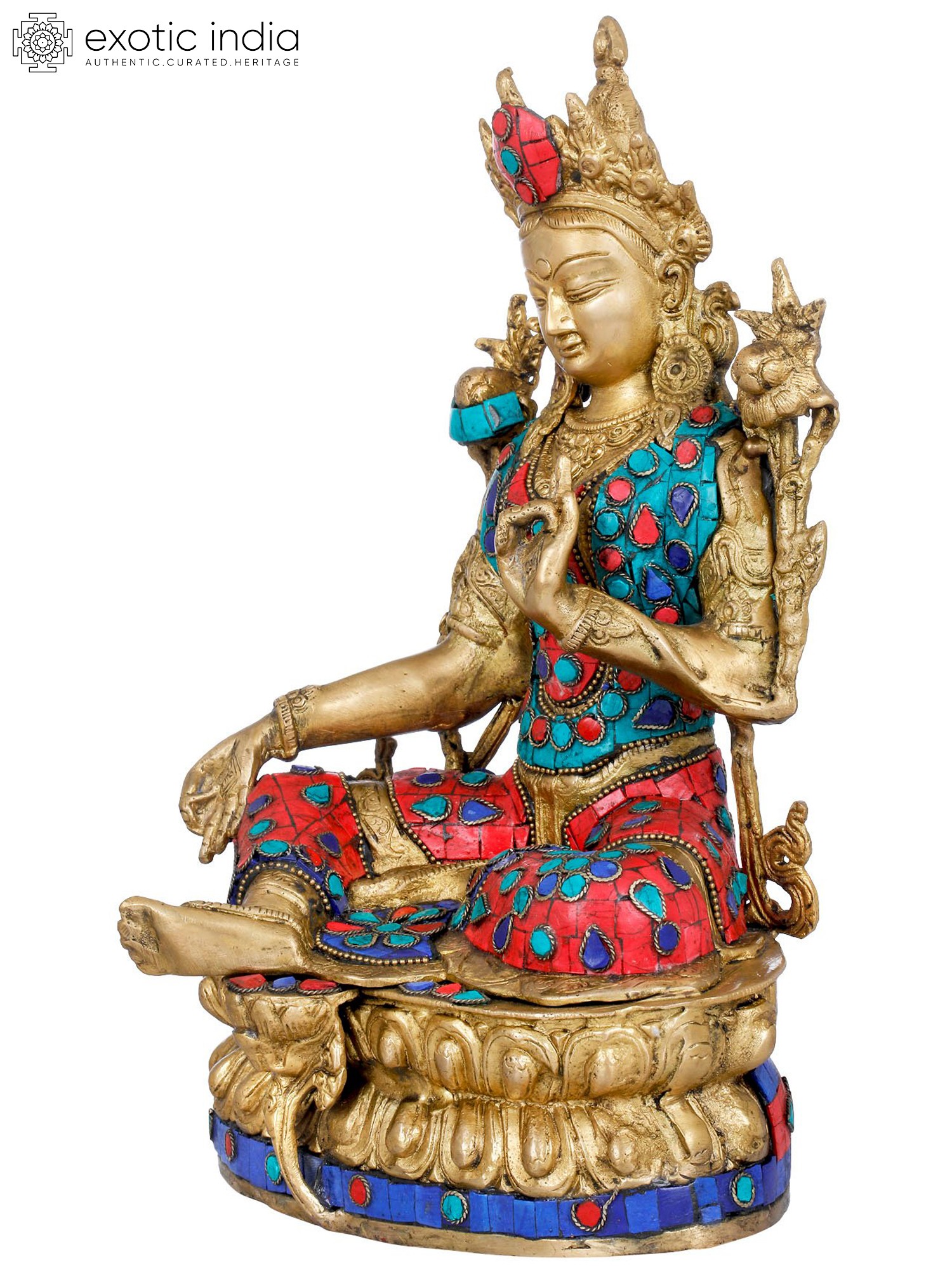
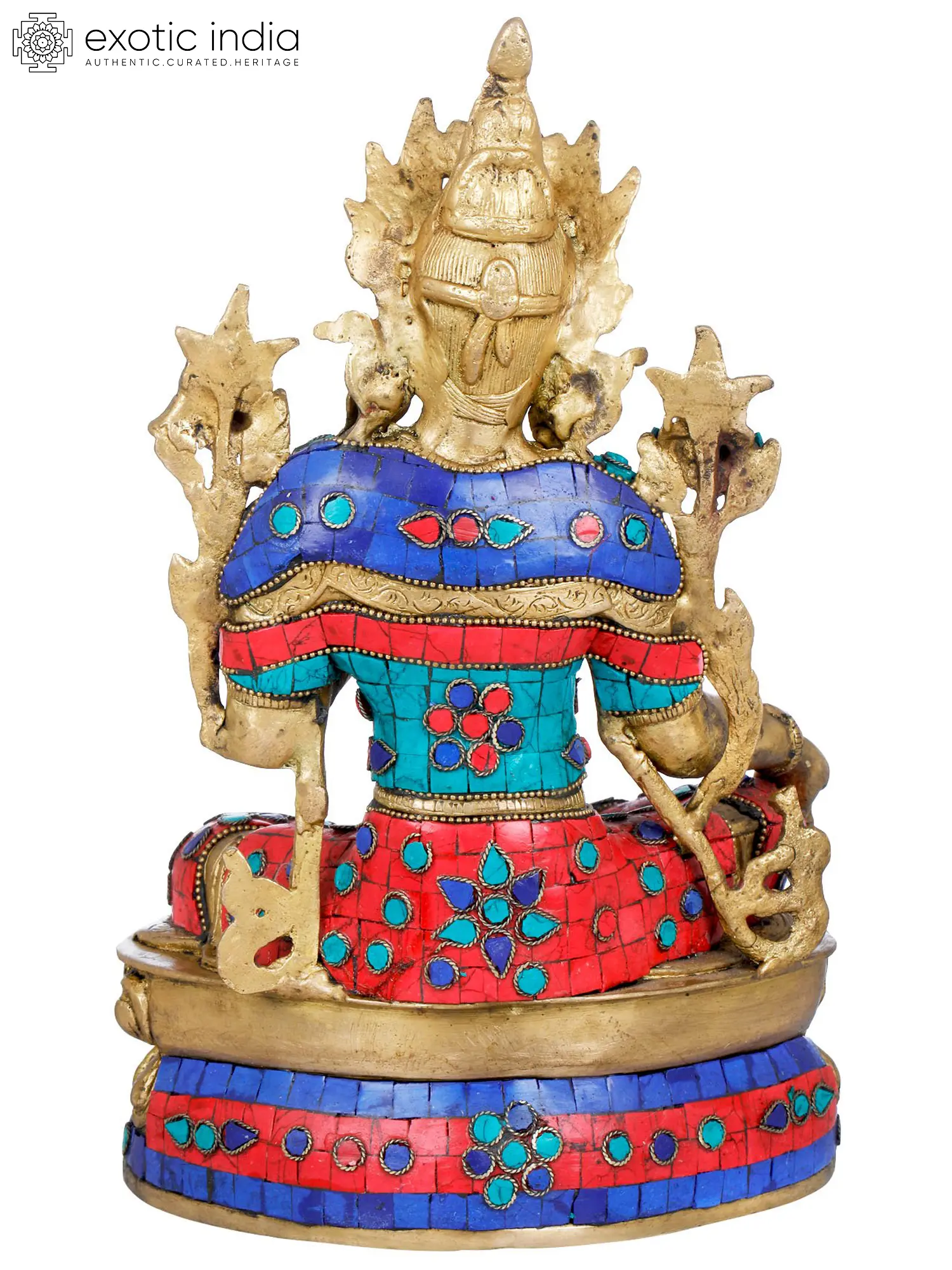
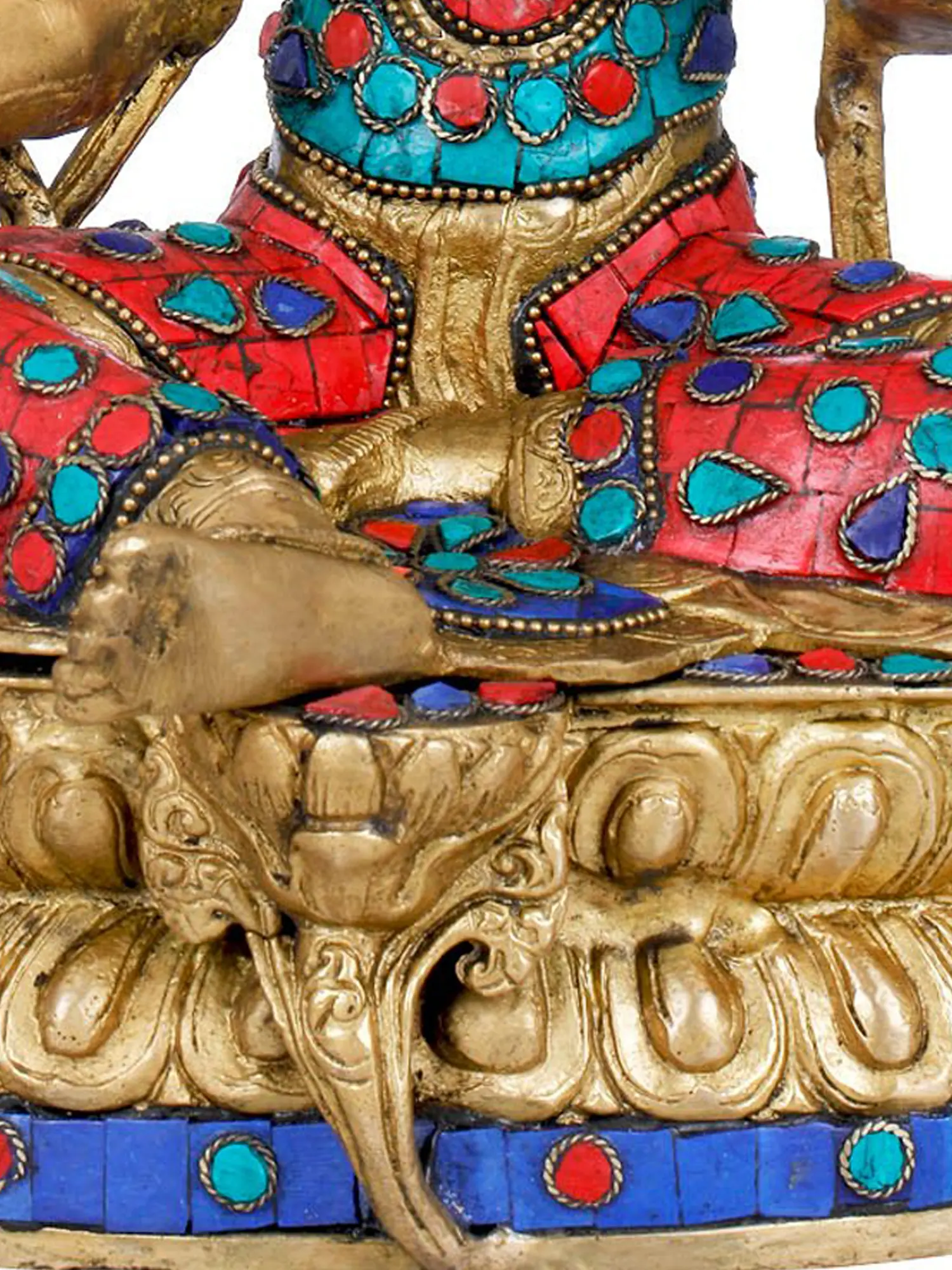
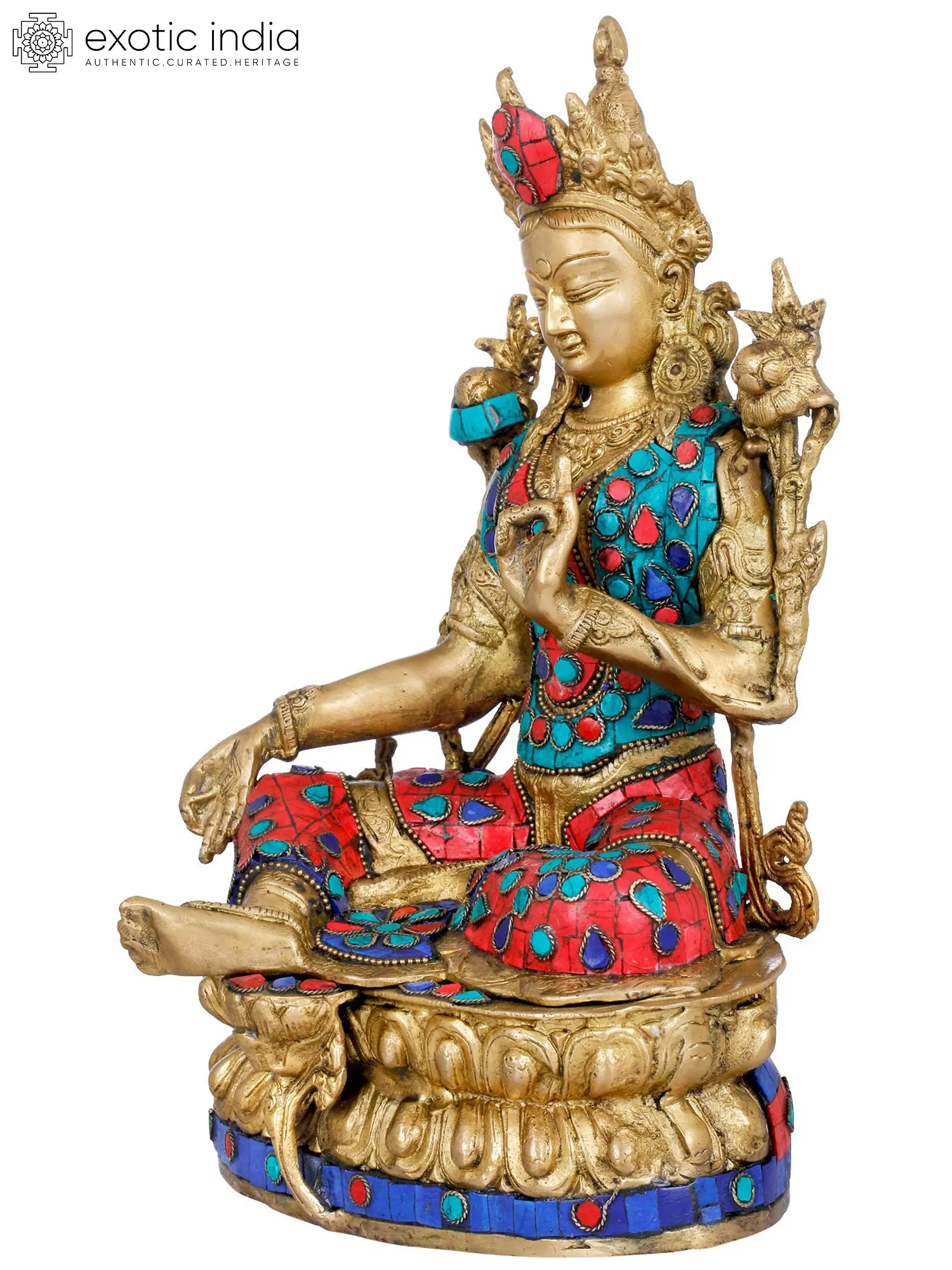
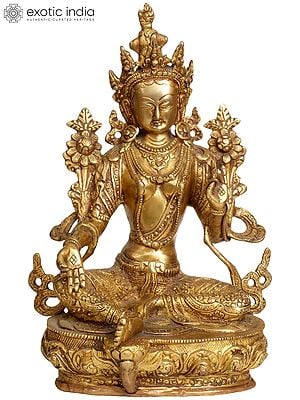
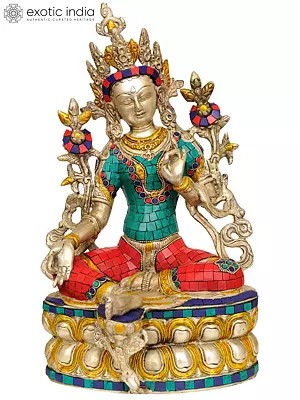
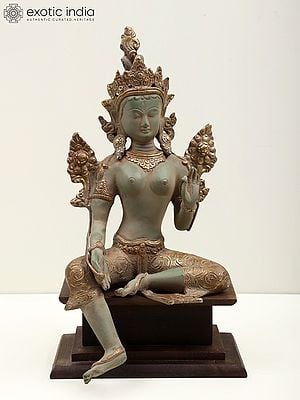
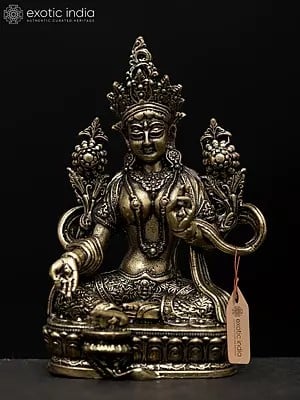
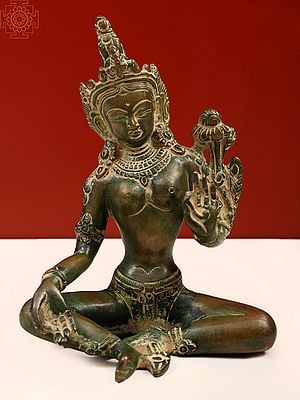
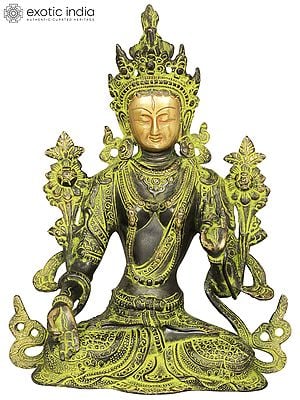
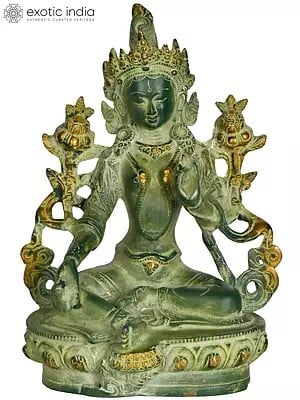
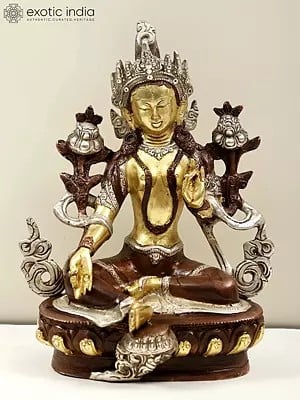
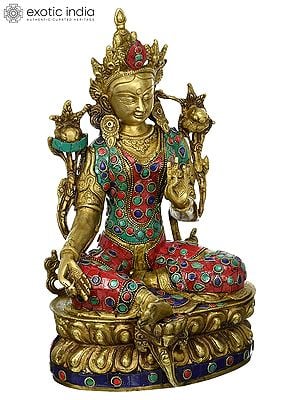
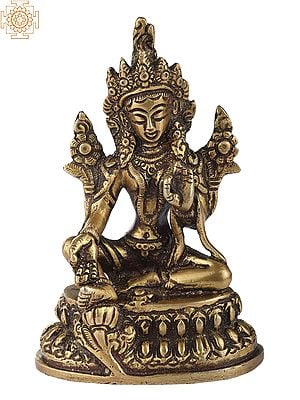
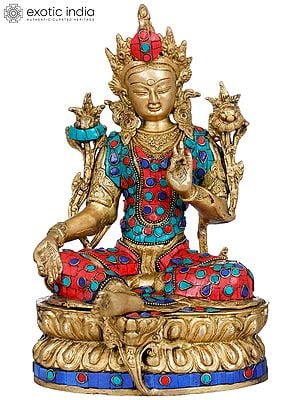
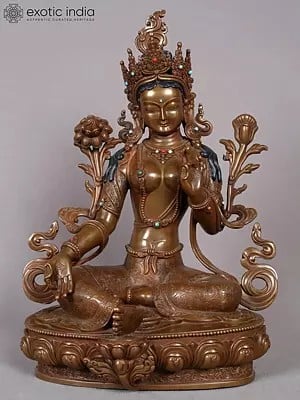
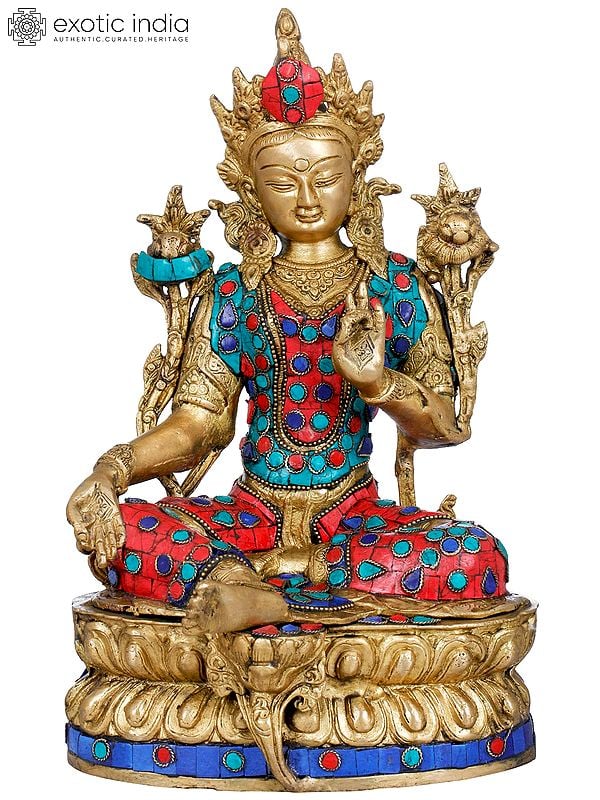
This exquisite brass statue captures the serene and compassionate form of Green Tara, a revered Bodhisattva in Mahayana Buddhism. Her posture is one of graceful ease, seated in the lotus position, a symbol of purity and spiritual enlightenment. Her right leg is extended, resting on a lotus bloom, signifying her readiness to descend and aid those in need. Her left leg is drawn up, and her left hand rests on her knee, while her right hand is raised in the gesture of *abhaya mudra*, the gesture of fearlessness and protection. This pose embodies her constant vigilance and willingness to protect sentient beings from the eight great fears.A Goddess of Swift Action and Protection
Green Tara is known as the "Mother of Liberation" and is invoked for her swift intervention in times of suffering and danger. Legends tell of her emanating from the tears of compassion shed by Avalokiteshvara, the Bodhisattva of Compassion. Upon seeing the suffering of the world, Avalokiteshvara wept, and a tear formed a lake from which a lotus arose, revealing Green Tara. Her name, Tara, itself means "star" or "to cross over," reflecting her ability to guide beings across the ocean of suffering to liberation. She is particularly invoked to overcome obstacles, overcome sickness, and to grant wishes, making her a beloved deity for practitioners seeking solace and spiritual progress.Artistry and Symbolism in Brass and Gemstones
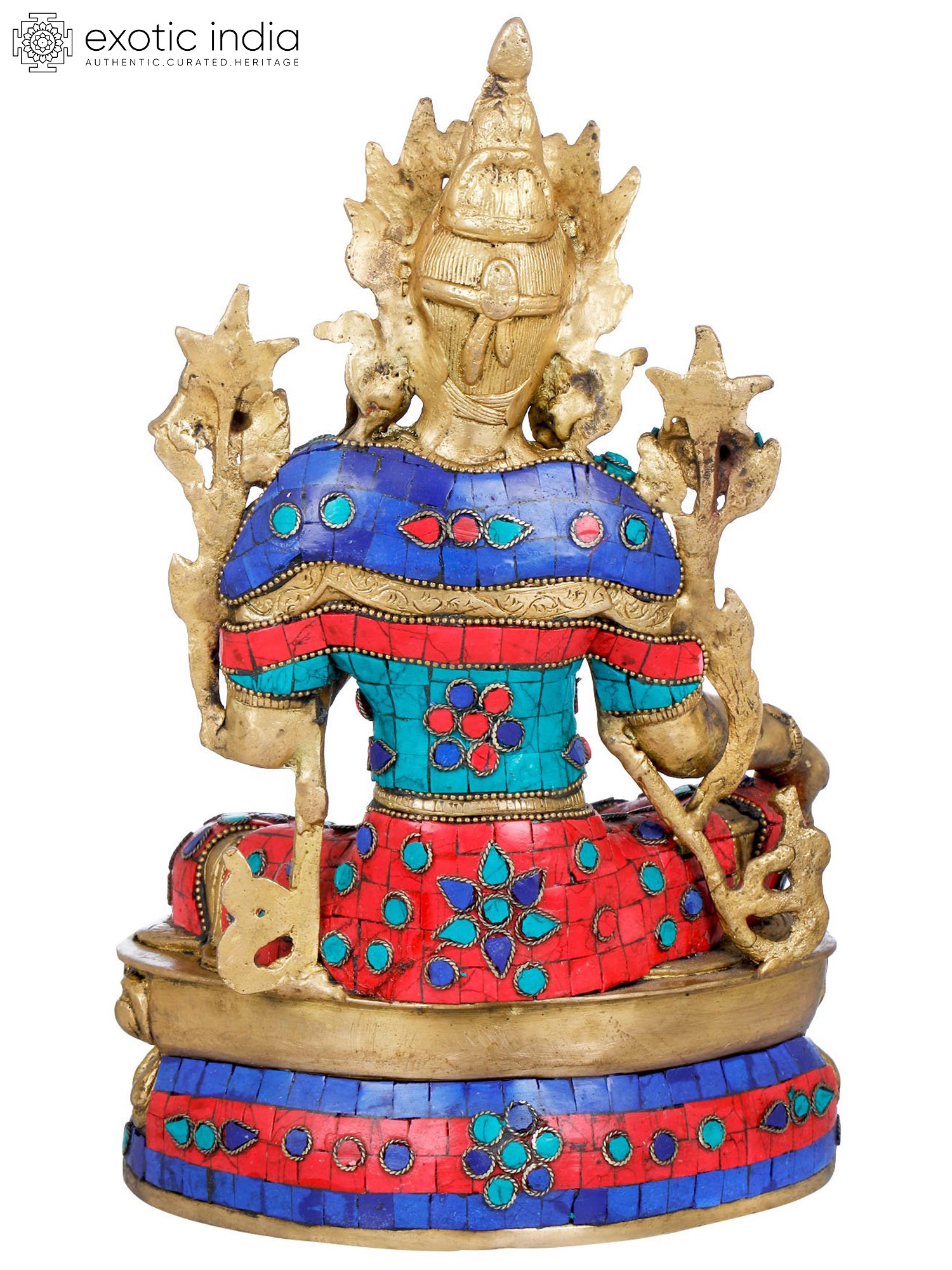
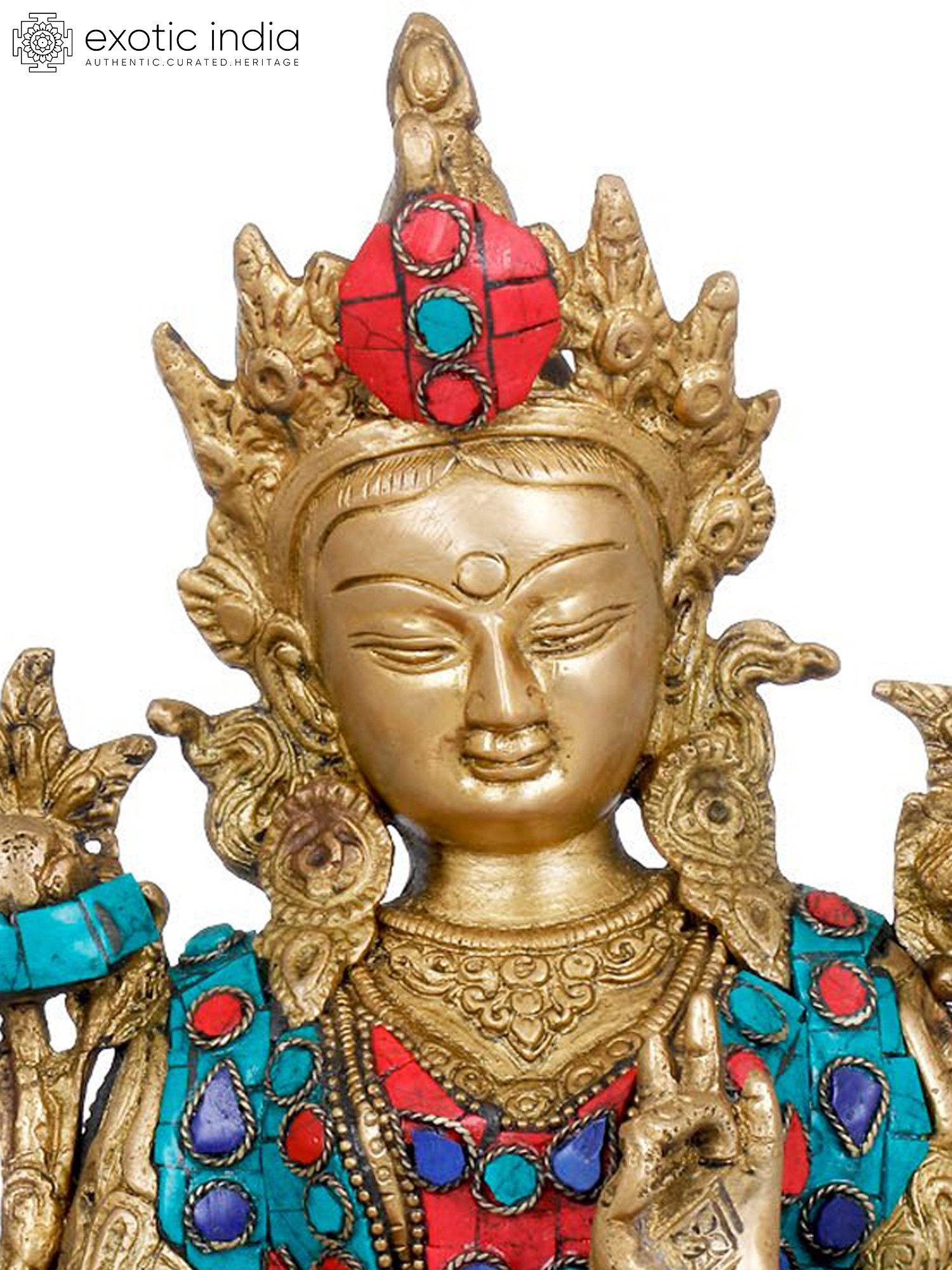
Crafted by skilled artisans in India, this statue is a testament to traditional craftsmanship. The lustrous brass base serves as a rich canvas for the intricate details of Tara's form. The vibrant inlay work, featuring striking red and turquoise stones, adds a captivating dimension to the deity. These colors are not merely decorative; red is often associated with life force, passion, and courage, while turquoise symbolizes the sky, the heavens, and spiritual wisdom. Together, they create a visual harmony that enhances the sacred aura of the statue. The delicate ornamentation, from the elaborate crown to the flowing robes, speaks of the divine grace and majesty of Green Tara. The lotus on which she rests, with its layered petals, symbolizes the unfolding of spiritual awareness.
This 12-inch representation is more than just an object of art; it is a conduit for devotion, a reminder of the boundless compassion and protection available to all beings. Whether placed in a home altar, a meditation space, or a study, this Green Tara statue is intended to inspire peace, courage, and a deep connection to the spiritual path. Its creation in India, a land steeped in rich spiritual traditions, further imbues it with authenticity and devotional resonance.
Exploring the Mystical Beauty and Symbolism of Tara: An
Insightful Journey
Tara is an important and revered deity in Tibetan Buddhism who
appears as a female Bodhisattva. Buddhist monks and followers
meditate on the image or deity of Tara to develop some good
qualities such as compassion and kindness. Tara is known as the
mother of compassion or liberation and is considered the female
aspect of Avalokiteshvara (who possesses the compassion of all
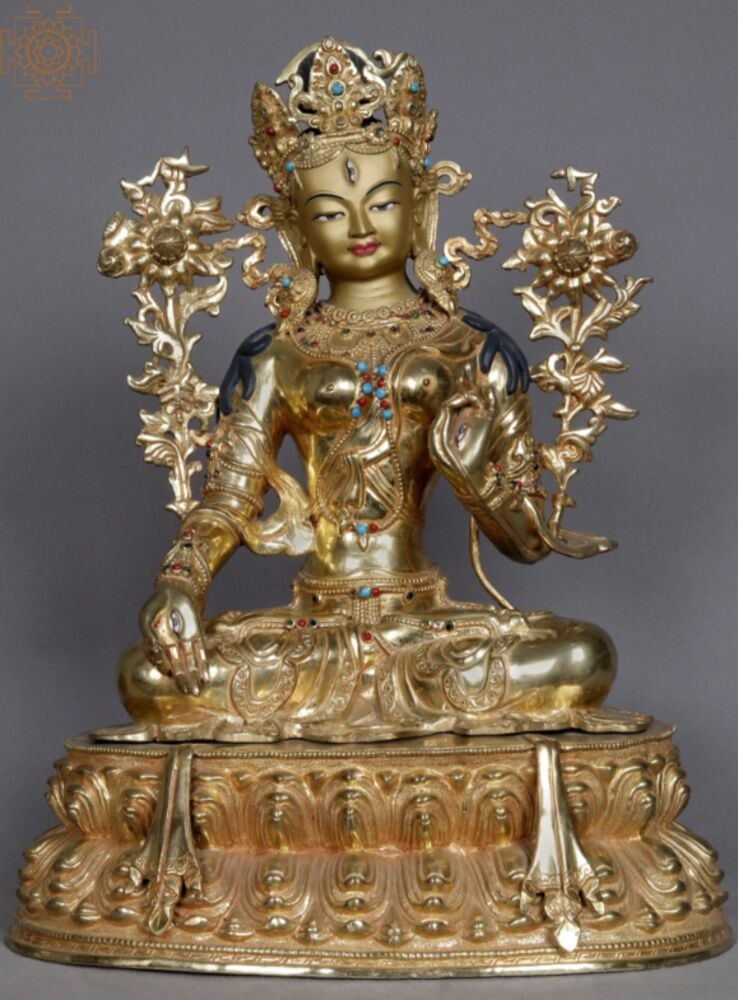
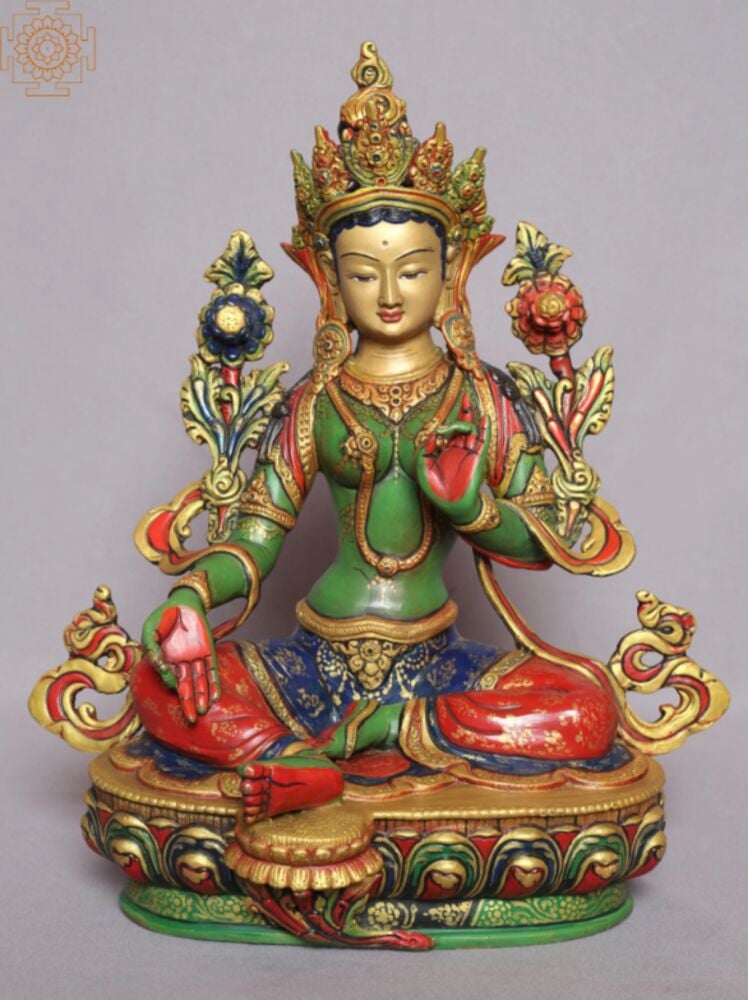
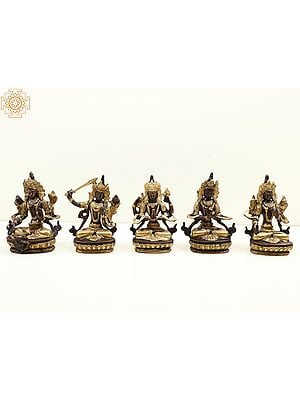
Buddhas). She manifests in different forms such as Green Tara
and White Tara. Green Tara is associated with fearlessness and
White Tara, as radiant as the moon, is associated with good
health. Tara also appears in red, blue, and yellow colors.
Tara, being the ocean of compassion, descends to this material
world to save fallen souls from the vicious cycle of repeated
birth and death. Whoever visualizes and meditates upon the form
of Tara crosses the ocean of material existence. She is often
depicted as having a beautiful youthful body and sitting on a
full-blown lotus resembling the form of Goddess Lakshmi.
What is Tara the goddess of?
Tara is usually associated with Tibetan Buddhism but in Chinese
Buddhism, she is considered the female manifestation of Guanyin.
She is given the position of the supreme mother who is full of
compassion and mercy. She enlightens living beings about the
nature of this material world (temporary and full of miseries)
and heals their emotional and physical wounds. She encourages
them to walk the path of self-realization and to uplift their
consciousness in order to come of material existence.
What does the statue of Tara symbolize?
Just as a mother is very merciful towards her child; she cries
when the child is in distress or pain, similarly, Tara acting as
the mother of the world, is the embodiment of all compassion and
mercy. She symbolizes various qualities such as peacefulness,
empathy, wisdom, love, and kindness. She helps all living beings
come to the real or true understanding of self. As a Buddhist
practitioner concentrates on the form of Tara, he develops these
qualities that help him advance in his spiritual journey.
Where should Tara statues be placed?
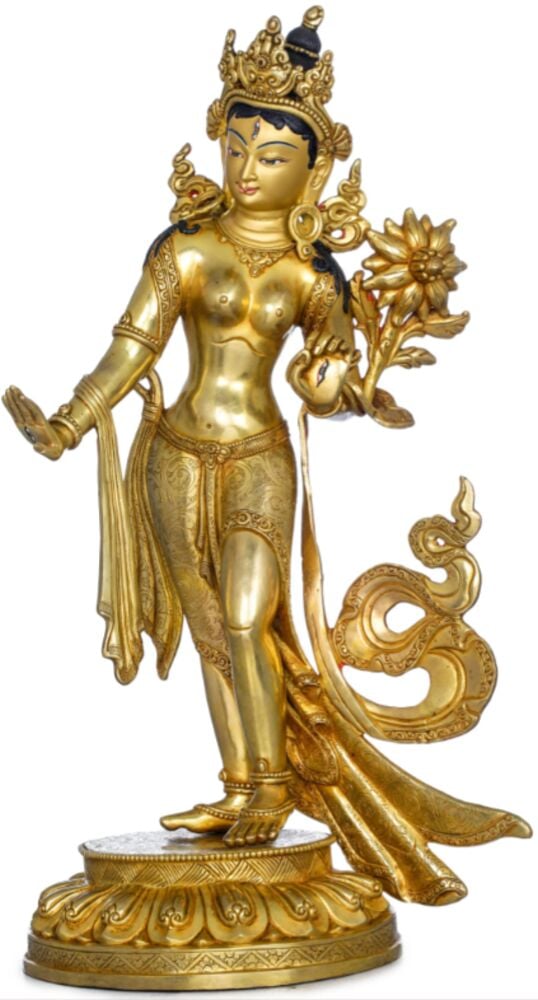
If you are planning to buy the statue of Goddess Tara, you can
keep it on the altar of your home. This will help you to focus
better on Tara"e;s form and invoke her energy. The form of Tara is
beautiful to look at and therefore, you can also place the
statue/deity on a clean table or a shelf in your living room to
spiritualize the entire space, leaving a positive impression on
the guests.
How to keep a Brass statue well-maintained?
Brass statues are known and appreciated for their exquisite beauty and luster. The brilliant bright gold appearance of Brass makes it appropriate for casting aesthetic statues and sculptures. Brass is a metal alloy composed mainly of copper and zinc. This chemical composition makes brass a highly durable and corrosion-resistant material. Due to these properties, Brass statues and sculptures can be kept both indoors as well as outdoors. They also last for many decades without losing all their natural shine.
Brass statues can withstand even harsh weather conditions very well due to their corrosion-resistance properties. However, maintaining the luster and natural beauty of brass statues is essential if you want to prolong their life and appearance.
- The best and simplest way to maintain a brass statue is to clean it at least twice a week using a soft cloth or cotton rag. This will prevent dust from accumulating on the surface. Dusting is especially important for outdoor statues since it is prone to dust accumulation much more than indoors.
- To give a natural shine and luster to the statue, you may apply coconut or olive oil using cotton on every portion. You can use a toothbrush to get to the small crevices but do not be too harsh. This will make the brass statue appear fresh and new with a polished look.
In case you have a colored brass statue, you may apply mustard oil using a soft brush or clean cloth on the brass portion while for the colored portion of the statue, you may use coconut oil with a cotton cloth.
Brass idols of Hindu Gods and Goddesses are especially known for their intricate and detailed work of art. Nepalese sculptures are famous for small brass idols portraying Buddhist deities. These sculptures are beautified with gold gilding and inlay of precious or semi-precious stones. Religious brass statues can be kept at home altars. You can keep a decorative brass statue in your garden or roof to embellish the area and fill it with divinity.




















 Upload an Image