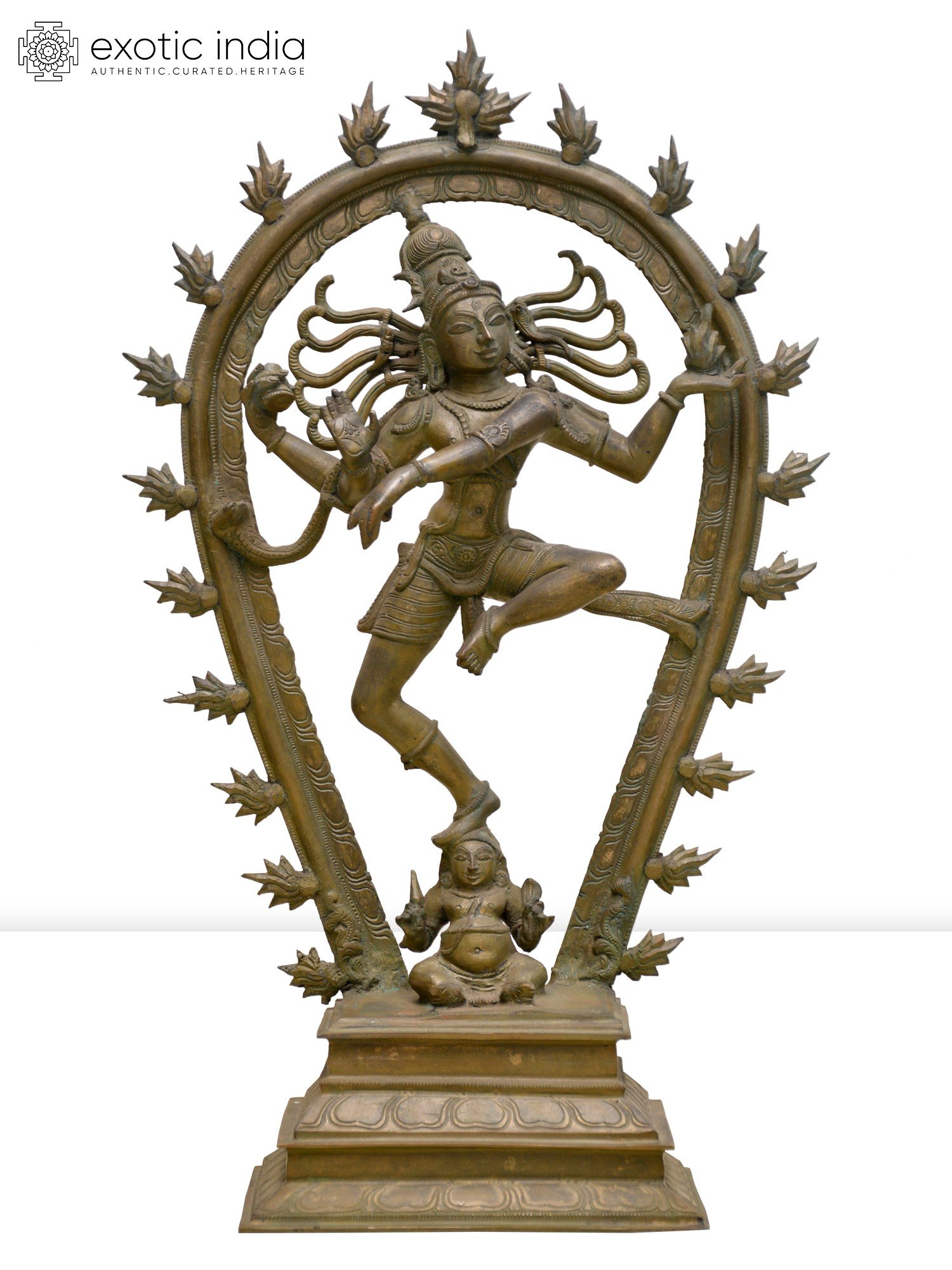
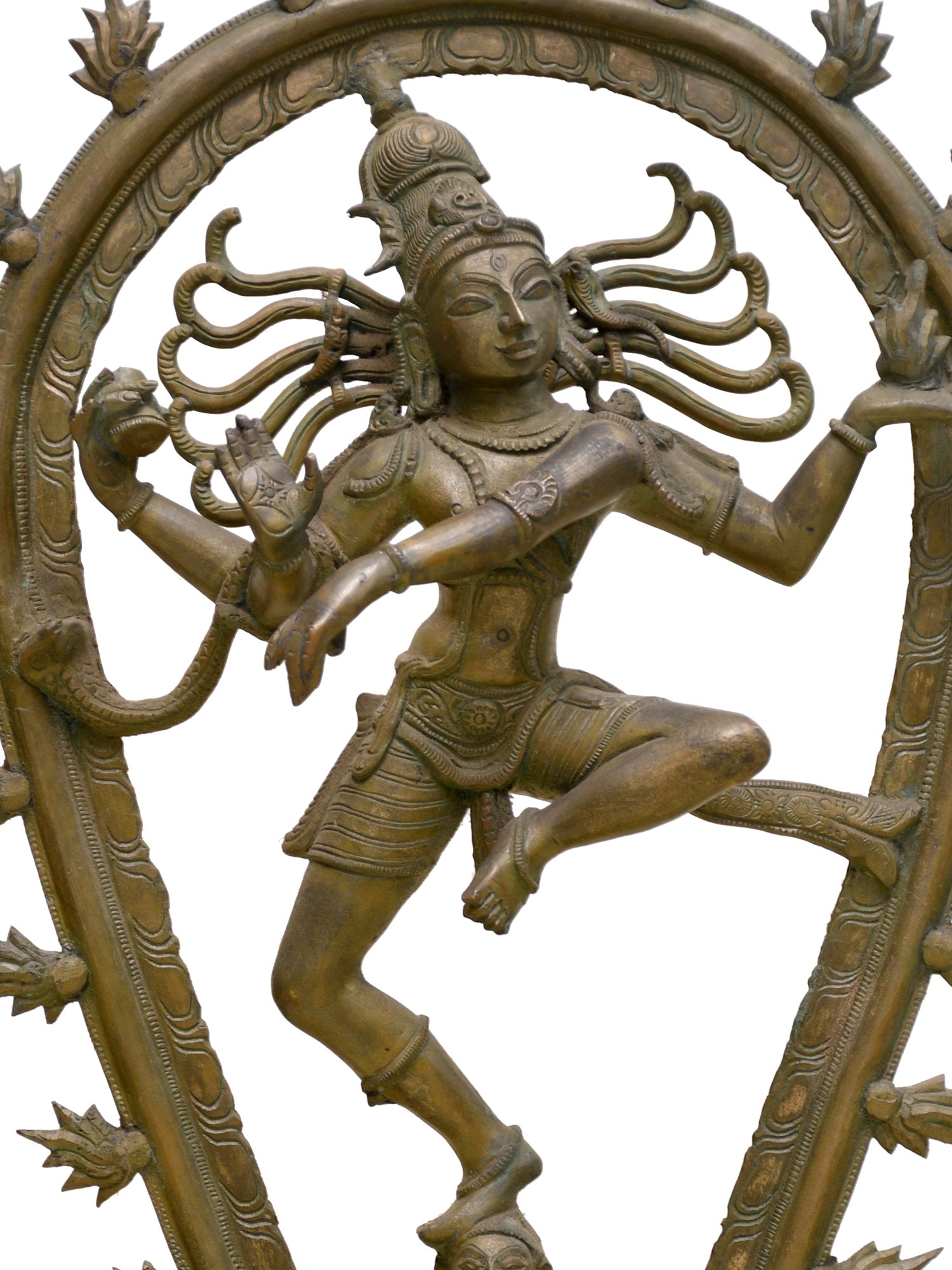
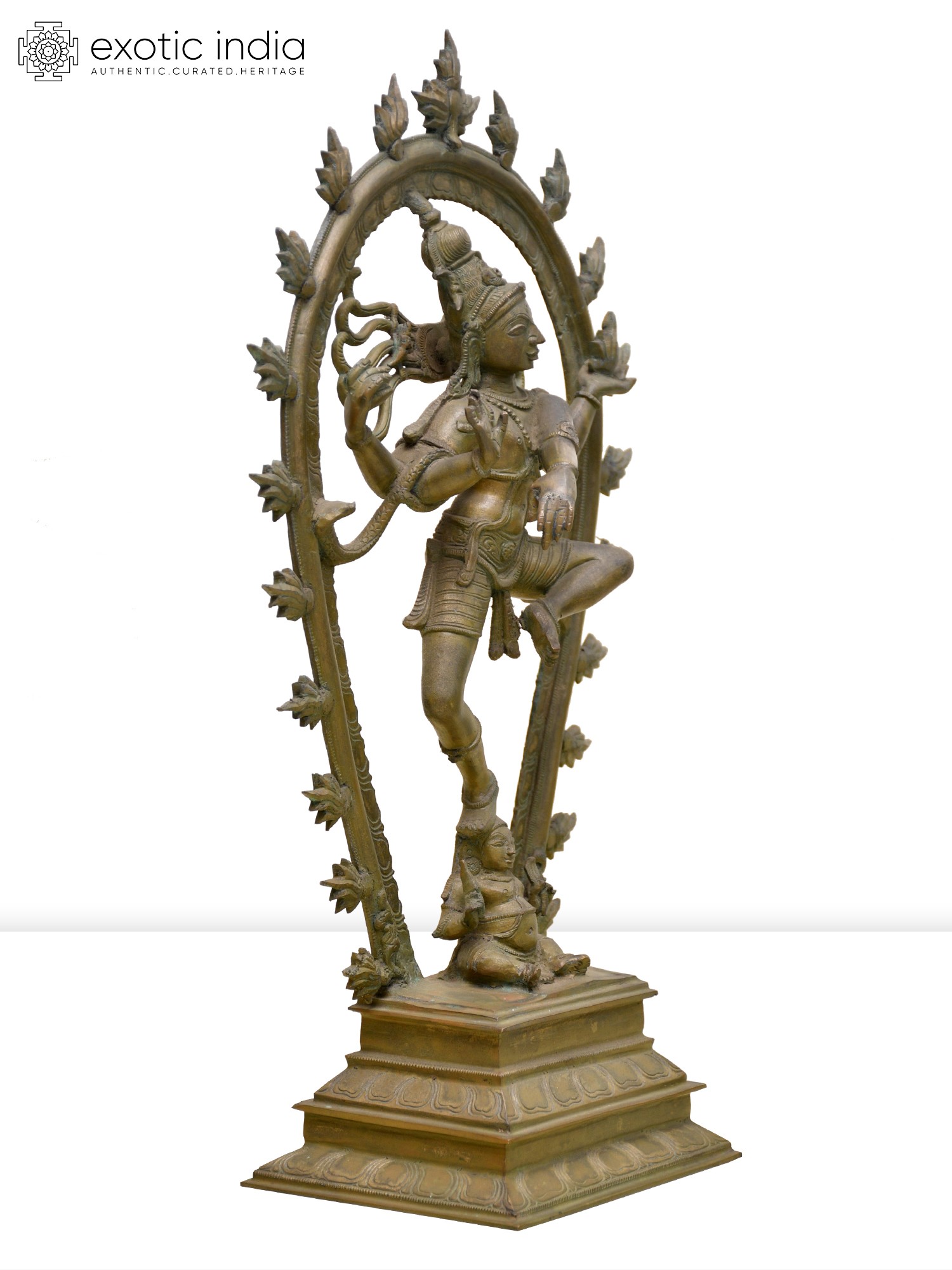
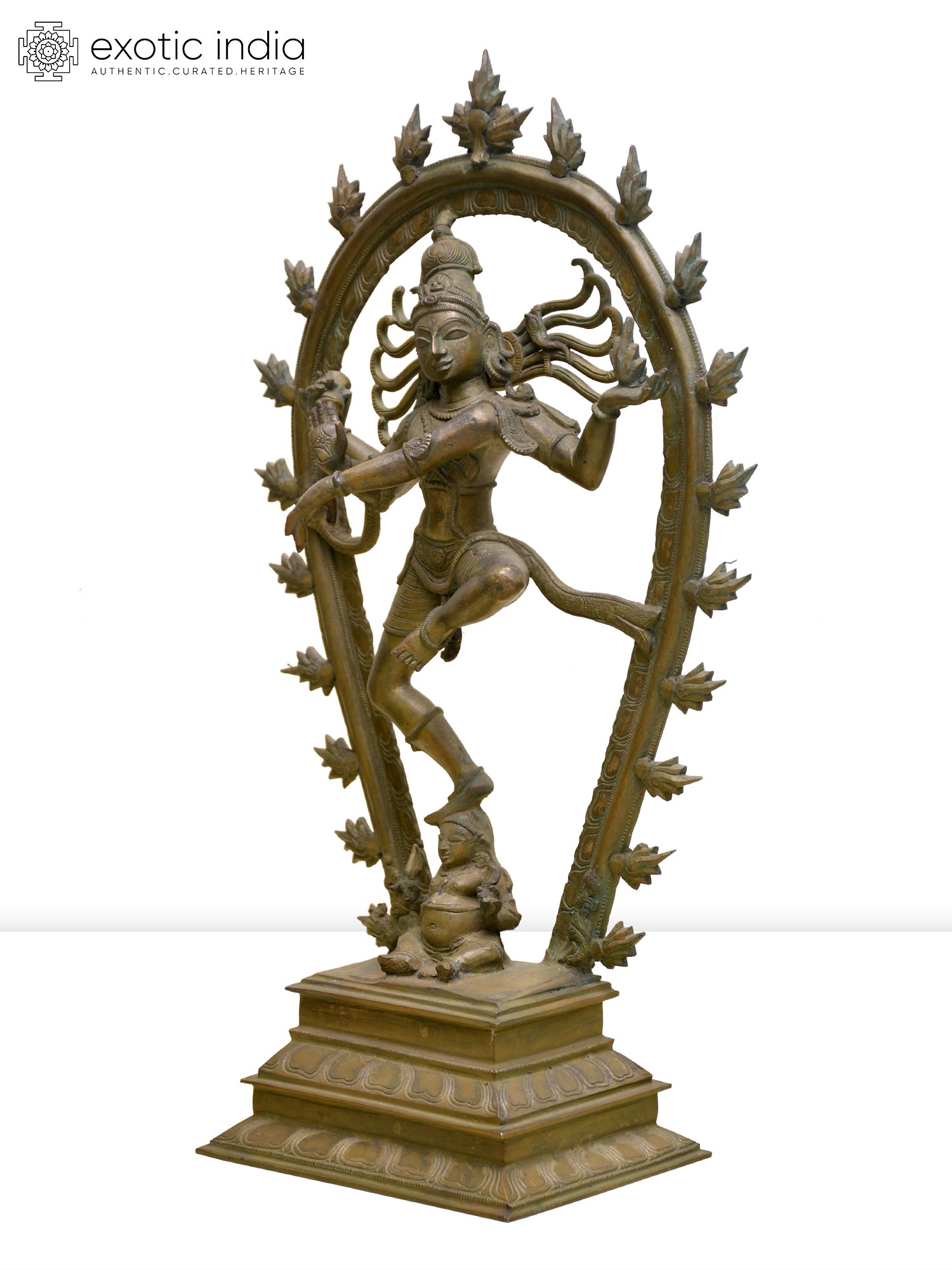
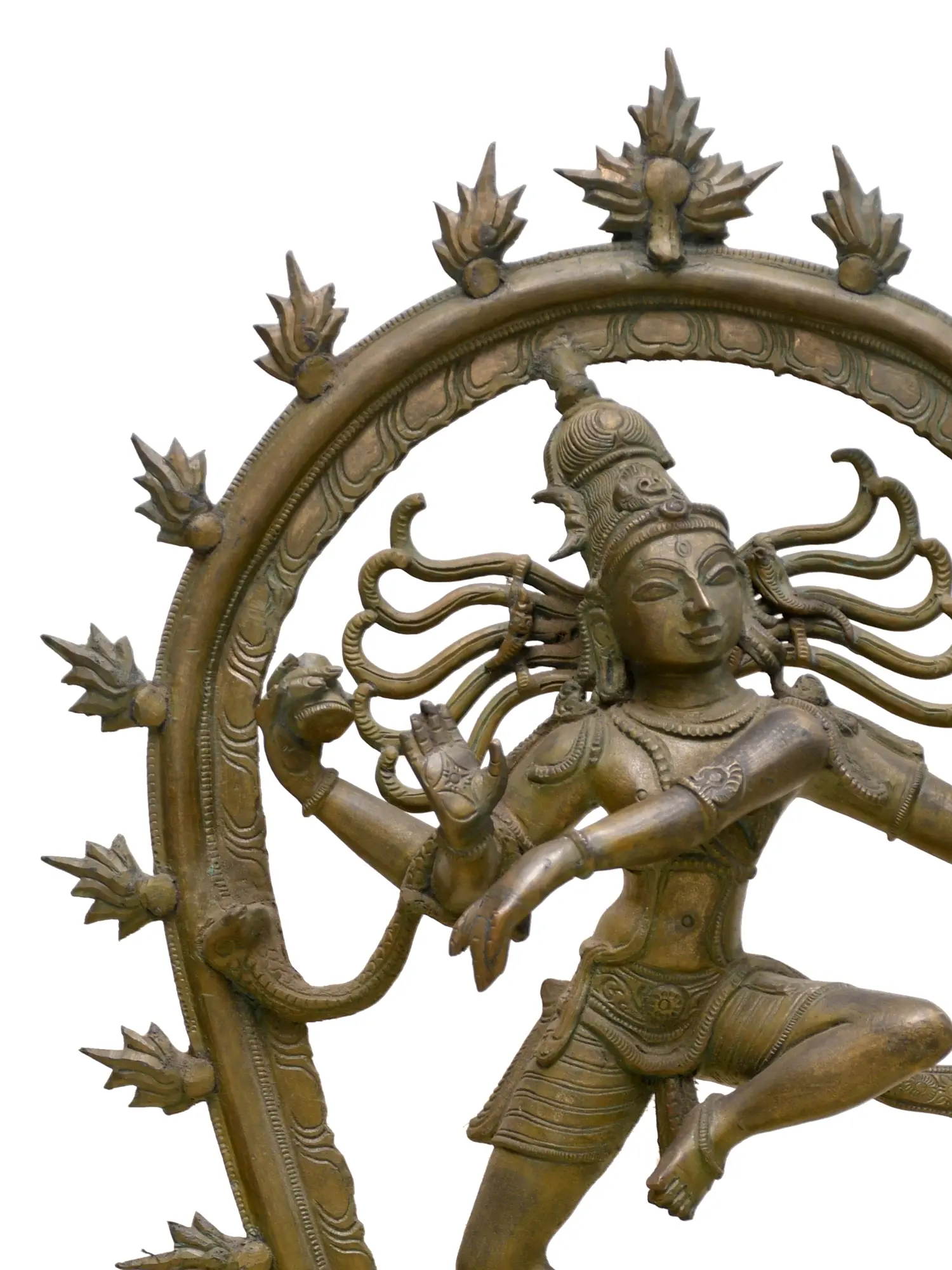
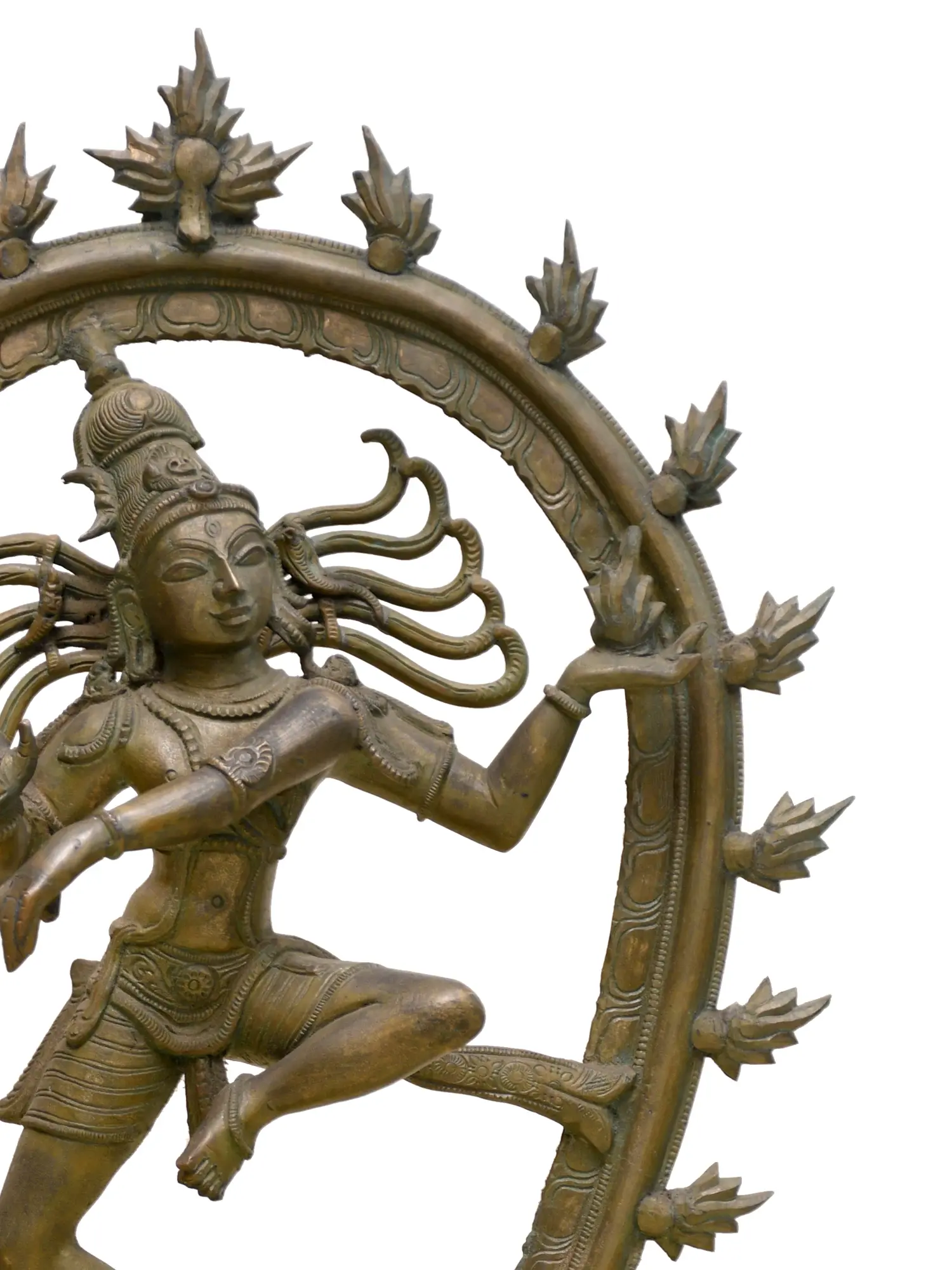
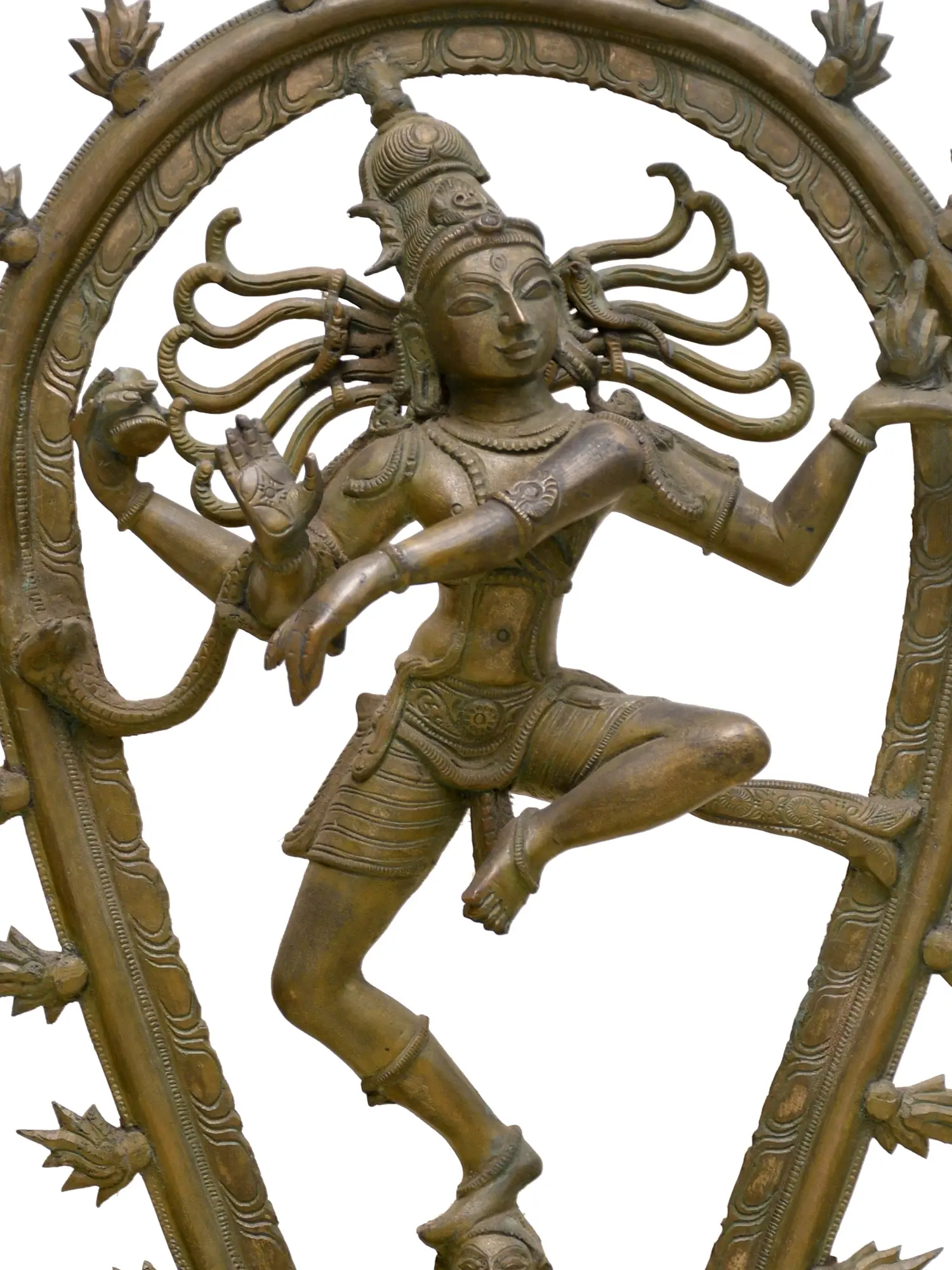
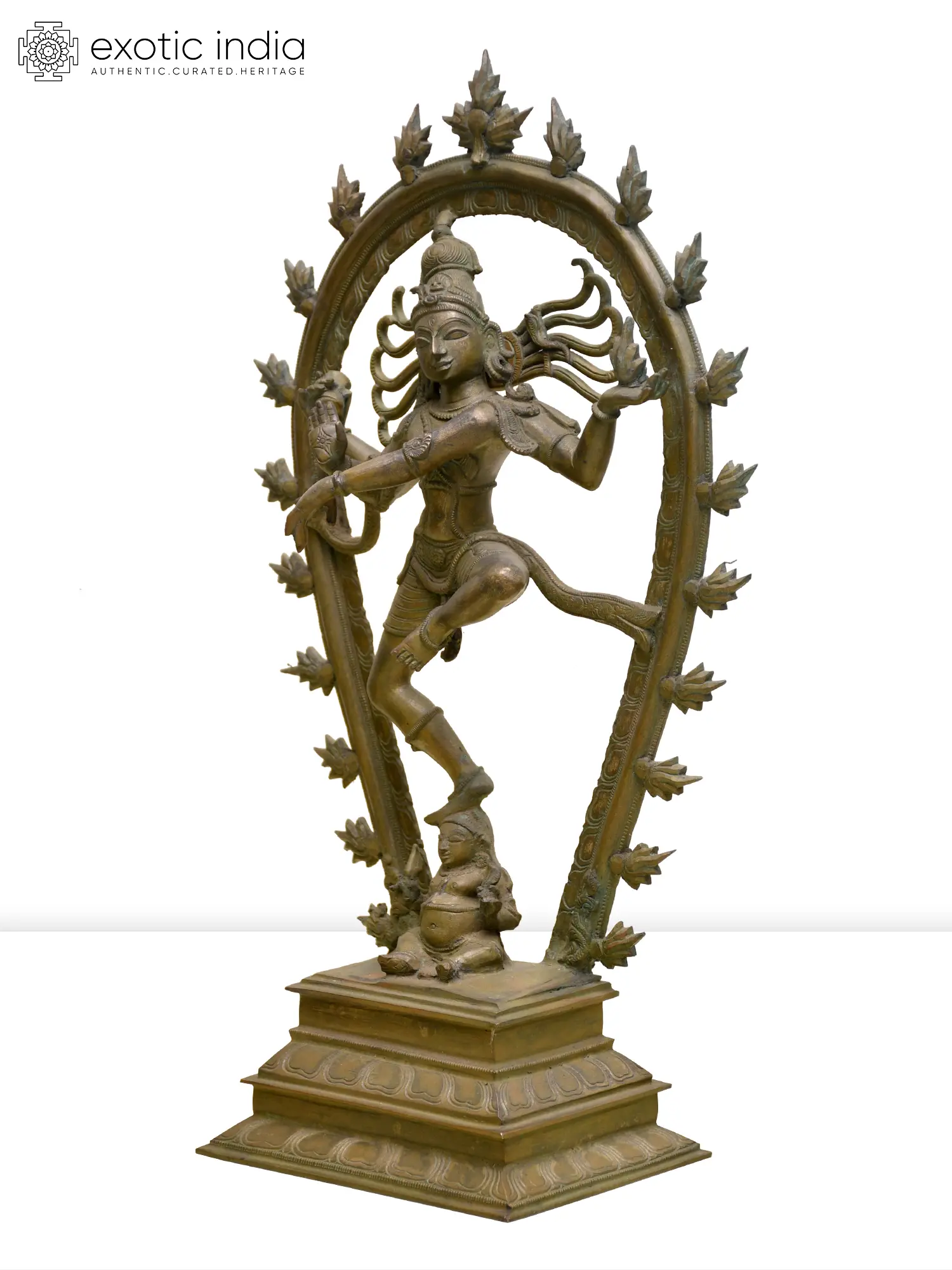
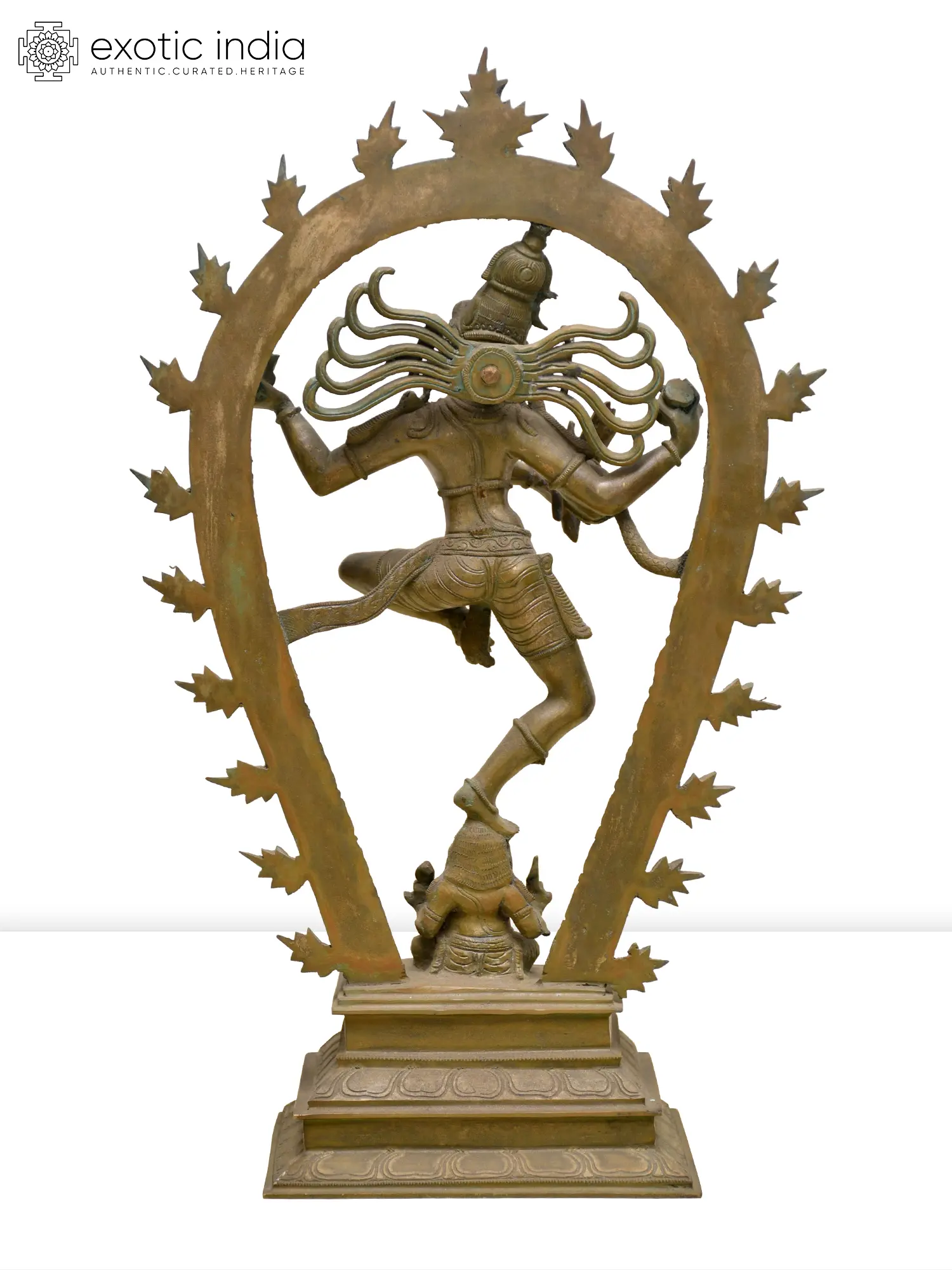
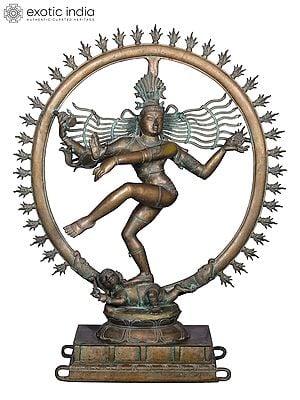
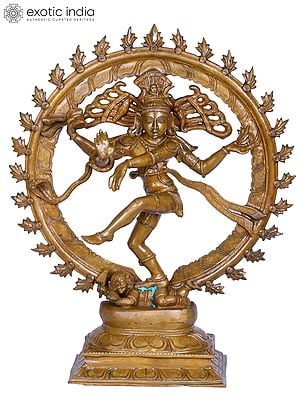
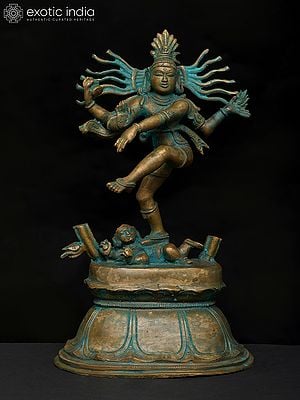
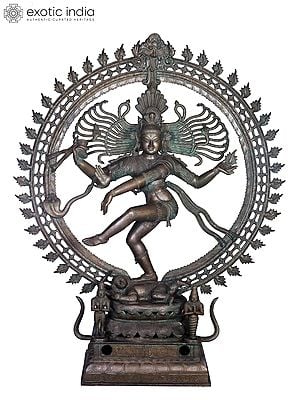
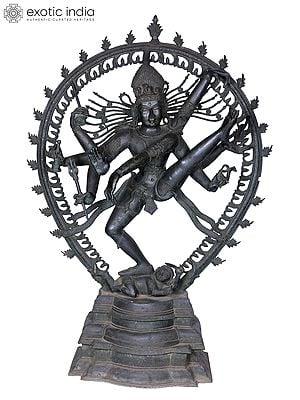
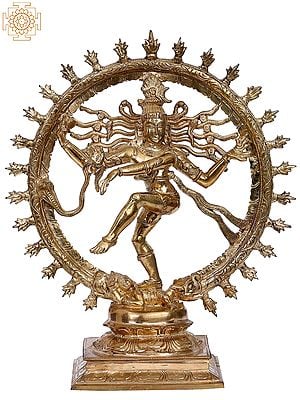
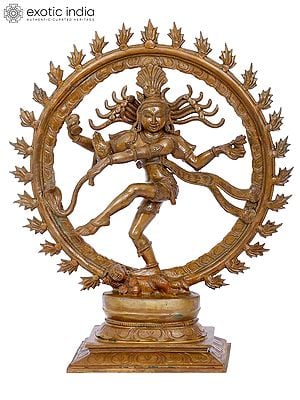
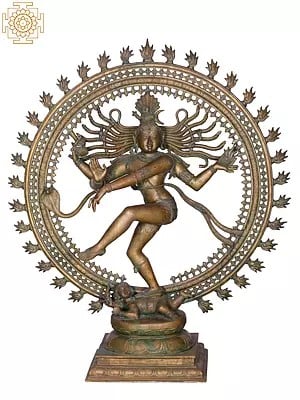
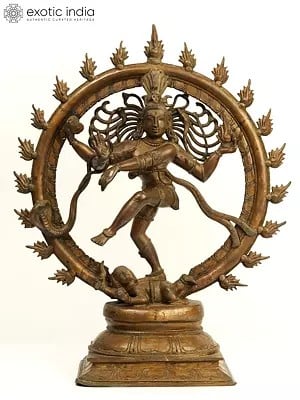
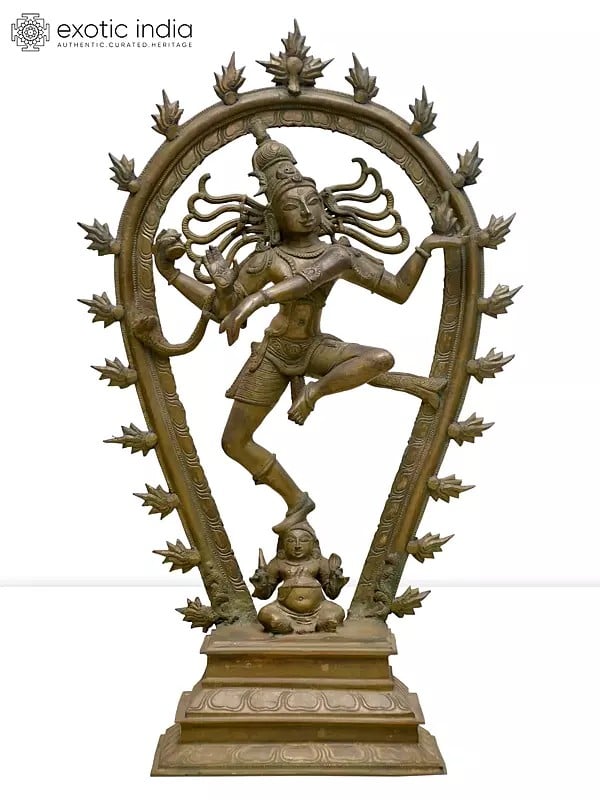
His left leg
swiftly raised, a sweet smile appeared on his face, and energy emanating from
his form, Shiva Nataraja in this bronze statue brims with divine dynamism.
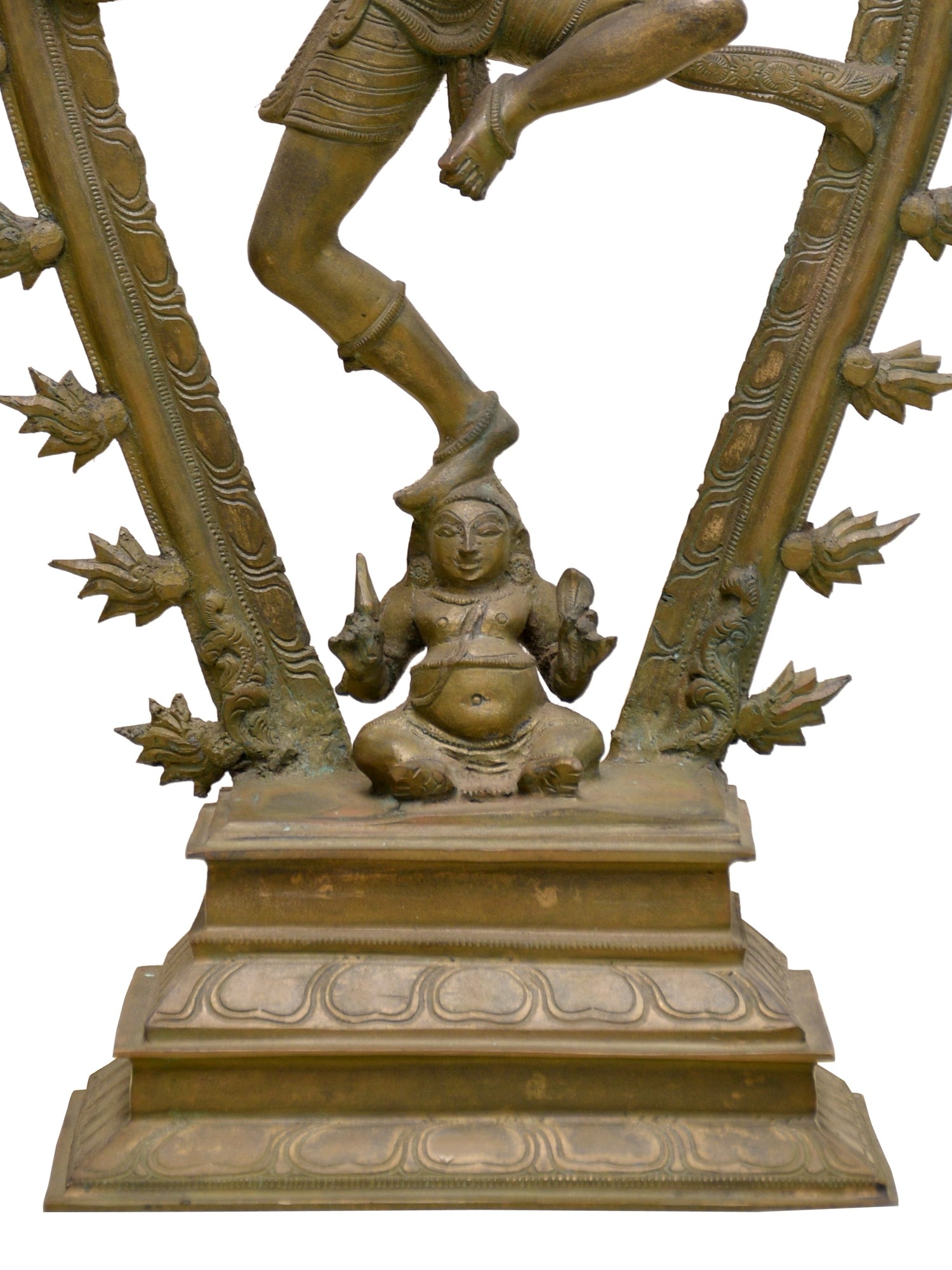
Standing on
the head of a stout Apsamara, Nataraja has a vigorous yet light appearance, as
if jumping forth in the cosmos, to perform his dance.
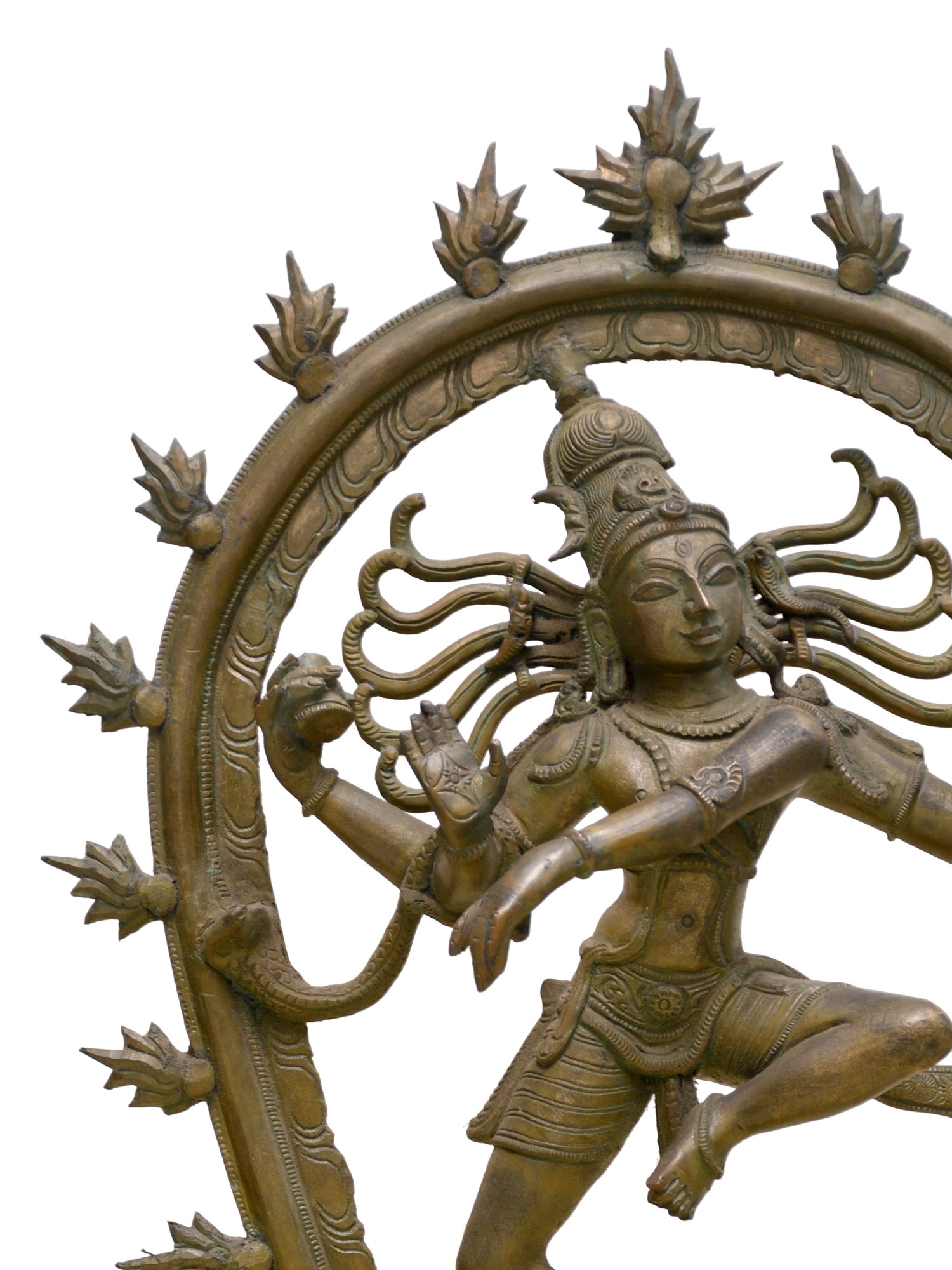
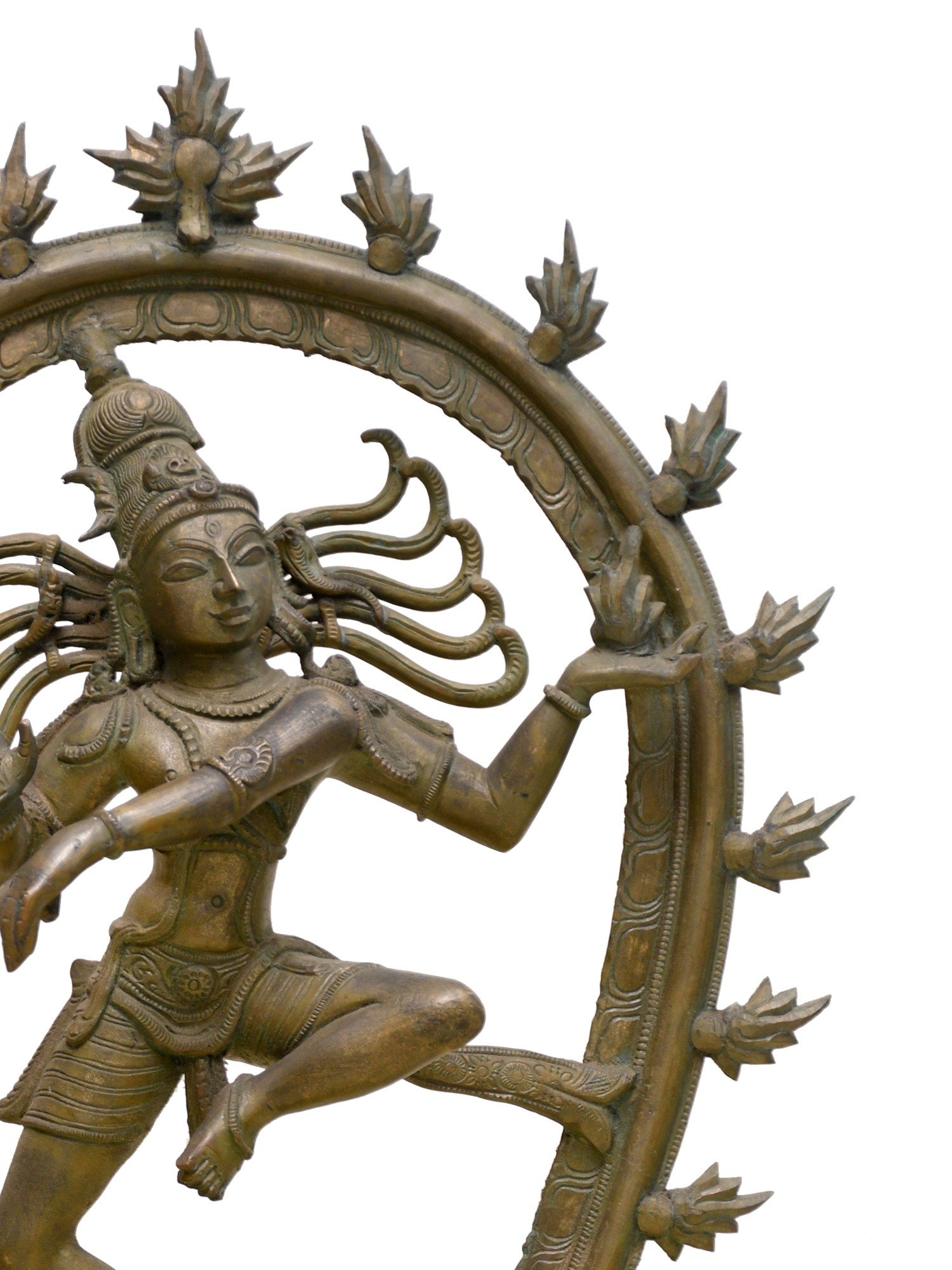
Highlighted
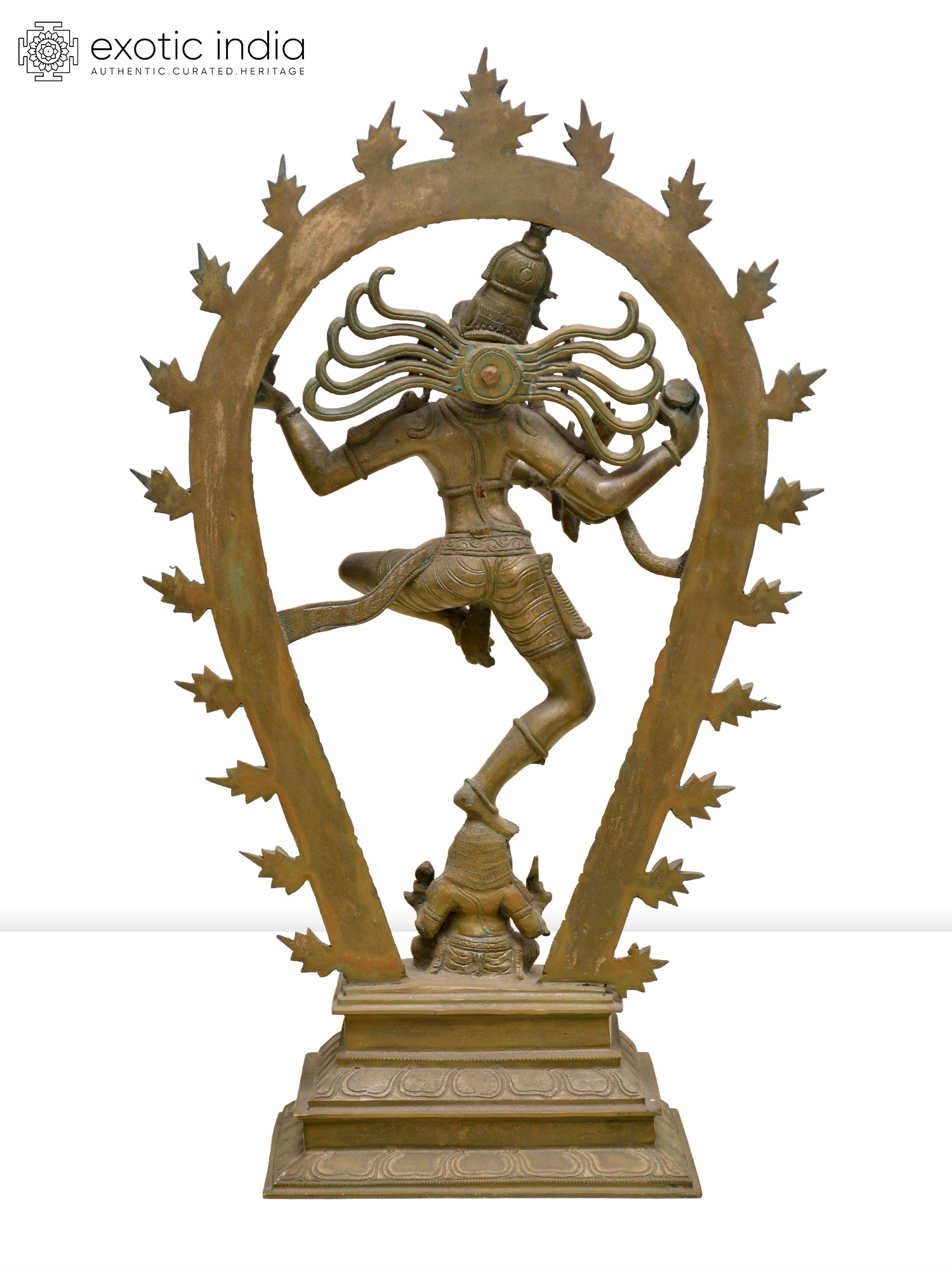
by the stylized aureole of fire, Nataraja throws his head backward, letting his
tresses sway around him contrasting with the neat ornamentation of his
intricate Jatamukuta.
The youthful features of
Shiva are adorned by traditional jewelry, with every attribute distinctly
sculpted to give the icon an elaborate appearance.
The Divine Dance: Unveiling the Nataraja
This magnificent 18-inch bronze statue of Lord Shiva as Nataraja, crafted using the ancient lost-wax (Madhuchista Vidhana) technique, is a breathtaking testament to the artistry and spirituality of South India. The piece is cast in Panchaloha, a sacred five-metal alloy, imbuing it with a profound spiritual significance. The intricate details, from the flowing locks of Shiva's hair to the delicate ornamentation of his attire, are a testament to the skill of the Swamimalai artisans who have for generations preserved this time-honored tradition. This Nataraja is not merely a decorative object; it is a powerful representation of cosmic energy and divine grace, a captivating work of art that captures the essence of Hindu mythology and devotion.The Mythology of Nataraja: The Cosmic Dance
Nataraja, the "King of Dance," is one of the most iconic and widely revered forms of Lord Shiva. His dance depicts the cyclical nature of creation and destruction, the universe’s rhythmic expansion and contraction. The different elements of the sculpture hold deep symbolic meaning: Shiva's raised left foot represents the release from the cycle of birth and death (samsara), while his lowered right foot holds the universe in place. His four hands carry various symbolic attributes: the damaru (hand drum) signifies the rhythm of creation, the agni (fire) represents transformation, the abhaya mudra (gesture of reassurance) offers protection, and the pasha (noose) symbolizes control over the cycle of time. The halo encircling him represents the cosmic circle of existence. The subdued figure at his feet is often interpreted as Apasmara Purusha, the demon of ignorance, signifying the triumph of knowledge over ignorance.The Artistry of Panchaloha and the Lost-Wax Technique
The statue's creation exemplifies the sophisticated lost-wax casting technique, known as Madhuchista Vidhana in Sanskrit. This ancient method involves creating a wax model of the desired sculpture, which is then covered in layers of clay. The clay mold is heated, melting the wax and leaving a hollow cavity. Molten Panchaloha, a sacred alloy of five metals (gold, silver, copper, brass and zinc), is then poured into this cavity. Once cooled, the clay mold is broken away, revealing the exquisitely detailed bronze statue. The use of Panchaloha, believed to enhance the spiritual potency of the sculpture, is consistent with traditional South Indian bronze-casting practices. The even patina and the rich bronze tone are testaments to the enduring quality and meticulous craftsmanship of this sacred work of art.Swamimalai: A Legacy of Bronze Casting
Swamimalai, located in Tamil Nadu, India, has a rich history associated with bronze casting. For centuries, the artisans of Swamimalai have been renowned for their mastery of the lost-wax technique, producing exquisite bronze sculptures revered for their aesthetic beauty and spiritual significance. The town’s heritage in bronze making is deeply intertwined with the cultural and religious landscape of South India, and its bronze sculptures are highly sought after by collectors and enthusiasts worldwide. This piece embodies the legacy and expertise of generations of skilled craftsmen, preserving a venerable tradition for posterity.A Timeless Treasure for Your Home
This Nataraja statue is more than just a piece of art; it’s a tangible link to a rich cultural heritage and a powerful symbol of spiritual enlightenment. Whether displayed as a focal point in a meditation space, a conversation piece in your living room, or a treasured item in your collection, this exquisitely crafted bronze sculpture will surely bring a sense of serenity, beauty, and profound meaning to your surroundings. Its presence is an invitation to contemplate the cyclical dance of existence and the ultimate triumph of consciousness.








 Upload an Image