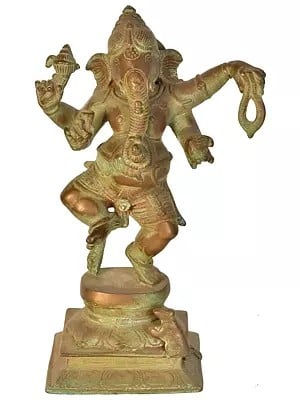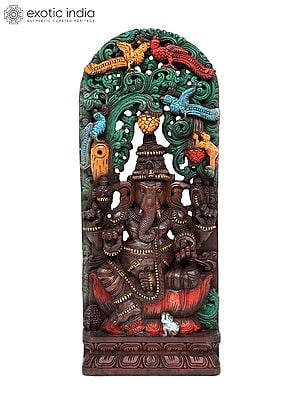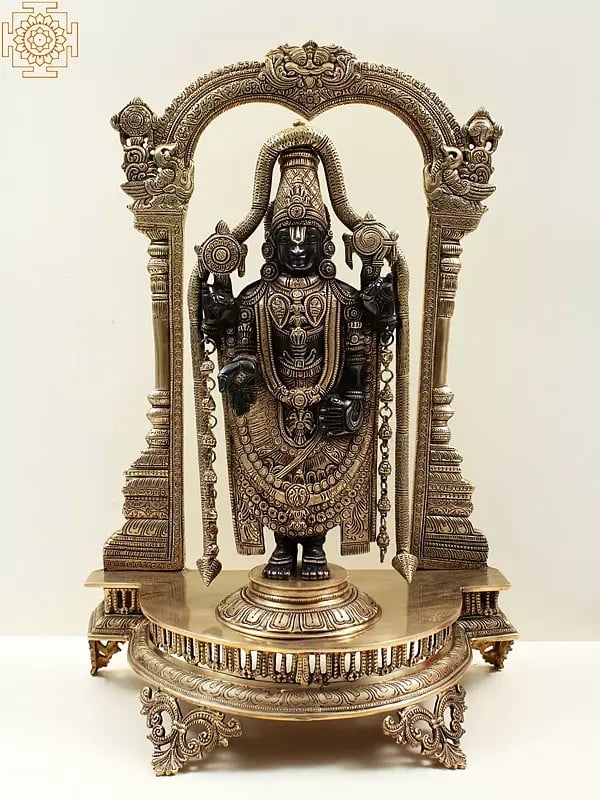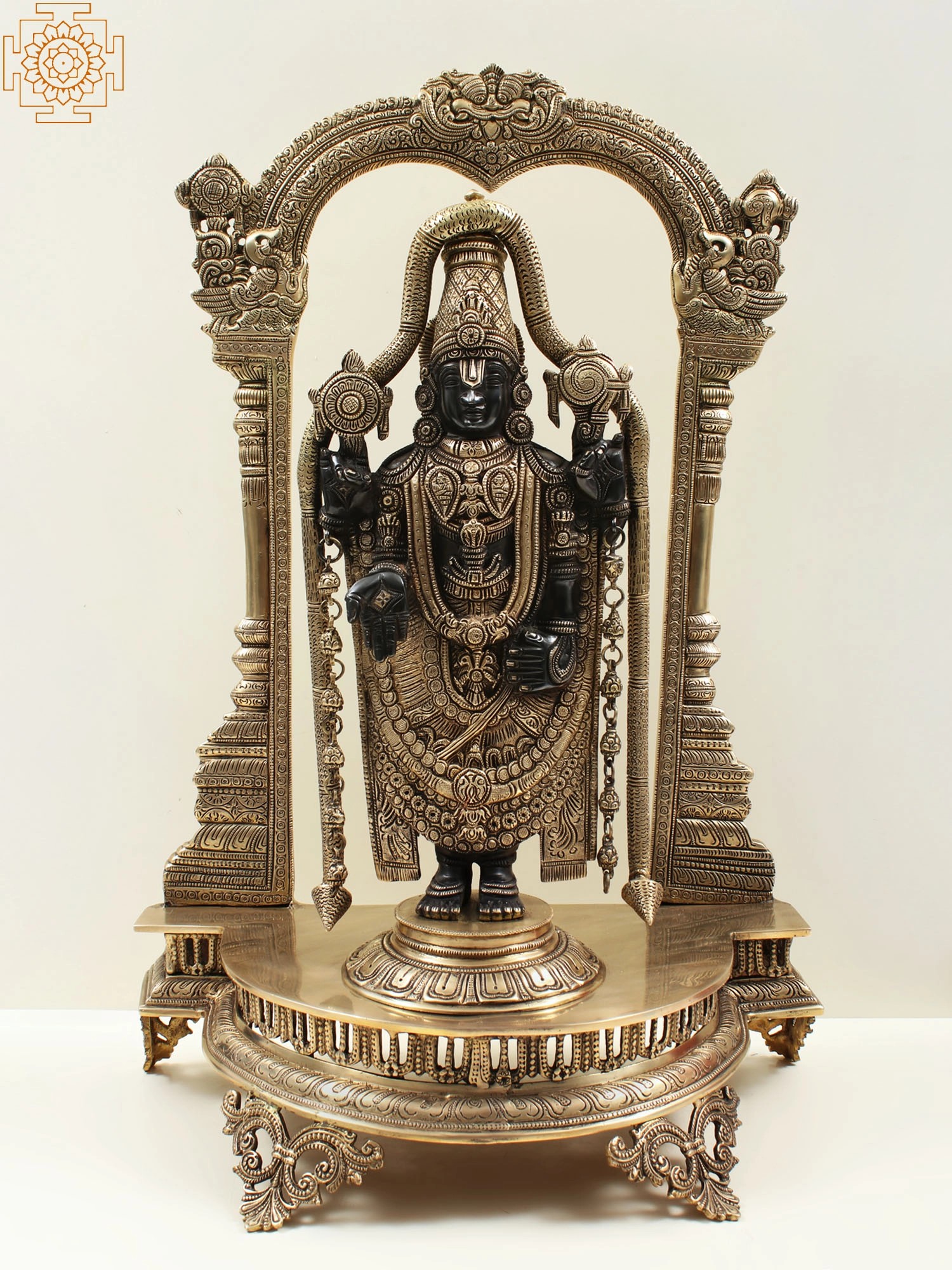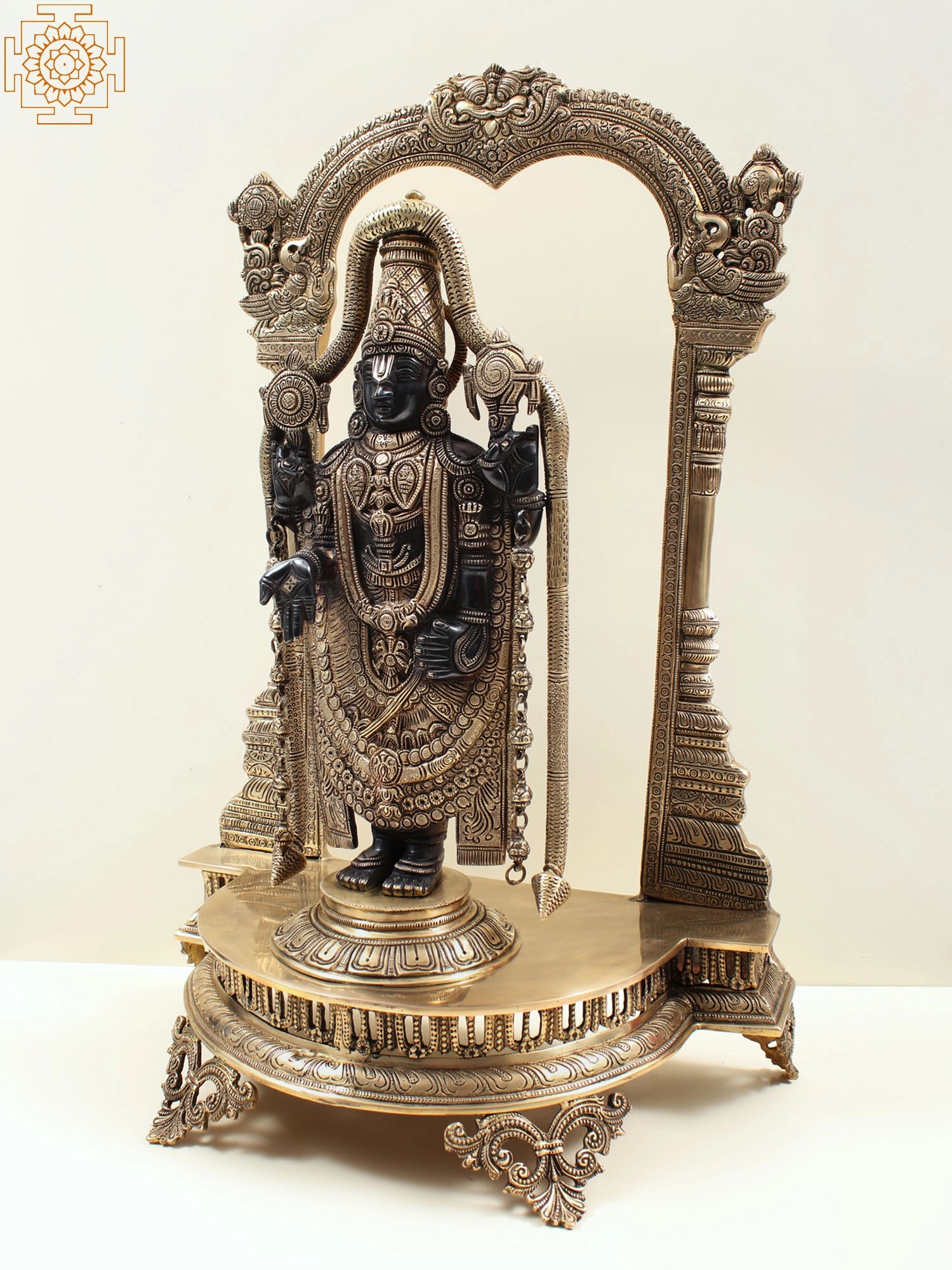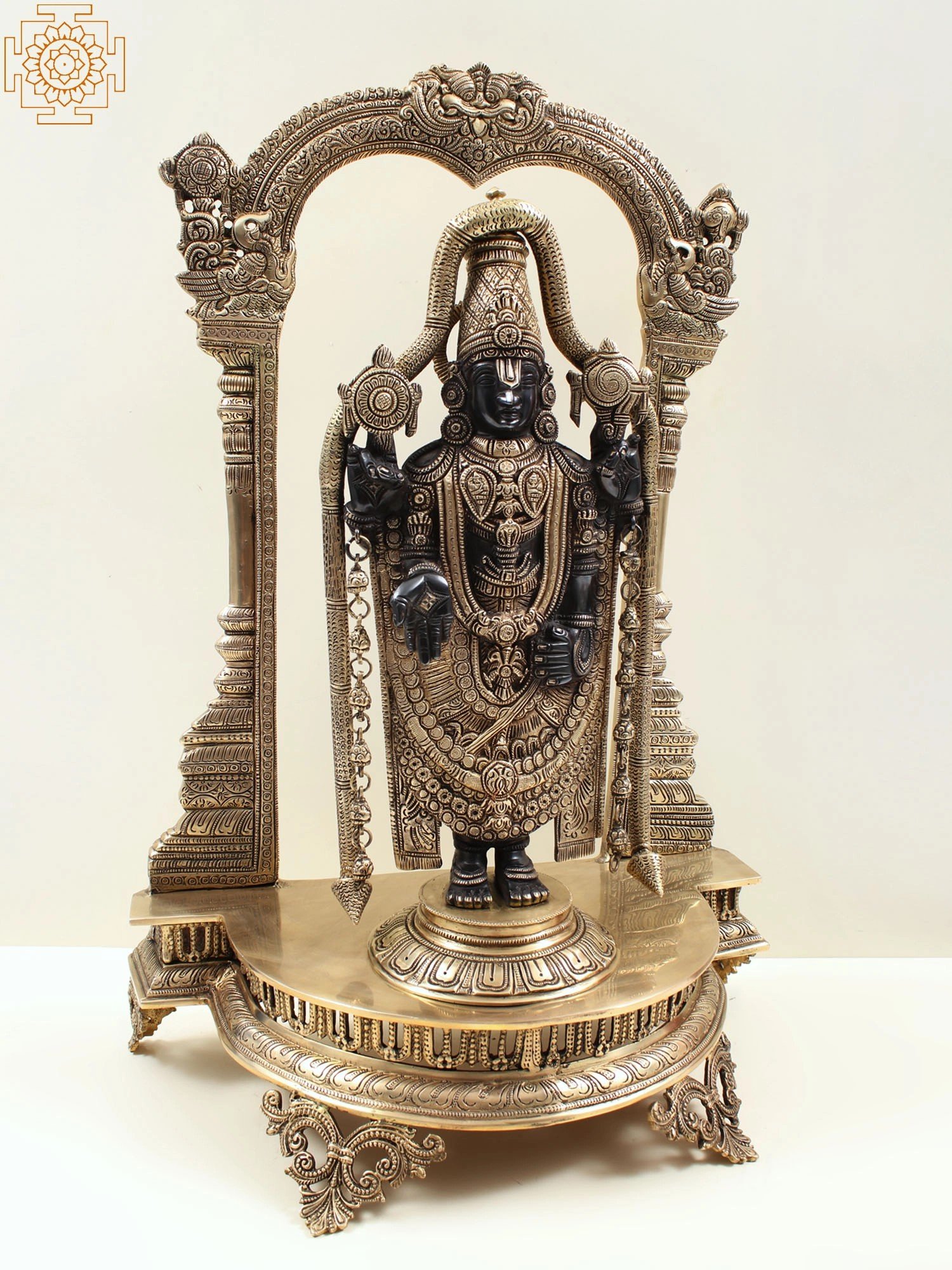

The statue
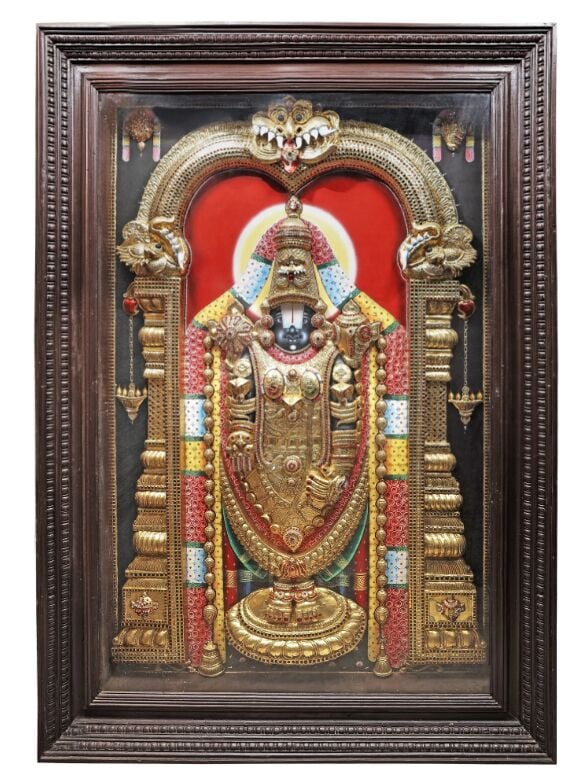
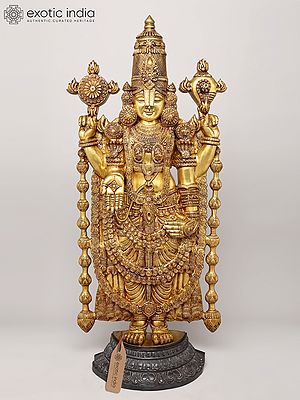
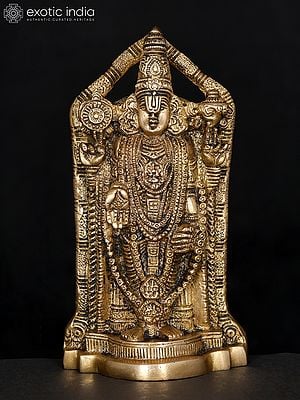
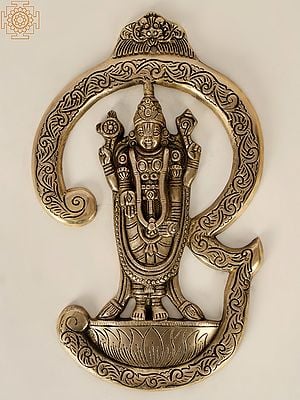
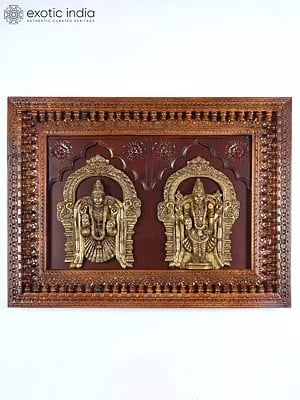
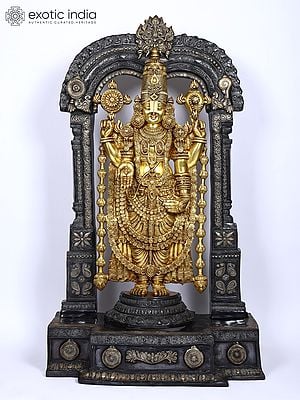
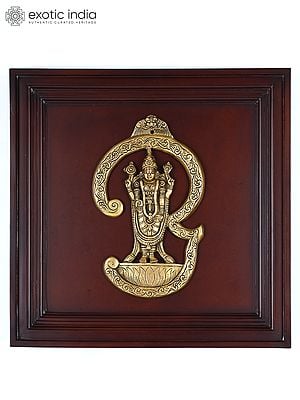
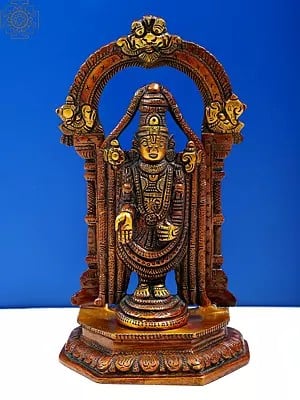
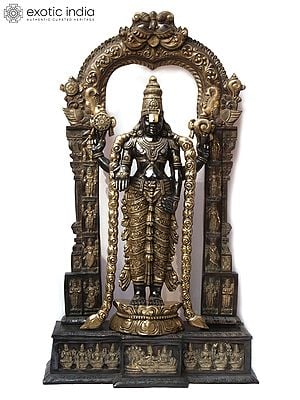
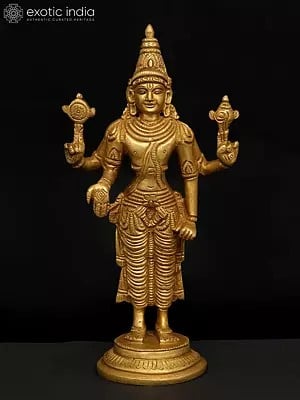
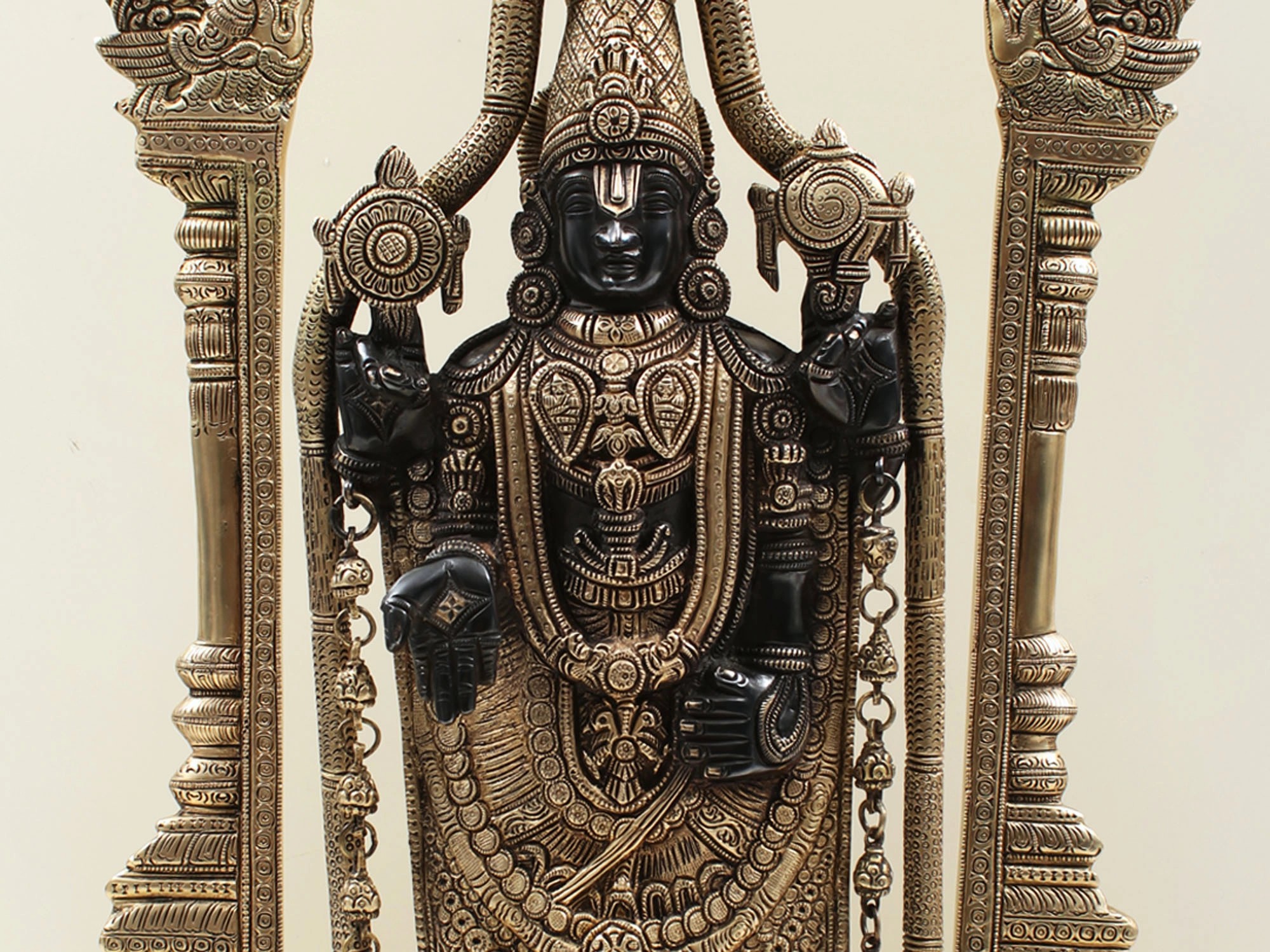
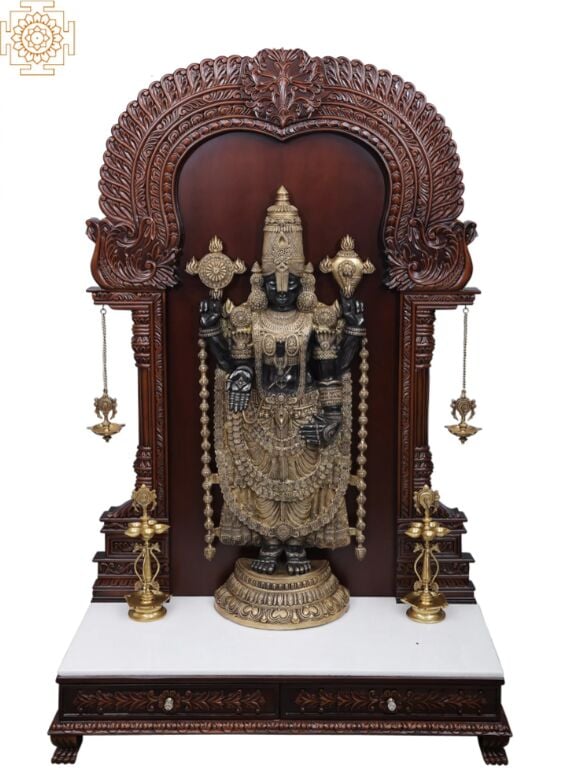
is an artisanal representation of Lord Venkateshwara, a form of the Hindu god
Vishnu, also revered as Balaji in the Tirupati region. Lord Venkateshwara is
depicted with four arms, which is characteristic of Vishnu's iconography,
holding the shankha (conch) and chakra (discus), symbolizing the creation and
regulation of the universe. His benevolent gaze and soothing smile are
indicative of his role as a nurturer and protector.
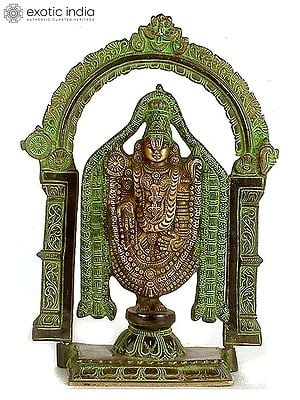
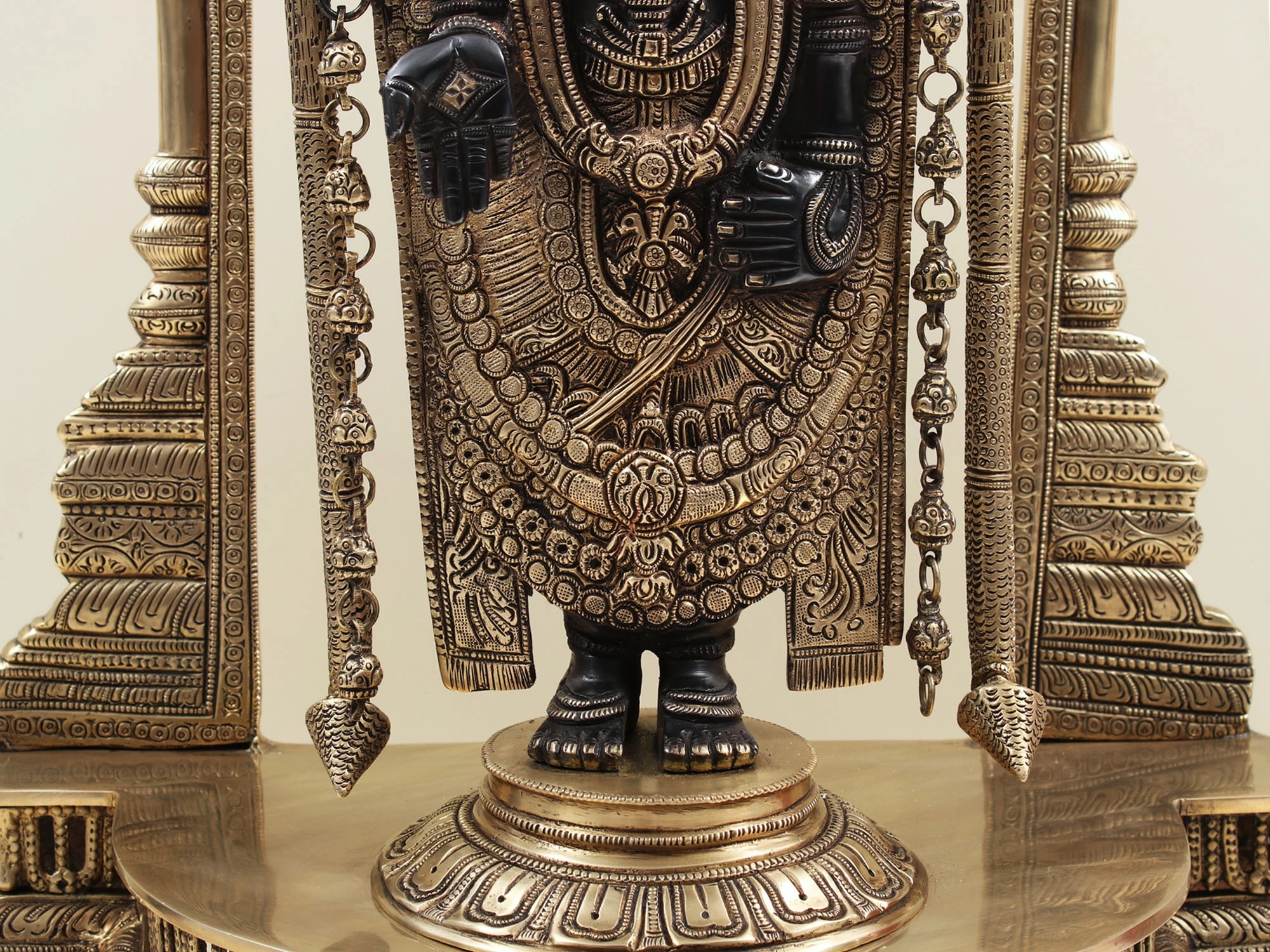
The fine detailing on
the crown and the jewelry represents tireless craftsmanship and symbolizes
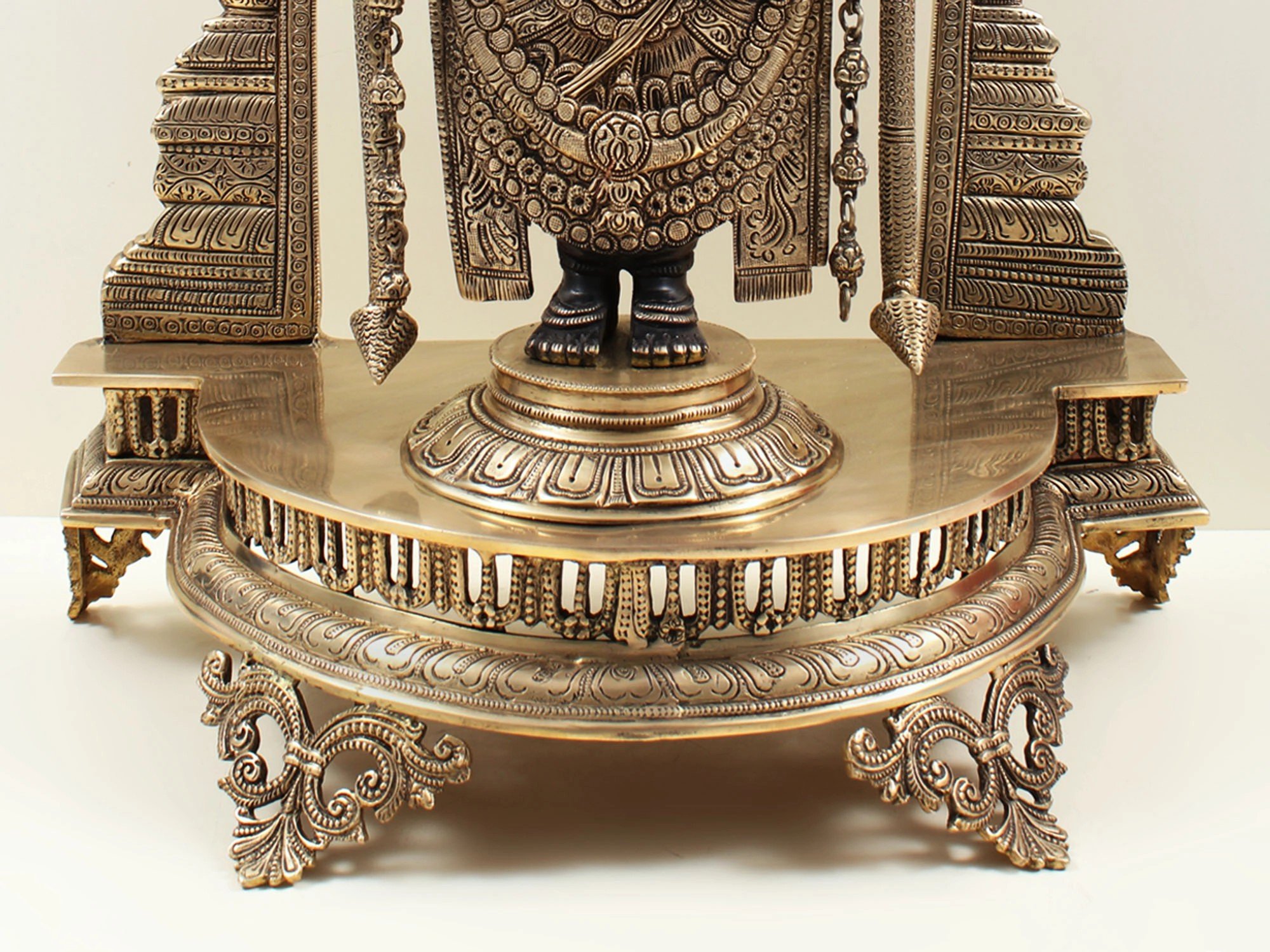
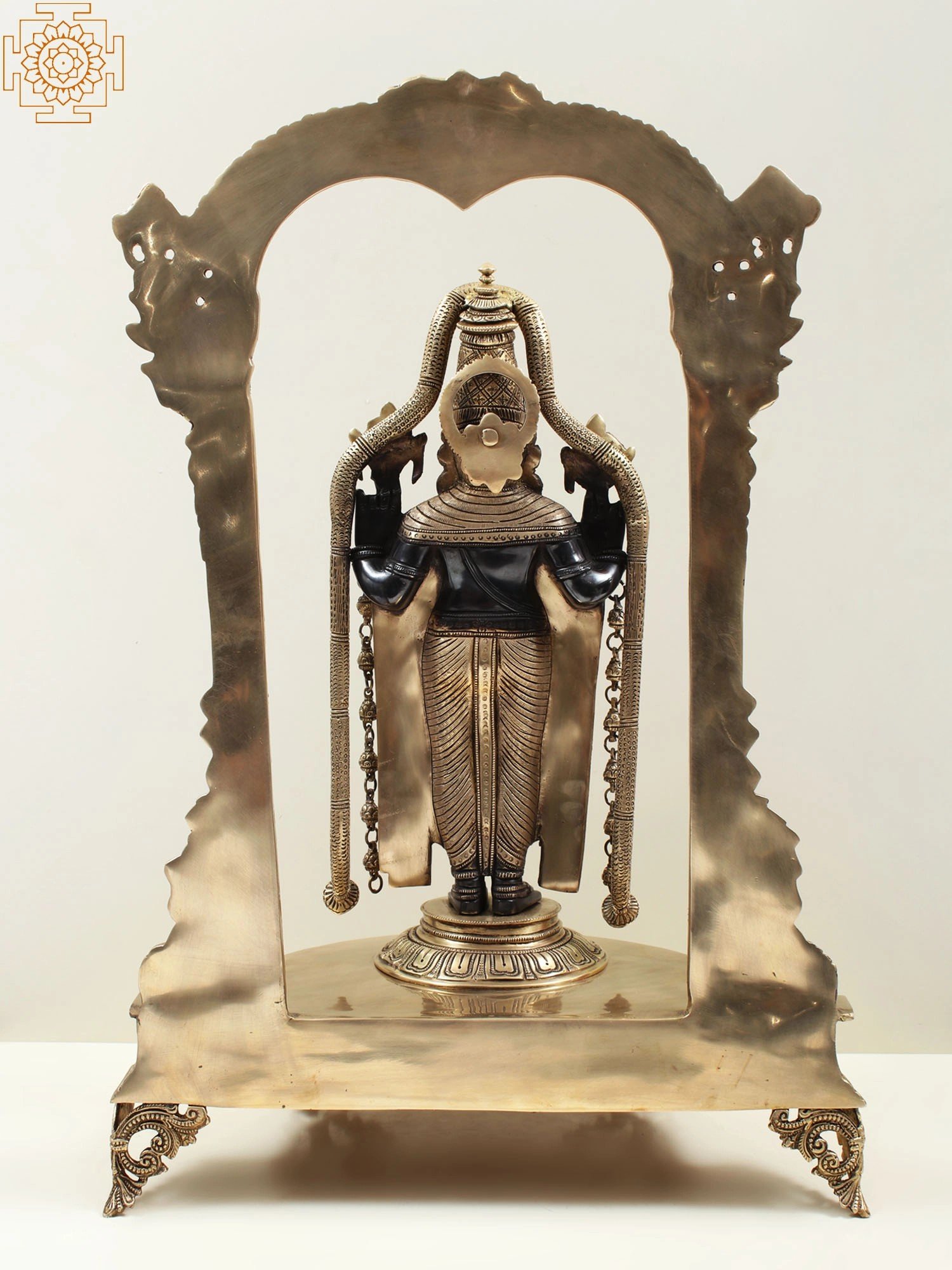
the celestial glory of the deity. The arch encircling the idol is reminiscent
of the temple architecture, suggesting the sacredness of the figurine. The
lotus pedestal upon which the deity stands is a universal symbol of purity and
enlightenment, elevating the sanctity of the idol.
Divine Splendor of Venkateshwara Balaji"s Iconography: Exploring
the Symbolism and Significance of the Hindu Deity"s Form
Lord Venkateshwara Balaji is the presiding deity of the
world-famous Tirupati temple situated in the Andhra Pradesh
state. He is an incarnation of Lord Vishnu, the Supreme
Personality of Godhead, who took this special form just to be
merciful upon the fallen souls of Kali Yuga and save them from
drowning in the ocean of nescience. He is considered an
important deity in the Vaishnava community. He is the destroyer
of sins. Whoever approaches Him and worships Him with love and
devotion, certainly gets His causeless mercy and attains the
highest perfection of life.
Where to place Tirupati Balaji idol at home?
Lord Venkateshwara is very merciful and has come to this
material world to relieve people from the miseries and pangs of
material existence. The Vedic scriptures such as the Skanda
Purana glorify the Lord and mention the benefits of worshiping
the deity of Lord Venkateshwara. Since He is the Supreme Lord,
only by His mercy and sweet will can anyone come to the platform
of performing loving devotional service. If you want to attract
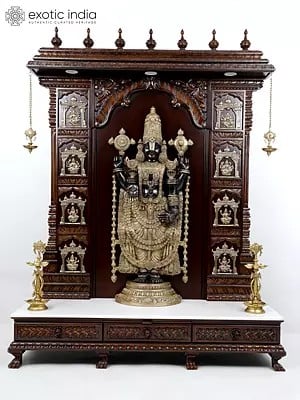
His mercy, you must bring into your home, a beautiful deity of
Lord Venkateshwara, and install it on the altar.
Although the standards of deity worship are not as strict as
those followed in the temples, there are some things you need to
keep in mind. If you have enough space in your home, you must
install the deity where there are no unnecessary distractions.
Avoid keeping it in your bedroom. However, if there is no other
option, you can place it in a corner of your bedroom.
Why is Balaji’s face covered?
The beautiful transcendental form of Lord Venkateshwara Balaji
is unique in so many ways. He stands bearing four arms holding a
conch shell (Panchajanya) and a disc (Sudarshan Chakra) in His
upper hands. While His lower arms are in different mudras to
bless His devotees. He is elaborately decorated with several
ornaments that look immensely beautiful. But there is something
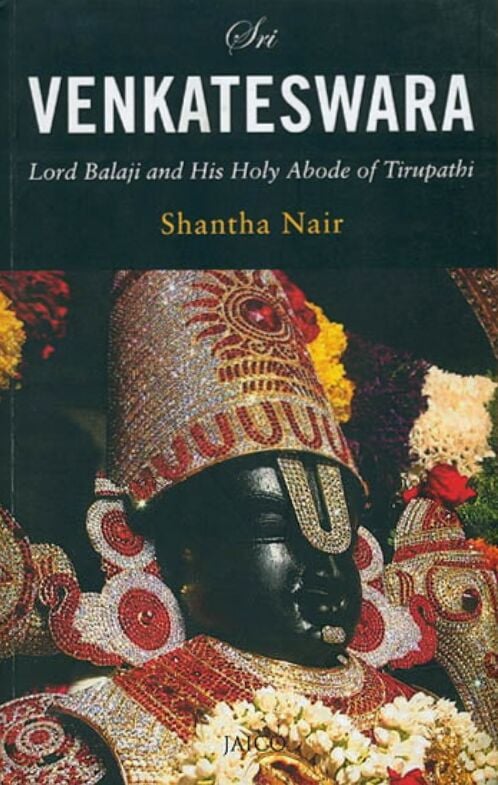
very interesting about His eyes. His forehead bears a white huge
mark or Tilak known as Urdhva Pundra that covers most parts of
His eyes. The reason behind this is often given that the
devotees who come to take the Darshan of Lord Balaji cannot
withstand the effulgence coming out of His glorious eyes and
therefore the white mark or mask covers His eyes.
Where is real Tirupati Balaji and how old is the deity?
The original or real deity of Lord Venkateshwara Balaji is
established in the Tirumala Temple in Tirupati, Andhra Pradesh.
It is believed to have been self-manifested. As far as the deity
is concerned, it is believed to have appeared at the beginning
of Kali Yuga, which means around 5,000 years ago. The Tirumala
temple is famous all over the world and thousands and lakhs of
devotees visit to take the blessings of the Lord and be situated
in transcendental ecstasy seeing the beautiful form of the Lord.
How to keep a Brass statue well-maintained?
Brass statues are known and appreciated for their exquisite beauty and luster. The brilliant bright gold appearance of Brass makes it appropriate for casting aesthetic statues and sculptures. Brass is a metal alloy composed mainly of copper and zinc. This chemical composition makes brass a highly durable and corrosion-resistant material. Due to these properties, Brass statues and sculptures can be kept both indoors as well as outdoors. They also last for many decades without losing all their natural shine.
Brass statues can withstand even harsh weather conditions very well due to their corrosion-resistance properties. However, maintaining the luster and natural beauty of brass statues is essential if you want to prolong their life and appearance.
- The best and simplest way to maintain a brass statue is to clean it at least twice a week using a soft cloth or cotton rag. This will prevent dust from accumulating on the surface. Dusting is especially important for outdoor statues since it is prone to dust accumulation much more than indoors.
- To give a natural shine and luster to the statue, you may apply coconut or olive oil using cotton on every portion. You can use a toothbrush to get to the small crevices but do not be too harsh. This will make the brass statue appear fresh and new with a polished look.
In case you have a colored brass statue, you may apply mustard oil using a soft brush or clean cloth on the brass portion while for the colored portion of the statue, you may use coconut oil with a cotton cloth.
Brass idols of Hindu Gods and Goddesses are especially known for their intricate and detailed work of art. Nepalese sculptures are famous for small brass idols portraying Buddhist deities. These sculptures are beautified with gold gilding and inlay of precious or semi-precious stones. Religious brass statues can be kept at home altars. You can keep a decorative brass statue in your garden or roof to embellish the area and fill it with divinity.