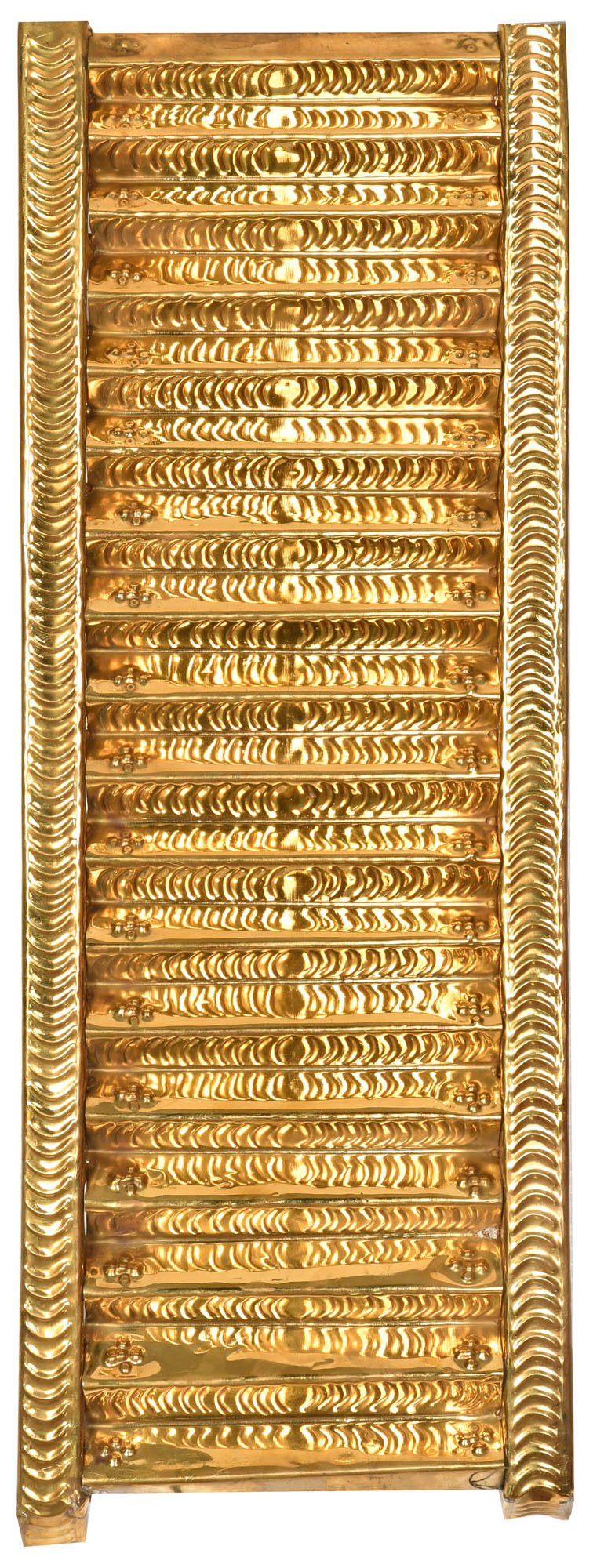
The Sacred Ascent: A Symbol of Devotion
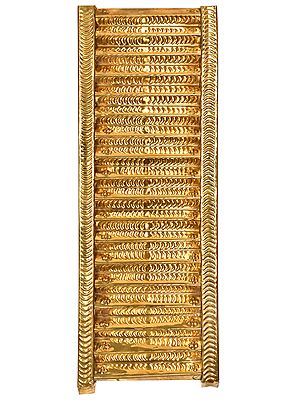
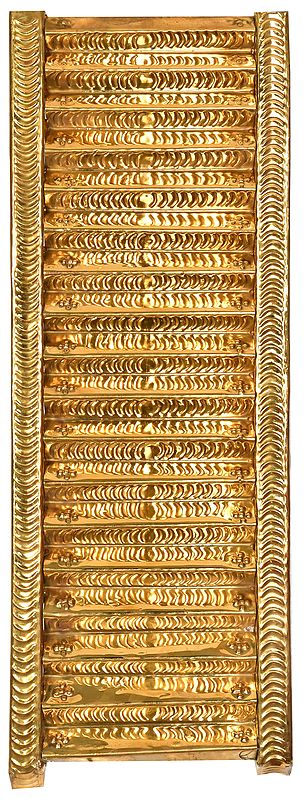
This exquisite representation of the eighteen sacred steps leading to the Sabarimala Ayyappa Temple is a profound artifact, designed for ritualistic veneration. Crafted from a blend of durable brass and iron, this piece embodies the sanctity and spiritual journey associated with one of India's most revered pilgrimage sites. The eighteen steps, each representing a stage of spiritual progression, are meticulously rendered in a gleaming, golden finish, inviting contemplation and devotion.
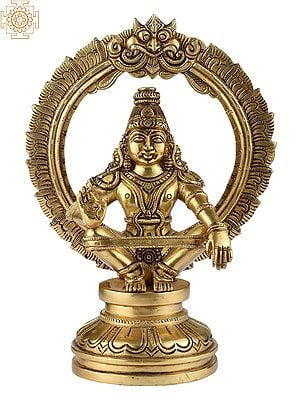
The Sabarimala temple, dedicated to Lord Ayyappan, is steeped in legend. It is believed that Lord Ayyappan, a deity embodying Dharma Sastha, was born of the union between Lord Shiva and Lord Vishnu in their female form, Mohini. His life was marked by austerity and the subjugation of demonic forces, culminating in his divine presence at Sabarimala. The ascent to the temple involves climbing these eighteen sacred steps, each step symbolizing a particular virtue or a conquest over inner demons. Devotees undergo rigorous rituals and vows, known as "Vratam," for forty-one days before embarking on the pilgrimage, purifying themselves to be worthy of the divine darshan.Artistry and Spiritual Resonance
The craftsmanship of this artifact is a testament to the dedication and artistry involved in creating objects of spiritual significance. The raised relief of each step is intricately detailed, with subtle patterns and embellishments that catch the light, symbolizing the radiance of spiritual enlightenment. The side borders feature a wave-like motif, perhaps evoking the flowing waters of the Pampa River, which plays a significant role in the pilgrimage rituals. The use of brass, a metal associated with purity and prosperity in Hindu traditions, further enhances the sacred aura of the piece. This "Padi Puja" (worship of the steps) artifact serves as a focal point for devotion, allowing individuals to connect with the spiritual essence of Sabarimala even in their homes.
The concept of climbing steps towards a higher divinity is a recurring theme in many spiritual traditions. In the context of Sabarimala, each step is a milestone on the path to self-realization and spiritual liberation. The eighteen steps are often interpreted in various ways, from representing the eighteen Puranas or the eighteen qualities to be attained, to the eighteen principles of righteousness. By possessing this artifact, one can invoke the blessings of Lord Ayyappan and draw inspiration from the arduous yet rewarding journey of spiritual ascent. It is not merely a decorative item, but a sacred conduit to the divine energies of Sabarimala.How to keep a Brass statue well-maintained?
Brass statues are known and appreciated for their exquisite beauty and luster. The brilliant bright gold appearance of Brass makes it appropriate for casting aesthetic statues and sculptures. Brass is a metal alloy composed mainly of copper and zinc. This chemical composition makes brass a highly durable and corrosion-resistant material. Due to these properties, Brass statues and sculptures can be kept both indoors as well as outdoors. They also last for many decades without losing all their natural shine.
Brass statues can withstand even harsh weather conditions very well due to their corrosion-resistance properties. However, maintaining the luster and natural beauty of brass statues is essential if you want to prolong their life and appearance.
- The best and simplest way to maintain a brass statue is to clean it at least twice a week using a soft cloth or cotton rag. This will prevent dust from accumulating on the surface. Dusting is especially important for outdoor statues since it is prone to dust accumulation much more than indoors.
- To give a natural shine and luster to the statue, you may apply coconut or olive oil using cotton on every portion. You can use a toothbrush to get to the small crevices but do not be too harsh. This will make the brass statue appear fresh and new with a polished look.
In case you have a colored brass statue, you may apply mustard oil using a soft brush or clean cloth on the brass portion while for the colored portion of the statue, you may use coconut oil with a cotton cloth.
Brass idols of Hindu Gods and Goddesses are especially known for their intricate and detailed work of art. Nepalese sculptures are famous for small brass idols portraying Buddhist deities. These sculptures are beautified with gold gilding and inlay of precious or semi-precious stones. Religious brass statues can be kept at home altars. You can keep a decorative brass statue in your garden or roof to embellish the area and fill it with divinity.















 Upload an Image