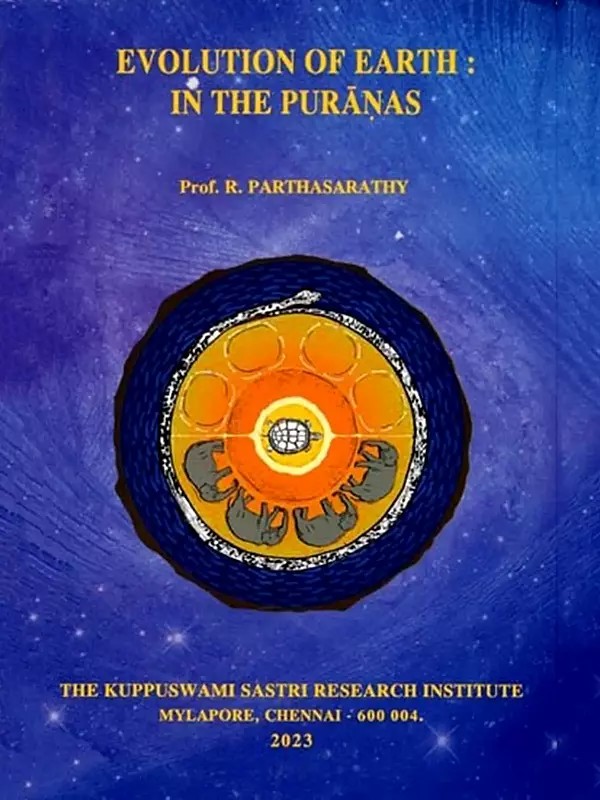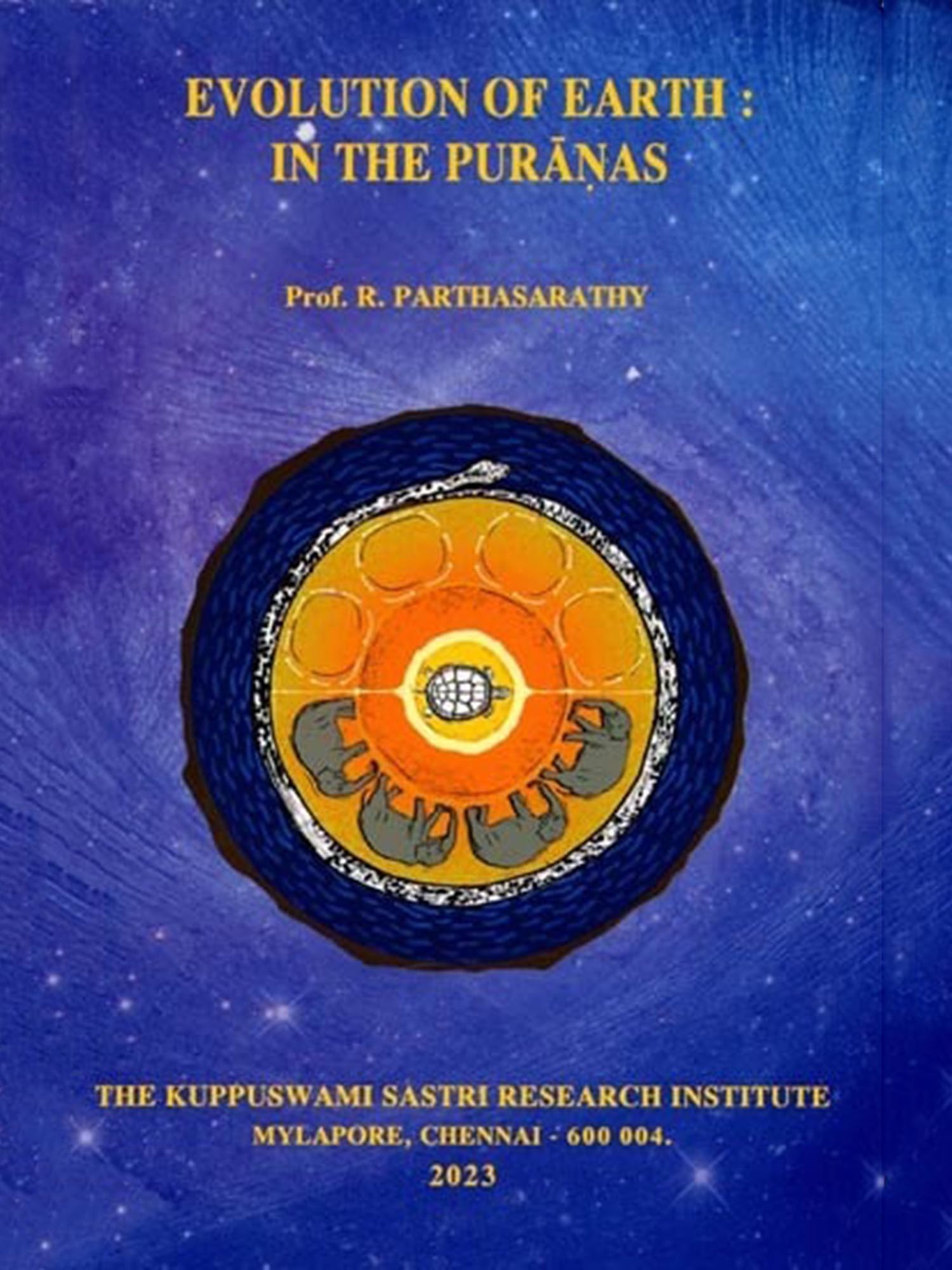






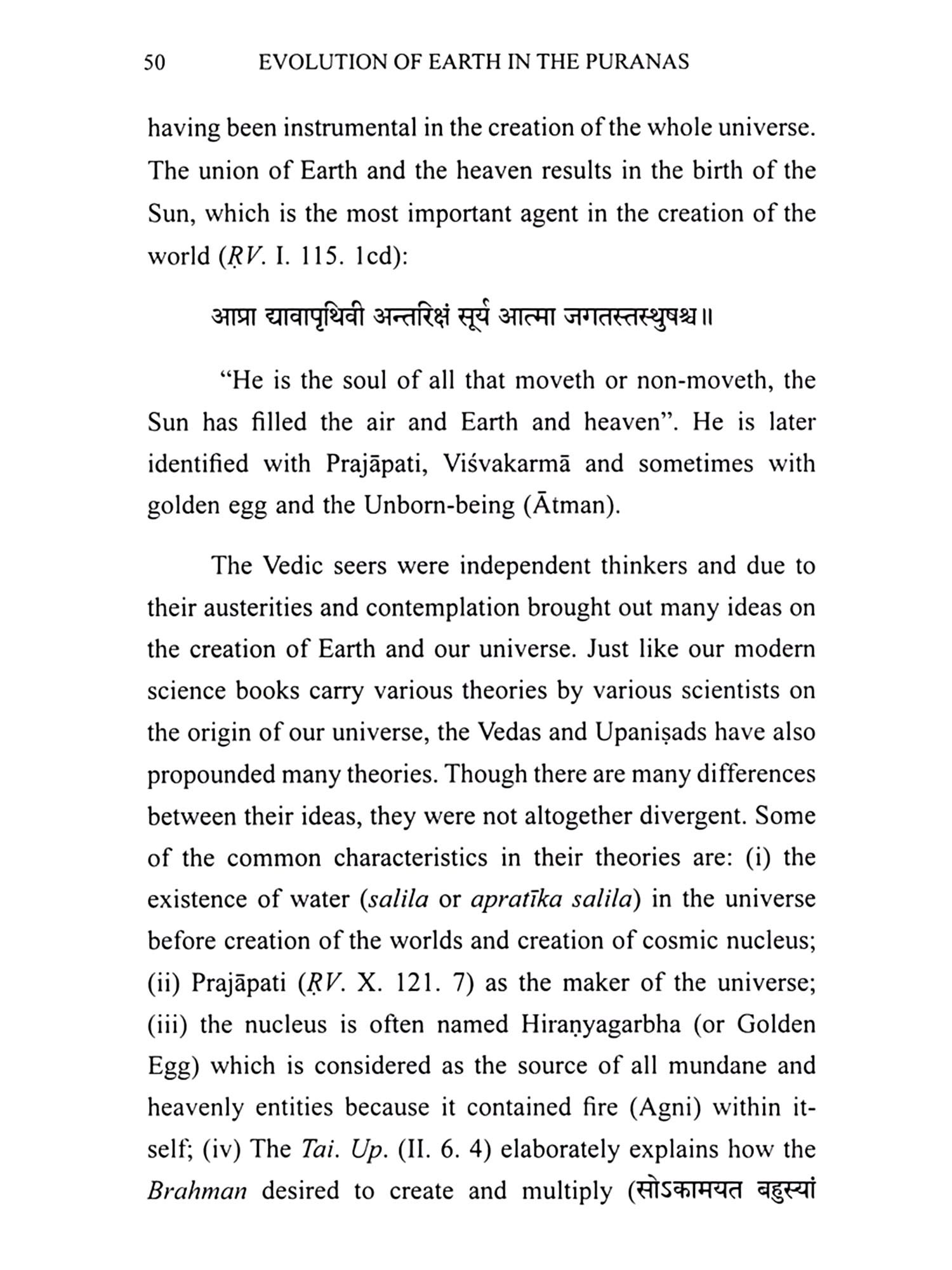

Evolution of Earth: In the Puranas


| Specifications |
 |
Publisher: THE KUPPUSWAMI SASTRI RESEARCH INSTITUTE |
| Author R. Parthasarathy | |
| Language: English | |
| Pages: 224 | |
| Cover: PAPERBACK | |
 |
8.5x5.5 Inch |
 |
Weight 340 gm |
| Edition: 2023 | |
| ISBN: 9788185170770 | |
 |
HBQ300 |
| Delivery and Return Policies |
 |
Ships in 1-3 days |
 |
Returns and Exchanges accepted within 7 days |
 |
Free Delivery |


The
Kuppuswami Sastri Research Institute was established as a tribute to one of the
greatest Sanskritists that our country has produced Mahāmahopadhyaya,
Vidyā Väcaspati, Darśana
Kalānidhi, Kulapati Prof. S. Kuppuswami
Sastri (1891-1944); he was also conferred with the most coveted 'I.E.S' by the
then British Government during the pre-independence era of this great land. Prof.
Kuppuswami Sastri stood as a colossus of Sanskrit and Sastraic studies when
they were neglected in this part of the country. Single handedly, he brought a
revolution in higher learning in Sanskrit. The Madras Sanskrit College, Chennai
established in 1906, of which he was made the first Principal, stands as a
testimony to his greatness even today. He attracted hundreds of students and
scholars from different parts of India who benefitted from his training both in
traditional and modern methods of learning and teaching in Sanskrit and
different Śāstras. The Presidency College
(Madras), Annamalai University (Chidambaram) and Rajah's College,
(Thiruvaiyaru) were some of the prestigious institutions where he nurtured
Sanskrit Studies and Comparative Philology. He was widely respected in India
and abroad for his traditional knowledge and modern research acumen. After the
sad demise of the great savant in 1944, great men of wisdom, his students and
admirers joined together to establish a research Institute as a fitting
memorial to him and aptly chose the premises of the Madras Sanskrit College,
Mylapore for carrying out the great work done by Prof. Sastri. Thus from 1945
till date the Kuppuswami Sastri Research Institute (KSRI) has been functioning
in this premises, holding one of the best collections of rare and old books on
various branches of Sanskritic and Indological studies. It has carved a niche
for itself in the international arena of Sanskrit and Indology. Hundreds of
scholars from many foreign universities across the globe and different parts of
India have benefitted by associating themselves with the KSRI. Dr. V. Raghavan,
followed by Dr. S.S. Janaki, with their depth of knowledge and intellectual
prowess led this Institute with great dedication and were ably supported by
many statesmen, scholars, lovers of Sanskrit and philanthropists. Even after
their demise, the Institute has been marching ahead in the same path and has
completed 75 years of glorious service to the cause of Sanskritic and
Indological research. The KSRI has been holding periodical seminars
/conferences and lectures in which eminent scholars from different parts of
India and abroad have actively participated. It is associated with University
of Madras for M.Phil and Ph.D in Sanskrit from 1983 and has produced about
hundred scholars who submitted their dissertation and were awarded their
degrees by the University of Madras. The institute has also been publishing the
Journal of Oriental Research, Madras an internationally reputed journal which
was originally started by the great Professor Mm. Kuppuswami Sastri in 1927.
Any study to be called a science should fulfil four aspects
in its approach. They are observation, recording, analysis and conclusion. Are
studies in India, be it on Geography, Astronomy, Yoga, Medicine etc.,
scientifically motivated, scientifically approached, scientifically
hypo-thesised and conclusions objectively arrived at? In other words, have
Indians applied the above said four aspects in their studies in various fields?
The Rşis of India had travelled widely. India has number of
holy places, holy rivers, holy tīrthas and mountains. Regular pilgrimage to the
rivers, tirthas and other holy places has been a common practice to our people
from time immemorial. Our Rşis like Agastya, Vyāsa, Vālmīki, Durvāsas, Vasistha
and Vaiśampāyana had travelled to many parts of India and the accounts of their
travels are well recorded in the Puranas and the Itihāsas. Innumerable Siddhas
have also travelled to many places. They have keenly observed nature and have
also recorded the information about nature. In India, the Rșis gave importance
to three aspects in their literature. They are nature (Prakrti), language and
God. Hinduism always propagates living with nature. Dharma Sastras like the
Manusmrti. Arthašāstra, Puranas and other treatises extol the merits of
preserving nature and prescribe punishment (both by state laws and divine law).
There are punishments dictated in the Manusmrti for contaminating water. We
find in the Ramayana that some Rşis were so compassionate that they did tapas
and survived by eating only fallen leaves. They did not consume the fruits lest
the next generation of plants be lost. Hindu religion venerates every mountain,
every river, birds and animals. Even the venomous snakes are an object of
worship. In daily chores, feeding ants with grain, cattle with waste vegetables
and giving water to cattle during summer time are included. This love for
nature and seeing God in nature are part of our system. Śrī Ādívarāha is
personified as Earth itself. The goddess of Earth (Bhūmidevī) is also
personified as mother Earth. Pärvatī is deified as Śākambarī (goddess of
vegetables). Hence, we find that in all Indian literature extolling the rivers,
trees, birds and even fish in a pond in a holy place is common and in itself
forms part of worship of God in that place. The epic writers Välmīki and Vyāsa
and host of other Rşis like Parāśara and Agastya have exhibited their
know-ledge on nature in their works.
-
Q. What locations do you deliver to ?A. Exotic India delivers orders to all countries having diplomatic relations with India.
-
Q. Do you offer free shipping ?A. Exotic India offers free shipping on all orders of value of $30 USD or more.
-
Q. Can I return the book?A. All returns must be postmarked within seven (7) days of the delivery date. All returned items must be in new and unused condition, with all original tags and labels attached. To know more please view our return policy
-
Q. Do you offer express shipping ?A. Yes, we do have a chargeable express shipping facility available. You can select express shipping while checking out on the website.
-
Q. I accidentally entered wrong delivery address, can I change the address ?A. Delivery addresses can only be changed only incase the order has not been shipped yet. Incase of an address change, you can reach us at help@exoticindia.com
-
Q. How do I track my order ?A. You can track your orders simply entering your order number through here or through your past orders if you are signed in on the website.
-
Q. How can I cancel an order ?A. An order can only be cancelled if it has not been shipped. To cancel an order, kindly reach out to us through help@exoticindia.com.