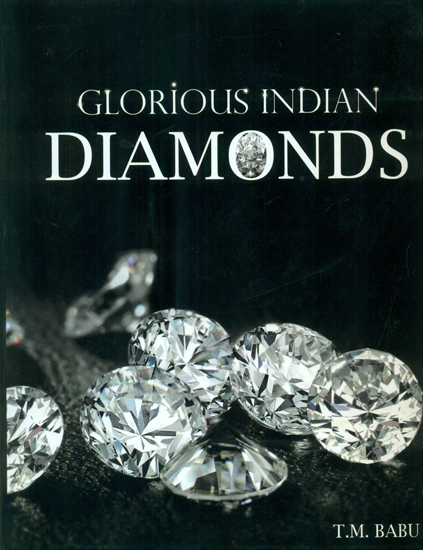

| Specifications |
 |
Publisher: D. K. Printworld Pvt. Ltd. |
| Author: T.M. Babu | |
| Language: English | |
| Pages: 420 (Throughout Color Illustrations) | |
| Cover: Hardcover | |
 |
11.0 inch x 8.5 inch |
 |
Weight 1.90 kg |
| Edition: 2015 | |
| ISBN: 9788124607367 | |
 |
NAK621 |
| Delivery and Return Policies |
 |
Usually ships in 3 days |
 |
Returns and Exchanges accepted within 7 days |
 |
Free Delivery |


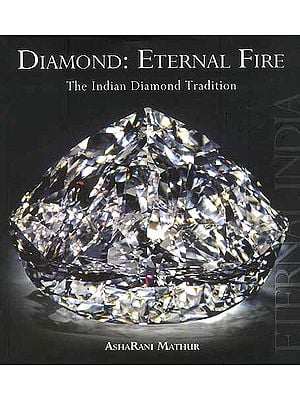
About the Book
India, for many millennia, was the diamond capital of
the world and controlled the global diamond business. Indians were the first to
discover, mine, curate and market diamonds in the world, and were the
first to discover that diamond can be cut only by diamond, and can be polished
with its own powder. Vedas, Upanishads and epics stand testimony to it.
Diamonds were the quintessential luxury of the Indian royalty. Kohinoor, (Mountain of Light), Hope,
Great Moghul, Orloff, Sansi, Hastings, Pigott and Akbar
Shah-Jahangir Shah had unparalleled place in the annals of Indian and world
history.
Till the seventeenth century, the Golconda Fort City
in south India was the World Trade Centre of diamonds and was a dream
destination for "who is who" in the diamond business. Though at present, diamond business is about $ 72 billion plus worldwide, India has
very little to offer to this market size. New nations/countries are on
the block and India has become a trivial entity in diamond production from the
colonial period due to the monopolistic policy pursued by the British in favour
of the new discoveries made in South Africa, and the socialistic policies of
Independent India. Even the environmental concerns stood as stumbling blocks
against the growth of Indian diamond mining industry.
The present study explores exhaustive data, based on
a decade-long serious research, targeting common man. It brilliantly attempts
to make one aware about the birth, history, glory, places of concentration,
applications of diamond and about the present Indian diamond cutting and
polishing industry. The book also introduces the readers into the reality of
imitations, artificial diamonds, and discusses such products in detail. It
delves deep into the identification and valuation techniques of diamond, and
the tools used for the same. Efforts are also made to present many a
superstition associated with diamonds, and to brief those diamonds that have
some bearing on history.
After decades of Independence, India has failed to
regain its lost splendour and leadership position. There is a need to bring
changes in its approach to this industry to put it back on track and compete
with the present world leaders. The author has given special attention to
analyse the present diamond scenario in India and suggests remedies.
About the Author
Dr T.M. Babu is an exploration geologist with about 40 years of world-wide
experience investigating diamonds, gold, tin, platinum, copper, and other rare
metals in India, Russia, China, Japan, Indonesia, United Kingdom, DR Congo,
Sudan and many African countries. He was associated with Government of India in
Geological Survey of India and Planning Commission, United Nations Development
Projects (USA), BRGM (France), WARDROP (Canada), Kyrgyzstan (Russia),
Coronation International (UK), and several international and multinational
organizations. He is known as - "tin
babu" - for his vast research work,
doctorate degree and discovery of tin deposit in Bastar,
Central India. He wrote books on tin, diamonds, platinum and co-authored Mining and Metal Production Through Ages, published by British Museum, London. He
is a recipient of National Mineral Award of Government of India and Narayanaswamy Award of Geological Society of India. Now he
is working as Vice-President of African Resources Group, in Africa.
Foreword
There are several reports on diamonds in Indian
history that date back more than 3,000 years. In 327 BCE Alexander from Greece came
to India and his convoy took some diamonds back to Europe. At that time India
was very active in diamond trade, exporting to Babylon, Mesopotamia, Egypt and
the Arabian countries. The book Arthashastra written
around 321 BCE by Chanakya mentions trading of diamonds in India and of
producing revenue through customs duties and taxes. The sixth century CE Brihatsamhita touches on grading of diamonds, and scientists observe that the distinctive
classification of colour and clarity was remarkably similar to those used in
the current market. These examples should certainly make the reader more
interested to know about the glory of Indian diamonds!
Many big stones were discovered from alluvial
deposits in India including the Kohinoor, the Hope, the Akbar Shah, the
Darya-e-Noor, the Orloff
and the Regent. Their journey through time full of intrigue, high adventure and
folklore is as interesting as if reading a Harry Potter story book.
After a long period of dominance new discoveries of
primary diamond deposits in the rest of the world (South Africa, Brazil,
Australia, Russia and Canada) pushed India into the background and currently
India has only one single diamond mine with a small production facility.
Today, India is home to the world's leading diamond
cutting and polishing centre providing eleven out of every twelve processed
diamonds found in the jewellery around the world. The Indian diamond-processing
sector employs around 1.3 million people.
This Coffee Table book aims to provide comprehensive
information to the reader about the glorious past and the history of diamonds
in India besides updating on the current status. The book touches on the
diamond potential of India, the current exploration scenario and mining
regulations. While India's diamond exploration and mining industry faces
challenges, the author hopes the situation will improve allowing more of
sustainable investment in the sector thereby paving the way for economic
development of the country.
The book with its glossy paper and numerous
illustrations surely would be a prized possession of readers. This publication
has been very well accomplished thanks to the tireless efforts of the author
based on his decade-long research. Dr T.M. Babu the
author of this book, brought out an earlier publication titled Diamonds
in India
through the
Geological Society of India that was well received by the academic community.
Dr Babu is a distinguished geologist with several
publications to his credit.
Rio Tinto is proud to be associated with the partial
sponsoring of this book and we believe that the Indian diamonds and its glorious
past will be rediscovered in the coming days!
Preface
DIAMOND, one of the most sought-after luxury products in the
world, invoked keen interest throughout the history of mankind. Rulers decreed
that diamonds were their sole property, denying ownership/possession to those
who discovered or mined them. Countries were invaded, wars were fought, kings
and emperors were tortured, disfigured and murdered for the possession of these
priceless gems across continents. Mighty rulers were fallen for their eye-pleasing,
heart- warming and mind-boggling beauty. They decorated their thrones, crowns,
necklaces and rings with these envying gems as a symbol of might, prosperity
and wealth, be it in Afghanistan, Great Britain, France, India, Iran, Iraq and
Russia or in USA. They were (are) status symbols par excellence.
Diamonds made an estimated retail business of US $ 72 billion now. India for, many millennia, was the diamond capital of
the world and controlled the global diamond business. Indians were the first to
discover, mine, curate and market diamonds in the world. Also, Indians were the
first to discover that diamond can be cut only by diamond and can be polished
with its own powder. There are numerous mentions of diamonds in Indian Vedas,
Upanishads and in the great epics Ramayana and Mahabharata.
In Ramayana,
Hanuman visits
Sita, in captivity in Lanka, and shows to her a ring, studded with a diamond
called Chudamani belonging to Rama, her husband, as
an identity proof that he has come on the advice of her husband. In Mahabharata
we see Lord
Krishna engages in a battle for a diamond named Syamantak
mani. When devas and asuras churned the ocean, there
came up a beautiful diamond Kausthubam, symbolizing
the tedious task for producing the gem stones. There are mentions in the Bible
(e.g. Exodus 39:11) too. Romans in the early centuries of the first millennium CE wore diamond- studded gold
rings to ward off evil spirits. Exchange of diamond-studded rings has now
become an inevitable formality at the time of engagement and marriage across
the globe. It is a lucrative and throbbing business.
An estimated 300 million women in the world spend $ 40 billion
a year on diamonds. Apart from their jewel value, diamonds find industrial and
medical applications as well.
Going back to the history, diamonds were the
quintessential luxury of the Indian royalty. Kohinoor (the Mountain of Light)
Hope, Great Moghul, Orloff
(Kohitur or Mt. Sinai), Sansi,
Hastings, Pigott and Akbar Shah-Jahangir Shah are
some of the diamonds that had unparalleled positions - in terms of size and
quality - in the annals of Indian and world history. Kohinoor, picked up from
the Krishna River bank near a remote village Kollur,
changed hands from common men to kings, queens and emperors, changed shapes, look,
caused wars and travelled across continents to settle finally as a museum show
piece in a glasscase in the Tower of London. Since
the death of Emperor Aurangzeb, there were a number of attacks from foreign
invaders like Nadir Shah who took away all these precious stones, and are now
under the custody of many foreign governments. India's efforts to reclaim them
could not make much breakthrough. Few of them were cut many a time and lost its
look and original size. The whereabouts of some of them are unknown to the
modern world.
Till the seventeenth century, the Golconda Fort
City, in south India ruled the roost as the World Trade Centre of diamonds and
was a dream destination for diamond merchants in the world. During 1364-1512, the city was at the peak of
its glory and attracted foreign travellers, traders, historians, geologists and
gemmologists. Maco Polo, Jean Baptise Tavernier,
Henry Howard, Streynsham Master, Benjamin Heyne, Henry Wesley Voysey, Carl
Ritter, William King, Valentine Ball, Thomas John Newbold,
Alexander Walker, Sir Richard Francis Burton, M. Chaper
and Robert Bruce Foote have visited the diamond mines, fort city and have left
a wide account of Golconda diamonds. Indian gemmologist Pingali
Venkayya and Nobel Laurate
Dr CV Raman have detailed a lot about diamonds.
Golconda was so popular that many countries in the
world like Brazil named their mines as Golconda. A county in Illinois, USA, was
named after Golconda. Many companies in England were named after Golconda.
There are roads named after Golconda in a few countries. As stated earlier,
Golconda shot to fame as the diamond capital of the world due to its proximity
to the diamond mines in the Krishna, Penner river
basins, and other mines in south India. There were twenty-three major diamond
mines around Golconda. Many historical diamonds like Kohinoor, Darya-e Nur, Hope, Nur-ul-Ain and Regent Wittelbach were
believed to have excavated from the mines around Golconda. Panna
in Madhya Pradesh, covering about 2,000 sq. km in area, was another diamond
mining spot.
However, for the last four centuries India has
witnessed a deep decline in its diamond mining industry. New leaders have
arrived on the block and India has become a trivial entity in diamond
production. The monopolistic policy pursued by the British in favour of the new
discoveries made in South Africa, another British colony, and the socialistic
policies of the Independent India were the major reasons for this downfall.
Even environmental concerns stood as stumbling blocks against the growth of
Indian diamond industry.
My first book Diamonds in India
was published
in 1998 keeping geologists as the target audience, and was technical in style
and substance. The present volume focuses on general public, sans technology,
and is presented with exhaustive data, based on a decade-long serious research.
Attempts have been made to make one aware about the birth, history, glory and
places of concentration of diamonds in India. There is a detailed account of
the diamond cutting and polishing industry. Though the mining has taken a back
seat, the polishing industry is very active in Gujarat and employs thousands of
people, having imported raw diamonds as inputs. The different stages in the
lapidary industry such as designing, cleaving, sawing, bruting,
brinding and polishing are detailed. The book also
introduces the readers into the reality of imitations, artificial diamonds and
discusses such products in detail. Another topic - identification and valuation
techniques, and the tools used for the same - is vividly explained. Efforts are
also made to present many a superstition associated with diamonds. In the end,
I have tried to brief those diamonds that have some bearing on history.
In the concluding chapter, special attention is given
to analyse the present diamond scenario in India and to suggest remedies. There
is a need for change in approach to this industry which employs around 100,000
people and also to put it back on track, thereby leaping forward to compete
with the present world leaders. After decades of Independence, India has failed
to regain its lost splendour and leadership position. Lack of dedicated
research and a few environmental concerns have played the spoilsport. We have
to find ways to overcome all these concerns with well-thought out plans and
policies. I firmly believe that, as a nation, India can still rev
up diamond
production and regain the lost grandeur.
I am indebted to many who have extended help and
support to me in different ways and means in bringing this volume out. The list
is long and endless. It will be a gross violation of justice if I do not
acknowledge them. My foremost thanks are due to Rio-Tinto India, the firm that
generously extended financial support in publishing this book. I am equally
grateful to Mr. Tony Harding, Exploration Head for the Foreword and to my
friend Mr Venkat of Rio-Tinto, a geologist, who
played a pivotal role in making this financial help possible. Mr Rajeev Wadhwa and the officials of National Mineral Development
Corporation (NMDC), who permitted me to take the photos of Panna
diamond mines, are acknowledged. Ms Morgan Lowe Barret
and the editorial team of the publishers have edited and gave many suggestions
to improve the content quality. All their efforts are well appreciated.
Thanks are also due to all copyright holders who
have given me permission to use copyrighted information from internet websites wikipedia, Google, Bing and other sources. Unfortunately,
in spite of my best efforts, I couldn't reach out to some copyright holders due
to paucity of time. I owe apology to them for this failure, and thank them
through this page. With great regards, let me acknowledge Mr Susheel K. Mittal, Rajendra Agarwal and Ms. Shailee Mittal of D.K.
Printworld, New Delhi for their untiring encouragement and support in bringing
out this volume beautifully designed and printed.
I am indebted to my family members - Uma, Praveen,
Rahul, Sutapa and Indu -
for their constant encouragement tolerating my idiosyncrasies.
I have made sincere efforts to sieve out errors from
this volume by checking and rechecking. However, I do not claim that it is
flawless. It is my pleasure to request and welcome readers to pinpoint errors,
if any, and give suggestions for further improvement. This book, though not
intended as an encyclopaedia of diamonds in India, is expected to be useful to
those involved in diamonds business from grass-root explorers, students,
historians, traders, market leaders and policy makers to understand and
appreciate the past glory of diamonds of India and to put in concrete efforts
to regain the same in the immediate future.
Contents
|
|
Foreword |
v |
|
|
Preface |
vii |
|
1. |
Introduction |
1 |
|
2. |
Birth from Mother Earth |
19 |
|
3. |
Indian Heritage |
43 |
|
4. |
Golconda Glory |
|
|
5. |
The Diamond Field of South India |
113 |
|
6. |
The Diamond Field of North India |
145 |
|
7. |
Cutting, Polishing and Jewellery |
183 |
|
8. |
Imitations and Artificials |
225 |
|
9. |
Identification and Valuation |
245 |
|
10. |
Historical Diamonds |
265 |
|
11. |
Superstitions |
325 |
|
12. |
Present and Future |
349 |
|
|
Glossary |
381 |
|
|
Bibliography |
385 |
|
|
Subject Index |
393 |
|
|
Locality Index |
399 |








Send as free online greeting card