| Specifications |
 |
Publisher: Jaico Publishing House |
| Author Swami Rajarshi Muni | |
| Language: English | |
| Pages: 200 | |
| Cover: Paperback | |
 |
9.6" X 7.2" |
| Edition: 2004 | |
| ISBN: 817224424 X | |
 |
IDG555 |
| Delivery and Return Policies |
 |
|
 |
Returns and Exchanges accepted within 7 days |
 |
Free Delivery |


About the Book :
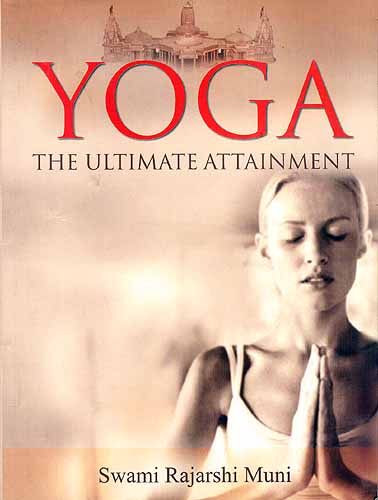
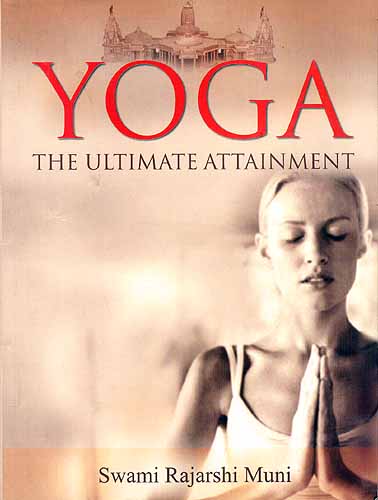
Yoga - The Ultimate Attainment is a groundbreaking work about "Spontaneous Yoga" or the yoga of liberation. Instead of discussing the physical exercises or meditations to achieve inner peace, this book is about a proven process by which you can achieve unlimited divine powers, liberation from the limitations of time and space, and an immortal, physically perfect divine body that is retained forever. The sagas who composed the ancient scriptures achieved such a state - as have people of all religious traditions. How? Through the process of spontaneous Yoga, in which the body and mind are surrendered to the spontaneous workings of the awakened life force: prana.
Once prana has been awakened, it works in its own amazing way to purify your physical and non-physical body and over time, all the bondages of karma are released and you become fully liberated. Yoga - The Ultimate Attainment reveals how anyone who's genuinely sincere can practice dharma, or pure conscious living, which results in prosperity, pleasure, happiness, and the joy of selflessness.
About the Author:
Swami Rajarshi Muni was born in 1931 and has devoted himself to serious yoga study since 1950. He renounced the world to receive Sannyas initiation in 1971, and lives in seclusion practicing the yoga of liberation.
| Foreword | xiii | |
| Preface | xv | |
| Introduction | xix | |
| Chapter 1: General Concept of Yoga | 1 | |
| Yoga Is a Gift form the Sages | 2 | |
| Yoga Is both Philosophy and Science | 2 | |
| Yoga Is Not a Religion | 3 | |
| Emphasis of Yoga | 4 | |
| Approach of Yoga | 5 | |
| Objectives of Yoga | 6 | |
| Access to Yoga | 7 | |
| Aspirants of Yoga | 8 | |
| Guidance and Self-effort in Yoga | 9 | |
| Chapter 2: Yoga in the Context of Time and Space | 11 | |
| Yoga Transcends Time and Space | 12 | |
| Measures of Cosmic Time | 13 | |
| Methods of Calculating Time | 13 | |
| Brahma and His Life Span | 14 | |
| Cosmogonic Cycle of Creation and Dissolution | 16 | |
| Life Span of the Other Aspects of the Trune Godhead | 17 | |
| A Yogi Can Transcend Time | 18 | |
| Our Place in Cosmic Time | 18 | |
| Chapter 3: Origin and history of Yoga Philosophy | 19 | |
| Historical Origins of Yoga Philosophy | 20 | |
| Systemization of Yoga | 22 | |
| A Never-ending Search for the Truth | 23 | |
| Chapter 4: Yoga in Indian Philosophy | 27 | |
| Sankhya and Yoga | 29 | |
| Mimamsa and Vedanta | 33 | |
| Vaisheshika and Nyaya | 38 | |
| Some Cosmological Differences | 42 | |
| The Six Systems Complement One Another | 43 | |
| Yoga Links All the Systems | 44 | |
| Chapter 5: Metaphysics of Yoga | 51 | |
| Dualistic and Non-dualistic Approaches | 51 | |
| Purusha, God, and Brahman | 52 | |
| Relationship between Purusha and Prakriti | 53 | |
| Cosmological Evolution and Involution | 55 | |
| Forces behind the Unfoldment of Prakriti | 56 | |
| Trinity of the Gunas: Sattva, Rajas, and Tamas | 57 | |
| Reflections Cause Imbalance Among Gunas | 60 | |
| Sequence of Evolution of Prakriti | 60 | |
| The Internal Instrument (Antahkarana) | 61 | |
| The External Instrument (Bahyakarana) | 63 | |
| Coordination between Internal and External Vehicles | 64 | |
| Subtale and Gross Elements | 66 | |
| Classification of the Tattva Categories | 68 | |
| Differences Regarding Primordial Principles | 70 | |
| Differences in Metaphysical Approaches | 70 | |
| Chapter 6: Similarity of Macrocosm and Microcosm | 73 | |
| Macrocosm and Microcosm | 74 | |
| Sheathing Structure of the Human Organism | 75 | |
| Composition of the Triple Bodies | 75 | |
| Illusion of Microcosm | 78 | |
| States of Microcosm | 78 | |
| Macrocosm Vis-à-vis Microcosm | 80 | |
| Individual Consciousness in Microcosm | 80 | |
| Significance of the Syllable "Om" | 83 | |
| Progressive Resolution of All States Into One | 84 | |
| Chapter 7: Theory of Rebirth | 87 | |
| Clinging to Life | 88 | |
| Transmigration to Heaven, Hill, or Earth | 89 | |
| Interlude between Two Lives | 90 | |
| Process of Death | 90 | |
| After-death Intermediate State | 91 | |
| Seeking Rebirth | 93 | |
| Chapter 8: Causes of Bondage and Suffering | 95 | |
| Dual Role of the Cycle of Transmigration | 96 | |
| Awakening and Release from Conditioned Existence | 97 | |
| Means for Transcending the Cycle of Transmigration | 99 | |
| Subconscious Impressions (Samskaras): The Seeds of "Becoming" | 100 | |
| Causes of Bondage | 101 | |
| What Are the Afflictions (Kleshas) | 102 | |
| The Afflictions Appear in Succession | 103 | |
| The Afflictions Cause All Sufferings | 103 | |
| Various States of the Afflictions (Kleshas) | 105 | |
| Yoga Aims at Total Destruction of the Afflictions (Kleshas) | 106 | |
| Chapter 9: Doctrine of Karma | 109 | |
| Karmas Cause Rebirths | 112 | |
| Inexorable Principle of Karma | 114 | |
| Karma Philosophy is Not Fatalistic | 114 | |
| Various Aspects of Karma | 115 | |
| Riddle of Action in Inaction | 119 | |
| Chapter 10: Operation of Karmic Law | 121 | |
| Physiology of Karma | 122 | |
| Influx of Subtle Karmic Substance | 123 | |
| Categories, Smell, and Coloring of Karmic Substance | 124 | |
| Karmic Substance Obstructs Liberation | 125 | |
| Piling up the Karmic Debt | 126 | |
| Suffering is Universal | 127 | |
| Need to Accept Karma Doctrine | 128 | |
| Chapter 11: Human Life and Its Purpose | 131 | |
| Modes of Human Endeavor | 132 | |
| Where Does "Real Happiness" Lie | 133 | |
| Limitations of the Ego-personality | 134 | |
| Final Goal of Life: Yoga and Not Sense-enjoyment (Bhoga) | 135 | |
| Sense-enjoyment: Outcome of Desire and Craving | 135 | |
| Yoga: Fruit of Contentment | 136 | |
| Spiritual Life Is Worthwhile | 136 | |
| Course of an Ideal Human Life | 137 | |
| Real Goal of Life | 138 | |
| Chapter 12: Supreme Bliss and Worldly Joys | 139 | |
| Nature and Power of Illusion (Maya) | 140 | |
| False Indentification with Ego-personality | 140 | |
| Impermanent Worldly Joys | 141 | |
| Joys of Objects | 142 | |
| Infinite Bliss | 142 | |
| Sublime Joy of God-realization | 142 | |
| Yoga Leads to Supreme Bliss | 143 | |
| Chapter 13: Modifications of Consciousness and Yoga | 145 | |
| The Embodied Soul and Psychomental Consciousness | 146 | |
| Levels of Human Consciousness | 146 | |
| What is Consciousness (Chitta) | 147 | |
| Difference between Consciousness and Mind | 147 | |
| Functioning of Consciousness | 148 | |
| How Modifications (Vrittis) Occur | 150 | |
| types of Modifications of consciousness | 151 | |
| The Type of Modifications Reflect Evolutionary Development | 153 | |
| Chapter 14: Superconsciousness through Yogic Purification | 155 | |
| Need to Purify the Triple Bidies | 156 | |
| Levels of Purification | 157 | |
| Appendix 1 | 161 | |
| Recapitulation | 161 | |
| How to Begin Practice | 164 | |
| What Is Prana | 166 | |
| Importance of Prana in Spiritual Upliftment | 167 | |
| The Working of Prana in the Gross and the subtle Bodies | 167 | |
| Willful and Spontaneous Practice of Yoga | 169 | |
| Manifestations Resulting from the Release of the Vital Force | 170 | |
| purpose behind Spontaneous Manifestations | 171 | |
| Results of Spontaneous Meditation | 172 | |
| Appendix 2 | 179 | |
| The Five Yamas, or Restraints | 180 | |
| The Five Niyamas, or Observances | 180 | |
| the practice of Yamas and Niyamas | 181 | |
| Creating Pranaprabalya :The Strengthening of Prana | 182 | |
| The Practice of Anuloma Viloma Pranayama | 183 | |
| Beginning Spontaneous Yoga Practice | 184 | |
| Guidance for Spontaneous Yoga Practice | 184 | |
| Glossary | 187 | |


Send as free online greeting card



Visual Search
 Upload an Image