

Filter
Carnatic music owes its name to the Sanskrit expression Karnātaka Sangītam which indicates "customary" or "arranged" music. Carnatic music is accepted to have a heavenly beginning, from the Devas and Devis. Ancient compositions portray the association of the beginning of swaras (the notes of Indian music) to the sounds of creatures and birds and man's sharp feeling of perception and insight in attempting to reproduce these sounds.
As indicated by the antiquated hypothesis, after hearing and recognizing the various sounds that radiated from bamboo reed when air goes through its hollows, the man planned the primary woodwind. Along these lines, music is revered as a part of the incomparable (nāda brāhmam). Folk music is likewise said to have been a characteristic beginning of Carnatic music, and numerous folk tunes are linked to explicit Carnatic ragas.
Carnatic music takes tirelessness to the next level as it requires discipline and difficult work. A student supersedes all difficulties and presents the littlest piece with outright exactitude and even makes it look easy while lifting the spirits of the audience members around. The more they practice, the more the development and the better advancement of performance abilities.
Melody and Musicality assume an equanimous part in Carnatic music. The uprightness of these two components is critical for execution. These should be all around supported and created to advance the ability. While learning compositions, the student ought to likewise have the option to envision and assimilate the notes and their positions across a cadenced construction. Some elements linked to Carnatic music are-
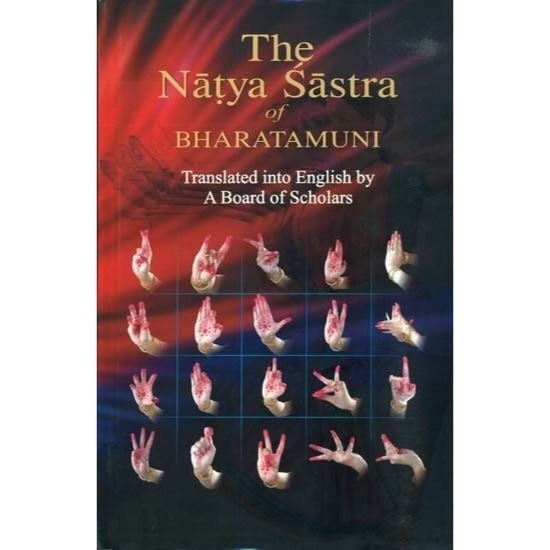
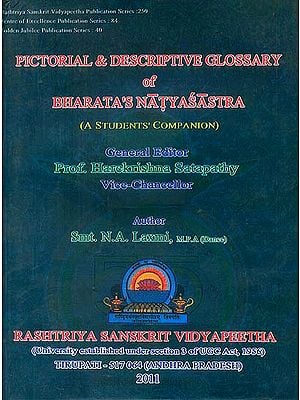
☛ Natya Shastra of Bharata is a significant milestone throughout the entire existence of Indian music. The Natya Shastra is an exhaustive work chiefly managing dramaturgy. In that, we get data on scales, melodic structures, tala, and instruments. The then-contemporary music perceived two standard scales. These were called gramas. The word grama itself may be the result of a gathering or faction: a town, for example. This likely led to a bunch of svaras or notes being called grama. This could generally be interpreted as scales.
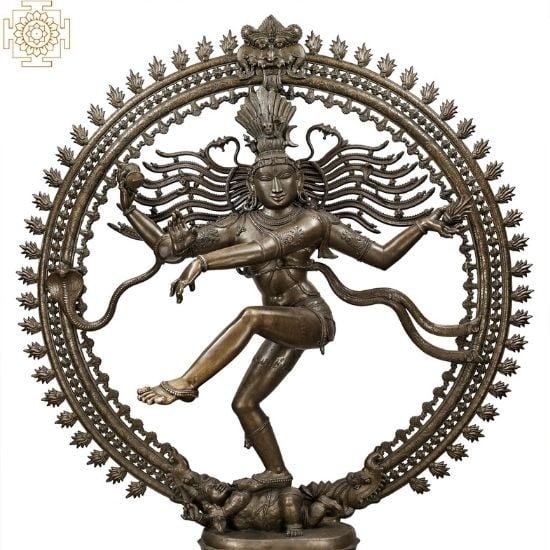
☛ Bharatanatyam, a pre-prominent Indian ancient dance structure probably the most established traditional dance legacy of India is viewed as the mother of numerous other Indian traditional dance structures. Routinely a solo dance performed simply by women, it started in the Hindu temples of Tamil Nadu and ultimately prospered in South India. The hypothetical base of this structure follows back to 'Natya Shastra', the old Sanskrit Hindu text on the performing arts. A type of illustrative story of Hindu religious subjects and profound thoughts acted out by artists with magnificent footwork and great expressions, its exhibition repertoire incorporates nritta, nritya, and Natya.
FAQs
Mythological stories are sprinkled across Carnatic music, which introduces students to the main myths of their culture. When melodies are set in the setting of temples, it invigorates the students both profoundly and architecturally.
For example, both Srirangam and Mylapore give questions and replies through Carnatic music, subsequently making a strong association between the renderer and the audience. Ragas are additionally instrumental in inspiring dispositions at specific times and transport the artist to locales that reverberate peace and harmony.
Purandara Dasa (1484-1564) is alluded to as the Pitamaha (the dad or granddad) of Carnatic music as he figured out the fundamental illustrations in teaching Carnatic music, and out of appreciation for his critical commitment to Carnatic music.
Carnatic Music evokes positive physical and spiritual influences, relieving all stress. The commonly described characteristics of a Carnatic style are strongly Kriti-based, dasavidha gamakas (especially the kampitha gamakas), unity of raga, tala, and sruti in every piece, mixing the three degrees of speeds and phrase-by-phrase raga development.
The main emphasis in Carnatic music is on vocal
music; most compositions are written to be sung, and even when played on
instruments, they are meant to be performed in a singing style (known as gayaki).
Three basic concepts are Raga (tuneful rendition with minute intervals and rich
in embellishments), Tala (rhythmic order marked by mathematical precision), and
Bhava (expression of thoughts and emotions).
A Carnatic raga consists of an ascending and descending scale pattern (known as arohana and avarohana respectively). Both ascent and descent should have at least five tones, although rarer ragas contain fewer tones. Scales establish rules for all performers to adhere to in melodic performance and provide a tonal boundary.
The typical scale features also act to help listeners identify ragas. Carnatic Music is known for being scale based with the 72 full scale melakartha raaga systems. Carnatic artists love to choose these full scale ragas to perform at length. C major (or the key of C) is a major scale based on C, consisting of the pitches C, D, E, F, G, A, and B.
Carnatic music is usually performed by a small
ensemble of musicians consisting of a principal performer (usually a vocalist),
a melodic accompaniment (usually a violin), a rhythm accompaniment (usually an
mridangam or tambura), which acts as a drone throughout the performance.
A genre known as kriti, an extended song composition
in 3 parts, forms the backbone of a Carnatic music concert. A performance
begins with a varnam (a melodic exploration sung with simple phrases) as a
prelude to the first kriti song and usually in the same raga. Followed by a
kalpanaswaram (improvising the notes of a chosen raga within the stylistic
rules of this form). Then moving on to the main compositional segment of the
performance.
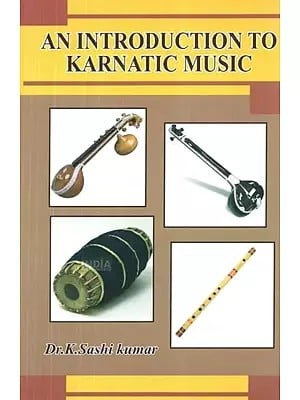
Major instruments used in Carnatic Music are stringed
Instruments (Veena, Sitar, Sarod, Gottuvadyam, Santoor, Tamboori, Chitraveena,
etc), Bowed instruments (Violin, Sarangi) Wind instruments (Flute or venu,
Shehnai, Nadaswaram, etc.) Mridanga, Harmonium, Ghatam, etc. Also known as
Raghunath veena is used mostly in Carnatic classical music. Veena is a fretted
string instrument belonging to the lute family. It is made using Jackwood. The
violin is a key instrument in Carnatic music. It is the accompanying instrument
for a vocal concert and holds its own as a solo player.
Purandara Dasa, who is known as the "father
(Pitamaha) of Carnatic music", formulated the system that is commonly used
for the teaching of Carnatic music. Venkatamakhin invented and authored the
formula for the melakarta system of raga classification in his Sanskrit work,
the Chaturdandi Prakasika. Govindacharya is known for expanding the melakarta
system into the sampoorna raga scheme – the system that is in common use today.
In the 18th and 19th centuries, Carnatic music was
mainly patronized by the local kings of Mysore, Travancore, and the Maratha
rulers of Tanjore. Some of the royalty of the kingdoms of Mysore and Travancore
were themselves noted composers and proficient in playing musical instruments,
such as the Rudra veena, violin, ghatam, mridangam.
In
ancient texts, the southern region of the Vindhyas is often referred to as
Karnatakam. Possibly, this is where the music of South India gets its name
from. The word ‘Carnatic’ can be interpreted as having its roots in the
Sanskrit word ‘Karneshuathathi’, which is pleasing to the ear.
Carnatic music owes its name to the Sanskrit term Karnâtaka Sangîtam which denotes “traditional” or “codified” music. Composed of a system of Ragam (Raga) and Thalam (Tala), it has a rich history and tradition. Carnatic music has stood the test of time and remained immune to the influences of Central Asia and Persia, whose profound influence can otherwise be seen in North Indian music.