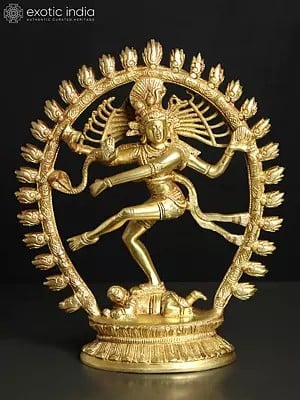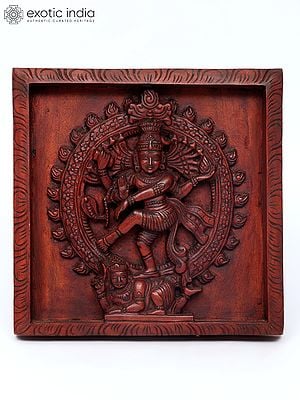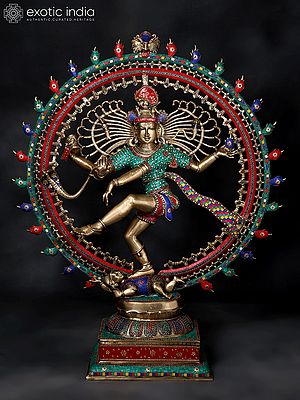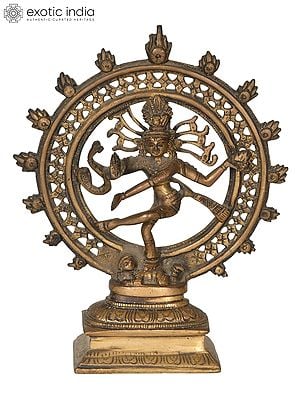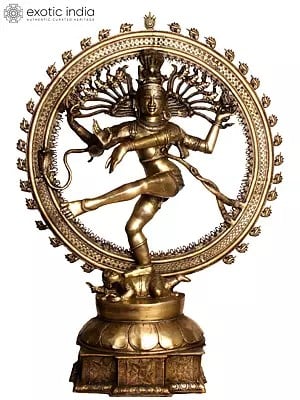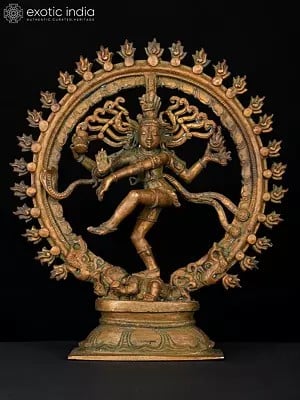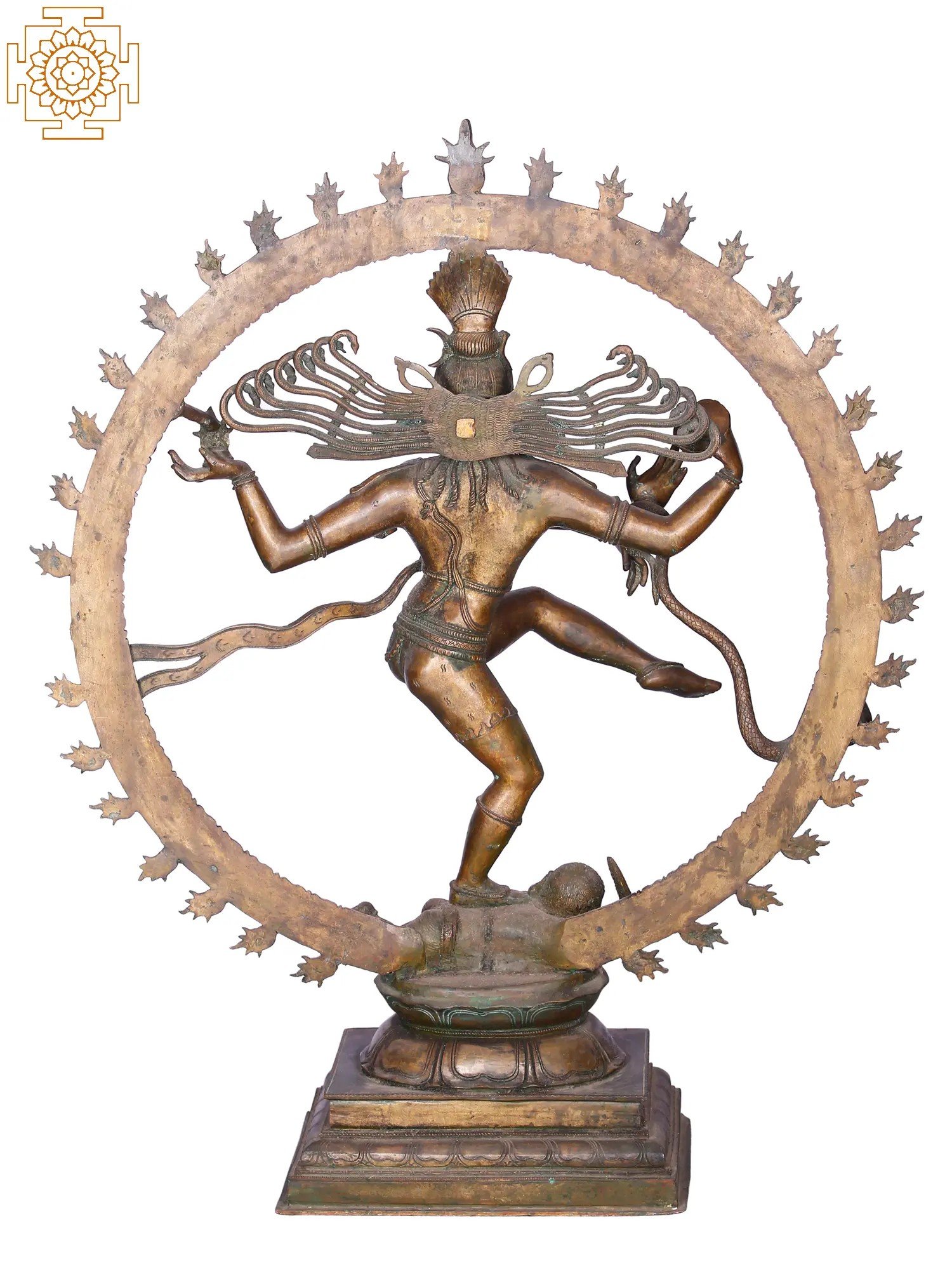

Nataraja, the cosmic dancer, manifests in
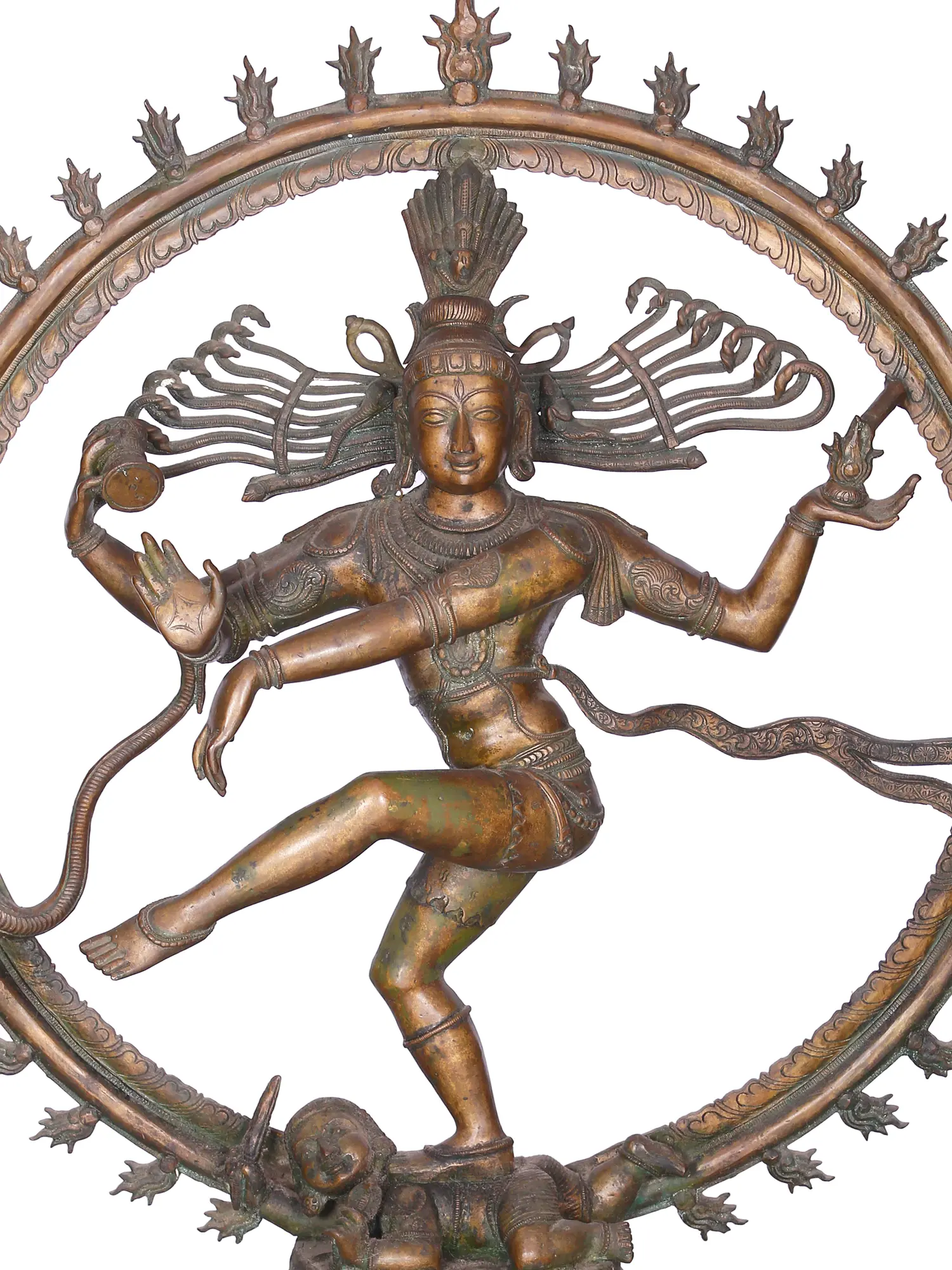
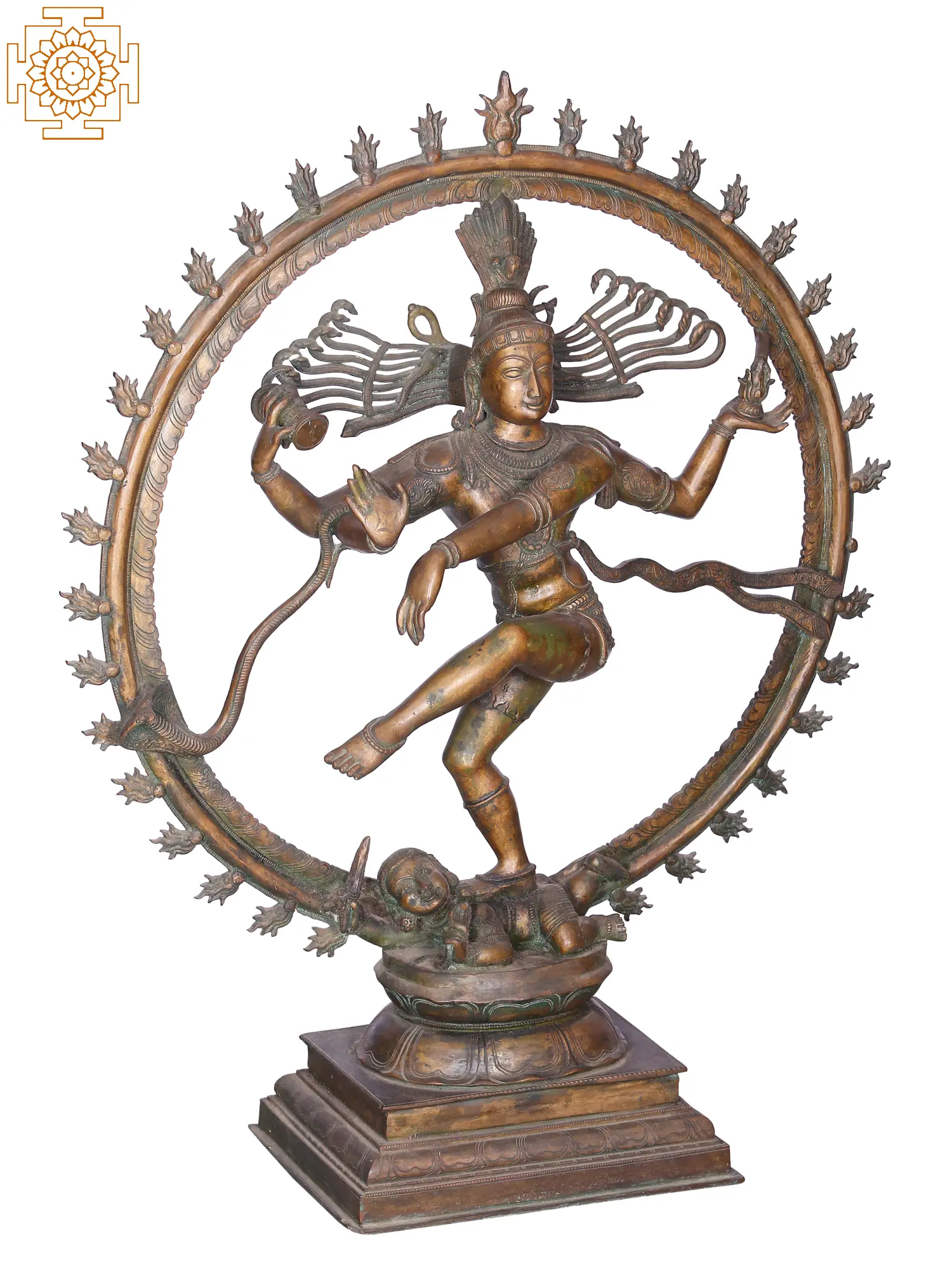
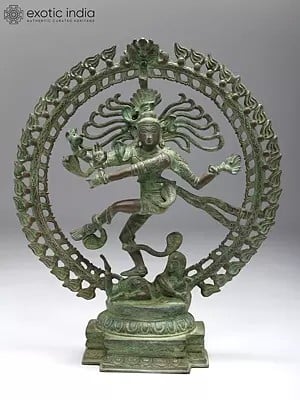
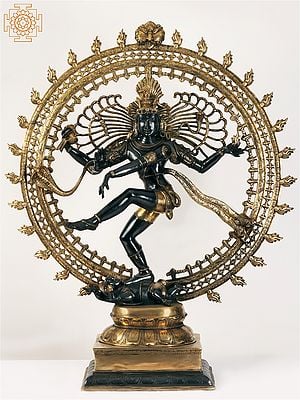
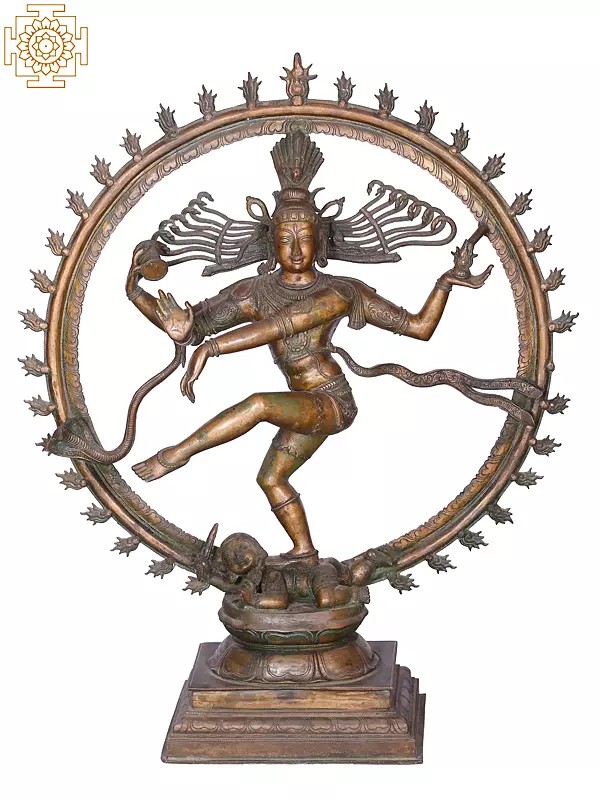
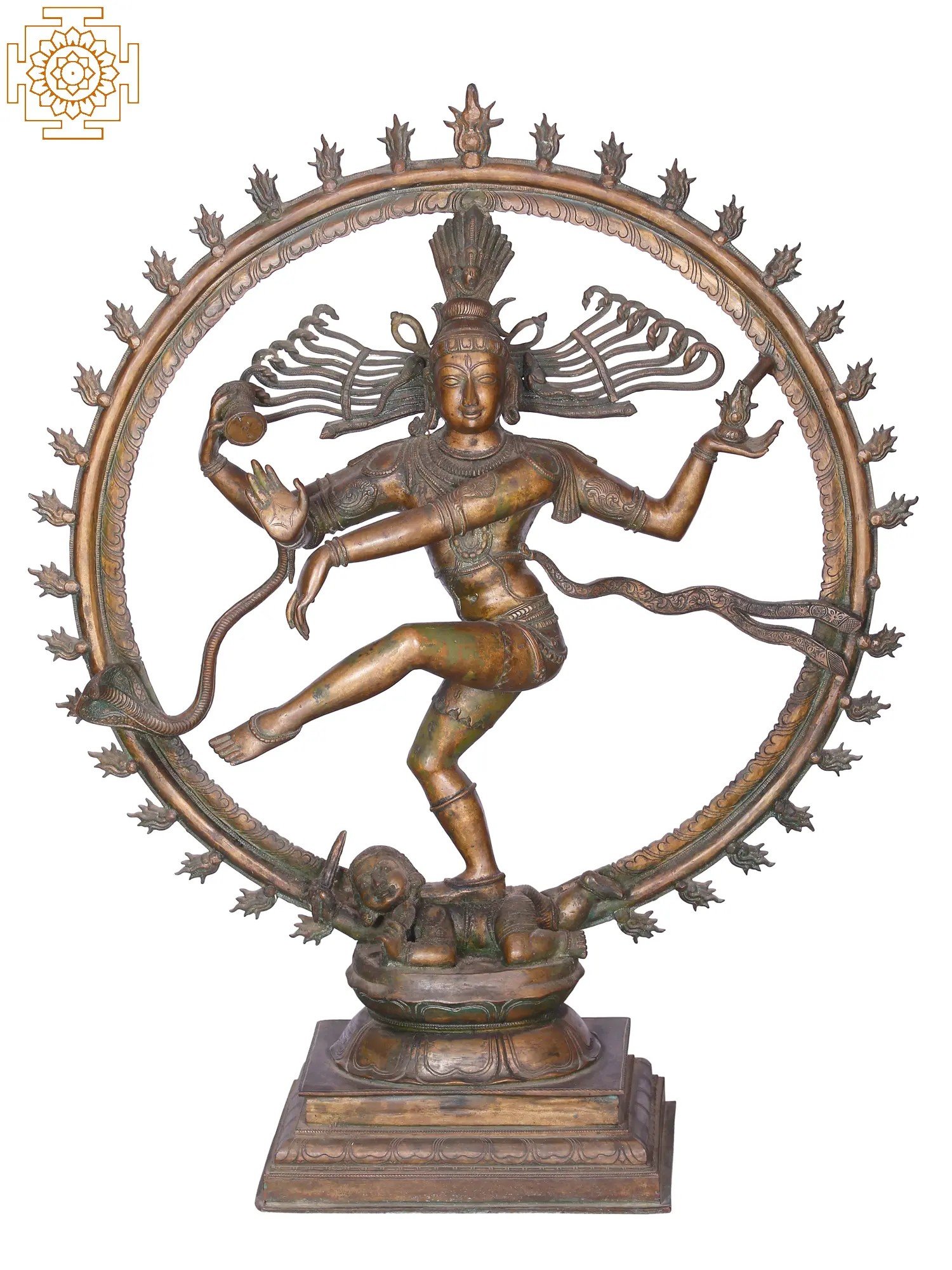
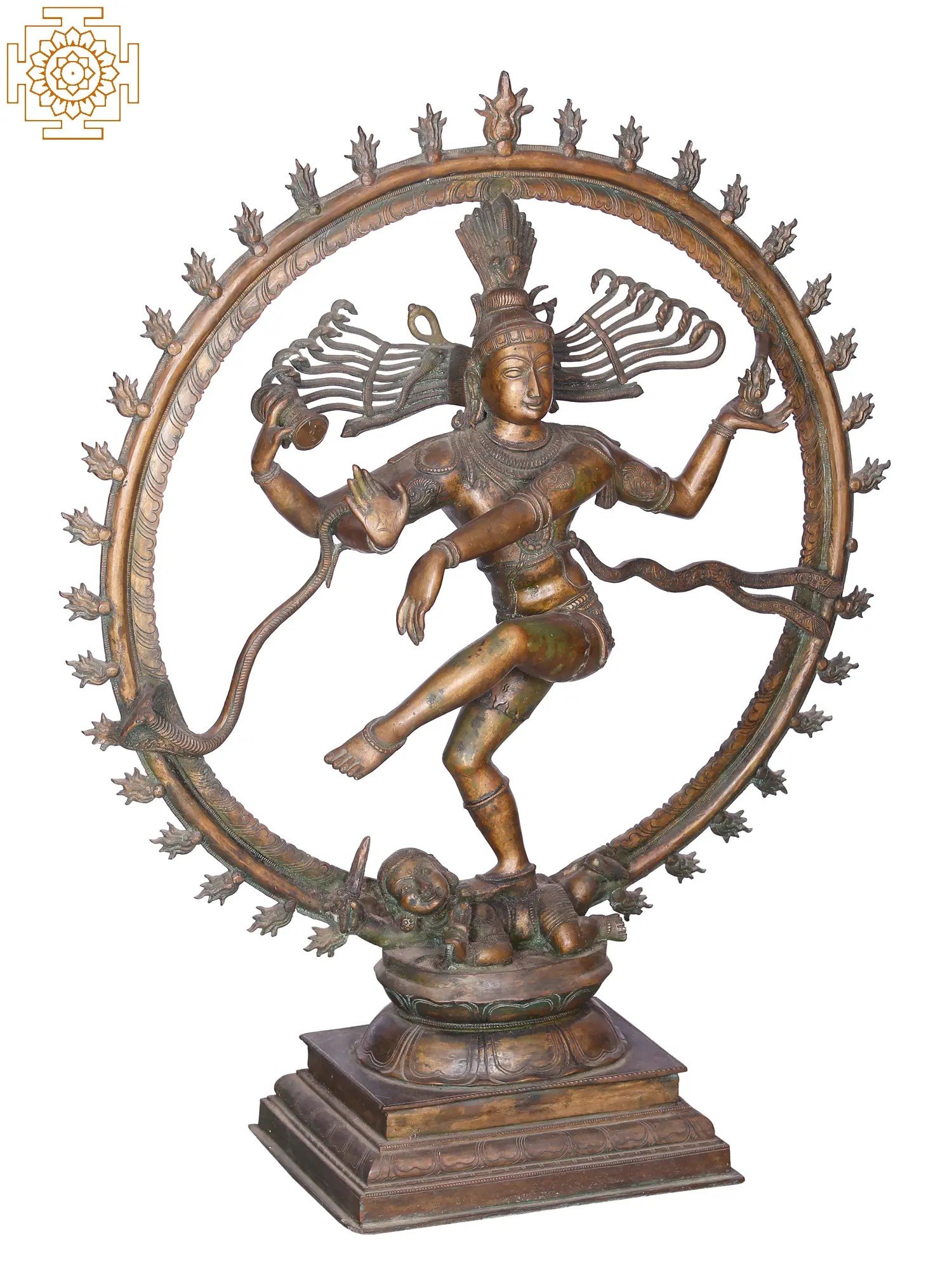
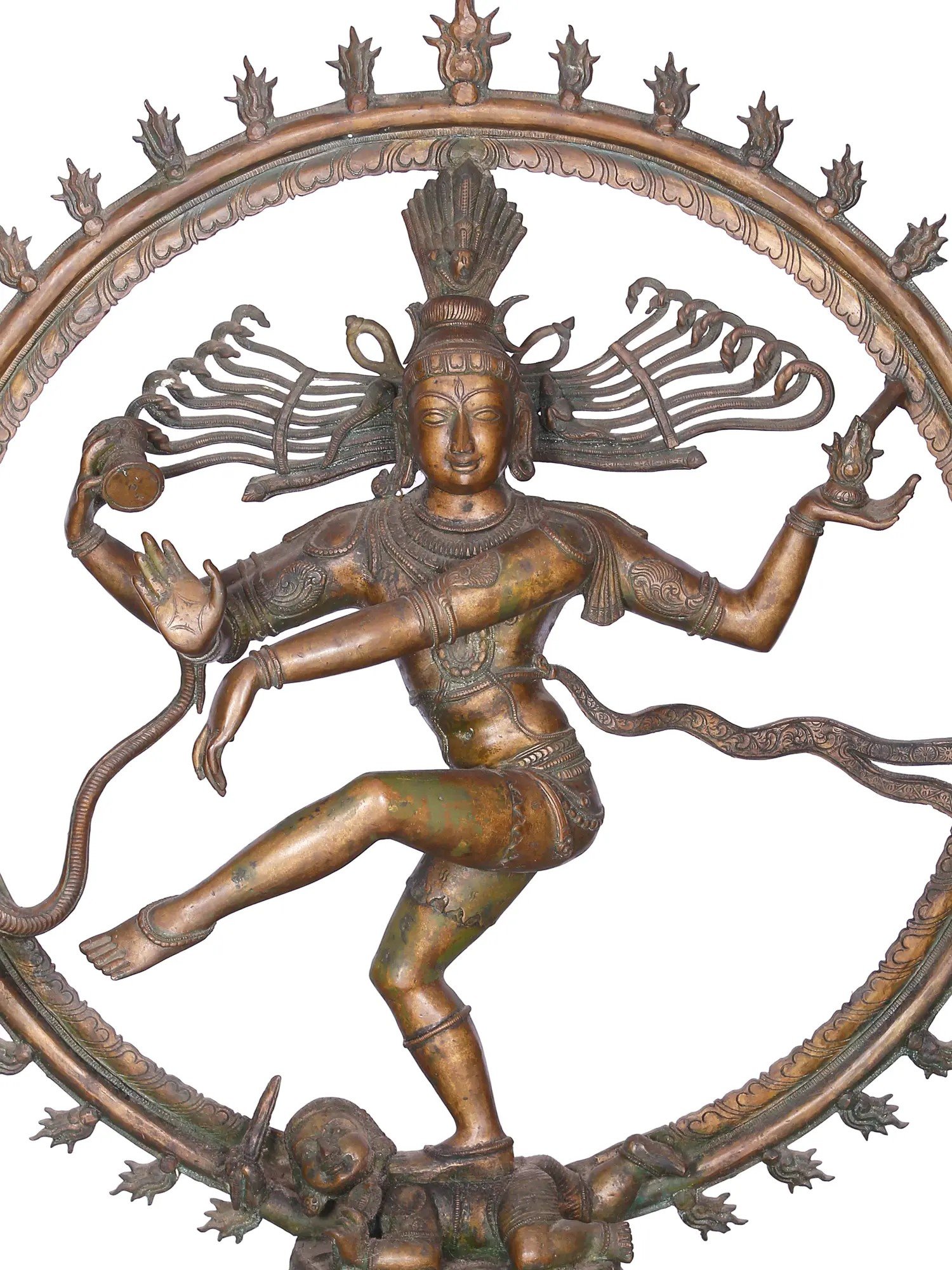
this breathtaking spectacle of divine dynamism. Encircled by a halo of flames, Nataraja, “the Lord of Dance”, stands
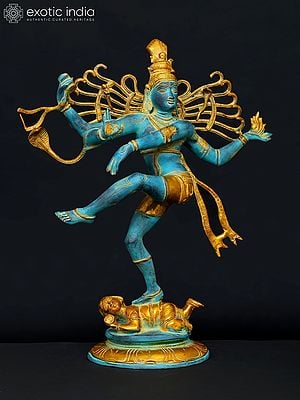
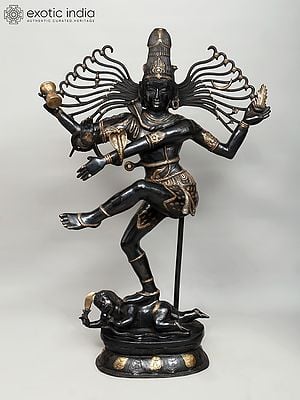
upon a lotus pedestal, gracefully lifting his left leg. His right leg,
triumphantly crushing the “demon dwarf
(Apasmara)” beneath, symbolises the conquest over spiritual ignorance. The
dance’s energy pulsates through the whirling strands of hair that fan out like
cosmic waves. In his upper right hand, a “Damaru
(Udukai)” beats the rhythm of creation, while the upper left hand wields “Agni”, embodying the forces of both
genesis and destruction.
A cobra uncoils from his lower right
forearm, emphasising life’s cyclical nature. His right is poised in Abhaya
Mudra, signifying courage and fearlessness. His lower left-hand points to his
feet, veiling his heart, symbolising the path to peace and salvation.
Nataraja’s form is a cosmic revelation, a timeless dance narrating the eternal
cycles of creation, preservation, and dissolution. Crafted in Panchaloha bronze from “Swamimalai” using
the ancient “Madhuchista Vidhana (Lost-Wax) technique”, this artwork encapsulates the
cycle of existence.
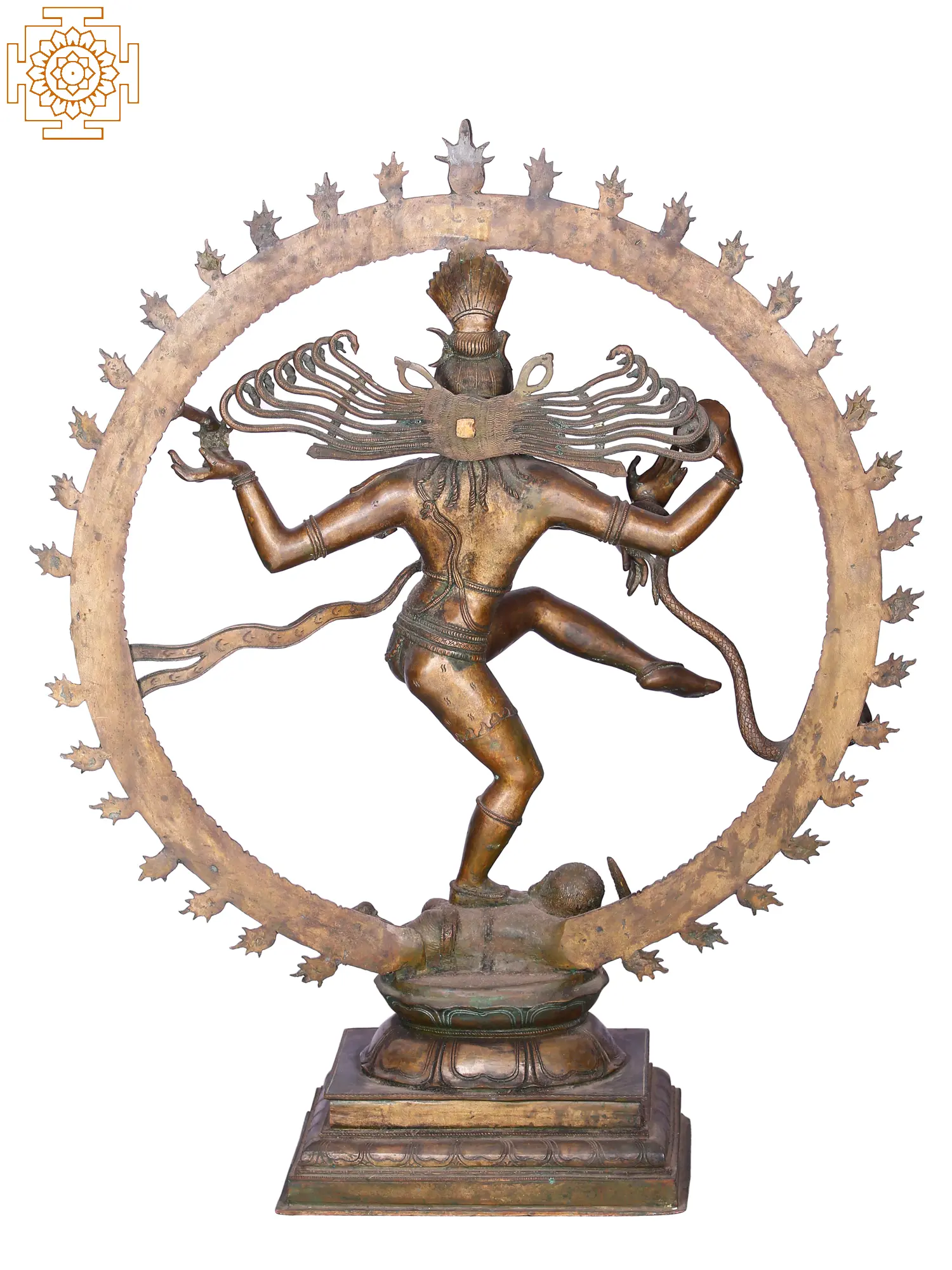
The Cosmic Dance of Shiva
This magnificent bronze statue captures Lord Nataraja, the embodiment of Shiva as the cosmic dancer, in his most dynamic and profound form. The dance, known as the Tandava, is not merely an artistic expression but a representation of the cosmic cycles of creation, preservation, and destruction that govern the universe. Each pose, each gesture, conveys a profound philosophical meaning, making this statue a focal point of spiritual contemplation and artistic appreciation.
A Masterpiece of Panchaloha
Crafted using the ancient Madhuchista Vidhana, or lost-wax casting technique, this sculpture is made from Panchaloha, a sacred alloy of five metals traditionally believed to possess auspicious qualities. This meticulous process, passed down through generations of artisans in Swamimalai, ensures the statue's exquisite detail and enduring beauty. The rich patina, a testament to the artistry and age, hints at the thousands of years of tradition that have gone into its creation. The intricate detailing, from the fiery halo to the serene expression of Shiva, speaks volumes about the skill and devotion of the craftsmen.
Symbolism in Motion
Lord Nataraja is depicted within a flaming aureole, symbolizing the cosmic fire that both creates and destroys the universe. His right hand is raised in the Abhaya Mudra, offering protection and dispelling fear, while his left hand, pointing downwards, guides one towards liberation. In his upper right hand, he holds the Damaru, a drum whose rhythmic beat creates the universe. In his upper left hand, he holds Agni, the fire of destruction and transformation. His raised left leg crushes the demon Apasmara, representing ignorance, while his dance itself signifies the eternal rhythm of existence. The coiled serpent around his neck signifies mastery over primal energy. The cascading locks of his hair, often depicted with a crescent moon and the goddess Ganga, symbolize his ascetic nature and his role as the source of life-giving waters.
An Icon of Balance and Transformation
This imposing 35-inch statue is more than just a decorative piece; it is a powerful symbol of balance and transformation. It represents the eternal dance of life, death, and rebirth, and serves as a reminder of the impermanence of all things and the underlying, unchanging reality. The presence of this Nataraja statue in your home or spiritual space can inspire a sense of awe, tranquility, and a deeper understanding of the cosmic order. It is a legacy of Indian craftsmanship and spiritual philosophy, brought to life in stunning bronze.