
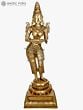

| Specifications |
 |
ZDQ74 |
 |
Brass Statue |
 |
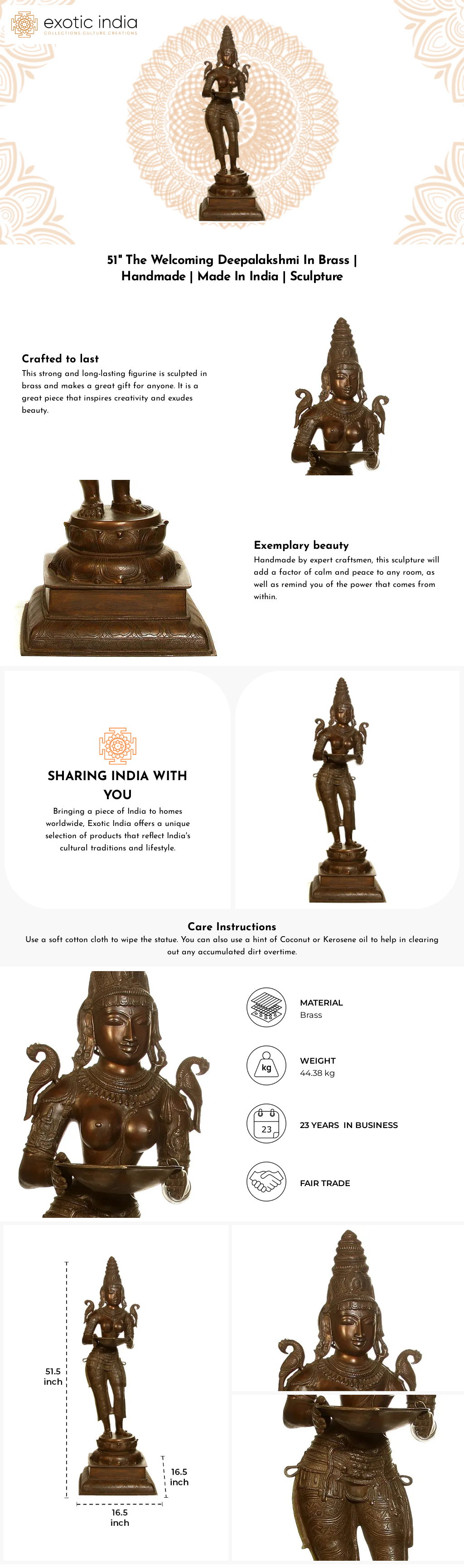
Height: 51.50 inch |
| Width: 16.50 inch | |
| Depth: 16.50 inch | |
 |
Weight 44.38 kg |
| Delivery and Return Policies |
 |
Ships in 1-3 days |
 |
Returns and Exchanges accepted within 7 days |
 |
Free Delivery |


Sculptures of a lamp-carrying maiden begin appearing quite early, however, her classification as a goddess, especially as a form of Lakshmi who was associated with Diwali, the festival of light, since long before, is datable to around the first half of the seventeenth century.
These statues of lamps carrying young women were initially used as articles of gift made to relatives, superiors and friends, a tradition which emerged first in the South, perhaps at Vijayanagar.
Later, it was widely followed all over the land. Deepalakshmi has been ever since a cultural icon that harbours light, keeps it up, and promotes all that light promotes.
Far ahead of the Western concept of ‘torch-bearer’ – the guide or the mentor – an intellectual being, in Indian tradition the courier of the lamp was seen as a divine presence that lighted the path by its mere presence. It was for such reasons that statues of a woman carrying a lamp in her hands were often seen posted on the entrances to temples, palaces, mansions or houses. These Deepalakshmi statues, a name they subsequently acquired, presented a strange blend of spiritualism and secularism.
They manifested divinity but were not linked to a sectarian line they were completely secular, and hence, adorned any door, or any sitting chamber, even an Islamic or Christian ruler’s, by their sheer aesthetic beauty and inspired by their power to spread light. Now for over three hundred years, a Deepalakshmi statue is one of the most auspicious objects in any house, and as significant an image for Diwali worship as Goddess Lakshmi herself.
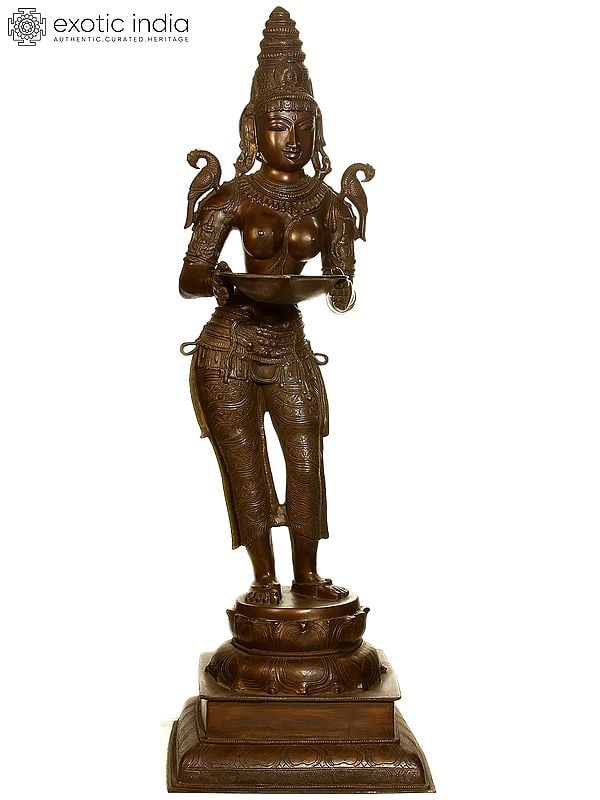
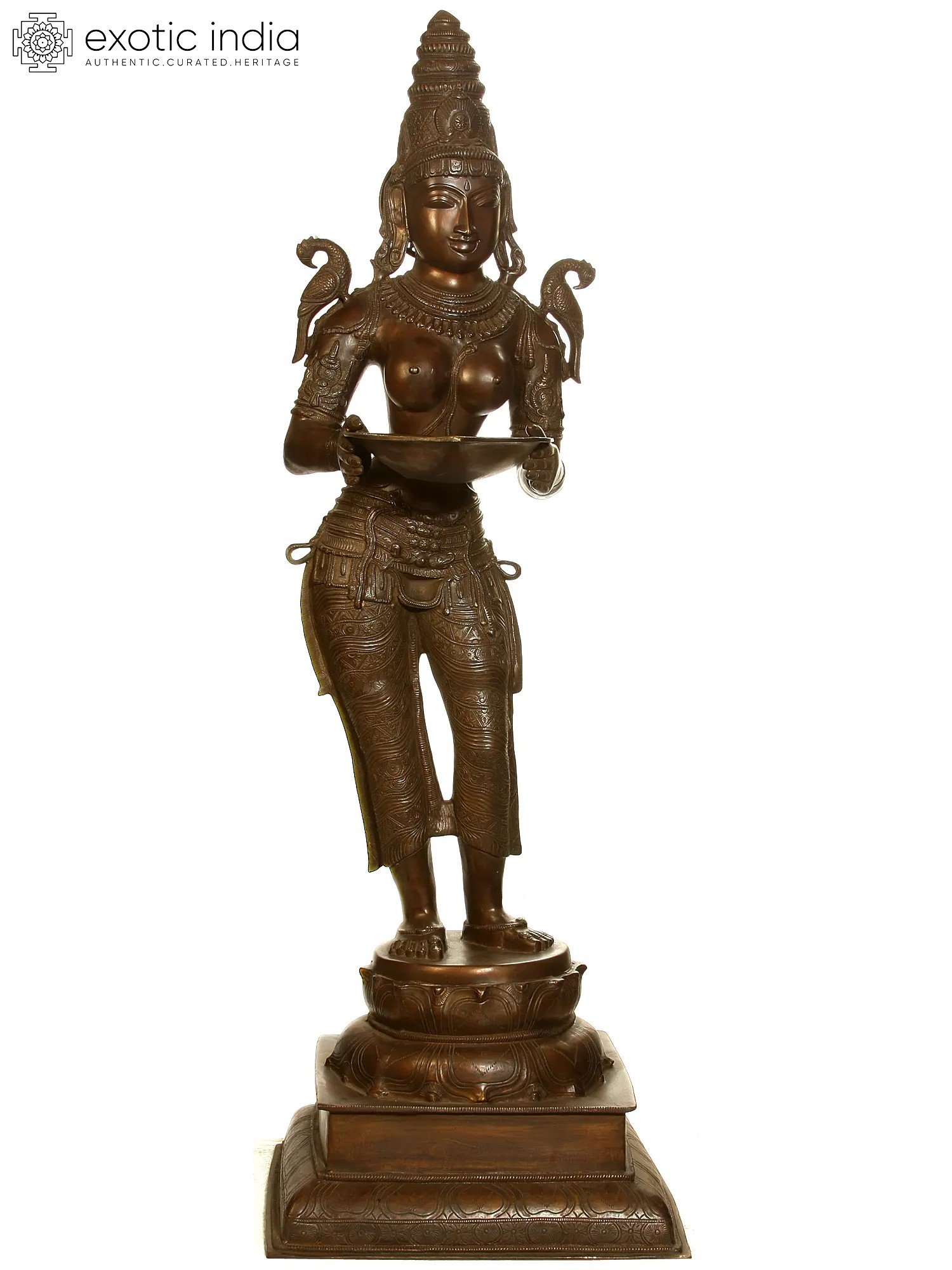
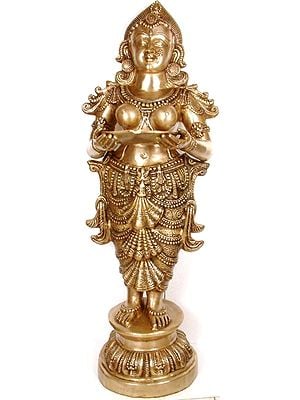
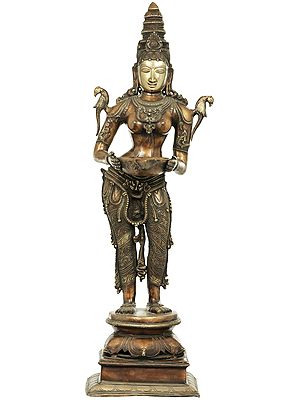
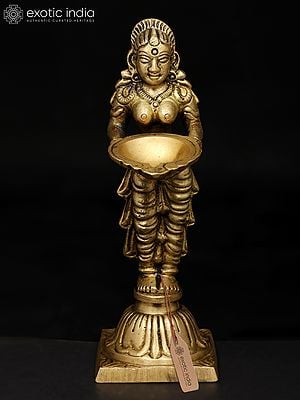
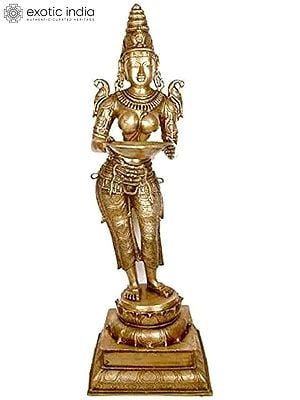
This brilliantly conceived brass cast is outstanding in the figural quality of the image, in its modeling, plasticity, grace, divine aura and iconographic details: round face with a sharp nose, rounded cheeks with cute lips socketed within and deep thoughtful eyes arching over, a large bead-like moulded chin and a blissful composure on the face. As absolute is the figure’s anatomy consisting of a well-defined neck, sensuously moulded breasts, subdued belly, broad shoulders, voluminous hips twisted to the right that add to the part greater volume, and a proportionate height.
Wearing a towering Vaishnava crown, ‘makara-kundalas’ – ear-ornaments designed like crocodiles, broad necklaces, elaborate waist-band and armlets conceived with two peacock motifs, strange and delightful, as a pair of the dancing bird is perching over shoulder-joints. An auspicious icon of peacocks enhances the image’s auspicious influence. The elegantly pleated and embellished ‘antariya’ – lower garment, is another exceptionally artistic element of the figure.



Send as free online greeting card