| Specifications |
 |
Publisher: Ranjan Publications |
| Author: D.P. Saxena | |
| Language: English | |
| Pages: 334 | |
| Cover: Paperback | |
 |
8.5" X 5.5" |
| Edition: 2007 | |
 |
IDK093 |
| Delivery and Return Policies |
 |
|
 |
Returns and Exchanges accepted within 7 days |
 |
Free Delivery |


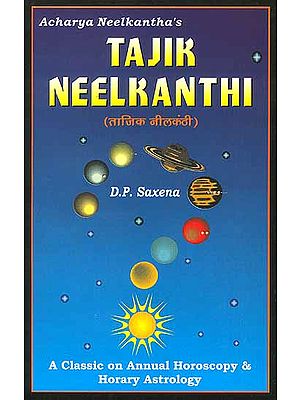
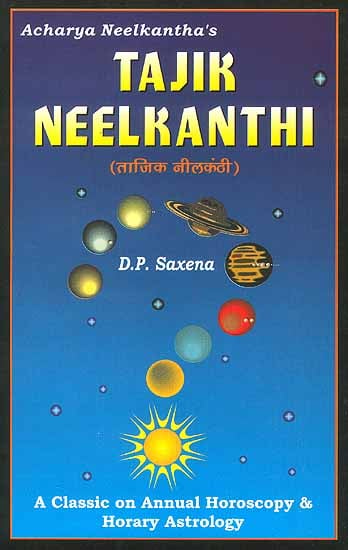
Daivajna Neelkantha first time introduced the concept of progressed horoscope called the Varshaphala or the annual chart based on sound astrological principles. The concept of Sahams and the unique system of Dasas in a so smaller period of a year are some of the specific contributions of the Acharya. While the natal astrology gives us a general outline of life of the native, the Varshaphala gives details of the events that may occur during a year.
Tajik Neelkanthi integrates the Arabic thought with the Vedic Astrological Principles. This has proved to be a authoritative treatise on horary astrology. The system of aspects in the form of 16 well known yogas is an added service to horary astrology. The work, in fact is not only a classic of the high order but also a script in its own right. We needed not only its translation in English language but also a comprehensive commentary by a competent scholar, useful to the neophytes as well as to the accomplished astrologers.
Preface
We in India mostly follow the Parasari system of astrology. Some of the luminaries and celebrated authors and exponents of the system have been Varahamihira, Kalyan Varma and Venkatesa.
The other system commanding equal respect is the Jaimini system. This system differs from the Parasari in some respects. The Dasa system, the mode of their interpretation are the important features of the Jaimini system is however not much in use except in some cases as an alternative to the Parasari. Prof. P.S. Sastri is perhaps the first person who has translated all the four chapters of Jaimini Sutras in English.
The third system commanding respect is the Tajik system. This differs from the Jaimini and the Parasari in many respects. The important difference is the concept of the Varshaphala or the annual progressed horoscope. The other important point of difference is the importance given to the Sun. The new year commences from the time and date of sidereal solar return to the position where Sun was at the time of the birth of the native. It is true that the Sun is accepted as the lord of solar system and also the significator of the Atman which ingresses into physical body again and again. Despite all this the Moon is given more importance in the Vedic astrology.
In the Tajik system we have two ways of determining the strength of planets. The one is the Pancha Vargeeya Bala or the 5 sources of strength. The Pancha Vargeeya Bala is computed for determining the lord of the year. The other is the Dwadash Vargeeya Bala or the 12 sources of strength of the planets. This strength indicates the benefic or malefic nature of the planets. It is believed that no planet is inherently malefic or benefic. It is only its placement that makes it one or the other.
In the Tajik we have mutual aspects of planets which is not the case in Parasari. If Saturn is in Aries and Mars in Gemini the former has an aspect to the latter but the latter does not aspect the former according to Parasari but in Tajik aspect is mutual.
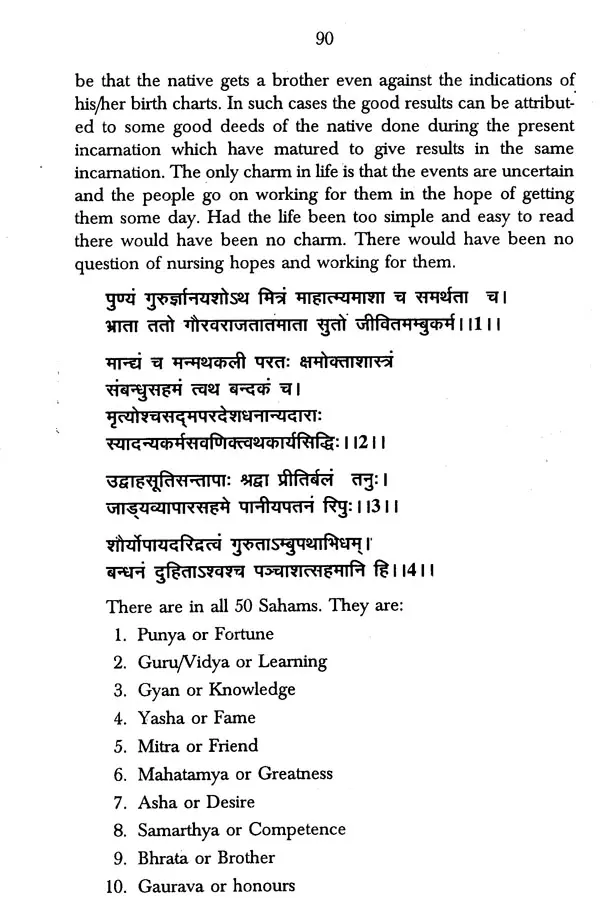
The introduction of sensitive points in the charts called the Sahams is another important aspect of Tajik system. Harshasthana, and Tri Raisipati concepts are other points of difference.
Neelkantha and Kesava are the illustrious exponents of Tajik system. It is the work of Neelkantha that has been translated here. This work is actually not a verbatim transliteration but a translation of ideas contained in the Sanskrit Slokas. I have grouped the slokas where they treat one subject and provided a running translation. This to my mind will help the readers in having a proper comprehension. In order to elaborate the idea some comments have been added. They are not the addition of any foreign matter to the subject. They may only be taken as additional explanations or interpretation. They may only be taken as additional proper assimilation. These comments may be taken only in that form. In the last chapter, however, some personal comments and those of other writers have been given while analyzing the specific cases according to the Tajik system. Despite all efforts to be objective in translation, interpretation and comments etc. it is possible that personal views may have entered the work. For this rare element, if any, I seek the pardon of the readers because no human being is perfect.
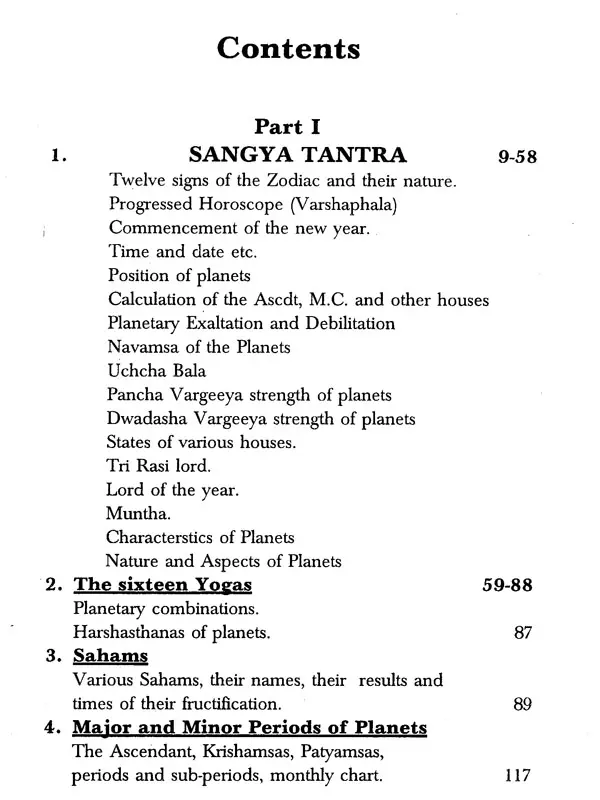
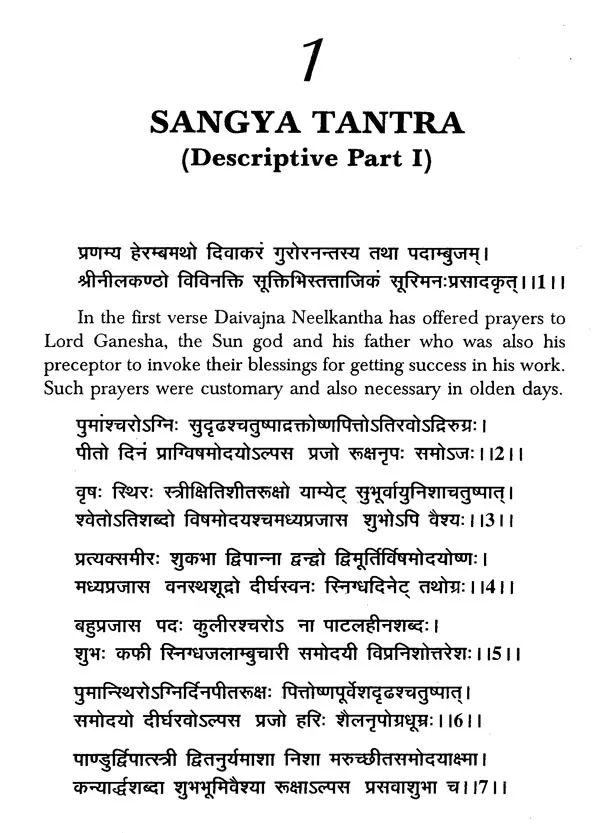
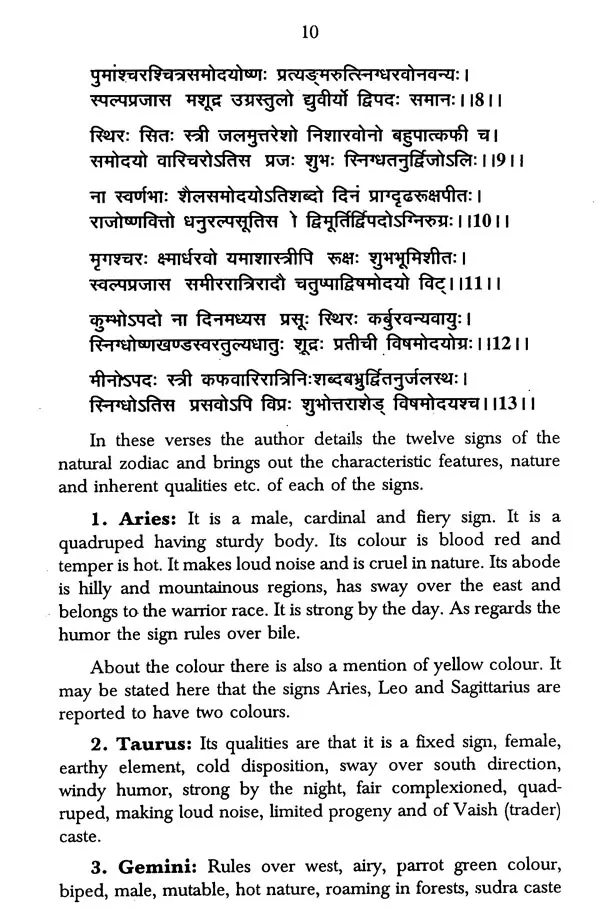
| 1. | SANGYA TANTRA | 9-58 |
| Twelve signs of the Zodiac and their nature | ||
| Progressed Horoscope (Varshaphala) | ||
| Commencement of the new year | ||
| Time and date etc. | ||
| Position of planets | ||
| Calculation of the Ascdt, M.C. and other houses | ||
| Planetary Exaltation and Debilitation | ||
| Navamsa of the Planets | ||
| Uchcha Bala | ||
| Pancha Vargeeya strength of planets | ||
| States of various houses. | ||
| Tri Rasi lord. | ||
| Lord of the year. | ||
| Muntha. | ||
| Characterstics of Planets | ||
| Nature and Aspects of Planets | ||
| 2. | The sixteen Yogas | 59-88 |
| Planetary combinations | ||
| Harshasthanas of planets | 87 | |
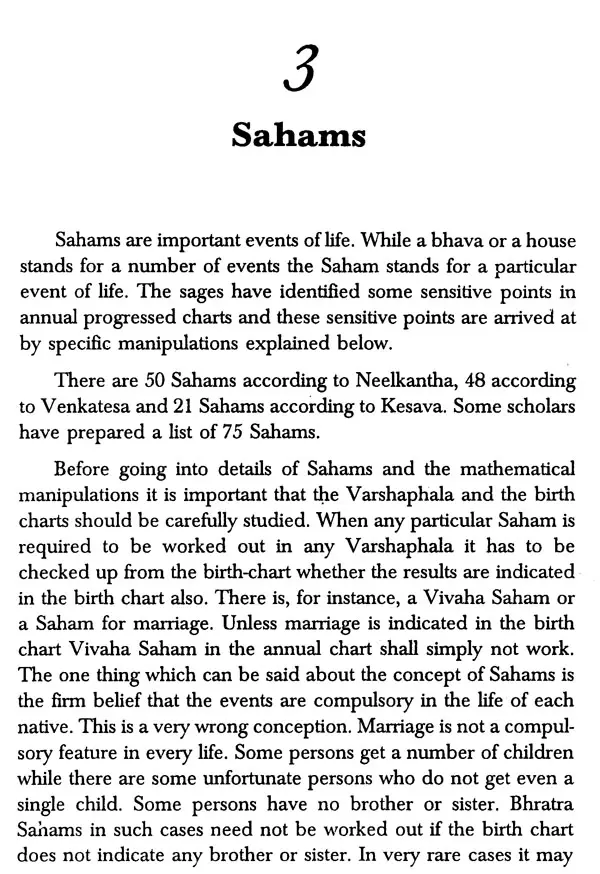
| 3. | Sahams | |
| Various Sahams, their names, their results and times of their fructification. | 89 | |
| 4. | Major and Minor Period of Planets | |
| The Ascendant, Krishamsas, Patyamsas, periods and sub-periods, monthly chart. | 117 | |
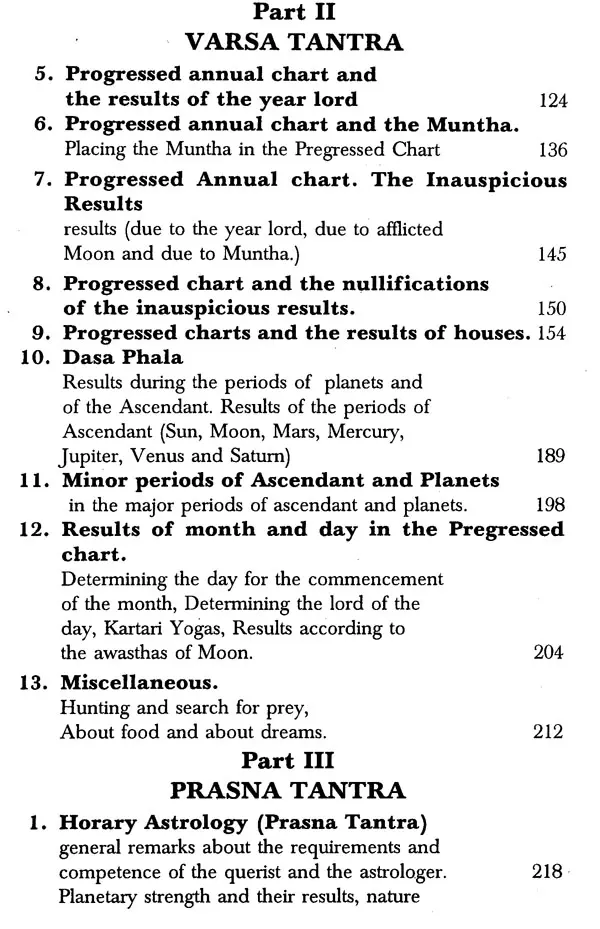
VARSA TANTRA | ||
| 5. | Progressed annual chart and the results of the year lord | 124 |
| 6. | Progressed annual chart and the Muntha.Placing the Muntha in the Pregressed Chart | 136 |
| 7. | Progressed Annual chart. The Inauspicious Result result (due to the year lord, due to afflicted Moon and due to Muntha). | 145 |
| 8. | Progressed chart and the nullifications of the inauspicious results. | 150 |
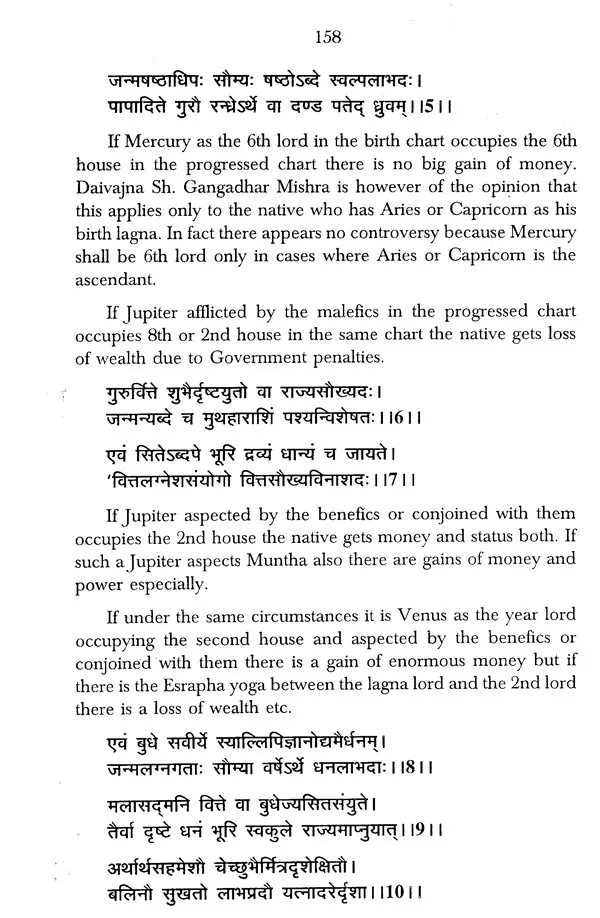
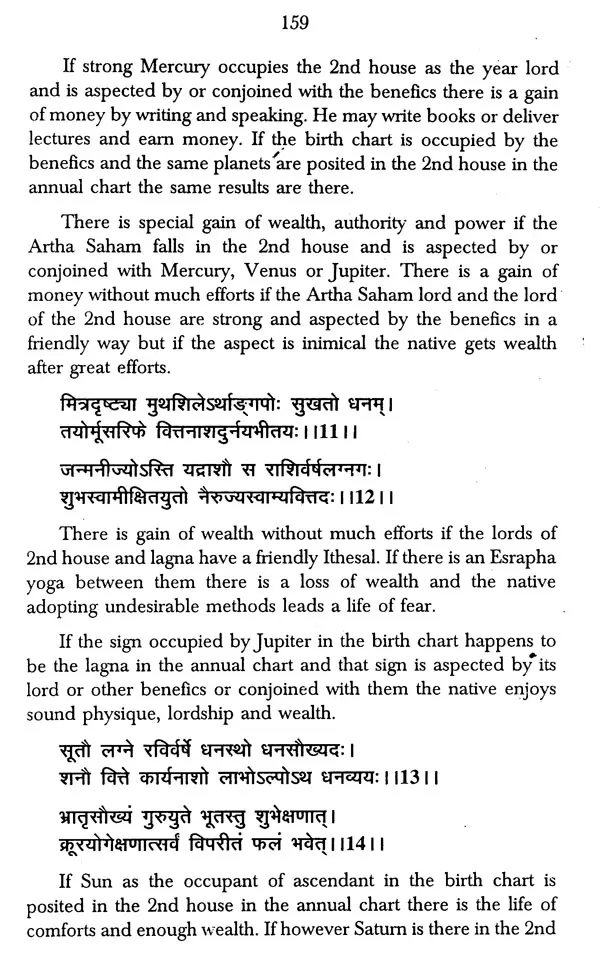
| 9. | Progressed charts and the results of houses. | 154 |
| 10. | Dasa PhalaResults during the periods of planets and of the Ascendant. Results of the periods of Ascendant (Sun, Moon, Mars, Mercury, Jupiter, Venus and Saturn)< | 189 |
| 11. | Minor periods of Ascendant and Planets in the major periods of ascendant and planets. | 198 |
| 12. | Results of month and day in the Pregressed chart. | |
| Determining the day for commencement of the month, Determining the lord of the day, Kartari Yogas, Results according to the awasthas of Moon. | 204 | |
| 13. | Miscellaneous Hunting and search for prey, About food and about dreams. | 212 |
PRASNA TANTRA | ||
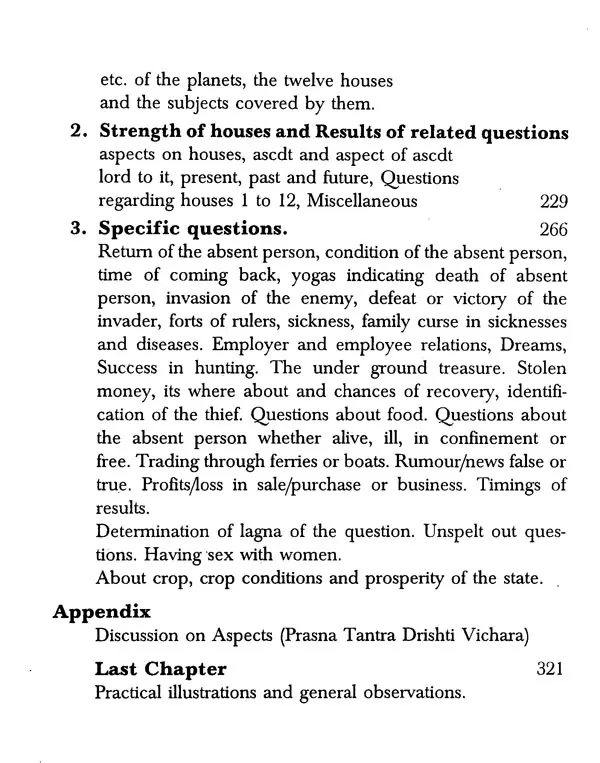
| 1. | Horary Astrology (Prasna Tantra)general remarks about the requirements and competence of the querist and the astrologer. Planetary strength and their results, nature etc. of the planets, the twelve houses and the subjects covered by them. | 218 |
| 2. | Strength of houses and Results of related questions aspect on houses, ascdt and aspect of ascdt lord to it, present, past and future, Questions regarding houses 1 to 12, Miscellaneous | 229 |
| 3. | Specific Questions. | 266 |
| Return of the absent person, condition of the absent person, time of coming back, yogas indicating death of absent person, invasion of the enemy, defeat or victory of the invader, forts of rulers, sickness, family curse in sicknesses and diseases. Employer and employee relations, Dreams, Success in hunting. The under ground treasure. Stolen money, its where about and chances of recovery, identification of the thief. Questions about food. Questions about the absent person whether alive, ill, in confinement or free. Trading through ferries or boats. Rumour/news false or true. Profits/loss in sale/purchase or business. Timing of results. | ||
| Determination of lagna of the question. Unspelt out questions. Having sex with women. About crop, crop conditions and prosperity of the state. | ||
| Appendix Discussion on Aspects (Prasna Tantra Drishti Vichara) | ||
| Last Chapter Practical illustration and general observations. | 321 |



Send as free online greeting card



Visual Search
 Upload an Image