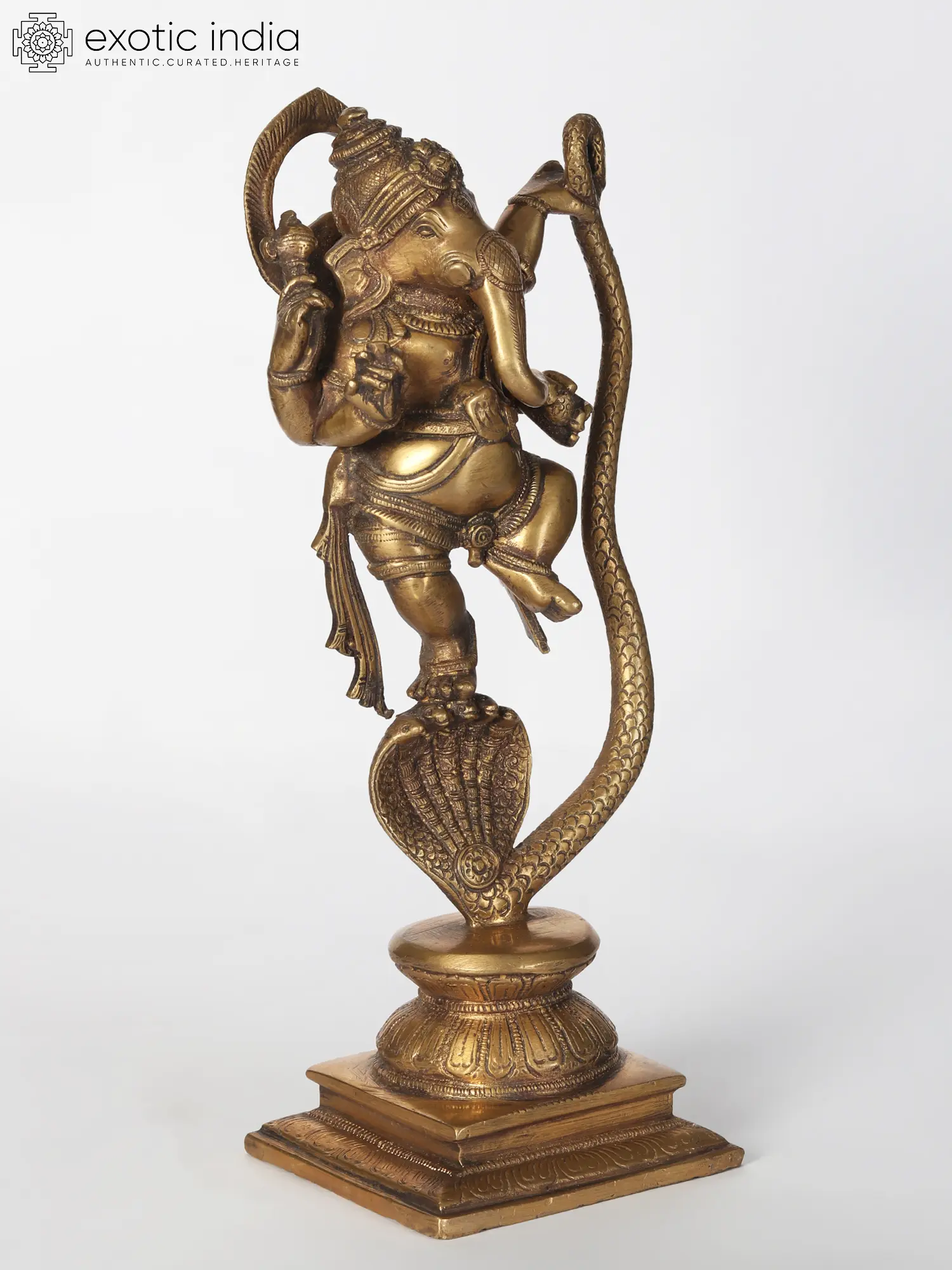
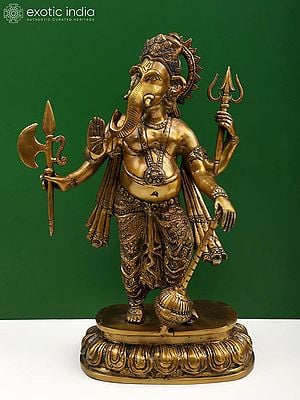
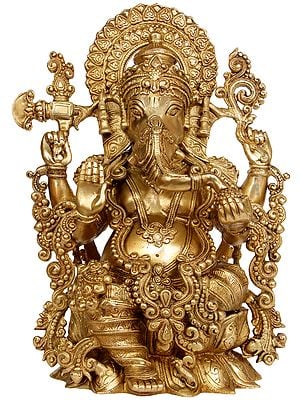
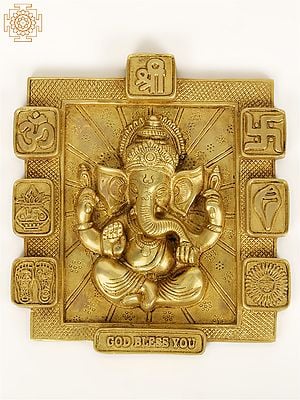
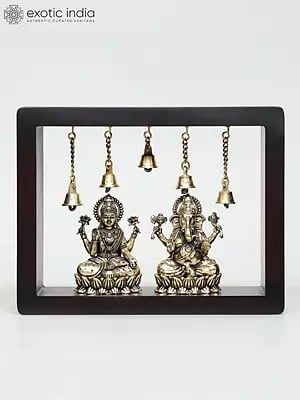
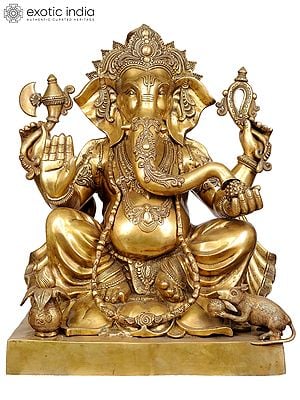
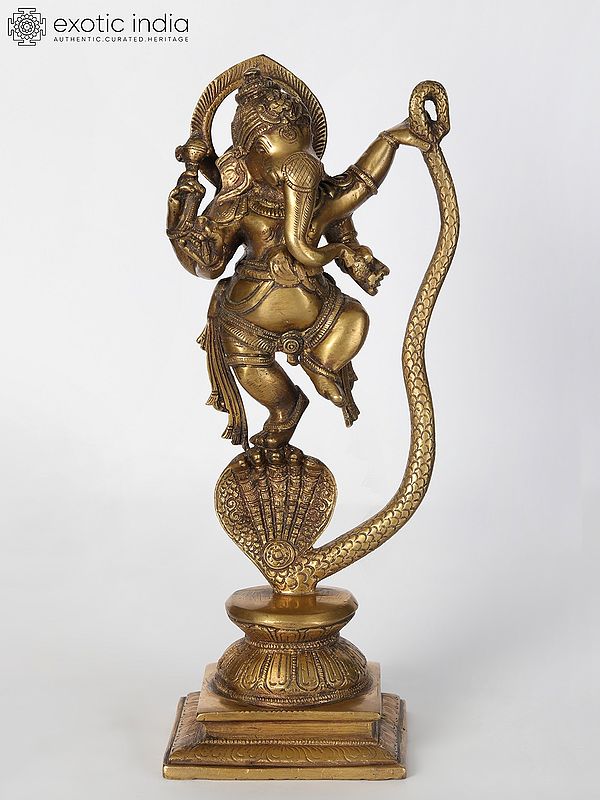
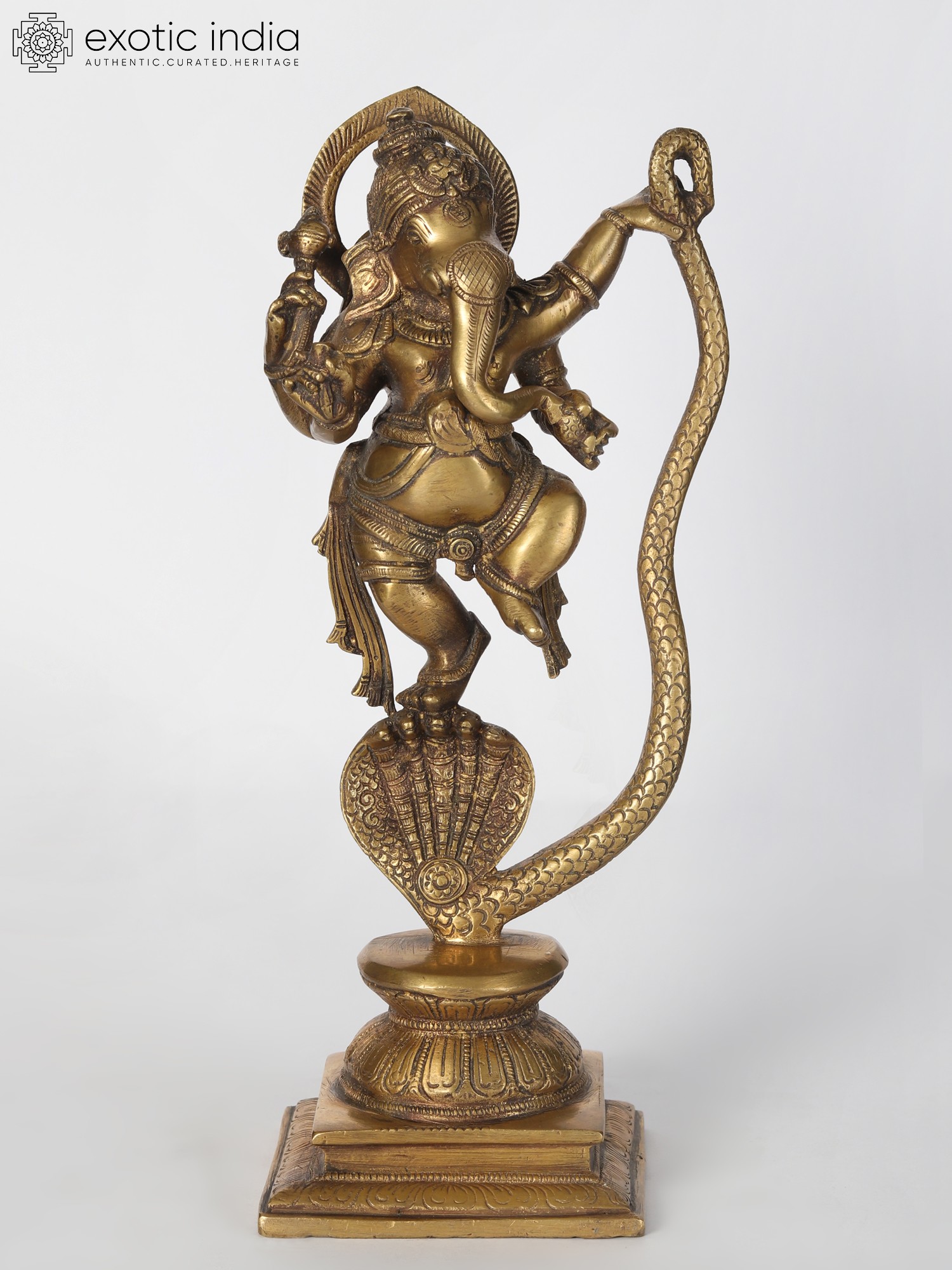
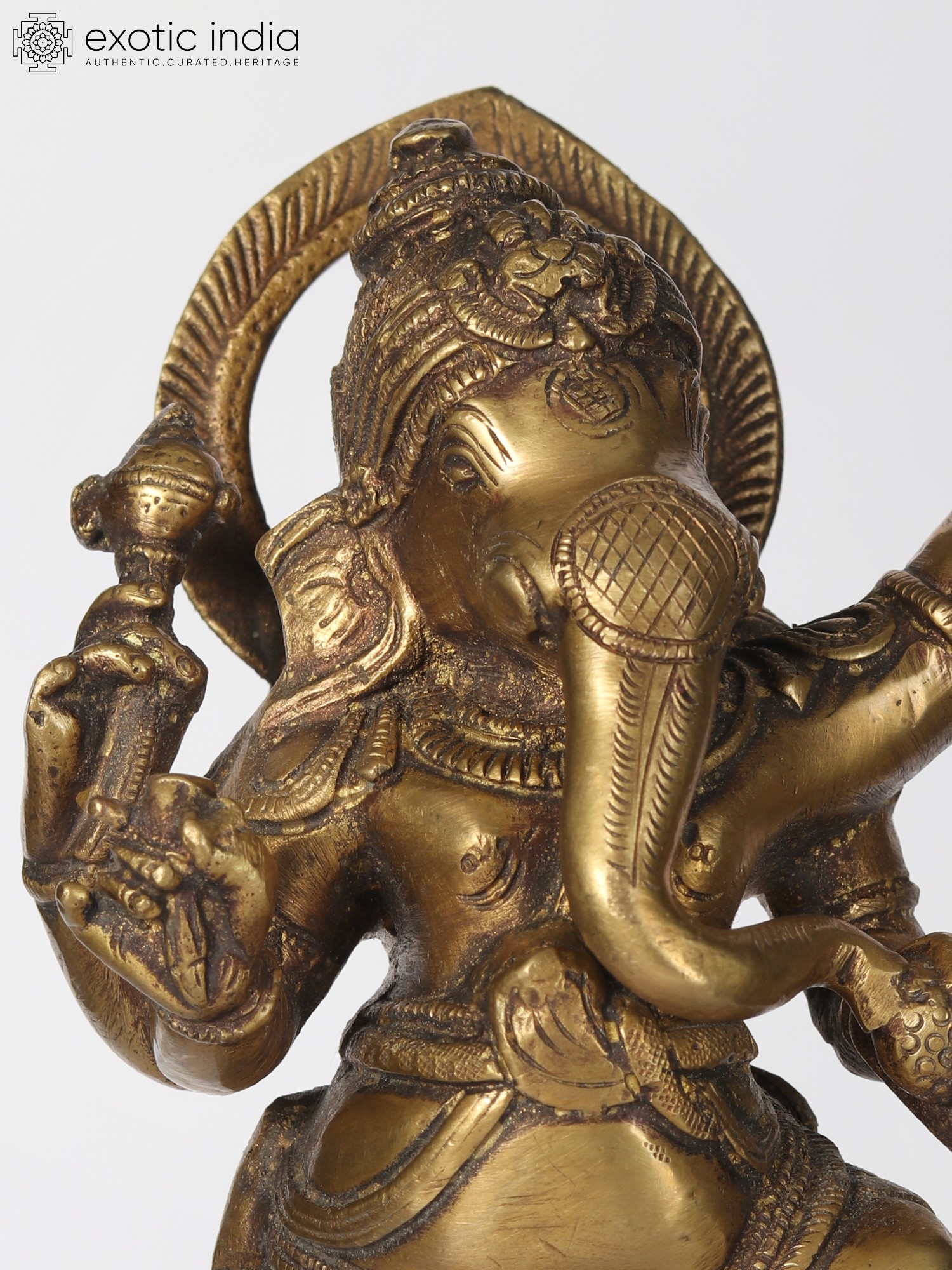
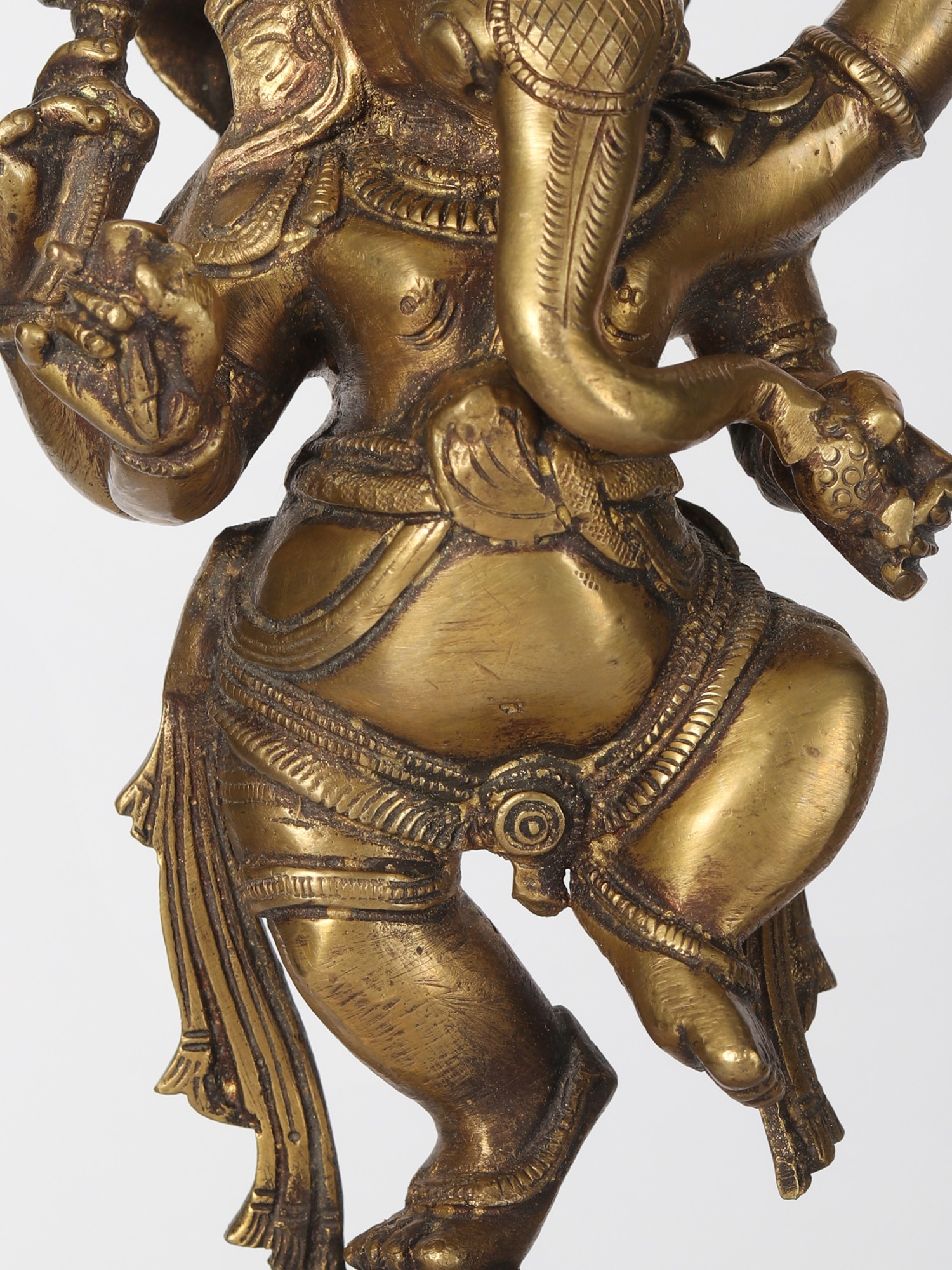
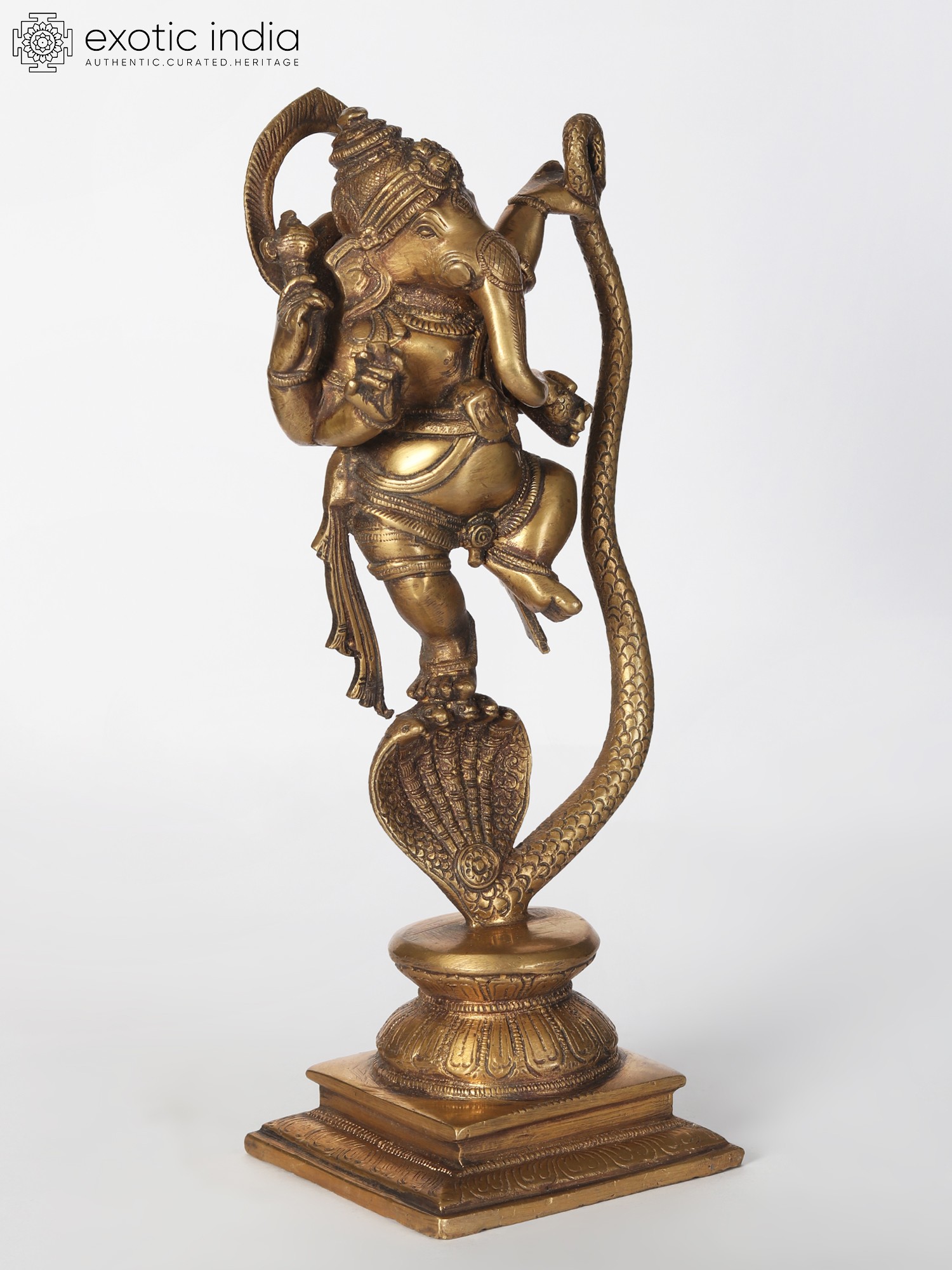
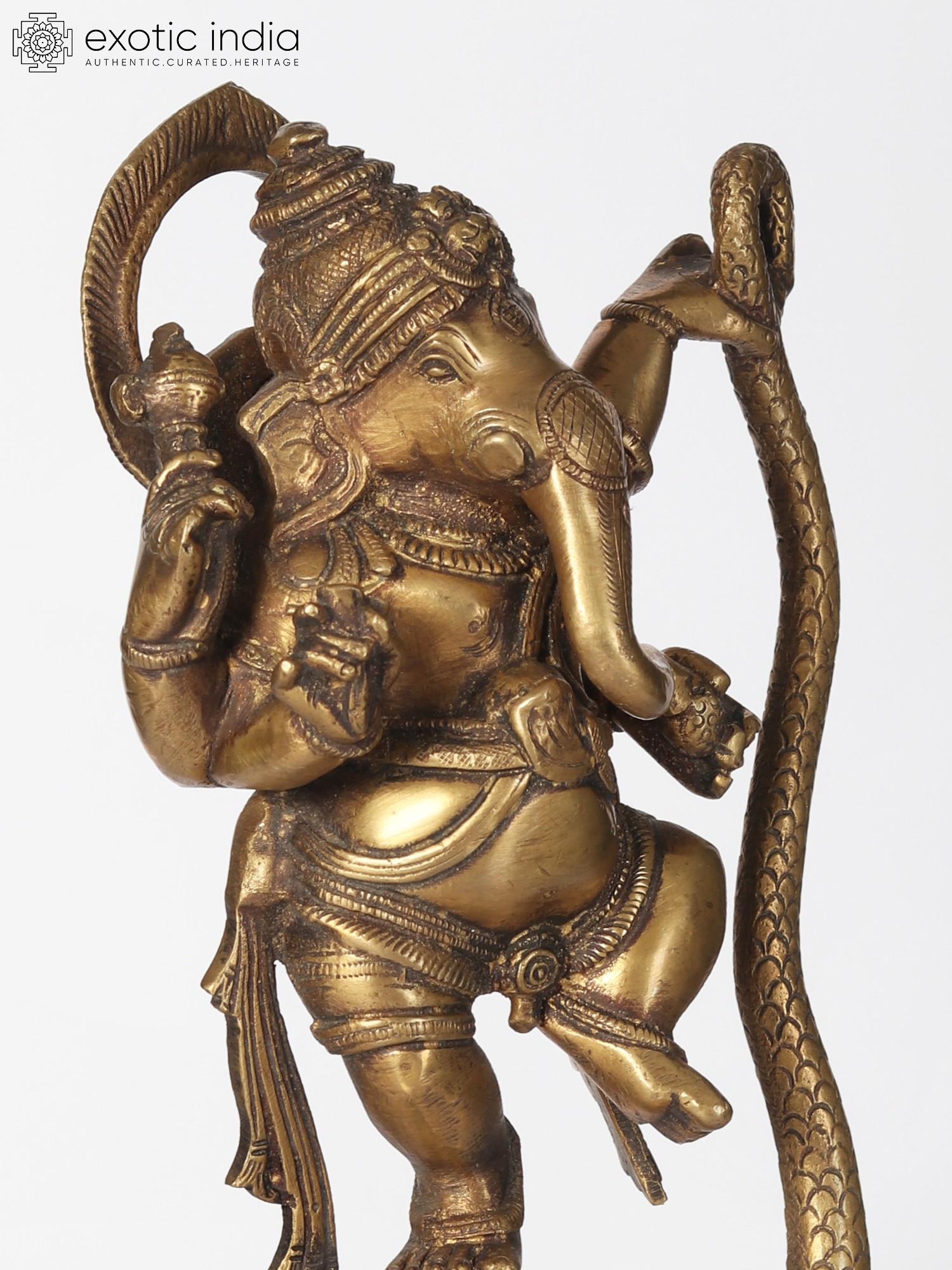
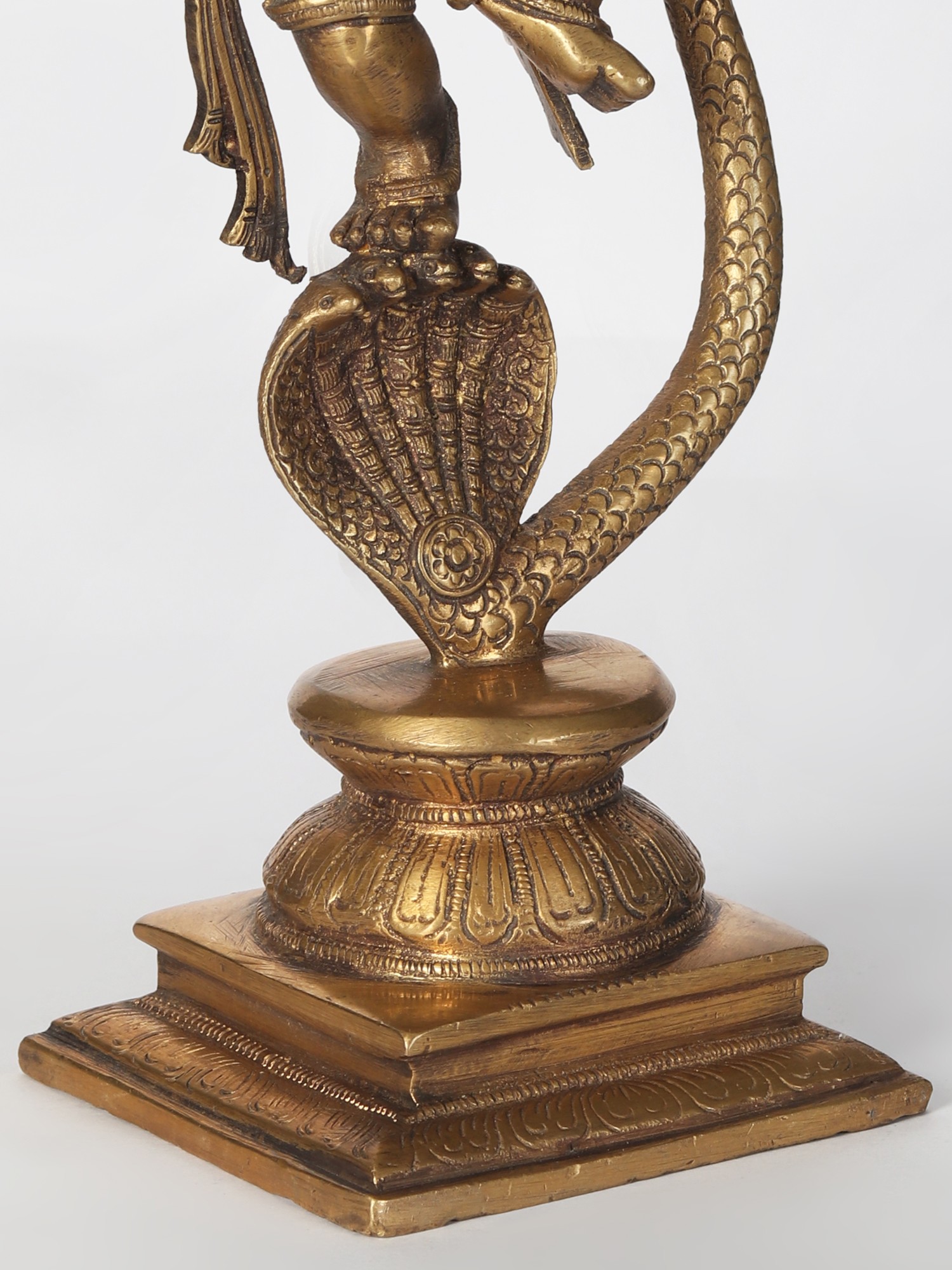
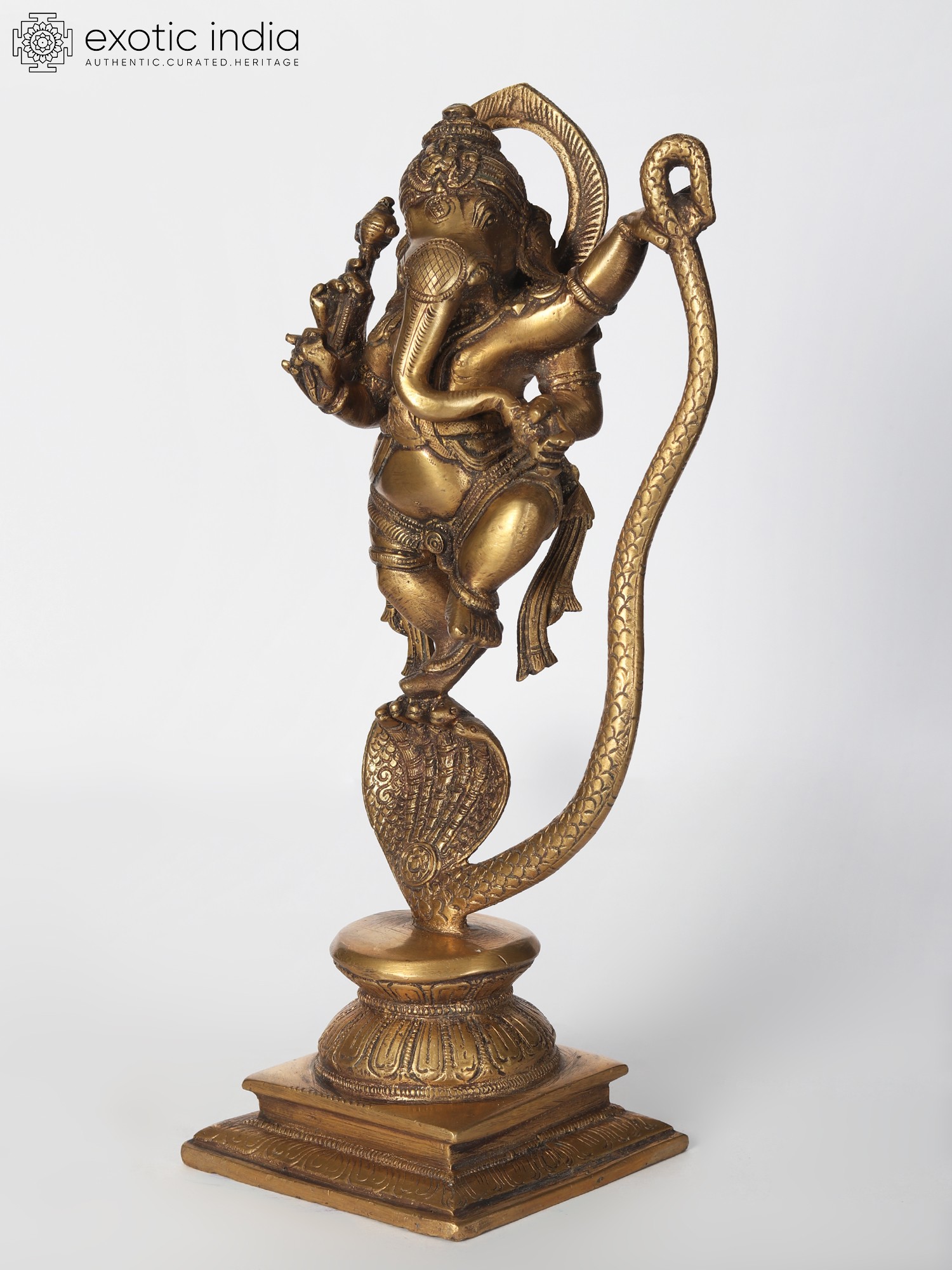
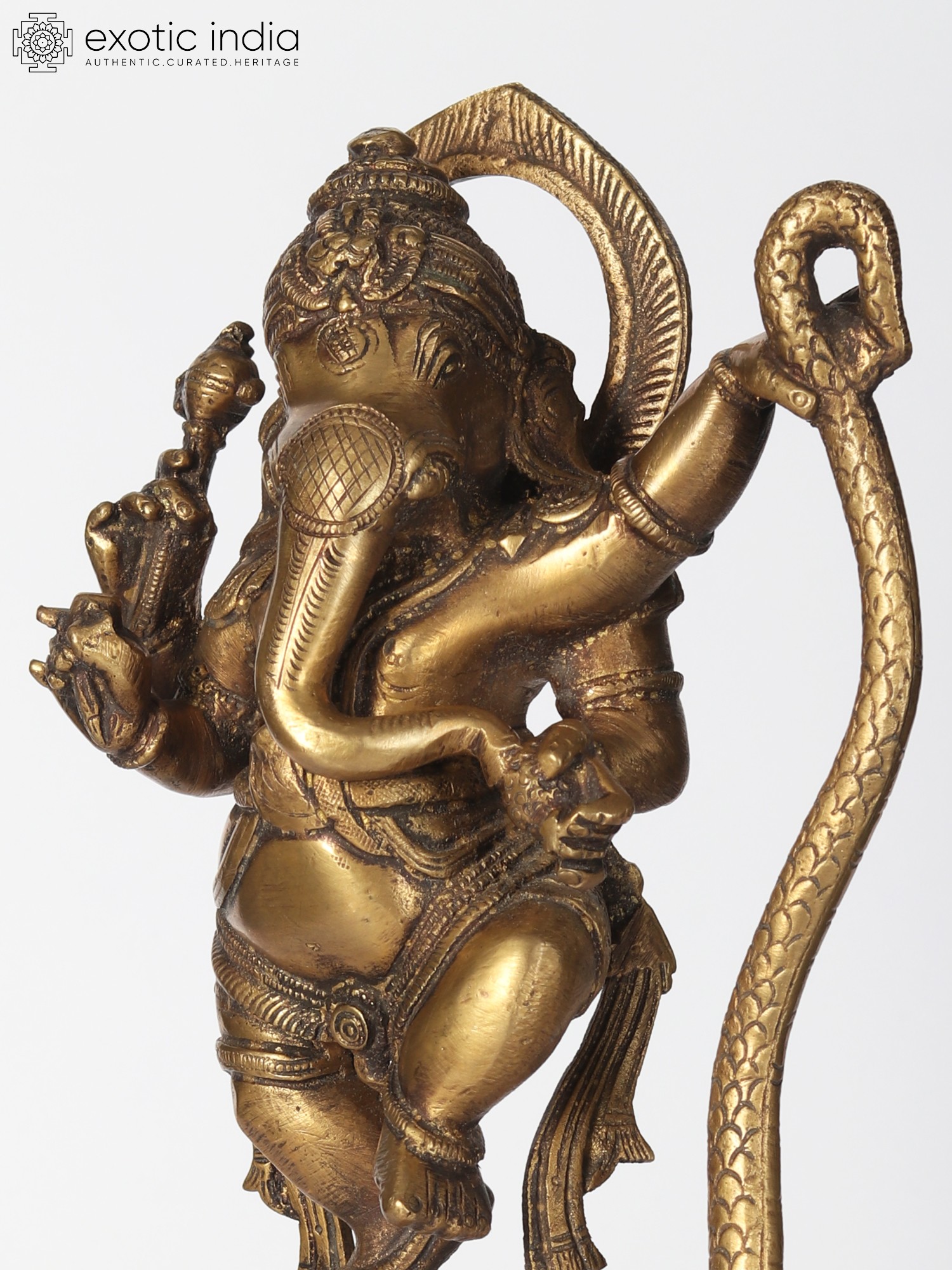
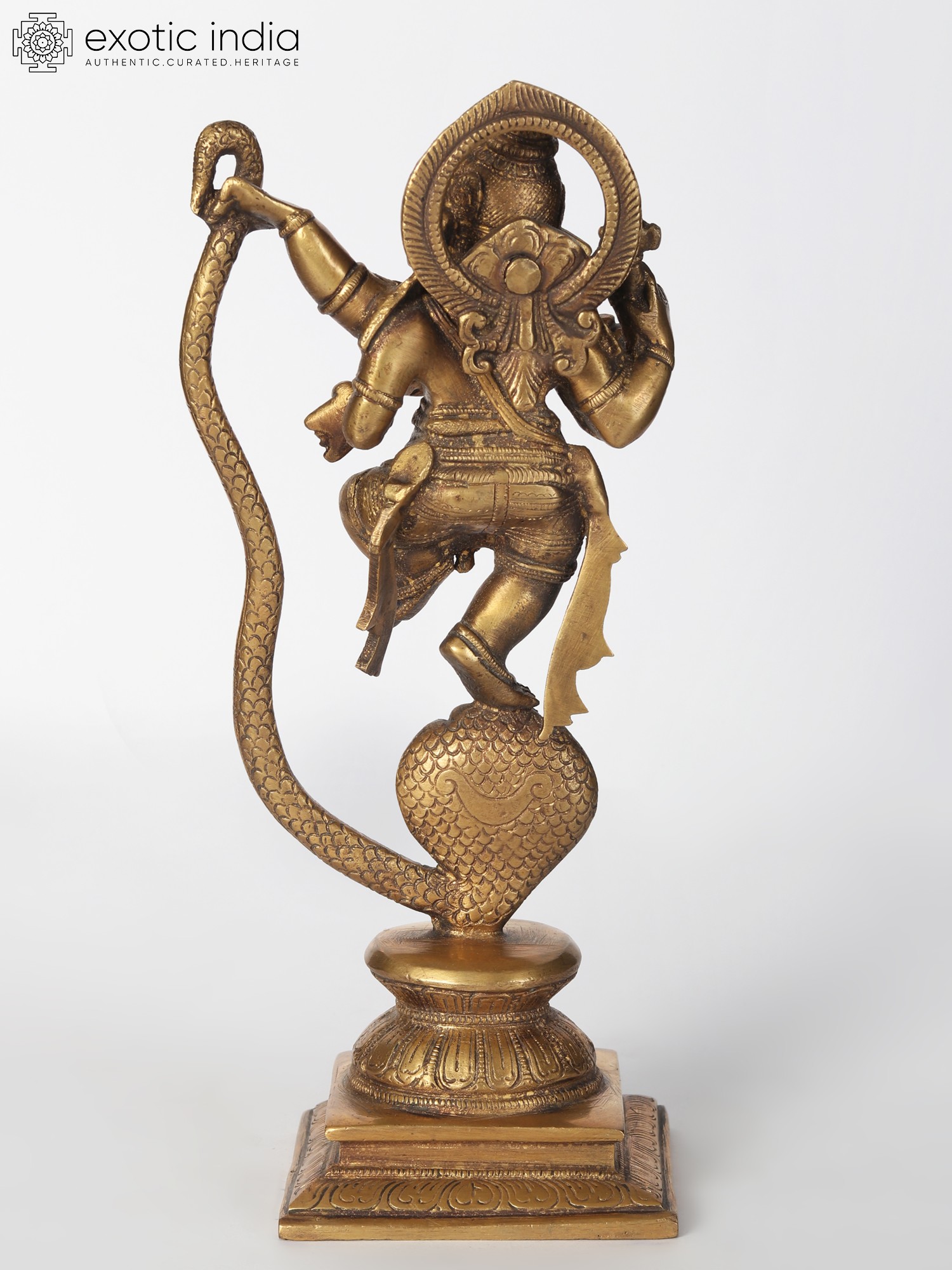
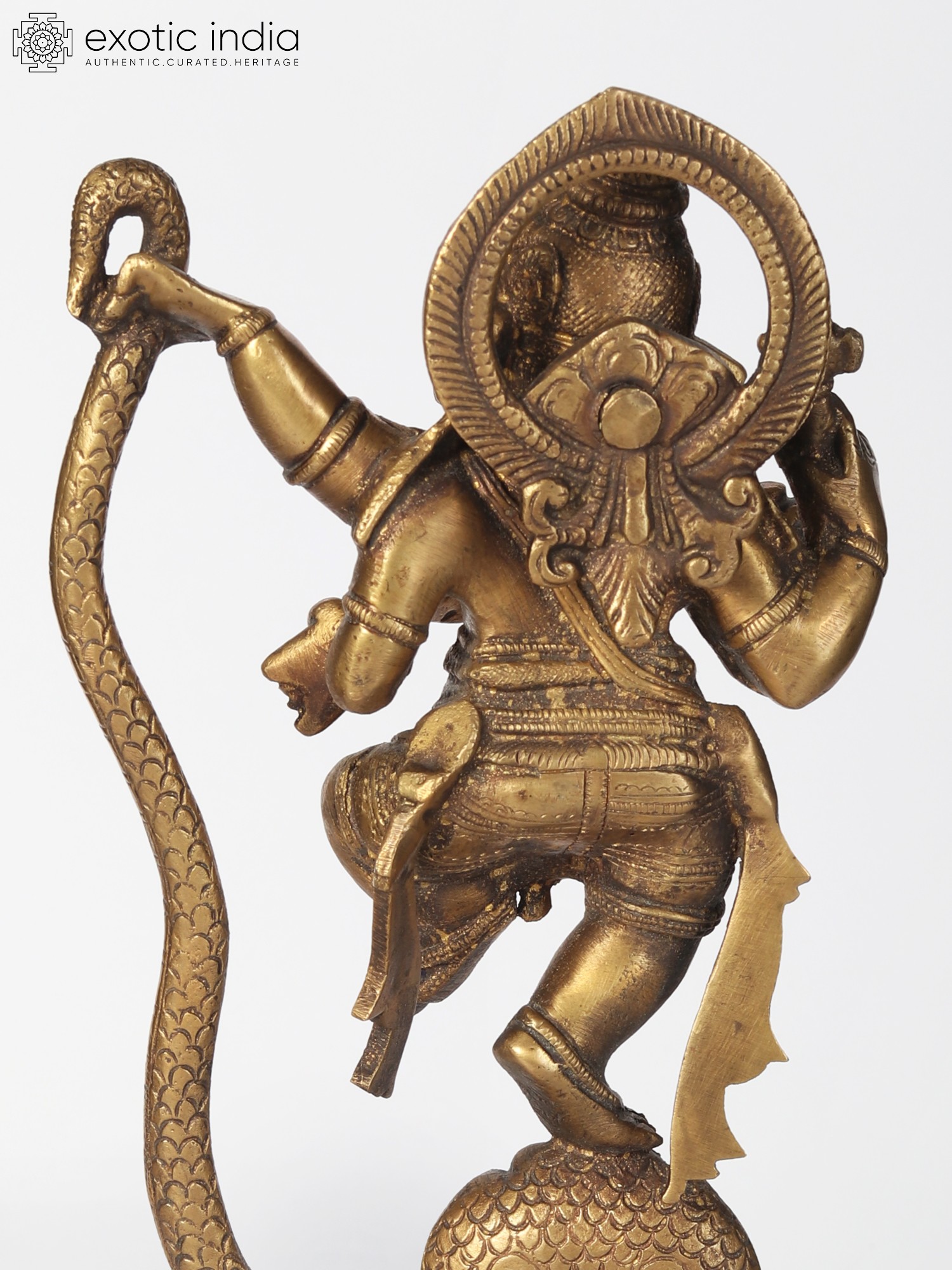
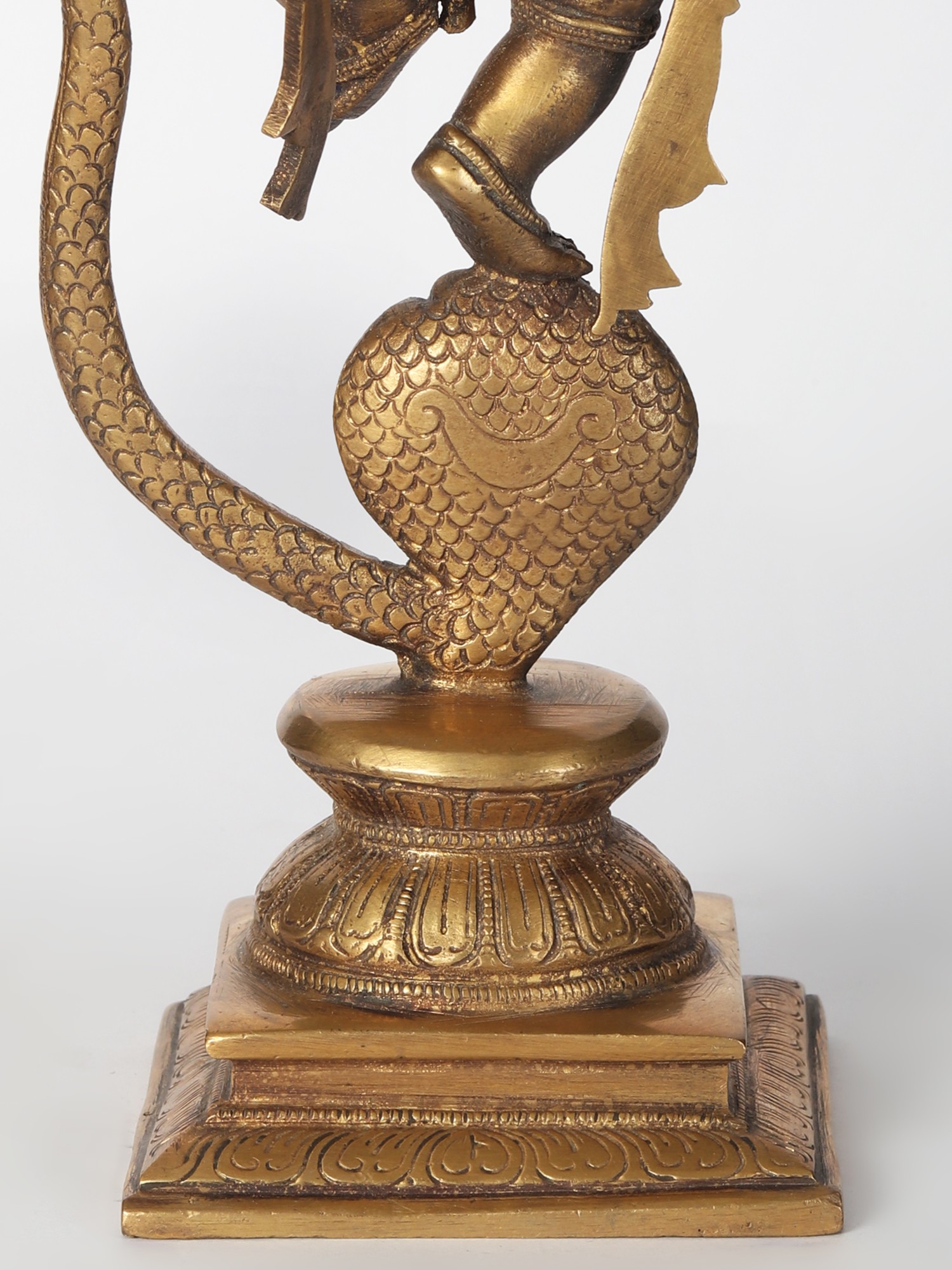
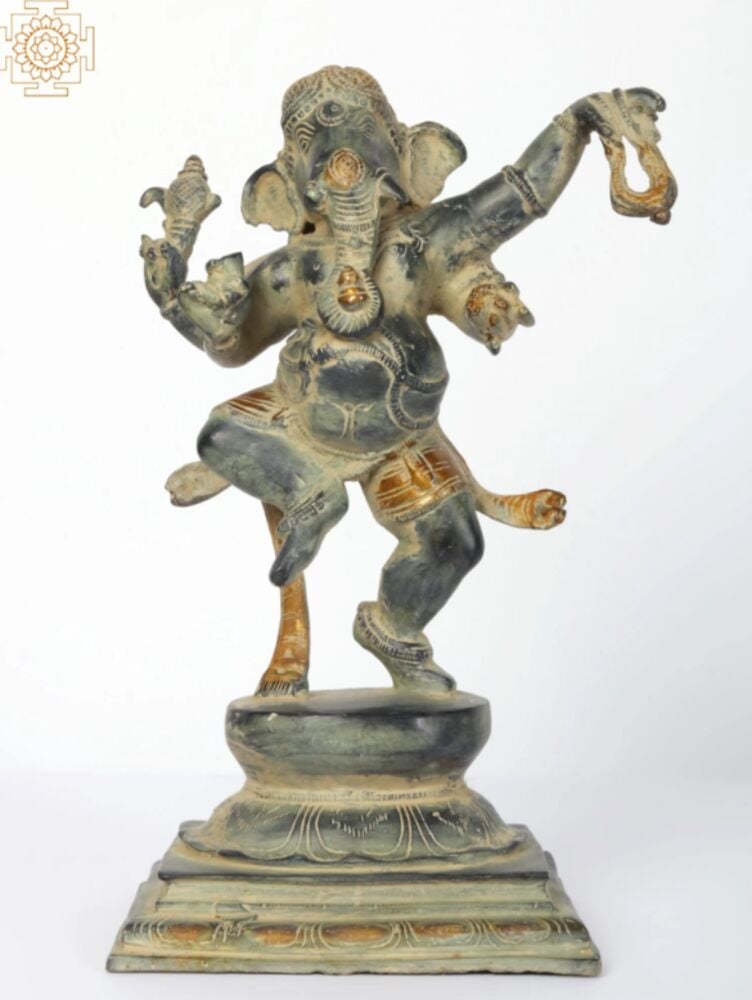
This Brass Statue of Lord Ganesha Dancing on a Five-Hooded Serpent intricately captures the captivating tale from the Ganesha Purana. Once when Lord Ganesha visited the Naga Lok to visit Naga Raja Vasuki, there was a tussle between them and Lord Ganesha defeated Vasuki, embarrassing the serpent king's pupil. The followers of Vasuki went to the Sesh Naag to ask for revenge.
Lord Ganesha then fought Sesh Naag to protect the world from the posion and fire coming out of the Seven heads of the serpent started dancing on his hood thus taming the Sesh Naag. The brass statue beautifully immortalizes this cosmic dance, symbolizing Ganesha's supremacy and his ability to harmonize even the most tumultuous forces, safeguarding the universe from destruction.
The Auspicious Beginning
Invite the blessings of Lord Ganesha into your home with this captivating brass sculpture. Ganesha, the elephant-headed deity, is revered as the remover of obstacles, the patron of arts and sciences, and the deva of intellect and wisdom. His image is traditionally invoked at the beginning of any new endeavor, ensuring success and good fortune. This exquisite piece not only serves as a symbol of auspiciousness but also as a testament to the rich artistic heritage of India.
A Divine Dance of Victory
This particular depiction showcases Ganesha in a dynamic dancing pose. The dance represents the divine play of creation, preservation, and destruction – the ceaseless rhythm of the universe. Each movement is imbued with power and grace, signifying Ganesha's triumph over negativity and chaos. The joy expressed in his dance is infectious, promising to bring vibrancy and positive energy to any space it graces.The Serpent's Embrace
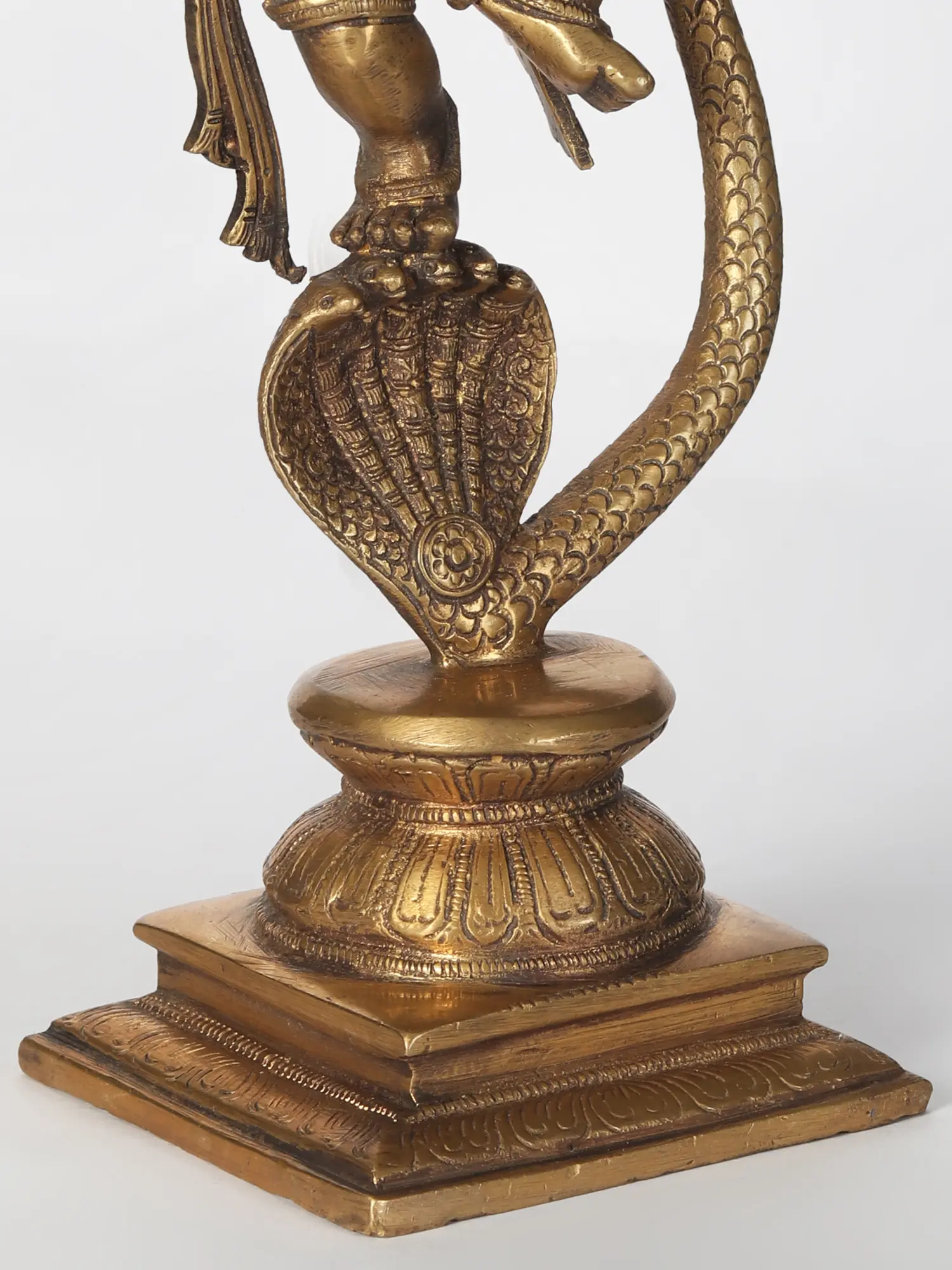
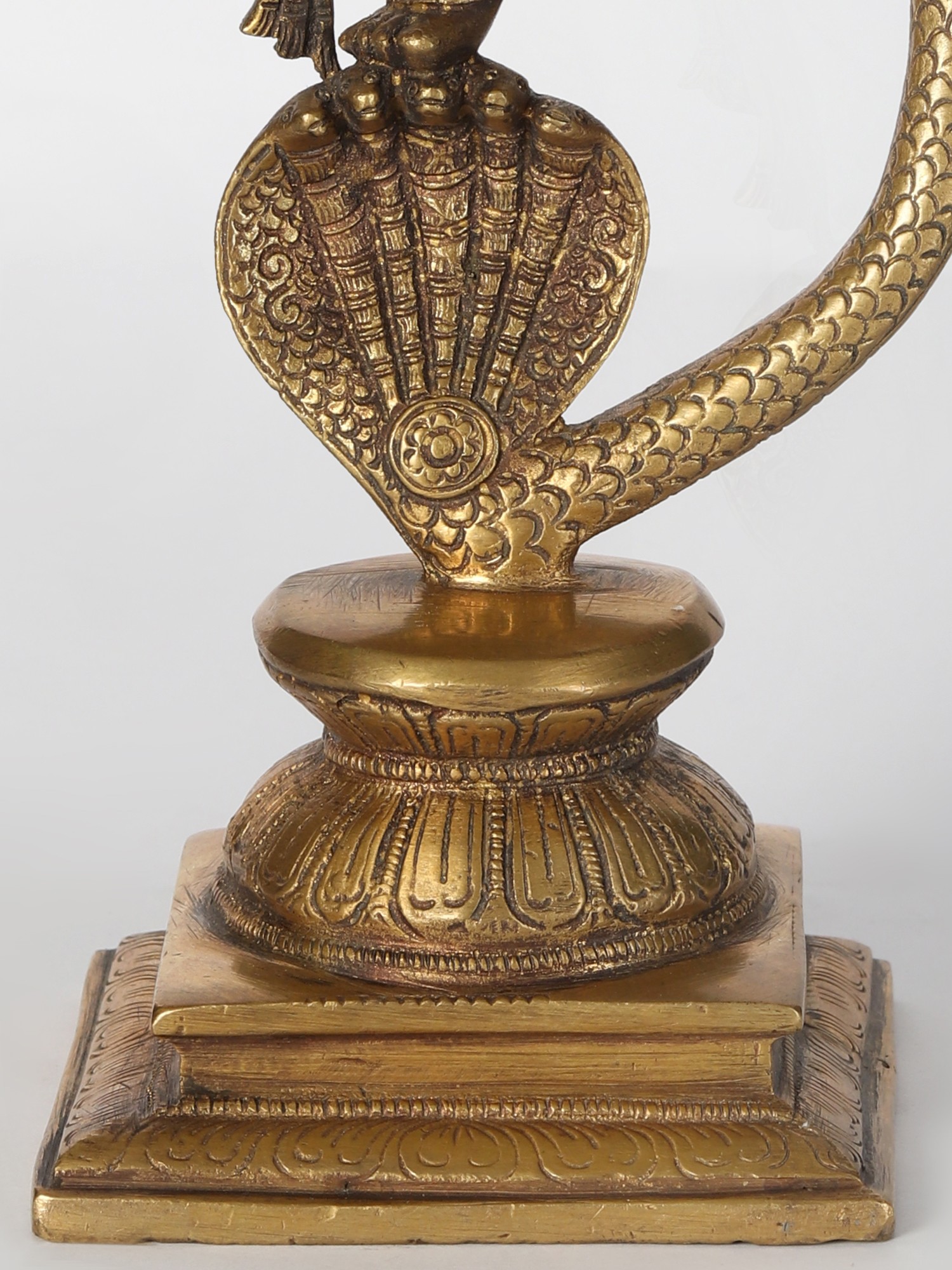
Adding to the drama and symbolism of this piece is the five-hooded serpent, or Naga, upon which Ganesha dances. In Hindu mythology, Nagas are powerful beings often associated with wisdom, protection, and cosmic energy. The five heads represent the five senses, symbolizing Ganesha's mastery over the sensory world and his ability to guide devotees toward spiritual enlightenment. Another interpretation is that the Naga represents the Kundalini energy, the coiled spiritual power that lies dormant within each individual, and Ganesha's dance signifies his role in awakening this potential. The serpent holds a rope, noose, that Ganesha holds that is used to cut away negative energies in your life.
Craftsmanship and Dimensions
Meticulously crafted from brass, this sculpture boasts intricate detailing and a lustrous finish that enhances its aesthetic appeal. From the delicate folds of Ganesha's garments to the intricate scales of the serpent, every element is rendered with precision and care. The piece measures 11.5 inches in height, 5.0 inches in width, and 4.0 inches in depth, making it a striking yet manageable addition to your altar, living room, or workspace. The brass material ensures durability and longevity, allowing you to enjoy this sacred artwork for generations to come.
A Timeless Treasure
This brass sculpture is more than just a decorative object; it is a tangible representation of faith, tradition, and artistic excellence. Its presence will not only enhance the beauty of your surroundings but also serve as a constant reminder of the power of wisdom, perseverance, and the boundless potential that lies within us all.
The Graceful Expressions of Dancing Ganesha: A Symbol of
Abundance and Prosperity
Lord Ganesha is also known as “Vignha-harta Shri Ganesha” as he
removes all the obstacles from the path of prosperity and
fortune in the lives of his worshipers. He is the younger son of
Lord Shiva and Goddess Parvati and has a special form. He bears
the head of an elephant and the body of a human. Lord Ganesha is
the head of all the associates (Gana) of Lord Shiva and for this
reason, he is also known by the name “Ganpati”.
He not only is the remover of obstacles but is also the lord of
science and art. He is an exquisite dancer and it seems he
inherited the dance styles from his glorious parents. His
father, Lord Shiv, assumes a special form known as Nataraja and
performs the Tandava dance and his mother, Goddess Parvati, is
the presiding deity of the graceful Lasya dance. Most of the
traditional dances such as Bharatnatyam and Kathak in theater
start with the glorification and worship of Lord Ganesha as he
is associated with dancing and music.
What does dancing Ganesha mean?
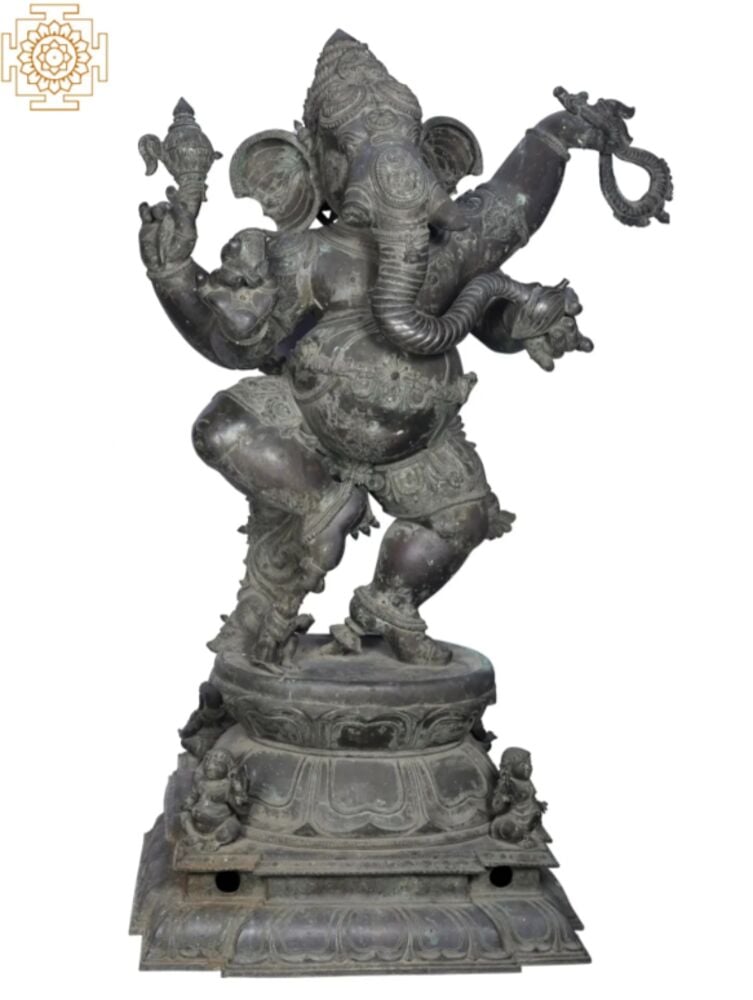
Dancing Ganesha is the form of Lord Ganesha in which he is
depicted dancing gracefully by lifting one of his legs up and
his four hands are arranged in different mudras. He also plays
musical instruments such as Mridanga. This form of Ganesha
emphasizes his playful and exuberant nature. A special name has
been given to Lord Ganesha for his dancing form. When he dances
in ecstasy, he is called “Rangaraj”.
Is Dancing Ganesha statue good for home?
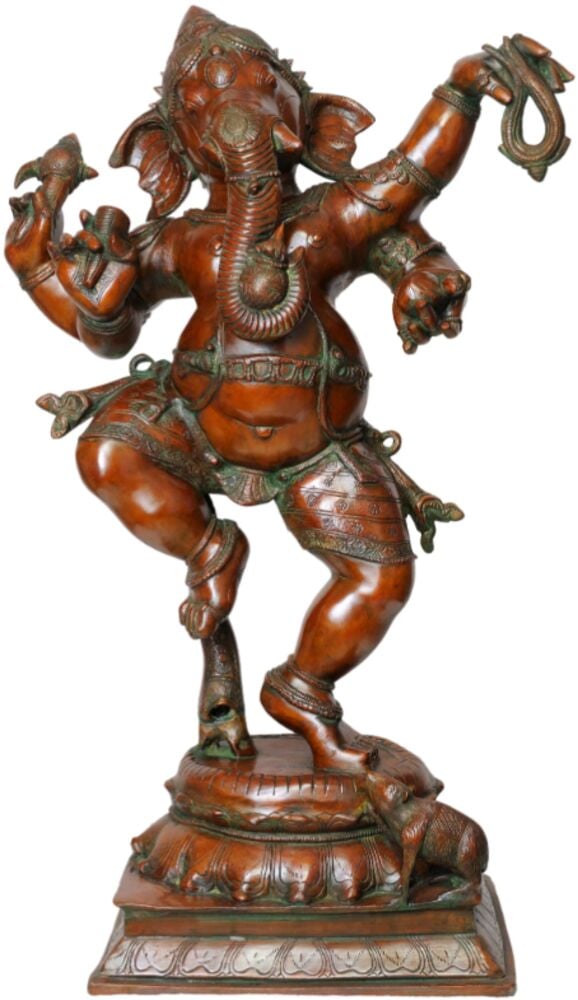
Since the dancing Ganesha is associated with bliss and ecstasy,
it is believed that keeping its statue at home helps in blocking
any negative forces or influences from entering the home. It
also helps in overcoming financial troubles or debts and blesses
the family with material prosperity. Lord Ganesha removes all
troubles in the lives of his worshipers.
Where to keep the dancing Ganesha statue at home?
Many people prefer to keep the statue of the dancing form of
Ganesha at home as it attracts a lot of positivity. One may keep
the statue in any room such as the living room or bedroom. But
it should not be dealt with in a casual attitude, forgetting the
exalted position of Lord Ganesha. If you place the statue in the
living room, keep it in such a way that the lord faces the main
door. This will help in the protection of your home.