


































Filter
It all started with curiosity, the curiosity of man to study the patterns of stars and celestial bodies. This led to the discovery of certain movements of planets and stars such as revolution, rotation and the appearance of comets. While at first, these phenomena were recorded as celestial events that happened in space, it was later seen that these events had effects on Earth as well.
Furthermore, these planets and celestial events were related to features of one’s personality. This resulted in the birth of the art form - Astrology. It was seen that the patterns of these planets and celestial bodies had predictive elements to them.
It had certain features that described a person’s characteristics and compatibility with other people. While this is a well-known fact today, there have since been many other discoveries with respect to the relationship between planets and astrology today. Today, planets are used as symbols along with zodiac signs to give us a better understanding of our lives.
1.) Sun - The luminary of life and self - On an individual level the sun is representative of the ego, personality and spirit while in terms of life, the sun depicts energy levels and collective focus.
2.) Moon - The luminary of emotions - In terms of the self, it represents your inner world and your soul while on a more grand scale, when it comes to life, the moon indicates humankind and their moods as a species.
3.) Mercury - The planet of the mind - Within you, it depicts the way your mind works and the ways in which you communicate and in terms of life, it depicts the mental patterns, economy and media of humankind as a collective.
4.) Venus - The planet of beauty - When it comes to the self, Venus is representative of a person’s love language and their aesthetics, however, in terms of life, Venus depicts humankind’s sense of connection as a whole.
5.) Mars - The planet of action - Mars represents one’s perseverance and determination and in life, depicts humankind’s general archetypes related to aggression.
6.) Jupiter - The planet of expansion - Within the self, Jupiter represents how luck manifests in one’s life and in life, Jupiter is connotative of the general sense of optimism and growth in humankind.
7.) Saturn - The planet of structure - Saturn represents how one learns life lessons and how they take responsibility for their actions, while in life, it represents the structures of the world.
FAQ’s:
The time zone you’re located in does not have any significant impact on your Sun Sign, your Sun Sign is determined by the exact location you were in when you were born only. Astrology relies on the ecliptic, meaning the circular path that the Sun appears to follow over the course of a year.
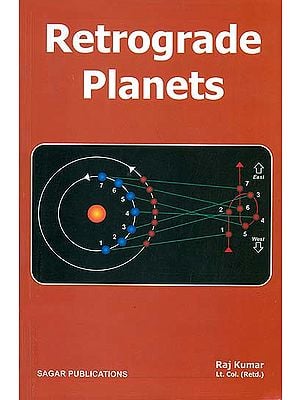
In definition, Retrograde, is an optical illusion that causes a planet to slow down and eventually come to halt. During this phenomenon, the traits and themes related to the planet are felt in a perturbed way, thus bringing on adversity for particular zodiac signs. The answer to this question is fairly simple.
In Astrology, planets are not seen as literal forces that control our feelings and emotions, it’s more of a symbolic relationship that exists between the planets and astrology, so in Retrograde, its symbolic of how the planets move backwards and stand still which causes an effect in our lives as well.
The planets, in order of their distance outward from the Sun, are Mercury, Venus, Earth, Mars, Jupiter, Saturn, Uranus, and Neptune. An easy way to remember the order of the planets is to use a special sentence, such as:
(The
first letter of each word is the first letter of each planet).
☛ My Very Educated
Mother Just Served Us Noodles.
☛ Men Very Easily
Make Jugs Serve Useful Needs, Perhaps.
☛ My Very Educated
Mother Just Served Us Nine Pizzas.
☛ My Very Elegant
Mother Just Sat Upon Nine Porcupines.
☛ My Very Easy
Method Just Shows Us Nine Planets.
☛ My Very Easy
Method Just Speeds Up Naming Planets.
Many
of these mnemonics were made obsolete in 2006, with Pluto's demotion to dwarf
planet.
There
are numerous questions on Planets:
☛ Which is the
planet nearest to the sun?
☛ Which is the
planet farthest from the sun?
☛ Which is the
hottest planet in our solar system?
☛ Which is the
largest planet in our solar system?
☛ Which is the
smallest planet in our solar system?
☛ Which of these
is the coldest planet in our solar system?
☛ Which is called
the “Red Planet” in our solar system?
☛ Which planet has
the highest number of moons?
☛ Which planet(s)
is/are with no moons?
☛ Which planet is
with two moons?
☛ Phobos and
Deimos are the natural satellites of which planet?
☛ How many moons
does Uranus have?
☛ Which planet is
called the evening/morning star?
☛ From the
atmospheres of other planets, we can learn how our atmosphere could be affected
in the future by dust, carbon dioxide, sulfuric acid, etc.
☛ Everything
humans have needed to survive and thrive- food, water, medicine, and materials
for shelter has been provided by the natural world around us.
☛ These planets
emit rays, just as the sun does. Just as the sun's light and movement influence
life on earth by creating different seasons and climates, so does the movement
of the planets organize our mind, emotions, senses, and systems of our physical
body.
☛ Planets and
Horoscopes help identify Chakra energy, physical, mental, and emotional
strength, and diseases in the human body. Every planet is connected with
respective chakras in our astral body.
Scientists
spent a lot of time arguing over what a planet is. In 2006, they came up with a
definition. They said a planet must do three things.
☛ It must orbit a
star (in our cosmic neighborhood, the Sun).
☛ It must be big
enough to have enough gravity to force it into a spherical shape.
☛ It must be big
enough that its gravity cleared away any other objects of similar size near its
orbit around the Sun.
In
general, planets are the largest objects in the solar system after the Sun.
Most of them orbit the Sun in a path shaped like a circle. They also have an
atmosphere or a layer of gasses surrounding them.