Easy Returns
Easy Returns
Return within 7 days of
order delivery.See T&Cs
Fully Insured
Fully Insured
All orders are fully insured
to ensure peace of mind.
100% Handmade
100% Handmade
All products are
MADE IN INDIA.

Party-Punch Hand-Crafted Upcycled Cotton and Jute Round Yoga-asana Mat with Jali

$64.50
$86
25% off
Includes any tariffs and taxes

See It In Your Home


This Party-Punch Hand-Crafted Upcycled Cotton and Jute Round Yoga-asana Mat with Jali ingeniously combines sustainability and style. By utilizing upcycled cotton and jute, this mat demonstrates a smart approach to eco-conscious manufacturing. Not only does it minimize waste by repurposing materials, but it also introduces a unique blend of textures and colors, adding flair to yoga practice.


The incorporation of jali, or latticework, further enhances its aesthetic appeal, infusing the design with cultural charm. This innovative use of materials not only supports environmental sustainability but also showcases the creativity and ingenuity of sustainable design practices, making it a smart and stylish choice for eco-conscious consumers.

Specifications
SBN76
Upcycled Cotton with Jute
Height: 32 inch
Width: 32 inch
Delivery and Return Policies
Returns and Exchanges accepted within 7 days
Free Delivery
Easy Returns
Easy Returns
Return within 7 days of
order delivery.See T&Cs
Fully Insured
Fully Insured
All orders are fully insured
to ensure peace of mind.
100% Handmade
100% Handmade
All products are
MADE IN INDIA.

A Burst of Color and Sustainable Style

Transform your living space with this vibrant, hand-crafted round yoga mat, a unique blend of upcycled cotton and jute. Its eye-catching design features a captivating mandala pattern in a rich palette of colors, adding a touch of bohemian flair to any room. More than just a functional piece, it's a statement of sustainable living and artisanal craftsmanship. The intricate jali work adds a layer of depth and texture, making it a truly special addition to your home. Perfect for meditation, yoga practice, or simply as a decorative rug, this piece adds a touch of artistry and warmth wherever you place it.

The Art of Upcycling

This stunning round yoga-asana mat isn't just beautiful; it's also environmentally conscious. Made from upcycled cotton and jute, it embodies the spirit of sustainable living. The use of recycled materials reduces textile waste and minimizes the environmental impact, giving these discarded materials a beautiful new life. This makes it a choice that aligns with eco-conscious values, contributing to a more sustainable future without compromising style.

Intricate Design and Craftsmanship

The design is a masterpiece of hand-braiding and knotting. The circular shape is accentuated by the concentric circles of vibrant upcycled cotton, interwoven with sturdy jute to form a rich mandala pattern. The detailed jali (lattice) work provides a beautiful contrast and texture. This level of intricate detail underscores the exceptional skill and dedication of the artisans who created this piece. Each mat is unique, reflecting the individual touch of the craftsperson.

Versatility and Functionality

This versatile mat can be used in various ways. It serves as a perfect spot for yoga and meditation practices, providing a comfortable and supportive surface. Its beautiful design, however, also makes it ideal as a decorative accent. Place it in your living room, bedroom, or even your entryway to add a touch of bohemian charm and color. Its compact size makes it perfect for smaller spaces and easier to store when not in use. It is also a great choice as a unique addition to a child's play area.

Care and Maintenance

To keep your mat looking its best, we recommend spot cleaning with a damp cloth. Avoid harsh chemicals or abrasive cleaners. For more thorough cleaning, gentle hand washing is recommended, followed by air drying. Avoid machine washing or placing it in a dryer, as this could damage the fibers and the intricate design. With proper care, your beautiful hand-crafted mat will continue to bring joy and beauty to your home for years to come.

From Fiber to Finery: Unveiling the Craftsmanship Behind Handmade Rug Creation

A carpet serves as a textile floor covering and can be seen in almost all Asian homes. European nations also are fascinated by their beauty and thus hand-knotted carpets are in great demand all over the world. A carpet typically consists of an upper layer of fabric and backing attached to it. Carpets can be made in any color by using dyed fibers. Different types of motifs and patterns are fabricated or embroidered on the fabric to beautify the floor. Indian craftsmen make carpets in such a way that every piece bears designs with attention to detail. Bright colors and high-quality fabric are used for their production.

Hand-knotted carpets are made using different types of techniques such as the Turkish knot (symmetrical), Persian knot (asymmetrical), Jufti Knot (tied around four warps instead of two), or Spanish knot (solo warp symmetrical). Common materials used in the making of the finest carpets are cotton, silk, wool, and jute.

1. Wool collection and processing

This is the step in the carpet-making process in which the best quality raw wool is imported or bought from the market. It is then cleaned and any unwanted particles are removed by washing it thoroughly. Now the clean wool is dried in the sun for two to three days.

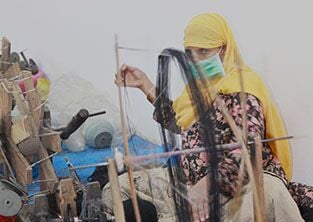
2. Woolen yarn spinning

Spinning involves a process called carding which is either done on carding rollers run by hand or with the help of a carding brush. This wool is now spun into yarn by spinning it on a spinning wheel, also called a charkha. The thickness of the yarn depends on the type and quality of the carpet to be made.
Image

3. Dyeing yarn

After the yarn is obtained, it is then dyed into different colors as per the requirement. The dyed yarn is now allowed to be sun-dried for at least two days.

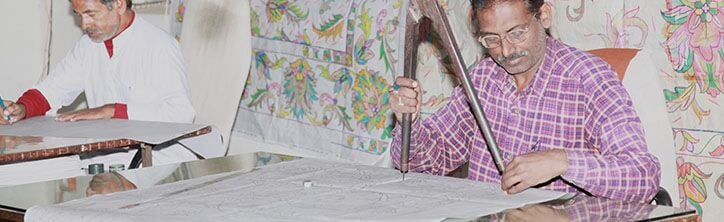
4. Designing

Designing a carpet is time-consuming and the most important step. The size, designs/patterns, and colors of the carpet contribute to the overall look of the carpet. The artisan first draws the design on paper and then copies it on graph paper.
Image

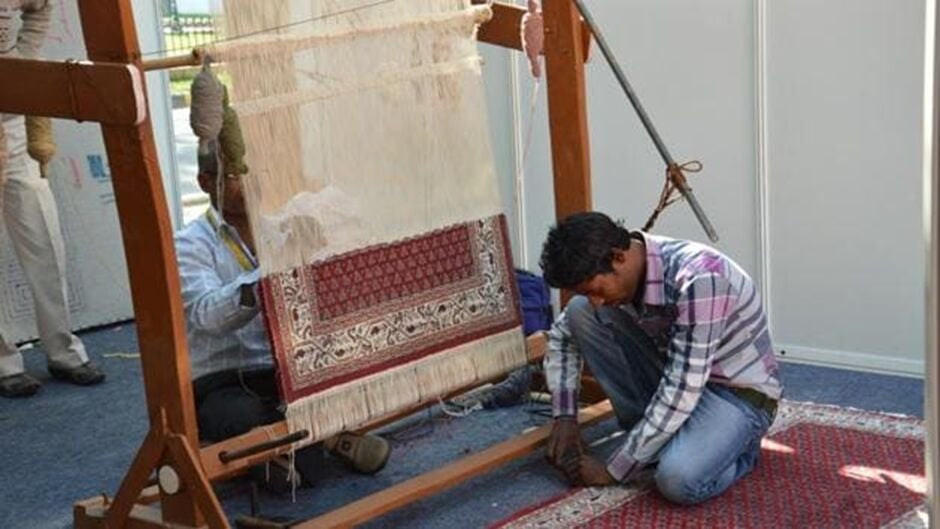
5. Weaving (Hand-knotting)

Weaving involves two important parts; weft (dyed yarn) and warp (reeled yarn). The warp yarn is loaded to the vertical loom and the graph paper containing the carpet sample design is put in front of the weaver. Each weft yarn is knotted to each warp yarn by hand. In this way, the whole carpet is weaved and the desired pattern is obtained.
Image

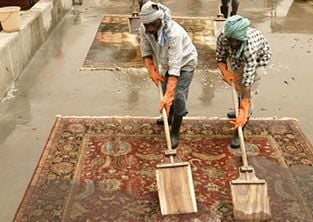
6. Washing

The carpet is now sent for washing multiple times with water and cleansing agents to remove dust and dirt from it.
Image

7. Clipping and Binding

Now any protruding knots and extra threads are cut off using scissors and clippers. Now the craftsmen ensure that all four sides of the carpet and weaves are locked by stitches so that the carpet remains intact and strong.
Image

8. Final washing and drying

The carpet is again washed and dried for the last time to make it appear absolutely neat and clean, ready to be put for sale.

Handmade carpets are often more expensive than those made by machines. It takes a minimum of six months to complete one carpet and this elaborate process involves around 20 - 25 artisans working at the same time.
Add a review
Have A Question
By continuing, I agree to the Terms of Use and Privacy Policy