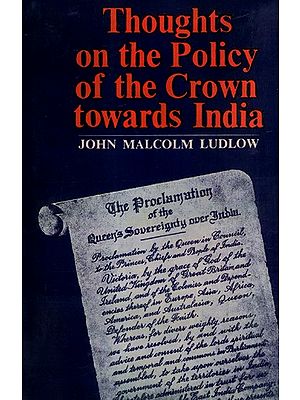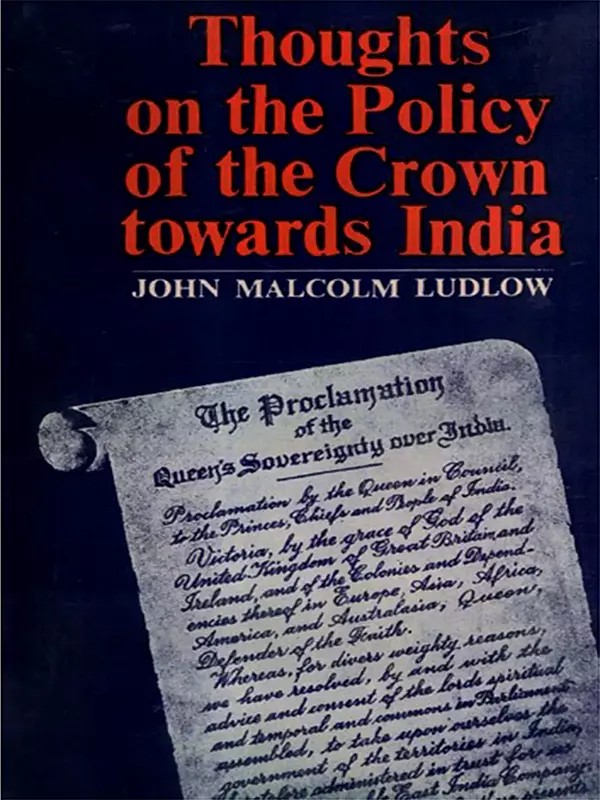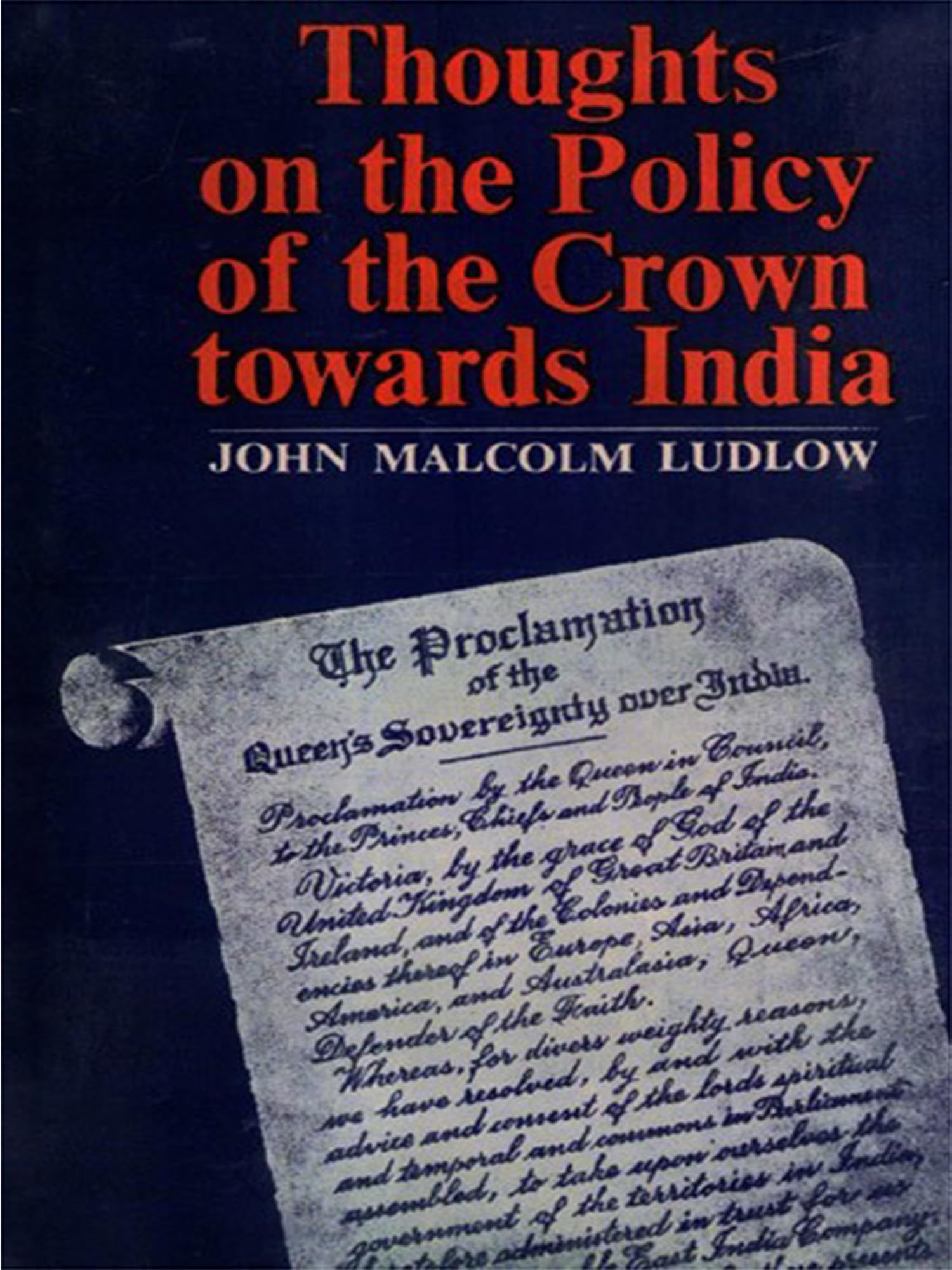
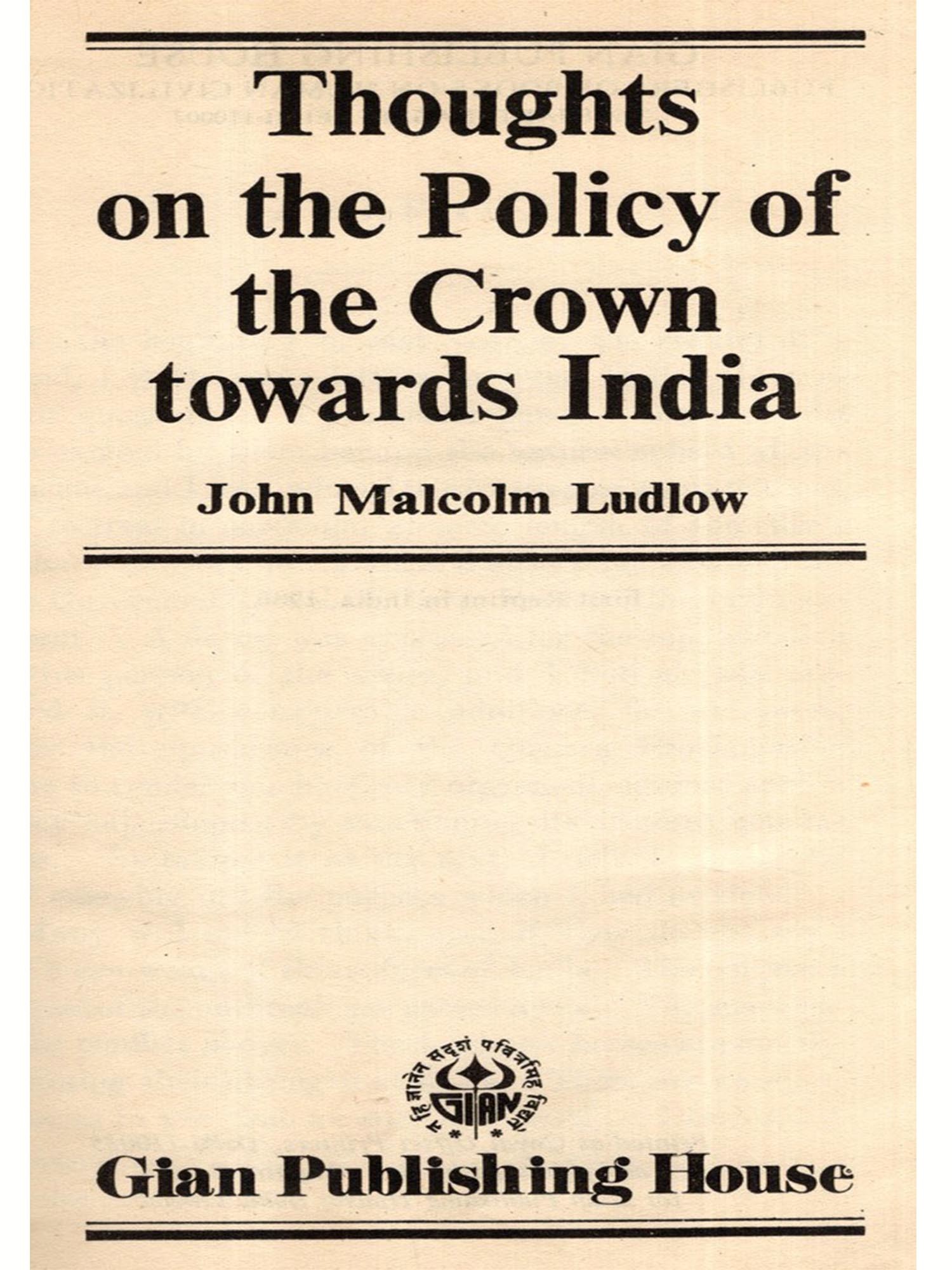

Thoughts on the Policy of the Crown Towards India

| Specifications |
 |
Publisher: Gyan Publishing House, New Delhi |
| Author John Malcolm Ludlow | |
| Language: English | |
| Pages: 380 | |
| Cover: HARDCOVER | |
 |
9x6 inch |
 |
Weight 600 gm |
| Edition: 1986 | |
| ISBN: 9788121200202 | |
 |
HBO374 |
| Delivery and Return Policies |
 |
Usually ships in 5 days |
 |
Returns and Exchanges accepted within 7 days |
 |
Free Delivery |


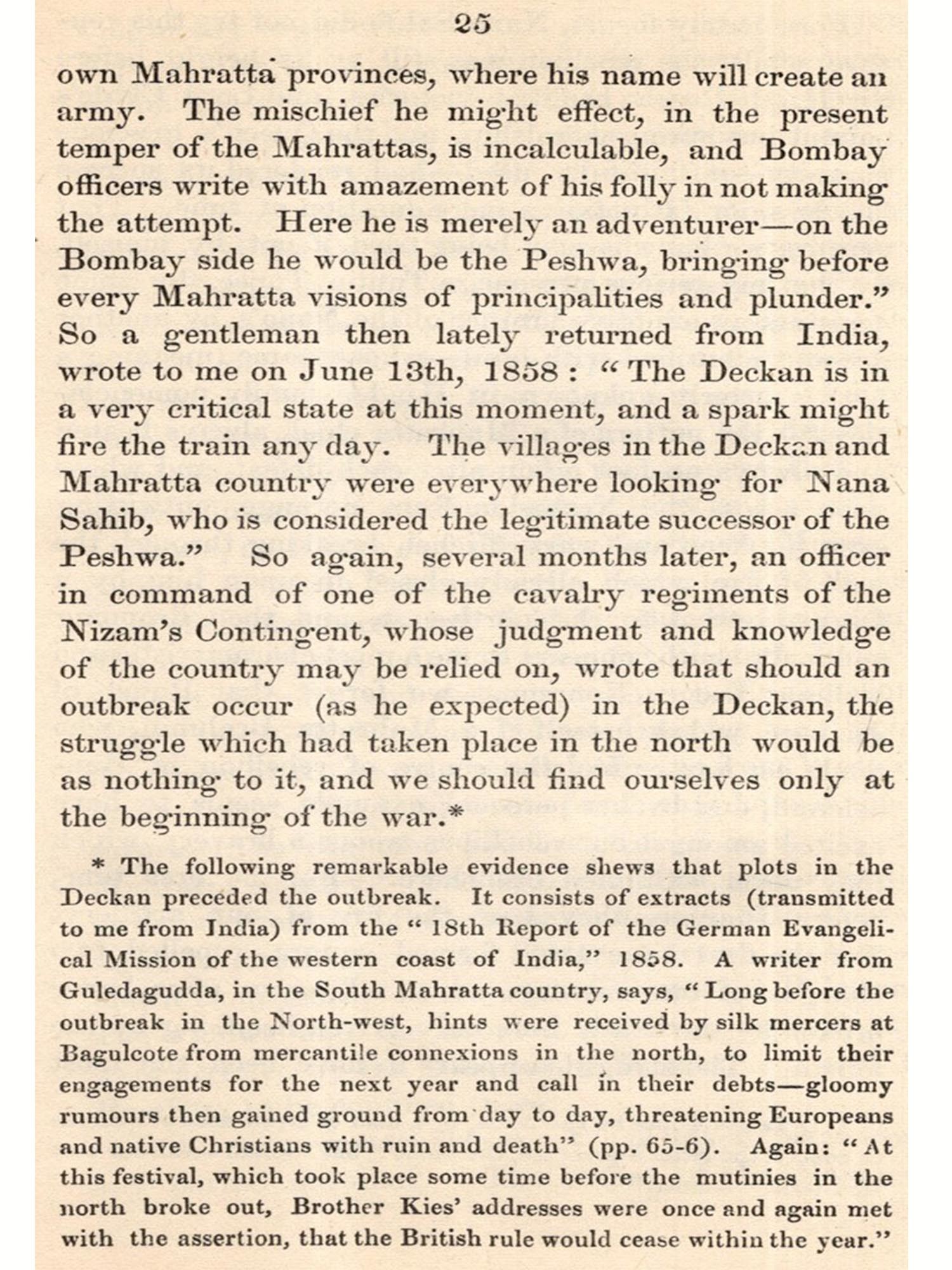
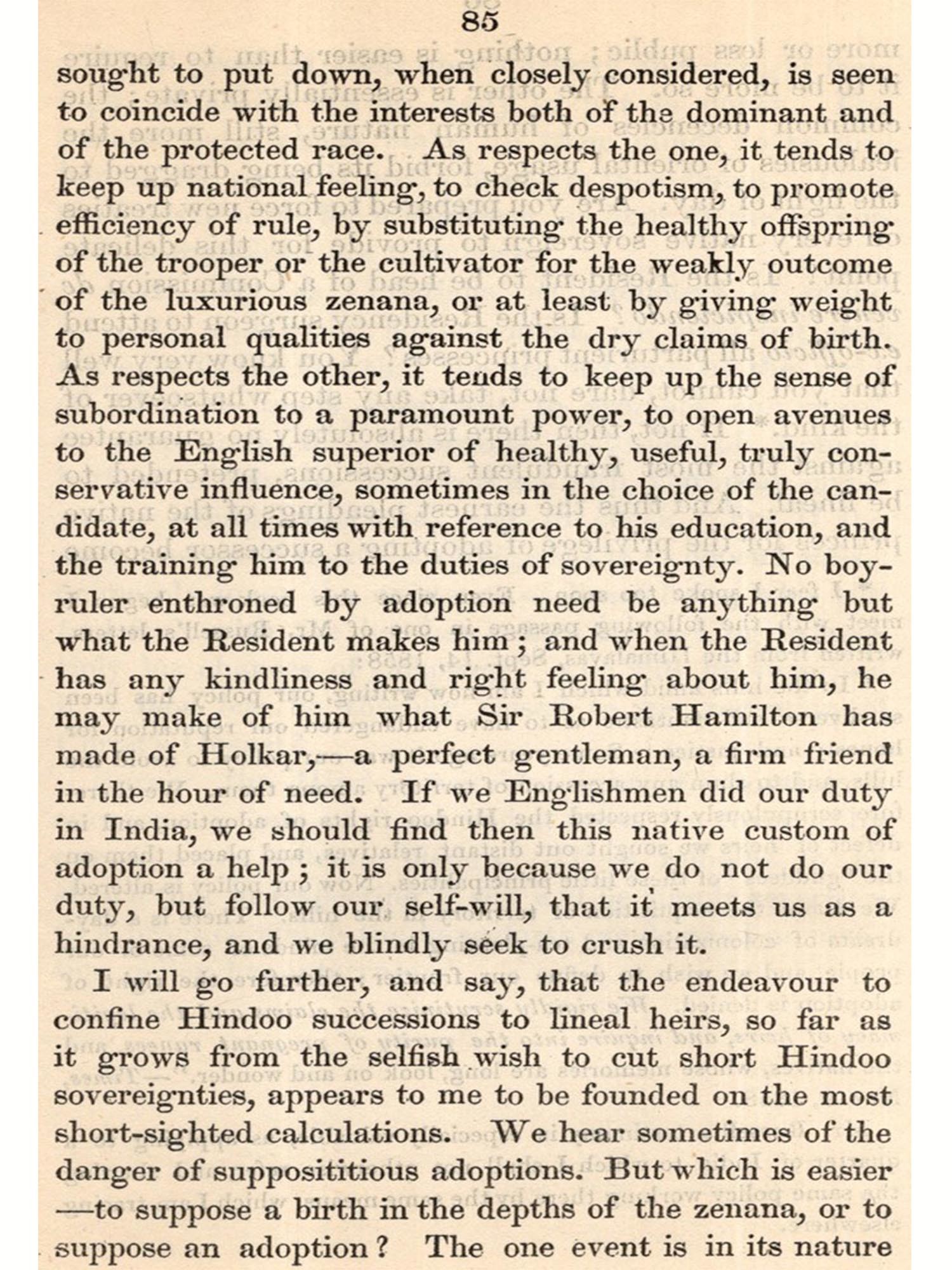
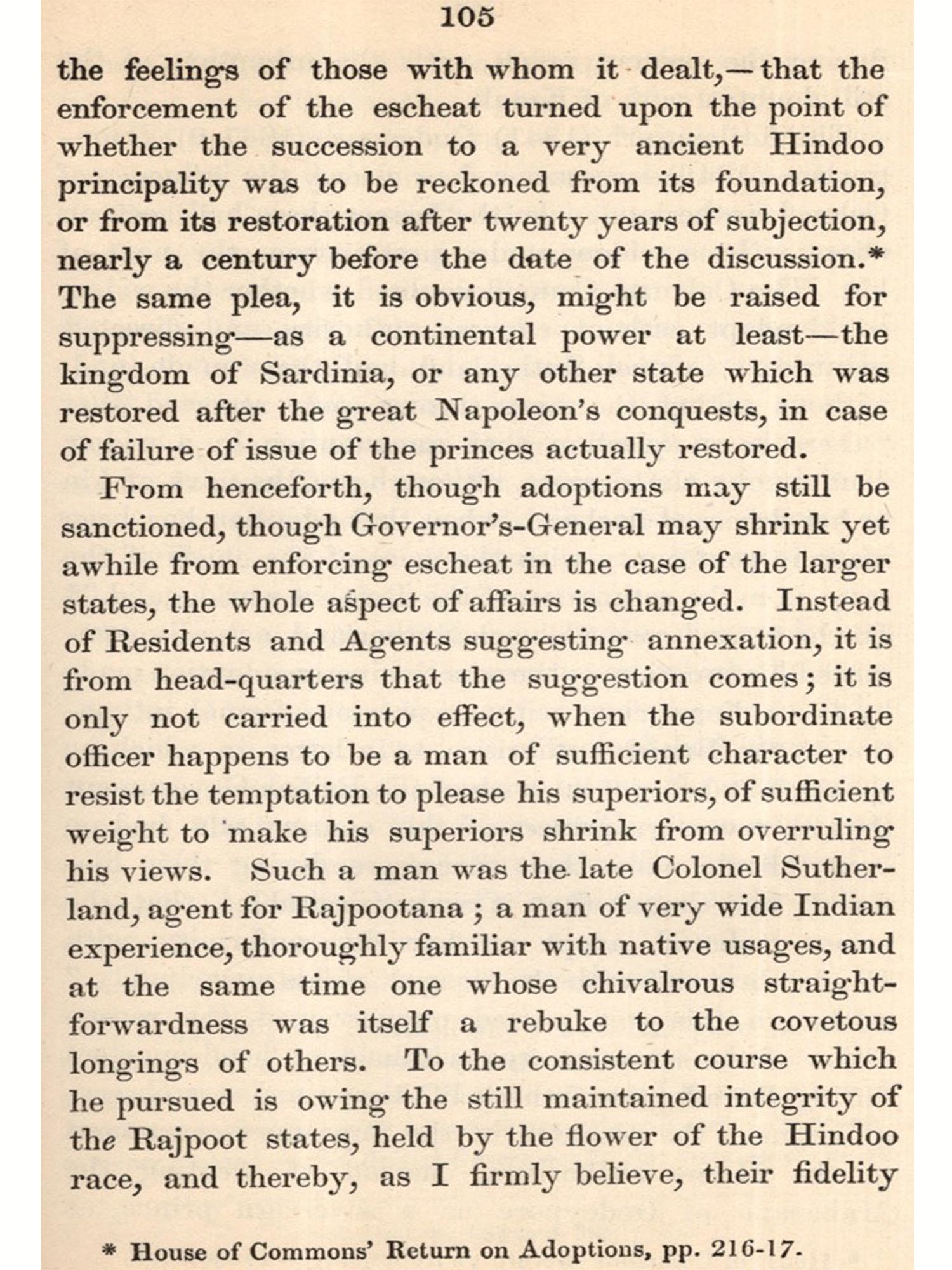
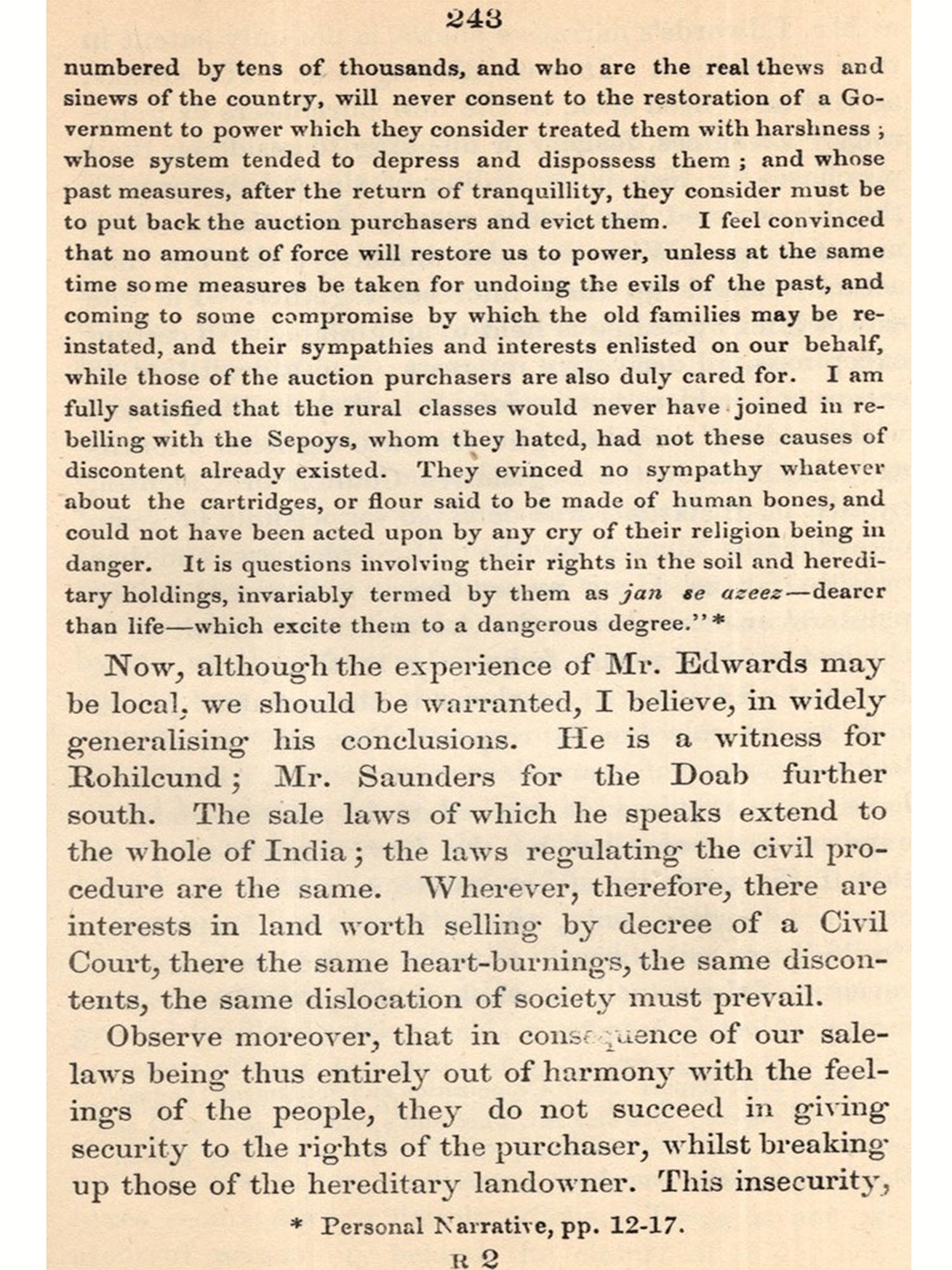
The year 1857 was a turning point in the history of British India. In this year the Sepoy Mutiny broke out, which, though suppressed by force by the then Government of the East India Company, riveted the attention of all educated English-men on India. Statesmen, Parliamentarians and people concerned with the welfare of the British nation went deep into the causes of the Mutiny and analysed its immediate and far-reaching impacts on the military strength and financial resources of England. The causes of the disaster were not far to seek. The general maladministration of the Company, their annexation policy, interference with the age-old practice of succession by adoption among the Indian princes, fear of the Indian people both the Hindus and the Musselman’s-that the Government, with the help of the Christian missionaries, are trying to convert the whole nation into Christianity, discrimination of the natives from the Englishmen in civil and military services as well as in the administration of justice, etc. became known as the causes behind the Mutiny. The future of the Indian Empire appeared to be grim to all right-thinking persons in England.
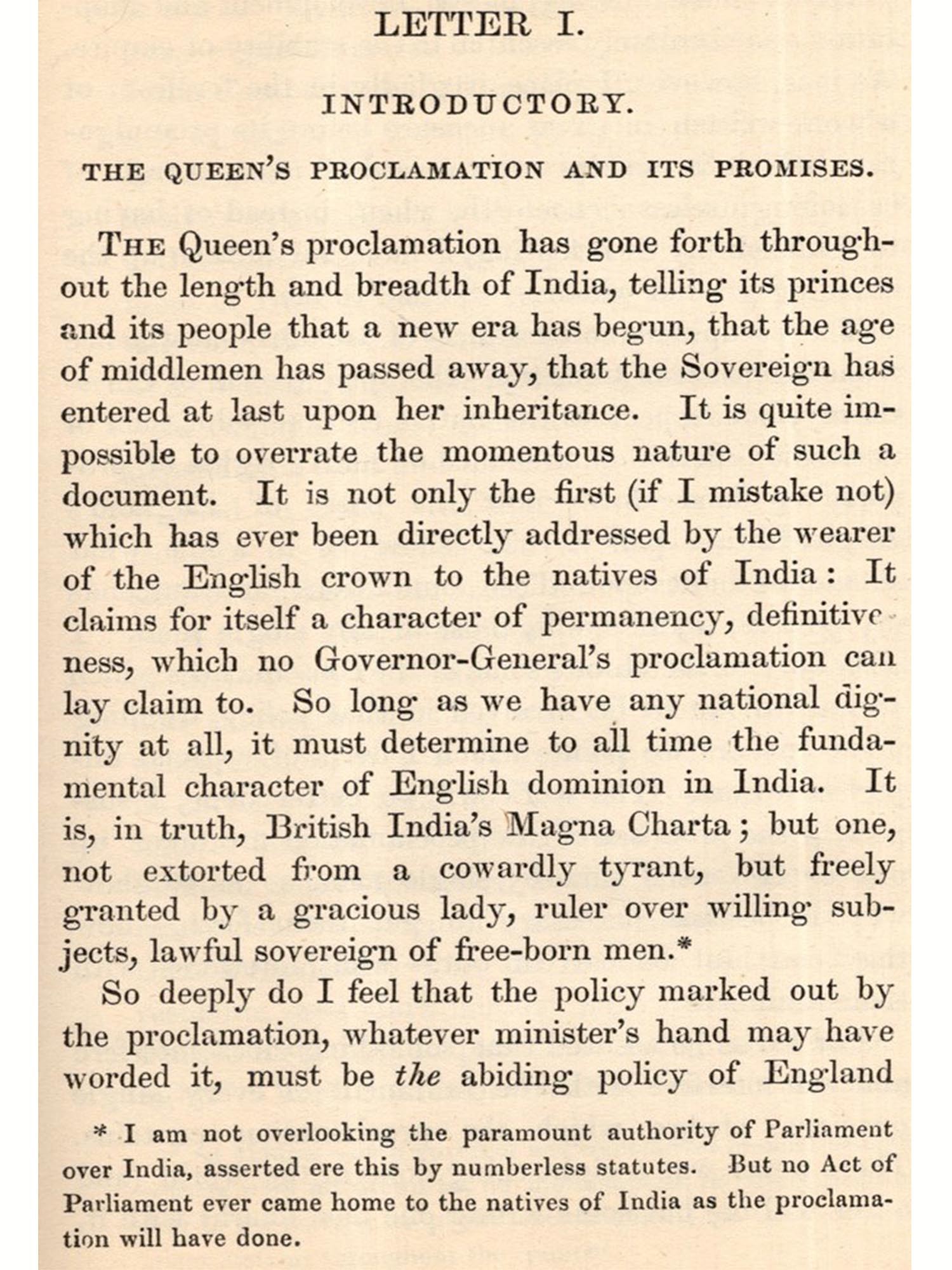
As a result of this retrospection and debate at home, the British Government of Queen Victoria decided to act to the right direction. Then came the Queen's Proclamation, the India Bill was passed by the British Parliament, the time-honoured administration of the East India Company swept away, the Government of India was transferred to the Crown, and a responsible ministry for India established.
The Queen's Proclamation was welcomed both in England and in India. It promised redress to all the above-mentioned grievances and to establish an impartial clean Government for the Indians.
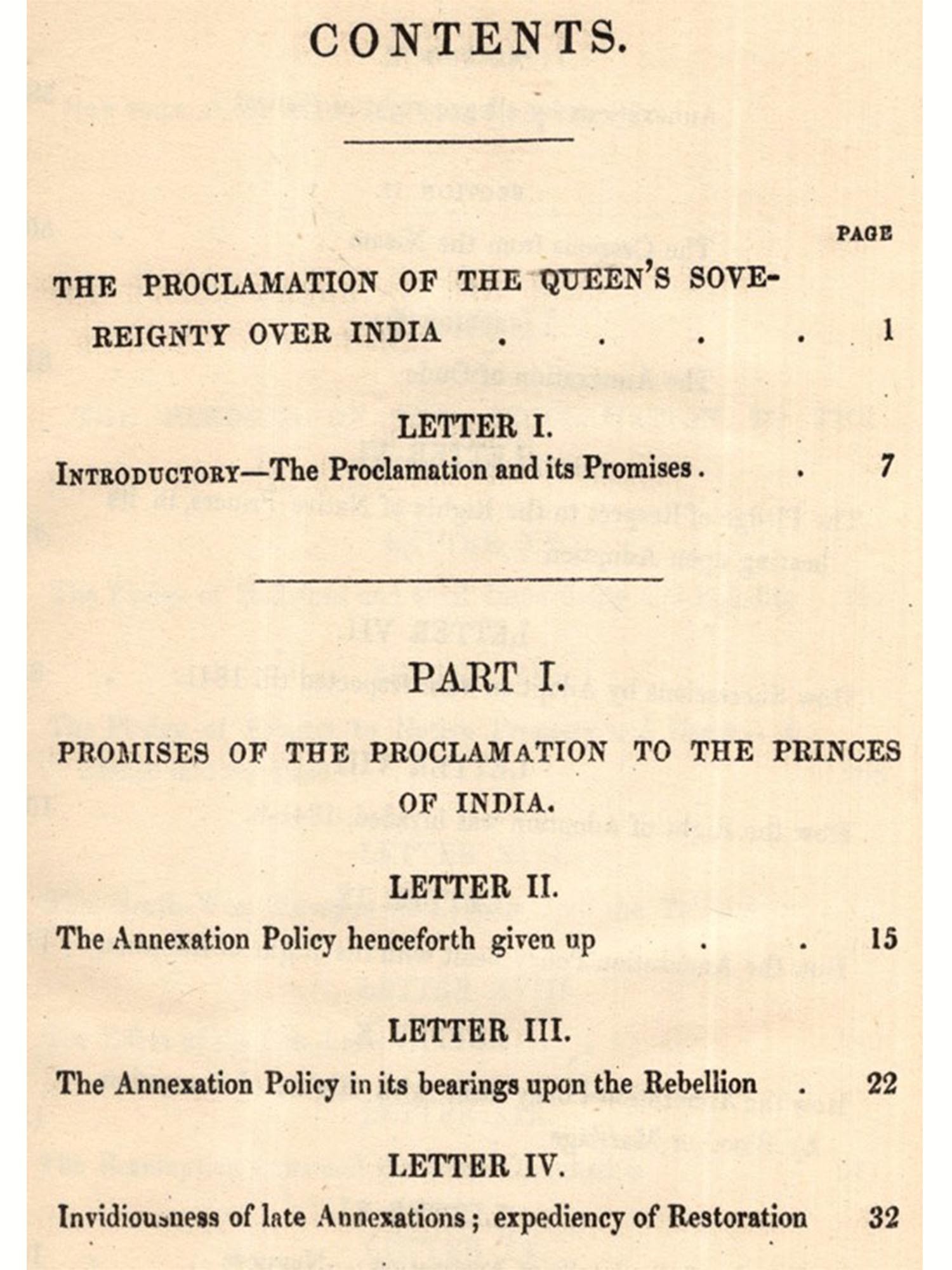
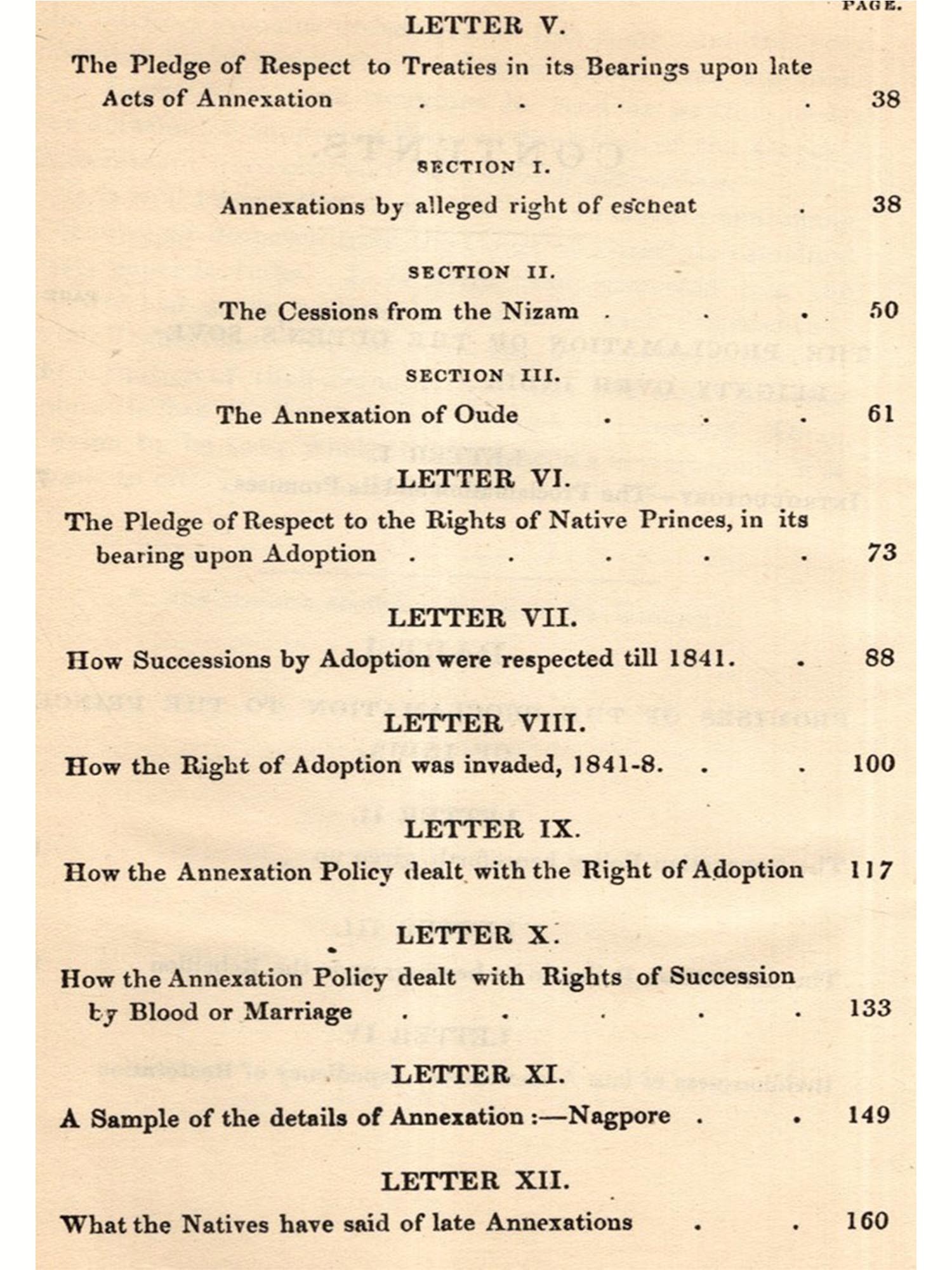
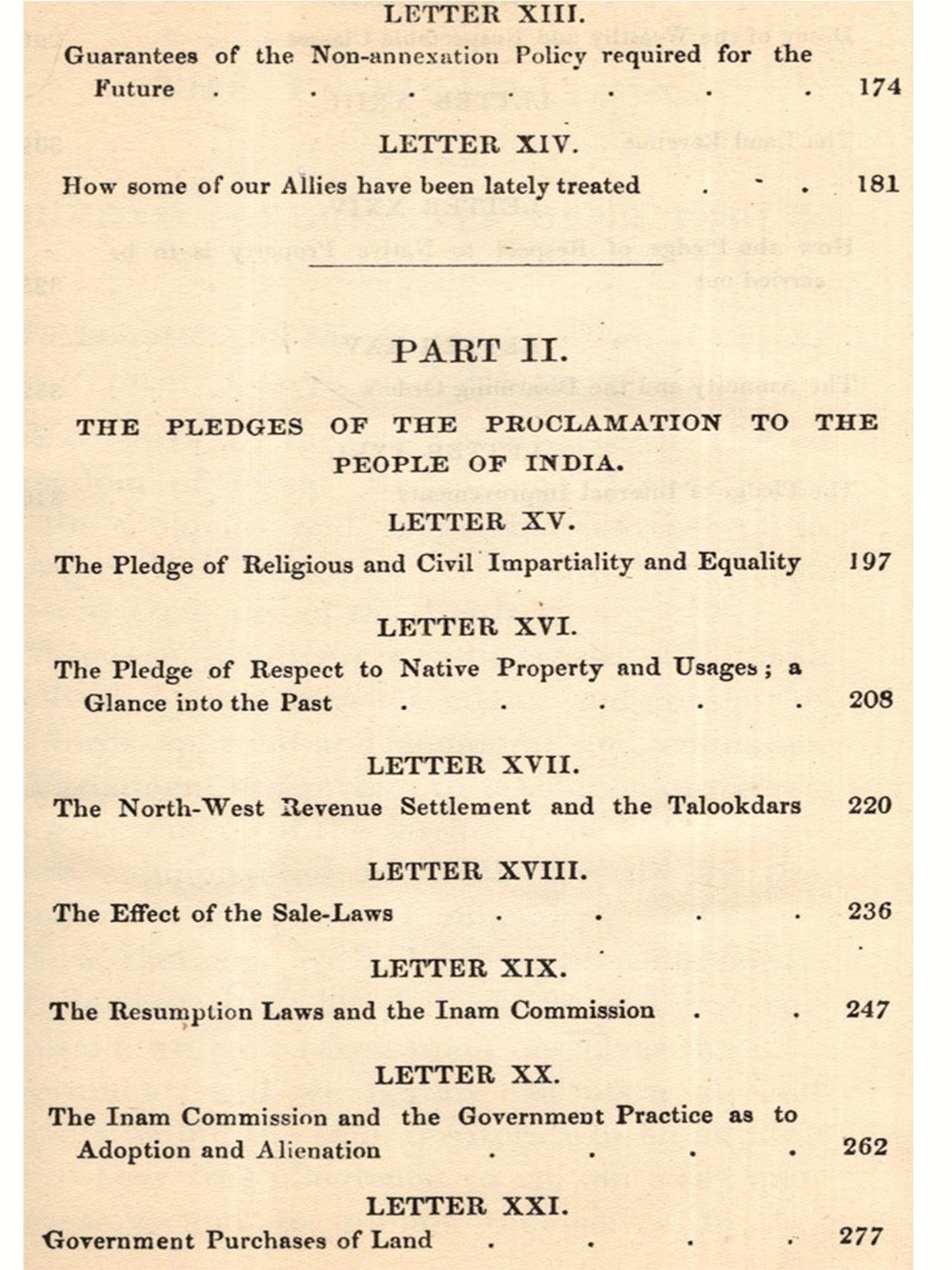
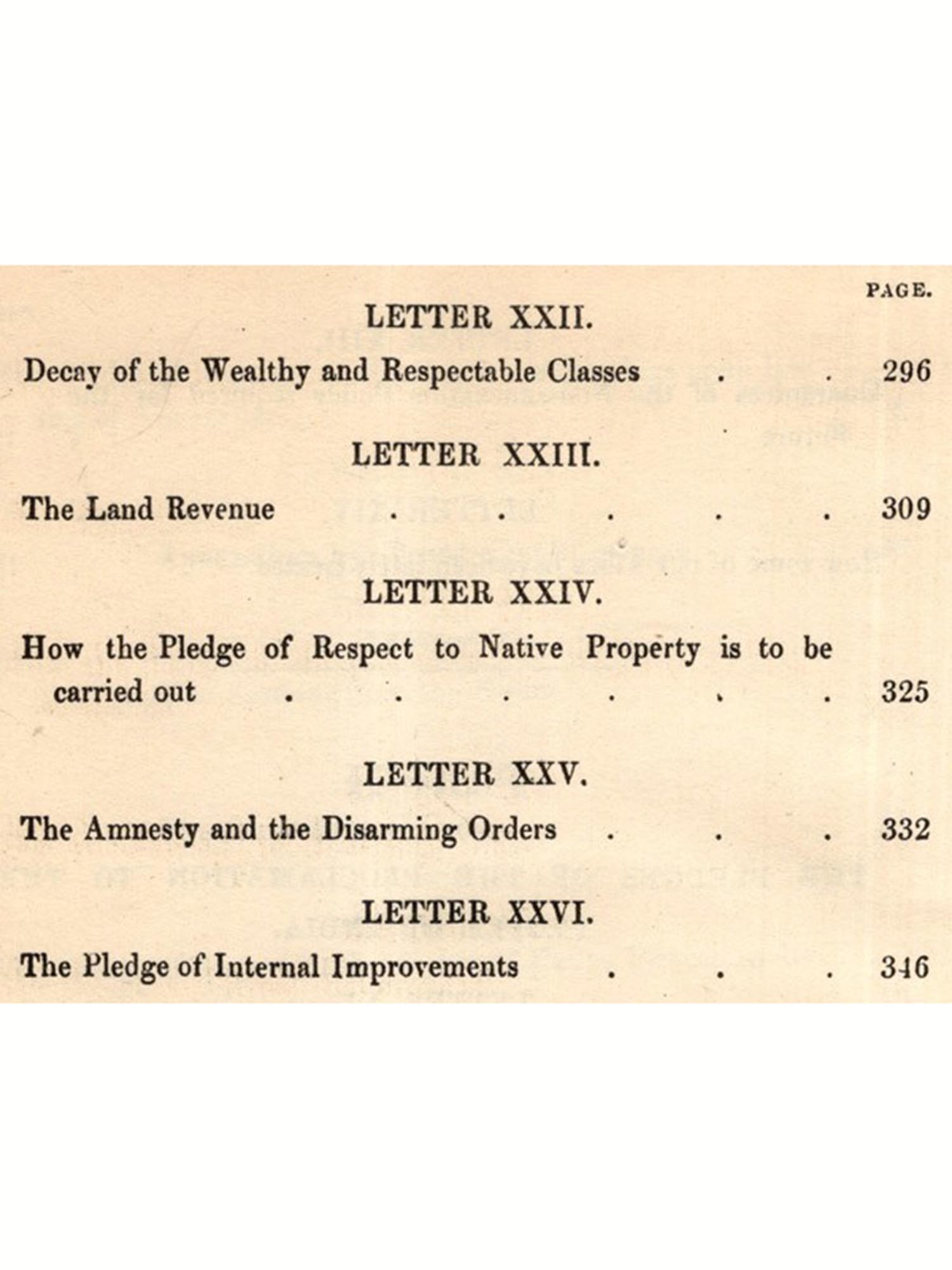
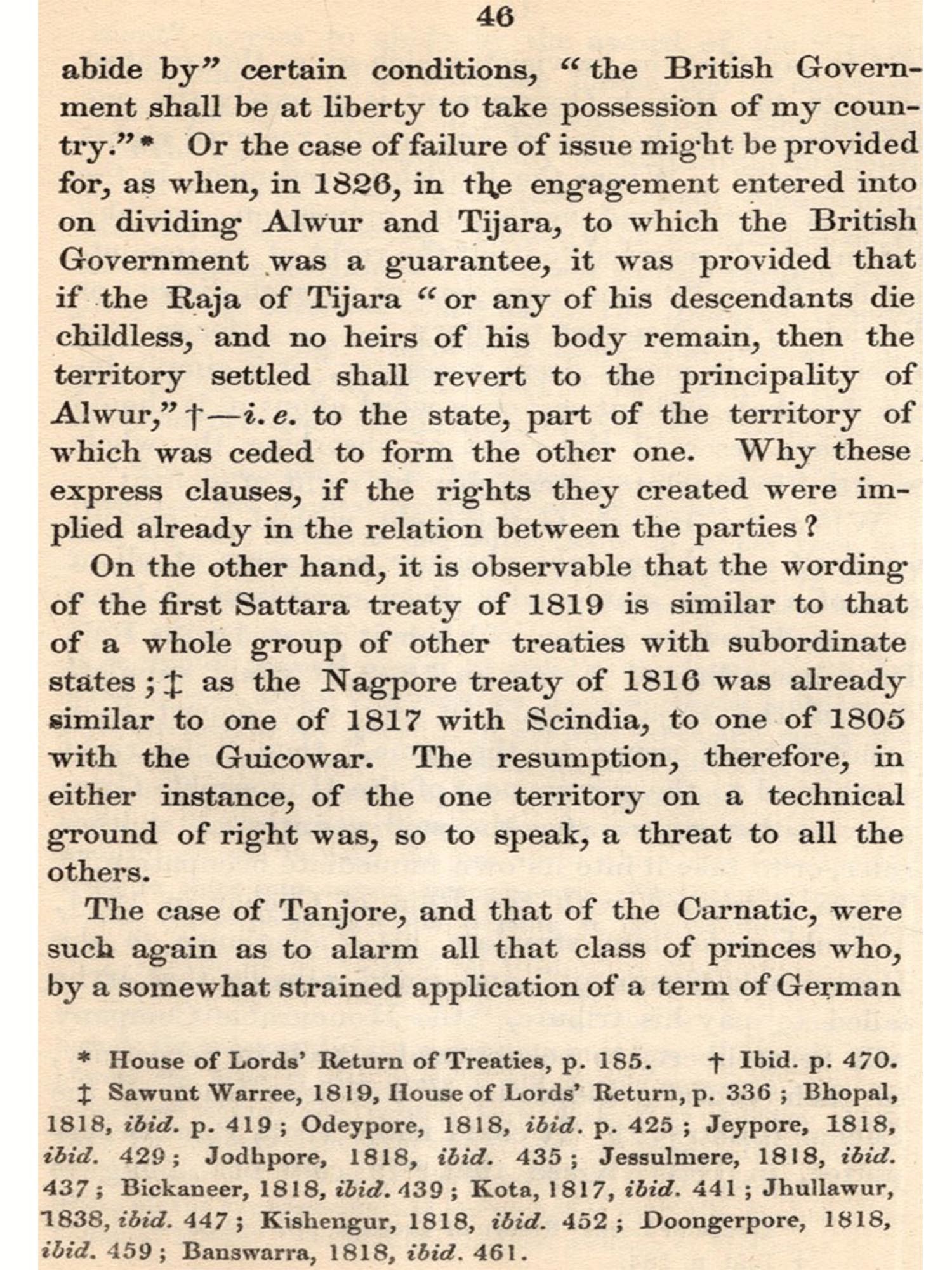
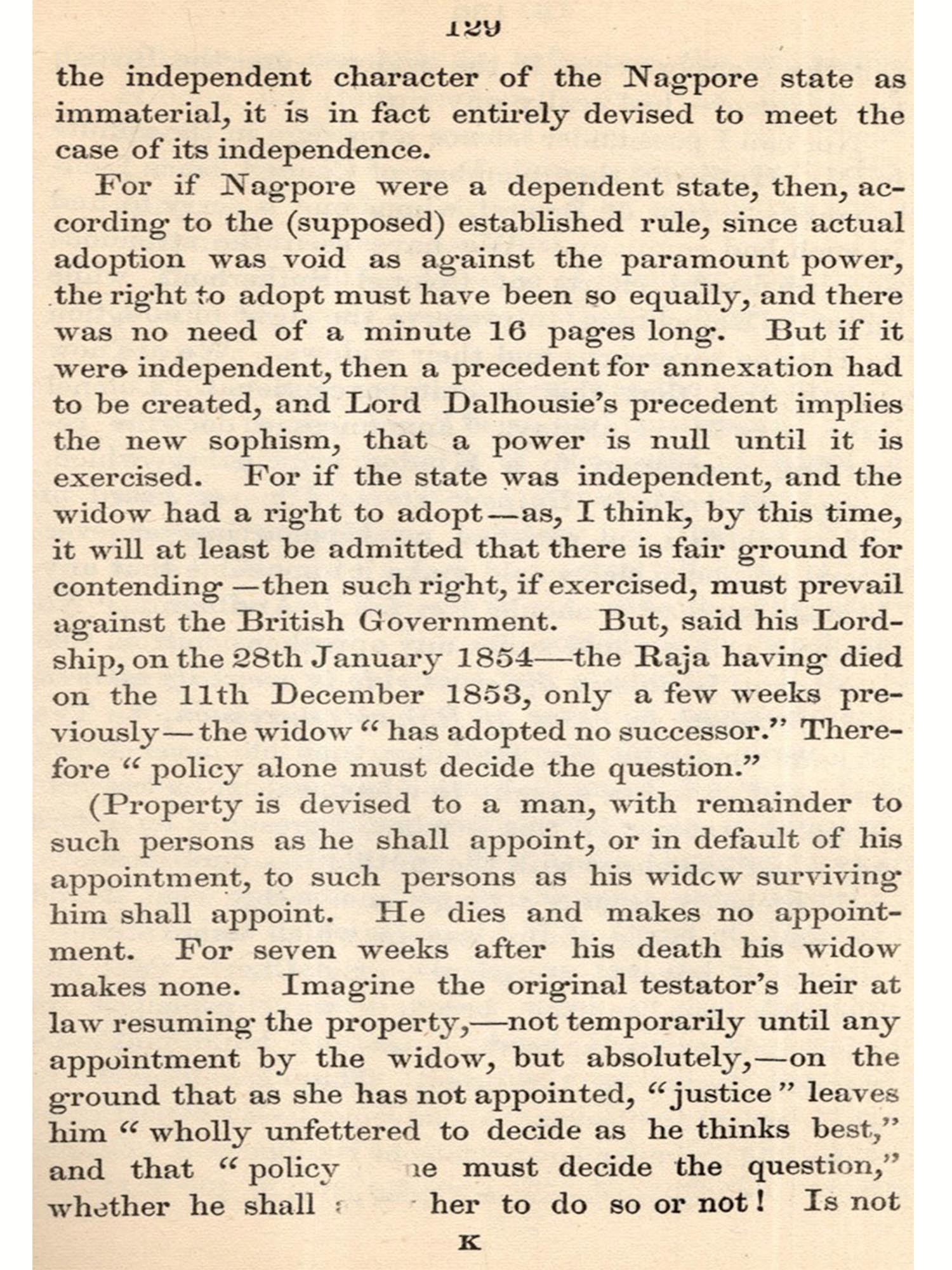
The present work, written by a contemporary British thinker, is an interpretative study of the Queen's proclamation and the post-mutiny policy of the Crown towards India. It takes up the Proclamation, section by section, and analyses the various promises contained therein. To make the subject properly understandable, the author has described the conditions existing prior to the Mutiny and the grievances of the people on various accounts, in great details. The work is a record of the state of affairs before and after the reforms and an interpretation of the policies of the British Government towards India.
The work has been reprinted from the 1859 edition in view of its importance as source material for the study of the evolution of British Raj in India.
In the beginning of last year, at the request of a friend, I wrote some letters on "the Indian Government question" in a provincial paper. Some interest was excited by them beyond the natural sphere of the Journal, and I was induced to give greater scope to them, and to treat in particular at some length of the effects of that policy of annexation and absorption of which the late Governor-General of India has been the main ex-ponent. A desire was expressed for the republication of this portion of the series, and I had already pre-pared it, with considerable additions, for the press, when the appearance of the Queen's Proclamation came to render much of my argument against such a policy superfluous, by sanctioning its leading conclusions. In taking it as my text, I felt I should be best carrying out the purpose which I had in view. *
Many will indeed think, even if they do not say: "We are weary of this subject of India. The poignant interest of the outbreak has passed away. The suspense of the conflict is over. The Lucknow heroes are mostly recruiting their strength at home. There are no more victories to win that we care to hear of. Besides, we have tried to understand the subject, and we cannot. It is so far, so foreign, so complex; we hear such different accounts of it. Where one says black and the other says white, each witness being, for aught we can discover, of equal authority, how can we decide between the two? The last session has seen the fate of a ministry hang on an Indian proclamation and despatch; has seen an India bill passed, the time-honoured administration of the East India Company swept away, the government of India transferred to the Crown, a re-sponsible ministry for India established. At the head of the new Council sits a young statesman, by almost general consent held most fit for his place, if not that to some he seems already fit for one still higher. Is not that enough? We have to think of the Reform Bill at home, of the ferment in Northern Italy, of Napoleonic intrigues, alliances, preparations for war, pacific denials soon denied; of quasi-slave trade com-plications; of Denmark and the Bund, of Villafranca and the Russians, of Turkey and its rayas, of Servia and her revolution, of the Ionian Isles and Mr. Glad-stone abroad. Why cannot we be allowed to forget India, were it only for a while?"
Much of what is thus said or thought is perfectly true, all is perfectly natural. Little as I may think of the Derby Cabinet's India Act, I rejoice in the two momentous changes introduced into the Indian administration, Crown Government and ministerial responsibility. I have hope in Lord Stanley, if not borne down by his Council.

-
Q. What locations do you deliver to ?A. Exotic India delivers orders to all countries having diplomatic relations with India.
-
Q. Do you offer free shipping ?A. Exotic India offers free shipping on all orders of value of $30 USD or more.
-
Q. Can I return the book?A. All returns must be postmarked within seven (7) days of the delivery date. All returned items must be in new and unused condition, with all original tags and labels attached. To know more please view our return policy
-
Q. Do you offer express shipping ?A. Yes, we do have a chargeable express shipping facility available. You can select express shipping while checking out on the website.
-
Q. I accidentally entered wrong delivery address, can I change the address ?A. Delivery addresses can only be changed only incase the order has not been shipped yet. Incase of an address change, you can reach us at help@exoticindia.com
-
Q. How do I track my order ?A. You can track your orders simply entering your order number through here or through your past orders if you are signed in on the website.
-
Q. How can I cancel an order ?A. An order can only be cancelled if it has not been shipped. To cancel an order, kindly reach out to us through help@exoticindia.com.