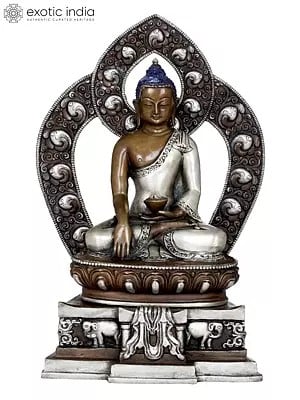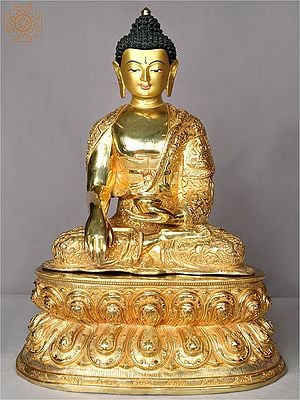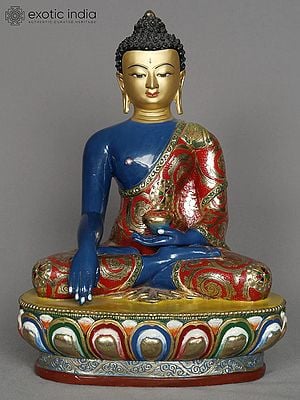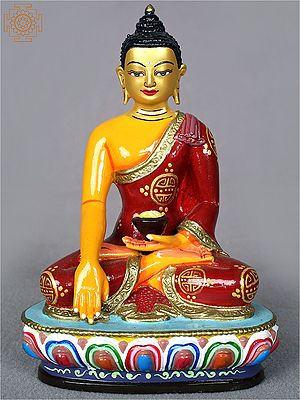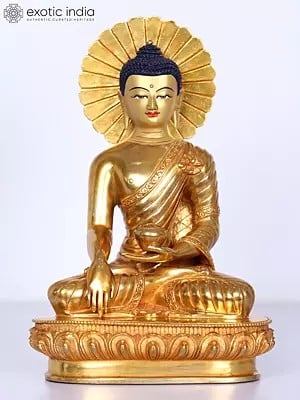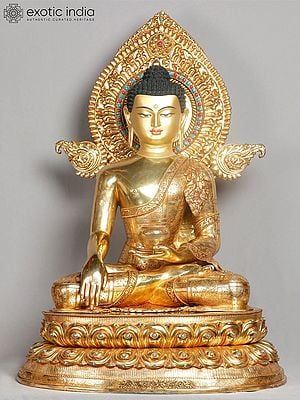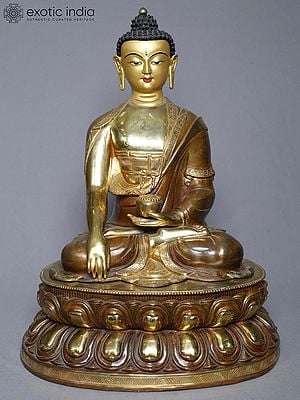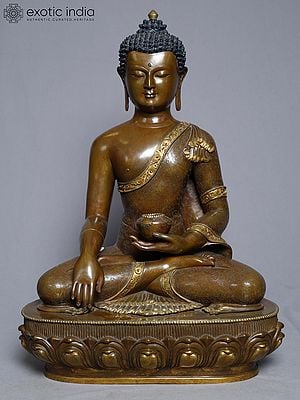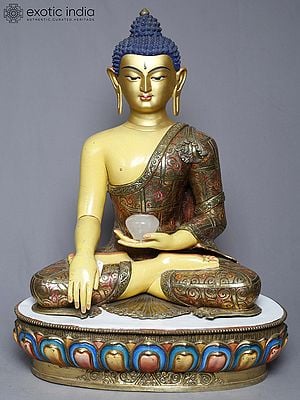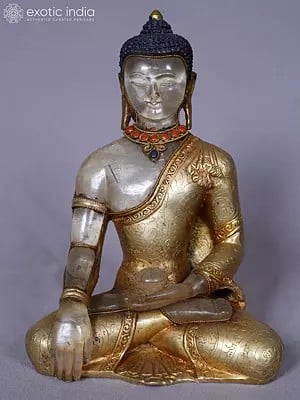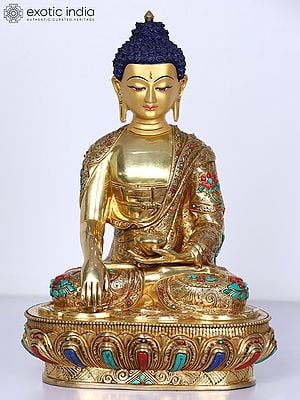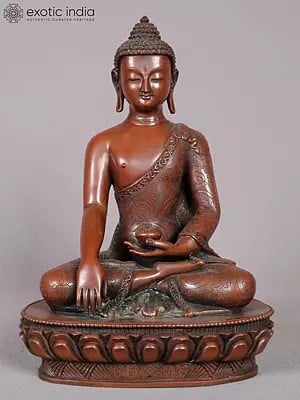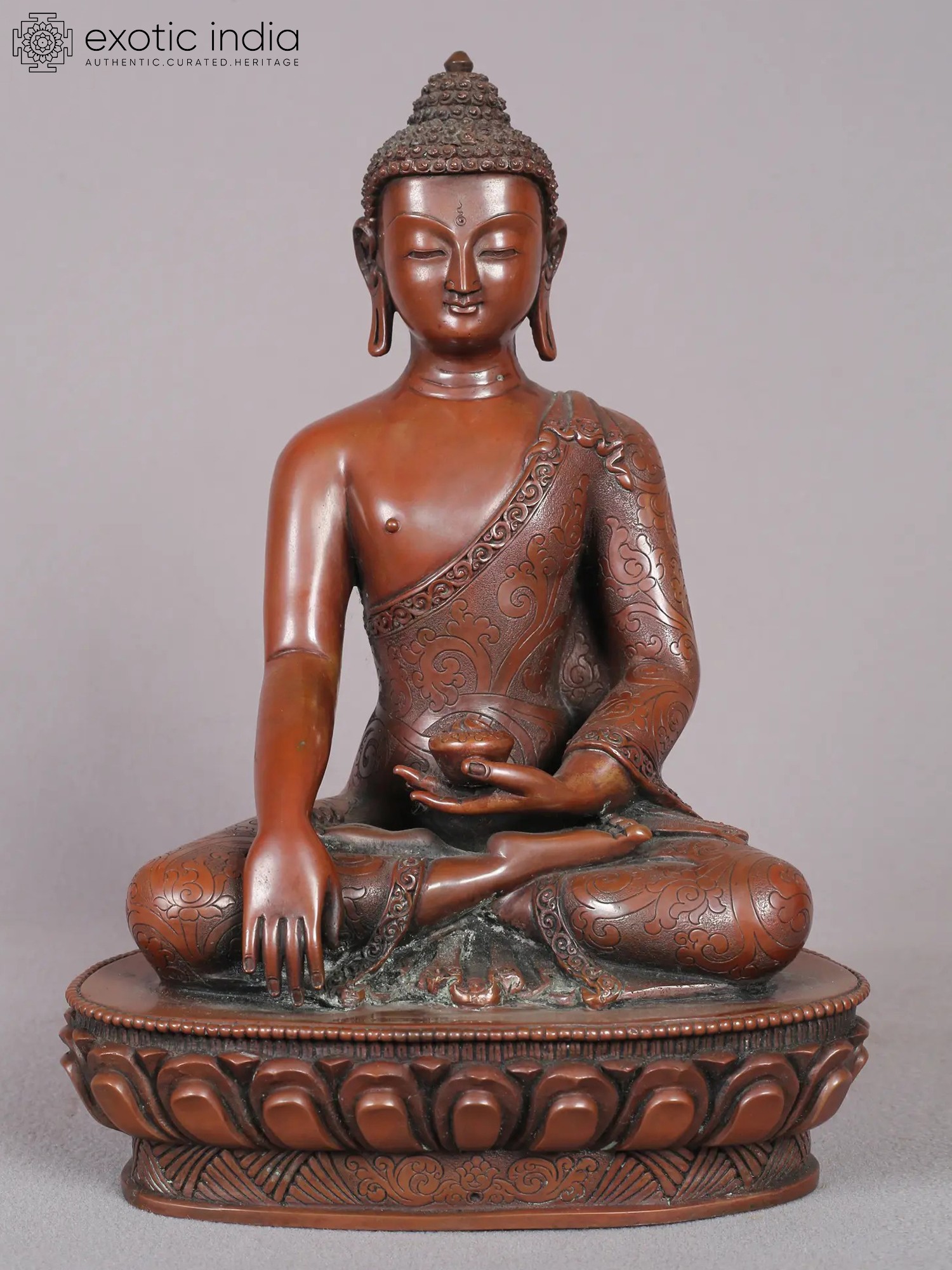
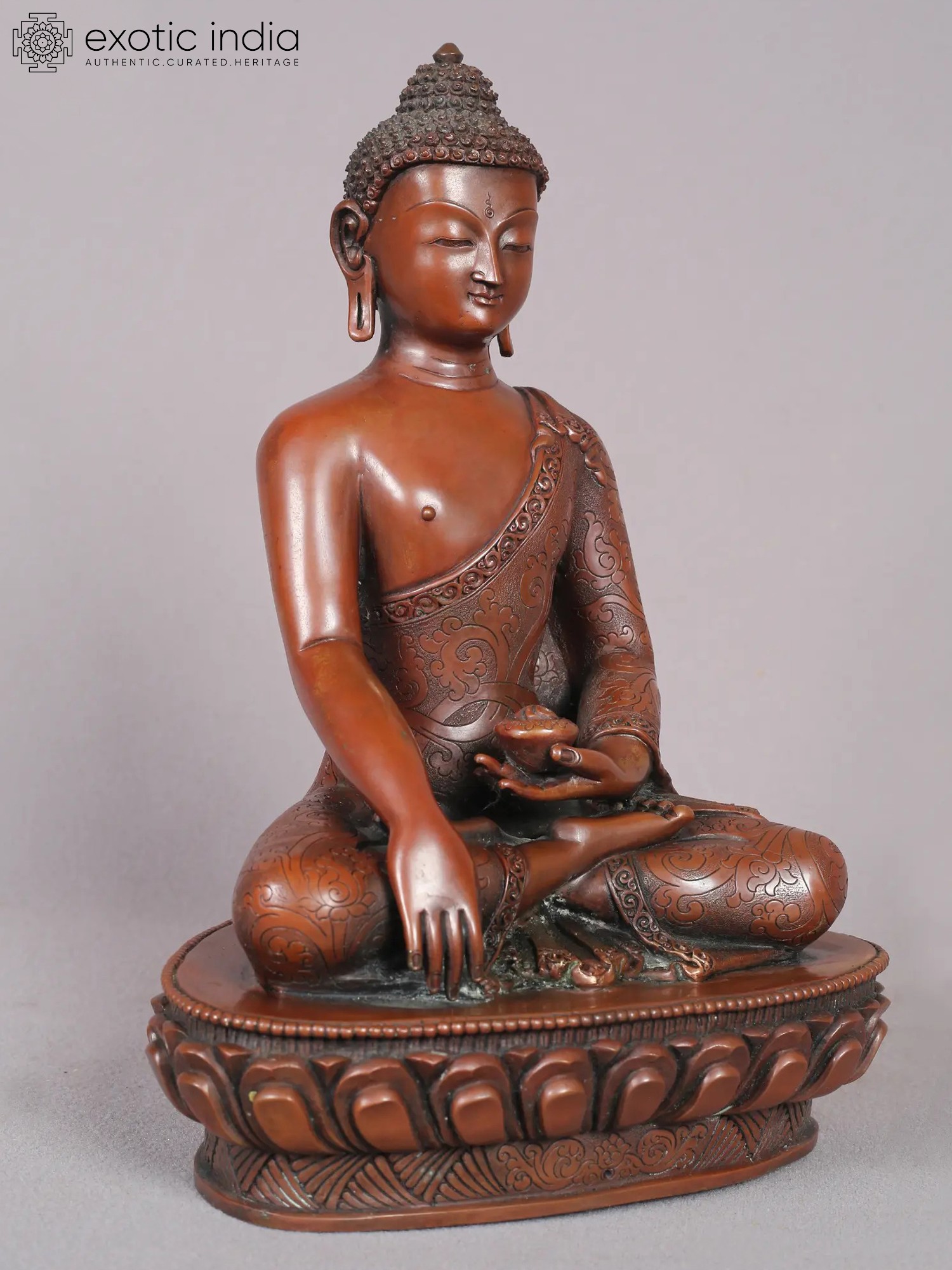
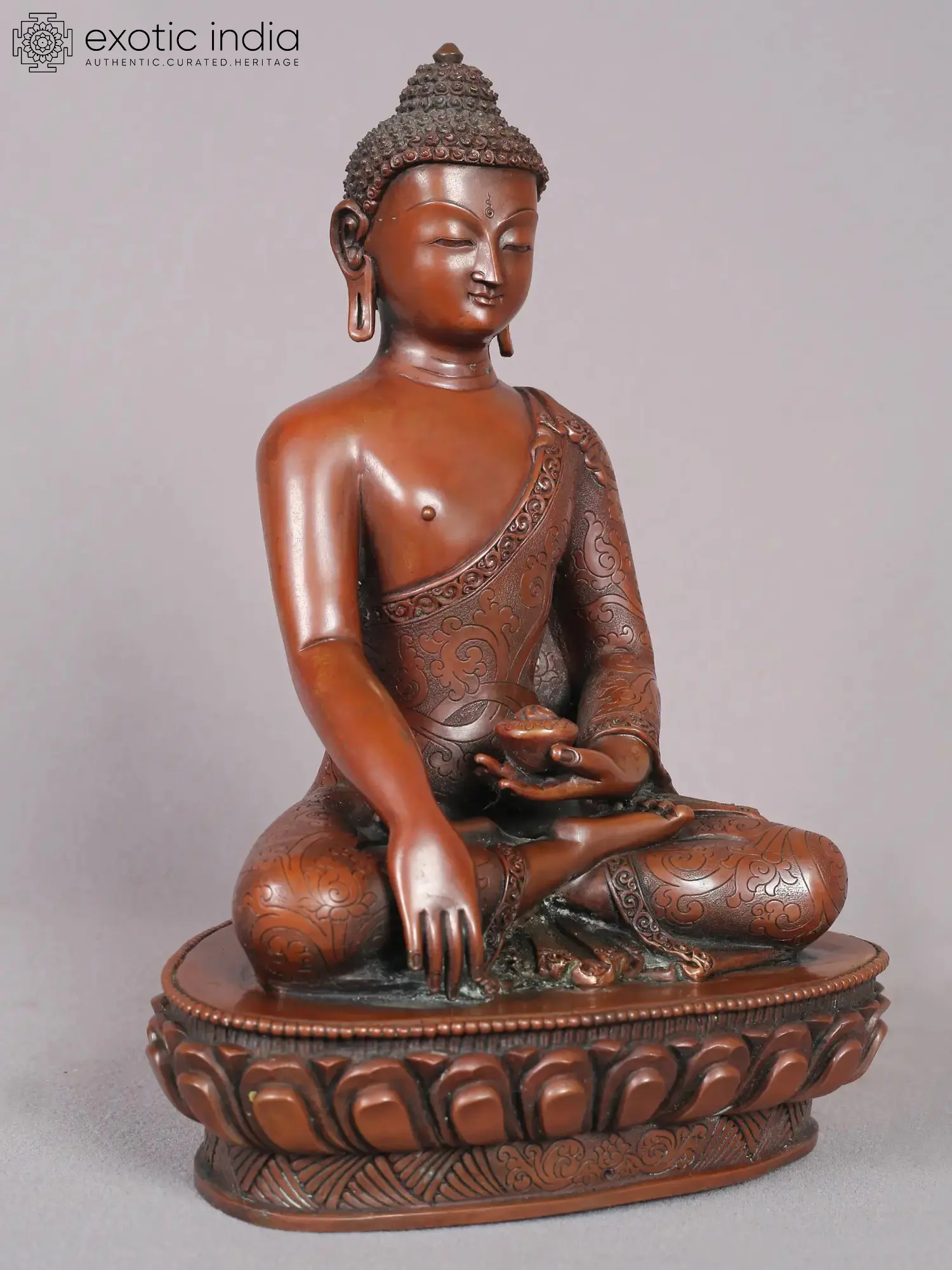
9" Shakyamuni Buddha Sculpture from Nepal | Lord Buddha Statue in Copper

| Specifications |
 |
MIS522 |
 |
Copper |
 |
Height: 9 inch |
| Width: 6.5 inch | |
| Depth: 4.5 inch | |
 |
Weight 1.90 kg |
| Delivery and Return Policies |
 |
Ships in 1-3 days |
 |
Returns and Exchanges accepted within 7 days |
 |
Free Delivery |


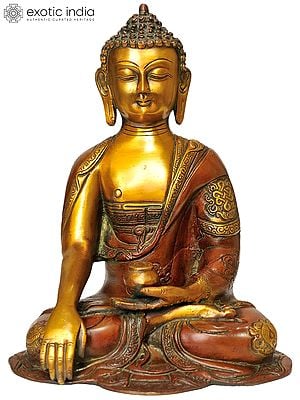
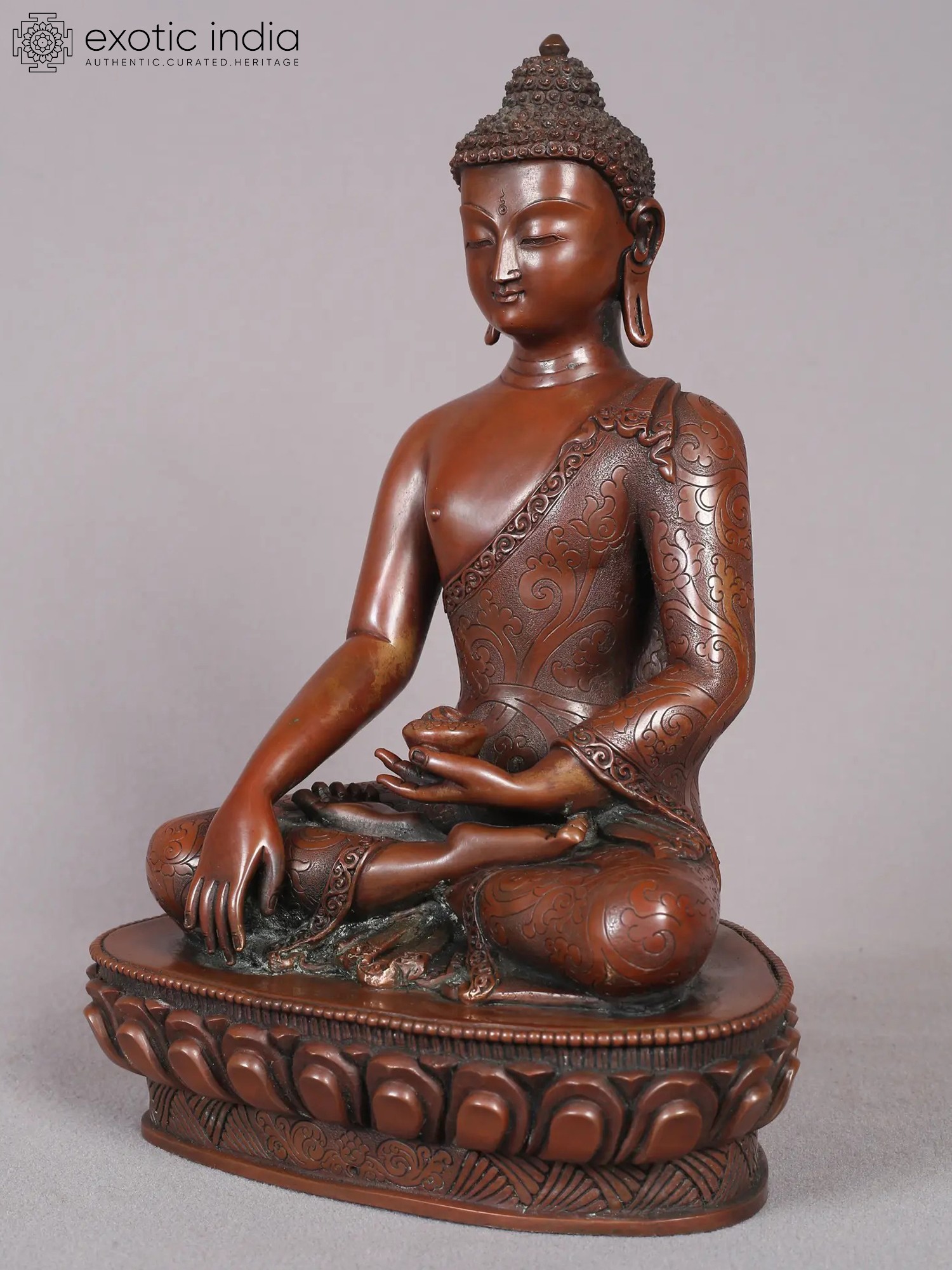
Presenting the
remarkable sculpture
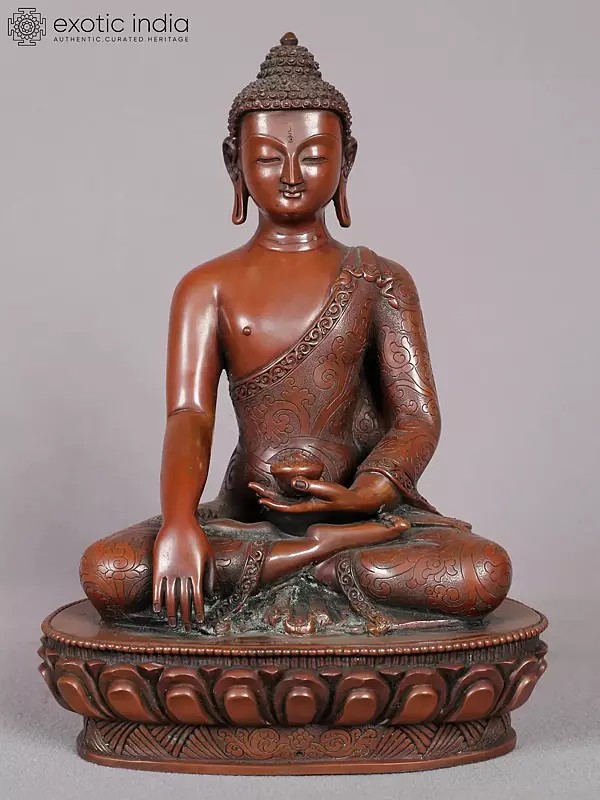
of Shakyamuni Buddha, a profound embodiment of timeless serenity and
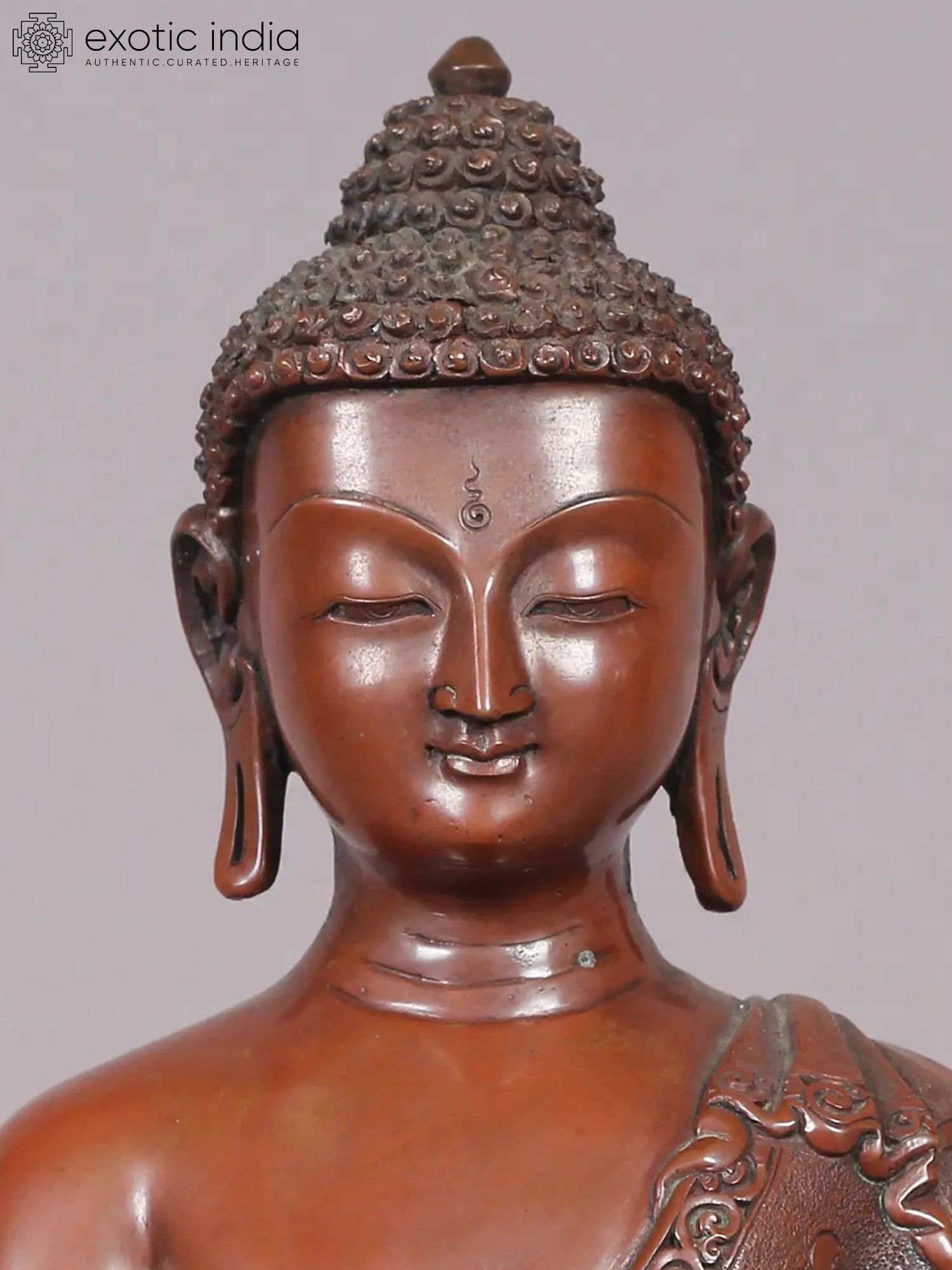
wisdom. The sculpture skillfully captures the essence of meditative
contemplation through the half-closed eyes, inviting viewers to delve into
profound introspection. The meticulously crafted Bhumisparsha
mudra, portrayed with exquisite artistry, symbolizes the triumph over
earthly desires. The left hand's gentle touch upon the earth signifies an
unwavering connection and attunement to the fundamental truths of existence.
Beyond its aesthetic allure, this sculpture stands as a beacon of
enlightenment, guiding beholders on a transformative journey towards profound
wisdom and self-realization, mirroring the enlightenment teachings of
Shakyamuni Buddha.
A Vision of Enlightenment: The Shakyamuni Buddha
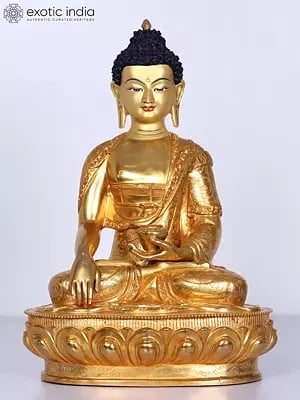
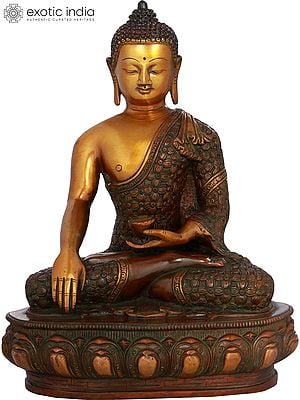
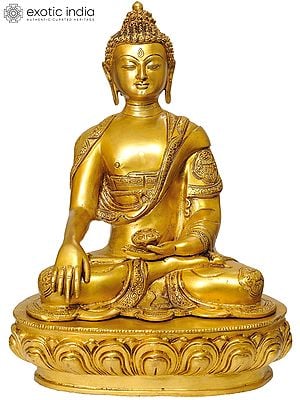
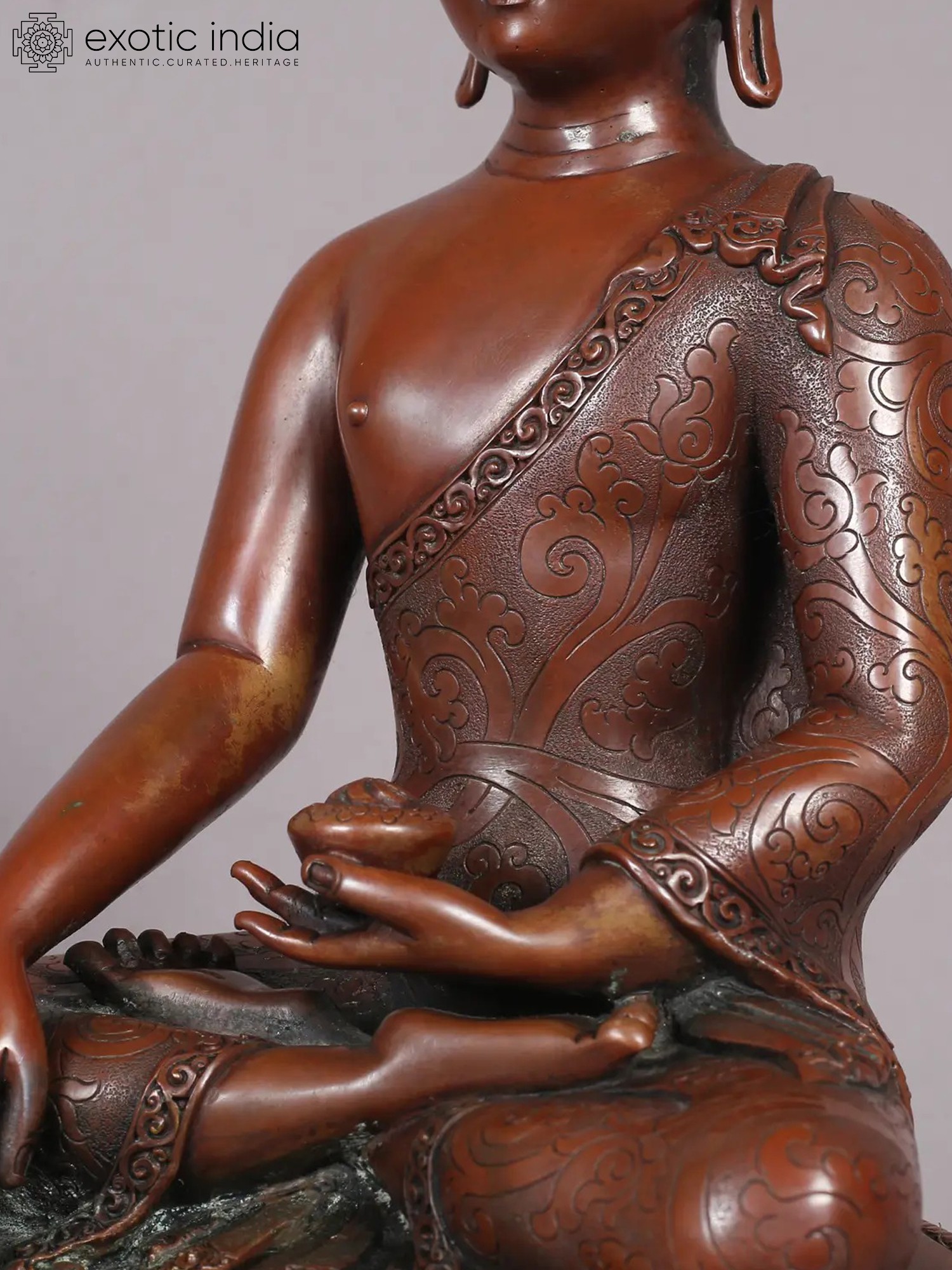
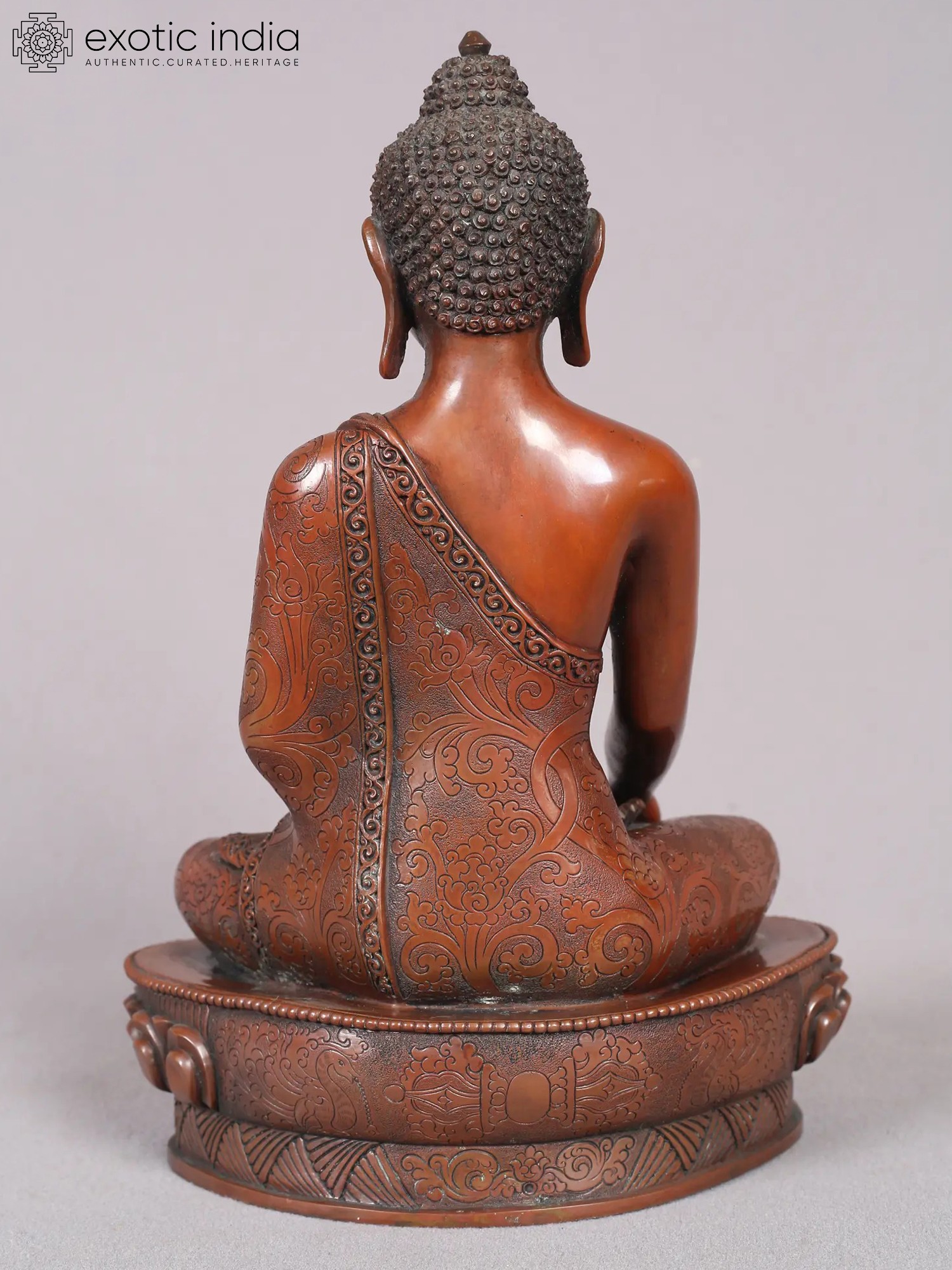
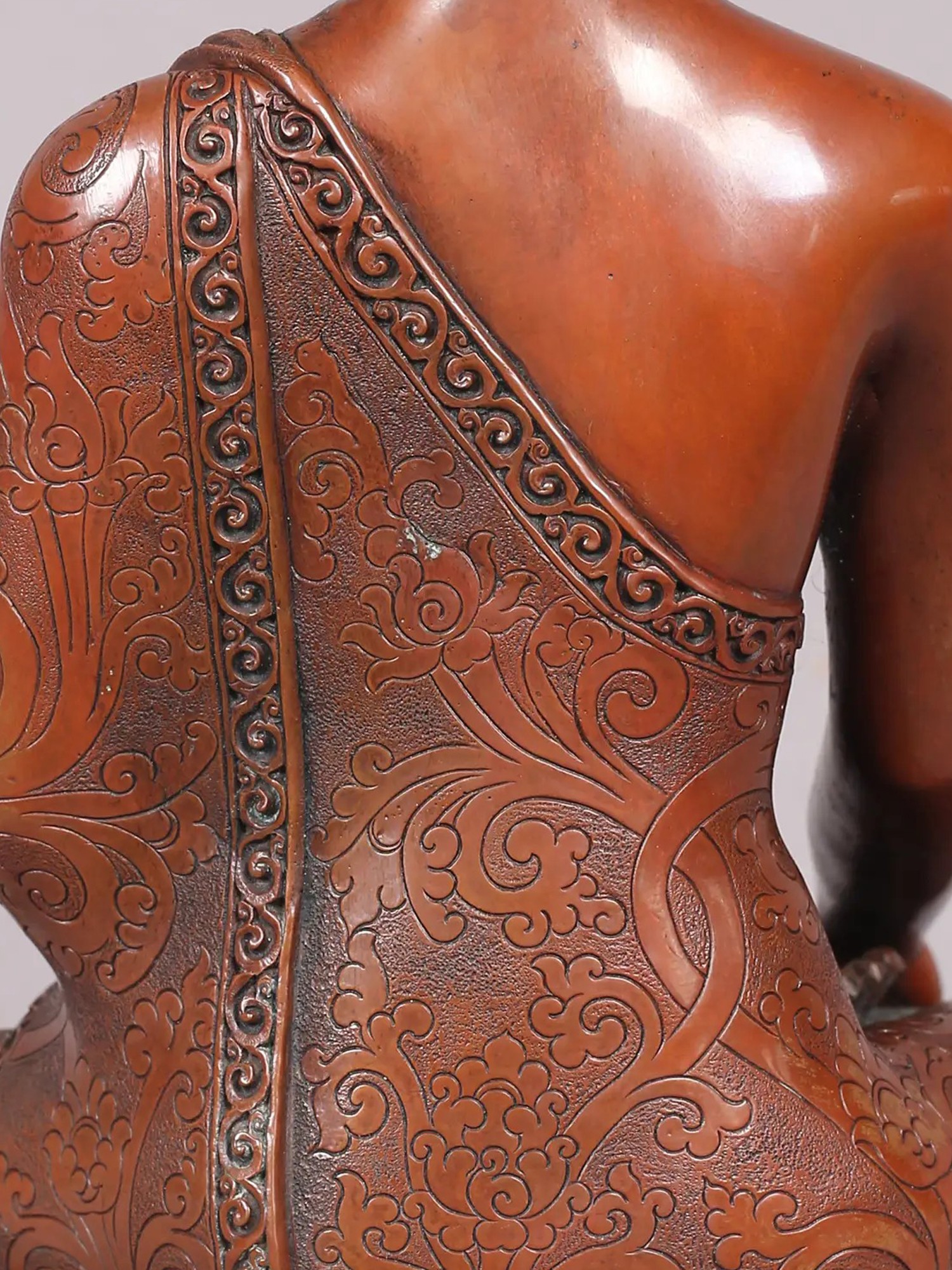
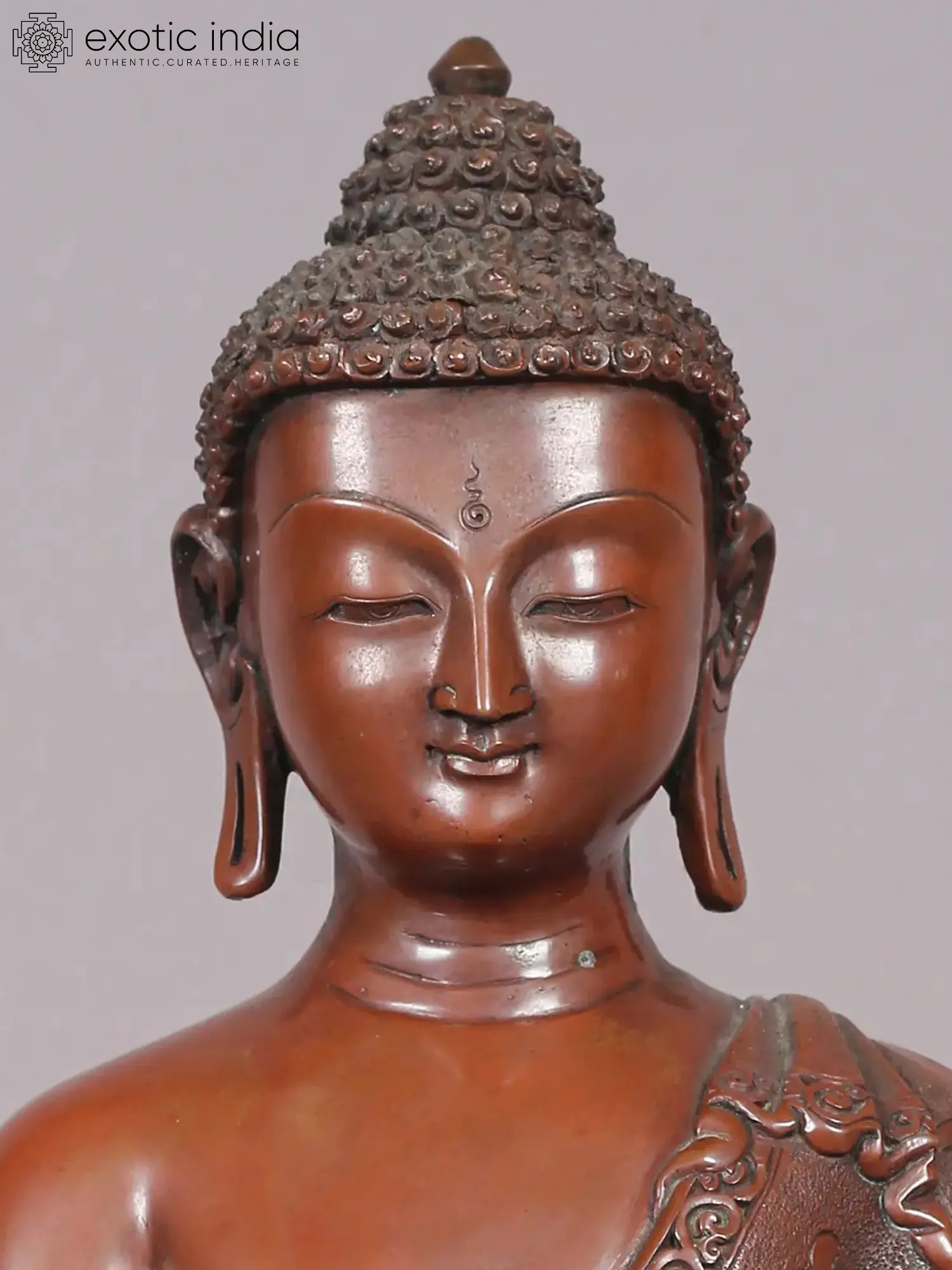
This exquisite copper sculpture captures the serene presence of Shakyamuni Buddha, the historical founder of Buddhism. Seated in the meditative lotus position, this 9-inch statue emanates an aura of profound peace and wisdom. Crafted in Nepal, a land steeped in Buddhist tradition and artistry, it embodies centuries of spiritual devotion and meticulous craftsmanship. The Buddha's face is a masterpiece of serene contemplation, with eyes gently closed as if observing the inner landscape of enlightenment. His brow is smooth, his lips curved in a subtle, knowing smile, inviting viewers to find their own inner stillness. The intricate details of the robe are particularly striking. The fine etchings depicting flowing patterns not only add to the visual appeal but are symbolic. These swirling motifs can be interpreted as the interconnectedness of all things, a fundamental principle in Buddhist philosophy, or perhaps as representations of the Dharma, the cosmic order and the teachings of the Buddha that guide all beings towards liberation. The rich, warm hue of the copper lends a sense of grounding and ancient reverence to the sculpture, hinting at the enduring power of the Buddha's message through the ages.The Symbolism of the Mudra and Posture
The posture of this Shakyamuni Buddha is the classic *Padmasana*, the lotus position, signifying purity and spiritual perfection. The way the legs are crossed, with the soles of the feet resting on the thighs, is a posture of deep meditation and stability, allowing for unwavering focus on the path to enlightenment. His right hand rests on his right knee, palm facing downwards, in the *Bhumisparsha Mudra*, the earth-touching gesture. This mudra is profoundly significant, symbolizing the moment of Buddha's enlightenment under the Bodhi tree. According to legend, as Mara, the tempter, tried to disrupt his meditation, the Buddha called upon the earth as his witness to his purity and worthiness to achieve enlightenment. The earth goddess then appeared and affirmed his claims, dispelling Mara's influence. His left hand rests in his lap, palm upwards, in the *Dhyana Mudra*, the gesture of meditation and concentration, holding a symbolic alms bowl, representing the renunciation of worldly possessions and the sustenance of the mind through the Dharma. Together, these mudras and the posture create a powerful visual narrative of the Buddha's journey and his ultimate victory over ignorance and suffering.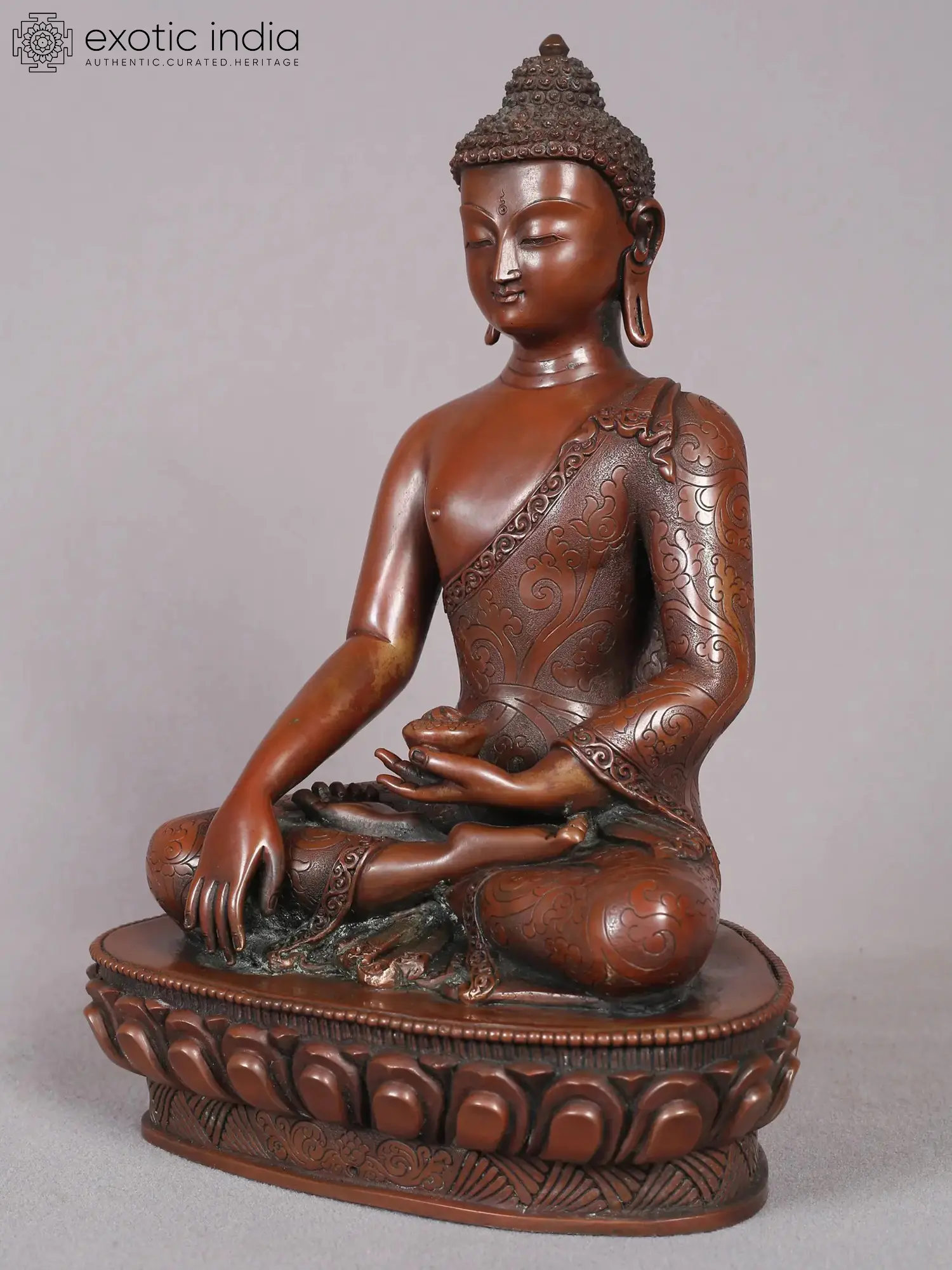
A Testament to Nepalese Artistry
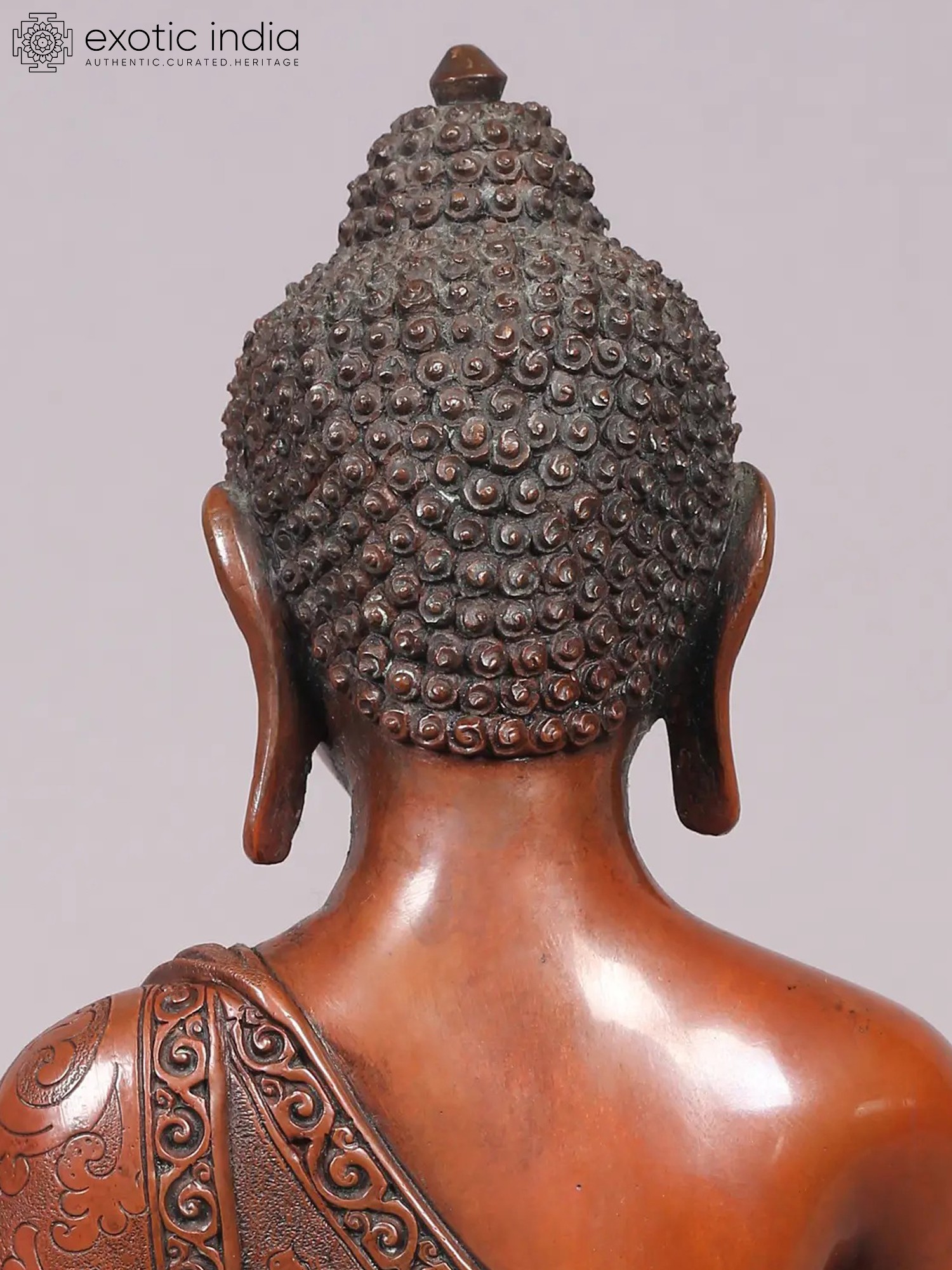
This sculpture hails from Nepal, a country that has been a spiritual and artistic hub for Buddhism for millennia. Nepalese artisans are renowned for their mastery of metal casting, particularly in copper and bronze, infusing their creations with a spiritual depth that transcends mere material form. The attention to detail, from the delicate curl of the hair to the precise rendering of the urna (the dot between the eyebrows, symbolizing spiritual insight) and the ushnisha (the cranial protuberance, signifying wisdom), speaks to a profound understanding and reverence for Buddhist iconography. Owning such a piece is not just acquiring a beautiful object; it is bringing a sacred symbol of peace, wisdom, and spiritual awakening into your home or contemplative space, connecting you to a rich cultural heritage and an enduring spiritual legacy.How are Nepalese copper statues made?
Nepalese statues and sculptures have a high copper content and therefore develop a slightly reddish patina on the surface as they age. However, the most unique feature of Nepalese copper statues is their decorative detailing. The pieces are heavily gilded and sometimes inlaid with semi-precious stones. This embellishment protects them from getting tarnished. The traditional lost-wax method for casting Nepalese copper statues remains the most practiced technique in Nepal for many centuries. This process involves many steps and requires skilled artists.
The first step in lost-wax sculpting is to make a wax replica of the desired Buddhist deity to be cast in copper. This replica is created by hand and therefore needs excellent artistic skills otherwise fine features will be lacking.
Once the wax replica is made, it is then coated with a special mixture of clay with a brush. This layer of clay is hardened when left to dry. A small hole is made on the base of the wax mould so that the wax flows away when it is heated.
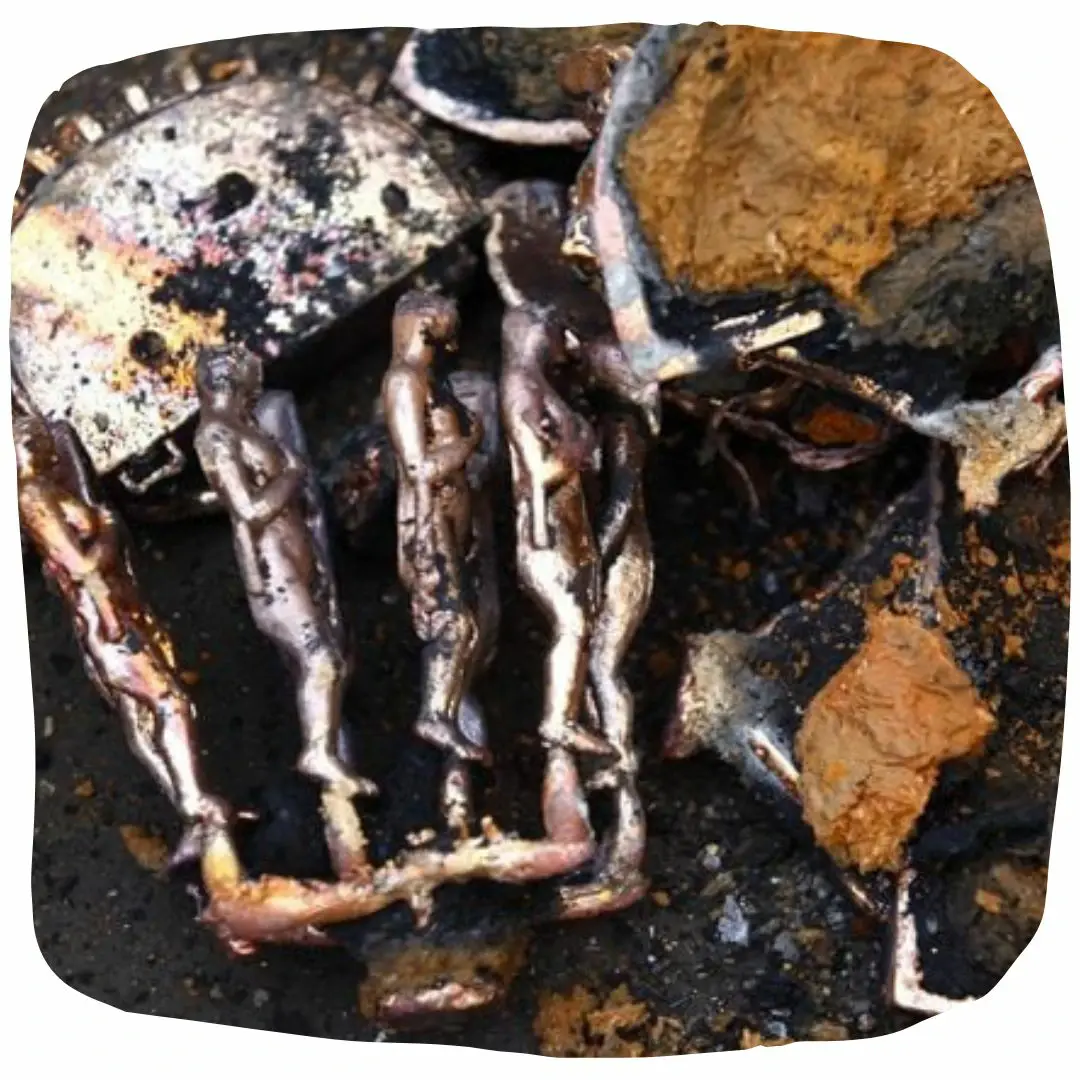
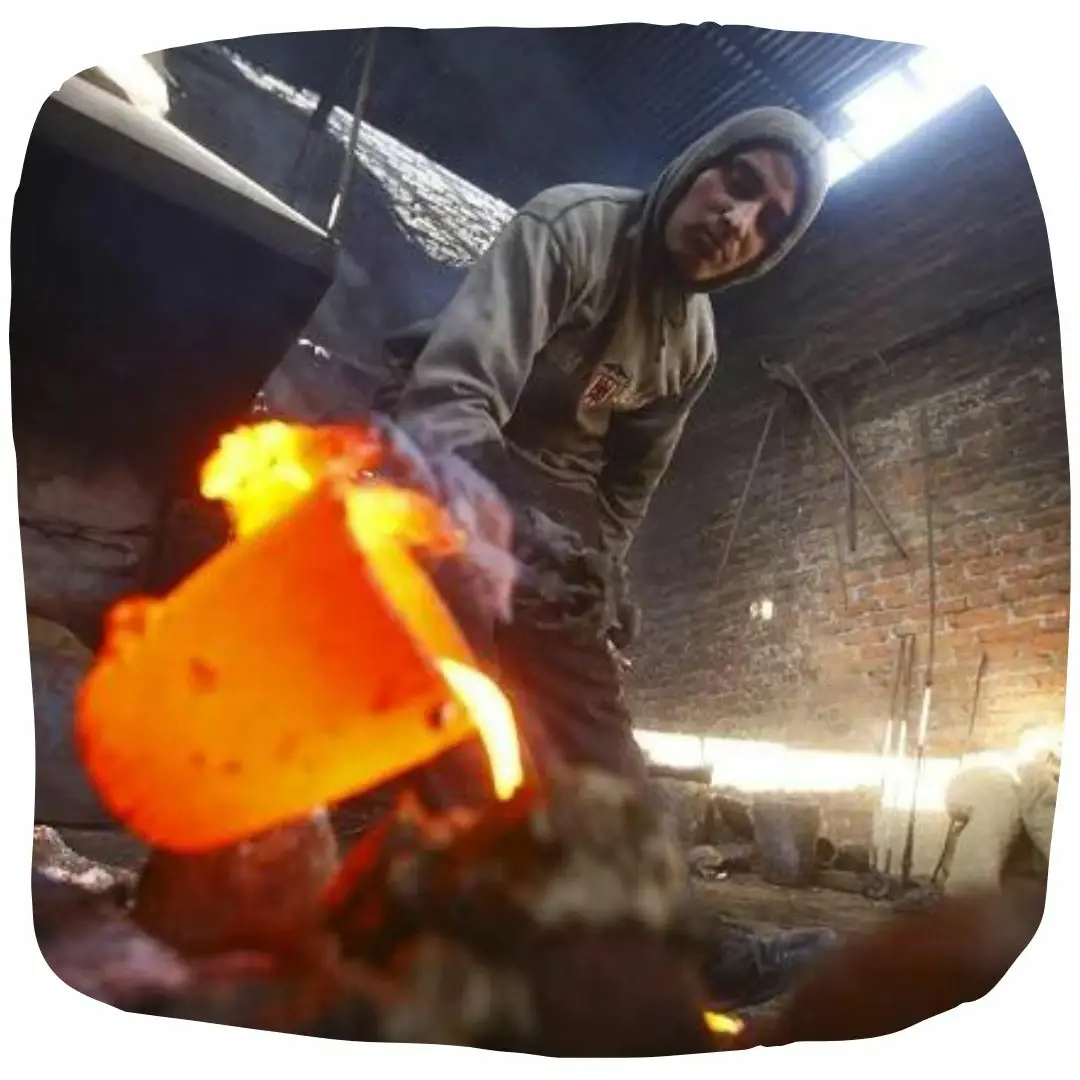
This is the time to pour liquid copper into the hollow mould which is then allowed to cool and harden inside a container of cold water. When the liquid metal has hardened, the mould is removed and the statue within is revealed.
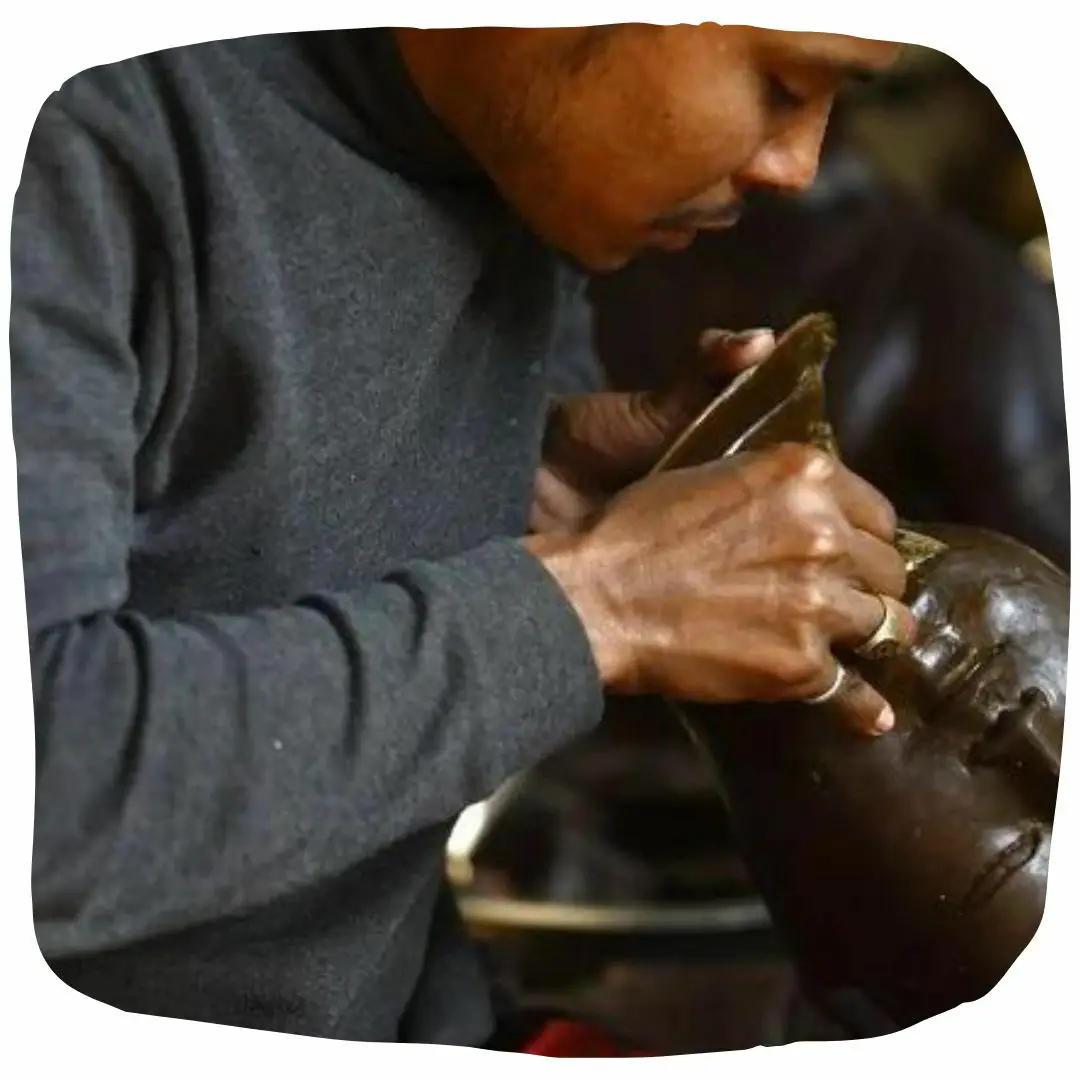
Now comes the most important part of Nepalese art which is gold gilding. This is done by the traditional fire gilding method. A mixture of mercury and 18K gold is applied on the surface of the statue and heat is applied using a flame torch. The result is that mercury evaporates along with impurities, leaving a pure 24K gold finish.
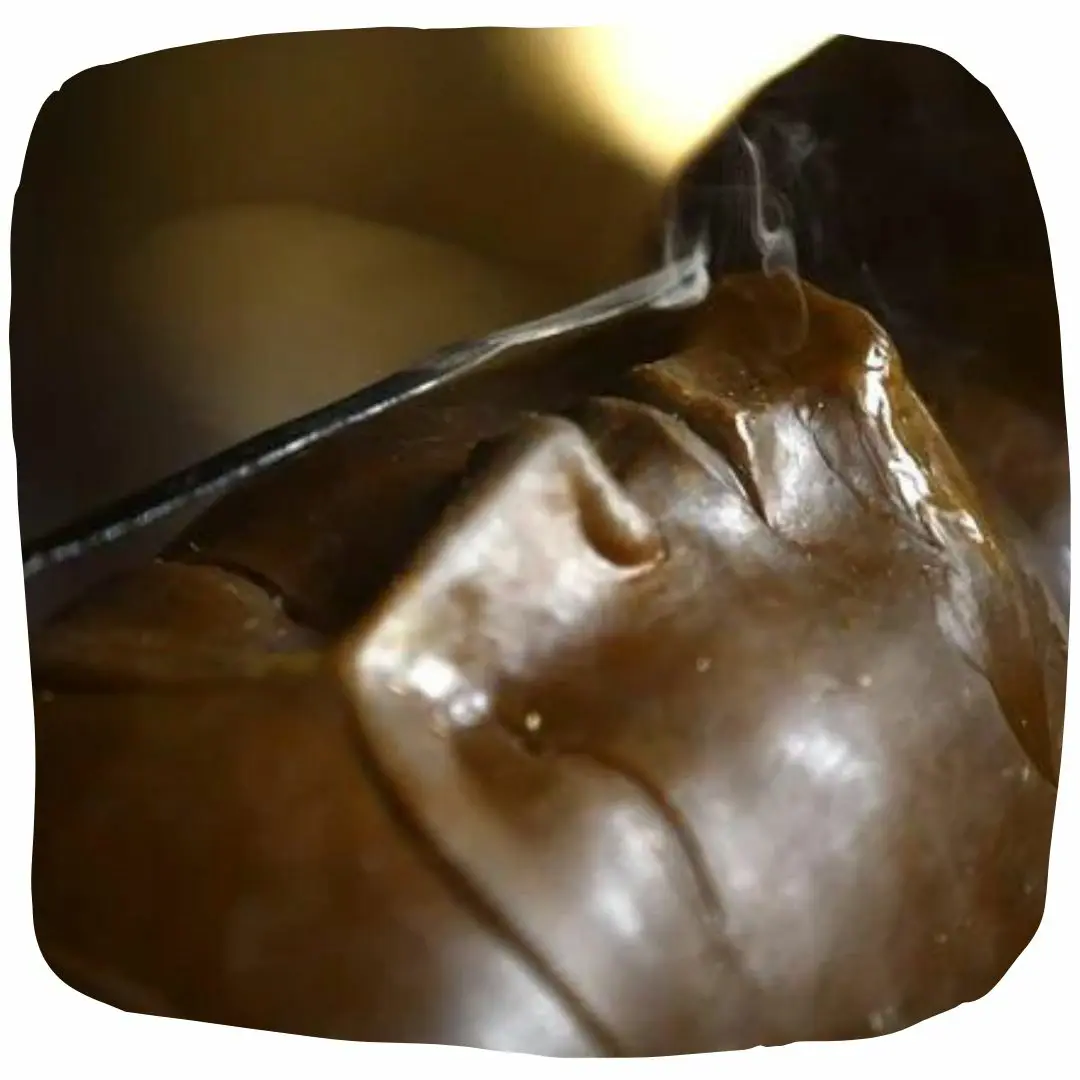
The lost-wax method of sculpting is the most preferred technique
for artists to cast a metallic statue having intricate details. Since Nepalese copper sculptures require extraneous effort for giving a majestic look by adding special embellishments, it takes several weeks to complete one masterpiece. A 24K gold gilded copper sculpture retains its brilliant luster for many years and appears as like before. Nepalese sculptures continue to remain one of the finest specimens of the art of the East that have a strong aesthetic appeal that other sculptures cannot match.